
The Architectural Mystery of the Bent Pyramid
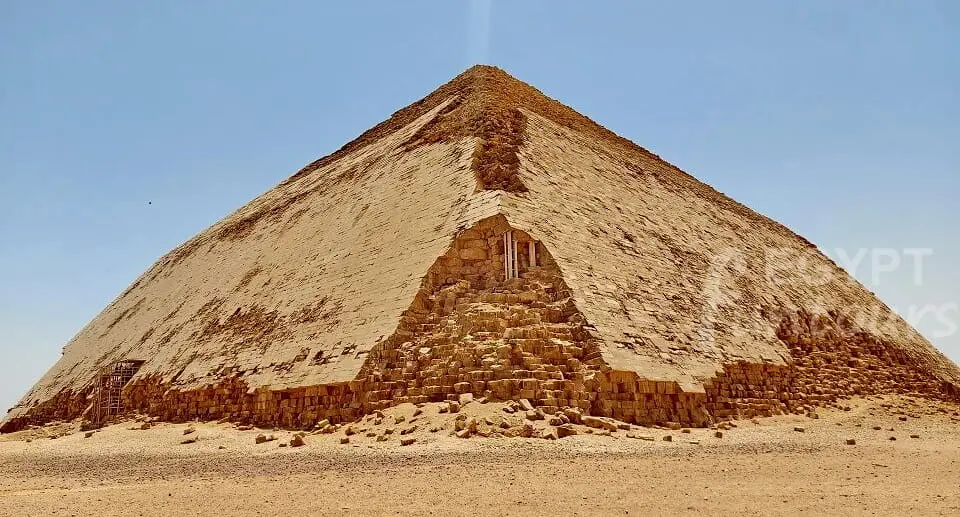
The Bent Pyramid represents a pivotal moment in ancient Egyptian history. King Sneferu commissioned this massive tomb during the Fourth Dynasty. Specifically, it marks a daring attempt to move beyond the traditional step pyramid design. Because the builders aimed for a smooth-sided finish, the structure stands as a bold architectural experiment. Consequently, the Bent Pyramid is a unique bridge between two eras of construction. Therefore, historians consider it an essential landmark for understanding the evolution of the Old Kingdom.
The pyramid sits in the desert necropolis of Dahshur, south of Saqqara. Most notably, its silhouette changes angle halfway up the structure. This distinct “bent” appearance resulted from a sudden adjustment during construction. Specifically, the architects feared the weight of the stone would cause a total collapse. For this reason, they reduced the slope from 54 degrees to 43 degrees. Therefore, the Bent Pyramid is a physical record of ancient trial and error. It showcases the resilience and ingenuity of the early Egyptian engineers.