
The Temple of Hibis: The Desert Sanctuary of Persia’s Egyptian Pharaohs

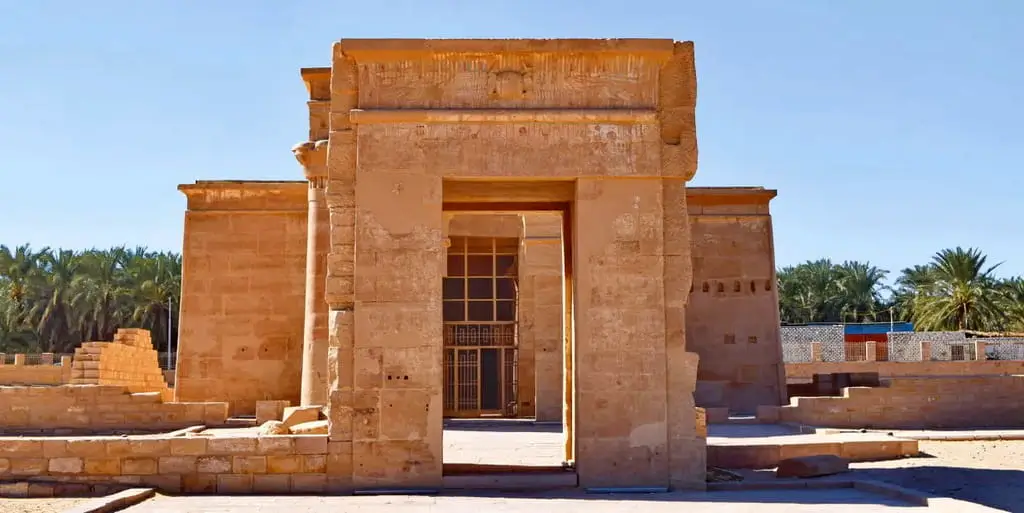
The Temple of Hibis stands as the ultimate crown jewel of Egypt’s Western Desert archaeology. Located in the fertile Kharga Oasis, this magnificent sanctuary holds the unique distinction of being the only major temple from the Saite-Persian Period (6th–5th centuries BCE) to survive relatively intact. Though built during a time of foreign conquest, Persian emperors like Darius the Great funded and expanded the site, choosing to depict themselves on its walls as traditional, pious Egyptian pharaohs. The temple acts as a vast visual encyclopedia of the Egyptian pantheon, featuring rare depictions of hundreds of deities alongside a globally famous 66-line Roman legal edict. Saved from destructive groundwater by a massive modern engineering project, this striking open-air museum offers modern travelers an unparalleled journey into Egypt's imperial and multicultural past.

Temple of Hibis: The Crown Jewel of the Desert Archaeology

Deep within the shifting sands of the Kharga Oasis stands a lonely, magnificent monument. This is the Temple of Hibis. Located roughly 500 kilometers southwest of Cairo in Egypt’s Western Desert, this ancient sanctuary remains a brilliant crown jewel of desert archaeology. It represents a fascinating crossroad of cultures where local desert traditions beautifully collided with vast foreign empires.

Temple of Hibis: A Unique Survivor of Persian Rule

What makes the Temple of Hibis unique in the world of Egyptology is its timing and miraculous survival. It stands today as the only major temple building from the Saite-Persian Period (6th–5th centuries BCE) that still survives relatively intact.

During an era when the mighty Persian Achaemenid Empire conquered and ruled Egypt, Persian emperors chose a surprising strategy. Instead of destroying local culture, rulers like Darius the Great funded, expanded, and decorated this grand desert sanctuary. They deliberately chose to portray themselves on these walls as traditional, pious Egyptian pharaohs.

Temple of Hibis: A Hidden Oasis Wonder

Today, the Temple of Hibis functions as a breathtaking open-air museum. For centuries, the remote desert sands protected its towering stone gateways, elegant columned kiosks, and deeply carved reliefs from destruction. From its intricate walls depicting hundreds of Egyptian deities to a famous, massive Roman legal inscription, this temple offers an unparalleled look into Egypt’s imperial past. For any traveler or history enthusiast, a journey to Hibis reveals a forgotten chapter of pharaonic history preserved in the heart of the desert.

FUN

Etymology and Geography: The Fortress of the Oasis

Etymology and Geography The Fortress of the Oasis

The name and location of this ancient sanctuary reflect its physical isolation. They also highlight its vital role as a desert haven.

Temple of Hibis: The Town of the Plough

The ancient Egyptians originally named the surrounding town and sanctuary Hebet (or Hi-bit). In their language, this name translates directly to “The Plough” or “The Town of the Plough.” This title drew attention to the region’s immense agricultural fertility. Thanks to rich underground natural springs, a thriving farming community bloomed amidst the harsh surrounding desert sands.

Classical Greek and Latin travelers later adapted this word into their own languages. They transformed the name into Hibis, which remains its official historical designation today.

Temple of Hibis: A Strategic Desert Crossroads

In antiquity, the Kharga Oasis was far from a forgotten desert outpost. It functioned as a critical economic and military crossroads.

Hibis sat at the strategic intersection of several lucrative desert trade routes. Most notably, the town controlled the northern end of the famous Darb el-Arbain (the Forty Days Road). This legendary caravan highway linked sub-Saharan Africa directly to the Nile Valley. Because of this location, the temple acted as a spiritual fortress, welcoming wealthy merchants, soldiers, and travelers crossing the desert.

FUN

A Fusion of Dynasties: Who Built Hibis?

A Fusion of Dynasties Who Built Hibis

The architecture of Hibis reflects a complex historical timeline. Local Egyptian rulers, foreign Persian conquerors, and later Greek pharaohs all added their own personal marks to the sacred grounds.

Temple of Hibis: The Egyptian Roots (26th Dynasty)

While the visible standing temple dates primarily to the Persian era, its spiritual foundations are much older. Archaeological excavations indicate that Pharaoh Psamtik II (c. 595–589 BCE) of the 26th Dynasty began building a smaller stone shrine here. He likely erected his limestone sanctuary over the ruins of an even older New Kingdom mudbrick shrine.

Temple of Hibis: The Persian Transformation (27th Dynasty)

In 525 BCE, the Persian king Cambyses II conquered Egypt and established the 27th Dynasty. His successor, Darius I (“Darius the Great”) (c. 522–486 BCE), chose a peaceful approach to rule his new territory. He actively sought to win over the powerful and influential Egyptian priesthood.

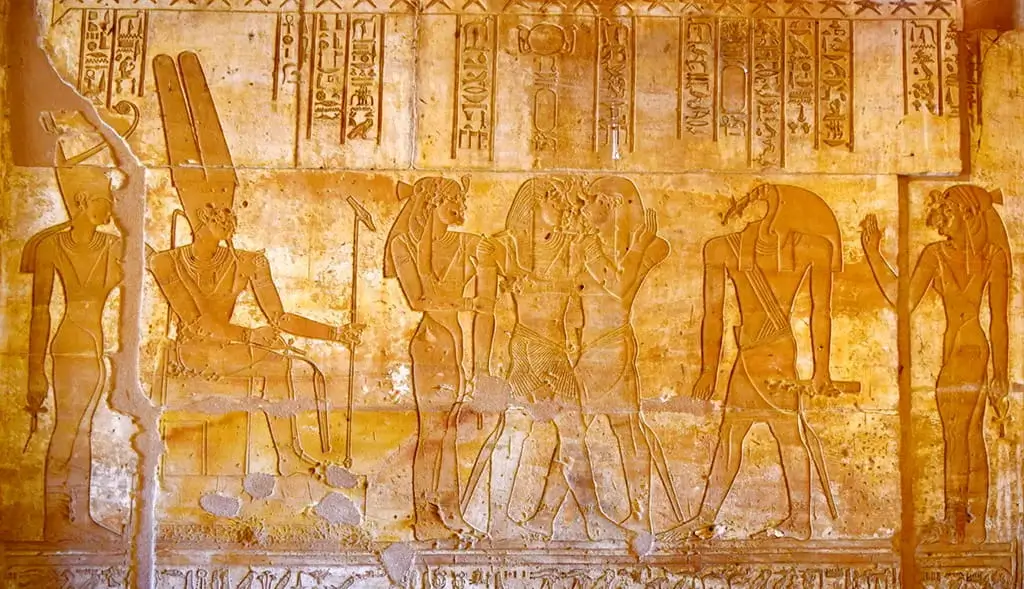
To show his deep respect for local customs, Darius I heavily funded, expanded, and decorated the Temple of Hibis. On the inner temple walls, artists carved Darius wearing the traditional double crown of Upper and Lower Egypt. The reliefs show the Persian king offering gifts to the native Egyptian gods. Later, a subsequent Persian ruler, Darius II, added further decorations to the inner sanctum.

Ptolemaic and Roman Additions

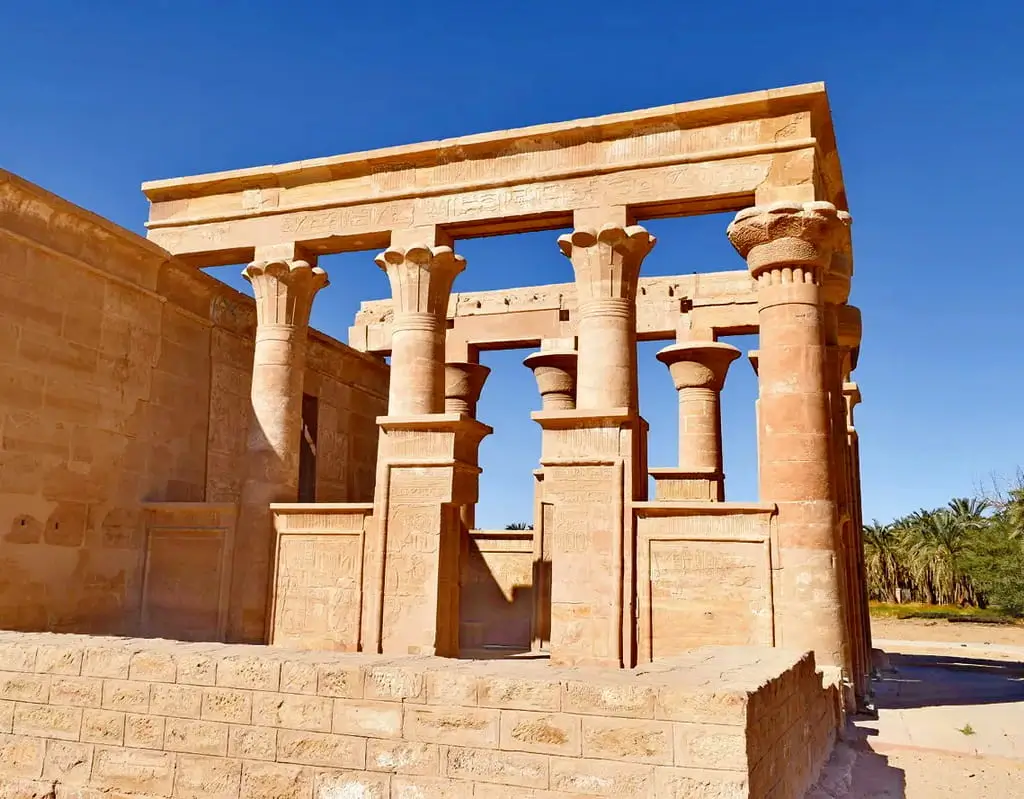
Centuries later, Alexander the Great liberated Egypt from Persian rule. His successors, the Greek Ptolemaic pharaohs, refused to let Hibis decay. Pharaoh Nectanebo II added a grand entrance kiosk with elegant columns.

Later, the Ptolemaic kings constructed a monumental gateway (pylon). Finally, during the Roman Period, imperial builders erected a protective enclosure wall and expanded the grand processional avenue leading to the temple entrance.

Queen Hatshepsut’s Temple: The Dazzling Masterpiece of Egypt’s Female Pharaoh

Visit the Mortuary Temple of Queen Hatshepsut, a stunning three-tiered masterpiece carved into the cliffs...
Related post
FUN

Divine Identity: The Gods of the Desert Sanctuary

Divine Identity The Gods of the Desert Sanctuary

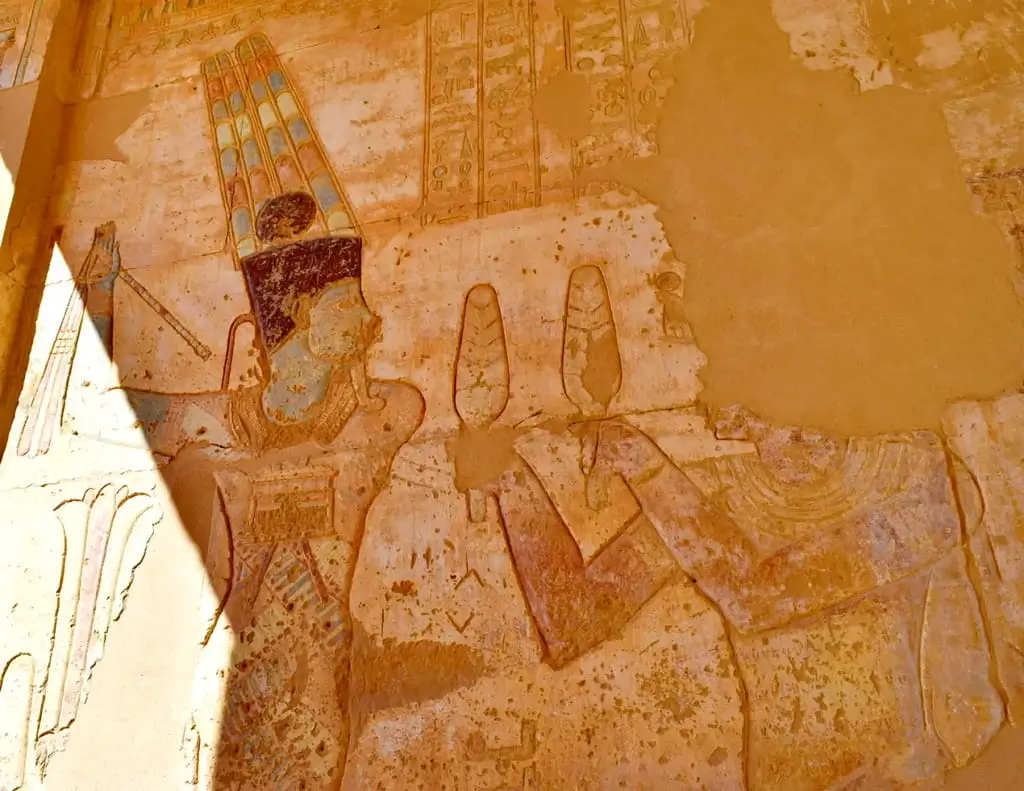
The Temple of Hibis was primarily dedicated to the Theban Triad. This divine family consisted of Amun-Ra, his wife Mut, and their son Khonsu. Because the temple sat far out in the Western Desert, worshippers honored the chief god in a localized form. They called him Amun of Hibis, Lord of the Plough.

However, the temple functions as an absolute theological goldmine for Egyptologists. Its walls feature a unique synthesis of the entire Egyptian pantheon, acting almost as an ancient visual encyclopedia of Egyptian religion.

The Falcon God of Chaos Control

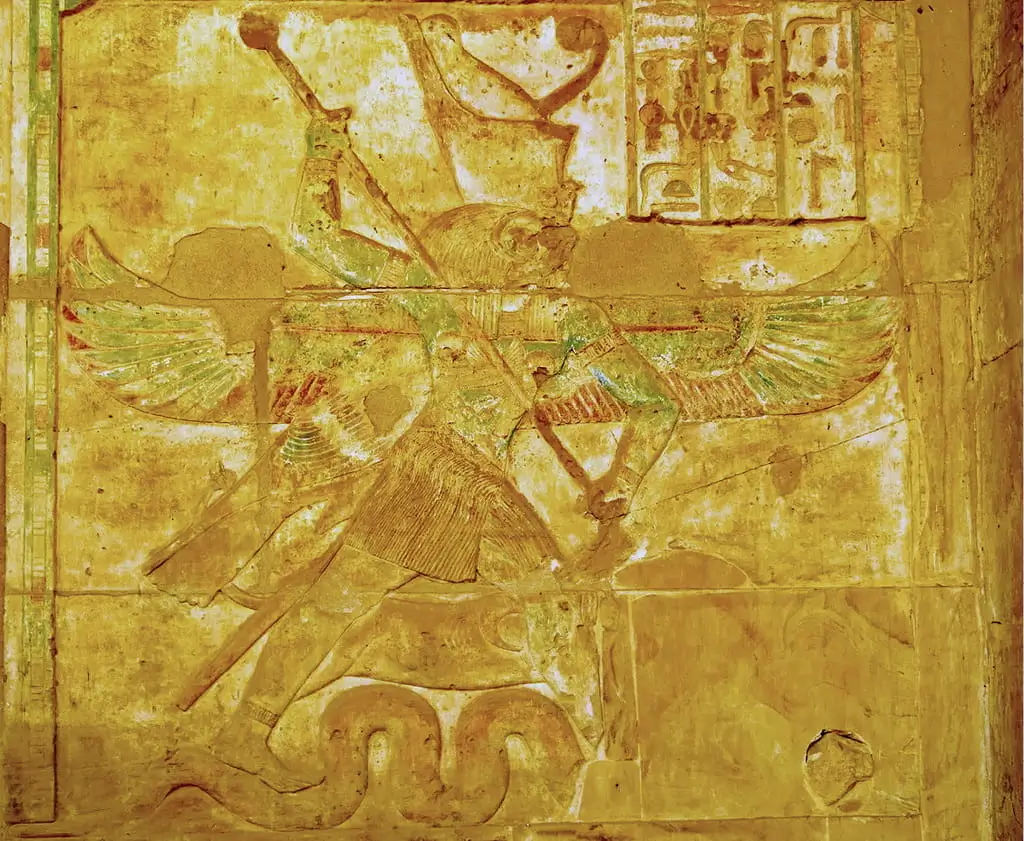
One of the most famous reliefs in the temple depicts a highly unusual version of Amun-Ra-Kamutef. The artist carved this deity as a fierce, winged falcon god with blue skin. The relief shows him standing proudly on the back of a giant serpent, battling the cosmic forces of chaos.

The Hidden Osiris Chapels

The temple design also focused heavily on the afterlife. The flat roof of the main building contains specialized, hidden chapels. These rooftop rooms dedicated their space entirely to the death, resurrection, and secret mysteries of the god Osiris.

Architectural Layout: A Walk Through the Shrine

Architectural Layout A Walk Through the Shrine

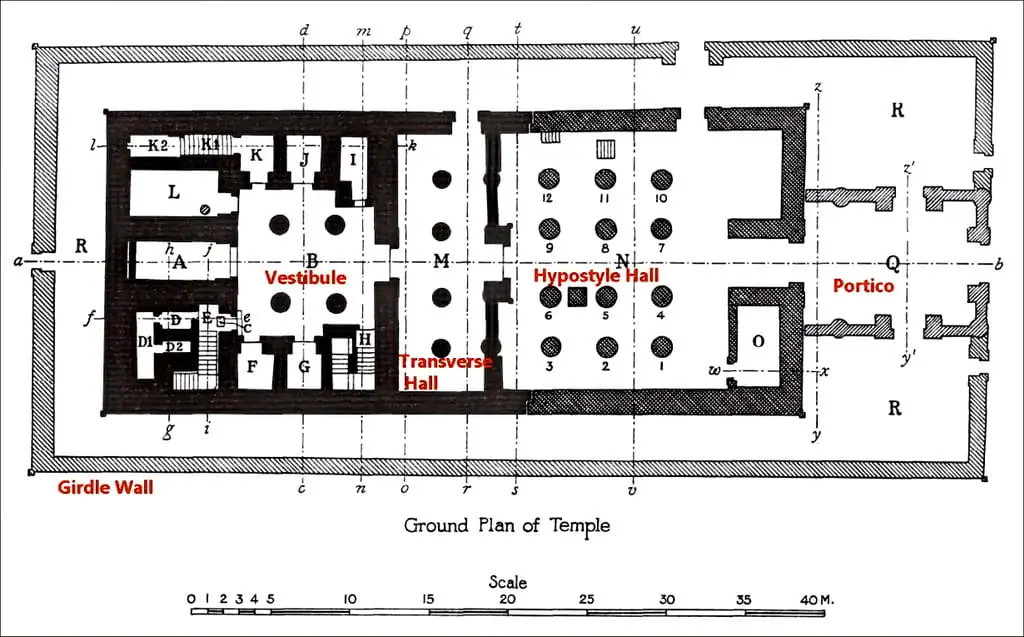
Because modern cities never swallowed Hibis, its structural layout remains brilliantly clear. Travelers today can easily walk through the successive historical layers of the complex.

+---------------------------------------------------------------------------------------+
|                                  TEMPLE OF HIBIS LAYOUT                               |
|                                                                                       |
|  [Roman Gate] ---> [Ptolemaic Pylon] ---> [Kiosk of Nectanebo] ---> [Hypostyle Hall]  |
|                                                                             |         |
|                                                     [Sanctuary of Amun] <---+         |
+---------------------------------------------------------------------------------------+

The Processional Avenue and Gates

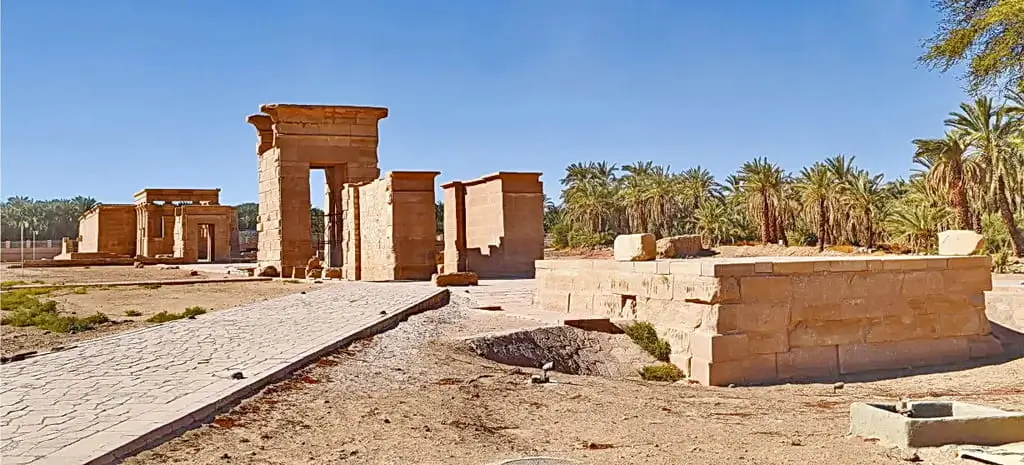
Visitors originally approached the temple along a grand processional avenue. This long path featured stone sphinxes on either side and led away from a now-dried ancient sacred lake. Worshippers then passed through three successive, towering stone gateways. Builders erected these gates across different eras, spanning the Persian, Ptolemaic, and Roman periods.

The Kiosk and Hypostyle Hall

After the gates, visitors encounter the beautiful Kiosk of Nectanebo II. This open-air portico features early composite floral columns. These unique capital designs later inspired the famous architecture of the temples at Philae and Edfu.

Beyond the kiosk lies the Hypostyle Hall. Twelve massive stone columns support the roof of this grand room. The walls here feature complex religious hymns and detailed scenes of King Darius offering gifts to the gods.

The Inner Sanctuary

The journey ends at the darkest, most sacred room at the very back of the temple. This is the Inner Sanctuary. Vibrant, deeply carved reliefs completely cover the walls. These ancient illustrations show the creation of the world and celebrate the supreme power of Amun.

The Temple of Dush: The Roman Fortress and Hidden Gold of Ancient Kysis

The Temple of Dush (ancient Kysis) stands as a mighty Roman frontier outpost at the...
Related post
FUN

The Edict of Tiberius Julius Alexander

The Edict of Tiberius Julius Alexander

For historians, the Temple of Hibis is globally famous for a non-religious artifact. In 68 CE, during the height of the Roman Empire, a Roman governor ordered a massive administrative text to be carved onto the exterior of the temple’s main gateway. This inscription is known as the Edict of Tiberius Julius Alexander.

Written in Ancient Greek, the 66-line inscription functions as a sweeping legal and economic reform document. It outlines specific measures to curb financial corruption, protect local desert inhabitants from illegal tax collection, and reform the regional court systems. It also explicitly prevents Roman officials from abusing their power in the remote oases. Today, it offers researchers a rare, incredibly vivid window into the stressful daily bureaucracy of Roman-ruled Egypt.

Modern Engineering: Saving the Temple

Modern Engineering Saving the Temple

By the late twentieth century, the Temple of Hibis faced a silent, deadly enemy: rising groundwater. Due to modern agricultural development and new irrigation projects in the Kharga Oasis, the underground water table rose dramatically. The soft bedrock beneath the temple began to shift, causing the ancient stone walls to crack, tilt, and threaten to collapse entirely.

In response, the Egyptian government launched a massive, multi-million-dollar restoration project. Instead of dismantling the temple and moving it to higher ground—as engineers famously did at Abu Simbel—experts chose a more complex path. They successfully stabilized the soil, installed a massive underground drainage system, and meticulously reinforced the ancient masonry. The temple officially reopened to the public in 2012, completely stabilized and preserved for future generations.

Philae Temple: Aswan’s Rescued Island Jewel

Discover Aswan's most enchanting site, the Philae Temple. This "hidden gem" is a stunning island...
Related post
FUN

Visiting the Temple of Hibis Today

Visiting the Temple of Hibis Today

The Temple of Hibis sits on the northern edge of the modern city of Al-Kharga, the capital of the New Valley Governorate. It stands as an incredibly rewarding destination for travelers looking to venture off the beaten path.

What to See

  • The Main Temple: Take time to study the inner sanctuary walls, where you can spot the cartouches of the Persian king Darius carved alongside traditional Egyptian gods.
  • The Kiosk of Nectanebo II: Marvel at the beautifully preserved pillars that mark the transition into late pharaonic architectural styles.
  • The Roman Gateway: Examine the outer pylon to see where Roman stonecutters carefully carved the famous 66-line legal edict.

Travel Tips

Traveling to the Kharga Oasis requires a dedicated journey. You can reach the oasis by taking a domestic flight from Cairo to Kharga Airport, or by booking a long-distance bus or private vehicle from Luxor or Asyut.

Because the site sits in the heart of the Western Desert, temperatures can become extremely high. Plan your visit for the winter months, and explore the temple grounds during the early morning or late afternoon to enjoy the best light and cooler weather.

FUN
God_Anubis_Icon

Great layover Tour!!

I had an excellent layover tour with Hani. He is knowledgable, fun, and passionate about his city. I went for a tour of the pyramids, sphinx, and to a papyrus factory which were all great. Ask him any question about Egyptian history and he will surely know the answer! Also

More »

Day Trip to Alexandria

An enjoyable drive from Cairo to Alexandria. It was an enriching trip. I learnt so much history about the ancient civilisation. The tour guide explained the history of each site we visited. There is so much to see. I would definitely highly recommend visiting Alexandria. It’s rich in history. The

More »
15-Day Historical Egypt Tour Package

all good!

we took pyramid and Cairo city tours and all went smoothly. The were very flexible to adapt to our requirements. Car, car driver and guide were great. very knowledgable and professional tour. Very recommendable

More »

Excellent Layover Tour

I would recommend Egypt Fun Tours to everyone who is looking for either a cultural or relaxing trip in Egypt. I was recently on a private layover tour and could not have been any happier with my day in Cairo. My tour guide, Hani was waiting just outside immigration and

More »
4-day-christmas-nile-cruise

Hossam Rashwan Tour Guide

We took this trip with Hossam Rashwan as our tour guide, and I must say that Hossam was the greatest tour guide in Luxor who showed us around. Our tour guide’s tales transported us to Luxor’s past, and we felt as if we were living in ancient Egypt. We really

More »
God_Anubis_Icon

Top-rated Tour Packages

God_Anubis_Icon