The Temple of Dush: The Roman Fortress and Hidden Gold of Ancient Kysis

The Temple of Dush (ancient Kysis) stands as a mighty Roman frontier outpost at the southern edge of Egypt's Kharga Oasis. Built during the 1st and 2nd centuries CE under powerful emperors like Domitian, Trajan, and Hadrian, the site uniquely blends an elegant stone sanctuary dedicated to Isis and Serapis inside a massive, protective mudbrick fortress. Positioned at the critical terminus of the Darb el-Arbain caravan route, it controlled vital African trade networks for centuries. Famous worldwide for the discovery of the spectacular 1989 Dush Gold Hoard, this remote desert stronghold offers modern travelers an unforgettable look into Rome’s military might and spiritual legacy in Egypt.

The Temple of Dush: A formidable Archaeological Marvel

Deep within the southern expanses of the Kharga Oasis, where the unforgiving sands of Egypt’s Western Desert meet the ancient tracks of legendary trade routes, sits a formidable archaeological marvel. This is Qasr Dush, home to the majestic Temple of Dush. Located roughly 120 kilometers south of Al-Kharga city, this remote site stands as a powerful testament to the far-reaching grip of the Roman Empire and its fascinating cultural synthesis with the land of the pharaohs.

Temple of Dush: A Roman Sentinel on the Desert Frontier

Unlike many of Egypt’s Nile Valley monuments that celebrate classical pharaonic dynasties, the Temple of Dush is a product of the Roman Period (1st–2nd centuries CE). During this era, the ancient settlement—known to the classical world as Kysis—served as a vital, heavily fortified imperial border town. The temple complex is structurally unique because its elegant, central stone sanctuary is entirely encased within a towering, massive mudbrick fortress designed to withstand the volatile geopolitics of the desert frontier.

Temple of Dush: Emperor-Pharaohs and Hidden Treasures

At Dush, the world’s most powerful Roman emperors—including Domitian, Trajan, and Hadrian—willingly stepped into the spiritual shoes of Egyptian pharaohs. They funded, expanded, and carved their names into this remote outpost to win the favor of local populations and secure their imperial trade borders.

For centuries, the site guarded its secrets well. It wasn’t until the late 20th century that archaeologists uncovered its most shocking secret: a spectacular, hidden cache of Roman-era gold known globally as the Dush Gold Hoard. Today, walking through the towering ruins of Qasr Dush offers a thrilling glimpse into a world of military might, rich desert commerce, and deep spiritual devotion.
FUN

Etymology and Geography: The Guardian of the South

Etymology and Geography The Guardian of the South

The ancient name and tactical positioning of this frontier outpost underscore its critical military and commercial role within the Roman Empire.

Temple of Dush: The Border Town of Kysis

In antiquity, the classical Greek name Kysis designated the sprawling settlement surrounding the fortress. This highly organized civil and military community thrived despite its hyper-arid environment.

The modern name, Dush, derives from the nearby contemporary village and serves as the standard archaeological term for the site. For centuries, sophisticated underground aqueducts (manwar) kept this oasis community alive by tapping into deep subterranean aquifers.

Temple of Dush: The Gateway to the Darb el-Arbain

Kysis was no isolated desert village; it functioned as a heavily trafficked geopolitical choke point. Imperial engineers strategically constructed the fortress at the southern terminus of the Kharga Oasis depression, positioning it as the ultimate gateway for the infamous Darb el-Arbain (the Forty Days Road).

This legendary caravan route acted as one of Africa’s most important trade arteries, connecting sub-Saharan Africa and Sudan directly to the Mediterranean world through the Nile Valley. Because travelers moving northward out of the deep desert encountered Kysis first, the site operated as a high-security customs station, an administrative tax office, and a heavily fortified military garrison.

Imperial Builders: The Roman Pharaohs

The stone temple complex visible today rose primarily during the 1st and 2nd centuries CE. During this period, Rome’s rulers eagerly adopted the traditional visual language of Egyptian kingship to solidify their political authority.

The Architectural Timeline of the Emperors

Rather than imposing purely Roman architectural styles, imperial engineers blended classical Roman construction methods with traditional pharaonic blueprints. Three prominent emperors left their distinct, authoritative marks on the sanctuary:

  • Emperor Domitian (81–96 CE): Initiated the construction of the core limestone temple. He commissioned the initial decoration of the inner sanctuary, ensuring that artists carved his name inside traditional pharaonic cartouches.
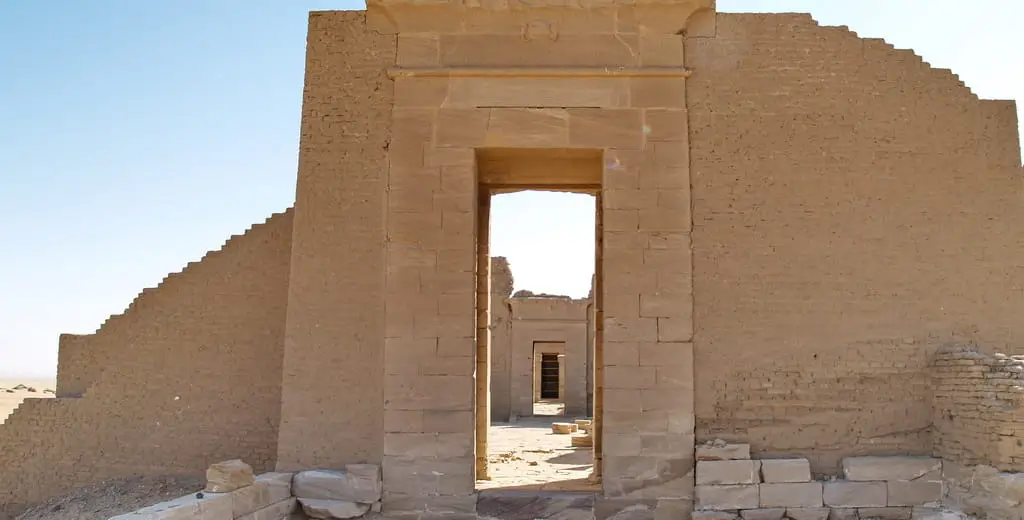
  • Emperor Trajan (98–117 CE): Expanded the sacred complex significantly. He ordered the construction of a monumental sandstone gateway (pylon) and a wide courtyard to accommodate larger religious processions.
  • Emperor Hadrian (117–138 CE): Focused heavily on the site’s defensive capabilities. He oversaw the massive expansion of the surrounding mudbrick fortress walls, barracks, and administrative offices to station a permanent military garrison.
FUN

Divine Identity: Osiris-Serapis and Isis

Divine Identity Osiris-Serapis and Isis

The Temple of Dush primarily honored the state-sponsored syncretic deities of Roman Egypt. Rather than introducing entirely foreign gods, the Roman rulers focused on figures that blended Mediterranean appeal with deep pharaonic roots.

The Rise of Osiris-Serapis

Ptolemaic rulers created the deity Serapis by blending Hellenistic traits with the traditional Egyptian underworld god, Osiris. At Dush, worshippers revered Serapis as the supreme cosmic protector of the oasis. He represented fertility, the afterlife, and the sun, serving as a unifying divine figure for both Roman soldiers and local Egyptian farmers.

Isis: The Mother Goddess of the Desert

Alongside Serapis, the cult of Isis exploded in popularity at the site. Her worship extended far beyond the borders of Egypt, reaching the very heart of Rome. At Dush, artists decorated the temple walls to show these classical deities adapted directly to desert life. The reliefs depict the gods receiving traditional local offerings, including local wine, grain, and fresh dates harvested from the surrounding fertile oasis depressions.

Queen Hatshepsut’s Temple: The Dazzling Masterpiece of Egypt’s Female Pharaoh

Visit the Mortuary Temple of Queen Hatshepsut, a stunning three-tiered masterpiece carved into the cliffs...
Related post
FUN

Architectural Layout: The Mudbrick Fortress

Architectural Layout The Mudbrick Fortress

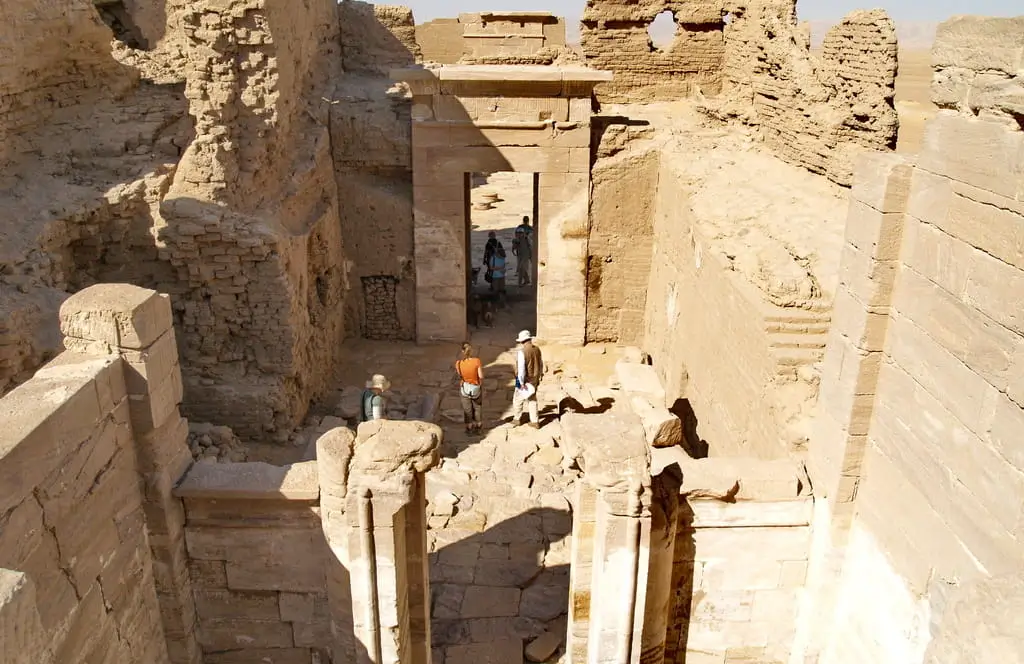
The Temple of Dush strikes a dramatic silhouette against the desert landscape. Unlike standard Nile Valley temples, a towering, multi-level mudbrick fortress (qasr) completely encases the elegant stone sanctuary. This aggressive design reflects the constant threat of nomadic desert raiders during the later stages of the Roman Empire.

+-----------------------------------------------------------------------------------------+
|                                    TEMPLE OF DUSH LAYOUT                                |
|                                                                                         |
|  [Fortress Gates] ---> [Trajan's Stone Pylon] ---> [Hypostyle Hall] ---> [Sanctuary]   |
|                                 |                                                       |
|                                 v                                                       |
|                   [Underground Vaults & Granaries]                                      |
+-----------------------------------------------------------------------------------------+

The Massive Enclosure Walls

Towering mudbrick walls, measuring several meters thick, surround the entire complex. These defensive structures originally contained multiple levels of rooms, barracks for the Roman garrison, and high watchtowers to monitor the horizon for approaching caravans or hostile raiders.

The Courtyard and Pylon

A monumental stone gateway, erected during the reign of Emperor Trajan, marks the formal religious entrance. Inscriptions carved into this pylon officially record dedications to the welfare of the emperor and celebrate the divine protectors of Kysis.

The Hypostyle Hall and Sanctuary

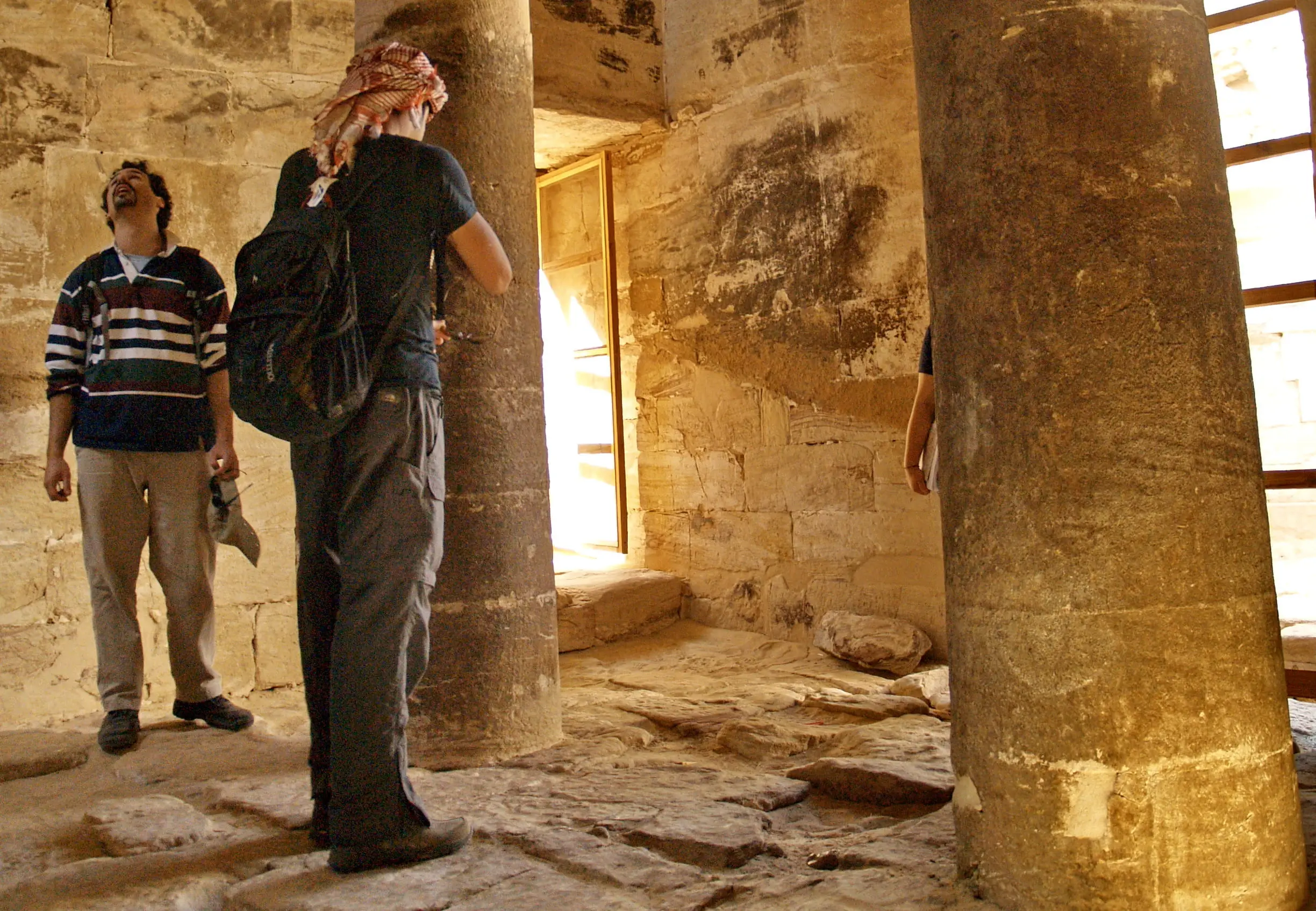
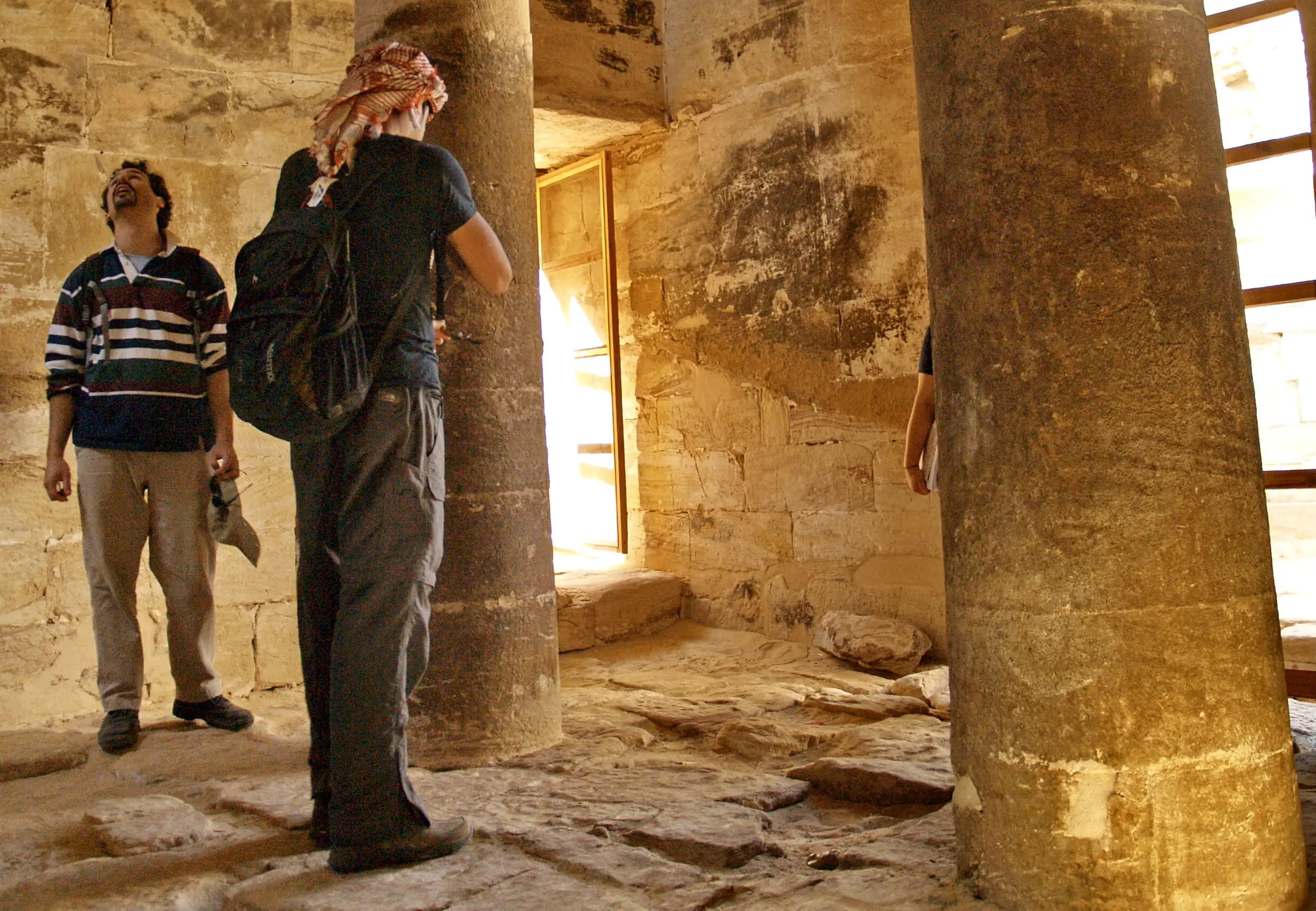
Beyond the courtyard lies a compact sandstone hypostyle hall. Here, columns support a stone roof where priests once prepared daily offerings. This hall leads directly into the Vaulted Sanctuary, the innermost chamber of the complex. Constructed of fine, tightly fitted limestone blocks, this dark room once housed the sacred cult statues of Isis and Serapis.

The Subterranean Vaults

Beneath the main temple floor and throughout the fortress foundations lies an extensive network of underground tunnels, secure storage rooms, and deep granaries. Imperial administrators designed these spaces to hold massive stockpiles of food and water, allowing the garrison to withstand long military sieges.

The Temple of Hibis: The Desert Sanctuary of Persia’s Egyptian Pharaohs

The Temple of Hibis stands as the ultimate crown jewel of Egypt’s Western Desert archaeology....
Related post
FUN

The Legendary Dush Gold Hoard

The Legendary Dush Gold Hoard

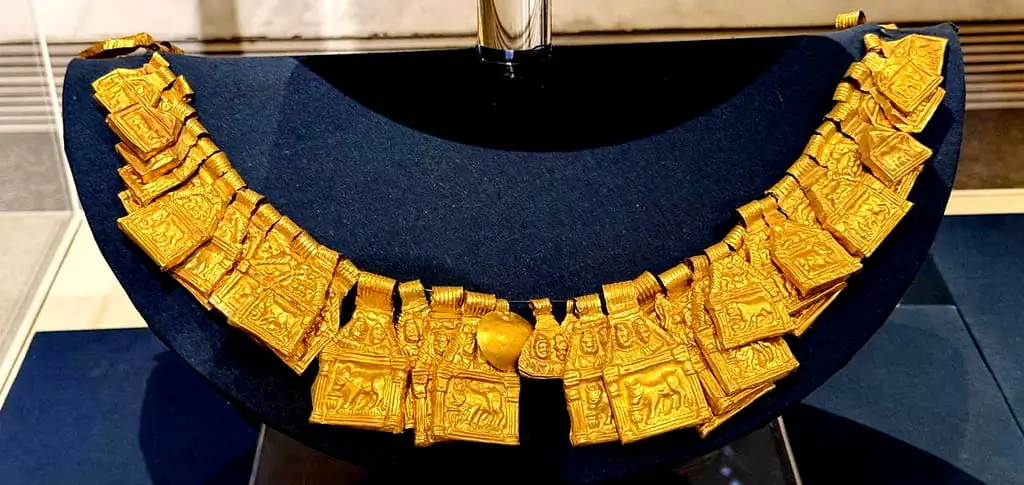
While the architecture of Kysis stands as an impressive sight, a monumental discovery in the late 20th century cemented the site’s fame worldwide. In 1989, a French archaeological team from the Institut Français d’Archéologie Orientale (IFAO) made a discovery at Dush that completely shocked the archaeological community. Specifically, while excavating a seemingly ordinary mudbrick wall within the fortress, researchers uncovered a pottery jar concealing a spectacular cache of Roman-era gold.

Unveiling the Imperial Treasure

This treasure, now famously known as the Dush Gold Hoard, contains an array of breathtaking artifacts that highlight the immense wealth flowing through this desert outpost. Most notably, the collection includes:

  • The Golden Crown: A magnificent, heavy crown made of pure gold, masterfully shaped like a wreath of laurel leaves and topped with a detailed, tiny figure of the god Serapis.
  • Elite Jewelry: Dozens of heavy gold bracelets, intricate armlets, and rings featuring embedded semi-precious gemstones.
  • Religious Plaques: Exquisite gold foil plaques depicting detailed images of Roman and Egyptian deities side-by-side.

A Hidden Sanctuary Legacy

Consequently, historians believe that temple priests or wealthy elite citizens hid this liturgical treasure during a time of extreme crisis. As nomadic desert raiders increasingly threatened the fading Roman borders during the 4th or 5th century CE, someone concealed the jar within the fortress wall, intending to retrieve it later. Because they never returned, the gold remained untouched for well over 1,500 years. Today, this spectacular treasure serves as a centerpiece display inside the Egyptian Museum in Cairo.

The Temple of Edfu: A Complete Guide to Egypt’s Best-Preserved Monument

The Temple of Horus at Edfu stands as the most impeccably preserved cult monument of...
Related post
FUN

Visiting the Temple of Dush Today

Visiting the Temple of Dush Today

Because Qasr Dush sits at the far southern edge of the Kharga Oasis network, it offers an incredibly rewarding experience for travelers looking to venture off the beaten path. Consequently, the journey requires careful planning, but it rewards visitors with unparalleled desert vistas and untouched archaeology.

Essential Highlights to See

  • The Mudbrick Fortress: Walk alongside the towering outer walls to experience the true scale of a Roman military base.
  • Trajan’s Pylon: Stand before the massive sandstone gate and look for the ancient Greek dedications carved directly into the stone.
  • The Hidden Vaults: Explore the atmospheric underground granaries and storage tunnels that run beneath the fortress floor.

Practical Travel Tips

To reach Dush, you must travel roughly 120 kilometers south from the main city of Al-Kharga via a paved desert highway. Because of its remote location, you should hire a private 4×4 vehicle with an experienced local driver. Furthermore, due to the intense, scorching heat of the Western Desert, you should plan your trip during the cooler winter months. Ultimately, exploring the ruins during the golden hours of the early morning or late afternoon provides the best lighting for photography and a much more comfortable climate.

Qasr Dush vs. Temple of Hibis: A Quick Comparison

To help you understand how Dush fits into the wider history of the Kharga Oasis, this comparative table highlights the key differences between the two greatest monuments in the region:

Feature Temple of Hibis Temple of Dush (Kysis)
Primary Era Persian Period (6th–5th Century BCE) Roman Period (1st–2nd Century CE)
Main Builders Pharaoh Psamtik II, King Darius I Emperors Domitian, Trajan, and Hadrian
Primary Gods Theban Triad (Amun-Ra, Mut, Khonsu) Serapis and Isis
Construction Material Solid Sandstone and Limestone Limestone Core enclosed in Mudbrick Fortress
Key Discovery The Edict of Tiberius Julius Alexander The Dush Gold Hoard
Location Northern edge of Al-Kharga Oasis Far southern edge of Al-Kharga Oasis
FUN
God_Anubis_Icon

The best holiday ever!

The Nile cruise, Luxor, and Aswan were amazing sites to see, especially when you have the best tour guide in Egypt. Hamada was absolutely fantastic, lots of information, and some of it not spoken by others. This guy was not only a simple tour guide for us, but he also

More »

Lenka Traverlers

Egypt Fun Tours was contracted by our travel agency, Lenka Travelers, to arrange and guide us through parts of Egypt and Jordon. They did a fabulous job. The hotels, restaurants, places we visited, and transportation were the best. Our guide in Egypt, Mohammad, was very knowledgeable, spoke perfect English, and

More »

Pyramids in the Mist, Egypt Adventure

Our long drive from Cairo turned into a terrifying flight through Alexandria’s impossibly crowded streets. Our minivan miraculously avoided hitting pedestrians, donkey carts, and old Lada cars. We arrived at the port gates with only 10 minutes to spare. But the guards ignored our U.S. passports, and they refused to

More »

Very Considerate and Helpful

Guide and driver were on time, open to my requests and took care that I felt safe and saw the Pyramids and parts of old cairo during my less than 24 hour stay between flights. Office staff were great in communicating by email before and during the trip.

More »
13-day Egypt guided tour package - Egypt Fun Tours

Easily the best two days of the year!

We were doing the 14-day Mediterranean cruise and were in Egypt for two days. I was searching the internet for about 4 days and finally found Egypt Fun Tours as my guide in Egypt. It ended up being the best 2 days of the entire cruise trip. Since this is

More »
God_Anubis_Icon

Top-rated Tour Packages

God_Anubis_Icon