The Fifth Dynasty of Egypt: Power, Religion, and the Rise of the Sun Kings

The Fifth Dynasty of Egypt represents a transformative era that shifted the Old Kingdom’s focus from the absolute, monolithic authority of the Fourth Dynasty to a more nuanced, solar-centered governance under the "Sun Kings." By prioritizing the cult of Ra, establishing innovative Sun Temples at Abusir, and introducing the revolutionary Pyramid Texts, these pharaohs redefined royal legitimacy and funerary theology. Supported by a rising professional bureaucracy and expanding trade networks, the Fifth Dynasty successfully balanced ancient traditions with administrative evolution, leaving a sophisticated cultural and political legacy that shaped the trajectory of Egyptian history for centuries to come.
The eye of Horus
WhatsApp
Email
Print

Fifth Dynasty of Egypt: A New Era for the Old Kingdom

The Old Kingdom is famously known as the “Age of the Pyramid Builders.” During the Fourth Dynasty, Egypt reached a monumental peak. However, a massive shift occurred around 2494 BCE. The power transitioned to a new line of rulers, marking the start of the Fifth Dynasty. This was more than a change in royal bloodlines. It represented a fundamental transformation in how pharaohs viewed the divine. Furthermore, it changed how they managed their complex state machinery.

From Giza to the Solar Cult

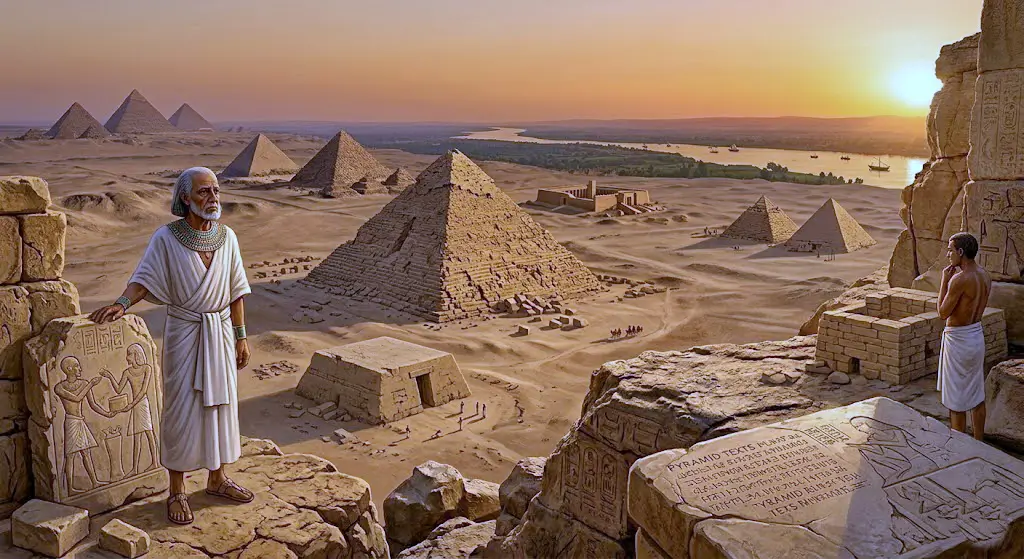
The Fourth Dynasty pharaohs focused on the massive Giza necropolis. In contrast, the rulers of the Fifth Dynasty sought a deeper, solar-focused connection to the cosmos. Consequently, this era became defined by the rise of the sun god, Ra. The kings established unique Sun Temples at Abu Ghurab to honor him. Additionally, they introduced the revolutionary Pyramid Texts. These were the first spells etched directly onto the walls of a royal tomb. As a result, these inscriptions forever changed the trajectory of Egyptian funerary practices.

The Evolution of Egyptian Governance

During this period, the absolute power of the king began to shift. Specifically, royal authority started to give way to a more professional, sophisticated bureaucracy. This dynasty was not just about building monuments; it was about administrative refinement. Through the study of the Abusir papyri, we gain incredible insights into how the state functioned.

Exploring the Sun Kings

In this article, we will move beyond the common stories of pyramid construction. Instead, we will uncover the true nature of these “Sun Kings.” We will investigate how they balanced ancient traditions with the needs of a growing society. Moreover, we will explore the profound religious changes that shaped Egypt for the next two thousand years. This is the story of a civilization in transition. It was a time when the rays of the sun guided the state, even as the first seeds of future decentralization were being sown.

The Kings of the Fifth Dynasty of Egypt: A Chronological List
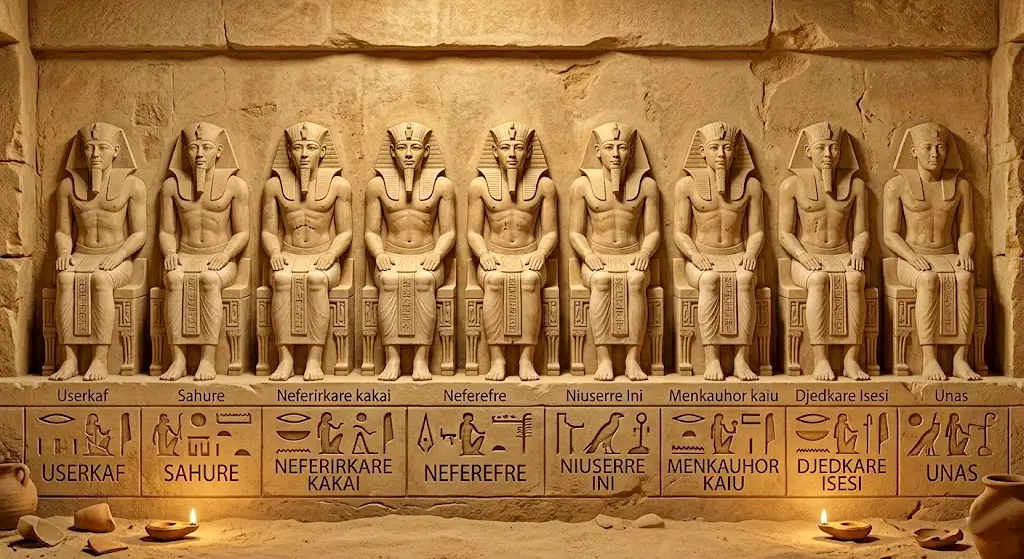
The Kings of the Fifth Dynasty of Egypt A Chronological List

To provide your readers with a clear, authoritative reference, this section outlines the pharaohs who shaped the Fifth Dynasty of Egypt. Their individual contributions, from religious innovation to administrative reform, define the legacy of this fascinating period.

Key Rulers of the Dynasty

  • Userkaf (c. 2494–2487 BCE): As the founder of the Fifth Dynasty of Egypt, Userkaf broke from the Fourth Dynasty’s traditions. He prioritized the sun god Ra and established the first Sun Temple at Abu Ghurab.
  • Sahure (c. 2487–2475 BCE): Sahure is renowned for his active foreign policy. He expanded trade expeditions to the Levant and solidified Egypt’s regional influence.
  • Neferirkare Kakai (c. 2475–2455 BCE): He continued the development of the Abusir necropolis. His reign saw the continued expansion of the complex bureaucracy that defined the administration of the Fifth Dynasty of Egypt.
  • Neferefre (c. 2455–2453 BCE): Although his reign was brief, his unfinished pyramid at Abusir remains a significant archaeological site that reveals the technical challenges of the era.
  • Niuserre Ini (c. 2453–2422 BCE): Niuserre is famous for the construction of the most complete Sun Temple at Abu Ghurab. His long reign allowed for extensive architectural and religious consolidation.
  • Menkauhor Kaiu (c. 2422–2414 BCE): While his reign is less documented, he maintained the solar focus established by his predecessors and continued the state’s administrative stability.
  • Djedkare Isesi (c. 2414–2375 BCE): A crucial reformer, Djedkare Isesi professionalized the bureaucracy. His long reign facilitated the provincial power shifts that eventually led to the decentralization seen in the later Fifth Dynasty of Egypt.
  • Unas (c. 2375–2345 BCE): As the final king of the dynasty, Unas revolutionized Egyptian history by engraving the first “Pyramid Texts” onto his tomb walls. This final act solidified the religious legacy of the Fifth Dynasty of Egypt for centuries to come.
Divider

The Origins: The Rise of the Sun Kings and the Fifth Dynasty

The Origins The Rise of the Sun Kings and the Fifth Dynasty

The Legend of the First Fifth Dynasty Rulers

The rise of the Fifth Dynasty of Egypt is wrapped in both political reality and captivating legend. According to the famous Westcar Papyrus, the first three kings were not merely royal successors. Instead, the text claims they were triplets born of the sun god, Ra, and a mortal woman. While modern historians view this as a clever piece of propaganda, it highlights a crucial truth. The new rulers desperately needed a way to legitimize their claim to the throne.

Userkaf and the New Solar Theology

Userkaf, the founder of the dynasty, took decisive steps to establish this new order. He moved away from the Giza Plateau, choosing instead to focus his religious efforts on the sun god. By doing so, he successfully aligned the monarchy with the most powerful deity in the pantheon. Furthermore, he adopted the title “Son of Ra.” This was a significant shift. Previously, the pharaoh was seen as a god himself; now, he became the chosen representative of the sun on earth.

Political Stability and Divine Legitimacy

These early rulers faced significant challenges. They had to maintain control over a vast bureaucracy while proving their divine right to lead. Consequently, they promoted the solar cult across the entire country. This move served two purposes. First, it unified the people under a single, central religious authority. Second, it provided a stable foundation for the Fifth Dynasty of Egypt to expand its influence. Although the transition was complex, it ultimately created a more flexible and resilient government.

Golden Scarab

The Architectural Revolution of the Fifth Dynasty of Egypt

The Architectural Revolution of the Fifth Dynasty of Egypt

Shifting Focus: Beyond the Giza Plateau

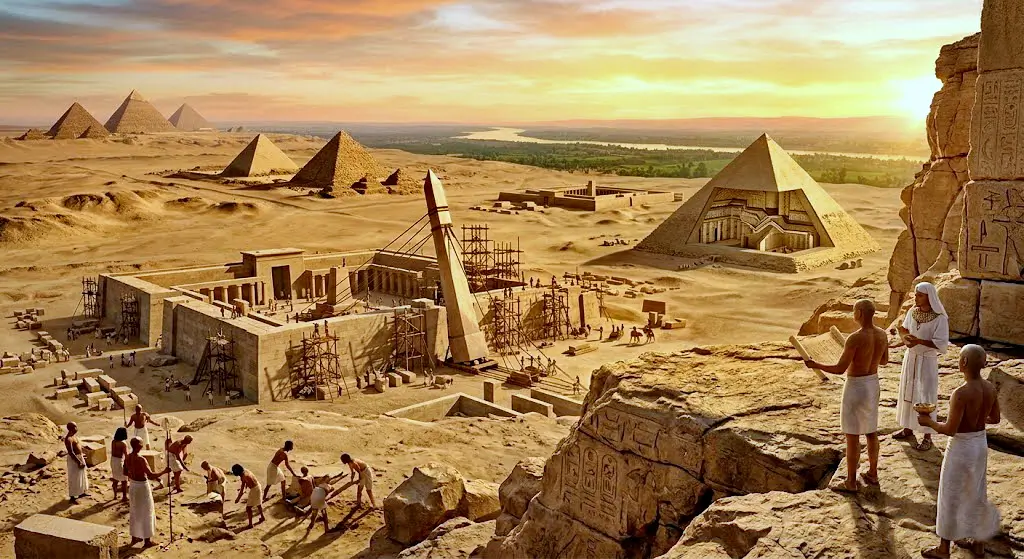
The monumental scale of the Giza pyramids eventually became unsustainable. As a result, the rulers of the Fifth Dynasty of Egypt chose to shift their construction efforts to new locations, most notably the Abusir necropolis. This move was not just a geographic change; it reflected a shift in state priorities. While their predecessors focused on the absolute, solitary power of the king, these new pharaohs invested heavily in infrastructure that supported the burgeoning solar cult.

The Rise of the Sun Temples

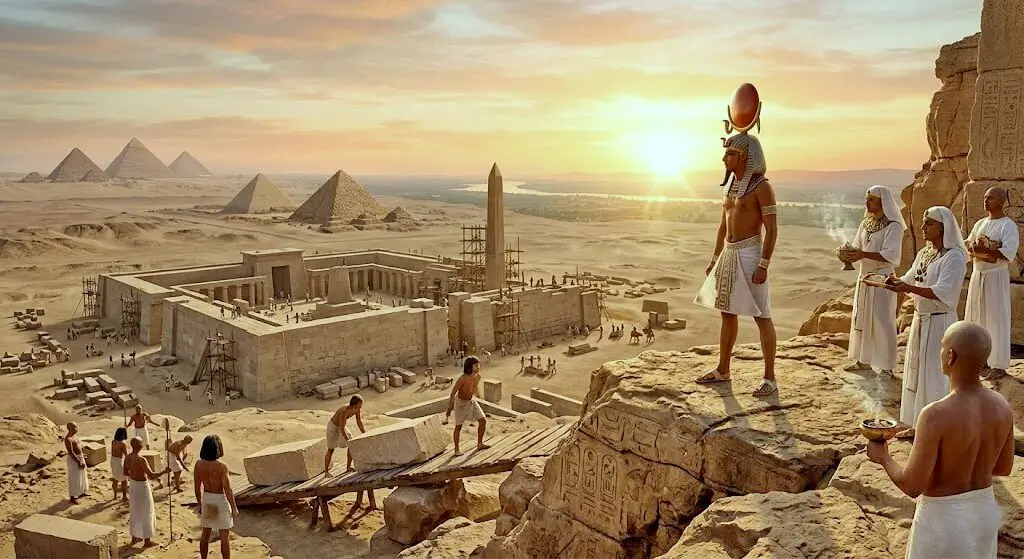
One of the most distinct architectural features of this era is the Sun Temple. Unlike a traditional tomb, the Sun Temple was an open-air facility designed for the worship of Ra. The temple of Niuserre at Abu Ghurab serves as the premier example of this innovation. It featured a massive obelisk, a symbol of the sun’s rays, standing on a wide pedestal. Consequently, these temples became the primary religious hubs of the Fifth Dynasty of Egypt, drawing attention away from the traditional mortuary complexes.

The Evolution of Pyramid Architecture

Although the pyramid form remained important, the technical approach evolved significantly. The royal tombs of the Fifth Dynasty of Egypt were smaller than those of the Fourth Dynasty. However, they were far more sophisticated on the inside. Architects shifted their focus from massive exterior volume to complex, intricate interiors. They began using higher-quality materials and more precise engineering techniques. Furthermore, this period saw the birth of the Pyramid Texts. By engraving these sacred spells onto the inner walls, the pharaohs ensured their transformation into the afterlife, blending architectural genius with deep religious tradition.

The eye of Horus

Religion and the Afterlife in the Fifth Dynasty of Egypt

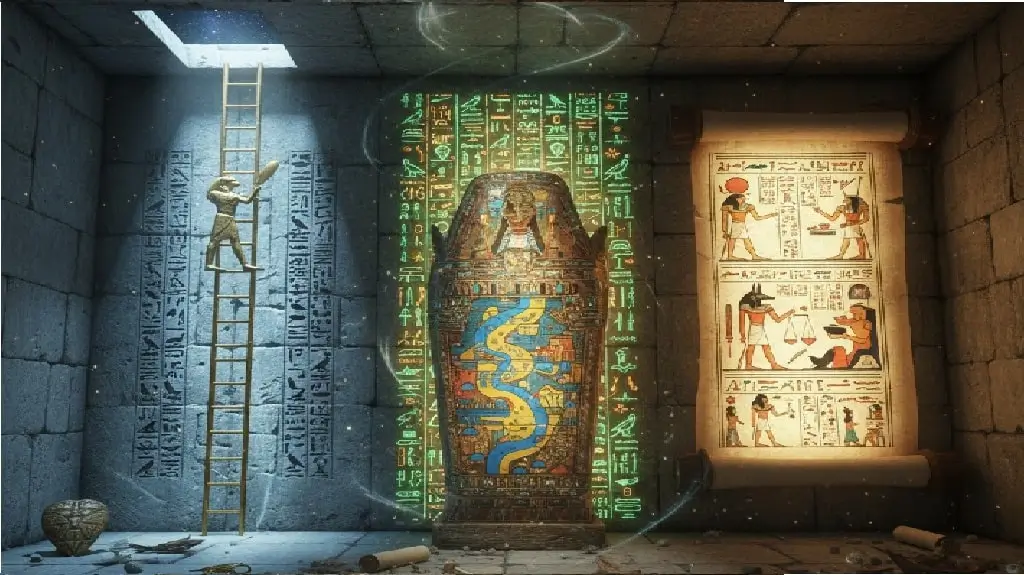
Egyptian Funerary Texts; Pyramid, Coffin, Book of the Dead

The Revolutionary Power of the Pyramid Texts

The most profound legacy of the Fifth Dynasty of Egypt lies within the tomb of Unas at Saqqara. Inside this pyramid, priests and scribes carved the very first “Pyramid Texts” onto the interior walls. Before this innovation, royal tombs were surprisingly devoid of written religious guidance. However, these new, magical inscriptions provided the deceased pharaoh with explicit instructions for navigating the afterlife. Consequently, they transformed the tomb into a functional gateway to the stars, permanently changing Egyptian funerary theology.

The Centrality of the Solar Cult

During this era, the influence of the sun god, Ra, reached an unprecedented peak. The kings of the Fifth Dynasty of Egypt did not just worship Ra; they integrated his power into every aspect of royal ideology. Daily life in the capital revolved around the solar cycle. Furthermore, the construction of Sun Temples demonstrated that the pharaoh’s duty was to provide a terrestrial home for the sun god. Because of this focus, the entire social and political structure of the country was reoriented to reflect the movement of the sun across the sky.

The Emerging Cult of Osiris

While the solar cult dominated, the late stages of the dynasty began to show signs of a new religious shift. Historians have observed the early, quiet emergence of the Osiris cult during this time. Osiris, the god of the dead, started to gain traction as a protector of the deceased in the underworld. Although he would not reach his peak until much later, the Fifth Dynasty of Egypt laid the critical groundwork for this transition. As a result, the spiritual life of the period was a dynamic mix of established solar worship and the burgeoning, deeper mysteries of the afterlife.

Divider

Administration and Society in the Fifth Dynasty of Egypt

Administration and Society in the Fifth Dynasty of Egypt

The Rise of the Professional Bureaucrat

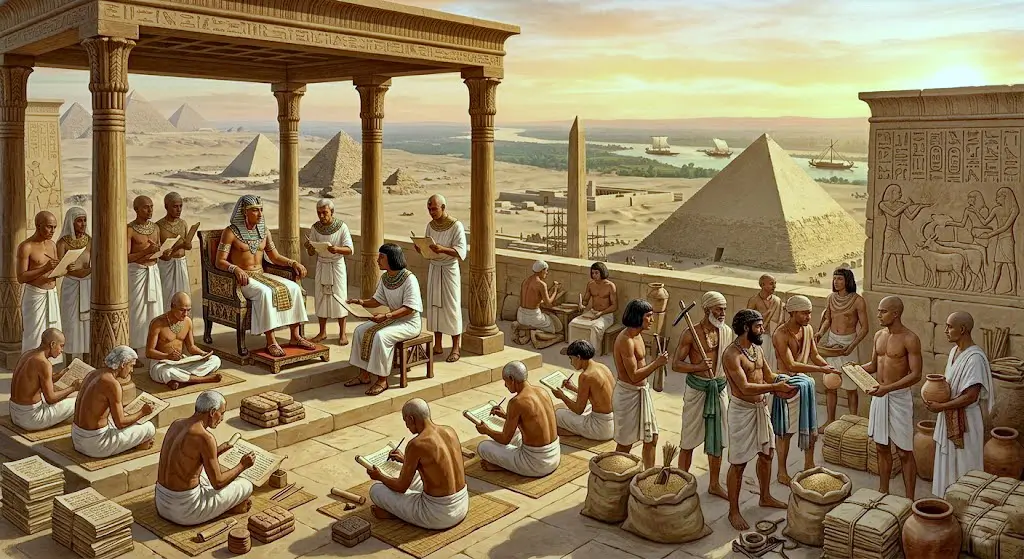
During the Fifth Dynasty of Egypt, the nature of government underwent a subtle but vital transformation. Previous pharaohs often relied exclusively on royal family members to fill the highest administrative positions. In contrast, the Fifth Dynasty rulers began to appoint talented individuals from outside the royal circle. This change created a professional class of viziers and high-ranking officials. Consequently, the state became more efficient, as these men were chosen for their specialized skills rather than their lineage.

Insights from the Abusir Papyri

Our modern understanding of this era is significantly bolstered by the discovery of the Abusir Papyri. These documents serve as the earliest known administrative records of temple management. Through these records, we can see how the Fifth Dynasty of Egypt maintained its massive mortuary complexes. The papyri detail everything from the scheduling of priests to the distribution of daily rations. Furthermore, they prove that the economy was highly organized, supporting a sophisticated network of workers, artisans, and scribes who kept the state functioning smoothly.

Social Stratification and Daily Life

As the bureaucracy grew, so did the complexity of Egyptian society. A distinct middle class began to emerge, consisting of skilled craftsmen, local administrators, and successful merchants. While the pharaoh remained at the pinnacle of society, the lives of ordinary citizens became more tied to state-led projects. Moreover, the increased demand for luxury goods and tomb construction meant that specialized talent was highly valued. Thus, the Fifth Dynasty of Egypt fostered a period of relative prosperity, where social roles were more clearly defined, yet still allowed for upward mobility through dedicated service to the king.

Diplomacy and Trade in the Fifth Dynasty of Egypt

Diplomacy and Trade in the Fifth Dynasty of Egypt

Expanding Horizons: Foreign Relations

The Fifth Dynasty of Egypt was not a period of isolation. Instead, the pharaohs actively pursued foreign relations to secure vital resources. Diplomatic ties were especially strong with the Levant, particularly the city-state of Byblos. Through these relationships, Egypt secured high-quality timber, which was essential for shipbuilding and large-scale construction. By maintaining these channels, the state demonstrated its regional influence and ensured that its grand architectural projects had a steady supply of materials.

The Legendary Expeditions to Punt

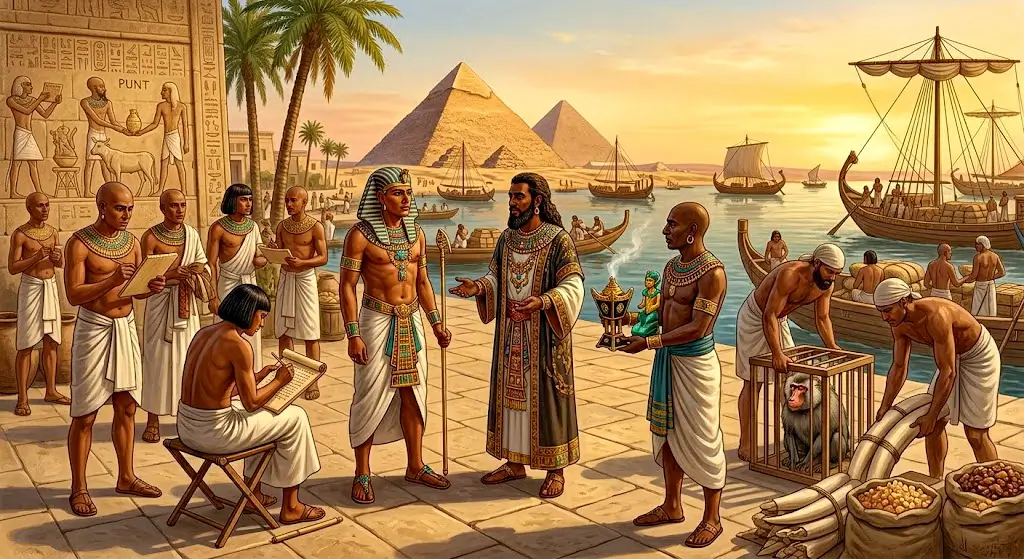
Perhaps the most famous commercial achievement of this era was the recurring trade expeditions to the Land of Punt. The pharaohs were eager to acquire unfamiliar luxury goods, including myrrh, frankincense, and electrum. These goods were not just for wealth; they were essential for religious rituals and temple offerings. Furthermore, the Fifth Dynasty of Egypt utilized these expeditions to project power. By successfully navigating the treacherous routes to Punt, the state proved its administrative and logistical capabilities to neighboring nations.

Resource Extraction in the Sinai

Beyond luxury trade, the economy relied on raw materials sourced from harsh environments. The Sinai Peninsula remained a critical hub for mining turquoise and copper. Mining expeditions were dangerous, but they were vital to the prosperity of the Fifth Dynasty of Egypt. Scribes and overseers managed these remote outposts with impressive precision. Consequently, the steady flow of copper and precious stones fueled the era’s artisan workshops. This focus on resource acquisition allowed the king to fund massive building projects while ensuring the economic stability of his kingdom.

The eye of Horus

The Decline and Legacy of the Fifth Dynasty of Egypt

The Decline and Legacy of the Fifth Dynasty of Egypt

From Stability to Decentralization

Every great era eventually faces its own challenges. Toward the end of the Fifth Dynasty of Egypt, the once-centralized power of the Pharaoh began to shift. The long, prosperous reigns of kings like Djedkare Isesi allowed provincial governors, known as “nomarchs,” to accumulate significant influence. Consequently, the central government could no longer maintain the same level of absolute control over the distant regions of the Nile Valley. This gradual decentralization created the initial conditions that would eventually lead to the political restructuring seen in the Sixth Dynasty.

The Lasting Impact on Egyptian Culture

Despite its eventual transition, the Fifth Dynasty of Egypt left behind a remarkable cultural footprint. The innovations made during this time became foundational for the rest of Egyptian history. For example, the Pyramid Texts established a standard for funerary literature that influenced practices for nearly two millennia. Furthermore, the focus on the sun god, Ra, deeply ingrained solar theology into the Egyptian identity. Future dynasties would frequently look back to this period as a time of religious and administrative “golden standards.”

Fifth Dynasty of Egypt: A Summary of the Sun Kings

The legacy of this era is defined by balance. The pharaohs managed to blend the heavy weight of traditional kingship with a progressive, bureaucratic vision. They moved beyond the stone-heavy focus of their predecessors to create a more intellectually vibrant society. Today, we view the Fifth Dynasty of Egypt as a bridge between the early, rigid state of the Old Kingdom and the more diverse, complex civilizations that followed. By understanding their triumphs and their eventual decentralization, we gain a much clearer picture of how ancient Egypt evolved into the timeless icon we admire today.

FAQs: The Fifth Dynasty of Egypt

Frequently Asked Questions about the Fifth Dynasty of Egypt

What distinguished the Fifth Dynasty of Egypt from other eras?

The Fifth Dynasty marked a clear shift in royal ideology. While Fourth Dynasty pharaohs displayed their absolute power through massive pyramids, Fifth Dynasty rulers prioritized a solar-focused connection to Ra, the sun god. This period also introduced the “Pyramid Texts”—the first written funerary spells inside royal tombs—and fostered a professional, non-royal bureaucracy.

Why did pharaohs build smaller pyramids than those at Giza?

Pharaohs of the Fifth Dynasty of Egypt directed their architectural and financial resources toward the construction of dedicated Sun Temples. These open-air sanctuaries honored Ra rather than focusing solely on the king’s burial. Furthermore, architects prioritized high-quality internal decoration, such as intricate reliefs and inscriptions, over sheer exterior scale.

What were the Sun Temples, and where can travelers find them?

Sun Temples served as open-air religious structures that pharaohs of the Fifth Dynasty of Egypt built to worship the sun god, Ra. Unlike pyramids, which enclosed the king’s tomb, these temples hosted daily solar rituals. Today, visitors can find the ruins of these temples at Abu Ghurab, near the Abusir necropolis, south of Cairo.

What do the Abusir Papyri reveal?

The Abusir Papyri represent the oldest known administrative records in Egypt. They provide a rare, intimate look at how the Fifth Dynasty of Egypt managed its temple complexes. These documents detail the daily operations of mortuary cults, including priest rosters, food offerings, and the logistical coordination that kept state institutions running.

Can tourists visit Fifth Dynasty sites today?

Yes, travelers can explore various archaeological sites associated with the Fifth Dynasty of Egypt. The Abusir necropolis and the nearby sites at Saqqara remain accessible to those interested in the evolution of pyramid construction and Old Kingdom tomb art. These locations often offer a more intimate, less crowded experience than the major pyramids of Giza.

Divider

Great Walking Tours!

My husband & I were very very happy with the walking tour we took with Egypt Fun on Nov 26. Our guide (Manal) was amazing & very very knowledgeable. Thanks to Manal, we were able to really get a very good understanding of the city, its history & its great

More »
Top 10 restaurants in cairo Egypt Fun Tours 2

Tour & Overnight camping with Mohamed

The breathtaking views and the isolation with a night under the stars! The trip was memorable with Mohamed, our tour guide, who drove us to all the sites on the way to the White Desert, and is clearly someone who knows the desert inside out. He also cooked a delicious

More »

7 night Egypt Experience Cairo, Aswan, Luxor

Trip of a lifetime!! COVID SAFE!! Knowledgeable guide who loves to share the magic of Egypt with tourists. Friendly and accommodating. This company goes to the extreme to make clients feel welcome and help them. A family company that takes good care of its support staff. Must book the 7-night

More »

Layover tour of Cairo Pyramids

On a recent trip, I had 8 hours from the time I landed in Cairo to when my next flight was scheduled to leave. Luckily, I arrived in the morning and left in the afternoon, so, not being one to sit around an airport for 8 hours, I visited the

More »
God_Anubis_Icon

Top-rated Tour Packages

God_Anubis_Icon
WhatsApp
Email
Print