
The Second Intermediate Period of Egypt represents the ultimate test of the nation’s cultural resilience. For centuries, the pharaohs of the Middle Kingdom maintained absolute authority over a unified land. However, this magnificent central structure did not last forever. Internal political decay and economic exhaustion eventually shattered the country’s fragile unity. What followed was a highly chaotic century of deep territorial division, civil war, and foreign governance.
This unique historical era completely flipped the traditional concept of Egyptian sovereignty on its head. The sacred crown no longer belonged to a single divine ruler sitting in a centralized capital. Instead, three distinct, competing power centers emerged simultaneously along the Nile. Foreign rulers dominated the wealthy northern ports. Meanwhile, native warlords struggled desperately to maintain their ancestral traditions in the southern valleys.
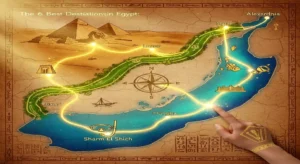
[ Lower Egypt / North ] ──► Hyksos Kings (Avaris Capital)
[ Middle Egypt / Center ] ──► Abydos Dynasty (Local Warlords)
[ Upper Egypt / South ] ──► Theban Princes (Seventeenth Dynasty)
The Second Intermediate Period of Egypt was far more than a simple story of military collapse. It was a fascinating, highly complex melting pot of foreign technology and native defiance. During this fragmentation, vital advancements like the horse-drawn chariot and advanced bronze weaponry first entered the Nile Valley. This dramatic era of division ultimately forced Egypt to completely reinvent itself. The intense struggle for reunification laid the exact foundation for the mighty military empire of the New Kingdom.