Temple of Gerf Hussein: History, Architecture, and UNESCO Relocation

The Gerf Hussein temple stands as a magnificent example of New Kingdom "hemispeos" architecture, blending a traditional masonry exterior with a profound rock-cut interior. Built by the Viceroy of Kush, Setau, under the reign of Ramesses II, the site was originally known as Per-Ptah or the "House of Ptah". While its "brutalist" artistic style features robust, colossal statues that differ from the refined aesthetics of northern Egypt, it served as a powerful tool for divine propaganda and political authority in Nubia. Although the rising waters of Lake Nasser submerged the original site, a dedicated UNESCO rescue mission saved its sacred heart. Today, the relocated temple resides at New Kalabsha, where it remains a vital link to Egypt’s spiritual and historical heritage.

Temple of Gerf Hussein: The “House of Ptah” in Nubia

The Gerf Hussein temple rose from the rugged cliffs of Lower Nubia as a symbol of royal power. Ramesses II built this monument to honor himself and the creator god, Ptah. Originally, the Egyptians called this site Per-Ptah, or “The House of Ptah.” This structure represents a stunning example of “hemispheres” architecture. This specific style combines a masonry exterior with a deep, rock-cut interior. Consequently, the temple feels both like a traditional building and a mysterious cave carved into the living stone.

Power and Architecture in the New Kingdom

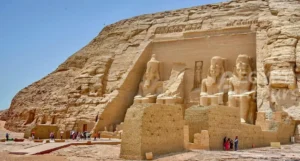
Setau, the Viceroy of Kush, supervised the construction during the 13th century BCE. He designed the temple to project the Pharaoh’s divine authority throughout the southern empire. Therefore, the temple served a political purpose as much as a religious one. While it shares traits with the famous Abu Simbel, Gerf Hussein features a unique “brutalist” aesthetic. The artists emphasized raw power and massive scale rather than delicate details. As a result, the colossal statues create an atmosphere of overwhelming strength.

Gerf Hussein Temple: The UNESCO Rescue Mission
The UNESCO Rescue Mission

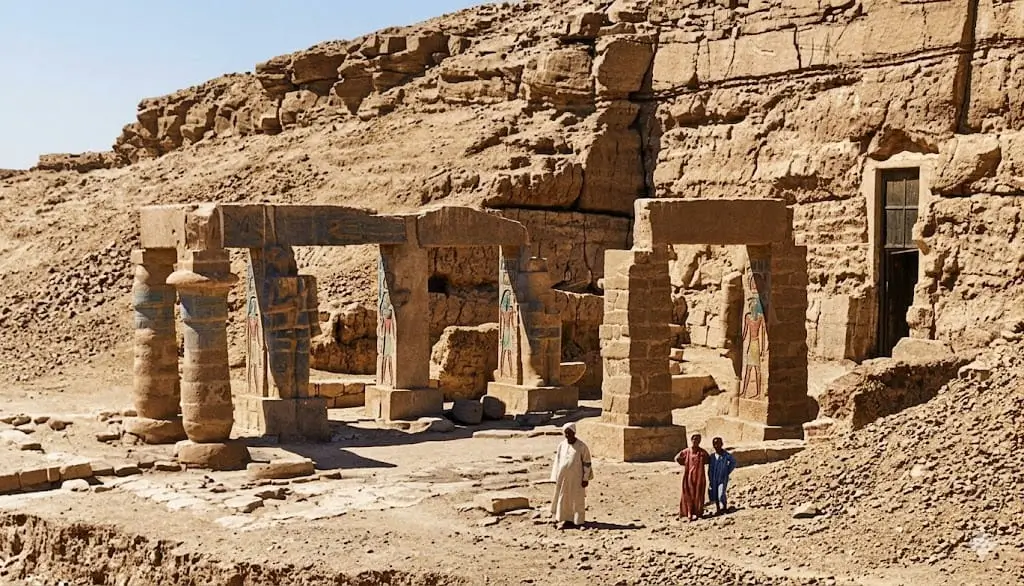
For centuries, the temple stood guard on the west bank of the Nile. However, the construction of the Aswan High Dam in the 20th century threatened its existence. The rising waters of Lake Nasser would have swallowed the entire site.

Fortunately, a heroic UNESCO-led mission saved the most vital sections. Workers dismantled the massive rock-cut halls and moved them to safety. Today, you can explore the temple at its new home on New Kalabsha Island. In this guide, we will analyze its history, art, and architectural layout.
FUN

The Architecture and Design of the Gerf Hussein Temple

The Architecture and Design of the Gerf Hussein Temple

The Gerf Hussein temple follows a precise and grand architectural plan. Architects of the New Kingdom used the natural landscape to create a sense of awe. Because the temple is a “hemispeos,” it transitions from an open-air courtyard into the dark, sacred heart of the mountain.

The Outer Courtyard and Pylon

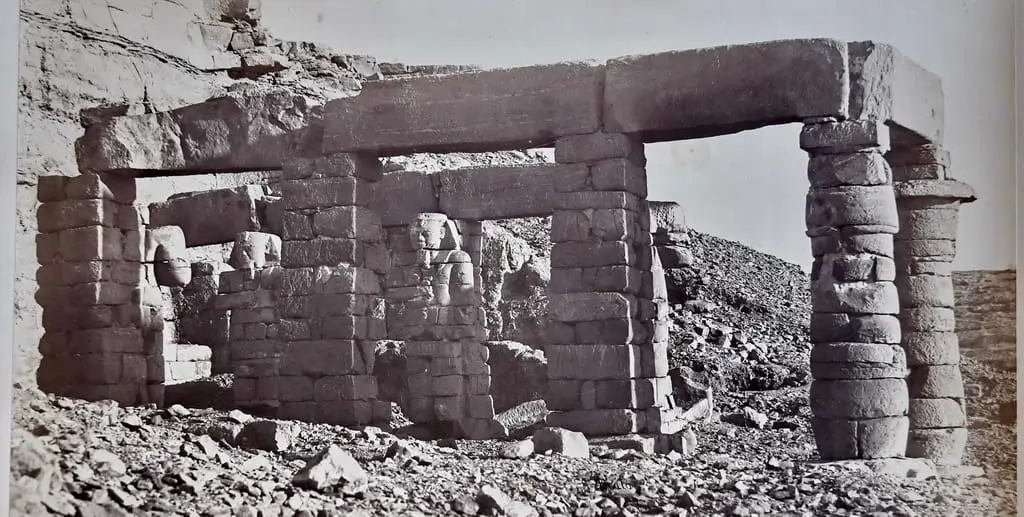
Originally, a massive pylon gateway marked the entrance to the Gerf Hussein temple. Beyond this gate lay a large rectangular courtyard. This space featured a stunning colonnade of lotus-bud columns and colossal statues. These statues depicted Ramesses II in the form of Osiris, the god of the afterlife. Unfortunately, the rising waters of Lake Nasser submerged this masonry section. However, archaeological drawings still show us the impressive scale of this initial approach.

The Rock-Cut Hall (Pronaos)

The Rock-Cut Hall (Pronaos)

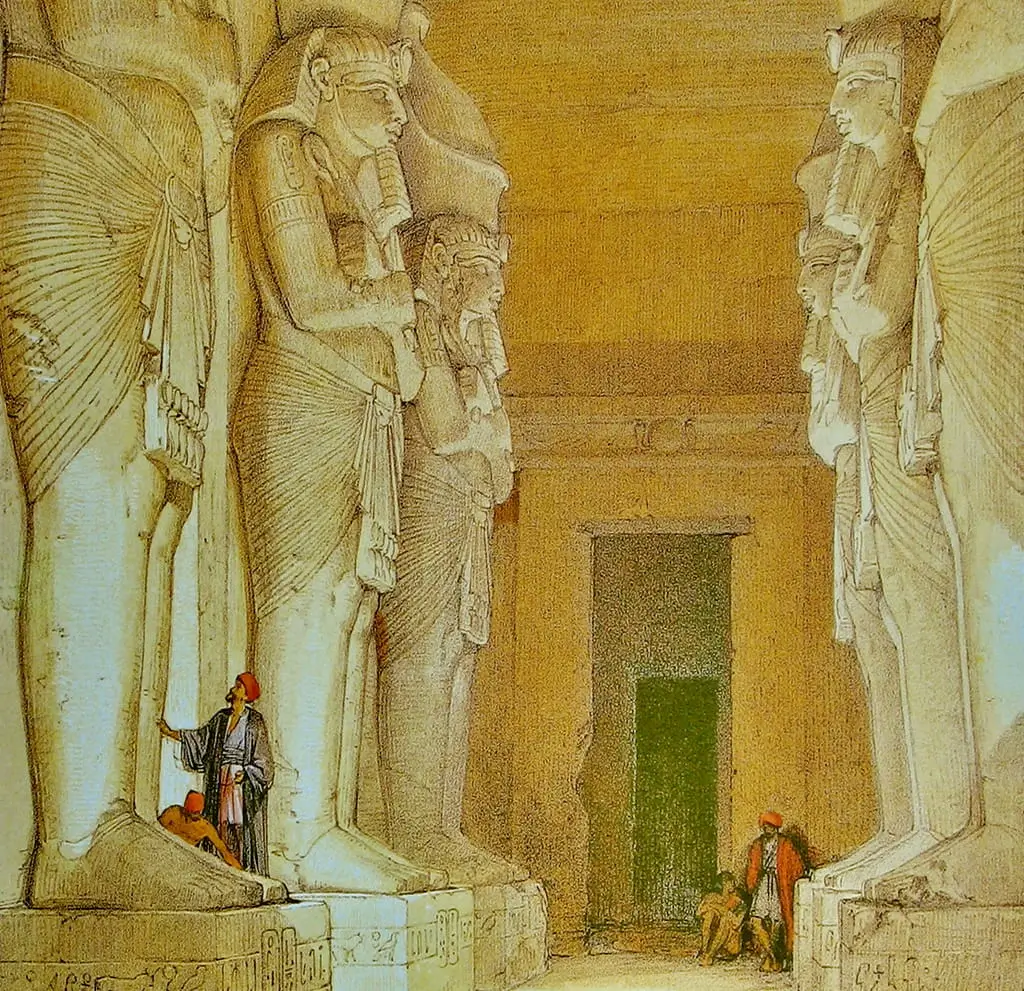
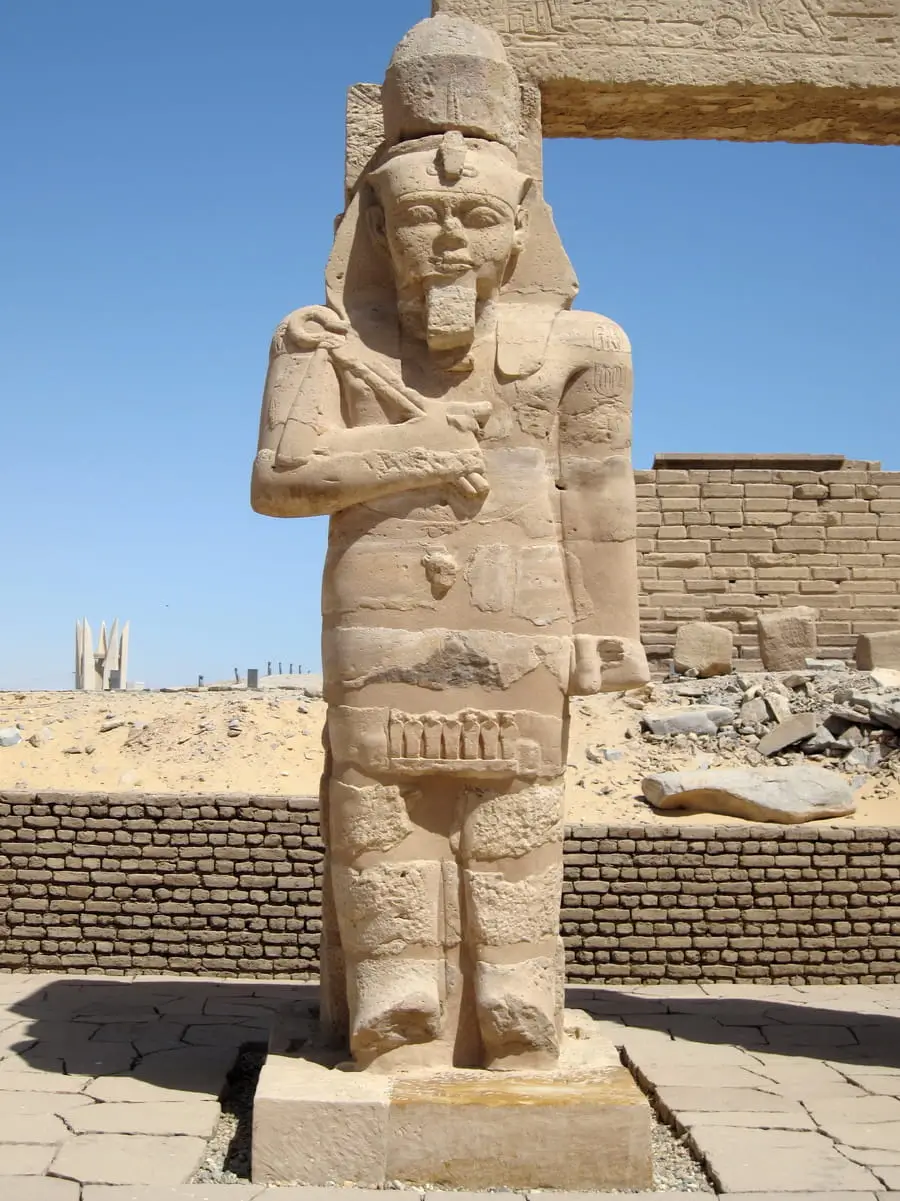
As you move deeper into the temple, the structure changes entirely. Builders hewed the massive central hall directly into the sandstone cliff. This square chamber contains six giant Osiride pillars. These figures are nearly 30 feet tall and support the weight of the mountain above.

The artists chose a “brutalist” style for these statues. Consequently, the features appear thick and heavy compared to other Egyptian temples. This choice creates a feeling of immense strength and permanence. Between the pillars, the walls display reliefs of the Pharaoh offering sacrifices to various gods.

Gerf Hussein Temple: The Sanctuary: The Holy of Holies

At the very back of the temple lies the sanctuary. This is the most sacred part of the entire complex. Within a small niche, four seated statues represent the divine assembly:

  • Ptah: The creator god and primary deity of the temple.
  • The Deified Ramesses II: The King positioned as a living god.
  • Ptah-Tatenen: The deity of the primordial earth.
  • Hathor: The goddess of beauty and joy.

During ancient festivals, sunlight would travel down the temple’s main axis. This light eventually illuminated the statues in the sanctuary, signaling a divine connection between the sun and the gods.

Gerf Hussein Temple: Construction Materials and Techniques

The workers used different materials for each section of the temple. They built the outer courts and pylons using sandstone blocks brought from nearby quarries. In contrast, they carved the inner rooms directly into the natural rock face.

This technique required incredible precision. The engineers had to calculate the weight of the cliff to ensure the pillars would not collapse. Furthermore, the use of sandstone allowed for deep carving, although the grain of the rock led to the robust, chunky appearance of the reliefs.

FUN

The Role of Setau: The Architect of the Empire

The Role of Setau The Architect of the Empire

The Gerf Hussein temple did not appear by accident. Its creation required the skill of one of the most powerful men in the New Kingdom: Setau. As the Viceroy of Kush, Setau governed the vast territories of Nubia for Ramesses II. He held immense responsibility, ranging from tax collection to the construction of massive monuments.

Setau wanted to leave a lasting mark on the landscape. Therefore, he oversaw the building of several temples along the Nile. However, the Gerf Hussein temple was his most ambitious project for the god Ptah. Interestingly, Setau often included his own image in the temple reliefs. This shows his high status and his personal devotion to the Pharaoh’s mission.

Gerf Hussein Temple: The Devotion to Ptah and Local Mythology

The Devotion to Ptah and Local Mythology

While most Nubian temples focused on the sun god Amun-Ra, the Gerf Hussein temple emphasized Ptah. This deity was the “Lord of Memphis” and the patron of all craftsmen. By building a massive home for Ptah in Nubia, Ramesses II connected the northern capital of Memphis with the southern frontier.

Furthermore, the temple honored Ptah-Tatenen. This specific form of the god represents the “rising land” or the primeval mound of creation. Because the temple was carved into a mountain, the location itself symbolized this ancient mound. Consequently, pilgrims who visited the temple felt they were standing at the very center of the world’s creation.

Gerf Hussein Temple: The Significance of the “Brutalist” Art Style

Modern Egyptologists often discuss the unique art found inside the Gerf Hussein temple. Unlike the delicate and elegant carvings found in Thebes, the figures here appear stocky and powerful. This “brutalist” style serves a specific psychological purpose.

First, the heavy proportions made the statues look indestructible. In a wild and distant land like Nubia, the Egyptians wanted to project a sense of eternal strength. Second, local craftsmen likely worked under Setau’s direction. These artists brought a regional flair to the traditional Egyptian canon. As a result, the Gerf Hussein temple possesses a raw energy that you won’t find in the more refined temples of the north.

Gerf Hussein Temple: Divine Kingship and Political Propaganda

The Gerf Hussein temple also functioned as a powerful tool for propaganda. In every hall, the reliefs show Ramesses II interacting with the gods as an equal. In the sanctuary, his statue sits side by side with Ptah and Hathor.

This iconography sent a clear message to the local Nubian population. It suggested that the Pharaoh was not just a ruler, but a living god. Therefore, obeying the Egyptian state was equivalent to obeying the divine will. By blending religion and politics, the Gerf Hussein temple helped maintain peace and order in a vital part of the empire.

Abydos Temple: The Sacred Home of Osiris & the Masterpiece of Seti I

Take a pilgrimage to Abydos, the sacred "home" of the god Osiris and the spiritual...
Related post
FUN

Gerf Hussein Temple: The UNESCO Rescue and the Modern Site

The UNESCO Rescue and the Modern Site

The construction of the Aswan High Dam in the 1960s created a massive crisis for Egyptian heritage. As the waters of the Nile rose to form Lake Nasser, they threatened to submerge dozens of ancient sites. The Gerf Hussein temple was among the most vulnerable. Consequently, an international team of engineers and archaeologists launched a daring rescue mission to save this historic treasure.

Gerf Hussein Temple: Moving the Mountain

Saving a “hemispheres” temple presents unique challenges. Because the Gerf Hussein temple was partly carved into a cliff, workers could not simply move the entire mountain. Instead, they had to cut the most important sections into manageable blocks.

Engineers used precision tools to slice the colossal Osiride statues and the inner sanctuary from the living rock. Then, they carefully transported these pieces to higher ground. While the outer masonry courtyard and the mud-brick pylons were unfortunately lost to the lake, the spiritual heart of the temple survived.

New Kalabsha: A Gathering of Temples

What to See in Kalabsha temple; Exploring the Temple's Grandeur

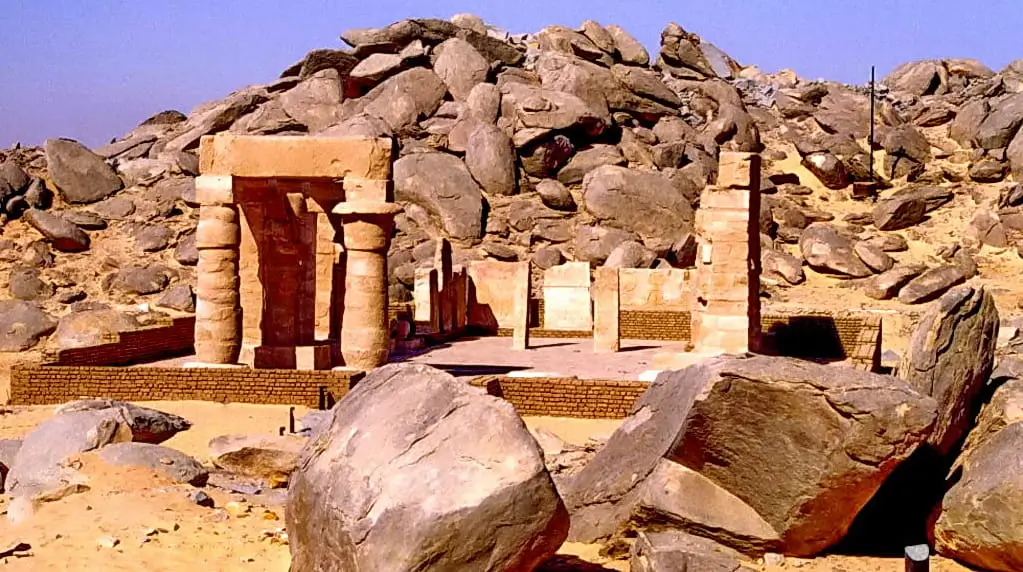
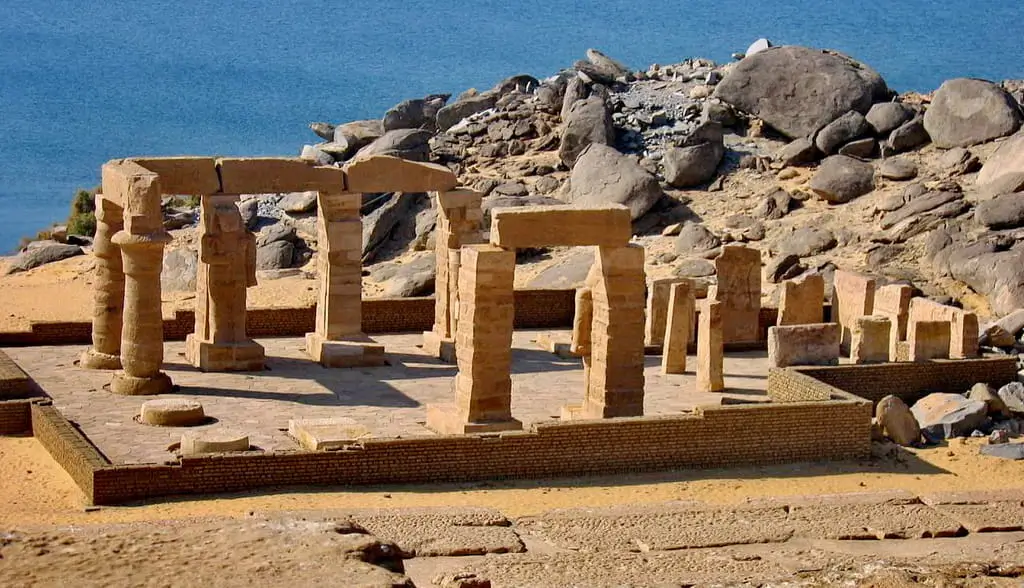
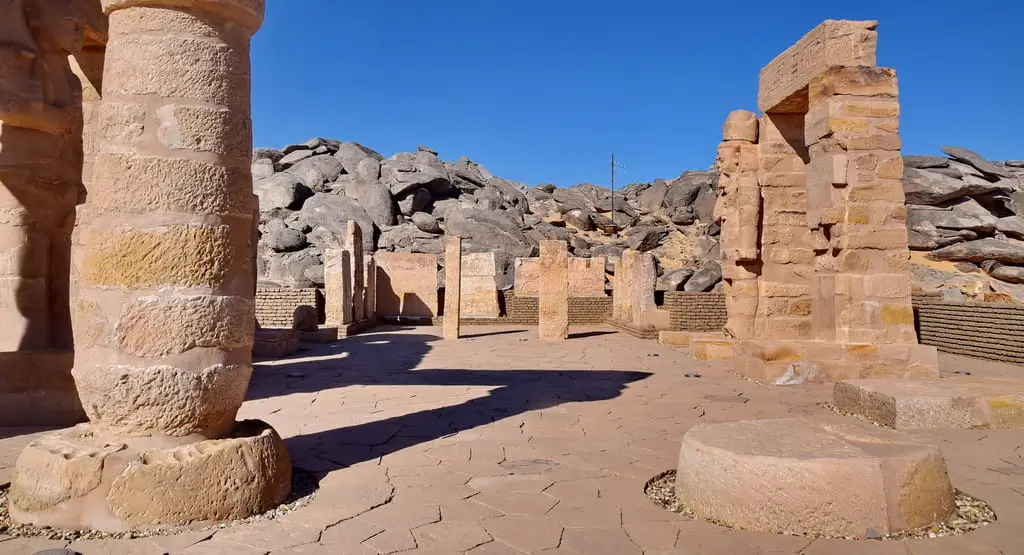
Today, the salvaged portions of the Gerf Hussein temple sit on New Kalabsha Island. This site is located just south of the Aswan High Dam. It serves as a dedicated “heritage park” for rescued Nubian monuments. When you visit the island, you can see the Gerf Hussein temple alongside other famous structures:

  • The Temple of Kalabsha: A massive Roman-era temple dedicated to Mandulis.
  • The Kiosk of Kertassi: A beautiful, small structure with Hathor-headed columns.
  • The Temple of Beit el-Wali: Another rock-cut temple built by Ramesses II.

Standing in its new location, the Gerf Hussein temple allows visitors to walk through the same colossal pillars that Setau carved over 3,000 years ago.

Why the Gerf Hussein Temple Matters

The Gerf Hussein temple remains a vital piece of the Egyptian puzzle. It is not just another monument to Ramesses II. Instead, it represents the intersection of Egyptian religion, Nubian craftsmanship, and modern engineering.

Through its “brutalist” art style, we see a different side of New Kingdom creativity. Through its dedication to Ptah, we understand how the Pharaohs unified their vast empire. Finally, through its rescue from Lake Nasser, we see the global commitment to preserving our shared human history. Whether you are a student of Egyptology or a traveler exploring Aswan, the Gerf Hussein temple offers a profound look into the eternal power of the “House of Ptah.”

Temple of Dakka: Exploring Greco-Roman Heritage at Wadi el-Sebua

The Temple of Dakka is a unique monument dedicated to Thoth, the god of wisdom,...
Related post
FUN

Planning Your Visit to the Gerf Hussein Temple

Planning Your Visit to the Gerf Hussein Temple

Most travelers explore the Gerf Hussein temple while visiting the New Kalabsha archaeological site. Because the temple now sits on an island in Lake Nasser, reaching it requires a bit of planning. However, the effort is well worth it to see the unique “brutalist” statues up close.

Gerf Hussein Temple: How to Reach New Kalabsha

The site is located near the western end of the Aswan High Dam. To get there, you must take a short motorboat ride from the dock near the dam. Most visitors hire a taxi from Aswan to the dock and then negotiate with a local boatman. Alternatively, you can book a guided tour that includes transportation and entry fees.

Gerf Hussein Temple: What to Look for During Your Visit

When you arrive at the Gerf Hussein temple section of the island, focus on these key highlights:

  • The Osiride Pillars: Notice the massive scale and the heavy, powerful features of the statues. These are the best examples of the provincial art style from the reign of Ramesses II.
  • The Sanctuary Reliefs: Look closely at the back niche. Even though the statues are worn, you can still identify the seated figures of Ptah and the King.
  • The View of the Lake: The elevated position of the new site offers a stunning panoramic view of Lake Nasser. This helps you visualize the vast area that the rising waters once covered.

Temples of the South: Architecture and Significance of the Nubian Temples

The Egyptian Nubian Temples represent an extraordinary collection of ancient monuments constructed by pharaohs—such as...
Related post
FUN

Frequently Asked Questions (FAQ)

Frequently Asked Questions (FAQ)

Is the Gerf Hussein temple the same as Abu Simbel?

No, they are different sites. While both are rock-cut temples built by Ramesses II in Nubia, the Gerf Hussein temple is dedicated to Ptah. Furthermore, Gerf Hussein is now located in Aswan, whereas Abu Simbel is much further south near the Sudanese border.

Why does the art look different from other temples?

The “brutalist” style at Gerf Hussein resulted from a combination of factors. The artists prioritized monumental scale to impress the local population. Additionally, local craftsmen likely executed the designs, leading to a sturdier and less delicate appearance than the royal workshops in Thebes.

Can I see the submerged parts of the temple?

Unfortunately, the original outer courtyard and pylons remain underwater. Divers can technically visit the old site, but visibility in Lake Nasser is often poor. Therefore, visiting the relocated sections at New Kalabsha is the best way to experience the temple’s history.

When is the best time to visit?

The best time to visit the Gerf Hussein temple is during the winter months, from October to April. The weather in Aswan is mild and pleasant during this time. If you visit in the summer, try to arrive early in the morning to avoid the intense midday heat.

The 8-Day Egypt Nile Pulse is the perfect equilibrium of authentic energy and curated comfort....
Discover the incredible treasures of ancient and modern Cairo....
FUN
God_Anubis_Icon

Excellent Adventure

These guys put together an amazing itinerary that allowed me see the sunrise at the sun festival in Abu Simbel, King Tut’s tomb, and mask! That was just the tip of the iceberg. Aswan, Kom Ombo, Edfu and Luxor. So much visited with plenty of rest time. An amazing trip

More »

Amazing tour to the pyramids of Sakkara and Dahshur

This week we had a great tour with Mohamed to the pyramids of Sakkara and Dahshur, as well as Memphis. He tailored the tour to our preferences, took a lot of time with us, and gave us detailed background information on everything. It was also great that he never tired

More »

Absolutely the best

We visited Cairo over a 15-hour layover. Egypt Fun Tours organized a customized and wonderful experience for us. We could not be happier. The day included a visit to all the great sites, the marketplace, dinner, a boat ride on the Nile, and a host of other special requests. I

More »

The best holiday ever!

The Nile cruise, Luxor, and Aswan were amazing sites to see, especially when you have the best tour guide in Egypt. Hamada was absolutely fantastic, lots of information, and some of it not spoken by others. This guy was not only a simple tour guide for us, but he also

More »
Amazing Egypt Tours Vacations in December Egypt Fun Tours

Amazing trip with Egypt Fun Tours

We had the time of our lives on a trip to Egypt and the Bahariya/White Desert with Egypt Fun Tours, too. I would highly recommend this company. They are very familiar with organizing this trip, and this means they are well-connected in the desert area. This was invaluable to us

More »
God_Anubis_Icon

Top-rated Tour Packages

God_Anubis_Icon