The Evidence: Mummified Crocodiles and Religious Practice
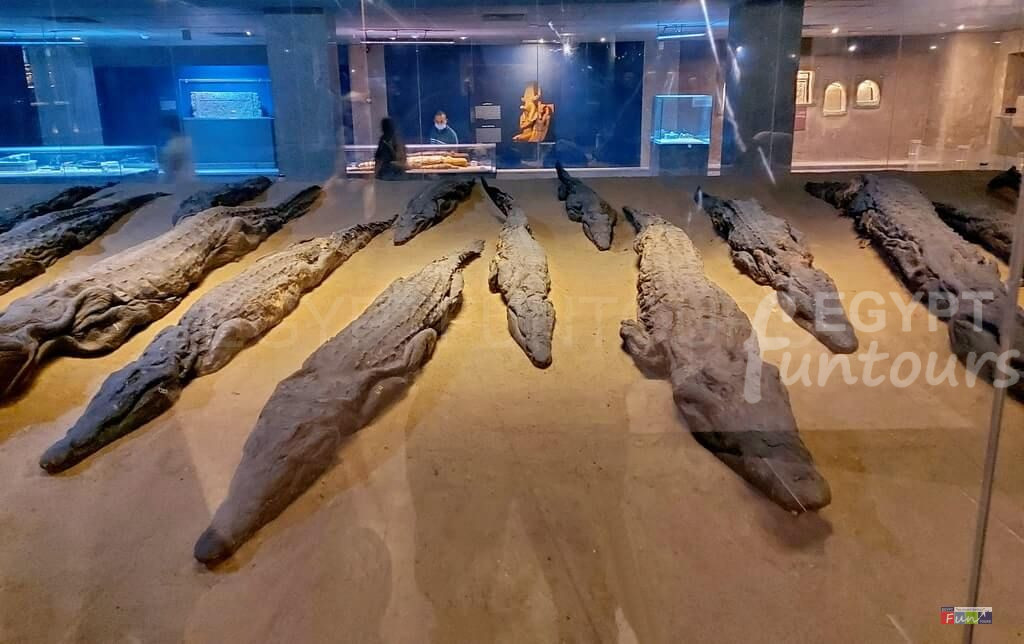
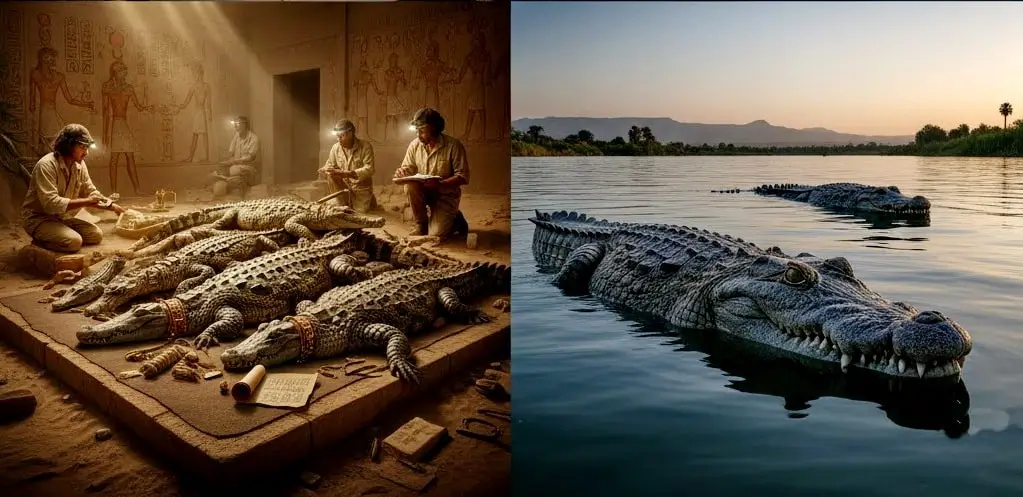
Archaeology provides the clearest evidence of this deep relationship. The discovery of mummified crocodiles confirms intense religious devotion. Egyptians did not just worship the abstract god. They honored the physical animal.
Priests performed complex rituals on the deceased reptiles. They first had to ritually kill or collect the animals. Then, they followed a meticulous embalming process. They cleaned the body and organs. They wrapped it carefully in linen bandages. As a result, the crocodile was prepared for eternity, just like a human noble.
The necropolis of Tebtunis is a crucial site. Archaeologists found thousands of mummified crocodiles there. This constituted one of the largest animal burials ever discovered. Many were infants or juveniles. However, they also discovered massive adult specimens. These finds show the sheer scale of the cult dedicated to Sobek.
The purpose of these mummies was twofold. Some were direct manifestations of Sobek himself. Others served as votive offerings. People purchased and presented them to the god. Consequently, they sought divine favor and protection.
A fascinating controversy surrounds these finds. Some mummies show signs of ritual sacrifice. Others appear to have died naturally. This tells us something important. Priests sometimes actively provided the sacred animal. On the other hand, they also simply collected the animals that died near the holy sites. This complex practice reveals the depth of reverence for the Crocodiles in Ancient Egypt.
The Enduring Legacy of the Egyptian Crocodile

The influence of the Nile’s apex predator did not vanish with the New Kingdom. The story of the Egyptian crocodile endures. It continues to fascinate historians and mythologists alike. Consequently, it remains one of the most recognizable icons of ancient civilization.
The god Sobek faded from worship over time. However, the imagery persisted. Ancient Greek and Roman writers often mentioned the sacred crocodiles. They recorded their amazement at the strange rituals. The story traveled across cultures.
Today, the Nile Crocodile still exists. It lives in the wild throughout Africa, including the Nile’s southern stretches. Conservationists now protect the species. Therefore, the relationship has shifted. Humans no longer worship the beast. Instead, they work to ensure its survival. This marks a profound change from the fear-filled reverence of antiquity.
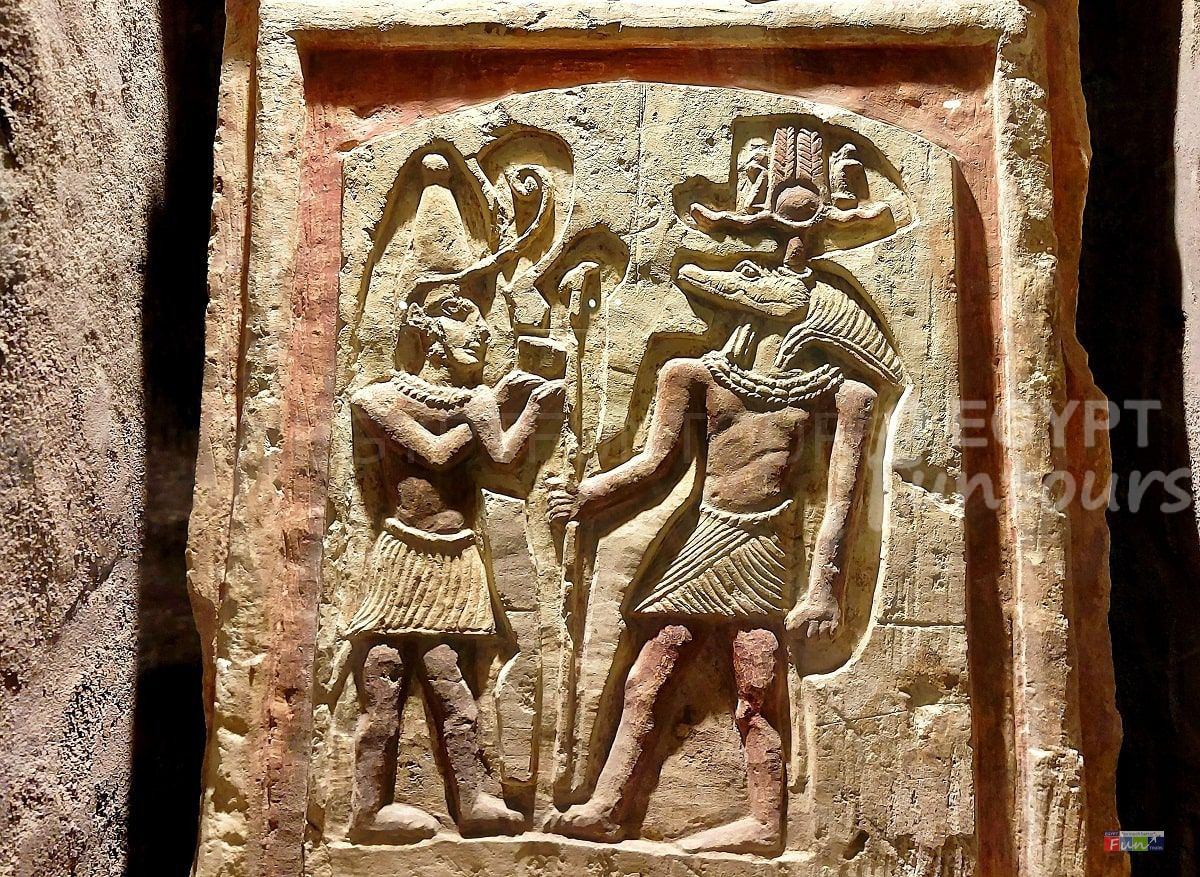
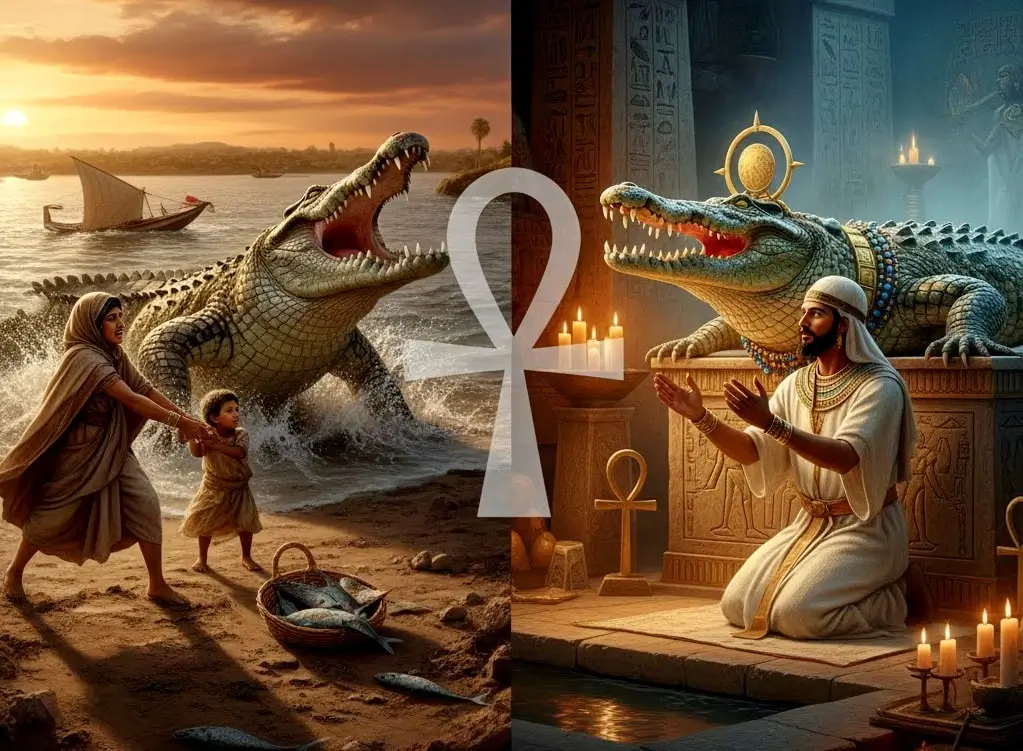
The crocodile embodies the complexity of Egyptian thought. It represented both the giver and the taker of life. The animal was chaos, yet it became a god of order. This contradictory role speaks volumes. It shows how the Egyptians incorporated the natural world into their spiritual life. Crocodiles in Ancient Egypt were not merely animals. They were forces of nature, deities, and mirrors of human ambition.
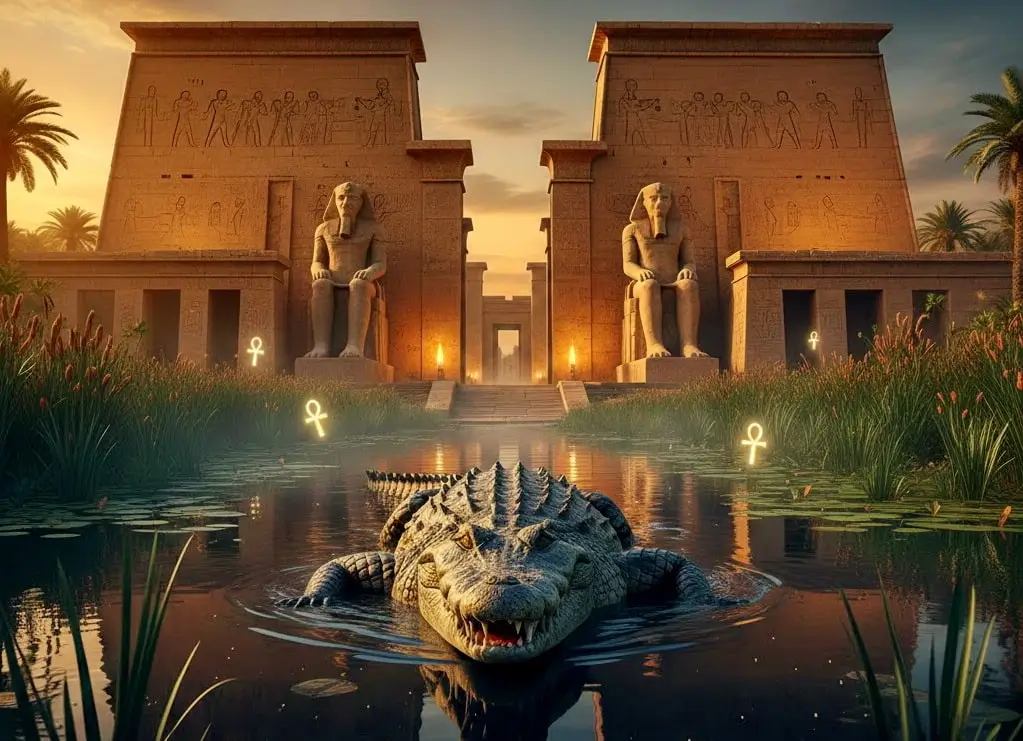
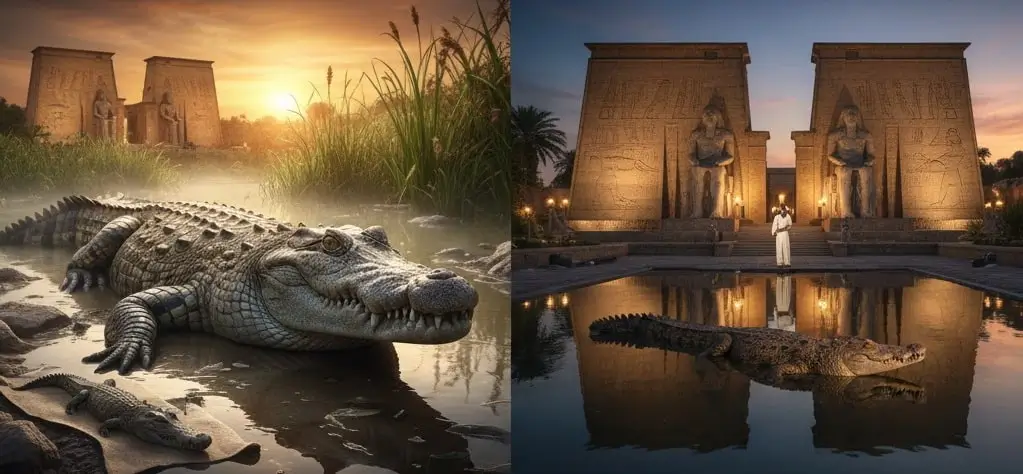
The comprehensive evidence confirms its importance. We see it in the immense temples of Kom Ombo. We find it in the thousands of mummies at Tebtunis. Furthermore, we see it in the powerful, protective amulet. The crocodile’s story is truly the story of the Nile itself. It is a tale of survival, devotion, and supreme power.
This exploration has revealed the depth of the topic. You now understand the beast, the god, and the cultural context. This knowledge provides the ultimate authority on Crocodiles in Ancient Egypt.