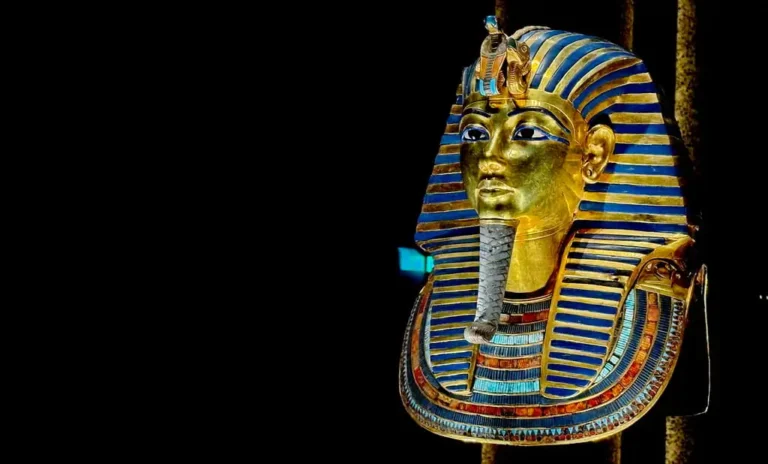
Egypt is famous for its towering pyramids and golden pharaohs. However, another world-class treasure waits in the heart of Old Cairo. This treasure is the Coptic Museum in Cairo. It stands as the largest collection of Coptic Christian art globally. Furthermore, it bridges the gap between ancient Egyptian history and the Islamic era. This museum is not just a building. Instead, it is a living chronicle of a unique culture.
A Journey Through Time and Faith
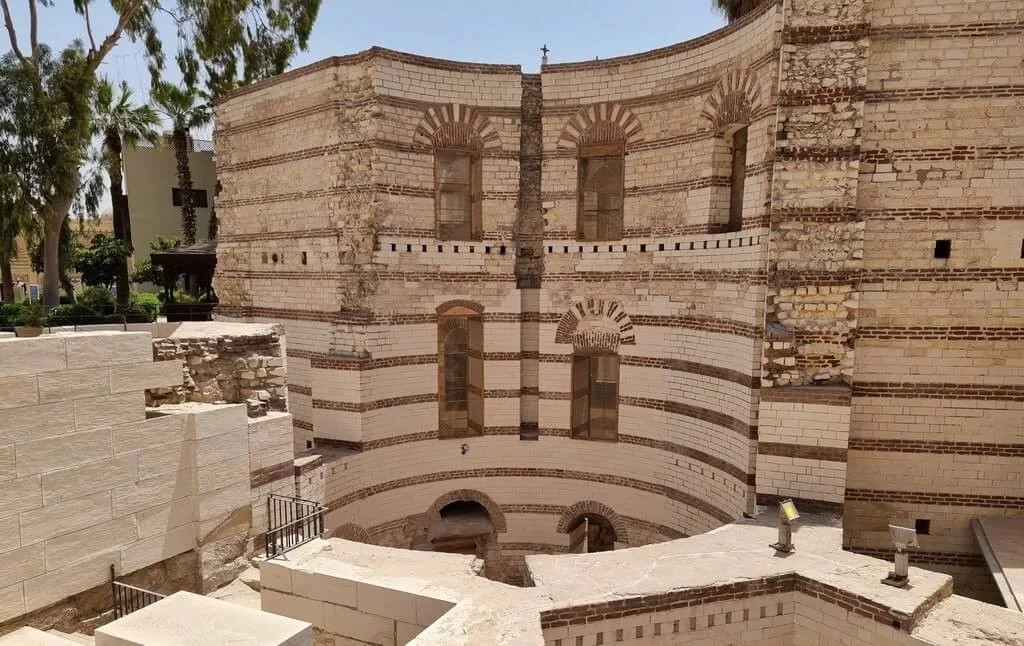
The Coptic Museum in Cairo sits within a historic fortress. Specifically, it occupies the ancient Roman Fortress of Babylon. Because of this, history greets you before you even enter. The museum covers over 8,000 square meters. Inside, you will find more than 16,000 artifacts. These items tell the story of Egypt’s Christian community. Consequently, the museum is essential for anyone studying religious history.
Why This Museum Matters Today
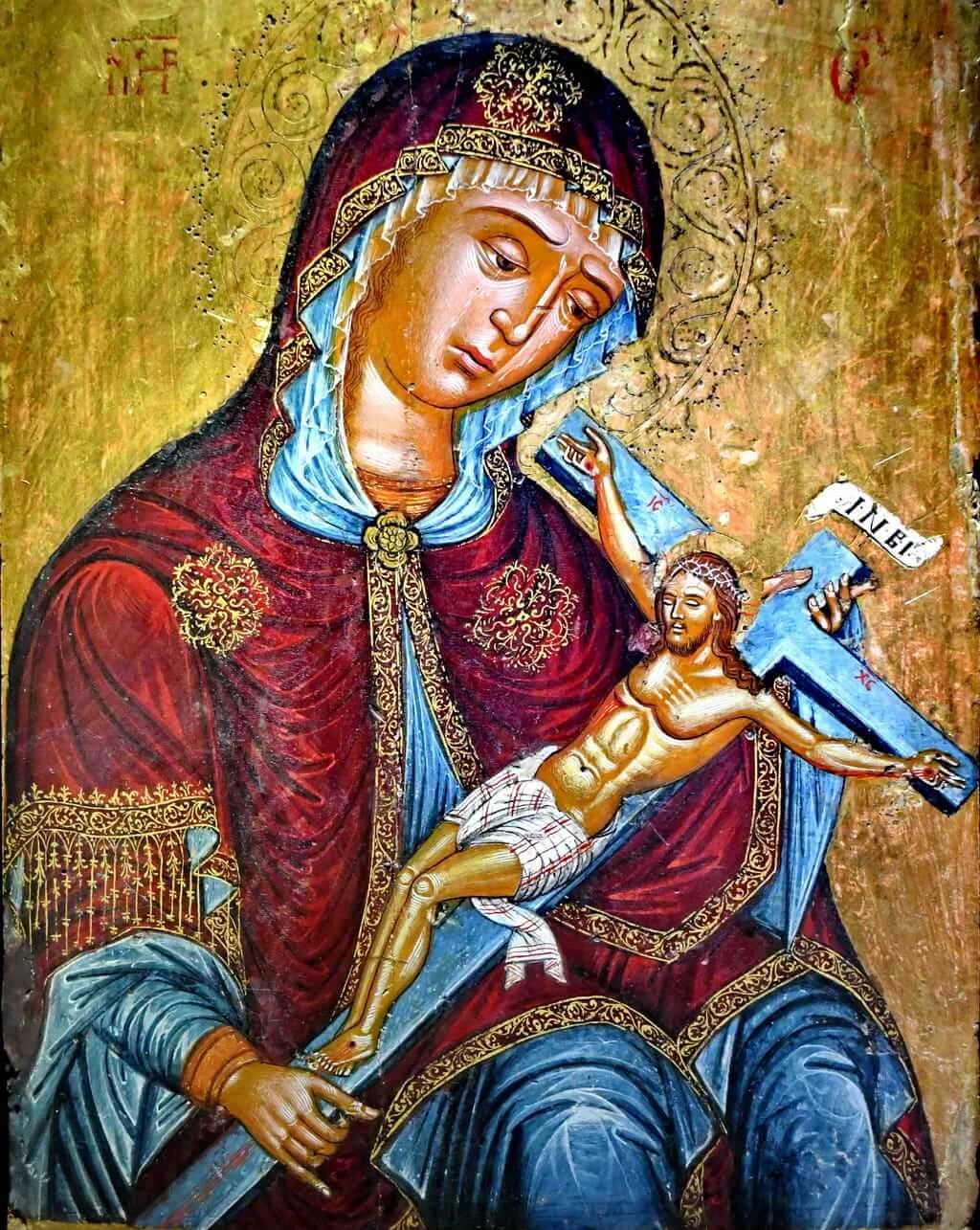
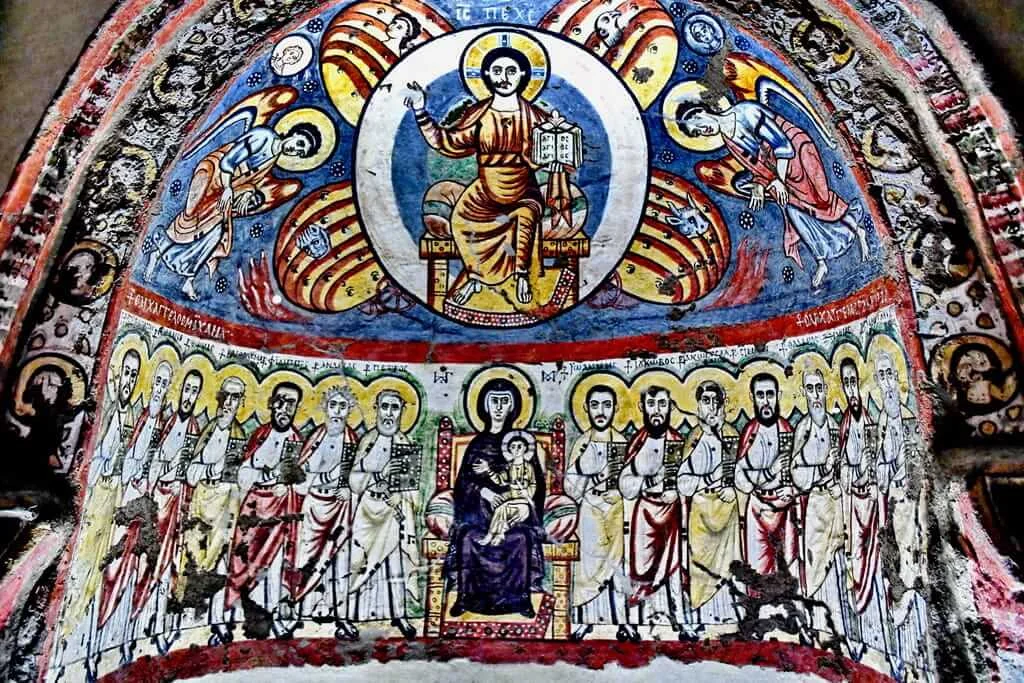
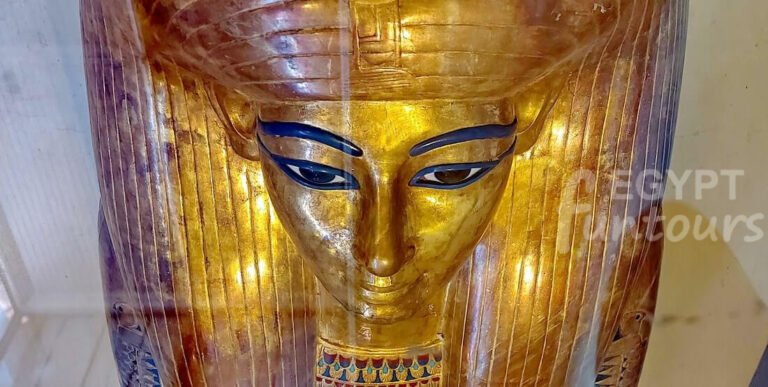
Many travelers overlook this site for the Giza Plateau. However, doing so means missing a vital part of Egypt’s identity. The Coptic Museum in Cairo showcases a rare artistic fusion. You will see Pharaonic symbols transformed into Christian icons. Additionally, you will notice Greek and Roman influences in the stone carvings. This blend created a distinct style known as Coptic art. Therefore, the museum serves as a cultural bridge.
What to Expect From This Guide
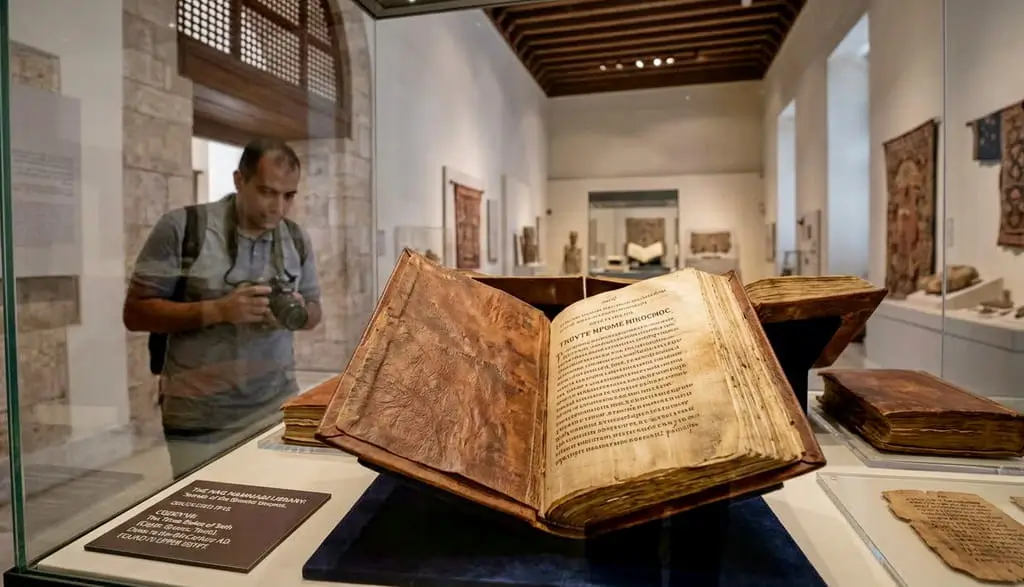
In this guide, we dive deep into every wing. We will explore the world-famous Nag Hammadi Library. We will also examine the intricate “Coptic Stitch” textiles. Moreover, we provide practical tips for your visit in 2026. Whether you are a history buff or a casual tourist, this pillar post is for you. Let us begin our exploration of the Coptic Museum in Cairo.
The Architecture: Where History Meets Art
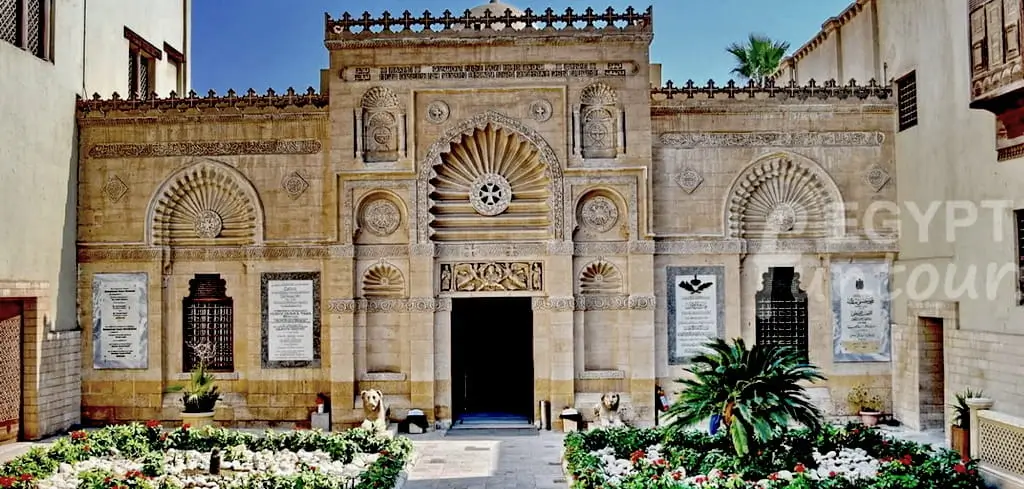
The first thing you notice is the stunning facade. It resembles a grand mosque but honors Christian heritage. This choice was intentional by the founder, Marcus Simaika Pasha. He wanted to show the unity of Egyptian culture.
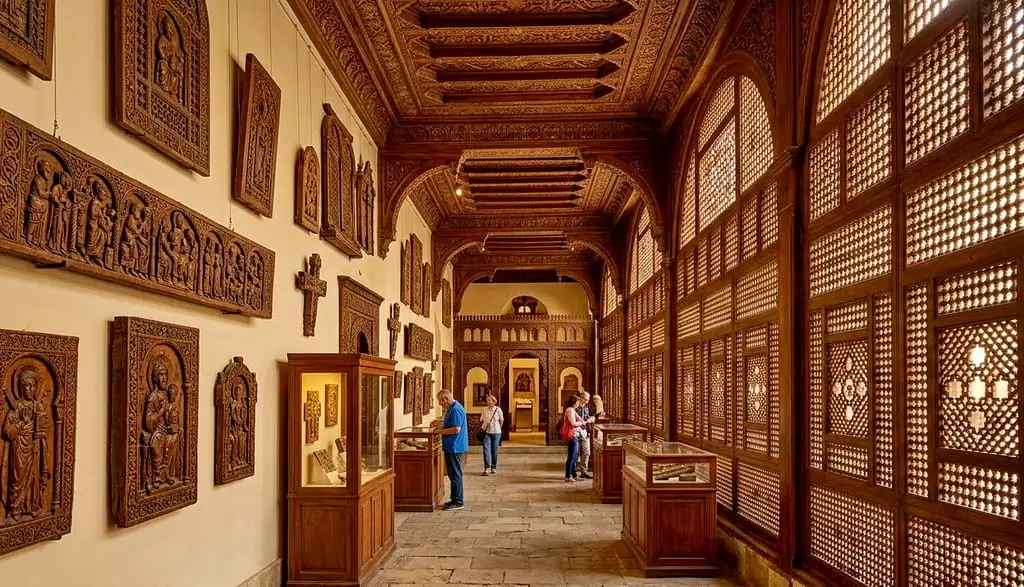
- The Woodwork: Look up at the mashrabiya screens. These carved wooden lattices filter the Cairo sun.
- The Courtyards: Peaceful gardens separate the wings. They offer a quiet space for reflection.
- The Fortress Walls: Part of the museum rests directly on Roman foundations.
In the next section, we will look at the earliest artifacts from the Graeco-Roman period.