Phases of Eternity: The Pyramid Texts, Coffin Texts, and Book of the Dead

The Egyptian quest for eternal life was meticulously documented across 2,500 years. This pillar article provides a deep Egyptian Funerary Texts Comparison, charting the evolution of the sacred scripts through three distinct phases. Discover how the secret, exclusive spells carved on the stone walls of royal pyramids (Pyramid Texts) gave way to the personalized, underworld maps on wooden coffins (Coffin Texts). Finally, explore the emergence of the mass-produced, ethical guide on papyrus scrolls (Book of the Dead). This journey is the story of the democratization of immortality, moving the focus from the god-king's stellar ascent to the individual's moral accountability in the decisive Weighing of the Heart.

Egyptian Funerary Texts: The Evolving Logic of Immortality

Ancient Egyptians never viewed the journey to the afterlife as a passive hope. They saw it as a technical process, meticulous, documented, and highly political. Over nearly 2,500 years, the script for immortality constantly changed. This evolution forms the basis of any meaningful Egyptian Funerary Texts Comparison. Yet, one belief held firm: success demanded the right knowledge.

Three monumental religious writings chronicle this evolution: the Pyramid Texts, the Coffin Texts, and the Book of the Dead. These are not interchangeable prayer books. They represent distinct phases of a single, continuous literary tradition.

Change was never arbitrary. Each textual shift responded directly to Egypt’s social, political, or economic changes. The sacred texts mirrored the changing distribution of power. They moved from a god-king’s exclusive right to an accessible property for the common man.

Our core thesis remains: The shift from texts carved on immovable stone to those written on portable papyrus reflects the decisive democratization of divine power. This transition shifted the afterlife’s focus. It moved from ensuring the king’s celestial welfare to demanding the ethical conduct and individual preparation of every deserving Egyptian. By comparing these three major collections, we uncover the full, fascinating story of how immortality became accessible.

FUN

Phase 1: The Royal Monopoly (Pyramid Texts)

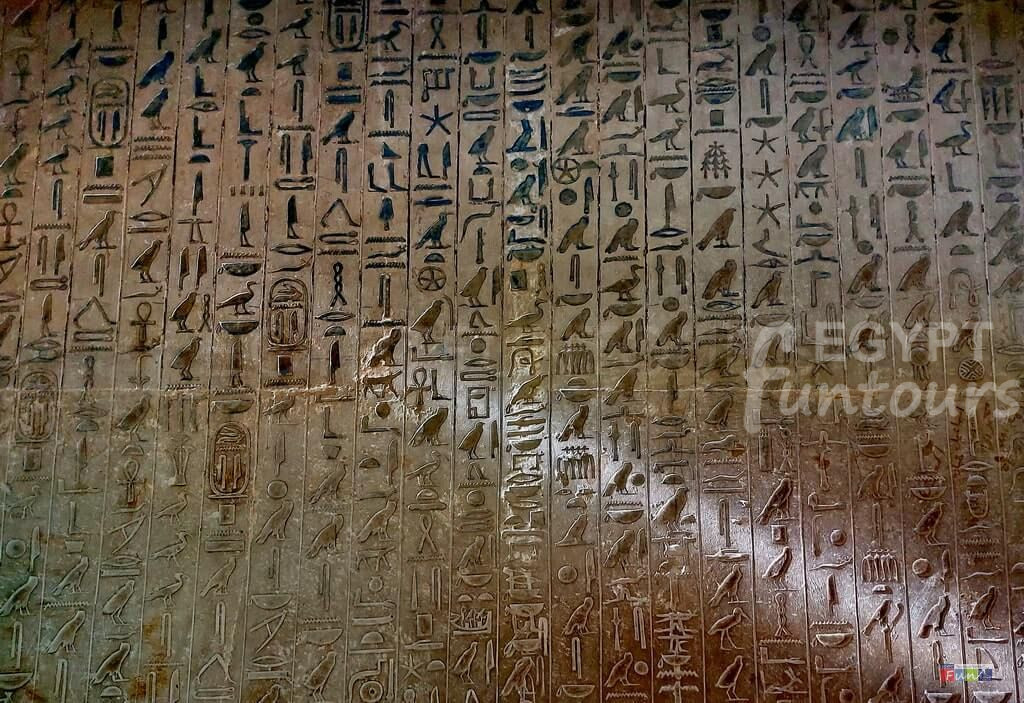
The pyramids text ancient egyptian book of dead - Egyptian Funerary Texts

The story of Egyptian funerary literature begins at the apex of centralized power: the Old Kingdom (c. 2686–2181 BCE). This era established the Pharaoh not just as a king, but as a living god, the terrestrial embodiment of Horus. This unique status dictated the initial, most exclusive form of the afterlife script: the Pyramid Texts.

Egyptian Funerary Texts: The Logic of Exclusivity

The Pyramid Texts embody the ultimate royal monopoly on immortality. The theology of the time decreed that only the Pharaoh possessed the inherent divine nature required to successfully navigate death and join the celestial pantheon. Immortality was not a personal reward; it was a national defense mechanism. If the King failed to achieve his Akh (effective spirit) status, the cosmos—and by extension, the state—would collapse.

This exclusivity explains the unique content of the spells. They focus heavily on ritual purification, identifying the King with various gods, and, most famously, acts of aggressive power acquisition. The Cannibal Hymn (Utterances 273–274) is the most visceral example. It depicts the Pharaoh hunting and consuming the gods themselves to assimilate their vital powers, thereby making his own divinity absolute and eternal. No commoner could ever utter such a claim; the theology simply forbade it.

The Medium: Immovable Stone

The choice of medium was just as crucial as the content. The Pyramid Texts were carved directly into the limestone walls of the burial chambers, sarcophagi, and ante-chambers within the pyramids, starting with King Unas.

The stone inscription was a functional choice. It ensured permanence, providing a non-transferable, physical component of the resurrection machine. These spells were not items you could buy or copy; they were a physical component of the resurrection machine, activated only by the King’s body. The spells were permanent, fixed, and non-negotiable, cementing the royal monopoly.

The Destination: The Stellar Ascent

For the Pharaoh, the afterlife destination was not the dark underworld, but the bright, eternal expanse of the heavens. The Pyramid Texts detail the King’s journey to the circumpolar stars—those stars that never set and thus represented eternal life. The spells serve as launch codes and navigation instructions, transforming the King into an Akh capable of ascending on the smoke of incense, on the ladder of the sky, or by riding the solar barque.

In this earliest phase of the Egyptian Funerary Texts Comparison, the rules are clear: Immortality belongs to the state, the script is fixed in stone, and the destination is the celestial realm.

FUN

Phase 2: The Logic of Expansion (Coffin Texts)

Decoding the Coffin Texts; Logic, the Soul's Manual, and Democratization

The stability of the Old Kingdom eventually fractured, leading to the decentralization and upheaval of the First Intermediate Period, followed by the resurgence of the Middle Kingdom (c. 2055–1650 BCE). This political and economic instability permanently broke the Pharaoh’s unique monopoly on the afterlife.

Egyptian Funerary Texts: The Democratization Crisis

As the central authority weakened, powerful regional governors and wealthy elites, known as Nomarchs, gained immense resources and autonomy. These individuals, who commanded their own armies and controlled local economies, began to demand the same afterlife assurances previously reserved for the King.

The Coffin Texts were the direct theological response to this demand. They represent the first major expansion of the afterlife protocol, adapting the royal spells for the wealthy elite. Immortality was no longer a state secret, but an expensive, personalized commodity available to those who could afford the elaborate burial preparations.

The Medium: Portable Wood

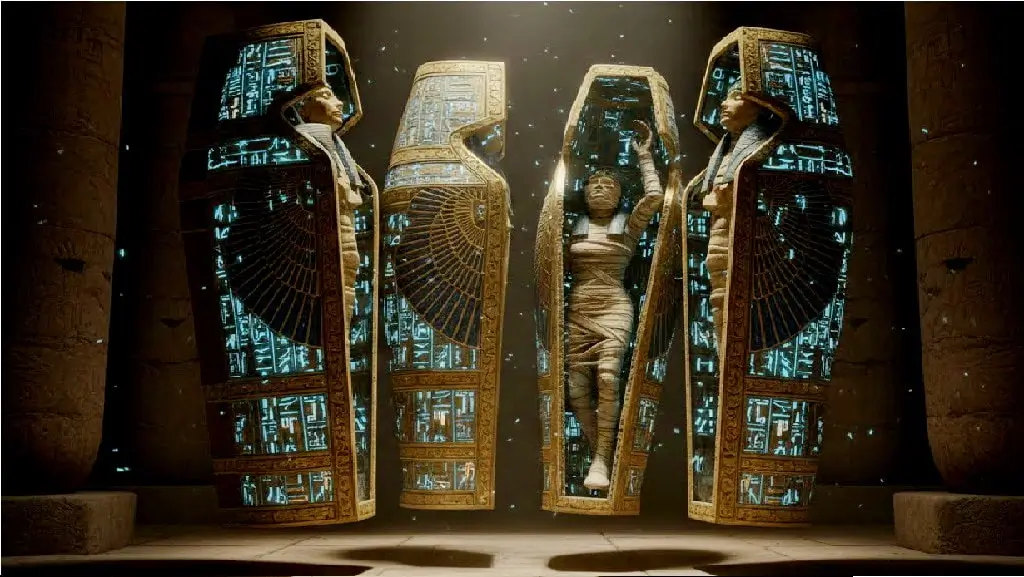
The medium changed decisively, moving the texts from the pyramid’s immovable stone to portable wooden coffins and sarcophagi.

This was a functional, revolutionary shift. Writing the spells on the coffin made them:

  1. Personal Property: The spells belonged to the individual inside the box.
  2. Transferable: The entire “resurrection machine” was now contained within the coffin, ready for burial in any tomb, not just a royal pyramid.

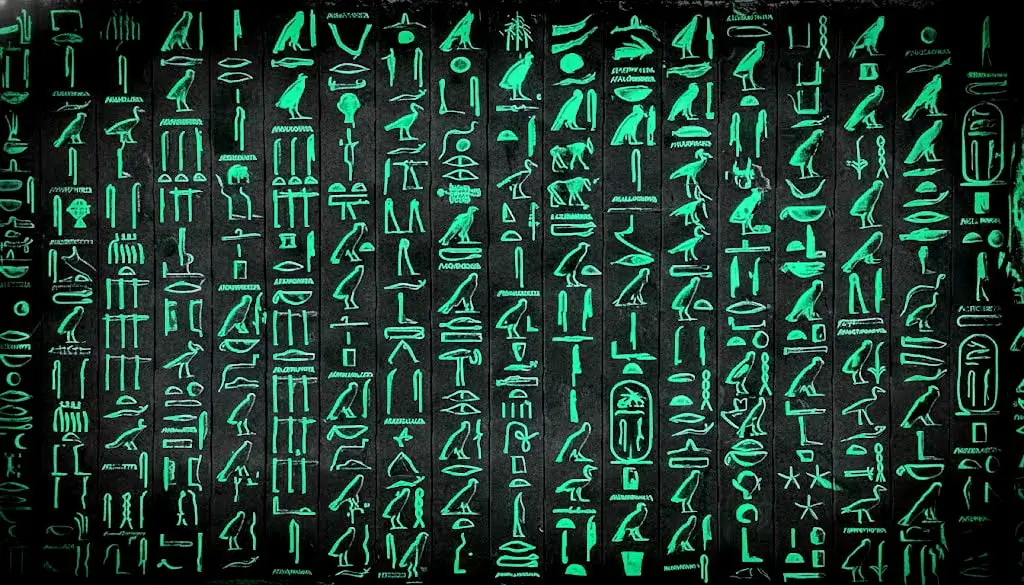
The Coffin Texts were often inscribed in dense columns across the entire inner surface of the coffin—the lid, the sides, and the floor. This transformation cemented the idea that the script was a user manual meant to travel with the deceased.

The Destination Shift: Mastering the Duat

The Nomarchs, despite their wealth, could not simply claim the Pharaoh’s birthright to the circumpolar stars. Therefore, the destination of the afterlife changed. The focus moved from the celestial heavens to the chthonic Underworld, or Duat.

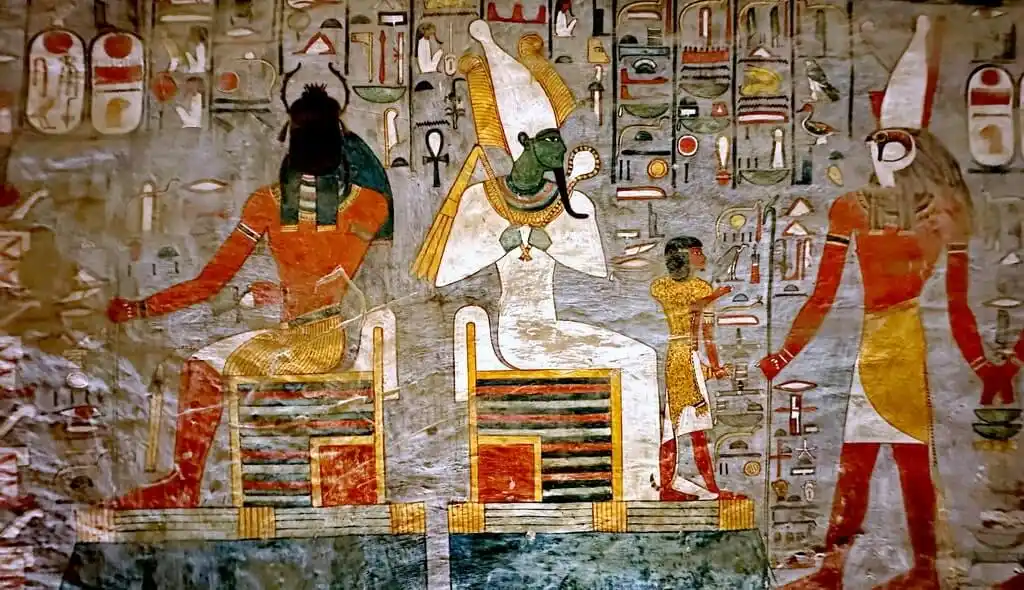
The Duat was ruled by Osiris, the god of resurrection and rebirth, who achieved eternal life after his murder and dismemberment. The deceased now sought to identify with Osiris, undergoing a perilous journey and emerging reborn, like the god. This shift meant the spells changed purpose:

  • They became protective, equipping the deceased with secret names and passwords to navigate past dangerous demons, guardians, and lakes of fire.
  • They included detailed topographical guides, most notably the Book of Two Ways, an actual pictorial map of the Underworld painted onto the floor of the coffin. This was the first explicit “map” of the afterlife, reflecting the trials the deceased now faced.

In this phase of the Egyptian Funerary Texts Comparison, the rules are: Immortality is now purchased, the script is portable, and the destination is the challenging yet achievable realm of Osiris.

The Profound Egyptian Influence on Greek Civilization

Egypt profoundly influenced ancient Greek civilization in various aspects. Key influences include religious syncretism, with...
Related post
FUN

Phase 3: The Universal Manual (Book of the Dead)

4-day-christmas-nile-cruise

The New Kingdom (c. 1550–1070 BCE) marked the height of Egyptian imperial power, stability, and wealth. This era saw a massive expansion of bureaucracy and a powerful artisan class, meaning even more people possessed the means to afford preparation for the afterlife. This unprecedented prosperity demanded an even more accessible and standardized funerary text: the Book of the Dead.

Mass Accessibility: The Personal Papyrus Scroll

The Book of the Dead—whose actual Egyptian name is Peret em Heru, meaning “Coming Forth by Day”—completed the democratization process.

The key change was the medium: the texts moved from large wooden coffins to easily produced, relatively inexpensive papyrus scrolls.

  • Ultimate Portability: Papyrus scrolls could be wrapped with the mummy, placed inside the coffin, or stored in small niches, making them an intimate, personal, and lightweight possession.

  • Standardization: Scribes often produced “off-the-shelf” scrolls containing the most common spells, leaving blank spaces to fill in the deceased’s name and titles upon purchase. This dramatically lowered costs and increased availability.

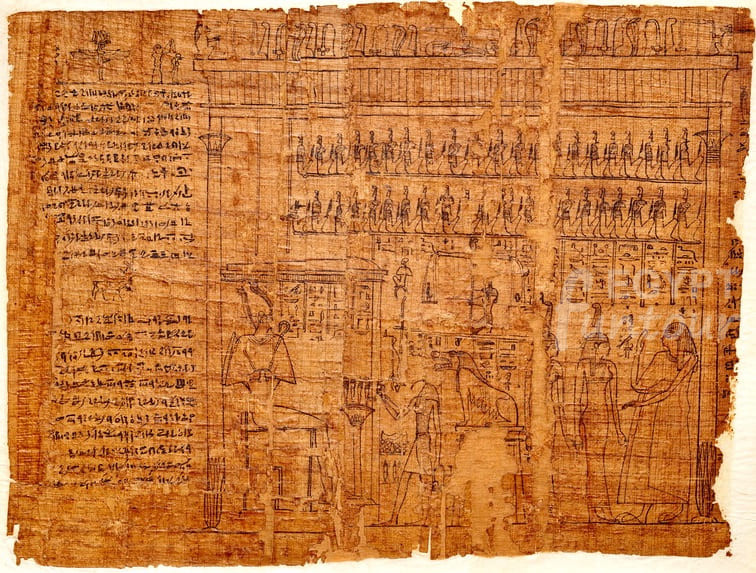
  • The Vignettes: Crucially, the Book of the Dead introduced the use of colorful, detailed illustrations, known as vignettes. These images were not just decoration; they were considered magically potent aids, guiding the deceased through the underworld trials and ensuring correct spell execution. The clarity offered by these visual guides made the complex theology accessible to a broader, potentially less-literate population.

The Theological Climax: The Weighing of the Heart

While the Coffin Texts focused on navigating the terrain of the Duat, the Book of the Dead shifted the focus to a climactic, ethical judgment, solidifying the idea of moral accountability in the afterlife.

The journey now culminated in the Weighing of the Heart (Psychostasia) ceremony, which took place in the Hall of Two Truths. This ritual was decisive:

  • The deceased’s heart (ib)—the seat of intellect, memory, and morality—was placed on one side of a scale.
  • The feather of Ma’at (representing Truth, cosmic order, and justice) was placed on the other.
  • If the heart was balanced with the feather, the deceased was declared “true of voice” and permitted to enter the fields of paradise. If it failed, the monstrous demon Ammit (part crocodile, lion, and hippopotamus) devoured the heart.

The deceased had to use Utterance 125, the Negative Confession, listing all the sins they had not committed (“I have not stolen,” “I have not killed,” etc.) to demonstrate their ethical life.

Egyptian Funerary Texts: The Role of the Heart Scarab

To ensure success during this high-stakes trial, one key spell became ubiquitous: Utterance 30B. This spell was inscribed on the Heart Scarab, an amulet placed over the mummy’s heart. The spell magically compelled the heart not to bear witness against its owner during the judgment. This shows the ultimate pragmatism of Egyptian theology: even at the moment of ethical judgment, a technical solution was available.

In this final phase of our Egyptian Funerary Texts Comparison, the rules are: Immortality is standardized and universal, the script is fully portable and illustrated, and the outcome depends on a blend of ethical conduct and specialized magical protection.

Ancient Egyptian Mummies: From Pharaohs to Powdered Medicine

This article explores the dark, two-sided history of Ancient Egyptian Mummies. Discover the staggering scale...
Related post
FUN

Synthesis: Key Points of Egyptian Funerary Texts Comparison

FInal Judgment Egyptian Mythology Egypt Fun Tours

Having examined the three distinct phases, we can now clearly define the evolutionary narrative. The differences among the Pyramid Texts, the Coffin Texts, and the Book of the Dead are not merely stylistic; they represent fundamental shifts in theology, politics, and social access.

The core narrative is one of democratization, a steady movement from centralized, exclusive power to decentralized, individual accountability. This evolution can be broken down into three critical comparative factors:

A. The Evolution of Access and Exclusivity

Feature Pyramid Texts (PT) Coffin Texts (CT) Book of the Dead (BD)
Era Old Kingdom Middle Kingdom New Kingdom
Logic of Access Royal Monopoly: Access reserved only for the Pharaoh. Elite Access: Restricted to wealthy officials and Nomarchs. Universal/Mass Access: Available to any Egyptian who could afford the papyrus and scribal fees.
Social Context Centralized Theocracy Decentralized Feudalism Imperial Bureaucracy

This table clearly illustrates the shift from a theology dependent on divine birthright (Pharaoh) to one dependent on acquired wealth (Nomarchs) and, finally, to one dependent on market economics (any free Egyptian).

B. The Evolution of Medium and Portability

The physical vehicle of the text determined its function and accessibility. The materials used directly reflect the political stability and economic capacity of the era.

  • Fixed and Permanent (PT): In the Old Kingdom, the texts were permanent, carved directly into the core structure of the pyramid. This permanence symbolized the Pharaoh’s unshakeable, unique claim on eternity, and the inseparability of the King’s afterlife from the state’s security.
  • Portable but Contained (CT): The move to wooden coffins made the ritual physically separate from the centralized royal tomb. The whole kit and caboodle—the spells and the body—moved together. This innovation was essential for the growing decentralized elite.
  • Mobile and Reproducible (BD): Papyrus scrolls were the ultimate technological step. They allowed for speed of production, customization, and cost-efficiency. This medium turned a massive architectural project (the pyramid) into a personal, reproducible document, making the afterlife script truly universal.

C. The Evolution of Afterlife Destination and Judgment

The purpose of the texts evolved from direct ascent to ethical validation.

Feature Pyramid Texts (PT) Coffin Texts (CT) Book of the Dead (BD)
Destination Celestial (The circumpolar stars/Re’s solar barque) Chthonic (The Duat/Osiris’s realm) Elysian (The Fields of Reeds, granted after judgment)
Means of Success Apotheosis: Inherently divine status; using aggressive, transformative spells (Cannibal Hymn). Knowledge: Possessing the secret names, passwords, and maps (Book of Two Ways) to overcome obstacles. Ethics: Passing the ethical test (Weighing of the Heart) and reciting the Negative Confession.

The evolution shows a clear shift in criteria for passage: from who you are (a god-king), to what you know (magical spells), to how you lived (ethical conduct).

The Role of Knowledge

Despite all the changes chronicled in this Egyptian Funerary Texts Comparison, one constant remains: The success of the deceased depended entirely on possessing the correct, written knowledge. Whether that knowledge was a cosmic blueprint exclusive to the King, a specialized map for the elite, or a mass-produced ethical guide, the written word was the technological key to unlocking immortality.

Adam and Eve in Egypt: Atum and the First Divine Family

In Ancient Egyptian mythology, Atum (the first man/creator) fathered four major deities, two male and...
Related post
FUN

Egyptian Funerary Texts: The Legacy of Documentation
Architecture and Inscription; The Logic of Location

The millennia-long journey of the Egyptian Funerary Texts Comparison reveals more than just changing burial customs; it offers a profound insight into the mechanics of social and religious change. The evolution from the Pyramid Texts to the Book of the Dead is, at its heart, the history of democratizing immortality through meticulous documentation. The three phases represent a theological scaling solution:

  1. Pyramid Texts: A one-time, custom-built solution for a single individual (the King).
  2. Coffin Texts: A batch-produced solution for a small, wealthy clientele (the Nomarchs).
  3. Book of the Dead: A mass-market solution made universally available through standardization and visual guides.

Every advancement in material—from immovable stone to portable wood and finally to reproducible papyrus—was a step toward greater social inclusion. This Egyptian literary tradition, which began as an exclusive script for a god-king, ultimately became a universal manual empowering every individual to navigate their final journey.

This enduring reliance on the written word and specialized knowledge secured not only the souls of the deceased but also the foundations of Western esoteric and religious thought. The Egyptian documents established the fundamental concept of a perilous afterlife journey requiring both ritual power and, eventually, moral justification—a legacy that truly defined eternity.

❓ (FAQs) About Egyptian Funerary Texts

1. What are the three main Egyptian funerary texts?

The three main collections of funerary texts, listed in chronological order of appearance, are:

  • The Pyramid Texts (Old Kingdom)
  • The Coffin Texts (Middle Kingdom)
  • The Book of the Dead (New Kingdom)

2. What is the biggest difference between the Pyramid Texts and the Book of the Dead?

The biggest difference is accessibility. The Pyramid Texts were exclusive, carved only inside royal pyramids for the Pharaoh. The Book of the Dead was widely accessible, written on papyrus scrolls purchased by any wealthy or middle-class citizen. This shift reflects the democratization of the afterlife.

3. What is the Book of the Dead really called?

The common name, Book of the Dead, was given by Western scholars. Its ancient Egyptian title is Peret em Heru, which translates to “Coming Forth by Day.

4. What is the Cannibal Hymn?

The Cannibal Hymn is a series of powerful and aggressive spells (Utterances 273–274) found in the Pyramid Texts. It describes the deceased Pharaoh hunting and consuming the gods themselves to assimilate their power and ensure his ultimate dominance in the afterlife.

5. Why did the destination of the afterlife change?

The destination changed due to political shifts. In the Old Kingdom, the Pharaoh’s afterlife was the circumpolar stars. When the royal monopoly broke, elites adopted the more accessible afterlife of Osiris in the Duat (Underworld), which became the standard destination in the Coffin Texts and the Book of the Dead.

6. What role did the vignettes play in the Book of the Dead?

Vignettes are the colorful illustrations found in the Book of the Dead. They were crucial magical aids, acting as visual guides to help the deceased perform the correct rituals and navigate the dangerous trials of the Underworld.

7. What is the significance of the Heart Scarab?

The Heart Scarab was an amulet. Egyptians placed it over the mummy’s heart. They inscribed it with Utterance 30B from the Book of the Dead. This spell magically prevented the heart from testifying against its owner during the decisive Weighing of the Heart judgment.

8. What is the Weighing of the Heart ceremony?

The Weighing of the Heart, or Psychostasia, is the central event of the New Kingdom afterlife, detailed in the Book of the Dead. The deceased’s heart (ib) is weighed against the Feather of Ma’at (Truth and Cosmic Order). If they balance, the deceased achieves eternal life.

9. What is the Book of Two Ways?

The Book of Two Ways is the earliest known pictorial map of the afterlife, found within the Coffin Texts. It provided an illustrated guide, outlining two paths—one by water and one by land—to navigate the dangerous regions of the Duat.

10. How did the materials of the texts evolve?

The texts evolved from the most permanent to the most reproducible:

  • Stone (Pyramid Texts): Fixed, permanent, exclusive.
  • Wood (Coffin Texts): Portable, personalized, but expensive.
  • Papyrus (Book of the Dead): Highly reproducible, mobile, and widely accessible.

10 Days Classic UNESCO Tour...
Discover the hidden aspects of Egypt's past....

HANDS DOWN, the best cultural experience I’ve ever had

Thank you, Egypt Fun Tour, for a most memorable trip. I admit I didn’t do any of the planning (it was all done by my boyfriend), but as you can read in the reviews below, Hani (the owner of Egypt Fun Tours) is superbly organized and accommodating with scheduling. My

More »

Good but did not get what I paid for…

I had an 11 hour layover in Cairo. I wrote to them based on recent reviews for them on this site. After a few email exchanges with Hati, who I think is one of the owners, I was ready to get there. I was greeted by Hatem, a very good

More »
Amazing Egypt Tours Vacations in December Egypt Fun Tours

Amazing trip with Egypt Fun Tours

We had the time of our lives on a trip to Egypt and the Bahariya/White Desert with Egypt Fun Tours, too. I would highly recommend this company. They are very familiar with organizing this trip, and this means they are well-connected in the desert area. This was invaluable to us

More »
15-Day Historical Egypt Tour Package

all good!

we took pyramid and Cairo city tours and all went smoothly. The were very flexible to adapt to our requirements. Car, car driver and guide were great. very knowledgable and professional tour. Very recommendable

More »
Isis with wings

Top-rated Tour Packages

Isis with wings