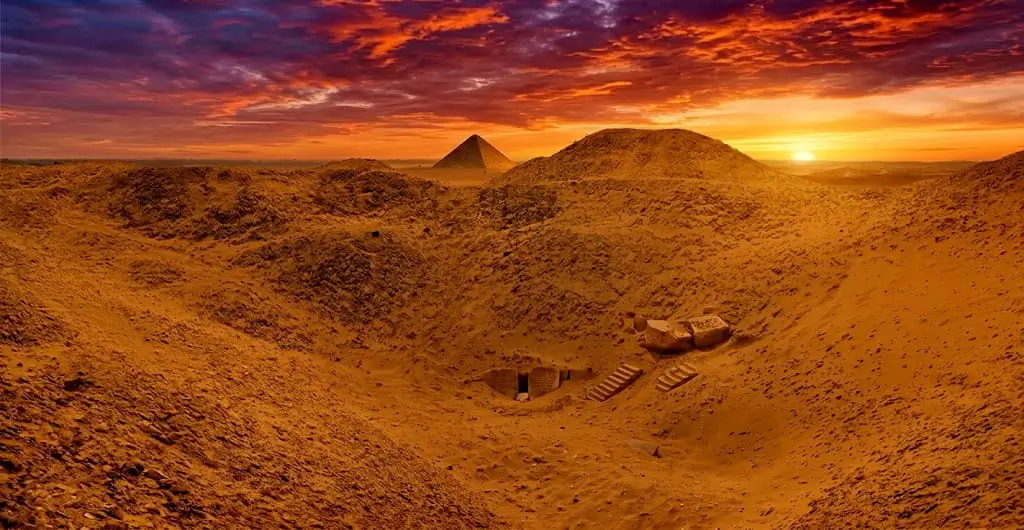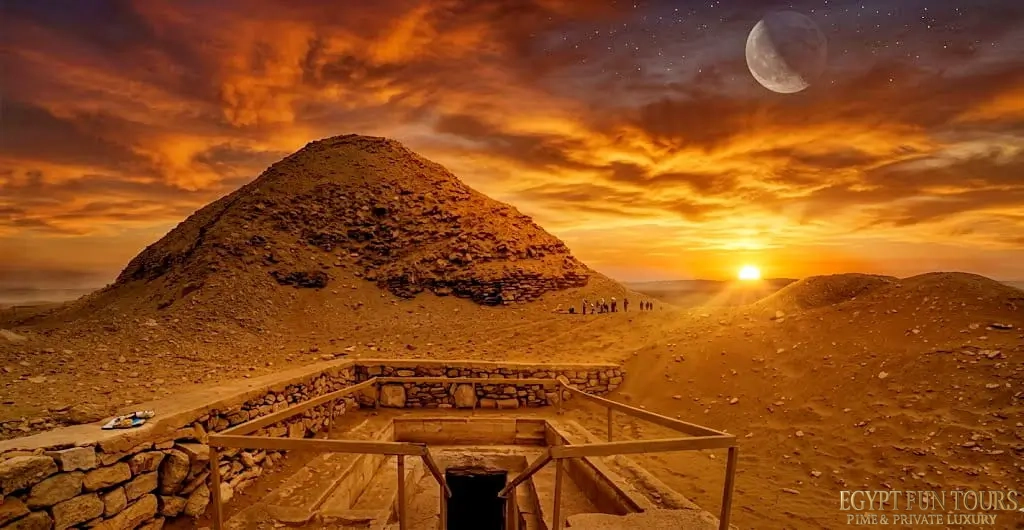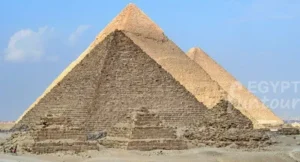

The White Pyramid of Amenemhat II stands as a fascinating bridge between the grand stone eras of the Old Kingdom and the innovative Middle Kingdom. King Amenemhat II, the third ruler of the Twelfth Dynasty, chose to site his tomb in Dahshur. Specifically, he placed it northeast of the Bent Pyramid. By returning to this ancient necropolis, the king physically linked his reign to the legacy of Sneferu. Consequently, the White Pyramid of Amenemhat II is a testament to the enduring sanctity of the Dahshur plateau. Therefore, it remains a critical site for understanding the political and religious motivations of the Middle Kingdom pharaohs.
The monument earned its name from the high-quality Tura limestone used for its original casing. Because the core was built with a framework of limestone walls, it appeared as a solid white mountain in antiquity. However, centuries of stone robbing have reduced the structure to a mound of limestone rubble. Specifically, the removal of the casing stones left behind piles of white chippings around the base. Consequently, modern visitors see a “white” landscape that gives the pyramid its modern name. For this reason, the White Pyramid of Amenemhat II is a silent witness to the cycle of construction and decay in Egyptian history.