King Chephren (Khafre): The Pharaoh of the Sphinx and the 2nd Pyramid
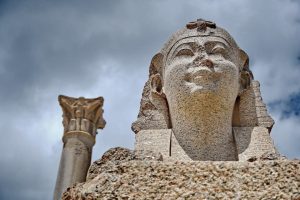
King Chephren (Khafre) is the master of the Giza Plateau. While his father, Khufu, built the largest pyramid by volume, Chephren built the most iconic complex. He constructed the Second Pyramid on higher bedrock to create the illusion that it is taller than the Great Pyramid. Furthermore, he is widely believed to be the builder of the Great Sphinx, meaning it is his face that has watched over the desert for 4,500 years.
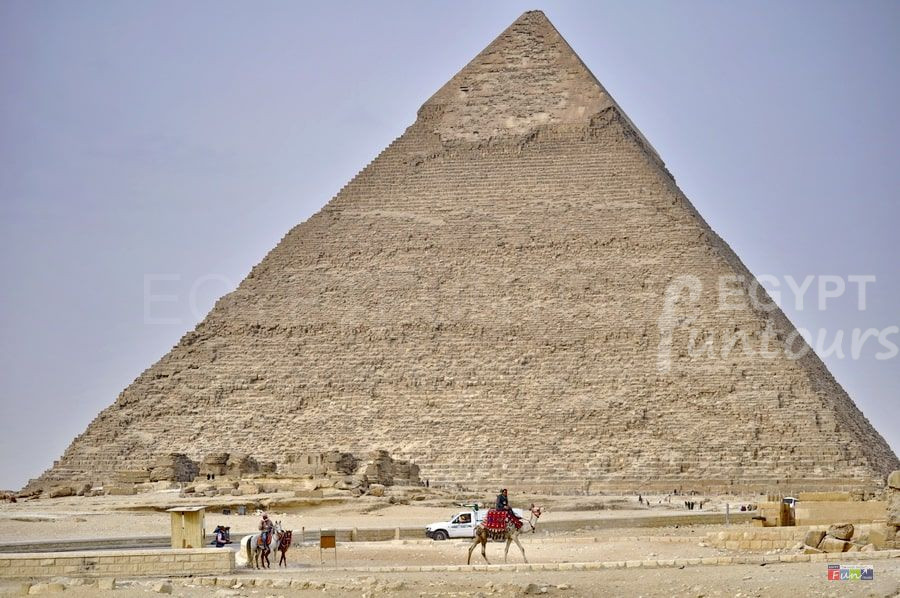
When you look at a postcard of Egypt, you are usually looking at King Chephren. It is the most common mistake tourists make. They point to the pyramid in the center of the Giza Plateau—the one with the smooth white limestone cap at the top—and assume it is the Great Pyramid. It is not. That is the pyramid of King Chephren. The Great Pyramid (built by his father, Khufu) sits behind it.
King Chephren (known as Khafre to the Ancient Egyptians) was a master of optics. He knew he could not match the sheer volume of his father’s monument. Therefore, he did something smarter. He built his pyramid on a bedrock foundation that was 10 meters (33 feet) higher. The result? From almost every angle in Cairo, his pyramid looks taller, sharper, and more dominant.
The Face of the Pharaoh
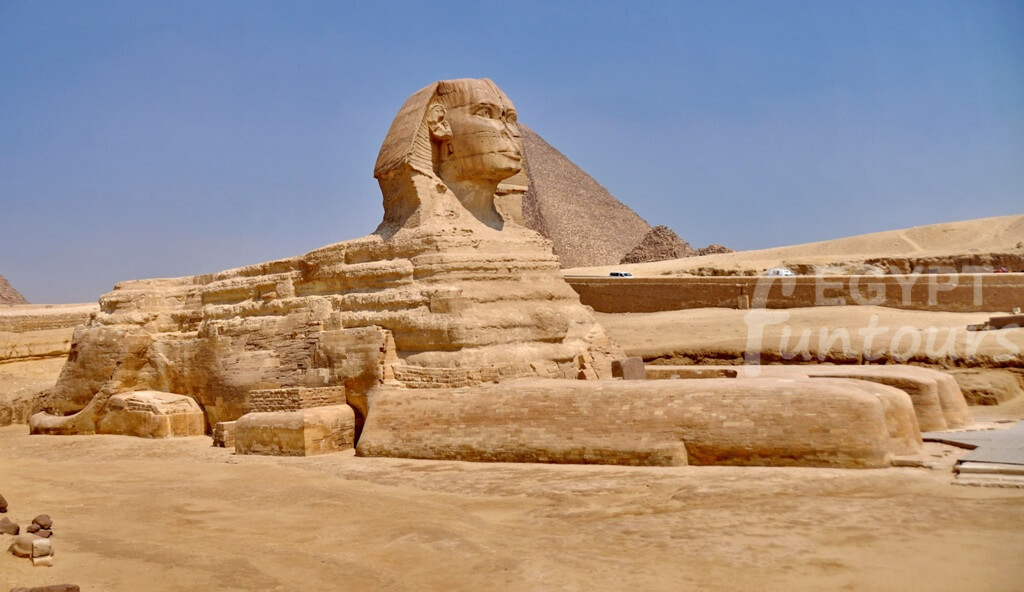
Who was the man behind the illusion? King Chephren ruled during the Fourth Dynasty (c. 2558–2532 BC). He succeeded his brother, the mysterious King Djedefre, and returned the royal necropolis to Giza. However, his legacy is not just about height. It is about the face. Most Egyptologists agree that King Chephren commissioned the Great Sphinx.
The Evidence: The Sphinx sits perfectly within his pyramid complex.
The Resemblance: The facial features match the famous diorite statues of the king found in his Valley Temple.
Consequently, King Chephren has become the definitive “look” of the Pharaoh. When the world imagines an Egyptian king—stern, muscular, and wearing the Nemes headdress—they are imagining him.
In this guide, we will explore the engineering of the Second Pyramid, the controversy of the Sphinx, and the exquisite art that makes King Chephren the true artist of the Old Kingdom.
The Shadow of the Father
King Chephren did not inherit the throne directly from his father, Khufu. There was an interlude. To understand Chephren’s reign, we must look at the lost brother: King Djedefre.
The Fourth Dynasty Context
When Khufu died, his son Djedefre took the crown. However, Djedefre broke with tradition.
The Move: He abandoned the Giza Plateau. He moved his pyramid north to Abu Rawash.
The Result: Djedefre ruled for only about eight years. When he died, the throne passed to his younger brother, King Chephren.
The Return to Giza King Chephren made a decisive strategic choice. He abandoned his brother’s site and returned to Giza, right next to his father.
This was a statement. By building next to the Great Pyramid, King Chephren visually linked himself to the glorious legacy of Khufu. He restored the Giza Plateau as the center of royal power and the gateway to the afterlife.
A Reign of Stability (The Tyrant Myth)
Like his father, King Chephren suffers from a bad reputation in history books.
The Greek historian Herodotus(writing 2,000 years later) claimed that Chephren was a cruel tyrant.
The Claim: Herodotus wrote that Chephren kept the Egyptian temples closed and forced the population into misery for 56 years.
The Reality: Archaeology proves this is false.
King Chephren built one of the most magnificent temples in the Old Kingdom (the Valley Temple). You do not build massive temples if you hate the gods. Furthermore, the sheer quality of art and sculpture from his reign indicates a period of immense prosperity and high cultural achievement, not poverty. He was likely a strict, powerful ruler who commanded absolute authority—but he was a builder, not a destroyer.
Alexander the Great: Travel the Path of a Pharaoh-King
Alexander the Great became Pharaoh in Egypt (332 BC). He founded Alexandria, a world capital,...
King Chephren faced a problem. His father had already built the largest pyramid possible on the plateau. To build something bigger was geologically impossible. So, he built something smarter.
Engineering the Illusion
The Pyramid of Chephren is an architectural masterpiece of perspective.
The Height: Originally, it stood 143.5 meters (471 feet) tall. This is only 3 meters (10 feet) shorter than the Great Pyramid.
The Trick:King Chephren chose a spot on the plateau where the bedrock was 10 meters higher than his father’s site.
The Result: Because it sits on a pedestal of natural rock, the Second Pyramid appears to tower over the Great Pyramid. Even today, many visitors argue that Chephren’s is the biggest. It is the ultimate ego move in architectural history.
The Casing Stones (The White Cap)
Look at the very top of the Second Pyramid. You will see a smooth layer of white stone. This is the original Tura limestone casing.
Khufu’s Pyramid: Has lost almost all its casing stones (they were stolen in the Middle Ages to build Cairo).
Chephren’s Pyramid: Retains this “white cap.”
This gives us a rare glimpse of what the pyramids originally looked like: smooth, white, and blindingly bright in the desert sun.
Inside the Tomb: The Belzoni Entry
For centuries, explorers could not find the entrance. They assumed the pyramid was solid. Then came Giovanni Belzoni. Belzoni was an Italian circus strongman turned tomb robber. In 1818, he used his skills to locate the hidden upper entrance. He battered his way through granite blocks, expecting to find gold.
What He Found: When he entered the burial chamber, he found it empty. The lid of the black granite sarcophagus was broken and lying on the floor. The tomb had been robbed thousands of years earlier. Frustrated but proud, Belzoni did what any 19th-century explorer would do. He carved his name in massive letters on the wall of the burial chamber.
“Scoperta da G. Belzoni. 2. mar. 1818.”
Visitors today can still see this graffiti. It is a permanent mark of the man who cracked the code of King Chephren.
The Interior Design Unlike the complex shafts of the Great Pyramid, King Chephren‘s interior is simple.
Two descending passages (one ground level, one subterranean).
A single burial chamber carved primarily out of the living bedrock, not the masonry.
No “Grand Gallery” or complex air shafts.
This simplicity suggests that King Chephren focused his resources on the exterior complex—specifically, the Sphinx—rather than the internal mechanics.
King Menkaure: Who Completed the Giza Necropolis
King Menkaure (also known as Mycerinus) was a pharaoh of Egypt's Fourth Dynasty who completed...
Who built the Great Sphinx? This is the biggest cold case in archaeology. There are no inscriptions on the statue saying “I built this.” For years, some scholars argued it was Khufu. Others claimed it predated the pyramids entirely.
However, the evidence points overwhelmingly to one man: King Chephren.
The Evidence: Why It Belongs to Chephren
We don’t need a signature to solve this. We just need to look at the geology and the architecture.
1. The Causeway Connection The Sphinx does not sit in isolation. It is part of a larger complex.
The Alignment: The Sphinx sits directly next to King Chephren‘s Valley Temple.
The Causeway: A massive stone causeway connects the Valley Temple directly to Chephren’s pyramid.
The Logic: The Sphinx, the temple, and the pyramid form a single, unified architectural line. It was designed as one cohesive unit.
2. The Geology of the Quarry The Sphinx was not built; it was carved.
The Source: To build the core of King Chephren‘s Valley Temple, workers quarried massive limestone blocks from the Giza plateau.
The Leftover: After removing these blocks, a massive chunk of bedrock was left in the center of the quarry. The sculptors then carved this “leftover” rock into the Sphinx.
The Conclusion: Since the blocks were used for Chephren’s temple, the Sphinx must have been carved at the same time.
3. The Face of the King Forensic comparisons seal the deal. When you compare the face of the Sphinx with the famous diorite statue of King Chephren (found in the Valley Temple), the features align. The broad face, the specific shape of the eyes, and the Nemes headdress are stylistic markers of Chephren’s reign, not Khufu’s.
The Purpose of the Guardian
Why did King Chephren carve a lion with a human head? The Egyptians called it Shesep-ankh, or “Living Image.”
Solar Symbolism: The Sphinx faces due east, staring directly at the rising sun.
The Divine Role: By placing his own head on the body of a lion (a symbol of solar power), King Chephren was merging himself with the sun god Atum or Ra.
He was not just guarding the necropolis. He was presenting himself as the eternal god-king, greeting the sun every morning for eternity.
Ptolemy I Soter: From Macedonian General to Pharaoh of Egypt
Ptolemy I Soter was one of Alexander the Great's generals who founded the Ptolemaic Dynasty...
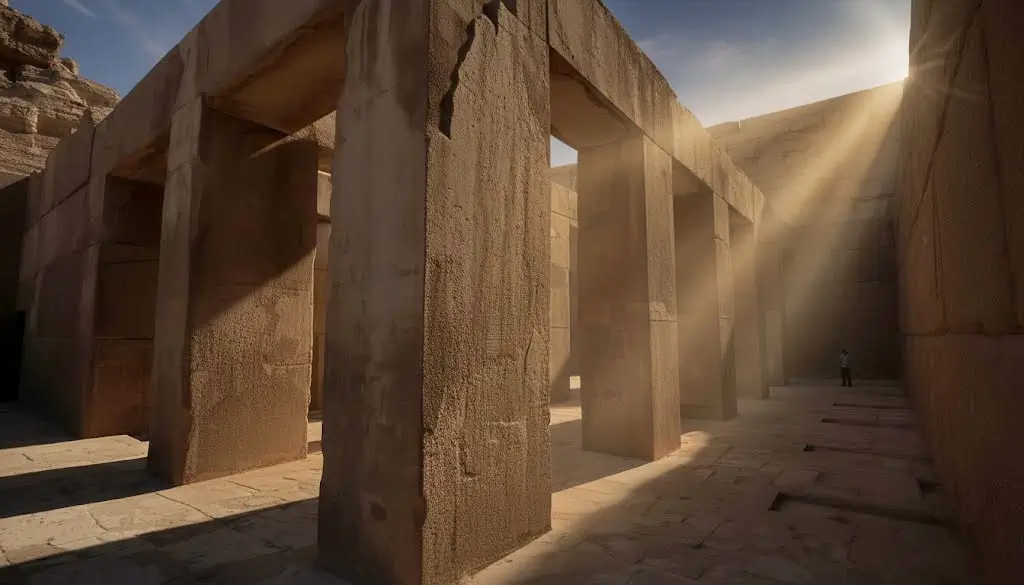
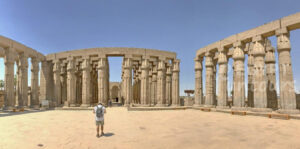
While the pyramid is famous for its size, King Chephren’s true genius shines in his temple. Located next to the Sphinx, the Valley Temple of Chephren is a miracle of survival. It is the best-preserved building from the Old Kingdom. Unlike other temples that were reduced to rubble, this one still stands almost exactly as it did 4,500 years ago.
The Architecture: Red and White
Stepping inside is like stepping back in time. The design is stark, powerful, and devoid of inscriptions. King Chephren let the stone speak for itself.
The Walls & Pillars: Massive blocks of Red Granite from Aswan. These represent the enduring power of the king.
The Floors: Gleaming White Alabaster.
The Symbolism: The contrast between the red granite (flesh/earth) and white alabaster (bone/purity) created a sacred, timeless environment for the king’s purification rituals.
The engineering is precise. The granite blocks are fitted together so perfectly that you cannot slide a piece of paper between them, even without mortar.
The Masterpiece: Khafre Enthroned
In 1860, archaeologists digging in the temple found a pit in the floor. Inside, buried upside down to protect it, was one of the greatest works of art in human history. It is the statue known as Khafre Enthroned. Carved from Diorite (an incredibly hard, black stone), it depicts King Chephren seated on a lion-legged throne.
The Expression: His face is calm and ageless. He looks past the viewer, into eternity.
The Protector: If you look at the statue from the front, you see only the king. However, if you look from the side, you see the Falcon God Horus. The bird stands behind the king’s head, wrapping its wings around Chephren’s neck in a gesture of absolute protection.
Why does this matter? This statue defined the “Canonical Style” of Egyptian art. For the next 2,000 years, every pharaoh tried to copy the perfect proportions and divine calm of King Chephren. It is the gold standard of royalty.
The Legacy of the Face
Khufu built the mountain. King Chephren built the legend. While his father focused on sheer volume, King Chephren focused on optics and artistry.
He engineered his pyramid to look taller.
He built the only temple from the Old Kingdom that still stands intact.
He carved his face onto the Sphinx, creating the ultimate symbol of ancient mystery.
When we think of Ancient Egypt today, we are almost always seeing the world through King Chephren‘s eyes. His statue is the perfection of royal art. His Sphinx is the guardian of history.
He proved that you don’t always have to be the biggest to be the most memorable. You just have to be the smartest.
Frequently Asked Questions (FAQ)
Here are quick answers to the most common questions about King Chephren.
Who built the Second Pyramid at Giza?
King Chephren (Khafre) built the Second Pyramid. It is often mistaken for the Great Pyramid because it sits on higher bedrock and still retains its white limestone casing at the top.
Did King Chephren build the Sphinx?
Yes. Most Egyptologists agree that King Chephren commissioned the Great Sphinx. It is carved from the bedrock left over from his Valley Temple construction, and the face bears a strong resemblance to his statues.
What is the “Khafre Enthroned” statue?
It is a masterpiece of Ancient Egyptian art carved from black diorite. The statue depicts King Chephren seated on a throne with the falcon god Horus wrapping his wings around the king’s head for protection. It is currently in the Egyptian Museum in Cairo.
Why does Chephren’s pyramid look taller than Khufu’s?
It is an optical illusion engineered by King Chephren. Although his pyramid is physically 10 feet shorter than Khufu’s, he built it on a bedrock foundation that is 33 feet (10 meters) higher, making it appear taller from most angles.
Explore the wonders of the Western Desert on an immersive 4-day private safari. Witness the ancient whale fossils of Wadi El Hitan (UNESCO) and sleep...
I had waited 60 years to get to Egypt; in fact, it was my 60th birthday gift to myself. I went with my oldest daughter, and the experience was excellent. It was meticulously planned by the tour company and was designed for me and my daughter. I never had a
I had a 10 hour layover in Cairo so booked a tour with Hani at Egypt Fun Tours. The tour was brilliant. I saw exactly what I wanted to see during the day which included the pyramids, Sphinx, Egyptian museum and the Bazaar. Hani was very knowledgeable and was the
We contacted Egypt Fun Tours via email about a slightly customized Nile Cruise tour, and they promptly responded with an itinerary that met our exact needs. We went back and forth with a few more questions, and they were perfect about responding and answering all our queries. Our trip was
Hello everyone! We would like to share our extremely positive experience with Fun Tours. Our tour was a complete success thanks to our guide, Osama, and our driver Hassan. Osama proved to be an enthusiastic and knowledgeable guide who answered all of our questions and catered to our individual wishes
Hi Hamada! Sorry, we were so quick to say goodbye—my mom was fading 🙂 I just wanted to say thank you for THE MOST AMAZING trip… You thought of every detail, improvised, adapted, overcame every challenge, multitasked personalities, and did it all with grace, intelligence, and kindness. From the bottom