

Kingdom of Kush: The Forgotten Superpower of the Nile Valley
For millennia, mainstream historical narratives viewed the Nile Valley through a single, narrow lens. Most accounts focused entirely on the borders of ancient Egypt. Historians often relegated the vast lands to the south—swept under the general term “Nubia”—to the footnotes of history. They framed this region merely as a volatile frontier, a source of unfamiliar trade goods, or a conquered territory. Today, modern archaeology and a balanced historical perspective shatter this old bias. South of the First Cataract lay a sophisticated, deeply resilient, and brilliantly innovative civilization. This power rivaled Egypt in wealth and majesty. In fact, its leaders sat upon the Egyptian throne for nearly a century. This was the Kingdom of Kush.
Kingdom of Kush: An Independent African Epic
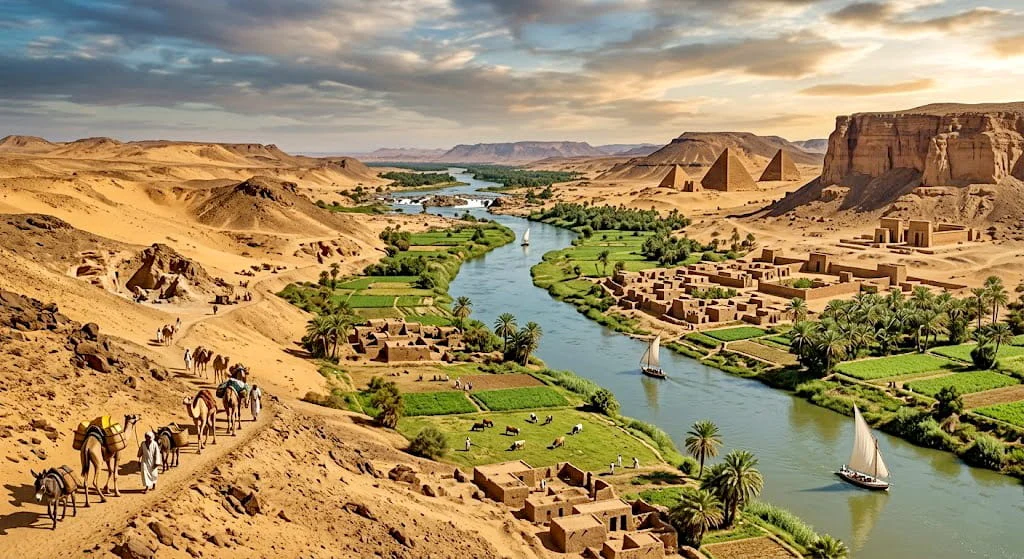
The story of the Kingdom of Kush stands as an independent epic of African state-building, military might, and cultural endurance. The Kushite state emerged as a formidable urban and agricultural society as early as the third millennium BCE. It flourished in the middle Nile valley, encompassing parts of modern-day Sudan and southern Egypt.
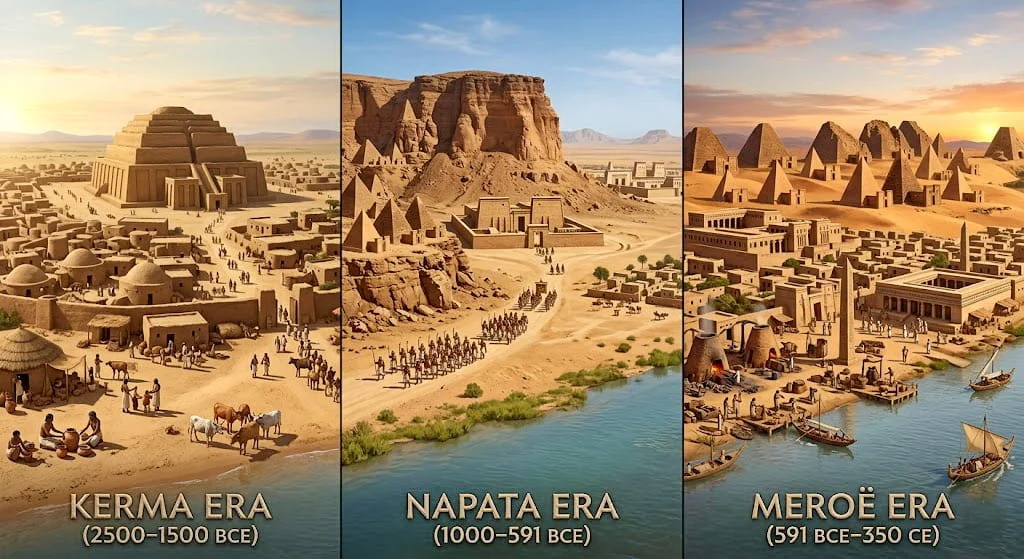
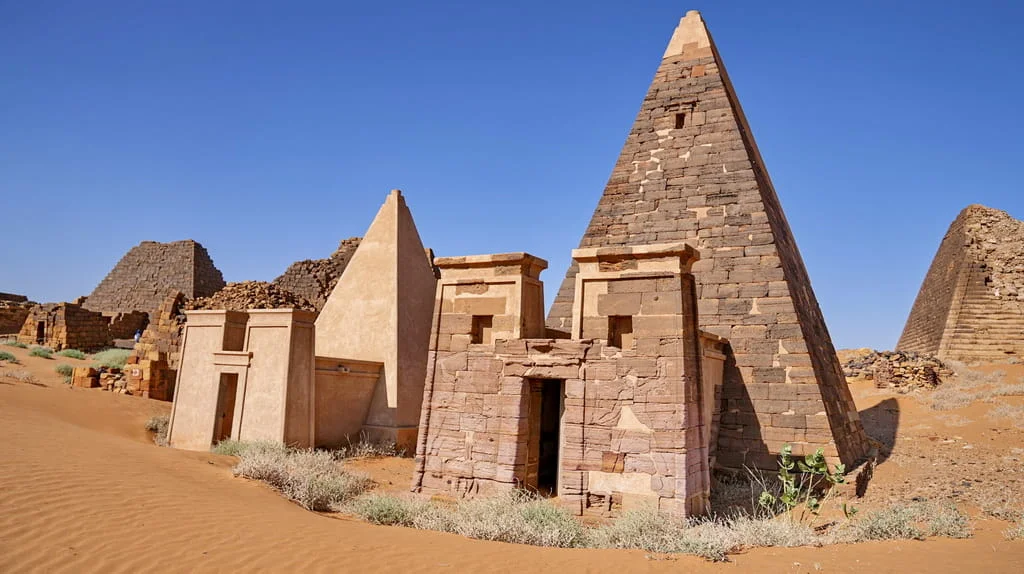
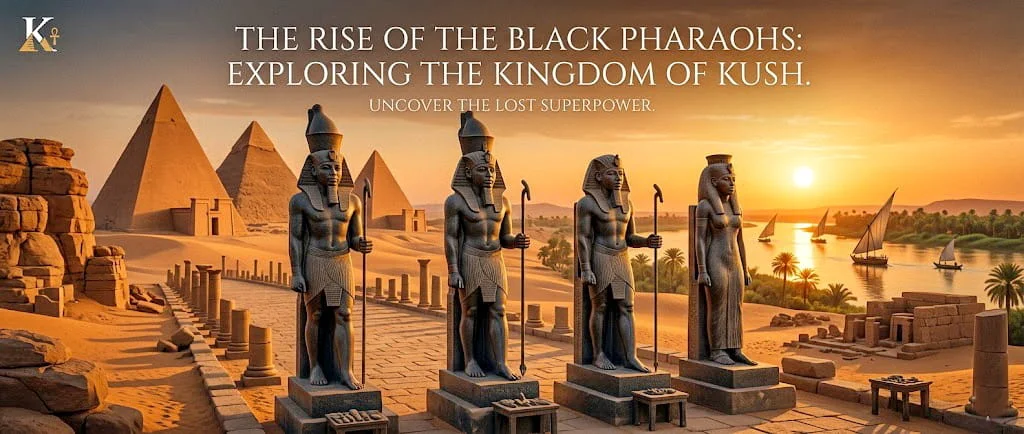
Over a staggering three-thousand-year lifespan, Kush adapted, evolved, and reasserted its dominance. The civilization cycled through three distinct capital eras: Kerma, Napata, and Meroë. This empire commanded vast trade networks, pioneered advanced iron-smelting technologies, and constructed more pyramids than the Giza Plateau.
Kingdom of Kush: The Kushite Restoration
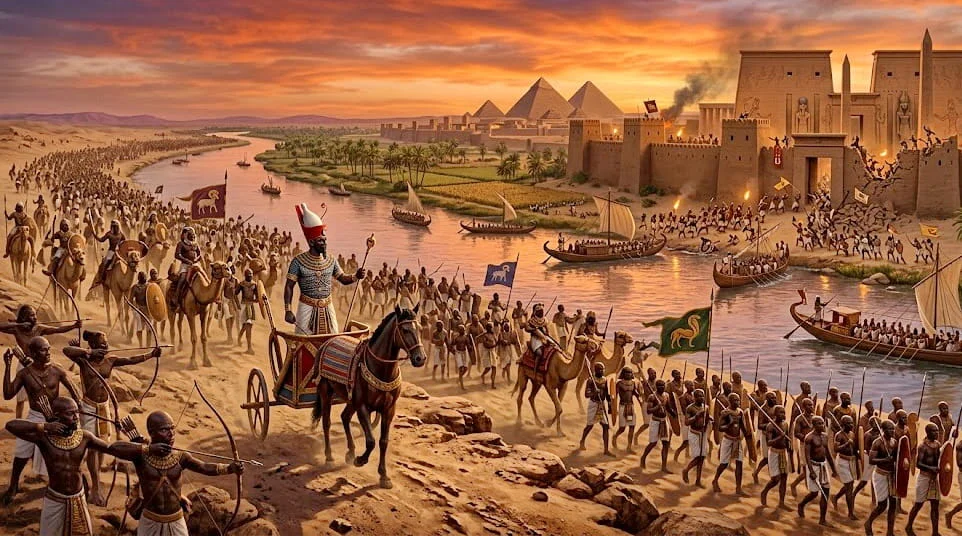
The Kushites actively shaped the geopolitics of the ancient Near East and Mediterranean worlds. During the Third Intermediate Period, the New Kingdom of Egypt collapsed into political fragmentation. The kings of Kush marched north to intervene. They did not arrive as destructive foreign invaders, but as pious revivalists.
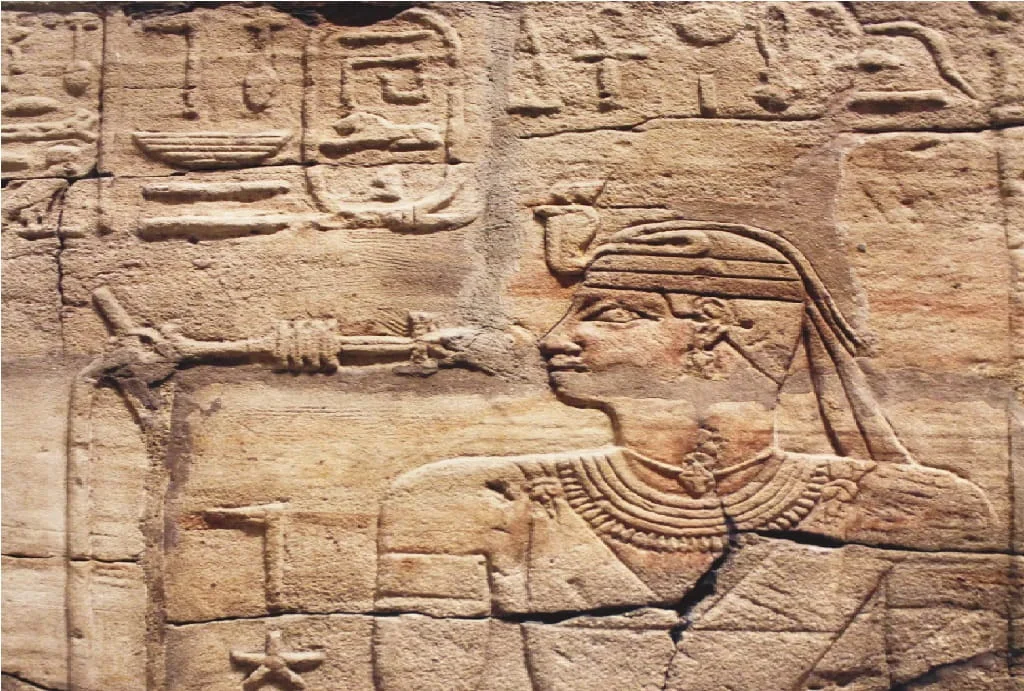
By establishing the 25th Dynasty, the Nubian Kushite Empire unified the entire Nile Valley. Their rule stretched from the Mediterranean Sea to the confluence of the Blue and White Niles. This era ushered in a brilliant cultural renaissance. Furthermore, it defended the region against the terrifying military machine of the Neo-Assyrian Empire.
To explore Kush is to step into a dynamic ancient world. Here, powerful queen-regents commanded armies against Rome, and holy mountains held the secrets of supreme deities. Kushite scribes invented an indigenous written script that still challenges modern linguists. This pillar guide reconstructs the sweeping saga of the Kingdom of Kush, restoring a forgotten superpower to its rightful place in global history.
Defining the Civilizations: Nubia vs. The Kingdom of Kush
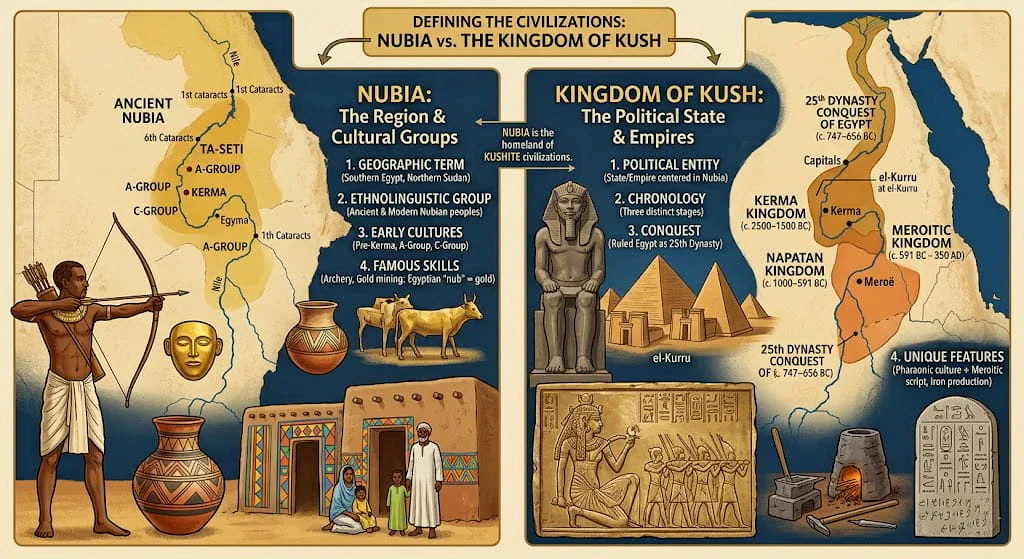
To understand this region’s trajectory, we must establish a clear distinction between two terms. People often use Nubia and Kush interchangeably, but they mean different things.
Nubia: The Region
Nubia is primarily a geopolitical and geographic term. It refers to the vast region south of Aswan (the First Cataract) stretching deep into central Sudan. Many historians believe the term derives from the ancient Egyptian word nbw, which means gold. This name directly honors the staggering mineral wealth embedded within the local deserts. Nubia hosted a diverse array of semi-nomadic cultures, distinct tribal groups, and shifting populations. These groups shared deep cultural ties but did not always answer to a single ruler.
Kingdom of Kush: The State
Kush, by contrast, defines a specific political power. The ancient Egyptians utilized this name to describe the centralized, organized state that grew out of Nubia. The inhabitants eventually adopted the name for themselves. When we speak of the Kingdom of Kush, we reference an institutionalized monarchy, a standing military, a state religion, and an urban civilization centered around a capital city.
In short, while all Kushites were Nubians, not all Nubian peoples belonged to the Kingdom of Kush. Recognizing Kush as a distinct, evolving state allows us to track its growth from a local river power into a sprawling, multi-ethnic empire.
Why the Kingdom of Kush Rewrites Ancient African History
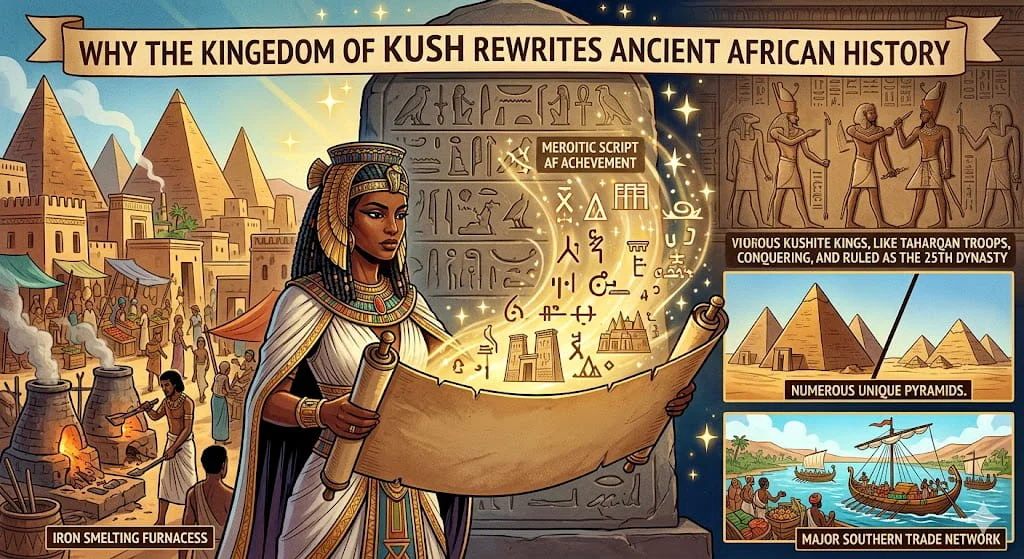
The academic rediscovery of the Kingdom of Kush upends traditional narratives of human civilization. For generations, early 20th-century archaeologists uncovered magnificent monuments, royal tombs, and gold treasures in Sudan. Yet, they erroneously attributed these achievements to external invaders or displaced Egyptians. The racial biases of that era made it difficult for early scholars to accept that an indigenous, dark-skinned African population engineered this empire.
Modern multidisciplinary research completely corrects this historical malpractice. Today, experts combine bioarchaeology, linguistics, and systematic excavations at sites like Kerma and Meroë. This work proves three crucial realities.
1. True Indigenous Complexity
Kush confirms that Northeast African state-building was entirely indigenous. The political complexity of Kush developed concurrently with, and independently of, early dynastic Egypt. It was a parallel civilization that engaged in a continuous, two-way cultural dialogue with its northern neighbor.
2. Global Geopolitical Influence
The existence of Kush shatters the idea of an isolated ancient Africa. Kushite foreign policy influenced decisions in Judea, clashed with the imperial strategies of Assyria, and negotiated complex military treaties with the Roman Empire.
3. Masterful Cultural Synthesis
Kush demonstrates a unique capacity for cultural synthesis. The Kushites possessed immense cultural flexibility. They adopted the worship of the Egyptian god Amun, mastered pyramid architecture, and utilized hieroglyphs. At the same time, they maintained their own indigenous pantheon, such as the lion-god Apedemak. They kept distinct burial customs, like burying kings on funerary beds, and ultimately invented their own phonetic Meroitic script.
By placing the Kingdom of Kush at the center of the ancient world, we move away from an isolated view of history. We step into a truer, richer understanding of Africa’s profound impact on global civilization.