
God Set: Guide to the Egyptian God of Chaos, Storms, and the Desert
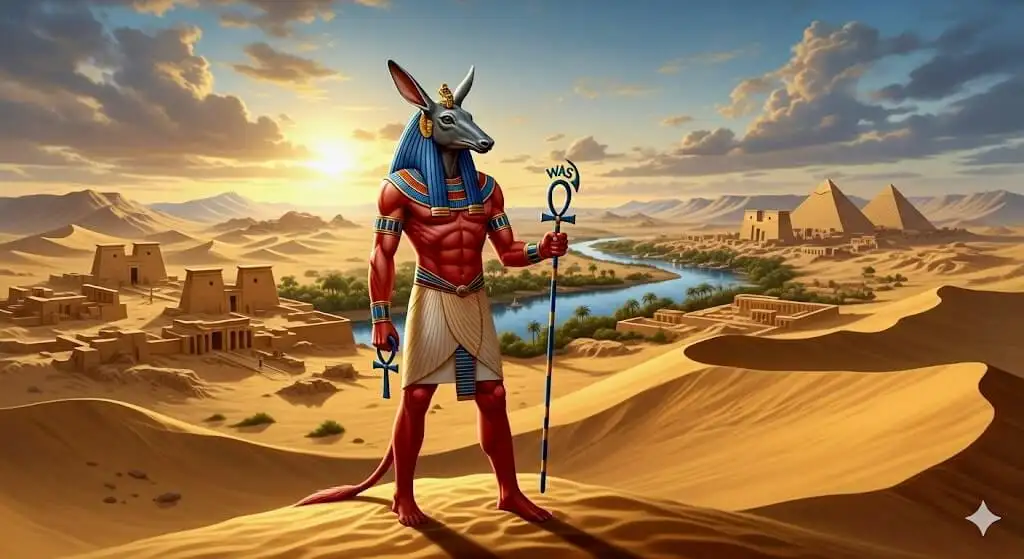
Set (also known as Seth or Sutekh) is the ancient Egyptian god of the Desert, Storms, Disorder, and Foreign Lands. His name became synonymous with chaos (Isfet), primarily due to his central role as the villain who brutally murdered his brother, Osiris, and battled his nephew, Horus, for the throne. Despite this, Set possessed a dual nature. He served as the fierce protector of the sun god Ra during his nightly journey through the underworld. He is uniquely depicted with the distinct head of the Set Animal, a composite creature symbolizing the untamed, violent forces of nature.
Geb: The Ancient Egyptian God of Earth, Fertility, and the Pharaoh’s Throne
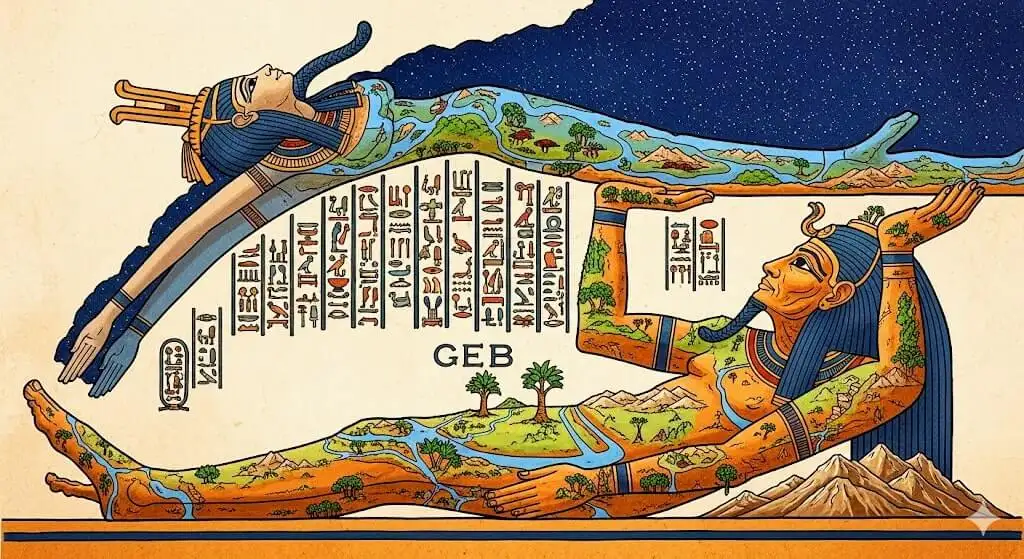
God Geb is the Ancient Egyptian deity of the Earth, who, along with his sister-wife Nut (the sky), forms the essential foundation of the cosmos. As the son of Shu (Air) and Tefnut (Moisture), Geb symbolizes the fertile, physical ground and the source of all life. This guide explores his pivotal role in the Heliopolitan Ennead, detailing his separation from Nut by their father, which created the world as the Egyptians knew it. You will discover his connection to fertility (often depicted with green or black skin), his symbolic role as the ultimate ruler of Egypt (the pharaoh’s true successor), and his special status as the jailer who holds the spirits of the dead.
God Aten: The Hidden Power Behind Sun Disk
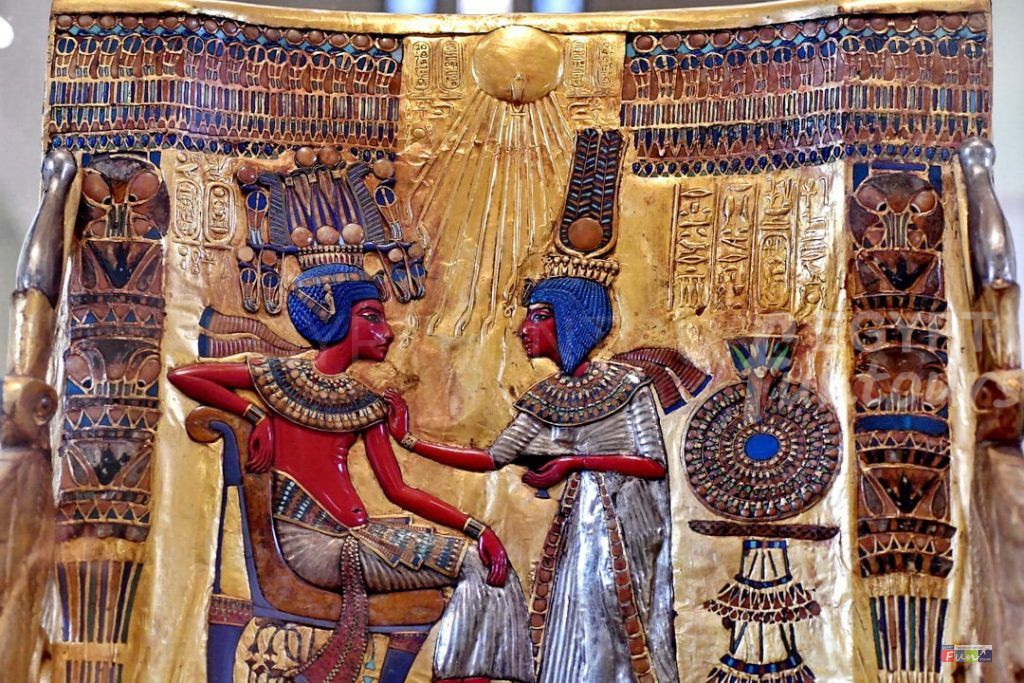
The God Aten is unique in Egyptian history, representing the solar disk itself and serving as the singular, omnipotent deity during the controversial Amarna Period. This guide explores Aten’s brief but radical ascent under Pharaoh Akhenaten (formerly Amenhotep IV), who abolished the traditional polytheistic worship of Amun and the other gods, establishing the Aten as the sole creator and life-giver. You will discover the theological revolution of Atenism, examining its aniconic depiction—the sun disk with life-giving rays—and the impact of this monotheistic experiment on Egyptian art, politics, and religion, and its sudden decline after Akhenaten’s death.
Atum: The Self-Created God Who Rose From Chaos (Creator of the Ennead)
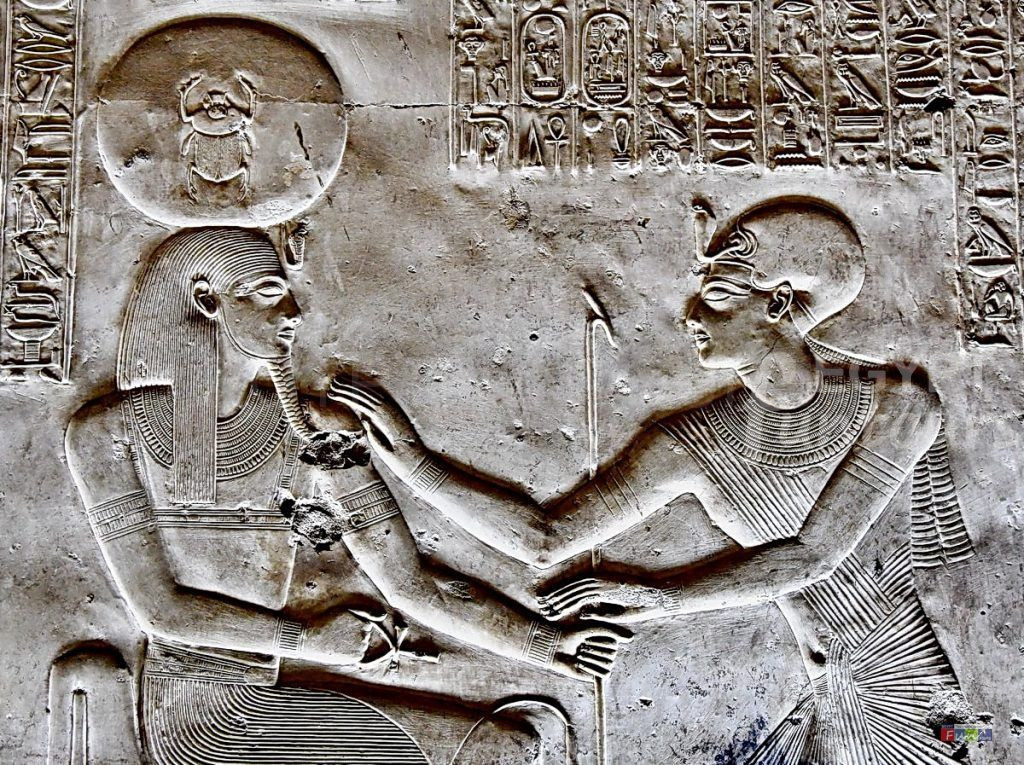
God Atum is the central figure in the Heliopolitan creation myth, regarded as the ultimate self-created god and the source of all existence. Known as “The All-Risen One,” Atum initially existed as a single entity in the dark, watery chaos (Nu) before creating the universe from his own being upon the primordial mound. This guide explores his role as the great primeval creator, detailing how he breathed life into the first divine couple, Shu (air) and Tefnut (moisture), thereby establishing the structure of the cosmos. You will discover his connection to the setting sun, his frequent depiction as a man wearing the Double Crown of Egypt, and his eternal significance as the one who governs both creation and its ultimate return to chaos.
God Ra: The Definitive Guide to the Supreme Sun God of Ancient Egypt
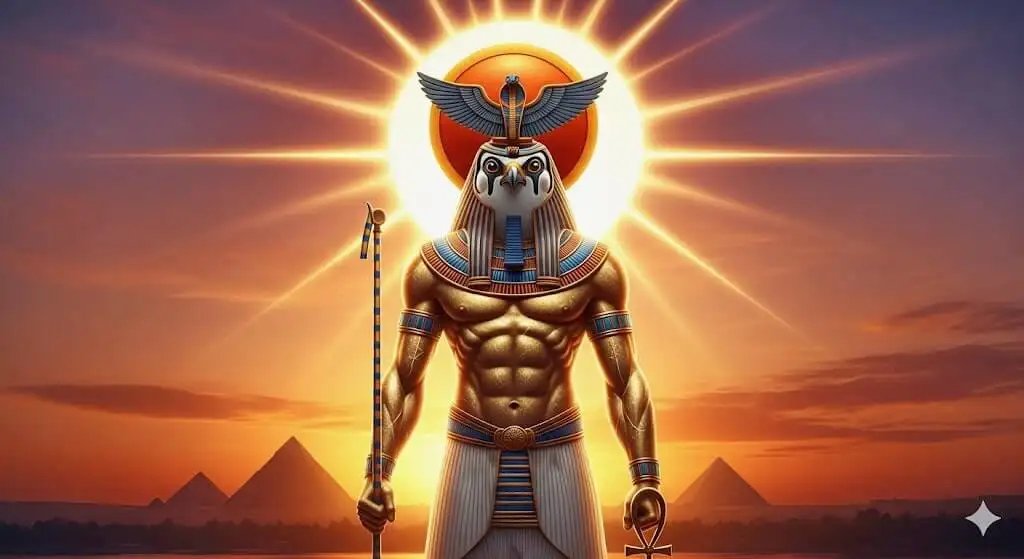
Ra is the supreme deity of the ancient Egyptian pantheon. As the self-created Sun God, he was the originator of the cosmos and the source of all life, light, and warmth. He ruled the sky, the Earth, and the underworld. Furthermore, Ra was the chief god of the Heliopolitan Ennead, the divine family who established the world’s order. Every day, he journeyed across the sky in his Solar Barque, ensuring the cyclical renewal of time. Ultimately, the pharaohs derived their authority directly from Ra, making him the political and religious centerpiece of Egyptian civilization.
God Horus: The Definitive Guide to the Sky God of Ancient Egypt
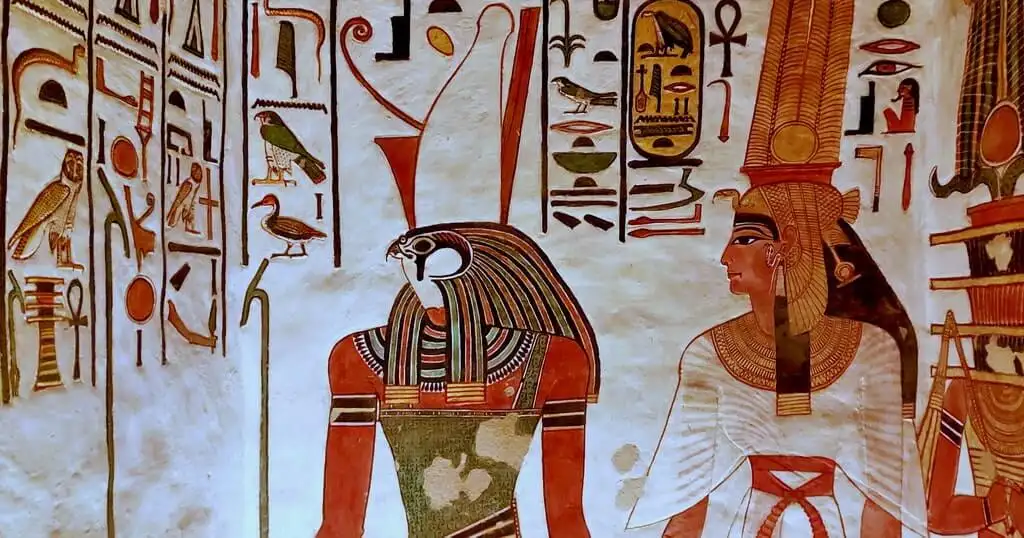
Horus is arguably the most vital deity in the Egyptian pantheon. He is the ancient god of kingship, the sky, and protection, famously depicted as a falcon or a falcon-headed man. His powerful story is intrinsically linked to the central Osiris myth, where he avenges his father, defeats the chaotic god Set, and restores divine order to Egypt. Every pharaoh, from the earliest dynasties, was considered the living manifestation of Horus on Earth, making him the cornerstone of Egyptian political and religious life.
God Ptah: Guide to the Egyptian Creator God of Memphis and Architects
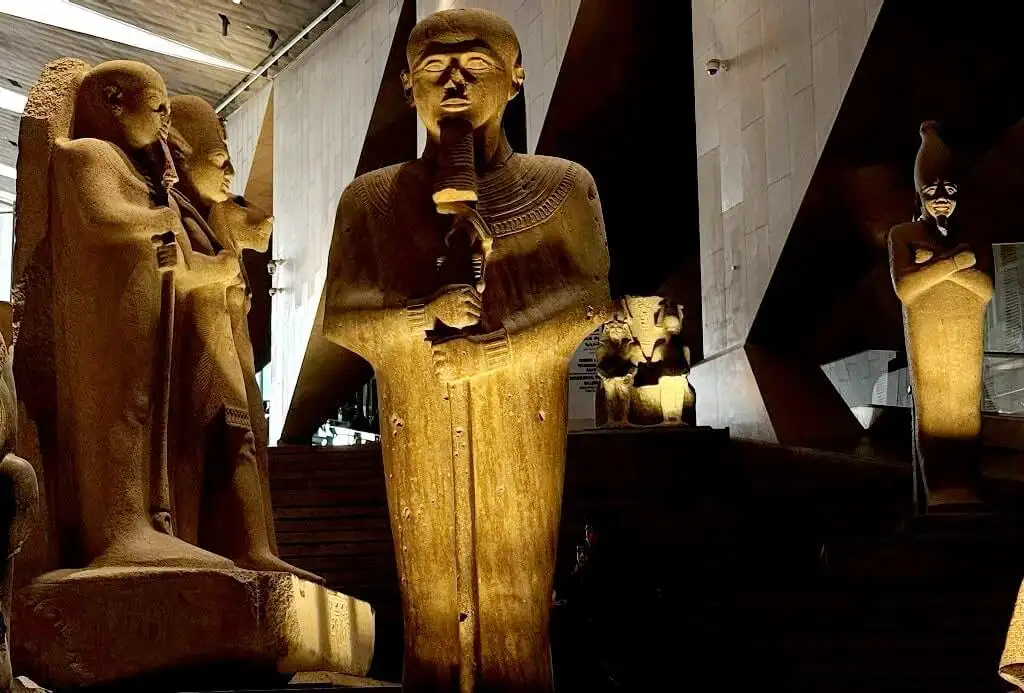
Ptah is the ancient Egyptian creator god of Memphis, revered as the ultimate patron of craftsmen, architects, and artists. Unlike other creator gods who used action, Ptah created the world, the gods, and all life through thought and command (his mind conceived the creation, and his tongue spoke it into existence). He formed a central part of the Memphite Triad alongside his consort, Sekhmet, and their son, Nefertum. Ptah is typically depicted as a mummiform man, often wearing a skullcap and grasping a staff that combines the symbols of power (was-scepter), life (ankh), and stability (djed).
Hapi: The God of the Nile Flood and Bringer of Fertility in Ancient Egypt
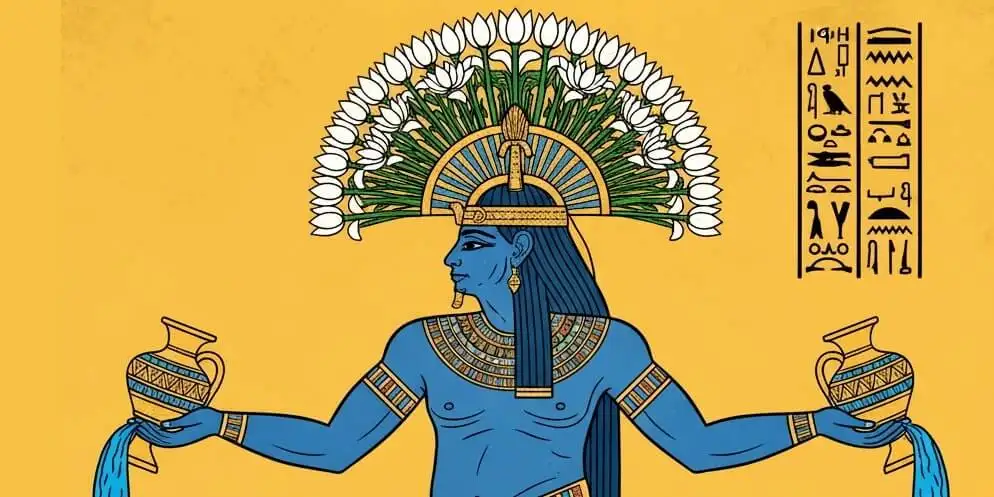
God Hapi is the quintessential Egyptian deity, personifying the life-giving annual flood of the Nile River, known as the Inundation. This guide explores his crucial role as the source of all fertility, detailing how the annual, predictable rise of the Nile brought the vital silt that created the Black Land (Kemet), thus ensuring the nation’s survival and prosperity. You will discover his unique iconography—a plump, androgynous figure with large breasts but a beard—which symbolized the perfect blend of male strength and female nourishment. Understand why the benevolence of Hapi, who emerged from the mythical caverns near Aswan, was the single most celebrated and essential blessing in the Egyptian cosmos.
Rituals of the Nile Inundation

The Rituals of the Nile Inundation were the central annual ceremonies of ancient Egypt, designed to honor the life-giving flood (Akhet) that deposited fertile black silt, ensuring the nation’s survival and prosperity. These sacred events, led by the pharaoh, involved elaborate processions, offerings to the god Hapi (the Nile personified), and the ceremonial cutting of the dykes to release the water, thereby maintaining the cosmic order known as Ma’at.
Goddess Tefnut: The Force of Moisture, The Lioness of the Sky
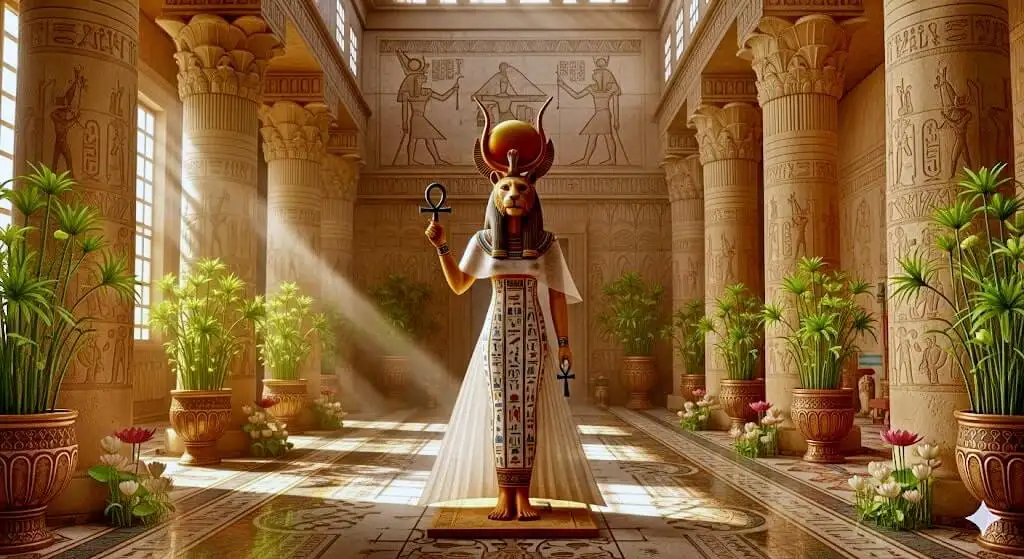
Tefnut is the foundational Egyptian Goddess of Moisture and a vital part of the creation myth, where she and her consort/brother, Shu (Air), separated the sky from the earth. The guide explores her fierce, dual nature as the Lioness of the Sky and the dangerous embodiment of the Eye of Ra. When angered, Tefnut fled Egypt, causing catastrophic drought (the myth of the Distant Goddess). Her eventual return, often facilitated by Thoth, symbolized the life-giving Inundation of the Nile, confirming her crucial role in fertility and the delicate cosmic balance essential for Egypt’s survival.
Goddess Meret: Egyptian Goddess of Music, Joy, and the Nile’s Rhythm
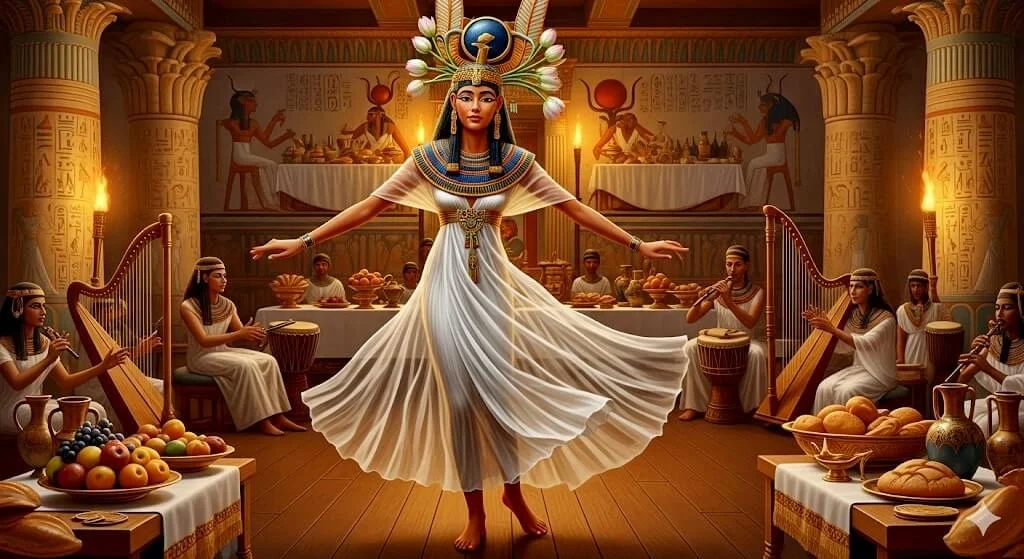
Meret (meaning “the beloved”) is the ancient Egyptian goddess who embodies the vibrant spirit of music, joy, and the life-giving rhythm of the Nile River. She does not belong to the major Ennead but grew essential through rituals. She partnered with Hapi, the god of the Nile flood, symbolizing the harmonious celebration and prosperity that accompanied the crucial inundation. Artists depicted her performing a gesture of clapping or conducting. Her role ensured the successful, joyful performance of religious rites and the maintenance of cosmic harmony.
Nephthys: The Egyptian Goddess of Funerals, Night, and Protection
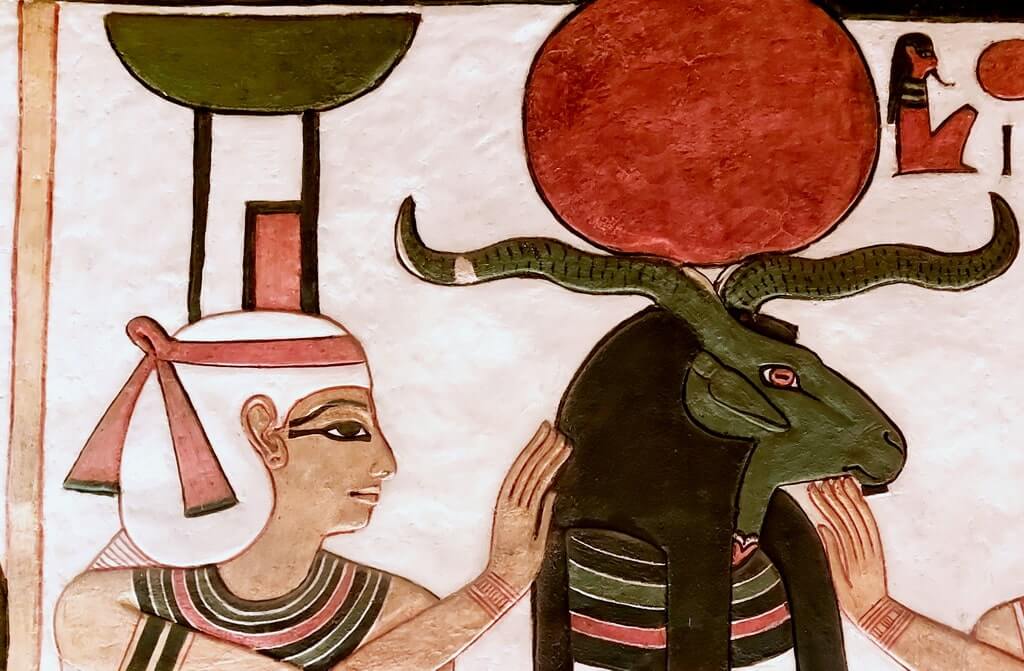
Nephthys (meaning “Mistress of the House” or “Lady of the Enclosure”) is an essential ancient Egyptian goddess of the Duat (underworld), Night, Service, and Funerary Rites. She belongs to the Ennead, as the daughter of Geb and Nut and the sister-wife of Set. Despite her marriage to the chaotic god, she served as the faithful, constant helper of her sister, Isis, aiding her in the resurrection of Osiris. Her primary role was to protect the dead, acting as a crucial mourner, weaver of bandages, and guide for the deceased soul.