Queen Nefertari: The Beloved of Ramesses and the Sistine Chapel of Egypt

Meet Queen Nefertari, the "One for Whom the Sun Shines" and the beloved Great Royal Wife of Ramesses II. Far more than a figure of beauty, she was a skilled diplomat who corresponded with the Hittite Empire to secure peace. Her legacy is immortalized in stone at Abu Simbel, where she stands equal in size to the Pharaoh, and in the Valley of the Queens, where her tomb (QV66) is celebrated as the "Sistine Chapel of Ancient Egypt" for its breathtakingly preserved artwork.

“The One for Whom the Sun Shines”

In the vast history of Egypt, few queens have captured the imagination like Queen Nefertari. Her name is not just etched in history books; it is carved into the very mountains of Nubia by a husband who adored her. An inscription at Abu Simbel famously declares her to be “The One for Whom the Sun Shines.”

It is crucial to distinguish her immediately: Nefertari was the Great Royal Wife of Ramesses II (Ramesses the Great) in the 19th Dynasty. She is distinct from the earlier Queen Nefertiti of the 18th Dynasty.

Nefertari was more than a pretty face. She was a highly educated diplomat, a powerful influence at court, and the love of the great pharaoh’s life. This guide explores her fascinating biography, from her mysterious origins to her role in international peace treaties. Finally, we will take you inside her greatest legacy: the breathtaking Tomb QV66 in the Valley of the Queens, widely considered the artistic masterpiece of the ancient world.

Key Takeaways

  • The Favorite: Nefertari was the first and most beloved wife of Ramesses the Great.
  • The Diplomat: She was literate and corresponded with foreign royalty, such as the Hittite queen, to maintain peace.
  • The Monument: Ramesses dedicated the Small Temple at Abu Simbel to her—a rare honor for a queen.
  • The Tomb (QV66): Located in the Valley of the Queens, it is often called the “Sistine Chapel of Ancient Egypt” due to its exquisite, vibrant paintings.
FUN

Origins and Titles: The Beautiful Companion

Nefertari tomb qv66 valley queens luxor 32 min min

While her husband’s life is well-documented, Queen Nefertari’s origins remain shrouded in mystery. Her name itself is a poetic declaration: Nefertari Merytmut, which translates to “The Most Beautiful of Them” or “The Beautiful Companion, Beloved of Mut.”

A Mysterious Lineage

Unlike many queens who were born princesses, Nefertari likely came from a noble, rather than a royal, family. Archaeologists found a knob from a chest in her tomb inscribed with the name of Pharaoh Ay (from the end of the 18th Dynasty). This discovery suggests she may have been his granddaughter or great-niece. If true, her marriage to Ramesses II was a brilliant political move, uniting his new 19th Dynasty with the old royal bloodline of the 18th Dynasty.

Titles of Power

Throughout her life, Nefertari accumulated titles that signified real influence, not just status. She was known as:

  • “Great of Praises”
  • “Sweet of Love”
  • “Lady of Grace”
  • “Great Royal Wife” (her official rank)
  • “Lady of the Two Lands”

These titles confirm that she was not merely a figurehead but a central pillar of the royal court, commanding immense respect and authority alongside the pharaoh.

FUN

❤️ The Love Story: Ramesses and Nefertari

More than just a political alliance, the marriage between Ramesses II and Nefertari stands as one of the greatest love stories of the ancient world.

A Youthful Union

They married young, likely when Ramesses was just a prince in his late teens, before he ascended to the throne. This early bond suggests a connection based on genuine affection rather than just royal duty. Together, they had at least four sons (including the crown prince Amun-her-khepeshef) and two daughters, creating a strong family unit that was central to Ramesses’s reign.

Public Declarations of Devotion

What sets their relationship apart is how publicly Ramesses displayed his love. In most pharaonic art, queens are depicted much smaller than the king, reaching only to his knee. However, at Abu Simbel, Ramesses broke tradition. He ordered colossal statues of Nefertari to be carved at the same height as his own. This visual equality was a shocking and powerful statement to the world: she was his equal, his partner, and his beloved.

King Amenhotep III

King Amenhotep III: The Magnificent Pharaoh King Amenhotep III was a pharaoh of the 18th...

Related post
FUN

The Diplomat and Ruler: Power Behind the Throne

Queen Nefertari was not just a wife; she was a statesman. Unlike many women of her time, she was highly educated and could read and write hieroglyphs—a skill that allowed her to play a pivotal role in international politics.

The Hittite Letters

Her diplomatic influence is proven by archaeology. Clay tablets found in the ancient Hittite capital of Hattusa (modern Turkey) reveal a direct correspondence between Nefertari and Queen Puduhepa of the Hittites.

After the famous peace treaty between Ramesses II and the Hittites, Nefertari sent independent letters and gifts to the Hittite queen to foster goodwill. She wrote as a “sister” and an equal, helping to cement the peace that ended decades of war. This proves she acted as a partner in ruling the empire, wielding soft power where armies could not.

Tutankhamun: The Complete Story of the Boy King and the Golden Tomb

Tutankhamun is the most famous face of Ancient Egypt, yet in his own time, he...
Related post
FUN

The Small Temple at Abu Simbel: A Temple for a Goddess

abu simbel nefertari temple - 9 Days Egypt Tour Itinerary to The Highlights of Egypt - Historical Egypt in 6 Days

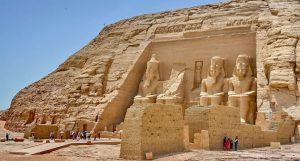
Ramesses the Great was a prolific builder, but one gesture stands above the rest. Beside his own colossal temple in Nubia, he constructed a second, smaller temple dedicated entirely to Queen Nefertari and the goddess Hathor.

A Monumental Break from Tradition

This temple is unique in Egyptian history. On the facade, six massive statues stand 33 feet tall. Four represent Ramesses, and two represent Nefertari. Crucially, Nefertari’s statues are the same height as the king’s. Never before (and rarely after) was a queen depicted as equal in size to the pharaoh on a temple facade.

Inside, the temple is filled with scenes of Nefertari making offerings to the gods, sometimes even alone, without her husband. This temple serves as a stone testament to her elevated status: she was not just a queen, but a divine consort, worthy of her own house of worship.

Tomb QV66: The Sistine Chapel of Egypt

Nefertari tomb qv66 valley queens luxor - 9 days unesco tour

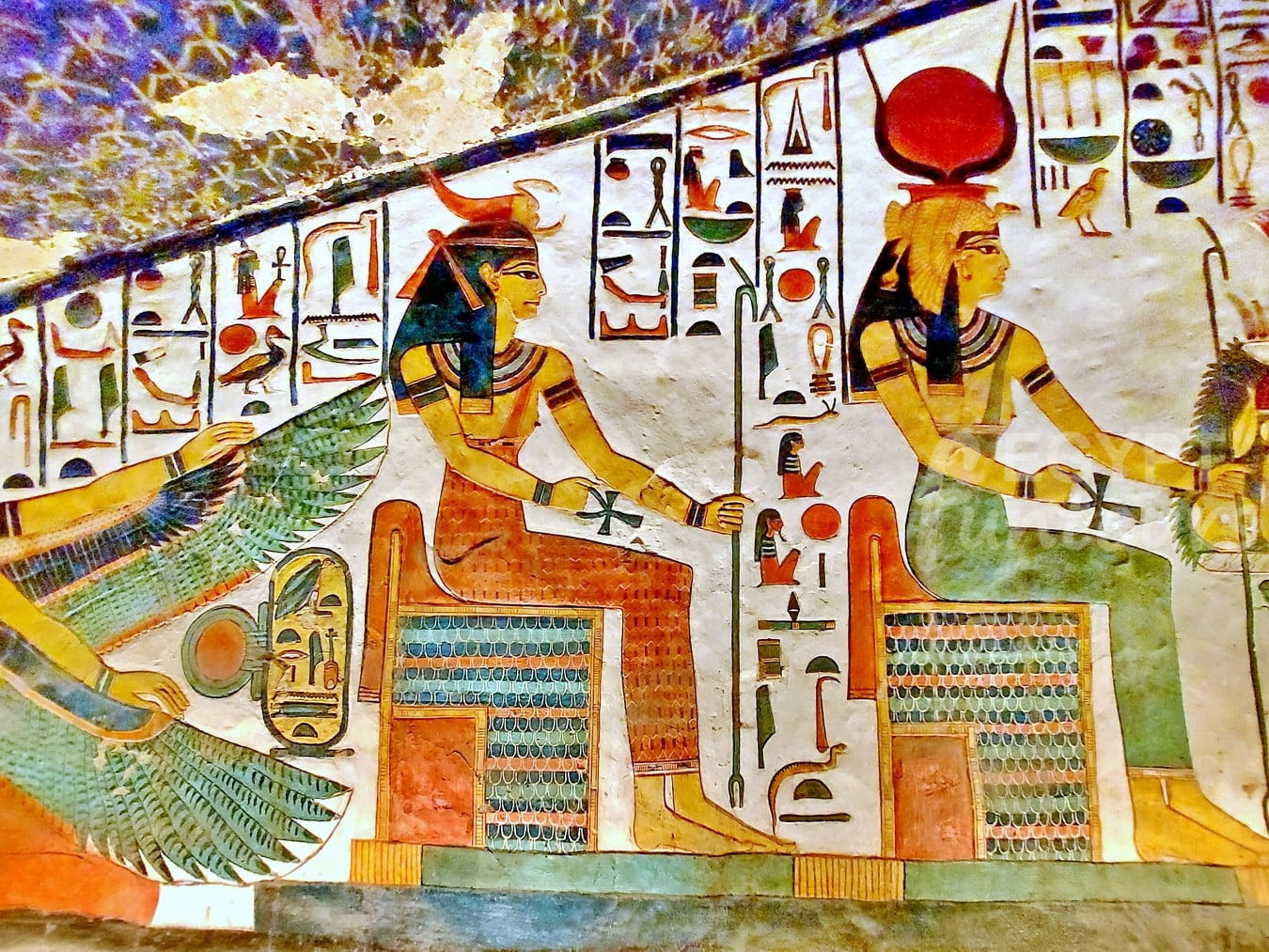
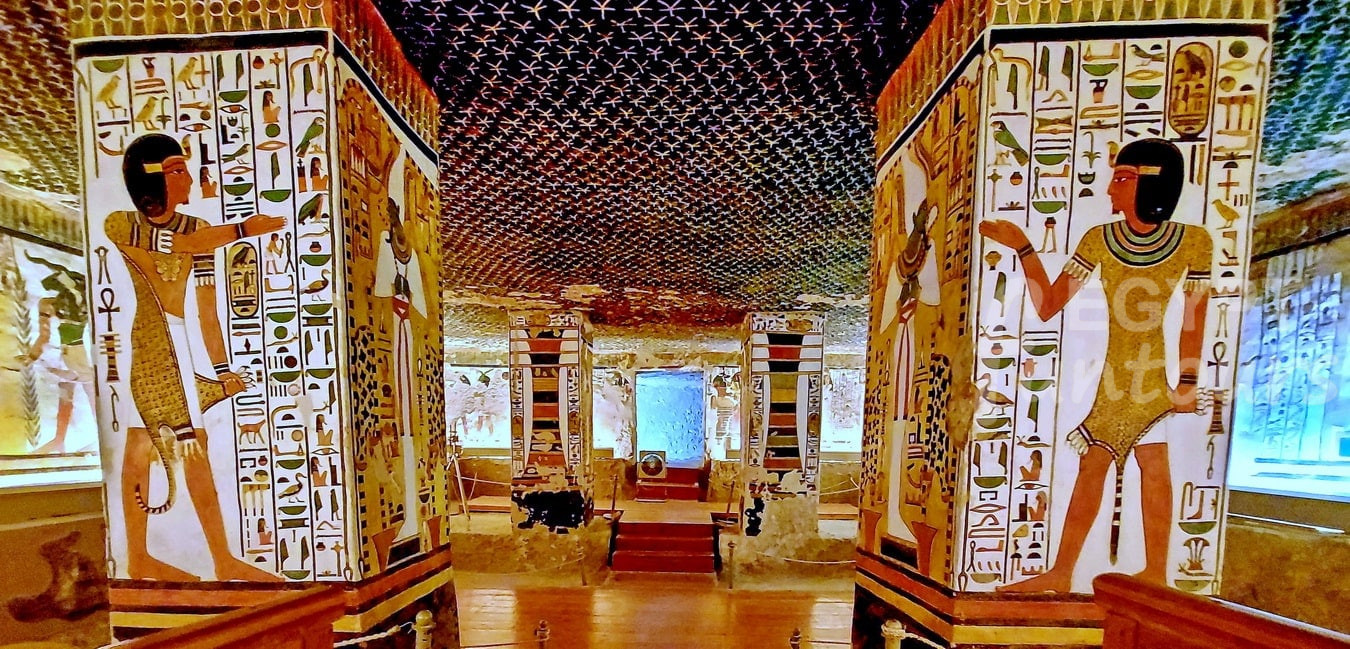
While the temples of Abu Simbel are grand, Nefertari’s greatest legacy lies hidden underground in the Valley of the Queens. Her tomb, QV66, is widely considered the most beautiful in all of Egypt.

A Masterpiece of Art

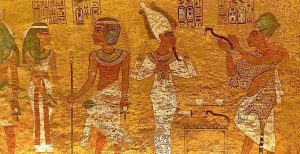
Discovered in 1904 by Ernesto Schiaparelli, the tomb stunned the world. The walls are covered in paintings so vibrant and detailed they look as if they were painted yesterday. Artists used sophisticated shading techniques to give her face volume and life—a rarity in Egyptian art. Scenes depict Nefertari playing the game of Senet, offering gifts to the gods, and transforming into a spirit to navigate the afterlife.

Conservation and Access

Over the centuries, salt crystals damaged the plaster. However, a massive restoration project by the Getty Conservation Institute in the 1990s stabilized the artwork. Today, visiting QV66 is an exclusive experience. To protect the fragile paintings from humidity, visitor numbers are strictly limited, and tickets are premium (often costing over $100 USD). Yet, for art lovers, standing inside this “Sistine Chapel of the Ancients” is worth every penny.

King Menes (Narmer): The Complete Guide to Egypt’s First Pharaoh

History remembers him as Menes. Archaeology knows him as Narmer. Regardless of the name, this...
Related post
FUN

An Eternal Beauty: The Legacy of Queen Nefertari

In the end, Queen Nefertari set the standard for what an Egyptian queen could be: educated, powerful, and deeply beloved. She was not merely a shadow behind the throne of Ramesses the Great; she was his partner in diplomacy and his equal in divinity.

Her legacy endures today through the sheer beauty of her monuments. From the colossal statues at Abu Simbel to the vibrant, living walls of her tomb, Nefertari remains “The One for Whom the Sun Shines.” 3,000 years later, she is still regarded as the most beautiful woman of antiquity, her story preserved in stone and paint for eternity.

Common Questions About Queen Nefertari

Here are the quick answers to the most common questions about this legendary queen.

Q: What is the difference between Nefertari and Nefertiti?

A: They are two different queens from different time periods.

  • Nefertiti (18th Dynasty): The wife of Akhenaten, famous for the “bust” in Berlin and the religious revolution.
  • Nefertari (19th Dynasty): The wife of Ramesses II, famous for her spectacular tomb (QV66) and the temple at Abu Simbel.

Q: How did Queen Nefertari die?

A: Historians do not know the exact cause, but she likely died of natural causes or illness around the 25th year of Ramesses’s reign (roughly 1250 BCE). She disappeared from historical records after the dedication of the Abu Simbel temples.

Q: Can you visit Nefertari’s tomb?

A: Yes. You can visit the tomb (QV66) in the Valley of the Queens. However, to protect the fragile paintings, the site charges a premium ticket price (currently around 1400-2000 EGP) and strictly limits visits to 10-15 minutes to control humidity.

Weather in Egypt

12-Day Guided Egypt Tour Including Hurghada...
5 Day Group Tour Exploring Egypt's Wonders...

Highly Recommend Egypt Fun Tours!

Several weeks ago, I reached out to Egypt Fun Tours regarding a 9-hour layover in Cairo. From the very beginning, Hani Ahmed was responsive and professional, quickly providing a well-organized itinerary tailored to our limited time. The itinerary included a visit to the pyramids, other historical sites, a delicious dinner,

More »

Egypt Fun Tours – Does it All!

My husband and I visited Egypt in March 2013. First, let me say, ‘Go, go, go!’ – it’s safer and definitely friendlier than many places we’ve visited. Tourism is drastically down – thanks mostly to media misinformation – so it’s a great time to visit to avoid line-ups and crowds

More »
cairo layover tours - Pyramids and GEM Tour from Cairo Airport

Great layover tour

First things first…I was in Cairo about a week before the protests of 2011 started. As far as the tour was concerned, I was very pleased. I was met at the airport by a knowledgeable guide (Sara) who spoke great English and a driver. They took me to Giza first,

More »

AMAZING TOUR, SOLO TRAVELER.

I am a California woman who traveled to Egypt alone, and thanks to Egypt Fun Tours, I had a great time. Hani, Mohammed, Kamal, and David (my driver) were very professional and very knowledgeable. I appreciate how respectful they were and how protective they were of me. They showed me

More »
Top 10 restaurants in cairo Egypt Fun Tours 2

Tour & Overnight camping with Mohamed

The breathtaking views and the isolation with a night under the stars! The trip was memorable with Mohamed, our tour guide, who drove us to all the sites on the way to the White Desert, and is clearly someone who knows the desert inside out. He also cooked a delicious

More »
Isis with wings

Top-rated Tour Packages

Isis with wings