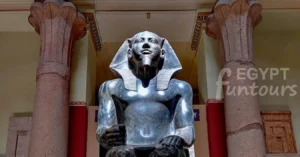
Saqqara: Guide to Egypt’s Eternal Necropolis and the Evolution of the Pyramid

Saqqara is a vast ancient necropolis near Cairo, serving as the burial ground for the city of Memphis. It is home to the Step Pyramid of Djoser, the oldest large stone building in the world, along with numerous other pyramids, mastaba tombs, and the Serapeum, a tomb for sacred bulls. Ongoing archaeological work continually uncovers new discoveries, making Saqqara a crucial site for understanding ancient Egyptian history.

Saqqara is much more than an old cemetery. In fact, it is the place where the very idea of Ancient Egypt was born. While most people look at the Giza Pyramids first, Saqqara is actually where the story began. It sits on a high desert plateau near the old capital of Memphis. For over 3,000 years, Egyptians buried their kings and commoners here. Because of this, the site acts like a stone history book of an ancient world.

Today, we are living through a new “Golden Age” for the site. Archaeologists are finding new coffins and hidden tombs every single month. Consequently, our understanding of the past is changing fast. In this guide, we will look at how Saqqara changed the world. We will explore the first stone buildings ever made. Furthermore, we will look at the incredible discoveries made just this year in 2026.

In This Guide:

  • The Imhotep Revolution: From mud-brick to the Step Pyramid.
  • The Pyramid Texts: Exploring the world’s oldest religious writings in the Pyramid of Unas.
  • 2026 Archaeological Updates: The Waser-If-Re discovery and Hydraulic Engineering theories.
  • The Serapeum: Investigating the 70-ton granite mysteries.
  • The Animal Catacombs: Inside the “City of Cats” and the 8-million-dog necropolis.
  • Traveler’s Logistics: 2026 pricing, card-only payments, and timing.

The Genesis of Stone: Djoser and the Imhotep Revolution

King Djoser

The history of Saqqara changed forever during the 3rd Dynasty. Before this time, the ancient Egyptian buried their kings in simple pits or mud-brick boxes called mastabas. These buildings were flat and rectangular. However, they were not very strong. They eventually crumbled in the desert heat. Then, a King named Djoser took the throne and changed everything.

The Genius of Imhotep

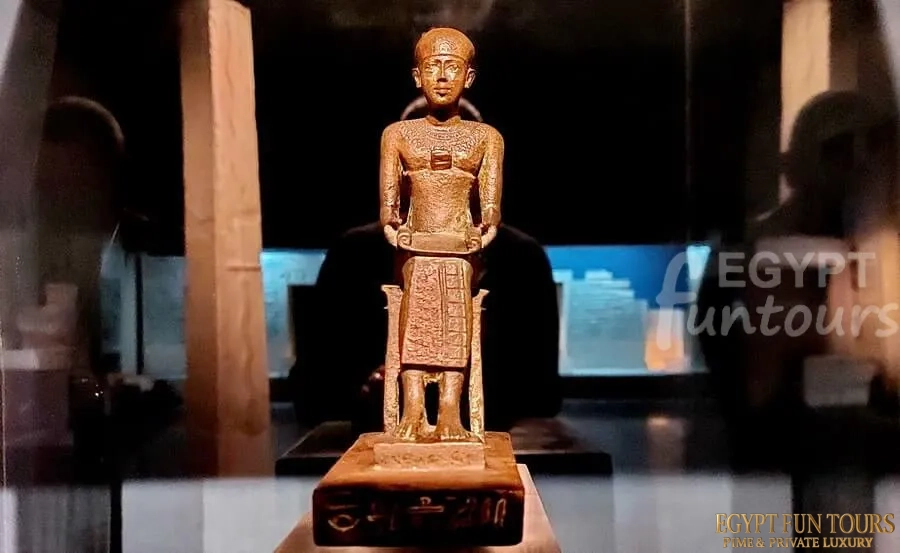
King Djoser had a brilliant architect named Imhotep. Imhotep wanted to build something that would last forever. Therefore, he made a bold choice. He decided to stop using mud and start using cut limestone. This was a massive turning point in human history. It was the first time anyone had built a large monument entirely out of stone.

How the Pyramid Was Built

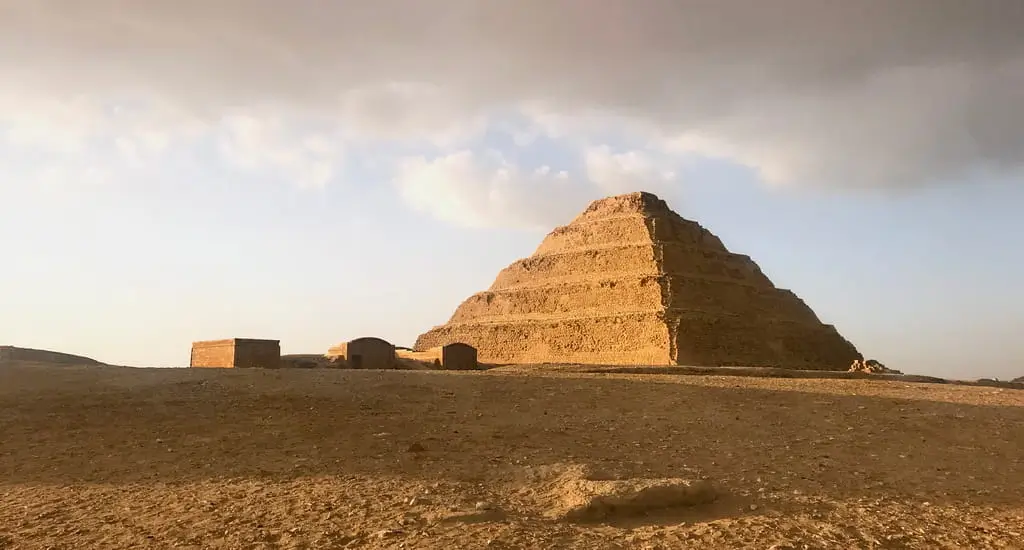
The Step Pyramid did not start as a pyramid. Instead, it grew in stages. First, Imhotep built a large stone mastaba. After that, he decided to make it bigger. He eventually stacked five more levels on top of the first one.

  • The Shape: This created a giant staircase with six steps.
  • The Meaning: The Egyptians believed the King could use these steps to climb to the stars.
  • The Size: It rose 62 meters into the air.

The Great Complex

Imhotep Egypt Fun Tours

The pyramid was not just a single building. On the contrary, it was part of a huge walled city. This complex included temples, courtyards, and long tunnels. For instance, the Heb-Sed Court was built for the King to run a race. This ritual proved he was still strong enough to lead. Even though the King was dead, he was expected to keep ruling in the afterlife.

As a result of Imhotep’s work, the “Age of the Pyramids” began. This one building at Saqqara paved the way for the Great Pyramid of Giza. Without the lessons learned here, the wonders of the world would never have been built.

FUN

The Pyramid Texts: The World’s Oldest Religious Liturgy

THe pyramids text ancient egyptian book of dead egypt fun tours

As time passed, the kings of Egypt wanted more than just a stone ladder to the stars. They wanted a written map to the afterlife. This brings us to the Pyramid of Unas. Unas was the last king of the 5th Dynasty. His pyramid looks like a small hill from the outside. However, the inside is a masterpiece of human history.

The Innovation of the Word

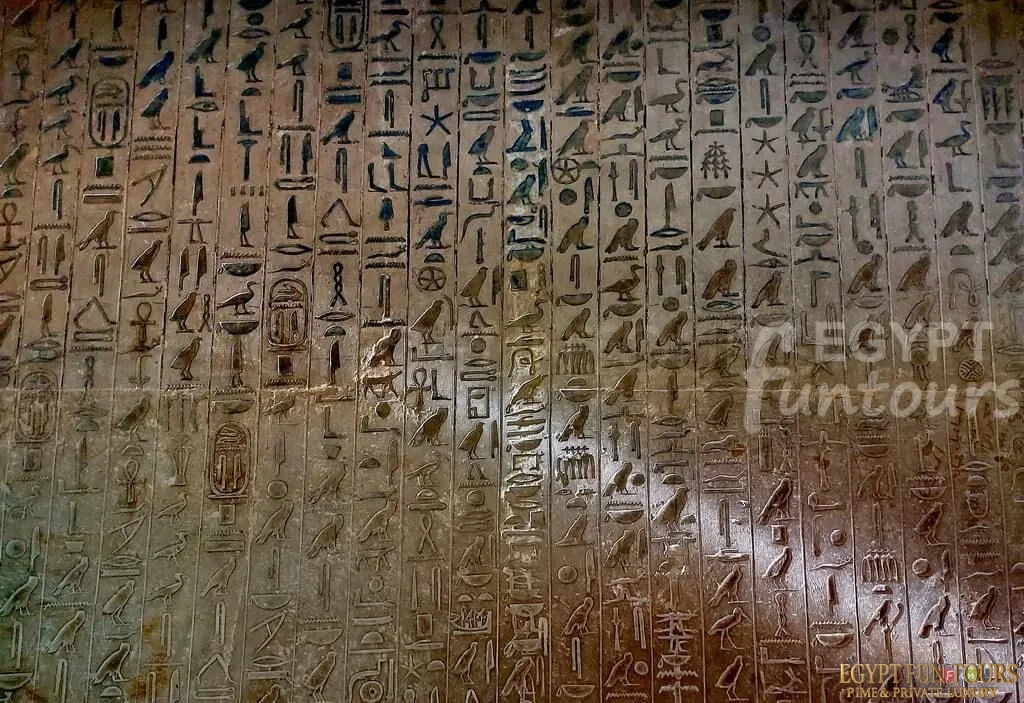
Before King Unas, the walls of the burial chambers were left blank. But Unas did something different. He ordered his priests to carve hundreds of spells and prayers directly into the limestone. These are now known as the Pyramid Texts. They are the oldest religious writings ever discovered.

  • The Look: The hieroglyphs are carved in high relief. Furthermore, they were painted with a vibrant blue pigment. This was meant to represent the sky or the waters of the Nile.
  • The Function: The texts were not for reading by the living. Instead, they were magical tools for the dead king. They helped him fight off monsters in the underworld. Moreover, they gave him the secret names of the gods so he could pass through the gates of heaven.

A Lasting Legacy

These spells were very successful. Consequently, the kings who came after Unas also used them. Over time, these royal spells were adapted for regular people. Eventually, they became the famous Book of the Dead. Therefore, the small, crumbling pyramid of Unas is actually the ancestor of all Egyptian religious books.

The Golden Age of Discovery

The Golden Age of Discovery in Saqqara site

Even though Saqqara is thousands of years old, we are still finding new things. In fact, 2025 and early 2026 have been some of the most exciting years in the history of the site. Archaeologists are using new technology like ground-penetrating radar. As a result, they are finding tombs that were hidden for 4,000 years.

The Tomb of Prince Waser-If-Re (2025)

In April 2025, a team led by Dr. Zahi Hawass made a major announcement. They found the tomb of Prince Waser-If-Re. He was the son of King Userkaf from the 5th Dynasty.

  • The Giant Door: The team found a massive false door made of pink granite. It is over 4 meters tall! This is the largest door of its kind ever found in Egypt.
  • The Mystery Statues: Inside the tomb, they found 13 granite statues of people sitting in chairs. Some of these statues represent the prince’s wives. Strangely, some are missing their heads. Archaeologists are still trying to figure out why.
  • The Layered History: Even though the tomb was built 4,400 years ago, people used it again 2,000 years later. This shows how important Saqqara remained for thousands of years.

The Northern Expansion (2026 Updates)

Starting in January 2026, researchers have focused on the northern edge of the plateau. For a long time, experts thought the cemetery ended at a certain point. However, new excavations have proved them wrong.

  • New Mastabas: Recent finds include mud-brick tombs from the very earliest dynasties.
  • Hidden Shafts: Teams have uncovered deep limestone shafts that lead to untouched burial chambers. These discoveries show that Saqqara is much larger than we ever imagined.
FUN

The Serapeum: The Mystery of the Underground Giants

The Legacy of the Serapeum

If you walk deep into the desert at Saqqara, you will find a small entrance in the ground. This leads to the Serapeum. It is one of the most mysterious places in all of Egypt. It consists of a long, dark tunnel with chambers on both sides. Inside these chambers sit 24 massive stone boxes.

The Sacred Bulls

These boxes were not made for humans. Instead, they were built for the Apis Bulls. The Egyptians believed these bulls were living gods. They were treated like kings while they were alive. When they died, they were mummified and buried with great honor.

An Engineering Puzzle

The Serapeum raises many questions for scientists today.

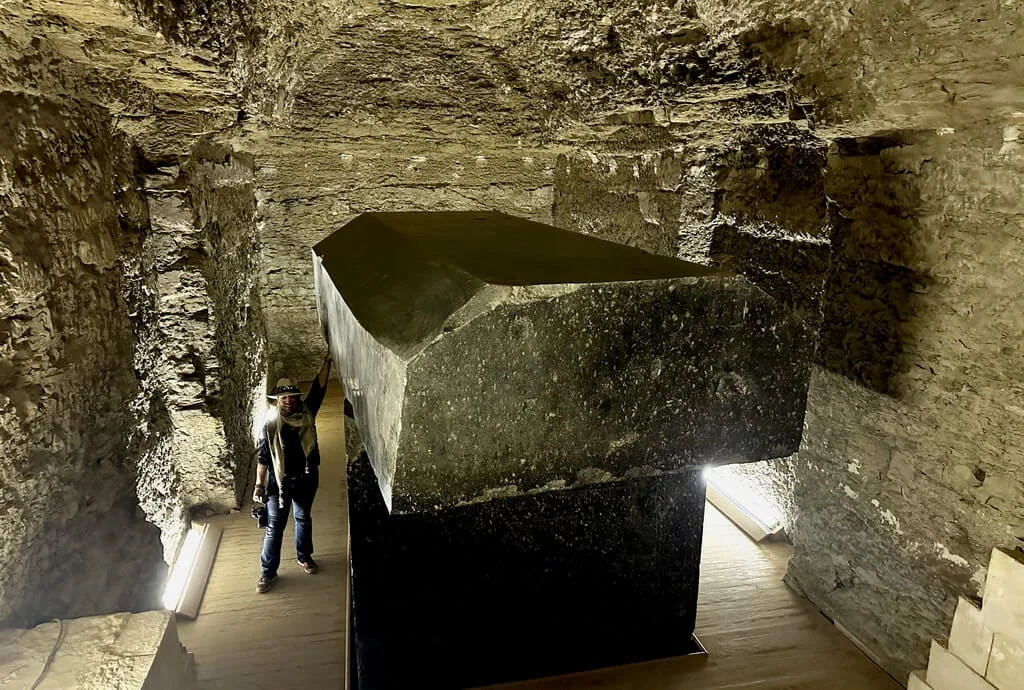
  • The Weight: Each stone box weighs between 60 and 70 tons. The lids alone weigh another 30 tons.
  • The Material: Most of the boxes are made of solid granite. This stone is very hard and was brought from Aswan, which is hundreds of miles away.
  • The Precision: The boxes are cut with incredible accuracy. The surfaces are perfectly flat, and the corners are perfectly square.
  • The Location: These giant boxes are squeezed into narrow underground tunnels. Even today, engineers wonder how the Egyptians moved them into such tight spaces without modern machines.

In fact, new research in 2026 suggests the Egyptians might have used complex pulley systems and sand-filled chambers to lower the boxes. This shows that their engineering was even more advanced than we once thought.

The Tombs of the Nobles: Life in Full Color

The nobles tombs in Saqqara - Tour from Cairo Airport

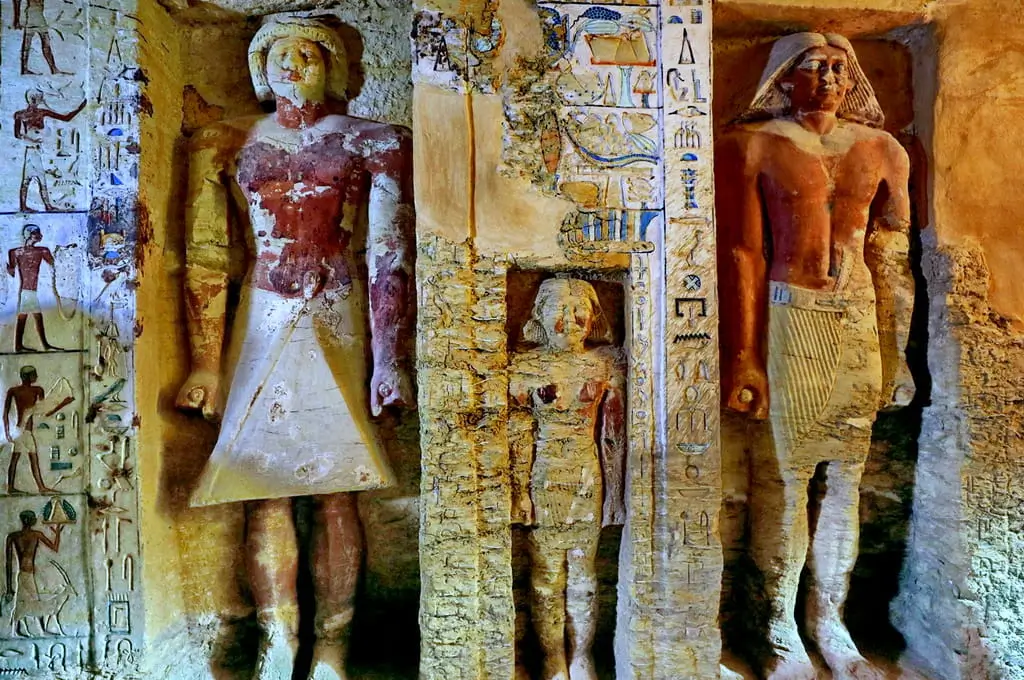
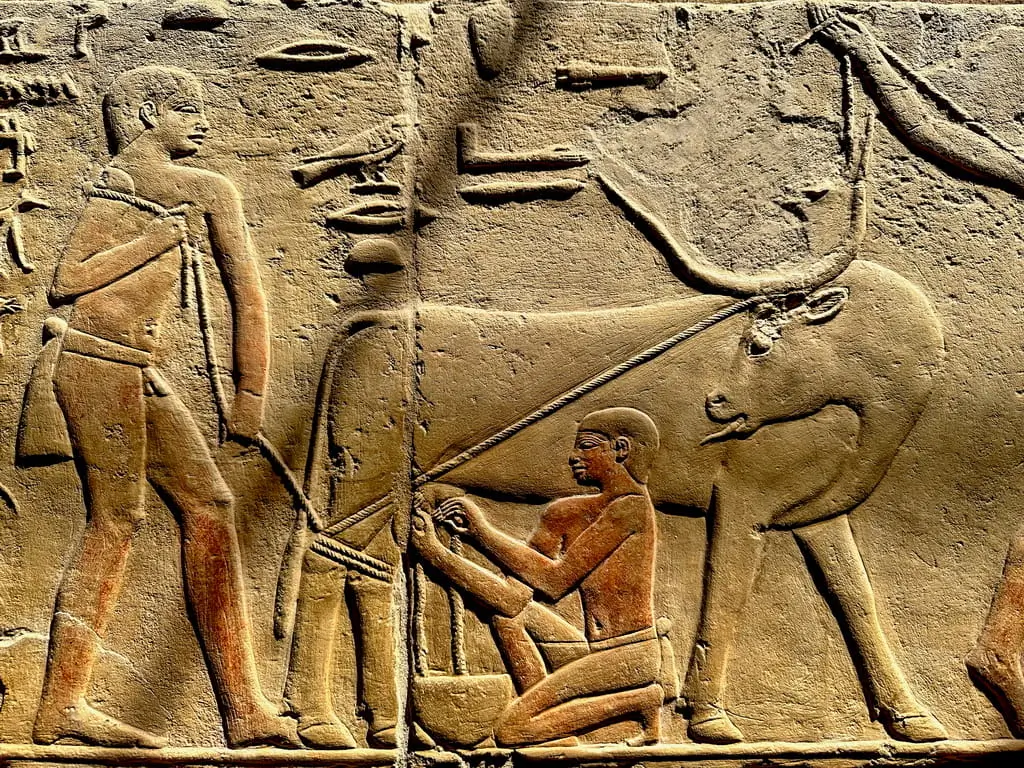
While the pyramids are grand and cold, the Tombs of the Nobles are warm and full of life. These tombs belonged to high-ranking officials like Mereruka and Ti. Unlike the royal pyramids, these walls are covered in scenes of daily life.

Art That Tells a Story

When you walk through these tombs, you see what it was like to live 4,500 years ago. For instance:

  • Working the Land: You can see farmers plowing fields and harvesting grain.
  • The Marshes: There are beautiful scenes of people hunting hippos and birds in the Nile Delta.
  • The Market: You can even see people trading goods and catching fish.

Why the Detail?

The Egyptians did not decorate these tombs just for fun. They believed that these carvings would come to life in the next world. Therefore, if a man had a carving of a feast in his tomb, he would never go hungry in the afterlife. Consequently, these tombs act as a “backup plan” for eternity.

Breakthrough 2026: The Hydraulic Engineering of the Step Pyramid

Step Pyramid of Djoser Saqqara 2026 hydraulic lift theory illustration

For over a century, the primary debate in Egyptology was whether the builders of the Step Pyramid used straight or spiral ramps to lift their massive limestone blocks. However, a groundbreaking multidisciplinary study in early 2026 has offered a radically different answer: they did not use either.

Scientists now propose that the Step Pyramid of Djoser was actually a masterpiece of hydraulic engineering. This “Hydraulic Theory” suggests that Imhotep utilized water pressure from the Nile to build a high-tech lifting mechanism. Therefore, instead of pulling stones up a ramp, the ancient Egyptians used water to float them into place. Consequently, this discovery forces us to redefine the ancient world’s technical capabilities.

The “Gisr el-Mudir” is the Smoking Gun

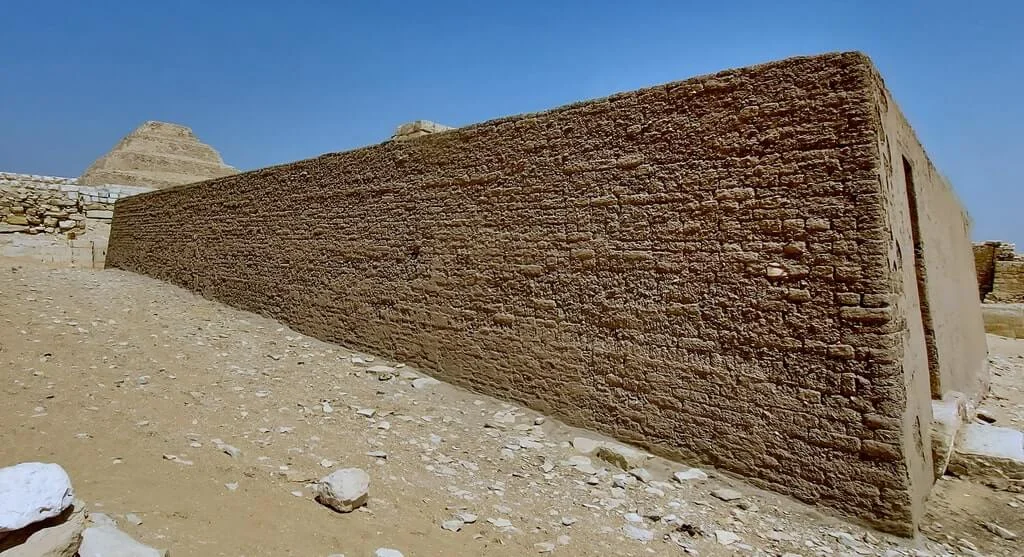
This theory resolves a long-standing mystery. To the west of the Step Pyramid lies a massive, rectangular stone enclosure known as the Gisr el-Mudir. For decades, archaeologists had no idea what it was for. Some believed it was an unfinished tomb; conversely, others thought it was a sacred corral.

The 2026 study reveals its true purpose: water purification.

  1. The Nile Connection: The system first began with a canal that linked the Nile to the Saqqara plateau. This canal funneled vast amounts of water to the western edge of the necropolis.
  2. The Clarification Basin: The Gisr el-Mudir (meaning “Enclosure of the Boss”) acted as a gigantic clarification basin. Because it was divided into multiple chambers, it forced the water through a series of “check walls.” These walls allowed the heavy Nile silt to settle to the bottom. Consequently, by the time the water reached the eastern end of the structure, it was filtered and clean.
  3. The Transport System: Finally, a series of precisely engineered subterranean tunnels carried this clean, high-pressure water from the Gisr el-Mudir directly toward the central axis of the Step Pyramid.

The “Check Valve” and the “Floating” Process

Once the filtered water reached the pyramid base, the true genius of the system began. The builders created a complex “check valve” system using the deep North Shaft and a massive subterranean “Dry Moat” that encircled the entire complex.

  • The Chamber Fills: Water flowed from the Gisr el-Mudir into the lower chambers of the central shaft. As the shaft filled, the water pressure rose.
  • The Check Valve: Crucially, a check valve at the bottom of the shaft acted like a modern hydraulic pump. When pressure decreased, the valve closed, preventing the water from draining back into the tunnels.
  • The Wooden Float: Engineers constructed massive wooden “floats” to ride on the rising water inside the main shaft. Stone-carriers would roll the limestone blocks from the plateau surface onto these floats.
  • The Lift: As more water was pumped in, the float—and its multi-ton cargo—rose effortlessly inside the shaft. Once the float reached the desired pyramid level, workers on the construction platform simply slid the stone off.

Therefore, this hydraulic lift allowed Imhotep to move stones far larger and heavier than any ramp system could handle. Moreover, it enabled them to work in 360 degrees around the shaft, dramatically speeding up construction.

Giza Zoo

The Giza Zoo: History and Collection Khedive Ismail constructed the Giza Zoo, opening it on...

Related post
FUN

A Timeline of Eternity: Saqqara Through the Ages

From Mastaba to Step Pyramid

Saqqara was not built in a day. On the contrary, it was used for more than 3,500 years. To understand its scale, we must look at how it changed over time.

Period Key Developments at Saqqara
Early Dynastic (c. 3100 BCE) First noble burials appear. Large mud-brick mastabas are built.
Old Kingdom (c. 2600 BCE) The “Age of Pyramids” begins with Djoser. Stone becomes the main material.
Middle Kingdom (c. 2000 BCE) The capital moves away, but some officials still choose Saqqara for burial.
New Kingdom (c. 1500 BCE) Memphis becomes a military hub. High officials like Horemheb built massive tombs.
Late Period (c. 600 BCE) Animal cults explode in popularity. Millions of mummified cats and bulls are buried.
Greco-Roman (c. 300 BCE) New styles of art appear, mixing Greek and Egyptian traditions.

Because Saqqara was used for so long, archaeologists often find “vertical history.” This means they might find a Roman mummy buried directly on top of an Old Kingdom tomb!

The Complete Census: 16 Royal Pyramids of Saqqara

Understanding the Saqqara plateau requires looking beyond the Step Pyramid. The site contains a dense concentration of royal monuments that track the evolution of the Egyptian state over nearly a millennium.

The 3rd Dynasty: The Experimental Phase

These structures represent the birth of monumental stone architecture.

  1. Pyramid of Djoser (The Step Pyramid): The world’s first stone pyramid, designed by Imhotep.

  2. The Buried Pyramid of Sekhemkhet: An unfinished step pyramid designed to rival Djoser’s in scale.

The 5th Dynasty: The Intellectual Phase

During this era, the focus shifted from external size to internal spiritual power.

3. Pyramid of Userkaf: The first pyramid built at Saqqara after the royal court returned from Giza.

4. The Headless Pyramid (Menkauhor): Rediscovered in 2008 after being “lost” for a century; it likely belonged to King Menkauhor.

5. Pyramid of Djedkare Isesi: Located in South Saqqara, this complex marked the return to traditional pyramid shapes.

6. Pyramid of Unas: The smallest Old Kingdom pyramid, but the most important, as it contains the earliest Pyramid Texts.

The 6th Dynasty: The Classic Phase

The pyramids of this era were highly standardized and often surrounded by massive cemeteries for queens and officials.

7. Pyramid of Teti: Famous for its accessible burial chamber and beautiful “star ceiling” reliefs.

8. Pyramid of Pepi I: This pyramid was once so influential that the city of Memphis was named after its funerary complex (Mennefer Pepi).

9. Pyramid of Merenre I: The burial site of King Merenre, where the oldest royal mummy was discovered.

10. Pyramid of Pepi II: The last great pyramid of the Old Kingdom, belonging to Egypt’s longest-reigning monarch.

The Queens’ Pyramids (The Feminine Landscape)

Significant recent excavations have highlighted that the Kings were not alone on the plateau.

11. Pyramid of Queen Neith: A major 2021 discovery, belonging to the wife of King Teti.

12. Pyramid of Queen Iput I: One of the three subsidiary pyramids in the Teti complex.

13. Pyramid of Queen Khuit II: Another important female monument in the Teti enclosure.

14. The Queen’s Pyramid of Pepi I (Innu-nekht): One of several satellites found near Pepi I’s main structure.

15. The Queen’s Pyramid of Pepi I (Mehaa): Highlighting the status of the royal wives in the 6th Dynasty.

The First Intermediate Period & Middle Kingdom

Saqqara remained sacred even after the Old Kingdom collapsed.

16. Pyramid of Khendjer: Located in South Saqqara, this is the only known pyramid from the 13th Dynasty (Middle Kingdom) to be completed.

Technical Breakdown: Why 16?

Visitors often ask why they can’t see all 16 today. The answer lies in “Pyramid Triage.” * Standing Monuments: Djoser, Unas, and Teti are the primary accessible sites for tourists in 2026.

  • Ruined Mounds: Many of the 5th and 6th Dynasty pyramids (like Pepi I and II) look like natural hills today because their outer limestone casing was removed in antiquity, causing the soft inner cores to collapse.
  • Subterranean Gems: Even if the exterior is ruined, the underground chambers of these 16 pyramids remain some of the most scientifically valuable sites in Egyptology.

The Tomb of Pay and Raia: A Masterpiece of New Kingdom Art at Saqqara

The Tomb of Pay and Raia is a remarkable "temple-tomb" located in the New Kingdom...
Related post
FUN

Practical Guide for Your 2026 Visit

The Serapeum and Other Hidden Treasures

If you are planning to visit the Saqqara site this year, things have changed. The site is now more organized and “high-tech” than ever before.

How to Get There

Saqqara is about 30 kilometers south of Cairo. Most people take a private car or a taxi.

  • Travel Tip: Do not try to use public buses unless you speak fluent Arabic and have a lot of time. A private driver is affordable and much safer for a day trip.
  • Timing: Arrive at 8:00 AM. This allows you to see the Step Pyramid before the large tour buses arrive around 10:30 AM.

Entrance and Tickets (2026 Pricing)

As of 2026, the Egyptian Ministry of Tourism and Antiquities has moved to a card-only payment system. You cannot use cash at the main ticket office.

  • Main Site Ticket: Approximately 600 EGP for foreign adults. This covers the general area and the Imhotep Museum.
  • Add-ons: If you want to go inside the Step Pyramid or the Serapeum, you must buy extra tickets.
  • The Imhotep Museum: This museum was recently renovated. It is air-conditioned and holds the best-preserved artifacts found on-site. It is the perfect place to cool down during the midday heat.

Essential Gear

The Saqqara plateau is very open and has almost no shade. Therefore, you must bring:

  1. Water: Bring more than you think you need.
  2. A Flashlight: Many of the smaller tombs have dim lighting. A small torch helps you see the fine details in the carvings.
  3. Sun Protection: A hat and sunscreen are mandatory.

Why Saqqara Still Matters

In conclusion, Saqqara is the soul of Ancient Egypt. It shows us the exact moment when humans learned to build for eternity. From the first stone blocks of Imhotep to the latest discoveries of 2026, it remains a place of endless wonder.

Whether you are a historian or a curious traveler, Saqqara offers something that Giza cannot: a quiet, deep connection to the past. It is a site that is still giving up its secrets, one grain of sand at a time.

The Animal Catacombs: Millions of Mummies

If you think the royal tombs are impressive, the animal catacombs will amaze you. These are not just small pits. Instead, they are massive, branching tunnels that stretch for miles under the desert. In these tunnels, the ancient Egyptians buried millions of mummified animals.

Why Mummify Animals?

To understand this, we have to understand how Egyptians saw their gods. They believed that certain animals were messengers or physical forms of the gods on earth. Consequently, people did not just pray to statues. They also brought animals to the temples as offerings.

There were four main types of animal mummies:

  1. Cult Animals: These were single animals, like the Apis Bull, worshipped as a living god.
  2. Votive Offerings: These were “gifts” to the gods. A person would buy a mummified bird to ask the god for a favor.
  3. Victual Mummies: Food placed in human tombs for the afterlife.
  4. Beloved Pets: Animals buried near their owners.

The Bubasteion: The City of Cats

One of the most famous areas in Saqqara is the Bubasteion. This temple was dedicated to Bastet, the cat-headed goddess of protection and home.

  • The Discovery: Archaeologists have found thousands of cat mummies stacked from floor to ceiling in these chambers.
  • The Process: In 2024 and 2025, new scans showed that many of these cats were actually raised in “cattery” farms specifically to be mummified.
  • The Art: The mummies were often wrapped in beautiful linen patterns. Some even had “masks” painted on them to make them look like tiny lions.

The Falcon and Ibis Galleries

Near the Step Pyramid, there are galleries dedicated to Horus (the falcon god) and Thoth (the ibis god of wisdom).

  • The Scale: There are over 4 million ibis mummies in these tunnels alone.
  • The Modern Finds: In early 2026, a team found a new chamber filled with mummified hawks. Interestingly, these hawks were buried with small pieces of jewelry. This suggests they were seen as very high-ranking messengers to the sun god.

The Sacred Canine Catacombs

Not far away, there is a massive network of tunnels filled with dogs and jackals. These were dedicated to Anubis, the god of mummification.

  • The Jackal Connection: Ancient people saw jackals hanging around cemeteries. Therefore, they believed jackals were the guardians of the dead.
  • The Statistics: Estimates suggest there are nearly 8 million dog mummies in this specific area.

The Science of the Sacred: New Findings in 2026

Thanks to new technology used in late 2025 and 2026, we are learning that the animal mummy business was a huge part of the Egyptian economy.

  • The Mummification Workshops: In 2024, archaeologists found the actual rooms where these animals were prepared. They found large stone beds and drainage systems used for the embalming process.
  • The Fake Mummies: Interestingly, X-ray scans in 2026 found that some “mummies” are actually empty! They are just bundles of linen shaped like animals. This proves that even 2,000 years ago, some priests were trying to save money or trick their customers!

The “Chemical Manual” of the Bubasteion: Saqqara’s Embalming Recipes Revealed

For centuries, historians relied on the Greek traveler Herodotus for information on how the Egyptians preserved their dead. However, in 2023, archaeologists discovered a 30-meter-deep burial shaft in the Bubasteion area of Saqqara. Inside, they found a state-of-the-art mummification workshop.

What makes this discovery truly revolutionary in 2026 is the laboratory analysis of over 100 pottery vessels. These were not just jars; they were labeled “manuals.” Each vessel featured a handwritten inscription detailing exactly what was inside and, more importantly, how to use it.

The 2026 Chemical “Recipe Book”

The 2026 study, led by teams from the University of Tübingen and the Egyptian National Research Centre, used gas chromatography and mass spectrometry to identify the specific “cocktails” used by Saqqara’s master embalmers. These findings have debunked the idea that mummification was a simple process of salt and linen. Instead, it was a high-tech chemical industry.

1. The “Beautiful Skin” Formula

On several jars, the inscription read: “To make the skin beautiful.” * The Ingredients: Researchers identified a mixture of ruminant animal fat (likely from cattle) and heated beeswax.

  • The Purpose: This acted as a moisturizing sealant. It prevented the skin from cracking during the 40-day natron desiccation process and gave the mummy a supple, lifelike appearance.

2. The Head and Brain Treatment

A specific set of jars was labeled: “To be given to his head.”

  • The Ingredients: A complex blend of elemi resin, pistacia resin, juniper oil, and cedar resin.
  • The Significance: These ingredients are notable because they are not native to Egypt. Elemi came from Southeast Asia or tropical Africa, while Pistacia and Cedar were imported from the Levant. Therefore, this proves that the Saqqara mummification industry was the center of a global trade network 4,000 years ago.

3. The Anti-Fungal “Wash.”

  • The Ingredients: Pure conifer oil or tar.

  • The Science: 2026 analysis confirmed that these resins contain potent anti-fungal and anti-bacterial properties. By “washing” the internal cavities with these tars, the priests were effectively creating a sterile environment that could last for millennia.

Engineering for the Senses: The Musty Aroma of Eternity

Beyond the physical preservation, the February 2026 update from the University of Bristol’s Organic Geochemistry Unit has unlocked a new dimension of the Bubasteion workshop: the scent. By analyzing the “Volatile Organic Compounds” (VOCs) trapped in the jars, scientists have reconstructed the smell of a freshly prepared 26th Dynasty mummy. It was not a scent of decay; rather, it was a potent mix of aromatic resins, beeswax, and bitumen.

Expert Insight: The priests used these scents as a form of “ritual technology.” The overwhelming fragrance of expensive imported resins signaled the presence of the divine, masking the reality of death and replacing it with the “odor of the gods.”

El-Mursi Abul Abbas Mosque: Alexandria’s Dazzling Seaside Sanctuary

Don't miss Alexandria's most famous and beautiful mosque: the El-Mursi Abul Abbas Mosque. With its...
Related post
FUN

A Final Word on the “Magic” of Saqqara

When you look at the Step Pyramid, the royal texts, and the millions of animal mummies, you see a complete picture of a society. Saqqara was a place where every level of life—from the King down to a common house cat—was prepared for eternity.

Because of this, Saqqara is perhaps the most human site in all of Egypt. It shows us that even though the Egyptians built giant stone towers, they were mostly worried about the same things we are: being remembered, staying safe, and hoping for a life after this one.

Saqqara vs. Giza: Which Should You Visit?

Saqqara step pyramid - cairo tour package

Many travelers wonder whether they should visit Saqqara after seeing the Great Pyramids of Giza. The truth is, both offer completely different experiences. While Saqqara shows the birth of the pyramid, the Eastern Cemetery at Giza represents the peak of royal private art, as seen in the Tomb of Queen Meresankh III.”

Feature Saqqara Necropolis Giza Plateau
Oldest Structure Step Pyramid (c. 2670 BCE) Great Pyramid (c. 2580 BCE)
Vibe Quiet, vast, and scholarly. Busy, iconic, and energetic.
Main Highlight Evolution of architecture & art. Massive scale and the Sphinx.
Interiors Incredible “Pyramid Texts” (Unas). Massive granite blocks (Khufu).
Crowds Low to Moderate. Very High.
Time Needed 4 to 6 hours. 2 to 3 hours.
Animal Cults Huge catacombs (Serapeum/Cats). None open to the public.

Expert Insight for Visitors

If you are visiting the Serapeum, bring a powerful handheld flashlight. While the main corridors are lit, a personal torch allows you to see the incredible mirror-like polish and precision-cut corners inside the granite boxes—details that prove the Egyptians possessed advanced stone-working technology that still challenges modern engineering logic.

Frequently Asked Questions (FAQ)

Is Saqqara older than Giza?

Yes. Saqqara’s Step Pyramid was built about 100 years before the Great Pyramid of Giza. It served as the experimental “blueprint” for all the pyramids that followed.

Can you go inside the Step Pyramid?

Yes! After a long restoration project, the interior of Djoser’s pyramid is open to the public. You can walk down into the burial shaft and see the massive granite sarcophagus at the bottom.

What is the most important recent discovery at Saqqara?

As of 2026, the most significant find is the mummification workshop near the Bubasteion. This site revealed the specific chemicals and tools Egyptians used to preserve bodies, providing a “manual” for ancient science.

How much does it cost to enter Saqqara in 2026?

The basic entry fee is approximately 600 EGP for international visitors. However, if you want to see the Serapeum or go inside the Step Pyramid, you will need to buy separate tickets. Expect to spend around 1,500 EGP total for the full experience.

Is it safe to visit Saqqara?

Saqqara is very safe. Because it is a protected UNESCO World Heritage site, there is a strong security presence. However, always hire a licensed guide to ensure you don’t get lost in the vast desert areas.

The Future of Saqqara

As we look toward the rest of 2026 and beyond, Saqqara remains the most active archaeological site in Egypt. While Giza is “finished” in many ways, Saqqara is still being born. Experts estimate that less than 30% of the plateau has been excavated. This means that every time you visit, there is something new to see.

By understanding the history of this site, you aren’t just looking at old stones. You are looking at the very first steps of human greatness. From Imhotep’s first stone block to the millions of animal mummies, Saqqara is a monument to the human desire to live forever.

13-Day Honeymoon Tour Package to Egypt Highlights...
Explore attractions of Cairo, Luxor, Aswan, and Abu Simbel....
God_Anubis_Icon
Tailored Services for Corporate Business Transportation Needs

On time, adaptable, and fun!

My friend and I planned a whirlwind trip to Dubai, the Dead Sea, Petra, Cairo, Luxor, and Sharm el Sheikh for early November 2011 – 6 cities in 10 days! We allotted one afternoon and evening for Cairo, and we wanted to see as much as we could! We drove

More »

Well Done

All aspects of the experience were considered and well taken care of. Knowledgeable and friendly guide and organized itinerary.

More »

Egypt Fun Tours makes the most out of your layover!

I had a really short layover in Cairo and didn’t want to be stuck in the Cairo Airport for several hours. It was like Mission Impossible: Egypt Fun Tours’ mission was to show me around Cairo during my short 5 hour layover which was made even shorter because my plane

More »

Amazing Experience

Hamada was incredible! So knowledgeable and kind. He had information about every item, street corner, and relic we looked at. Any questions we had, he had answers! He even made sure to give us tips while walking through the crowds so that we would feel more comfortable when being approached

More »
God_Anubis_Icon

Top-rated Tour Packages

God_Anubis_Icon