The Miraculous Birth of Horus: Magic, Danger, and Destiny

Discover the miraculous Birth of Horus, the ancient Egyptian myth of the "Solar Child" who conquered darkness. This guide explores how Isis used powerful magic to conceive her son after Osiris's death and hid him in the secret marshes of Chemmis. Learn why the ancients celebrated his birth on December 25th to mark the Winter Solstice, and how the image of the divine mother nursing her savior son influenced religious iconography for millennia.

The Child of Light and Devine Magic

Imagine a child conceived after his father’s death, born in a secret swamp, and celebrated for millennia as the bringer of light. This is the story of the Birth of Horus, one of the most profound events in ancient Egyptian mythology.

For the ancients, Horus was more than just a falcon-headed god. He represented the “Infant Sun,” the return of hope, and the triumph of order over chaos. In fact, his birth was so significant that Egyptians celebrated it on December 25th, coinciding with the winter solstice—the moment when the sun begins to “return” and days grow longer.

This guide explores the complete saga of the Birth of Horus. We will uncover the myth of his magical conception by Isis, the perilous secrecy of his childhood in the marshes, and the complex rituals—involving palm shoots and 12-day festivals—that honored his arrival as the renewal of the cosmos.

Key Takeaways

  • The Solar Child: The Birth of Horus symbolized the rebirth of the sun and was celebrated on December 25th, aligning with the winter solstice.
  • Miraculous Conception: Isis conceived Horus via powerful magic after her husband Osiris had already died.
  • Divine Lineage: As the son of Osiris (the King of the Dead) and Isis (the Goddess of Magic), Horus was born to be the avenger and the rightful heir.
  • Enduring Legacy: The themes of a divine child, a protective mother, and a birth celebrated at the winter solstice deeply influenced later religious traditions, including early Christianity.
FUN

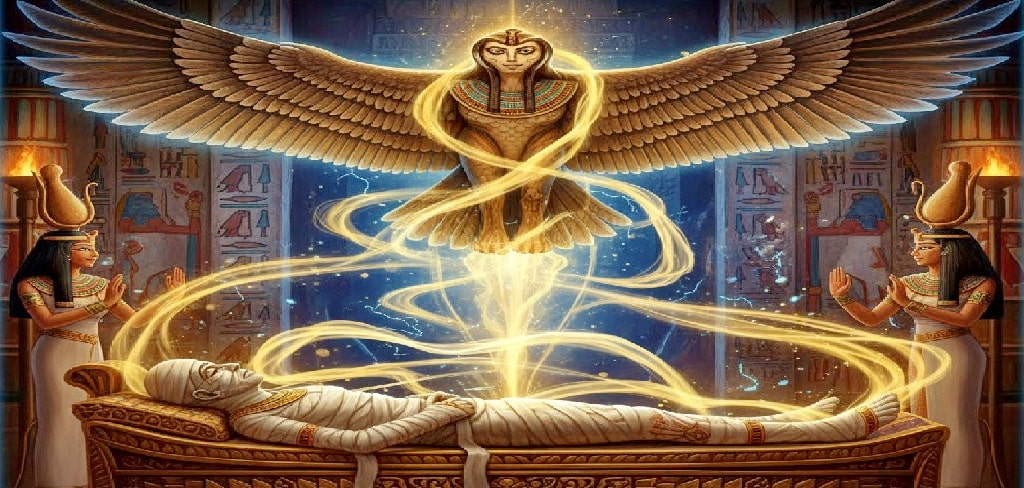
The Mythological Conception: Wings Over the Mummy

The Miraculous Birth of Horus; Magic, Danger, and Destiny

To understand the miracle of Horus, you must first look at the tragedy that preceded it. The story begins with a murder. Seth, the god of chaos, killed his brother Osiris and scattered his body parts across Egypt to prevent him from ever ruling again.

The Resurrection of Osiris

The birth of God Horus Date and significance - Egypt Fun Tours

However, Seth underestimated the power of love. Isis, Osiris’s wife and the goddess of magic, refused to accept this fate. She journeyed across the land, gathered the pieces of her husband, and bound them together, creating the first mummy.

The Divine Union

Then, Isis performed her greatest feat. She transformed herself into a female falcon (a kite). Beating her wings to create the “breath of life,” she hovered over the lifeless body of Osiris. Through this powerful magic, she revived him just long enough to conceive a son.

Thus, the Birth of Horus began not with a normal union, but with a miraculous victory over death itself. He was destined from conception to be the “Avenger,” the one who would restore the balance (Ma’at) that his uncle Seth had destroyed.

Hiding in the Reeds: Birth at Chemmis

Hiding in the Reeds; Birth at Chemmis

Isis knew the danger. Seth, her murderous brother-in-law, would stop at nothing to prevent the Birth of Horus and eliminate any threat to his ill-gotten throne. Therefore, she fled to the most remote and protected place in Egypt: the dense papyrus marshes of the Nile Delta.

The Floating Island of Chemmis

Mythology describes Isis giving birth on the “Floating Island of Chemmis” (also known as Akh-bity). This legendary spot was not a fixed landmass. Instead, it drifted within the labyrinthine waterways of the Delta, making it virtually impossible for Seth to track.

Here, amidst the rustling papyrus reeds and the secretive wildlife of the swamp, Horus was born. He lay on a humble bed of reeds, vulnerable and hidden. This imagery of a divine child born in humble, secretive circumstances, protected by his mother, resonated deeply throughout the ancient world.

Protection in the Marshes

The Delta marshes provided not only concealment but also a unique ecosystem of protectors. Local marsh dwellers, simple fishermen, helped Isis when they could. Even minor goddesses, particularly Serqet (a scorpion goddess), lent their aid, ensuring the safety of the future king from both natural dangers and Seth’s spies. This period of hidden vulnerability underscored the preciousness of Horus’s life and the intense efforts required to secure Egypt’s rightful heir.

FUN

Celebrating the Light: The Winter Solstice Rituals

Celebrating the Light; The Winter Solstice Rituals

The Birth of Horus was not merely a mythological event; it was a momentous occasion celebrated with profound devotion and complex rites that linked the divine child to the cosmos. Ancient Egyptians marked this critical event on their calendar, recognizing its deep connection to renewal and the cyclical nature of life.

December 25th and the Return of the Sun

The birth of Horus was famously celebrated on December 25th, a date that coincided with the winter solstice according to the Roman calendar. This alignment was highly significant. The winter solstice marked the shortest day of the year, after which the days began to lengthen, symbolizing the “rebirth of the sun.”

  • Symbolism of the Infant Horus: During this festival, Horus, often depicted as a child, embodied the rebirth of the sun. Priests would bring forth a representation of the infant god from a shrine, emphasizing the renewal of light and life as the sun began its return.

Festivities and Sacred Rituals

THe birth of God Horus - Festivals and rituals - Egypt Fun Tours

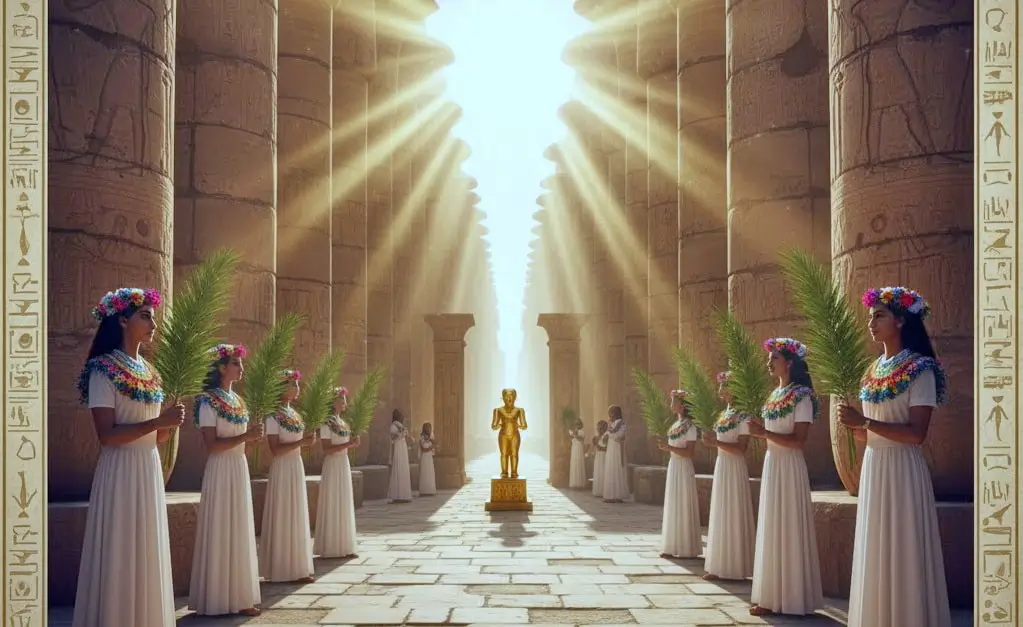
The celebration of Horus’s birth lasted for twelve days. This period mirrored the twelve divisions of the Egyptian zodiac sun calendar, marking the completion of the year and the promise of a new cycle.

  • Decorations and Symbols: Ancient Egyptians decorated their surroundings with vibrant greenery. They particularly used twelve palm shoots, which symbolized the completed year and the eternal renewal of life. This practice highlighted the profound connection between the natural world and the divine.
  • Temple Alignments: Architectural genius also played a role. Temples, such as the magnificent Karnak Temple, were specifically constructed in alignment with the solstice. This allowed the rising sun to perfectly illuminate shrines dedicated to the sun god, visually underscoring the importance of the solstice and the Birth of Horus in their religious practices.

These elaborate celebrations underscored Horus’s pivotal role as the god of light, renewal, and hope, deeply embedding his birth into the rhythms of the Egyptian year.

The Immortal Love and Tragedy: Unraveling the Osiris and Isis Myth

The Osiris and Isis Myth is the cornerstone of Ancient Egyptian religion, detailing the cosmic...
Related post
FUN

A Childhood of Danger & Healing

A Childhood of Danger & Healing

Even after his secret birth at Chemmis, the young Horus faced constant peril. His childhood was not one of divine ease, but a continuous struggle against the forces of chaos, reflecting the fragile nature of order in the ancient world.

The Vulnerable God

Unlike many powerful deities, Horus was born utterly vulnerable. He represented the innocent potential of a new dawn, constantly threatened by the darkness of his uncle Seth. Isis, his watchful mother, had to protect him not only from Seth’s direct agents but also from the natural dangers of the Delta.

The Scorpion’s Sting and Divine Intervention

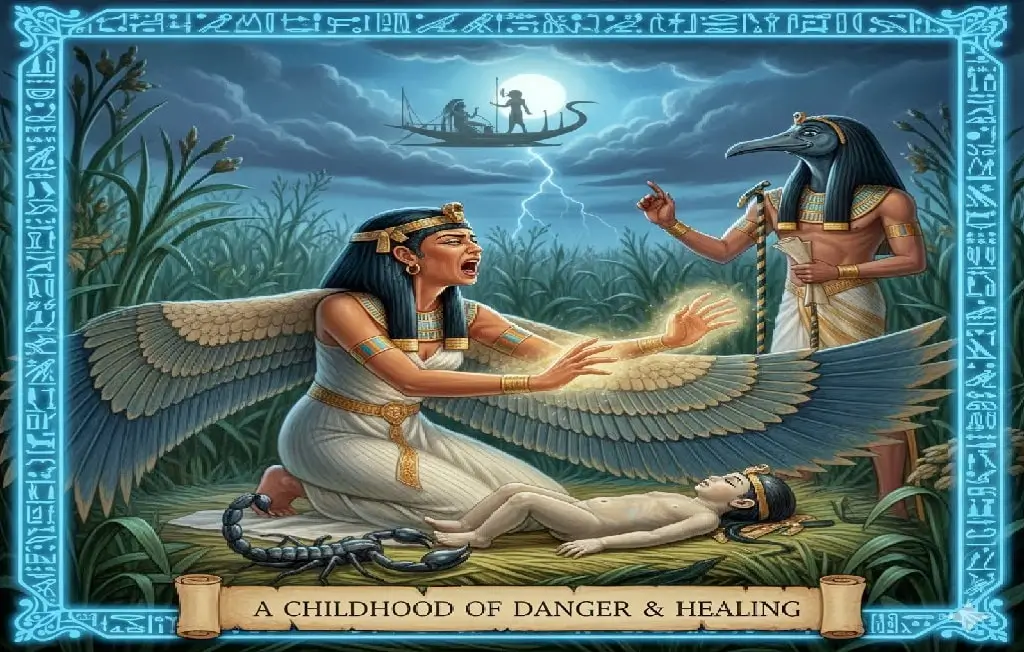
One of the most famous stories from the Birth of Horus myth highlights this danger. One day, as Isis left Horus unattended to gather food, Seth (or a demonic entity) sent a venomous scorpion to sting the sleeping child. Horus fell gravely ill, his life hanging in the balance.

Isis returned to find her son dying. Her wails of sorrow were so powerful that they stopped the Boat of the Sun (Ra) in the sky. She pleaded for help, and the god Thoth, master of magic and wisdom, descended to assist her. Thoth used powerful incantations and divine magic to extract the venom and miraculously cure Horus.

Harpocrates: The Enduring Symbol

This period of vulnerability and divine protection led to one of Horus’s most recognizable forms: Harpocrates (from the Egyptian Heru-pa-khered, meaning “Horus the Child”).

  • Iconography: Harpocrates is depicted as a naked boy wearing the Sidelock of Youth (a symbol of royal childhood) and often holding his finger to his mouth.
  • Meaning: This gesture is not one of silence, but a natural act of childhood—sucking his finger. He symbolizes innocence, the dawn, and the promise of new life. His image served as a potent amulet for protection against venomous creatures, directly referencing his miraculous healing.

Horus’s survival of these early dangers proved his destiny. He would not only live but one day avenge his father and restore balance to Egypt.

The Complete Legend of Osiris: Betrayal, Death, and Resurrection

Dive into the most essential myth of ancient Egypt: the Legend of Osiris. This guide...
Related post
FUN

The Divine King: Horus and the Pharaoh

The Divine King; Horus and the Pharaoh

Ultimately, the Birth of Horus was not just a myth; it was the divine blueprint for Egyptian kingship. Every reigning pharaoh was viewed as the “Living Horus,” the earthly manifestation of the god.

  • Divine Rule: Just as Horus was the rightful heir who defeated chaos to reclaim his father’s throne, so too was the pharaoh the legitimate ruler maintaining order (Ma’at) in Egypt.
  • The Festival Connection: The elaborate birth festivities we discussed earlier served a crucial political purpose. They publicly reinforced the king’s divine right to rule. By celebrating the birth of Horus, the people were also celebrating the legitimacy and protection of their pharaoh.

The Enduring Legacy: Influence on Christianity

Ancient Egypt and Christianity

The story of Horus did not end with the fall of ancient Egypt. Its powerful themes of a divine child and a protective mother echoed into later religions, most notably Christianity.

  • From Horus to the Future Faiths: As noted earlier, early Christians adopted the date of December 25th—originally the festival of Horus’s birth and the return of the sun—to celebrate the birth of Jesus. This choice drew a parallel between the “Rebirth of the Sun” (Horus) and the “Birth of the Son” (Christ).
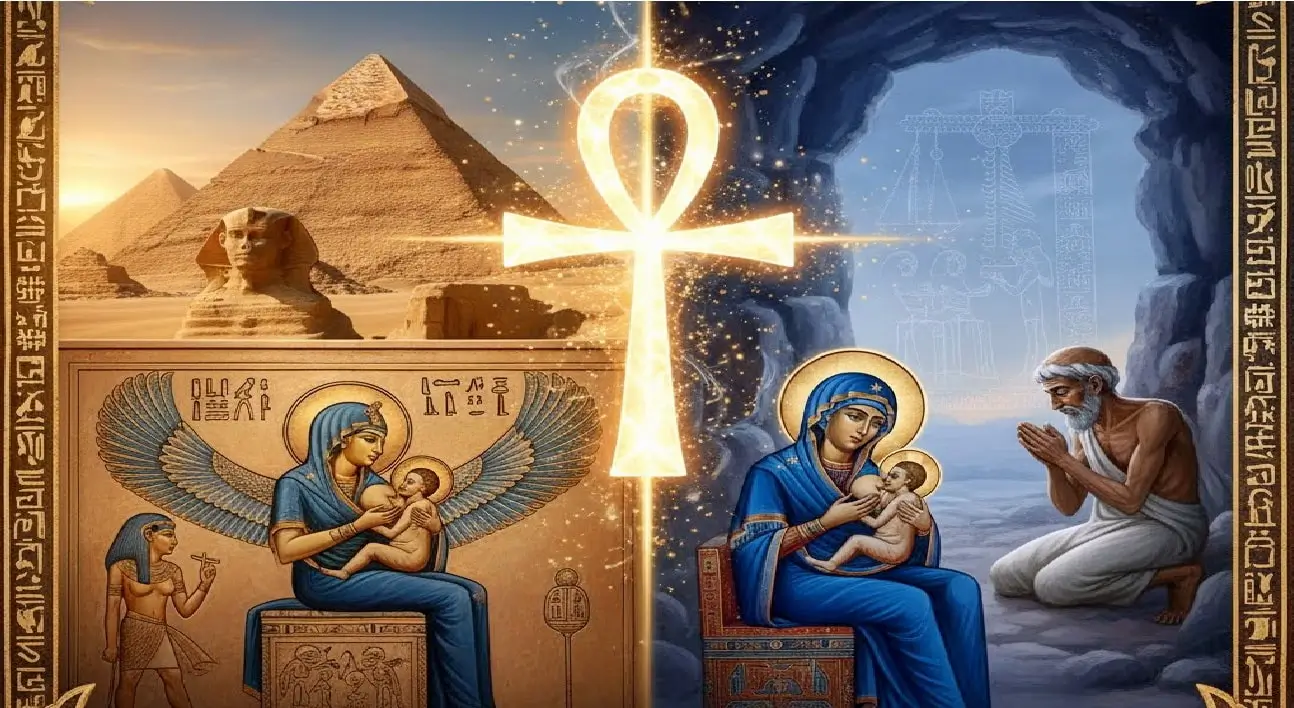
  • Shared Symbolism: Furthermore, the iconography of Isis nursing Horus (Isis Lactans) strongly influenced early Christian depictions of the Virgin Mary and Jesus. The themes of a divine child born in secret, hidden from a tyrant (Seth/Herod), and destined to bring light to the world reveal a deep continuity in human spiritual storytelling. Read our Full Guide about Ancient Egypt and Christianity

The Destruction of Human Being: How Beer Saved Humanity in Ancient Egypt

Discover the epic Egyptian myth of the Destruction of Human Being, a dramatic tale of...
Related post
FUN

The Eternal Sunrise

Mythological Context

Ultimately, the Birth of Horus was more than just a myth about a falcon god. It was a profound celebration of the cyclical nature of the cosmos. It promised the ancient Egyptians that no matter how dark the night or how cold the winter, the sun—and the king—would always rise again.

Today, the legacy of Horus survives not just in hieroglyphs, but in the very way we celebrate light, renewal, and the hope of a savior during the darkest days of the year.

FAQs About the Birth of Horus

Cultural and Historical Impact - God Horus

Here are the quick answers to the most common questions about the Birth of Horus.

Q: Who were Horus’s parents?

A: Horus was the son of Osiris (the god of the dead) and Isis (the goddess of magic). He was conceived via magic after Osiris’s death.

Q: Why is Horus’s birth celebrated on December 25th?

A: In ancient Egypt, this date aligned with the winter solstice, marking the return of the sun and longer days. Horus, as a solar deity, symbolized this “rebirth” of light.

Q: How did Isis hide Horus?

A: She fled to the floating island of Chemmis in the Nile Delta marshes. She hid him in dense papyrus thickets to protect him from his jealous uncle, Seth.

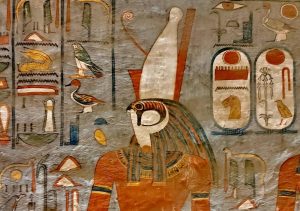
Q: Why does Horus have a falcon head?

A: Horus is a sky god. The falcon, a bird of prey that soars high above the earth with incredible vision, symbolized his dominion over the heavens and his role as the protector of the pharaoh.

Weather in Egypt

Wonderful adventure to discover Egypt in a week...
Discover Egypt's Hidden Wonders in the magical oases....
cairo layover tours - Pyramids and GEM Tour from Cairo Airport

Great layover tour

First things first…I was in Cairo about a week before the protests of 2011 started. As far as the tour was concerned, I was very pleased. I was met at the airport by a knowledgeable guide (Sara) who spoke great English and a driver. They took me to Giza first,

More »

7 night Egypt Experience Cairo, Aswan, Luxor

Trip of a lifetime!! COVID SAFE!! Knowledgeable guide who loves to share the magic of Egypt with tourists. Friendly and accommodating. This company goes to the extreme to make clients feel welcome and help them. A family company that takes good care of its support staff. Must book the 7-night

More »
Giza pyramids Tours - Egypt Fun Tours

Thanks to egypt fun tours!

Thank u Hani for the enlightening tour of Giza and Saqqara. Thank u also for the great recommendation – Felfela – which we enjoyed a lot. returning the commission u got at the papyrus shop was something we didn’t expect and truly appreciate. shookran!

More »
Isis with wings

Top-rated Tour Packages

Isis with wings