
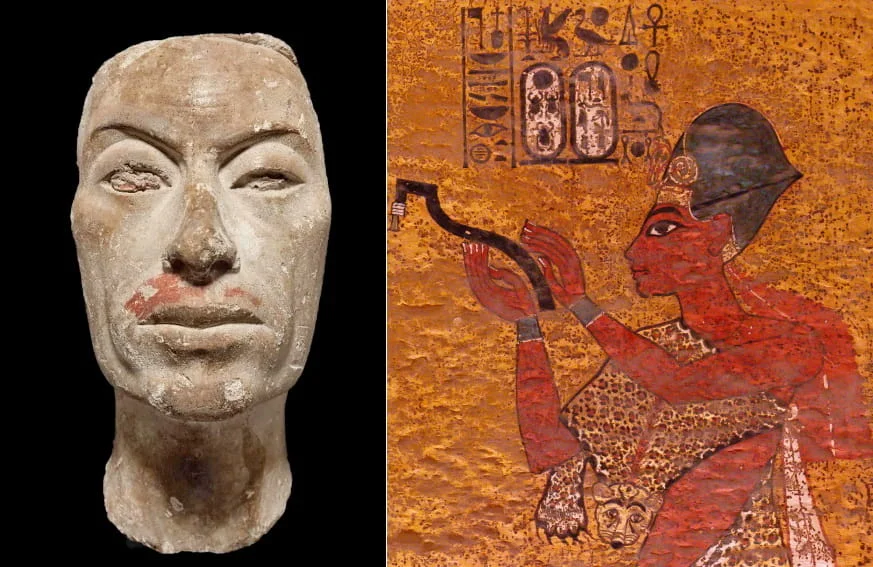
The Controversial Reign of King Ay: The Master Political Survivor

King Ay remains one of the most intriguing and clever political survivors of ancient Egypt's 18th Dynasty. Rising through the ranks during the chaotic Amarna Period, this experienced court insider successfully protected his high-standing position under the heretic pharaoh, Akhenaten. Following that collapse, he served as Grand Vizier to the young King Tutankhamun before masterfully seizing the empty throne for himself. Although his peaceful, four-year reign was cut short by his advanced age, Ay focused heavily on restoring the traditional temples and stabilizing the fragile empire. Ultimately, despite fierce attempts by his military successor, Horemheb, to completely erase his name from history, modern archaeology has firmly cemented Ay's legacy as the ultimate behind-the-scenes strategist.
The eye of Horus
WhatsApp
Email
Print

Few eras in ancient history match the sheer chaos of the late 18th Dynasty. The radical religious experiments of the heretic king, Akhenaten, had fractured Egypt. He pulled down the ancient temples and abandoned the traditional capital. When his young son, Tutankhamun, took the throne, the empire desperately needed to find its balance again. The boy king began a massive national restoration. However, tragedy struck when he died suddenly at just nineteen years old. He left no children and no designated heir to protect the royal crown. Egypt stood on the absolute edge of a massive political crisis. Yet, a master politician stepped out of the shadows to claim total power. This calculating figure was the older Grand Vizier, King Ay.
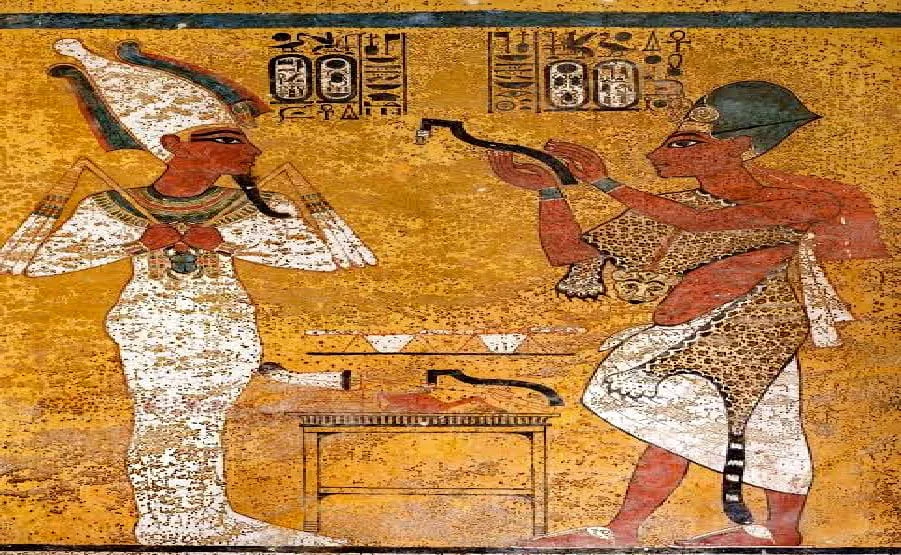
King Ay

Ay was the ultimate court insider, with a rare ability to survive deadly shifts in royal favor. He served at the absolute highest levels of government under Akhenaten. Ay then managed the state behind Tutankhamun’s fragile throne. After the young pharaoh’s sudden death, Ay managed his most ambitious political maneuver. He oversaw the royal burial. He even painted himself onto the tomb walls to secure his royal claim. By doing so, this older advisor successfully seized the ultimate prize: the double crown of Egypt. His brief, controversial reign tells a fascinating story. It reveals how political skill and clever manipulation could triumph over royal blood.
Divider

The Power Behind the Throne: Ay’s Early Career

The Power Behind the Throne Ay's Early Career

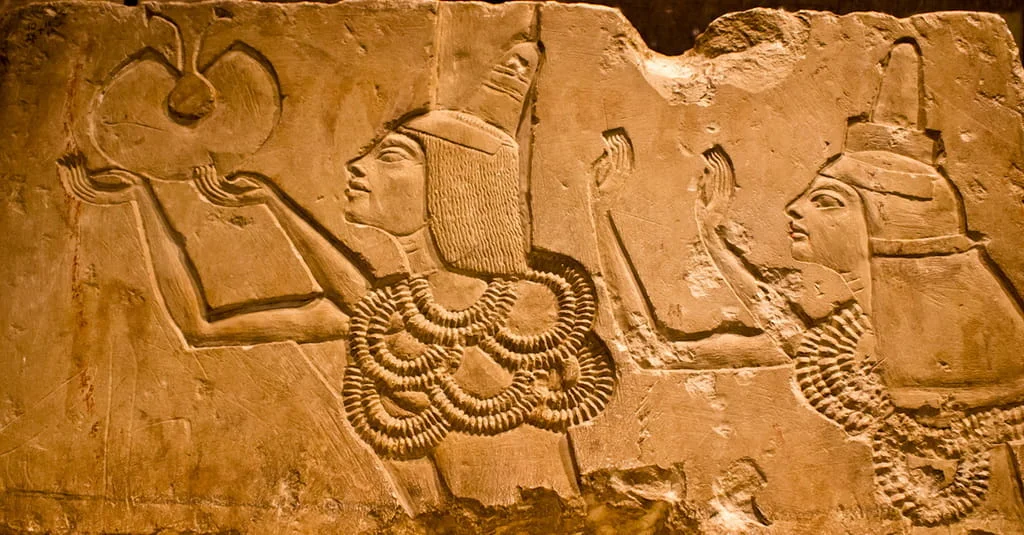
King Ay did not achieve supreme power overnight. Instead, he spent decades quietly climbing the ranks of the royal court. Most historians believe he grew up in the influential city of Akhmim. Indeed, he likely possessed highly valuable family connections there. For example, many scholars believe he was the brother of Queen Tiye, the famous chief wife of Pharaoh Amenhotep III. Consequently, this close family tie placed him at the absolute center of royal influence from a very early age.

Serving the Heretic Akhenaten

When Amenhotep III died, his radical son Akhenaten took the throne. Suddenly, the new king upended Egyptian society by outlawing the traditional gods. Although many officials lost their positions during this aggressive religious purge, Ay managed to survive.

In fact, he adapted perfectly to the new regime at the capital city of Amarna. For this reason, he earned the prestigious title of “Master of all the Horses of his Majesty.” In addition, he received the highest court honor, known as the Gold of Honor. To prove his loyalty, Ay even carved the Great Hymn to the Aten into the walls of his personal Amarna tomb. This text shows that he publicly championed the king’s strange new religion simply to protect his own political standing.

Guiding the Boy King Tutankhamun

Eventually, the radical Amarna experiment collapsed after Akhenaten’s death. When the nine-year-old Tutankhamun became pharaoh, the royal court desperately needed experienced leaders. Therefore, Ay stepped into this vacuum as the Grand Vizier (the chief operating officer of Egypt).

During this unstable time, he worked closely alongside the Supreme Commander of the Army, Horemheb. Together, these two powerful men managed the daily operations of the Egyptian empire. Meanwhile, Ay focused on guiding the child king entirely away from the heresy of Amarna. To achieve this, he directed the restoration of the ancient temples of Amun in Thebes. Ultimately, he successfully positioned himself as a trusted, irreplaceable father figure to the young boy. As a result, no one could make a major state decision without his direct approval.

Golden Scarab

The Brief Reign of Pharaoh Ay

The Brief Reign of Pharaoh Ay

Despite his brilliant political maneuvering, Pharaoh Ay inherited an incredibly fragile nation. His advanced age meant his time on the throne would be short. Consequently, he focused entirely on stabilizing the country rather than launching major military campaigns. He needed to prove that the gods once again smiled upon Egypt after the disastrous Amarna Period.

Domestic Policies and Religious Restoration

Domestic Policies and Religious Restoration

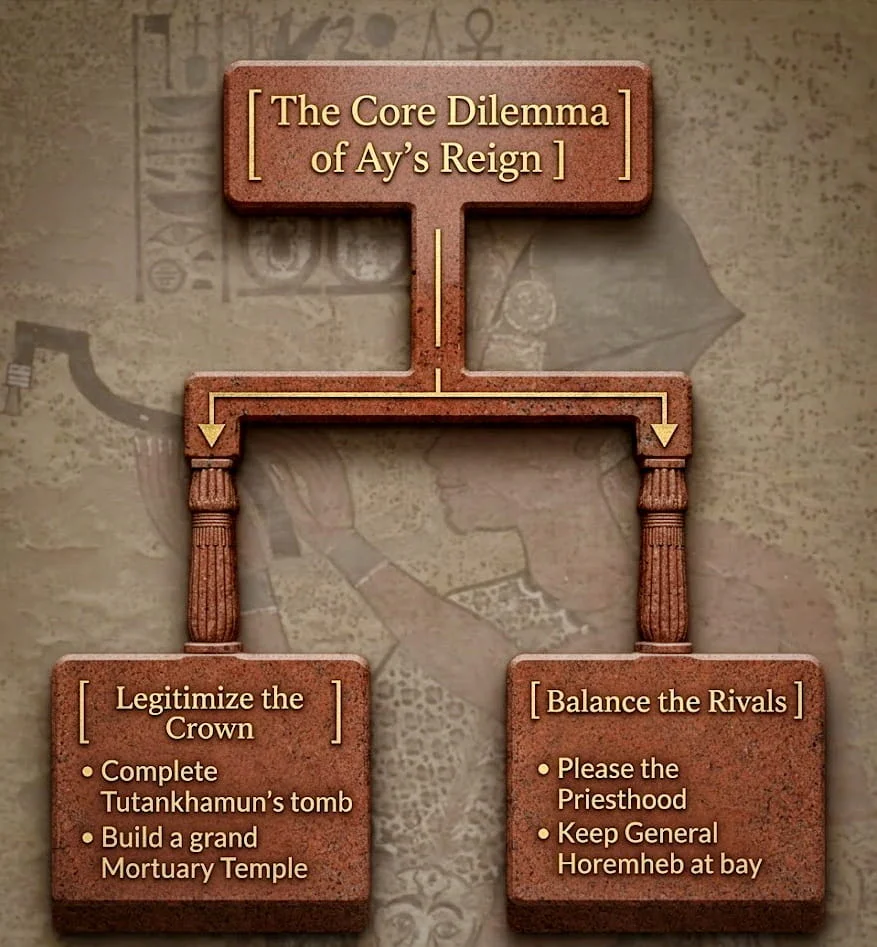
First and foremost, Ay continued the massive religious restoration project he had started under Tutankhamun. He poured significant funds into restoring the ancient temples of Amun at Thebes. By doing so, he successfully won the political backing of the powerful priesthood.

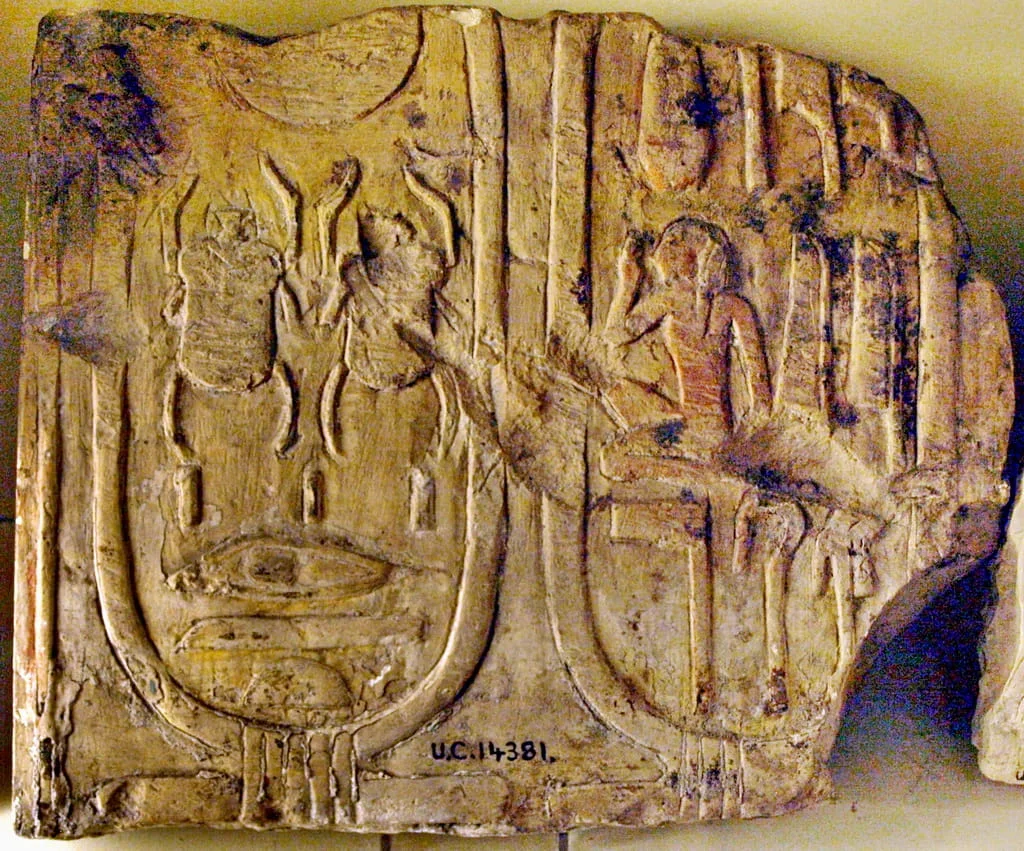
In addition, he spent a large portion of his brief reign constructing his own massive mortuary temple at Medinet Habu. Interestingly, he also took over the construction of several monuments that had originally been started by Tutankhamun. By carving his own cartouche over the dead boy’s name, Ay sought to cement his face as the permanent savior of traditional Egyptian religion.

Maintaining the Peace

On the international stage, Ay chose a policy of caution. Because the Egyptian military was still recovering from decades of neglect under Akhenaten, the pharaoh avoided major foreign wars. Instead, he relied heavily on his diplomatic experience to manage tense relations with the Hittite Empire. Meanwhile, he left the daily management of the army to General Horemheb. This strategic choice kept the peace, but it also allowed Horemheb to grow increasingly powerful and popular with the people.

The eye of Horus

King Ay: Death, Burial, and the Wrath of Horemheb

King Ay Death, Burial, and the Wrath of Horemheb

After a brief reign of only four years, Pharaoh Ay died around 1319 BCE. Because he left no surviving sons to claim the crown, his death marked the absolute end of his short-lived family line. He was buried in a magnificent rock-cut tomb located in the isolated Western Valley of the Kings, known today as WV23.

The Architecture of Tomb WV23

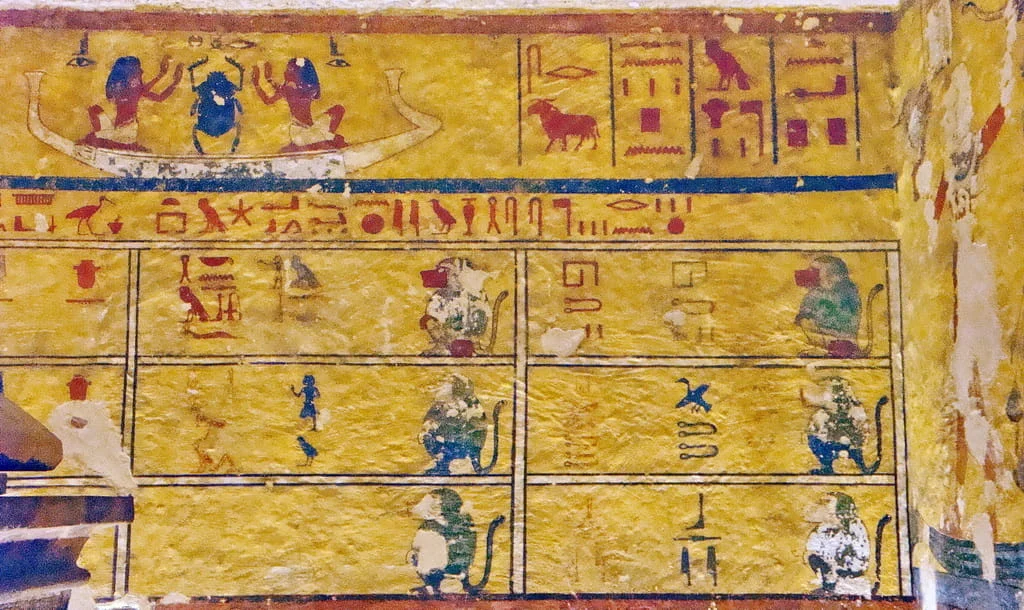
Initially, the construction of this beautiful tomb had actually started for Tutankhamun. However, when Ay seized the throne, he took the grand tomb for himself and forced the boy king into a much smaller grave. Inside WV23, artists decorated the walls with stunning scenes of traditional hunting trips and religious rituals. Most notably, one wall features twelve sacred baboons representing the hours of the night. This specific design closely mirrors the artwork found inside Tutankhamun’s famous burial chamber.

The Systematic Destruction by Horemheb

Unfortunately for Ay, his earthly peace did not last long. Following his death, the supreme military commander Horemheb finally seized the throne. Because Horemheb viewed Ay as a corrupt remnant of the despised Amarna Period, the new general-turned-pharaoh unleashed a devastating campaign of revenge.

Horemheb initiated a strict damnatio memoriae—a systematic campaign to completely erase Ay from human memory.

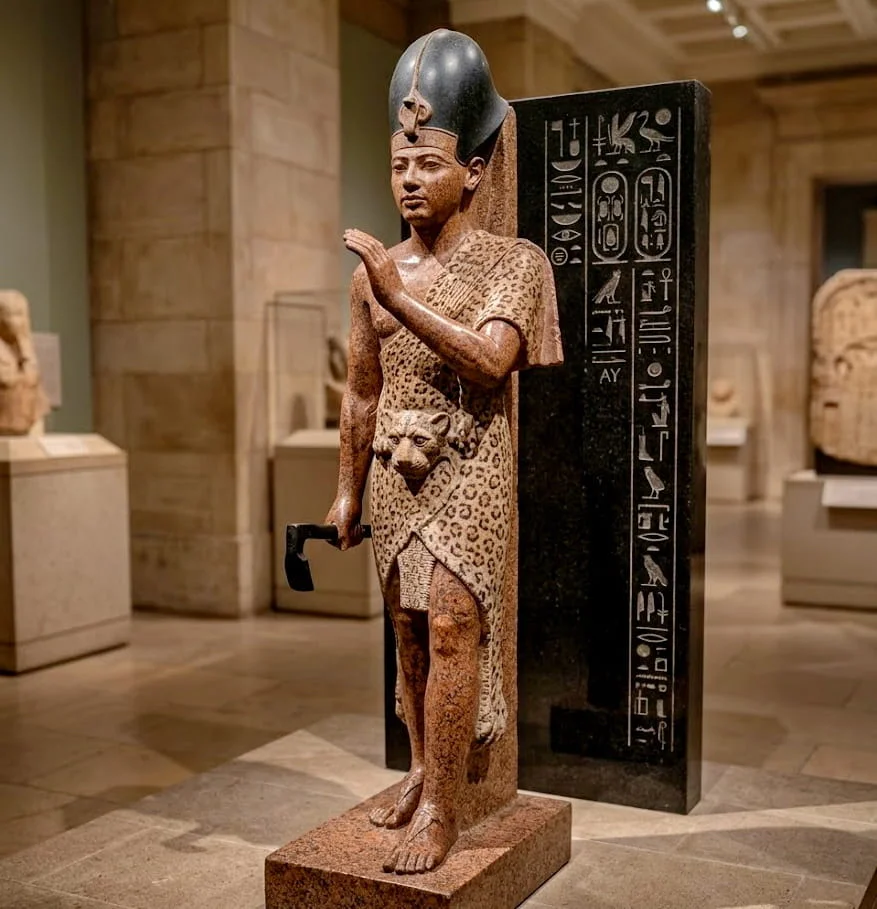
Consequently, royal agents marched into tomb WV23 with hammers and chisels. They smashed Ay’s heavy red quartzite sarcophagus into pieces. Furthermore, they scraped his royal face and cartouches off the painted walls, leaving him nameless in the afterlife. To ensure total erasure, Horemheb even stole Ay’s massive mortuary temple at Medinet Habu, carving his own name directly over Ay’s images.

Divider

King Ay: The Ultimate Court Insider

King Ay The Ultimate Court Insider

Ultimately, history remembers King Ay as one of the most fascinating political chameleons of ancient Egypt. He did not rule through legendary battlefield conquests like his predecessor Amenhotep II. Instead, he maintained his power through decades of unmatched administrative skill and sharp political instinct. By changing his beliefs to match the ruler of the day, he successfully survived the dangerous Amarna Period. He then navigated the collapse of a dynasty to place the royal crown directly onto his own head.

Although his successor Horemheb tried to erase his face from history, modern archaeology has restored Ay’s place in the pharaonic timeline. His brief four-year reign serves as a powerful testament to the value of political survival. He proved that sometimes, the quiet advisor behind the throne could outmaneuver the most powerful warriors in the ancient world.

The eye of Horus

FAQs: Frequently Asked Questions About King Ay

Who was King Ay in ancient Egypt?

King Ay was a high-ranking court official and Grand Vizier who became pharaoh at the end of the 18th Dynasty. He was a master political survivor who served under Akhenaten and Tutankhamun before taking the throne himself.

How did King Ay become pharaoh?

Ay seized the throne after the sudden death of the young King Tutankhamun, who left no clear heir. To secure his royal claim, the older advisor quickly married Tutankhamun’s grieving widow, Queen Ankhesenamun.

Was King Ay related to Tutankhamun?

While he was not of direct royal blood, Ay was closely connected to the family. Most scholars believe he was the brother of Queen Tiye, making him Tutankhamun’s great-uncle by marriage.

Why did Horemheb erase King Ay from history?

Horemheb viewed Ay as a corrupt remnant of the disastrous Amarna Period. Consequently, when Horemheb became pharaoh, he ordered his soldiers to destroy Ay’s tomb, smash his sarcophagus, and erase his name from all public monuments.

Where is King Ay buried?

Ay was buried in tomb WV23, which is located in the isolated Western Valley of the Kings. Although ancient grave robbers and political rivals heavily damaged the tomb, visitors can still see its beautiful wall paintings today.


Divider

Excellent Adventure

These guys put together an amazing itinerary that allowed me see the sunrise at the sun festival in Abu Simbel, King Tut’s tomb, and mask! That was just the tip of the iceberg. Aswan, Kom Ombo, Edfu and Luxor. So much visited with plenty of rest time. An amazing trip

More »

Cairo Day Trip

Great trip organised. I had a 12-hour layover in Cairo and had a great time with Sherif, who answered every question I had on ancient Egypt. Highly recommend.

More »
Top 10 restaurants in cairo Egypt Fun Tours 2

Tour & Overnight camping with Mohamed

The breathtaking views and the isolation with a night under the stars! The trip was memorable with Mohamed, our tour guide, who drove us to all the sites on the way to the White Desert, and is clearly someone who knows the desert inside out. He also cooked a delicious

More »

Great layover tour

First things first…I was in Cairo about a week before the protests of 2011 started. As far as the tour was concerned, I was very pleased. I was met at the airport by a knowledgeable guide (Sara) who spoke great English and a driver. They took me to Giza first,

More »
God_Anubis_Icon

Top-rated Tour Packages

God_Anubis_Icon
WhatsApp
Email
Print