Fourteenth Dynasty of Egypt: Environmental Crisis and the Hyksos Subjugation
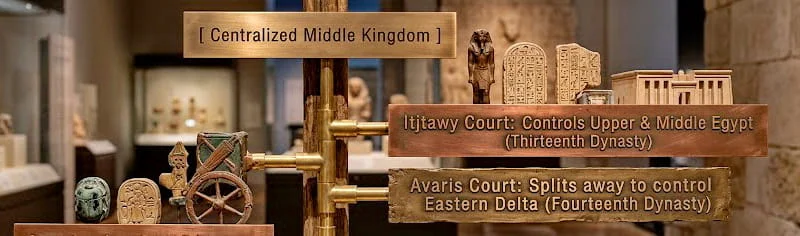
The spectacular commercial success of the Fourteenth Dynasty of Egypt could not protect it from natural disaster. The larger kingdoms of the Nile Valley were much more agriculturally stable. Unlike them, the highly populated urban centers of the eastern Delta were deeply vulnerable. Sudden environmental changes posed a constant, severe threat to their survival. Toward the mid-seventeenth century BCE, a series of catastrophic events systematically disabled the northern state. These overlapping crises rapidly pushed the entire realm into a terminal decline.
This tragic collapse did not begin with a foreign enemy assault. Instead, a devastating environmental phenomenon triggered the initial downfall. A series of consecutive, critically low Nile floods completely ruined the local agricultural fields. The Delta state relied intensely on importing supplemental grain from nearby regions. They needed these steady imports to feed their dense merchant population. Consequently, this sudden food shortage quickly triggered widespread, desperate famine across the entire northern region.
Fourteenth Dynasty of Egypt: The Ravages of Famine and Disease
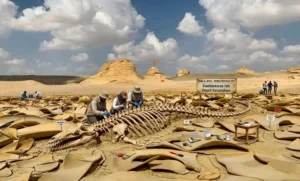
The archaeological layers at Avaris provide grim physical proof of this sudden internal catastrophe. Excavators working at the site have uncovered numerous crowded, irregular mass graves. These emergency burials date precisely to the final years of the Fourteenth Dynasty of Egypt. Furthermore, these tragic graves completely lack traditional ritual care. They contain no wealthy funerary offerings or elite scarab amulets. Such prized items heavily characterized the earlier, highly prosperous decades of the Delta rule.
The state administration packed thousands of urban traders into a crowded port city. Doing this during a severe food shortage created a deadly situation. It formed the perfect breeding ground for highly contagious epidemics. This lethal combination of widespread famine and aggressive plague rapidly decimated the local population. It completely wiped out the wealthy ruling elite class. Additionally, it thoroughly paralyzed the state’s vital maritime trade networks. The administrative machinery of the Avaris court simply rotted away from within. This internal decay left the northern gateway completely defenseless against outside forces.
Fourteenth Dynasty of Egypt: The Infiltration of the Fifteenth Dynasty
The Fourteenth Dynasty of Egypt collapsed under the sheer weight of this intense biological crisis. Consequently, a more powerful group of West Asian rulers carefully took advantage of the massive power vacuum. Around c. 1650 BCE, the ambitious leaders of the Fifteenth Dynasty officially marched into the weakened Delta. Historically, scholars and ancient scribes refer to these incoming people as the Hyksos.
The Hyksos did not need to wage a long, destructive war to conquer the territory. They met almost no military resistance along the borders. Instead, they simply walked right into a depopulated, structurally ruined capital city. They immediately seized the reins of state power with total ease. The incoming Hyksos kings kept the strategic city of Avaris as their primary grand capital. They systematically absorbed the remaining pieces of the Canaanite-Egyptian bureaucracy. They also took over the existing international trade routes. Finally, they adopted the hybrid religious cult of Seth-Baal. This smooth political transition marked the official end of the Fourteenth Dynasty. It effectively paved the way for the total regional dominance of the Hyksos over the complex Second Intermediate Period.
The Lasting Legacy of the Delta Kingdom
The Fourteenth Dynasty of Egypt stands as an extraordinary historical experiment. It serves as a brilliant example of multicultural governance and deep economic specialization. Its relatively short lifespan proves a vital historical point. An empire does not always require massive territorial conquests to survive. It also does not need a traditional line of Upper Egyptian pharaohs to successfully assert its political legitimacy.
The rulers of Avaris successfully transformed a modest trade outpost into a dominant maritime capital. By doing so, they fundamentally shifted the geopolitical gravity of ancient Egypt. They moved the nation’s economic focus directly toward the Mediterranean coast. Furthermore, they pioneered a brilliant, highly durable cultural synthesis. This social framework allowed distinct Levantine and native Egyptian identities to thrive side by side in perfect harmony. Their trading empire ultimately succumbed to environmental ruin and deadly disease. However, their profound historical impact remained completely intact. The unique administrative, commercial, and religious systems they left behind at Avaris were highly influential. They laid the exact structural blueprint for the subsequent rise of the mighty Hyksos state.