The Thirteenth Dynasty of Egypt: Bureaucracy and Change

The Thirteenth Dynasty of Egypt (c. 1802–1650 BCE) presents a compelling historical paradox where a highly resilient state bureaucracy maintained national stability despite rapid, chaotic successions of short-lived rulers. While the central government at Itjtawy eventually fractured due to economic strain and the rise of a rival Fourteenth Dynasty in the northern Nile Delta, this era witnessed a fascinating democratization of art, marked by an explosion of private funerary stelae and mass-produced scarab seals for the non-royal elite. Ultimately, it was not a story of sudden, violent collapse, but a gradual transition into the Second Intermediate Period where the enduring administrative machinery of the Middle Kingdom kept the core of Egyptian culture alive.
The eye of Horus
WhatsApp
Email
Print

Thirteenth Dynasty of Egypt: The Paradox of Continuity and Chaos

The Thirteenth Dynasty of Egypt (c. 1802–1650 BCE) remains one of history’s greatest political puzzles. Many general history books quickly dismiss this era. They often label it as a time of total collapse and decay. However, modern archaeology reveals a much more fascinating reality. The period actually highlights a brilliant historical paradox. Egypt suffered from rapid changes in leadership, yet the daily life of the nation remained remarkably stable.

During this era, dozens of short-lived pharaohs claimed the throne. Some kings ruled for only a few months before disappearing from the record. In the past, such chaos would have plunged Egypt into a bloody civil war. Yet, the Middle Kingdom did not fracture immediately. The state’s internal machinery stayed functional and strong.

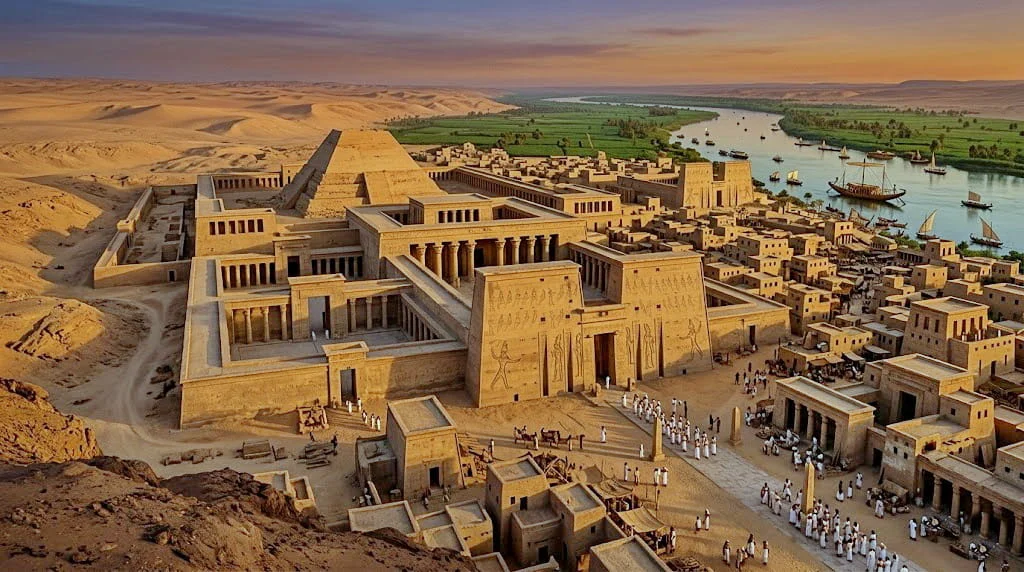
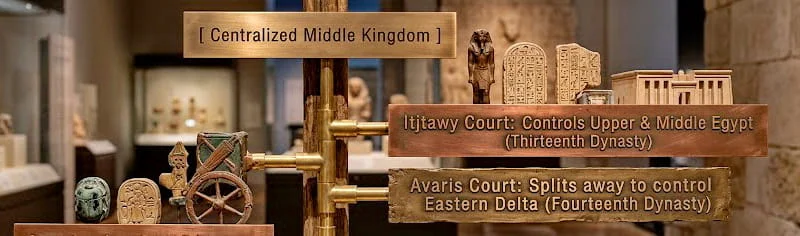
The secret to this survival lay in the capital city of Itjtawy. This administrative center continued to guide the country. In the palace offices, powerful viziers and civil servants managed the economy. They collected taxes, maintained regional borders, and enforced the law. They followed the exact systems established by the great kings of the Twelfth Dynasty.

Therefore, the Thirteenth Dynasty does not represent a sudden, violent fall. Instead, it shows a slow, structural transformation. The central government learned to survive without the iron fist of a single, long-reigning monarch. For the first time in Egyptian history, the stability of the empire depended upon its enduring bureaucratic systems rather than the individual strength of the man sitting on the throne.

Divider

The Bureaucratic Ghost in the Machine of the Thirteenth Dynasty of Egypt

The Bureaucratic Ghost in the Machine of the Thirteenth Dynasty of Egypt

The true secret to Egypt’s survival during this fractured era lies within its deep administrative offices. Under previous rulers, the pharaoh acted as the absolute anchor of the state. However, the Thirteenth Dynasty of Egypt turned this traditional system completely on its head. While kings rotated through the palace doors at an alarming rate, a highly trained class of permanent officials kept the country running.

This period marks the ultimate triumph of the Egyptian civil service. The daily operations of the government no longer relied on the personal spark of a divine monarch. Instead, a complex network of scribes, treasurers, and overseers maintained total control. They logged the annual Nile floods, managed national grain storage, and preserved the vital records of the state.

Thirteenth Dynasty of Egypt: The Ultimate Power of the Vizier

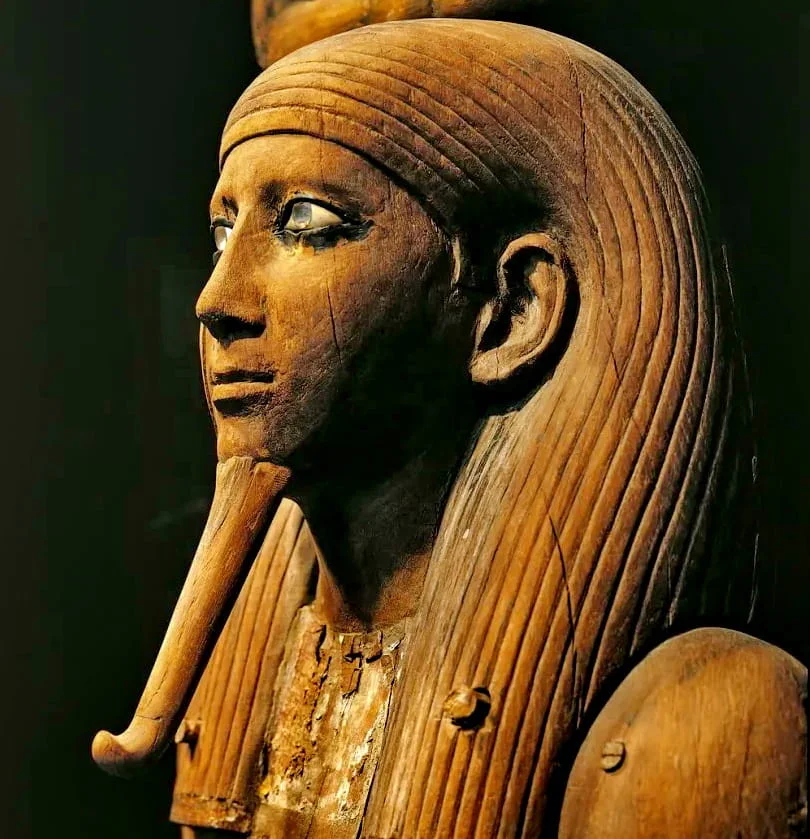
At the absolute center of this enduring bureaucracy stood the office of the Vizier. During the Thirteenth Dynasty of Egypt, the Vizier effectively functioned as the prime minister and chief justice of the nation. While the royal bloodline grew weak and unstable, the families of these top ministers held incredible generational power.

The historical record highlights famous individuals like the Vizier Ankhu. Records show that Ankhu served multiple consecutive pharaohs during his long career. When one king died or lost the throne, Ankhu simply remained in office to guide the next ruler. He managed the royal court, directed state projects, and ensured that the transition of royal power did not disrupt public order. Through his steady leadership, the office of the Vizier became a pillar of stability that completely overshadowed the crown itself.

Thirteenth Dynasty of Egypt: The Survival of the Treasury and Resource Registries

Beyond the grand office of the Vizier, the lower levels of the bureaucracy worked with remarkable efficiency. Scribes across the country utilized the strict administrative models left behind by the Twelfth Dynasty. They consistently updated nationwide asset registries, which tracked everything from livestock to physical land boundaries.

The royal treasury at Itjtawy continued to function as the economic engine of the empire. Officials carefully collected taxes from the northern Delta all the way to the southern borders of Upper Egypt. Even when central authority began to show small cracks, the local populations continued to pay their dues to the state. This financial consistency allowed the government to fund its massive network of civil servants. By decoupling the daily economy from the identity of the reigning pharaoh, the Thirteenth Dynasty of Egypt proved that a well-engineered bureaucracy could outlast any political crisis.

Golden Scarab

High Points in the Thirteenth Dynasty of Egypt

High Points in the Thirteenth Dynasty of Egypt

Modern textbooks often overlook the rulers of this era. They frequently group these pharaohs into a single category of weak, short-lived leaders. However, the Thirteenth Dynasty of Egypt actually produced several highly capable monarchs. These kings briefly broke the cycle of political chaos. They reasserted royal authority, launched impressive building campaigns, and actively projected Egyptian power beyond the traditional borders.

These successful reigns prove that the dynasty did not experience a steady, linear decline. Instead, the period looked more like a political rollercoaster. Moments of severe fragmentation alternated with decades of strong central rule. During these high points, the pharaohs effectively utilized the state’s massive wealth to leave a lasting mark on the archaeological record.

The Reign of Sobekhotep III: A Shift in Royal Power

King Sobekhotep III represents one of the first major success stories of the Thirteenth Dynasty of Egypt. Historical evidence suggests that he did not possess royal blood. Instead, he likely rose to power through a prominent military or bureaucratic family. This non-royal background did not stop him from establishing a powerful and highly visible reign.
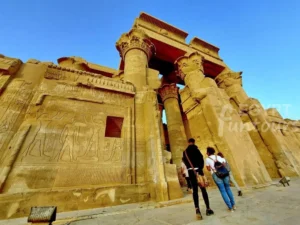
Once on the throne, Sobekhotep III launched an extensive monument-building program across the entire country. He added grand structures to major religious centers, including the temples at Abydos, Elkab, and Tod. To fund these projects, he relied on a fully functional economy and stable trade networks. His ability to build on such a national scale proves that the central treasury at Itjtawy still held immense resources during his rule.

Neferhotep I and Sobekhotep IV: The Peak of Monumental Stability

The absolute zenith of the Thirteenth Dynasty of Egypt arrived with the consecutive reigns of two brothers, Neferhotep I and Sobekhotep IV. Together, these two kings ruled for over two decades. This extended period of stability allowed Egypt to experience a brief but brilliant cultural renaissance.

  • Neferhotep I: This king focused heavily on restoring religious traditions and solidifying his divine right to rule. He famously left behind a massive rock inscription at Abydos. This text describes his deep personal research into the ancient archives of Heliopolis. He wanted to ensure that his court built the monuments exactly as the gods had intended at the dawn of time.
  • Sobekhotep IV: His brother and successor, Sobekhotep IV, shifted the focus toward external power and military might. Archaeology proves that he successfully projected Egyptian influence abroad. Statues bearing his name have been found as far north as the Levant and as far south as the Third Cataract in Nubia. His reign shows that the Thirteenth Dynasty of Egypt could still command formidable armies and enforce its will over foreign territories.

Thirteenth Dynasty of Egypt: The Material Wealth of the High Points

The artifacts from these specific reigns challenge the idea of a poor, dying culture. Master craftsmen continued to produce high-end luxury goods for the royal court. Fine jewelry, beautifully carved stone scarabs, and large-scale diorite statues flourished during these decades.

The pharaohs used this material wealth to secure the loyalty of the elite class. They gifted precious amulets and specialized seals to top officials across the country. By distributing these high-status objects, the kings reinforced the ties between the provinces and the capital at Itjtawy. These successful reigns proved to the ancient world that when a strong leader sat on the throne, the intact systems of the Middle Kingdom could still achieve true imperial greatness.

The eye of Horus

The Fracturing Landscape and the Second Intermediate Period

The Fracturing Landscape and the Second Intermediate Period

The impressive stability of the high points could not last forever. Toward the latter half of the century, the absolute control of the Thirteenth Dynasty of Egypt began to erode. This decay did not happen overnight. Instead, a slow, geographic fracturing sliced the nation into competing territories. This division ultimately pushed Egypt out of the Middle Kingdom and into the chaotic Second Intermediate Period.

The primary breakdown occurred far from the capital of Itjtawy, deep within the marshlands of the northern Nile Delta. For generations, the rulers of the Thirteenth Dynasty of Egypt had allowed foreign settlers from the Levant to live and work in this fertile region. These immigrant communities grew incredibly wealthy by controlling local maritime trade routes. Eventually, their economic power transformed into political ambition, creating a rival state that directly challenged the pharaoh’s court.

The Rise of Avaris and the Fourteenth Dynasty

The city of Avaris became the epicenter of this regional rebellion. Around $c.$ 1705 BCE, local leaders in the eastern Delta officially broke away from the central government. They declared their independence and founded what historians now call the Fourteenth Dynasty.

The Rise of Avaris and the Fourteenth Dynasty

This sudden territorial split cut the Thirteenth Dynasty of Egypt off from its highly lucrative Mediterranean trade networks. The pharaohs in Itjtawy still controlled Upper and Middle Egypt, but they lost their grip on the north. This economic blow severely weakened the royal treasury. The central government could no longer easily fund its massive network of civil servants or maintain its distant military outposts.

The Coming of the Hyksos

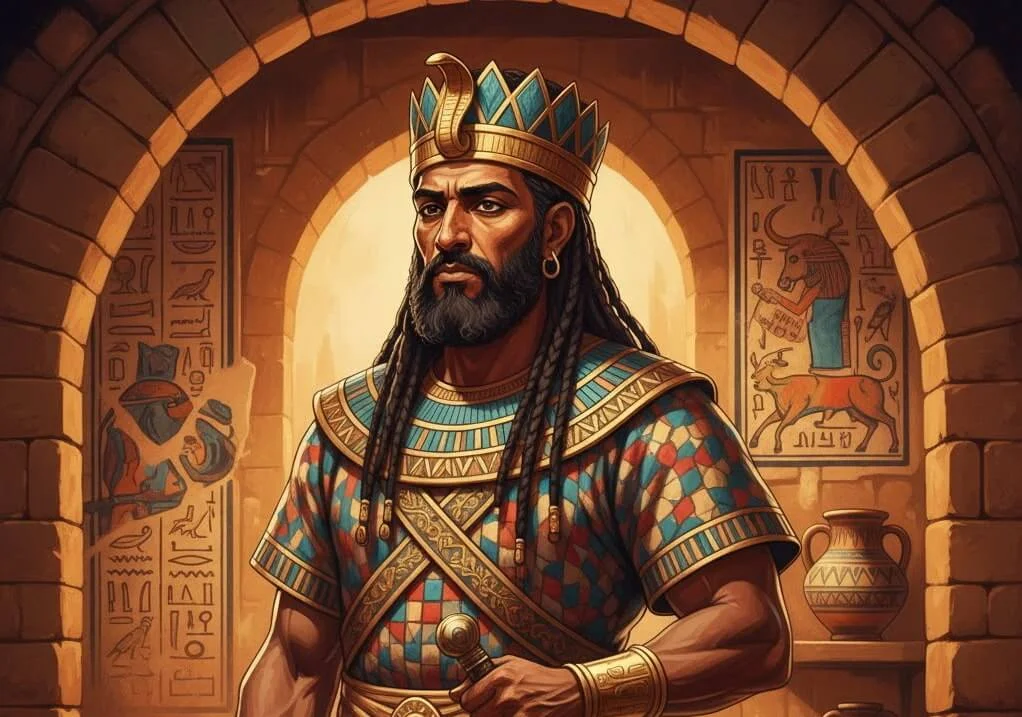
As the local government at Avaris weakened the Delta, a much greater threat loomed on the horizon. A new group of West Asian rulers, known as the Hyksos, began to migrate into the region. These newcomers possessed superior military technologies, including the composite bow and horse-drawn chariots.

Avaris and the Hyksos Dynasty; The Rulers of Foreign Lands

The Hyksos did not launch a massive, sudden invasion. Instead, they gradually infiltrated the political structures of the Delta. Around c. 1650 BCE, they overran Avaris and established the Fifteenth Dynasty. From this northern stronghold, the Hyksos pushed their armies south toward the capital of Itjtawy.

The aging bureaucratic empire of the Thirteenth Dynasty of Egypt could not withstand this dual pressure. Facing economic ruin and military defeat, the court finally abandoned Itjtawy. The remnants of the royal family fled south to the ancestral safety of Thebes. This strategic retreat marked the official end of the Middle Kingdom, leaving Egypt divided between foreign kings in the north and struggling regional pharaohs in the south.

Divider

The Art and Culture of the Common Elite during the Thirteenth Dynasty of Egypt

The shift in political control did not crush Egyptian creativity. In fact, the Thirteenth Dynasty of Egypt witnessed a fascinating democratization of art and culture. During the height of the Twelfth Dynasty, high-end art served the pharaoh almost exclusively. However, as the royal court at Itjtawy weakened, elite families and regional officials took artistic patronage into their own hands.

This cultural shift created an explosion of private monuments. Rather than focusing on grand royal pyramids, the country’s finest artists began producing exquisite items for non-royal citizens. This change shows that wealth had spread from the crown down into the upper-middle class of the bureaucracy.

The Rise of Private Funerary Stelae

Stele production reached an absolute peak during the Thirteenth Dynasty of Egypt. Thousands of middle-class officials, scribes, and military officers commissioned these carved limestone slabs for their tombs. The sacred site of Abydos became the absolute center for this private devotion.

Art Feature Twelfth Dynasty Style Thirteenth Dynasty of Egypt Style
Primary Patron The Pharaoh and Highest Court Royals Regional Bureaucrats and Local Officials
Monument Scale Massive Royal Pyramids and State Temples Private Tombs, Stelae, and Small Chapels
Artistic Theme Absolute Royal Perfection and Divine Power Family Relationships and Personal Devotion

These private stelae focus heavily on family connections. Unlike the rigid royal art of the past, these pieces frequently depict large family gatherings. Owners proudly displayed their parents, siblings, children, and even household servants on a single monument. The carvings often lack the pristine perfection of royal workshops, but they display a lively, deeply personal charm that reflects the daily reality of the Egyptian people.

The Mass Production of Scarab Seals

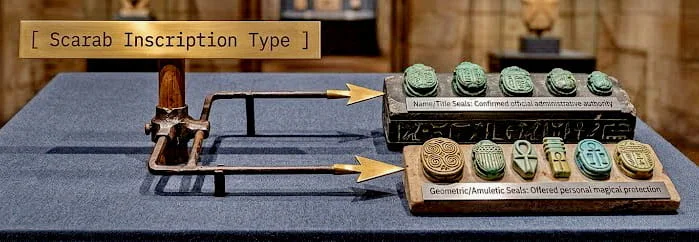
Beyond large stone stelae, the Thirteenth Dynasty of Egypt became the true golden age of the scarab seal. These small, beetle-shaped amulets served a dual purpose in society. They functioned as protective magical charms and as official administrative signatures.

The Mass Production of Scarab Seals

Scribes and officials wore these seals on rings or necklaces to stamp clay documents and jar stoppers. Because the civil service remained so large, workshops produced these objects in massive quantities. The backs of these scarabs contain incredibly detailed geometric spirals, floral patterns, and strings of hieroglyphic titles. Today, these tiny artifacts provide historians with an invaluable roadmap of the bureaucracy. They list the exact names and titles of hundreds of otherwise forgotten officials who kept the empire alive.

The eye of Horus

The Resilient Heritage of the Thirteenth Dynasty

Ultimately, the Thirteenth Dynasty of Egypt proves that an empire is far more than the identity of its king. The era did not witness a sudden, apocalyptic collapse of Egyptian civilization. Instead, it highlighted the spectacular resilience of the systems built during the Middle Kingdom.

While the crown fractured and foreign dynasties seized the Delta, the deep-rooted civil service kept the core of Egyptian culture alive. The administration preserved the language, the religious traditions, and the artistic techniques of the land. When the remnants of the court finally retreated south, they carried this intact institutional knowledge with them. This bureaucratic survival ensured that even in its dark intermediate hours, the spark of ancient Egypt never truly went out.

Recommended Academic Readings

To delve deeper into the nuanced historical debates surrounding the Thirteenth Dynasty, these foundational and specialized scholarly texts provide invaluable insights:

Grajetzki, W. (2006). The Late Middle Kingdom in Egypt: Introduction to its History and Culture.

  • Why Read: This is a critical text for understanding why the Thirteenth Dynasty is culturally unified with the Middle Kingdom. Grajetzki argues effectively that despite rapid changes in kingship, there was no immediate structural break in daily life or artistic administration.

Ryholt, K. S. B. (1997). The Political Situation in Egypt during the Second Intermediate Period, c. 1800–1550 B.C.

  • Why Read: This monumental, groundbreaking study completely reframed how historians look at the chronology and king-lists of this era. Ryholt presents the opposing political viewpoint, placing the Thirteenth Dynasty at the dawn of the Second Intermediate Period due to its fragmented kingships.

Ben-Tor, D. (2007). Scarabs, Chronology, and Interconnections: Egypt and Palestine in the Second Intermediate Period.

  • Why Read: For a comprehensive look at how small artifacts reconstruct imperial history, Ben-Tor offers the definitive guide on Thirteenth Dynasty scarab design styles (such as the distinct “Type C” square head) and how they trace the evolution of the administrative network.

Miniaci, G., & Grajetzki, W. (Eds.). (2015). The World of Middle Kingdom Egypt (2000–1550 BC).

  • Why Read: A fantastic collection of archaeological papers focusing on settlement archaeology and provincial cemeteries like Abydos, highlighting the continuity of material culture into the later dynasties.

Frequently Asked Questions (FAQs)

1. Is the Thirteenth Dynasty considered part of the Middle Kingdom or the Second Intermediate Period?

It depends entirely on an expert’s academic focus. Art historians and cultural archaeologists group the Thirteenth Dynasty within the Late Middle Kingdom because there is a seamless continuation of artistic styles, language, and administrative systems from the Twelfth Dynasty. Conversely, political historians often group it with the Second Intermediate Period because the era saw the throne fracture among dozens of short-lived rulers, leading directly to territorial division.

2. How did the central government stay functional if kings changed so quickly?

The state survived thanks to a robust, highly centralized bureaucratic network inherited from King Senusret III of the Twelfth Dynasty. Power shifted from an individual divine monarch to the institutional Office of the Vizier. While kings rotated rapidly, powerful, multi-generational families of civil servants stayed in office at the capital of Itjtawy, consistently executing tax collection, judicial processes, and asset tracking across the country.

3. Who were the most powerful pharaohs of this dynasty?

While many of the 50+ kings remain obscure figures known only from fragments, the consecutive reigns of two brothers stand out: Neferhotep I and Sobekhotep IV. Ruling together for over two decades, they restored stability, commissioned expansive monument projects at religious hubs like Abydos, and successfully projected military influence north into the Levant and south into Nubia.

4. What caused the ultimate collapse of the Thirteenth Dynasty?

The collapse was primarily structural and economic rather than an explosive foreign invasion. Over generations, a massive population influx of Near Eastern settlers grew dominant in the eastern Nile Delta. Eventually, a rival localized state—the Fourteenth Dynasty at Avaris—split away, cutting the Thirteenth Dynasty off from lucrative Mediterranean trade. Severely impoverished, the administrative state weakened, allowing the incoming Hyksos (the Fifteenth Dynasty) to push south and force the royal court to abandon Itjtawy for Thebes.

5. Why are private scarab seals and stelae so important to this specific era?

Because the royal court could no longer finance immense stone pyramids, elite artisans shifted their business model to cater to the non-royal upper-middle class. The resulting explosion of private funerary stelae at Abydos and the mass production of personal scarab seals created a detailed, localized paper trail. Scribes and officers used these unique geometric and hieroglyphic seals to sign documents, providing modern archaeologists with the exact names, titles, and familial links of the people who actually kept Egypt running.

Divider

Well Done

All aspects of the experience were considered and well taken care of. Knowledgeable and friendly guide and organized itinerary.

More »

Outstanding layover tour

I had the opportunity to do a layover tour with Egypt Fun Tours this Friday, and it was amazing. I had a 10-hour layover tour in Cairo, and I was met by Mohamed on time at the airport. He picked me up in a clean, new, safe, and comfortable van.

More »

Like two days of touring in one day!

I had a 12 hour stay in Cairo- and had made no plans on how to spend it until 8pm the night before departure. I emailed Egypt Fun Tours in a panic and they responded immediately. They made it incredibly easy to arrange a tour and we made arrangements via

More »
4 Days Egypt Experience for Solo Woman Egypt Fun Tours min 1

Amazing experience

My husband and I had a ten-hour layover in Cairo and luckily found Egypt Fun Tours while researching tour companies online. The owner, Hamada, picked us up from the airport and brought us around Cairo. He took us to see the pyramids, which was a memory I will never forget.

More »
Premium Cairo Tour Package Egypt Fun Tours

THE MOST AMAZING TRIP

Hi Hamada! Sorry, we were so quick to say goodbye—my mom was fading 🙂 I just wanted to say thank you for THE MOST AMAZING trip… You thought of every detail, improvised, adapted, overcame every challenge, multitasked personalities, and did it all with grace, intelligence, and kindness. From the bottom

More »
God_Anubis_Icon

Top-rated Tour Packages

God_Anubis_Icon
WhatsApp
Email
Print