The Tomb of Pashedu (TT3): Spirituality and the Palm Tree of Life

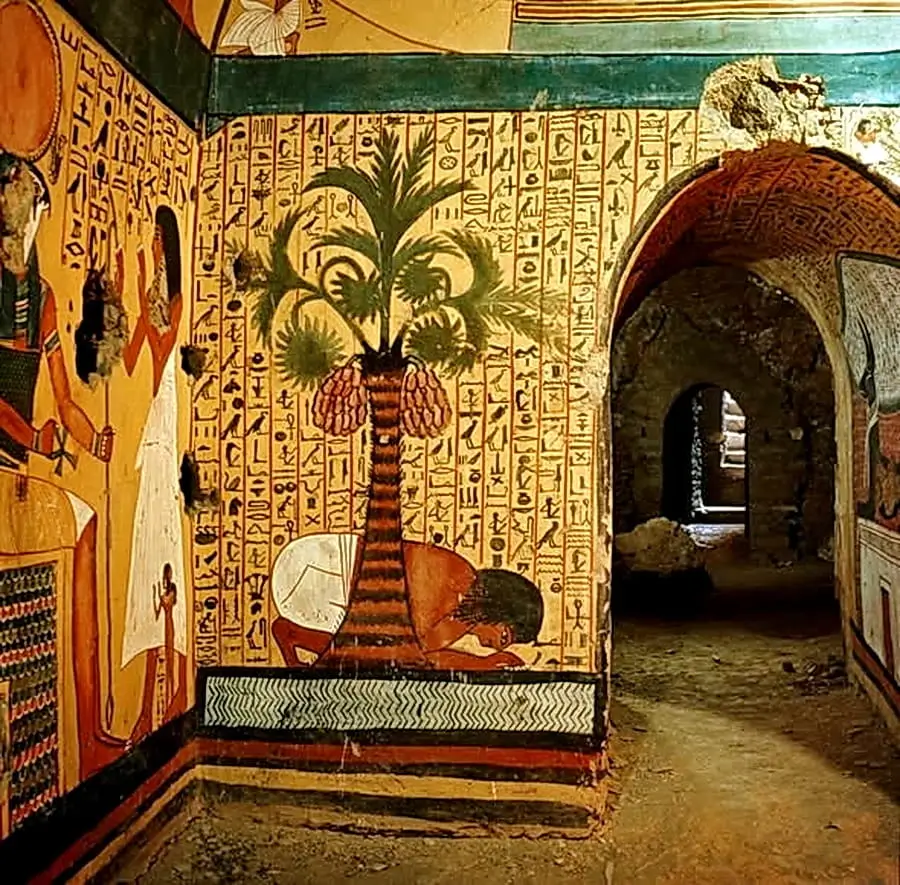
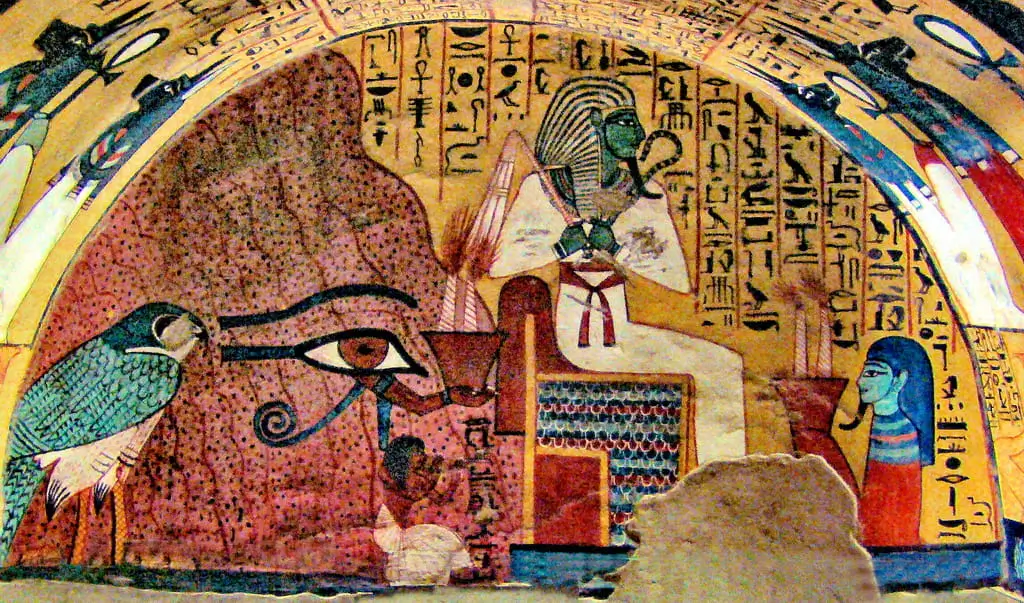
The Tomb of Pashedu (TT3) is a spiritual masterpiece in Deir el-Medina, famous for its vivid "Egyptian yellow" walls and emotional depth. As a royal artisan, Pashedu used his elite skills to paint the iconic scene of himself kneeling under a palm tree to drink from a cool pool of water. This intimate image captures the ancient hope for eternal peace and refreshment. Unlike the grand official tombs, Pashedu’s sanctuary offers a deeply personal look at the faith of the men who built the Valley of the Kings.

The Tomb of Pashedu (TT3) is one of the most beautiful and spiritual sites in the village of Deir el-Medina. Unlike the high officials in other parts of Luxor, Pashedu was an elite artisan. He lived in the “Place of Truth” and spent his life building the magnificent royal tombs in the Valley of the Kings. When it came time to build his own resting place, he used his professional skills to create a masterpiece of color and devotion.

Stepping into this tomb feels different than any other. You must walk down a long, steep staircase that leads deep into the earth. At the bottom, you find a burial chamber filled with vibrant yellow walls and stunning religious art. The tomb is famous for its emotional and personal atmosphere. It moves away from the busy scenes of daily life and focuses instead on the soul’s journey toward peace.

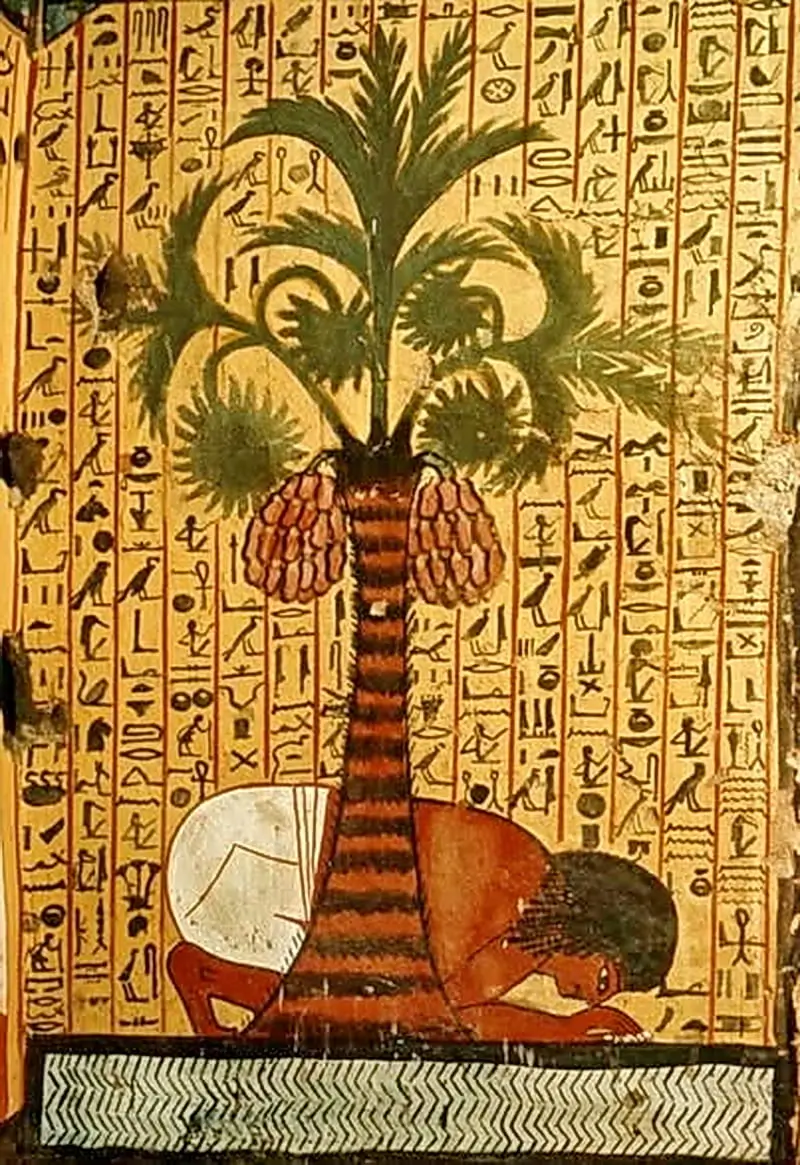
The highlight of the Tomb of Pashedu is the iconic image of the owner himself. He is shown kneeling by a cool pool of water under the shade of a palm tree. This single painting has become a symbol of the ancient Egyptian hope for a peaceful afterlife. In this guide, we will explore why Pashedu’s tomb is a must-see for anyone who wants to understand the spiritual heart of the people who built the pyramids and palaces of the New Kingdom.

FUN

Who Was Pashedu? The Master of the Place of Truth

Who Was Pashedu The Master of the Place of Truth - The Tomb of Pashedu (TT3)

Pashedu lived during the early part of the Ramesside Period in the New Kingdom, likely during the reign of Seti I or Ramesses II. He was not a politician or a general. Instead, he was a highly skilled professional known as a “Servant in the Place of Truth.” This title meant he was part of the elite group of artisans who lived in the secluded village of Deir el-Medina.

A Builder of Royal Dreams

Pashedu’s daily job was to carve and paint the spectacular tombs of the Pharaohs in the Valley of the Kings. Because he spent his life working on the most important projects in the empire, he was a master of his craft. He understood the complex religious texts and the secret artistic techniques used for royalty. When he worked on his own tomb, he applied that same “royal standard” to his personal walls.

The Professional Artisan Class

In the village of Deir el-Medina, art was the family business. Pashedu came from a line of builders. His father and brothers likely worked alongside him in the royal valley. Because these artisans were so valuable to the King, they were well-paid and literate. This allowed Pashedu to design a tomb that was much more complex and beautiful than a typical worker’s burial.

A Legacy of Faith

Pashedu’s tomb shows that he was a man of deep faith. His title and his artwork suggest he took great pride in his work for the gods. He did not just want a place for his body. He wanted a sanctuary that reflected his skill and his hope for a smooth journey into the next world. By looking at his tomb, we see the high level of respect and creative freedom that the master builders of Egypt enjoyed.

FUN

The Palm Tree Scene: A Symbol of Eternal Peace

The Palm Tree Scene A Symbol of Eternal Peace - The Tomb of Pashedu (TT3)

The most celebrated image in the Tomb of Pashedu (TT3) is found at the far end of the burial chamber. It shows Pashedu himself kneeling beside a cool, blue pool of water. Above him, a lush palm tree bends with the weight of ripe dates. This scene is world-famous because it captures a moment of pure, quiet devotion.

The Refreshment of the Soul

In the hot, dry climate of Egypt, water and shade were the ultimate symbols of comfort. This painting represents a specific spell from the Book of the Dead. It illustrates the soul’s desire to “drink water in the afterlife.”

  • The Pose: Pashedu is shown in a deep crouch, leaning forward to scoop water with his hands. His body reflects total humility and gratitude.
  • The Water: The pool is painted with zigzag lines, representing the ripples of a fresh spring. In a land dominated by the desert, this was the Egyptian vision of paradise.
  • The Palm Tree: The tree is not just a decoration. It represents the “Tree of Life.” Its presence ensures that Pashedu will always have shade and food in the “Field of Reeds.”

Vibrant Colors and Artistic Skill

The colors in this section are incredibly well-preserved. The artists used a deep, earthy red for Pashedu’s skin and a bright, “Egyptian blue” for the water.

  • The Background: Like the rest of the tomb, the background is a warm, golden yellow. This color was meant to represent the flesh of the gods and the eternal light of the sun.
  • The Detail: Look at the individual fronds of the palm tree. The artist used fine, confident strokes to show the texture of the leaves. This level of detail shows that even though Pashedu was a “worker,” his skill was equal to that of the artists who painted for the Pharaohs.

A Universal Message

This scene resonates with visitors today because it feels very personal. While other tombs show grand battles or complex rituals, this painting shows a simple human need: a drink of water and a place to rest. It reminds us that Pashedu was a real person who hoped for a peaceful end to his long life of labor. By placing this image at the end of his tomb, he created a permanent “oasis” for his spirit.

The Catacombs of Kom Esh-Shokafa: Roman-Egyptian Underworld

Descend into one of the "Seven Wonders of the Middle Ages" at the Catacombs of...
Related post
FUN

The Journey Through the Duat: The Vaulted Ceiling

The Journey Through the Duat The Vaulted Ceiling

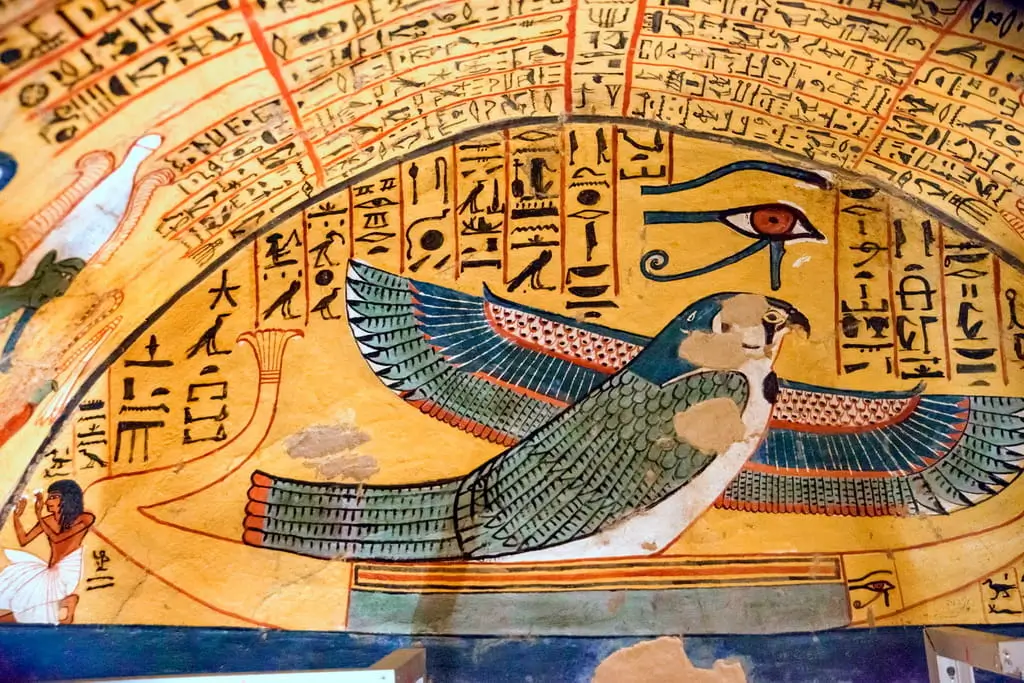
The burial chamber of the Tomb of Pashedu features a striking vaulted ceiling. This curved shape serves a specific purpose. It mimics a protective cave or the arch of the sky itself. Master artists covered every inch of this space with religious texts and images of powerful deities.

Walking with the Gods

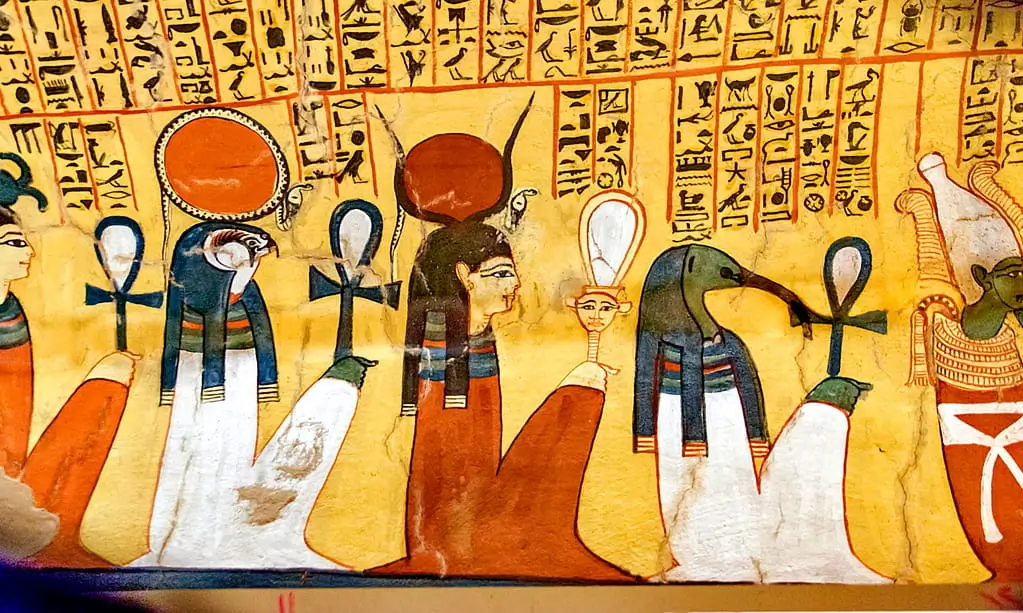
As you look at the walls and the ceiling, you see Pashedu interacting with the divine. The artwork maps his journey through the Duat, the ancient Egyptian underworld.

  • The Bark of Ra: On the ceiling, the sun god’s boat sails across the sky. Pashedu sought to join Ra on this eternal daily journey.

  • The Protective Deities: Anubis, the jackal-headed god, appears frequently throughout the chamber. He stands as the guardian of the tomb and prevents evil forces from disturbing Pashedu’s rest.
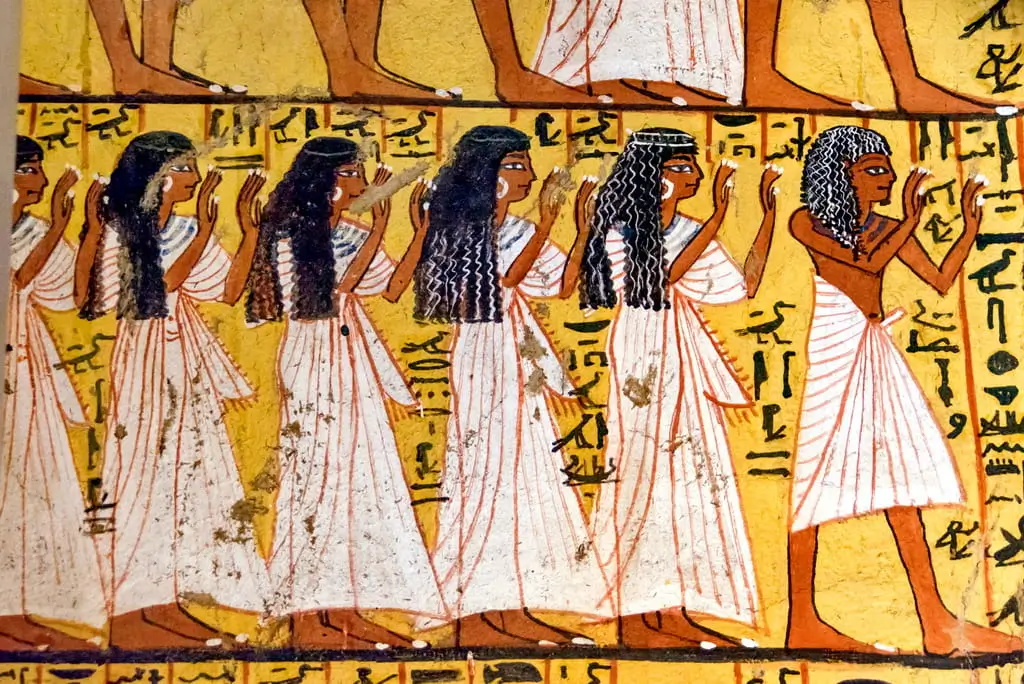
  • The Family in Prayer: Pashedu stands with his wife and children. They raise their hands in worship, supporting his transition into the next world with their prayers.

The Book of the Dead in Color

The Book of the Dead in Color - The Tomb of Pashedu (TT3)

The text surrounding these images comes from the Book of the Dead. For a master artisan like Pashedu, these were not just decorations. They functioned as magical spells.

  • Vivid Yellow Backgrounds: The painters used a bright yellow background, a signature style of the Deir el-Medina community. This color represents the flesh of the gods and turns the dark underground room into a golden, sun-lit hall.
  • Confident Linework: Pashedu and his colleagues painted tombs for a living. You can see their professional skill in the steady, black outlines of the hieroglyphs and the sharp profiles of the gods.

A Sanctuary Under the Earth

The combination of the curved ceiling and the golden walls makes the tomb feel warm and secure. Pashedu designed this space to protect his soul from the “second death.” By surrounding himself with these specific spells and protectors, he created a permanent map for his journey into eternity.

The Tomb of Inherkhau (TT359): Masterpieces of the 20th Dynasty

The Tomb of Inherkhau (TT359) is a 20th-Dynasty masterpiece in Deir el-Medina, showcasing the elite...
Related post
FUN

The Artisan’s Touch: Why Deir el-Medina Style is Unique

The Artisan’s Touch Why Deir el-Medina Style is Unique

The Tomb of Pashedu represents a distinct branch of Egyptian art. While the noble tombs in Sheikh Abd el-Qurna focus on grand social scenes, the tombs of Deir el-Medina focus on high-contrast, religious intensity.

The Master’s Advantage

Because the residents of Deir el-Medina built the royal tombs, they had access to the highest quality materials and the latest artistic trends.

  • The “Golden” Palette: The artisans used a specific shade of yellow ochre to cover their walls. This color choice symbolized the eternal nature of the gods. It creates a warm, glowing atmosphere that you won’t find in the limestone-white tombs of the officials.
  • Bold Outlines: Notice the thick, confident black outlines around the figures. This style came from the artists’ daily work in the Valley of the Kings, where they had to paint quickly and clearly by the light of small oil lamps.

Visiting the Tomb of Pashedu

To see the Tomb of Pashedu, you must travel to the village of the workers, located in a small valley behind the hill of Sheikh Abd el-Qurna.

  • The Descent: Prepare for a steep climb down. The staircase is narrow and deep, which adds to the feeling of entering a secret, sacred world.
  • The Atmosphere: Because fewer large tour groups visit Deir el-Medina compared to the Valley of the Kings, the experience feels more intimate. You can truly appreciate the silence and the spiritual energy of the space.
  • Combined Tickets: Usually, a ticket for Deir el-Medina includes the Tomb of Pashedu along with the Tomb of Sennedjem (TT1). Visiting both allows you to see how different artisans expressed their personal faith.

The Mastaba of Shepseskaf: A Deep Dive into Egypt’s Most Unique Royal Monument

The Mastaba of Shepseskaf is a unique royal monument in South Saqqara that marks the...
Related post
FUN

Summary: The Oasis of the Soul

Summary The Oasis of the Soul

The Tomb of Pashedu (TT3) stands as a masterpiece of faith and craftsmanship. It moves beyond the busy scenes of the physical world to focus on the peace of the afterlife. The image of Pashedu kneeling beneath the palm tree remains one of the most powerful symbols of ancient Egypt. It shows us that even the workers who spent their lives in the dark tunnels of the royal tombs dreamed of a world filled with light, cool water, and eternal rest. For any visitor, TT3 offers a rare chance to see the Egyptian afterlife through the eyes of the very men who built it.

Discover Cairo and Hurghada in one trip....
Wake the inner adventurer and enjoy marvelous group tour to Egypt's treasures...
God_Anubis_Icon

Jeep Safari in the Sahara

I contacted Hani two days before I went to Egypt and asked him if it was possible to combine two of their tours as we were short on time. We had planned to stay in Cairo but with the uprising we decided it would be safed outside of the hot

More »

Islamic cairo and khan el khalili- great tour

Wonderful tour with the guide Hamada. I did not feel rushed at all. He explained a lot of facts about the city, the mosque, the water storage room, and also brought me to no-hassle shops. He picked a great place to eat and have Turkish coffee and a cold lemon

More »
Amazing Egypt Tours Vacations in December Egypt Fun Tours

Amazing trip with Egypt Fun Tours

We had the time of our lives on a trip to Egypt and the Bahariya/White Desert with Egypt Fun Tours, too. I would highly recommend this company. They are very familiar with organizing this trip, and this means they are well-connected in the desert area. This was invaluable to us

More »

Amazing layover Tour

We had 12 hour layover in Cairo, and our guide Hani waited patiently for us when we had a few visa issues entering the country! We got on our tour, and had the best experience ever! We saw the pyramids, the sphinx, Islamic Cairo and rode through the city! We

More »
God_Anubis_Icon

Top-rated Tour Packages

God_Anubis_Icon