The Twenty-Sixth Dynasty of Egypt: The Saite Renaissance

The twenty-sixth dynasty of Egypt (c. 664–525 BCE) marks the definitive beginning of the Late Period, staging a brilliant "Saite Renaissance" that reunited a fractured nation following brutal Assyrian invasions. Based in the western Delta city of Sais, these ambitious pharaohs masterfully blended ancient traditions with modern, globalized strategies. By intentionally copying the classical art, language, and religion of the Old and Middle Kingdoms while simultaneously opening borders to Greek mercenaries and Mediterranean maritime trade through ports like Naukratis, this dynamic lineage restored immense wealth and centralized rule to the Nile Valley, marking the final great flowering of native pharaonic civilization before the Persian conquest.
The eye of Horus
WhatsApp
Email
Print

The twenty-sixth dynasty of Egypt (c. 664–525 BCE) marks the definitive beginning of the Late Period and represents the final great flowering of native pharaonic civilization before the Persian conquest. Emerging from the western Delta city of Sais, this remarkable line of kings restored centralized rule to a battered nation. They took power during a time of immense geopolitical chaos, immediately following decades of brutal civil war and destructive Neo-Assyrian invasions.

Historians often refer to this era as the Saite Period. Instead of looking forward into an uncertain Iron Age, the Saite monarchs looked backward to find their strength. They initiated a brilliant cultural renaissance by intentionally copying the art, language, and monuments of the Old and Middle Kingdoms.

Yet, this dynasty was also deeply modern and global. The Saite pharaohs opened Egypt’s borders to the Mediterranean world. They hired Greek mercenaries to build a formidable military, established bustling international trading ports, and projected naval power across the Levant. For nearly 140 years, the twenty-sixth dynasty of Egypt successfully blended ancient traditions with globalized strategy, staging a magnificent final stand for the traditional pharaonic state.

Divider

The Rise of Psamtik I and the Reunification of Egypt

The Rise of Psamtik I and the Reunification of Egypt

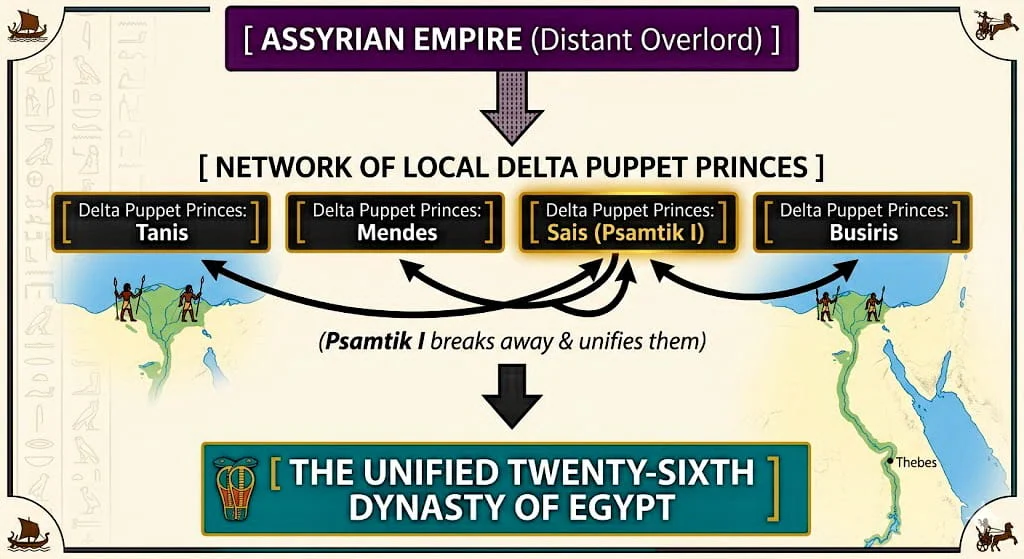
The story of the twenty-sixth dynasty of Egypt begins in a fractured world. After the Assyrians sacked Thebes in 663 BCE, they did not stay to rule directly. Instead, the Assyrian king left a network of local Delta princes in charge to collect taxes and maintain order.

Among these local puppet rulers was Psamtik I (c. 664–610 BCE), the prince of Sais. Psamtik was ambitious, highly strategic, and determined to be more than a vassal to a distant Mesopotamian master. He quietly planned to liberate his country and place the entire Nile Valley under his absolute control.

Expelling the Assyrian Garrisons

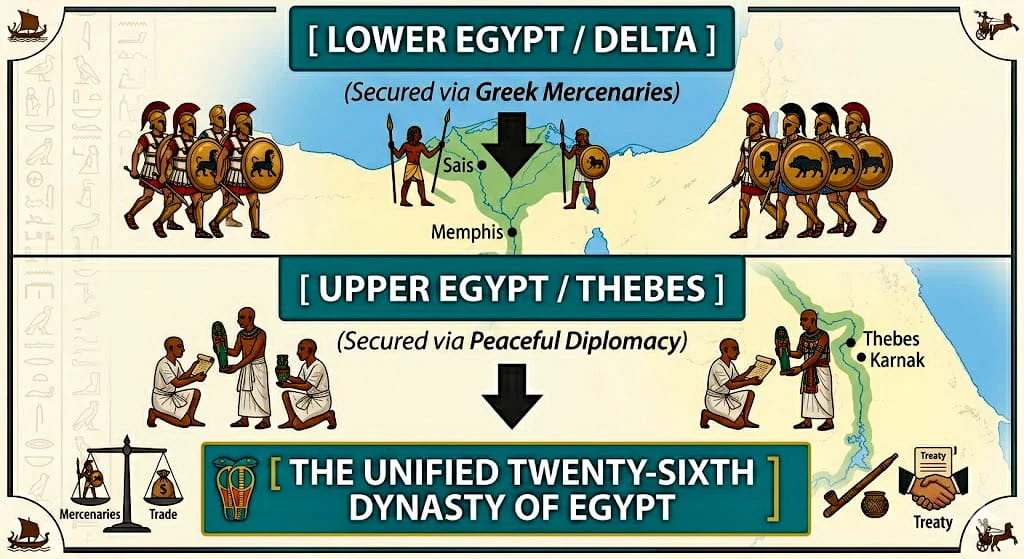
Psamtik I realized that a traditional Egyptian army could not defeat the Assyrian empire on its own. He needed a modern, adaptable force. To achieve this, he turned his gaze across the Mediterranean Sea. Psamtik formed a vital alliance with King Gyges of Lydia, located in modern-day Turkey. With Lydian support, he began hiring thousands of heavily armed Greek mercenaries, primarily Carians and Ionians.

These foreign soldiers brought something entirely new to the Nile: the devastating Greek hoplite phalanx formation. Clad in heavy bronze plate armor and carrying massive round shields, these troops easily overwhelmed the local Assyrian garrisons. By taking advantage of internal political civil wars within Assyria, Psamtik successfully expelled all foreign forces from Egypt without triggering a major military invasion in return.

Golden Scarab

Neutralizing the Delta and Securing the South

Neutralizing the Delta and Securing the South

With the Assyrians gone, Psamtik turned his army against the other rival Delta princes. He used a calculated mix of overwhelming military force and clever marital diplomacy to systematically absorb their territories into the twenty-sixth dynasty of Egypt. Once he secured Lower Egypt, he faced a final major challenge: the deeply conservative, independent south at Thebes.

Rather than launching a bloody civil war against the southern elite, Psamtik chose a peaceful, brilliant diplomatic path. He sent his young daughter, Nitocris I, south to Thebes with a massive naval flotilla. He negotiated with the reigning God’s Wife of Amun, Shepenwepet II, to have Nitocris formally adopted as her legal successor. This masterstroke peacefully transferred the immense wealth, vast temple lands, and political allegiance of Upper Egypt directly to the Saite crown. For the first time in generations, Egypt was fully reunited under a single, native pharaonic line.

Archaism and the Cultural Revival of the Twenty-Sixth Dynasty of Egypt

Archaism and the Cultural Revival of the Twenty-Sixth Dynasty of Egypt

Once Psamtik I unified the country, the rulers of the Twenty-Sixth Dynasty of Egypt turned their attention to a massive cultural project. This movement is known today as archaism. After enduring centuries of foreign invasions and internal chaos, the Saite elite suffered from a deep cultural anxiety. To reclaim their national identity, they chose to look back to Egypt’s ultimate golden ages: the Old and Middle Kingdoms.

The Saite pharaohs did not invent new cultural styles. Instead, they sent their royal artists, scribes, and architects to ancient sites like Giza, Saqqara, and Abusir. These craftsmen painstakingly copied the reliefs, inscriptions, and proportions of statues from monuments that were already two thousand years old.

The eye of Horus

Restoring Classical Art and Language under the Twenty-Sixth Dynasty of Egypt

This obsessive return to antiquity transformed every aspect of Egyptian high culture. Artists completely abandoned the flashy, dramatic styles of the late New Kingdom.

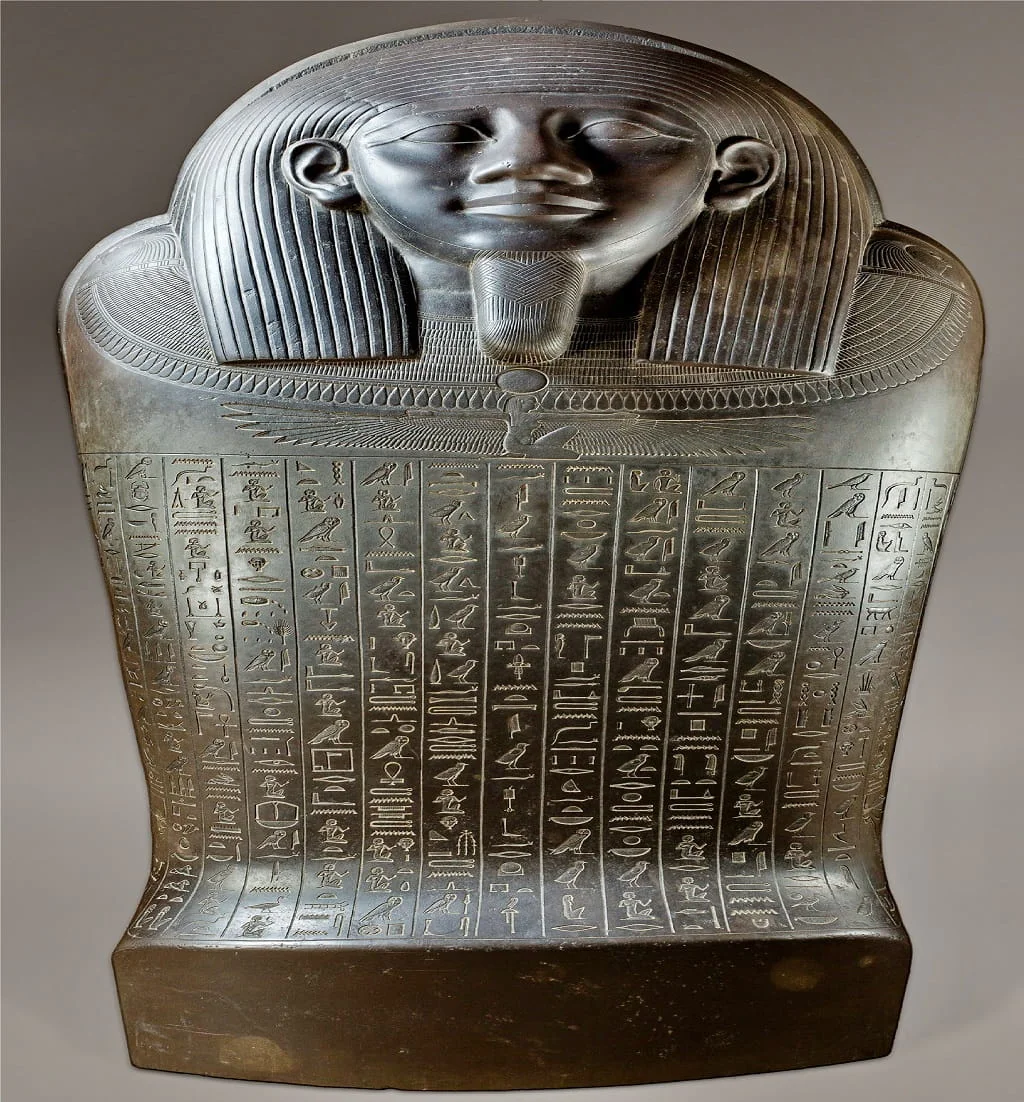
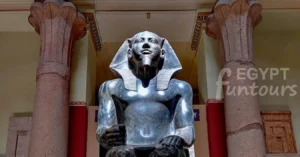
  • Sculpture: Sculptors began carving statues from incredibly hard stones such as green greywacke and black basalt. They carved athletic, idealized bodies with serene, youthful faces that directly mirrored Fourth Dynasty artwork.
  • Hieroglyphs: Royal scribes stopped writing in the contemporary spoken idiom. Instead, they revived the classical Old Egyptian grammar and spelling used during the age of the pyramid builders.
  • Tombs: Elite officials built massive, deep shafts in the desert floor at Saqqara. Inside, they carved their burial chamber walls with the ancient Pyramid Texts and Coffin Texts to secure their path to the afterlife.

Religious Restorations and Animism

Religious Restorations and Animism

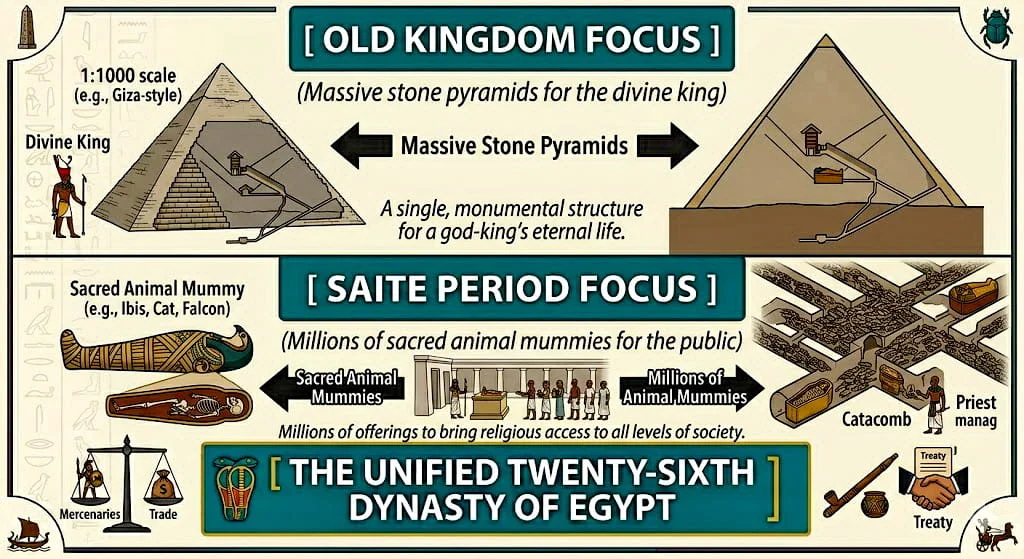
The Saite Renaissance also brought a massive revival of traditional religious cults. The pharaohs poured vast wealth into rebuilding and expanding the ancient temples of Memphis, Sais, and Heliopolis. However, this era also introduced a major shift in popular religion: the explosive growth of animal mummification.

During the twenty-sixth dynasty of Egypt, millions of animals—including ibises, falcons, cats, and dogs—were carefully mummified and buried in vast underground catacombs. Egyptians believed that these animals acted as direct, personal messengers to the gods. The cult of the Apis Bull at Saqqara reached its absolute peak during this time. The Saite kings constructed giant, monolithic granite sarcophagi inside the underground Serapeum to house the sacred bulls, blending Old Kingdom grandeur with late pharaonic piety.

Global Trade and the Economic Expansion of the Twenty-Sixth Dynasty of Egypt

While the rulers of the Twenty-Sixth Dynasty of Egypt looked to the past for cultural inspiration, they were highly forward-thinking in their economic strategy. They recognized that the Mediterranean world was changing rapidly. Wealth was no longer measured just in grain and temple lands, but in maritime trade, silver coinage, and global commercial networks. To fund their large standing armies, the Saite pharaohs abandoned Egypt’s traditional isolationist policies. They turned the Nile Delta into a bustling commercial hub, directly connecting African trade routes with the emerging markets of Greece, Cyprus, Phoenicia, and Persia.

Divider

Naukratis: The Gateway of the Twenty-Sixth Dynasty of Egypt

Naukratis The Gateway of the Twenty-Sixth Dynasty of Egypt

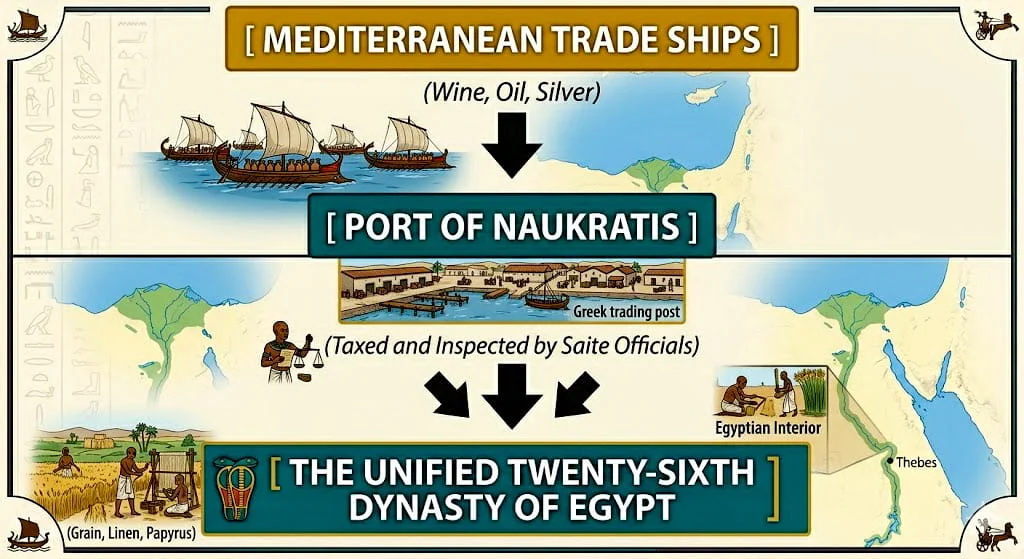
The crown jewel of this economic strategy was the city of Naukratis. Located on the Canopic branch of the Nile in the Western Delta, Naukratis became the first permanent Greek trade colony in Egypt. Pharaoh Amasis II later restricted all Greek merchants to this single city. This move was a stroke of administrative genius:

  • Customs and Taxation: By forcing all foreign ships to dock at Naukratis, royal officials could easily monitor trade, inspect cargo, and collect hefty customs taxes for the pharaonic treasury.
  • Cultural Separation: It allowed the Greeks to build their own traditional temples and marketplaces while keeping them isolated from the conservative Egyptian population, preventing cultural or religious friction.
  • Resource Exchange: Egypt exported massive amounts of grain, fine linen, and papyrus. In return, Greek merchants poured valuable silver bullion, olive oil, and Aegean wine into the Egyptian economy.

The Strategic Canal of Necho II

The economic ambitions of the twenty-sixth dynasty of Egypt extended far beyond the Mediterranean coast. Pharaoh Necho II (c. 610–595 BCE) recognized the immense value of connecting the Mediterranean Sea directly to the Red Sea. To achieve this, he launched a massive engineering project to dig a navigable canal through the Wadi Tumilat. This waterway was the ancient predecessor to the modern Suez Canal.

According to ancient historians, Necho II employed over one hundred thousand workers on this project. Although he ultimately halted construction before completion due to an unfavorable oracle, the project demonstrated the immense logistical power and global vision of the Saite kings. Necho II also commissioned a fleet of Phoenician mariners to sail out of the Red Sea. They accomplished the first recorded circumnavigation of Africa, sailing all the way around the continent before returning to Egypt through the Straits of Gibraltar three years later.

Military Ambitions and the Fall of the Twenty-Sixth Dynasty of Egypt

The twenty-sixth dynasty of Egypt did not operate in a vacuum. As the Neo-Assyrian Empire collapsed, a dangerous scramble for power erupted across Western Asia. Pharaoh Necho II marched his armies into the Levant to check the rise of the Neo-Babylonian Empire.

Although Necho II initially scored victories—including the famous Battle of Megiddo—the Babylonian prince Nebuchadnezzar II decisively defeated the Egyptian forces at the Battle of Carchemish (605 BCE). This crushing defeat permanently shattered Egypt’s imperial dreams in Syria and Palestine.

The eye of Horus

The Sunset Splendor of Amasis II under the Twenty-Sixth Dynasty of Egypt

The Sunset Splendor of Amasis II under the Twenty-Sixth Dynasty of Egypt

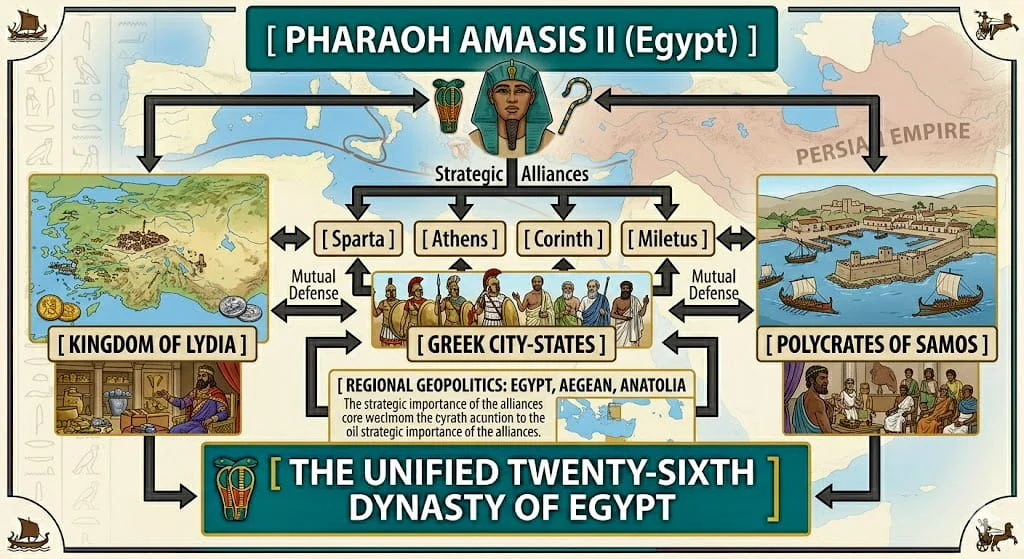
Despite losing the Levant, Egypt experienced a final, brilliant era of internal peace and immense wealth under Pharaoh Amasis II (c. 570–526 BCE). Amasis was a shrewd diplomat and a masterful politician. He realized that Egypt could not defeat its eastern rivals through brute force alone. Therefore, he built a massive web of international alliances.

Amasis funded Greek temples, befriended powerful tyrants like Polycrates of Samos, and married a Greek princess named Ladice. Under his long forty-four-year reign, agricultural output reached its peak, trade through Naukratis flourished, and the treasury overflowed. Yet, this great wealth only drew the envious eyes of a new global superpower: the Achaemenid Persian Empire.

The Catastrophe at Pelusium and the Persian Conquest

The Catastrophe at Pelusium and the Persian Conquest

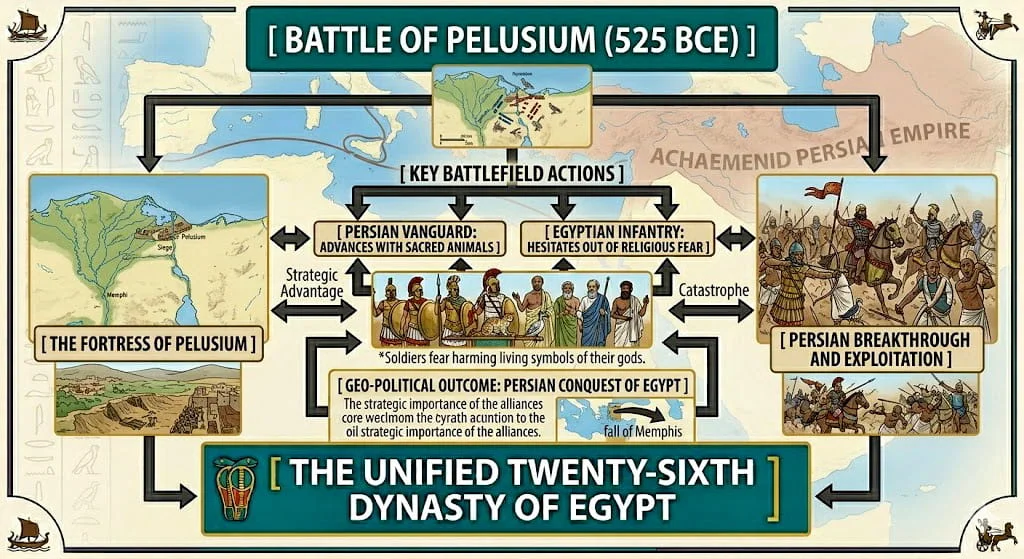
In 525 BCE, the Persian king Cambyses II launched a massive invasion against the twenty-sixth dynasty of Egypt. Amasis II died just months before the blow landed, leaving his young, inexperienced son, Psamtik III, to face the storm.

The two armies met at the strategic frontier city of Pelusium in the eastern Delta. The battle was brief and devastating. According to ancient legends, the Persians played on Egyptian religious piety by placing sacred cats and other animals directly in front of their frontline troops. Terrified of harming the living symbols of their gods, the Egyptian soldiers hesitated.

The Persian forces easily broke the Egyptian lines and marched onward to capture Memphis. Cambyses II executed the young Psamtik III, bringing a tragic, sudden end to the twenty-sixth dynasty of Egypt. Native pharaonic rule collapsed, and Egypt was absorbed into the vast Persian Empire as a conquered province (satrapy), closing the curtain on the grand Saite Renaissance.

Divider

Absolutely the best

We visited Cairo over a 15-hour layover. Egypt Fun Tours organized a customized and wonderful experience for us. We could not be happier. The day included a visit to all the great sites, the marketplace, dinner, a boat ride on the Nile, and a host of other special requests. I

More »

Valley of the Kings, Hepchepsut

I never had a more positive experience and educational time than this tours. Learning about a variety of kings and queens was amazing! The tour guide was super nice and helped me and my friend every step of the way! Including bargaining for a few souvenirs! I will never forget

More »
12 Days Solo Woman Tour Package (Queen Cleopatra)

Mohamed is Very Kind Person

Mohamed. I just want to thank you again for your kindness. You made our trip memorable. Give your family and the Egypt Fun Tours crew all my love and thank them again for me. Take care. Enjoy the season! Love. Linda

More »

Egypt Fun Tours makes the most out of your layover!

I had a really short layover in Cairo and didn’t want to be stuck in the Cairo Airport for several hours. It was like Mission Impossible: Egypt Fun Tours’ mission was to show me around Cairo during my short 5 hour layover which was made even shorter because my plane

More »
God_Anubis_Icon

Top-rated Tour Packages

God_Anubis_Icon
WhatsApp
Email
Print