The Granular Tour: Deep Dive into Halls 1–10
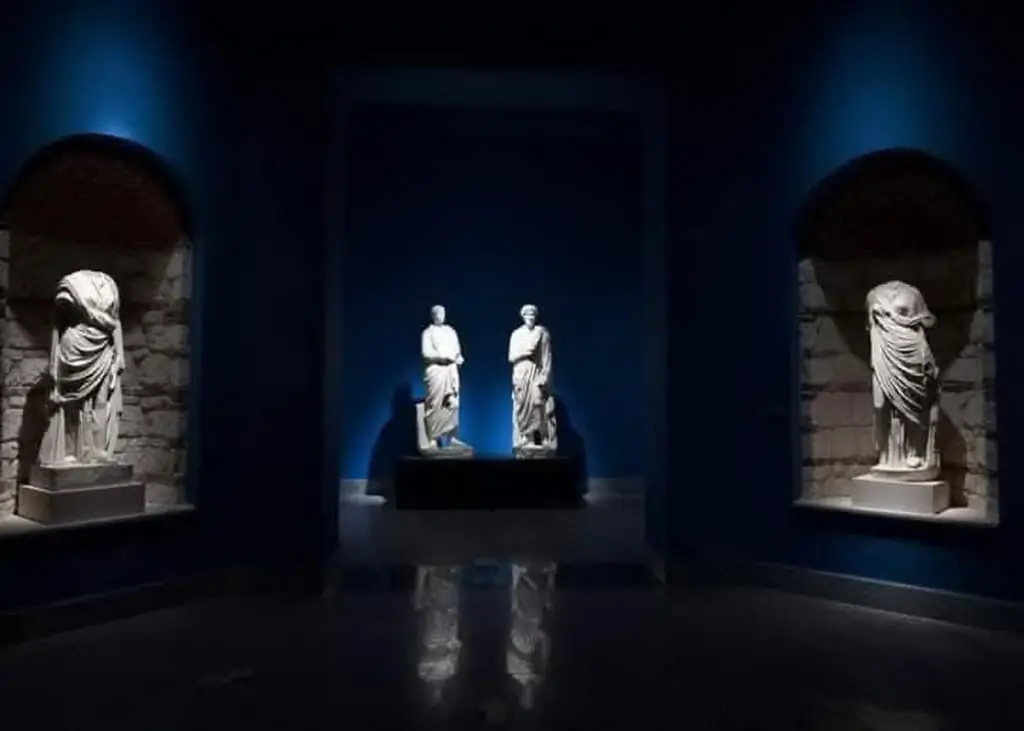
The ground floor of the museum is a chronological masterpiece. In 2026, the new signage and lighting make these halls more accessible than ever. Here is what you will encounter as you begin your journey:
Hall 1: The Dawn of Coptic & Byzantine Art
Surprisingly, the journey begins not with the Greeks, but with the cultural evolution that followed them. Hall 1 focuses on the Coptic Period, illustrating how early Christian art in Alexandria was born from Greco-Roman roots.
- The Masterpiece: The Alabaster Good Shepherd. This 4th-century statue is iconic for its “Alexandrine eyes”—large, soul-searching pupils that look upward.
- Monastic Heritage: Discover artifacts from the Monastery of St. Menas (Abu Mena), a UNESCO site west of the city. Look for the “Menas Flasks,” small terracotta bottles used by ancient pilgrims to carry holy water or oil.
Hall 2: Architectural Fusion
This hall is a masterclass in how civilizations literally built upon one another.
- Coptic Capitals: Notice the “Basket Capitals”—stone column tops carved with intricate grapevines and acanthus leaves. These represent a transition from the classic Corinthian style to a more symbolic Christian aesthetic.
Hall 3: The Treasury of Precious Metals
For many, this is the most dazzling hall in the museum. It houses a vast collection of gold, silver, and bronze.
- The Silver Torso of Aphrodite: Dating to the 2nd century, this artifact highlights the incredible metalworking skills of Alexandrian smiths.
- Ancient Jewelry: View gold earrings, necklaces, and bracelets set with semi-precious stones. In 2026, these remain a primary source for understanding the fashion of Alexandria’s elite upper class.
Hall 4: The Art of the Loom
Dedicated to Coptic Textiles, this hall preserves some of the finest weavings in the ancient world.
- Intricate Tapestries: Because of Egypt’s dry climate, these linen and wool fragments have survived for over 1,500 years. The designs often feature a mix of Christian crosses and pagan symbols, a hallmark of the era’s religious transition.
Hall 5: Ancient Engineering & Hydraulics
Alexandria was a city of science. Hall 5 explores the technical ingenuity of its residents.
- Water Systems: See a rare ancient model of a water-cooling system. The Ptolemies and Romans were masters of moving water, and these artifacts prove that ancient Alexandria had comforts comparable to many modern cities.
Hall 6: The Sacred Bull & The Hybrid God
This is arguably the most important hall for understanding the “Alexandrian Identity.”
- The Apis Bull: A magnificent black granite statue found west of Pompey’s Pillar. It was commissioned during the reign of Emperor Hadrian (117–138 AD).
- The Head of Serapis: Here you see the god Serapis, who combined the Egyptian Osiris and Apis with the Greek Zeus. This was a “political” god, created to unite the two halves of the population under one faith.
Hall 7: The Sphinxes of Amenemhat IV
While most of the museum is Greco-Roman, Hall 7 provides the “Pharaonic Backdrop.”
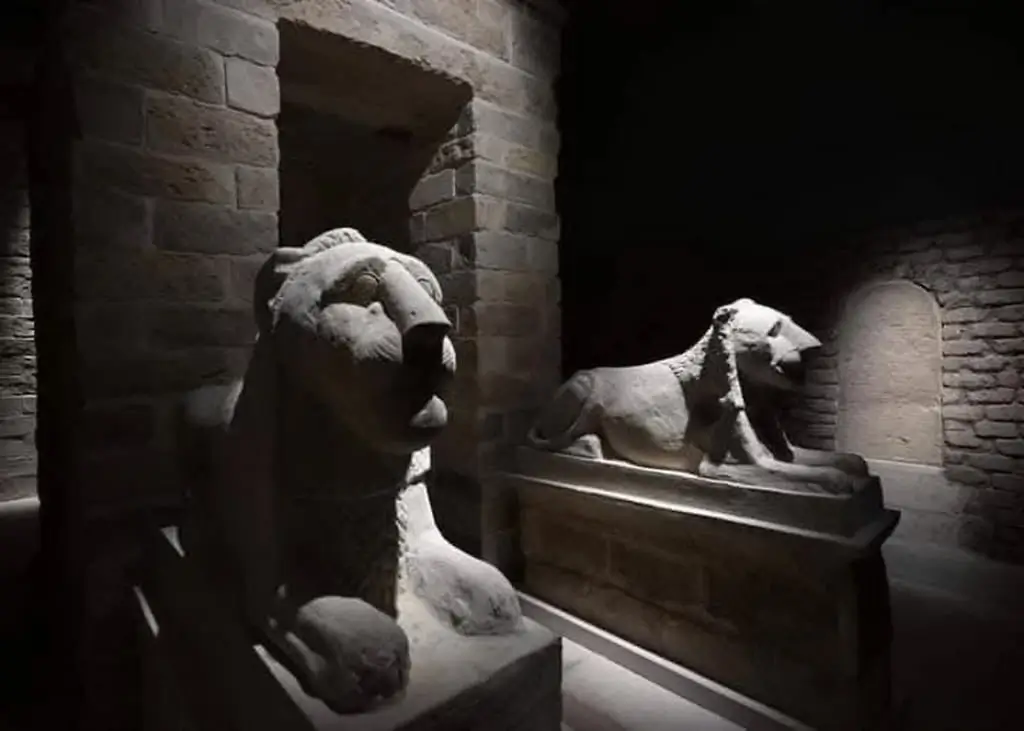
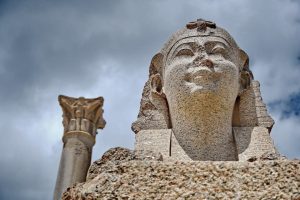
- The Middle Kingdom Connection: Featuring two headless sphinxes carved for Pharaoh Amenemhat IV. These were moved to Alexandria in antiquity, showing that the Ptolemies respected and repurposed the grandeur of the earlier Dynastic kings.
Hall 8: Funerary Evolution (Mummies & Sarcophagi)
This hall illustrates how burial practices changed when the Greeks arrived in Egypt.
- Ptolemaic Mummies: Observe the “Diamond Bandaging” technique, which is unique to this era.
- Sarcophagi: Compare the gilded Pharaonic styles with the more realistic, marble Roman sarcophagi. This is where you see the Fayum Portraits—the world’s first realistic “selfies”—painted on wooden boards and placed over the faces of the deceased.
Hall 9: The Divine Serpents
- Agathadaimon Stelae: In Alexandria, the “Good Spirit” was often depicted as a serpent. This hall contains stelae (stone slabs) showing these divine serpents being worshipped, a uniquely Alexandrian blend of Greek mythology and Egyptian animal worship.
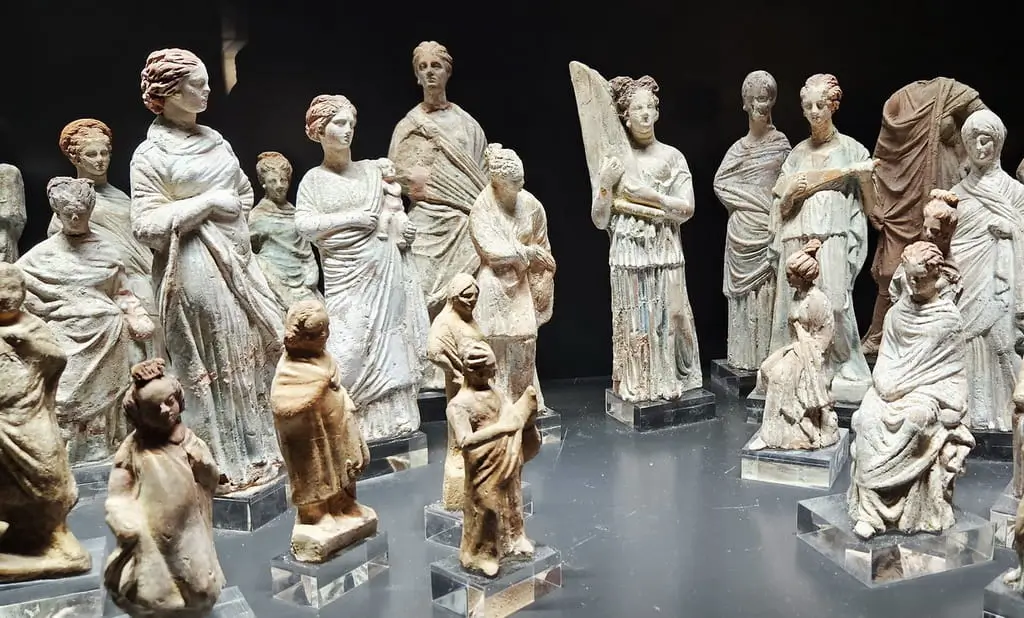
Hall 10: The Tanagra Ladies (Alexandria’s Fashion)
This hall is an intimate look at the people of the city.
- Tanagra Figurines: These small, colorful clay dolls show women in various poses, wearing the latest Greek fashions, elaborate hats, and intricate hairstyles. It is a “social history” gallery that makes the ancient residents of Alexandria feel remarkably human.
The Roman Imperial Period (Halls 11–15)
As you move into the heart of the ground floor, the artistic style shifts. The idealized Greek forms are replaced by the “Verism” of Rome—a style that favors brutal realism and the projection of Imperial authority.
Hall 11: The Egyptian School under Greek Influence
Hall 11 serves as the final bridge before entering the purely Roman galleries. It answers a critical question: How did Egyptian artists adapt to their new Greek masters?
- The Fusion of Styles: Look for statues in which the body follows the rigid, forward-facing Pharaonic pose, while the face is carved with the soft, wavy hair and deep-set eyes of the Hellenistic tradition.
- Masterpiece: The Red Granite Head of Ptolemy VI. Found in Giza but housed here, this colossal head demonstrates how the Ptolemies used traditional Egyptian materials (red granite) to project a Greek image.
Hall 12: The Emperors’ Gallery
This is the “Power Room” of the museum. It houses the most significant collection of Roman Imperial portraiture in the Mediterranean.
- The Colossal Roman Emperor: Standing in the center of the hall is a massive statue of a Roman Emperor in full military regalia. It is believed to represent Marcus Aurelius or Septimius Severus. Notice the intricate “Lorica” (breastplate) featuring mythological scenes used as political propaganda.
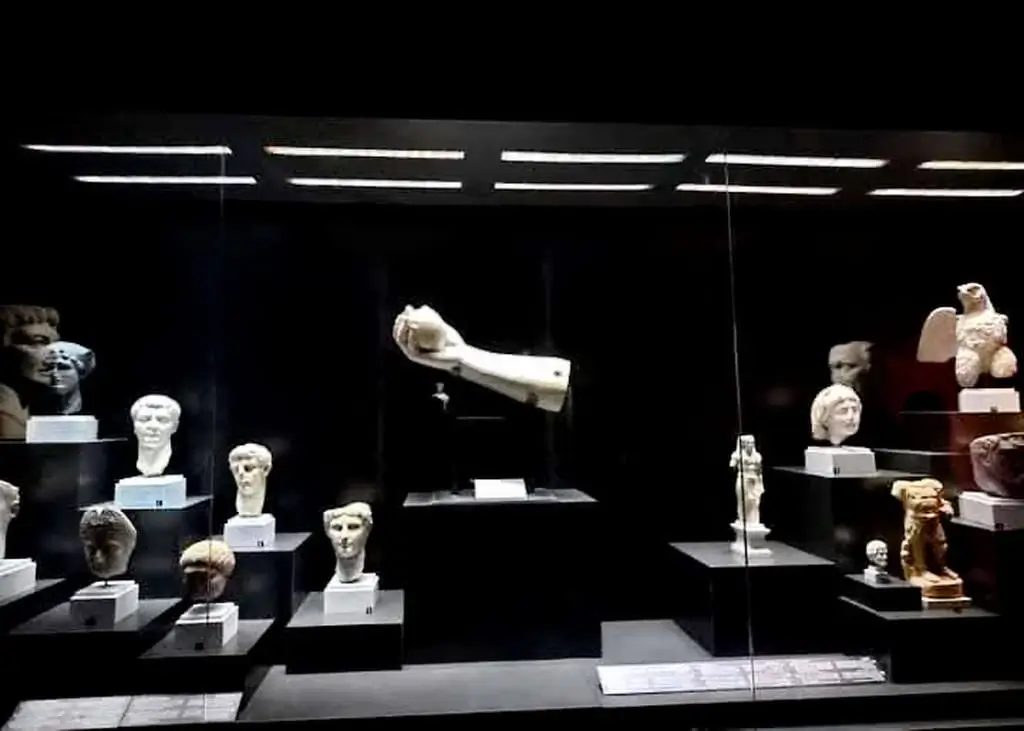
- The Head of Alexander the Great: Recovered from the seabed near the ancient port, this marble head is considered one of the most accurate depictions of Alexander, showing his characteristic “Anastole” (hair swept back from the forehead).
- The Statue of Bacchus: A stunning marble depiction of the god of wine, showcasing the Roman love for hedonistic themes and flowing, draped marble.
Hall 13: The Sculptures of Ras El-Soda
This hall is unique because it reconstructs the findings of a single site: the Temple of Ras El-Soda.
- The Votive Foot: One of the museum’s most famous and quirky artifacts. It is a large marble foot on a pedestal with a Greek inscription. It was a “votive offering” made by a wealthy Roman named Isidoros, thanking the goddess Isis for healing his foot after a chariot accident.
- Isis & Hermanubis: See the statues that once stood in the private villa of Isidoros. The statue of Hermanubis (a blend of the Greek Hermes and the Egyptian Anubis) is a perfect example of how Roman-era Egyptians merged their spiritual beliefs.
Hall 14: Roman Portraiture & The Realism of Power
If Hall 12 was about “Grandeur,” Hall 14 is about “Personality.” Roman art was famous for showing wrinkles, scars, and aging—marks of wisdom and service.
- The Imperial Busts: This hall contains a rare group of statues representing various Roman emperors and their wives. Look for the distinct hairstyles of the Roman Empresses, which were used as “fashion templates” for women across Alexandria.
- The Philosopher King: A marble bust of Marcus Aurelius depicting him not as a soldier, but as a stoic philosopher. This reflects Alexandria’s status as a center of philosophy and intellect during his reign.
Hall 15: The Architecture of the Afterlife
In Hall 15, the focus shifts to the remains of the buildings and tombs that once lined the streets of Alexandria.
- Architectural Fragments: You will see Corinthian capitals, friezes, and cornices that once adorned the Great Caesareum (the temple started by Cleopatra for Mark Antony).
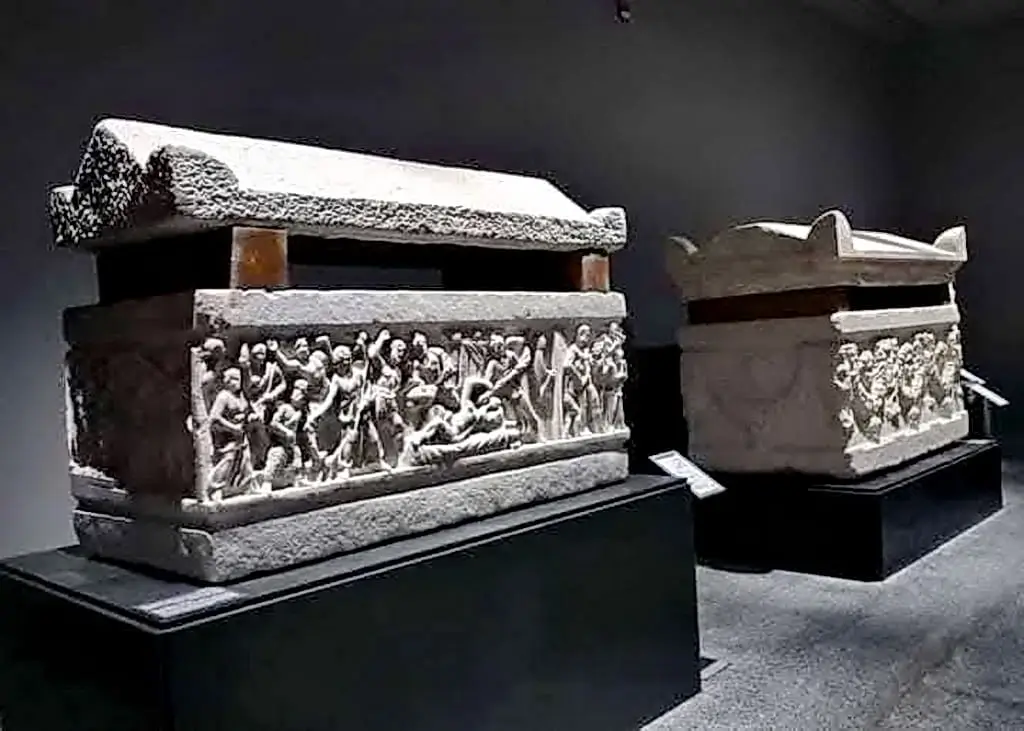
- Mixed-Style Sarcophagi: The sarcophagi here are masterpieces of “mixed character.” They feature Egyptian protective deities (like Anubis or Isis) carved alongside Greek garlands and Roman theatrical masks.
- The Ariadne Sarcophagus: A highlight of the funerary collection, depicting the myth of Ariadne asleep on the island of Naxos, surrounded by Dionysus and his drunken retinue. It is a stunning example of high-relief Roman carving.
The Thematic Masterpieces (Halls 16–20)
While the first fifteen halls follow a timeline, Halls 16 through 20 shift to the “Alexandrian Identity”—focusing on the city’s relationship with the Nile, its trade, and its unique artistic specialties like mosaics.
Hall 16: The Nile Hall (The God of the River)
This hall is dominated by one of the most famous statues in Egypt: The Colossal Statue of the Nile God (Nilus).
- Symbolism of the Flood: The statue depicts a venerable, bearded old man reclining against a Sphinx. In his hand, he holds a cornucopia of fruit and wheat.
- The “Sixteen Children”: Look closely at the small figures (Putti) climbing over the god. There are exactly sixteen children, representing the sixteen cubits of water required for a “perfect flood” to ensure Egypt’s prosperity.
- The Holy Water Vessel: Unlike Roman versions found in Italy, the Alexandrian Nilus often holds a hydria (water jar), emphasizing the religious sanctity of the Nile water in the cult of Isis.
Hall 17: The Mosaic Masterpieces & “The Medusa”
Alexandria was the undisputed world capital of mosaic art. Hall 17 showcases why the city’s craftsmen were headhunted by Roman Emperors.
- The Medusa Mosaic: This is the hall’s crown jewel. It features the head of Medusa (the Gorgoneion) centered within a shield of concentric, oscillating triangles.
- The Optical Illusion: The black and white triangles are arranged to create a “spinning” effect—an ancient form of Op-Art designed to petrify (literally “turn to stone”) any evil spirits entering a home.
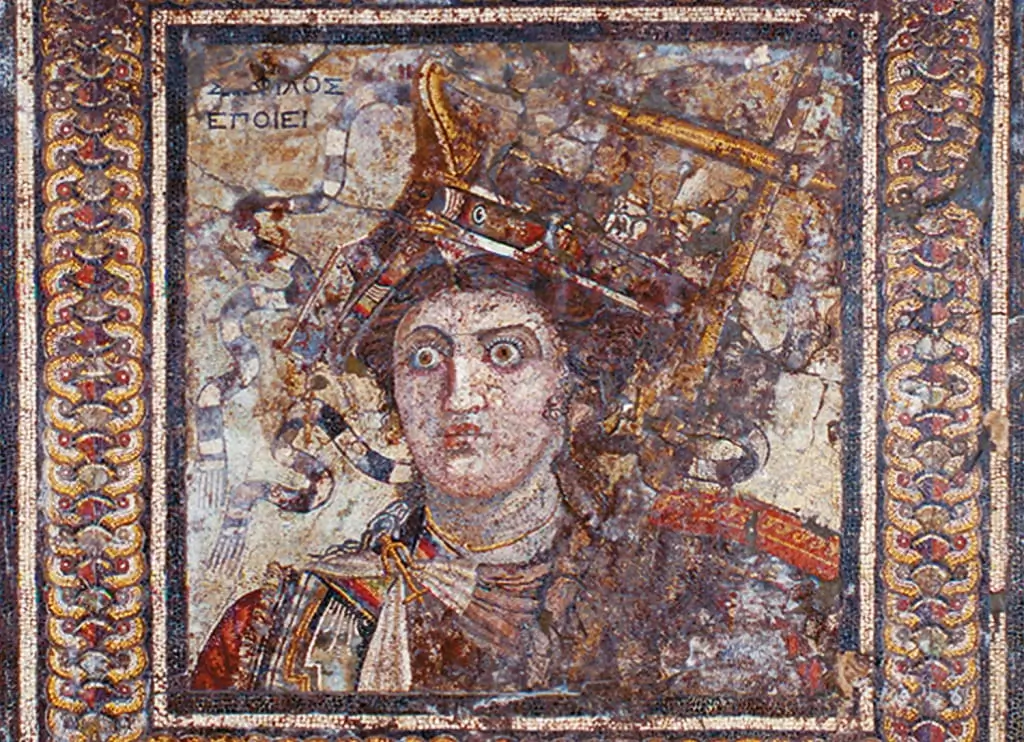
- The Queen Berenice II Mosaic: A rare “pebble mosaic” using tiny, natural-colored stones to create a portrait of the Ptolemaic queen wearing a crown in the shape of a ship’s prow, celebrating Alexandria’s naval power.
Hall 18: The Agora & The Economy
This hall recreates the atmosphere of the Alexandrian Agora (the marketplace).
- Trade Goods: View the massive collection of Amphorae (clay storage jars). By analyzing the stamps on the handles, archaeologists have tracked 2000-year-old trade routes from Alexandria to Marseille, Athens, and Rome.
- Weights and Measures: See the official stone weights used by market inspectors to ensure fair trade—a testament to the city’s complex administrative and economic systems.
Hall 19: Industry and “The Red Land”
This hall focuses on the desert regions surrounding Alexandria and the industries that fueled the city.
- Glassmaking: Alexandria was the center of “Luxury Glass.” View the intricate Millefiori (thousand flowers) glass bowls, created by fusing colored glass rods—a technique still used in Murano, Italy today.
- Perfume & Medicine: Explore the display of tiny glass unguentaria (perfume bottles) and surgical instruments, reminding us that Alexandria was the world’s medical research hub (home to the famous Herophilus).
Hall 20: The Alexandrian Theater & Art
- Theatrical Masks: See the marble and terracotta masks used in the local theaters. Alexandria was famous for “Mime” and “Pantomime” performances that were more rowdy and popular than the classic tragedies of Athens.
- The Barberini Statue: A beautiful, draped female figure that showcases the “Alexandrine Style”—soft, wet-looking drapery that appears to cling to the body, a peak of Hellenistic technical skill.