The Tenth Dynasty of Egypt: The Fall of Herakleopolis and the Reunification of Egypt
Despite their strong alliances and fortified borders, the Tenth Dynasty could not hold back the tide of southern expansion forever. The century-long civil war reached its dramatic conclusion around 2025 BCE, when the military might of the Theban Eleventh Dynasty finally broke through the northern defenses.
The Final Confrontation: Mentuhotep II and the Theban Triumph
The turning point came under the leadership of the aggressive Theban pharaoh Mentuhotep II. He launched a massive, decisive military campaign aimed directly at the heart of Middle Egypt.
The strategic city of Asyut, which had shielded the Tenth Dynasty for generations, fell to the southern forces. With the defensive line shattered, the Theban fleet surged up the Nile and laid siege to the northern capital of Herakleopolis Magna.

The northern forces could not withstand the assault. Herakleopolis fell, and Mentuhotep II officially reunified Lower and Upper Egypt under a single crown, marking the end of the First Intermediate Period and the birth of the Middle Kingdom.
The Fate of the Tenth Dynasty Royal Family
What happened to the royal family of the Tenth Dynasty remains a mystery. Unlike later periods of Egyptian history, where vanquished rulers were routinely executed or publicly humiliated, evidence suggests a quieter end.
Some historians believe the last Herakleopolitan king died during the final siege of the capital. Others suggest that Mentuhotep II may have allowed the surviving northern royals and loyal elites to blend into the new administration. This tactical mercy would have prevented further rebellions and helped stabilize the newly unified country.
The Tenth Dynasty of Egypt: Archaeological Evidence of Destruction at Herakleopolis
Modern archaeological excavations at the site of Herakleopolis Magna provide clear, physical proof of this violent political transition.
Excavators uncovered widespread layers of ash, burned wood, and smashed monuments dating precisely to the end of the Eleventh Dynasty’s northern campaign. The tombs of the tenth-dynasty elite were systematically looted and dismantled.
The Thebans deliberately destroyed these monuments to erase the memory of their northern rivals, ensuring that the history of Egypt would henceforth be written from the victorious perspective of Thebes.
Historiography and Legacy: How History Remembers the Tenth Dynasty
The historical legacy of the Tenth Dynasty resembles a puzzle rewritten multiple times by different authors. For millennia, the victorious Theban narrative dominated historical memory. It cast the entire Herakleopolitan era as an illegitimate period of lawlessness and rebellion.
Manetho’s Account vs. Modern Archaeological Discoveries
Our modern structural understanding of Egyptian dynasties comes largely from Manetho, an Egyptian priest who wrote a comprehensive history of the land in the third century BCE.
Manetho preserved the memory of the Tenth Dynasty, identifying it as a line of nineteen kings ruling from Herakleopolis for a total of 185 years. However, his records survived only as summaries copied by later Roman and Christian historians. These later authors often introduced transcription errors and exaggerated the level of political collapse.

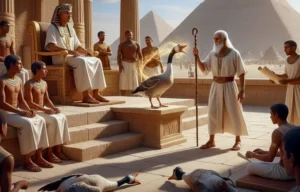
Modern archaeology acts as a vital correction to these biased ancient texts. The image above shows traditional scribes keeping detailed administrative accounts. Excavations prove that despite the division of the country, Tenth Dynasty scribes maintained sophisticated legal, economic, and bureaucratic records. The sophisticated administration did not vanish; it simply decentralized.
Why the Tenth Dynasty is Essential to Understanding the Middle Kingdom
Historians can no longer view the Tenth Dynasty as a dead-end era of failure. Without the socio-political breakthroughs of the Herakleopolitan Period, the brilliant Middle Kingdom could never have emerged.
The Tenth Dynasty served as a critical crucible for testing new governance models. The fierce rivalry between the north and south forced both sides to innovate, leading directly to the classic structures of the unified state:
-
The Rise of Professional Bureaucracy: The erosion of total royal control forced the Tenth Dynasty to appoint officials based on talent and eloquence rather than purely aristocratic birth.
-
The Foundation of Classical Literature: The linguistic styles and philosophical deep dives developed by Herakleopolitan royal courts became the official golden standard for Egyptian education during the subsequent centuries.
The Tenth Dynasty of Egypt: The Resilient Spirit of First Intermediate Period Egypt
The story of the Tenth Dynasty of Egypt reminds us that a fractured nation is not necessarily a dead nation. While the Herakleopolitan kings ultimately lost the civil war for the double crown, their impact on the trajectory of Egyptian culture remains undeniable.

These forgotten kings governed a resilient, highly adaptive northern realm during an unprecedented ecological crisis. They successfully defended their borders against external raids, nurtured breathtaking local artistic movements, and democratized access to the afterlife for ordinary citizens.
When you look past the biased propaganda of their Theban conquerors, you discover that the Tenth Dynasty was not a chaotic dark age. Instead, it was an era of profound cultural rebirth that reshaped the spiritual, political, and literary future of Ancient Egypt forever.
To understand the broader socio-political structure and how this era fits into the macro-cycles of pharaonic power, see our master guide on The Dynasties of Ancient Egypt.