
The Twentieth Dynasty of Egypt: The Twilight of the Ramesside Empire

The Twentieth Dynasty of Egypt, spanning from its restoration under Setnakhte to its ultimate division under Ramesses XI, represents a turbulent era of imperial twilight that concluded the New Kingdom. While Ramesses III successfully defended the nation from catastrophic invasions by the Sea Peoples, the staggering financial cost of these wars catalyzed an irreversible domestic decline. Plagued by climate disasters, severe economic inflation, the world's first recorded labor strike, widespread tomb robbing, and deep political fracturing—including the assassination of the pharaoh in the Harem Conspiracy—the centralized authority of the god-king slowly crumbled. This exhaustion of state power culminated in a peaceful geopolitical split, as the High Priests of Amun established a localized theocracy in the south while Smendes founded a new ruling line at Tanis in the north.
The eye of Horus
WhatsApp
Email
Print

The Twentieth Dynasty of Egypt: The Final Phase of the New Kingdom

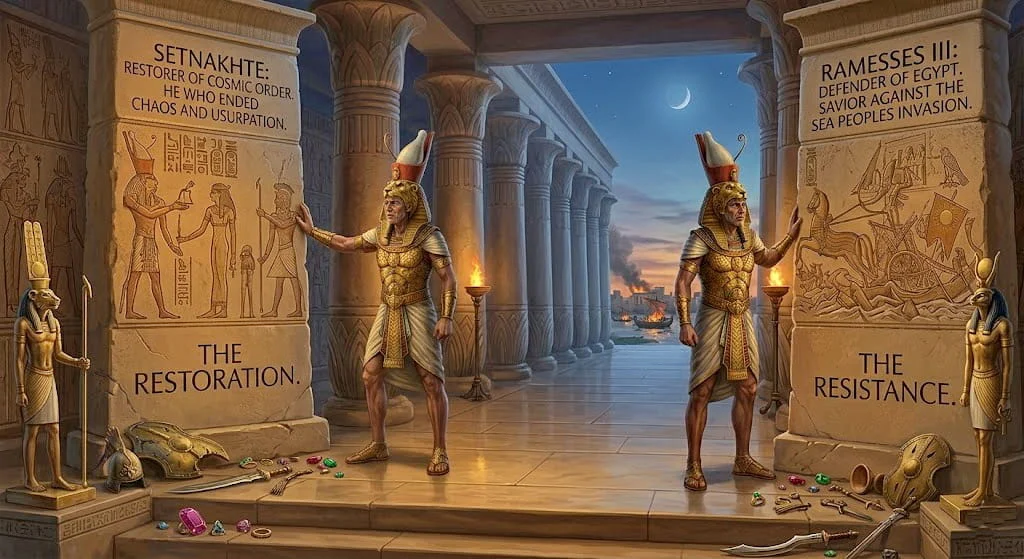
The transition into the Twentieth Dynasty of Egypt marks the final, dramatic chapter of the Egyptian New Kingdom. Previously, the glorious expansion of the Ramesside Golden Age had collapsed into severe political instability. Following the sudden death of Queen Twosret, bitter civil unrest and anarchy threatened to completely tear the nation apart. Consequently, the responsibility of restoring cosmic order fell upon a strong military commander named Setnakhte. By forcefully crushing internal factions, he successfully stabilized the state and established a new dynastic line.

However, this newfound peace did not last long. The Twentieth Dynasty quickly became an era defined by desperate defensive warfare and sudden economic decline. Unlike their predecessors, these later pharaohs did not launch aggressive wars of conquest to expand borders. Instead, they fought tirelessly just to protect the Egyptian homeland from massive, unprecedented waves of foreign migrations.

An Empire Under Siege

To study this dynasty is to witness a grand superpower courageously fighting against the tides of history. Over the course of more than a century, the rulers of this era struggled against growing internal corruption, changing global climates, and empty royal treasuries. While the dynasty started with brilliant military triumphs, it eventually faced a long, slow decline under a series of weak rulers. This imperial twilight was shaped by several critical historical milestones:

  • Setnakhte: First, this determined leader successfully ended the destructive civil wars and secured the throne.
  • Ramesses III: Next, this grand pharaoh saved Egypt from destruction by defeating the terrifying Sea Peoples on land and sea.
  • The Harem Conspiracy: Meanwhile, a dark, internal plot to assassinate the king exposed deep fractures within the royal court.
  • The Royal Tomb Strikes: Finally, worsening economic inflation led to the first recorded labor strikes in human history, signaling the ultimate breakdown of state power.

Tracing the Fall of the New Kingdom

This comprehensive cornerstone article serves as your definitive guide to the political, economic, and military history of the Twentieth Dynasty. By exploring rich primary sources, such as the grand reliefs of Medinet Habu and the ancient legal papyri of Turin, we will uncover the true story of Egypt’s final imperial phase. From the thrilling details of naval warfare to the rising political power of the High Priests of Amun, you will discover exactly how the New Kingdom ultimately dissolved, opening the door to a fractured and divided nation.
Divider

Restoration and Resistance: Setnakhte and Ramesses III

Restoration and Resistance Setnakhte and Ramesses III

Setnakhte’s Triumph: Ending the Civil Anarchy

To understand the rise of the Twentieth Dynasty, we must first look at the chaos that marked the end of the previous era. Following the death of Queen Twosret, Egypt fell into a state of severe internal collapse. Local governors fought bitterly for power, and foreign opportunists exploited the weak government. According to the famous Great Harris Papyrus, a mysterious Syrian official named Irsu even seized temporary control over parts of the country, neglecting the traditional temples and plunging the economy into ruin.

Consequently, the survival of the state required a decisive leader with absolute military backing. A powerful commander named Setnakhte stepped forward to reclaim the country. First, he launched a fierce domestic campaign to crush the rebellious factions. Next, he systematically expelled the foreign usurpers and restored public confidence in the central government.

Although Setnakhte only ruled for a brief period of roughly three years, his iron-fisted intervention was a massive success. He completely stabilized the internal economy and secured the throne for his family. Most importantly, he left a peaceful, unified nation to his young, capable son, Ramesses III, who would soon face the greatest foreign invasion in Egyptian history.

The Clash of Empires: Confronting the Sea Peoples

When Ramesses III ascended the throne, he instantly faced a changing world filled with terrifying geopolitical threats. Across the Mediterranean, the Late Bronze Age collapse was destroying great civilizations. Specifically, Mycenaean Greece, the Hittite Empire, and the kingdoms of the Levant were falling one by one. The driving force behind this mass destruction was the Sea Peoples—a massive, unstoppable coalition of seafaring warriors and migrating families seeking new lands to settle.

By the eighth year of Ramesses III’s reign, this massive invasion force targeted the borders of Egypt. The pharaoh knew that standard defensive strategies would not be enough. Therefore, he rapidly mobilized the entire nation for a desperate war of survival on two distinct fronts:

The Battle of Djahy (The Land Invasion)

First, the Sea Peoples advanced by land through the Levant, accompanied by massive ox-carts filled with women and children. Ramesses III quickly marched his elite infantry and chariot divisions north into modern-day southern Israel. He intercepted the enemy at the strategic frontier fortress of Djahy. The disciplined Egyptian archers unleashed a devastating rain of arrows, completely breaking the enemy lines. This decisive tactical victory successfully halted the land invasion before it could ever touch Egyptian soil.

The Battle of the Delta (The Naval Invasion)

Meanwhile, a massive enemy fleet sailed directly toward the mouths of the Nile Delta. Ramesses III rushed back to organize a brilliant naval ambush. First, he completely lined the riverbanks with rows of hidden archers. Next, he blocked the river entrances with a defensive wall of Egyptian warships.

When the unsuspecting Sea Peoples entered the narrow waterways, the shore archers opened fire with a terrifying volley. Simultaneously, the Egyptian ships used grappling hooks to board and capsize the trapped enemy vessels. This historic clash marks the first fully recorded naval battle in human history. It resulted in a total, crushing victory for Egypt, saving the Nile Valley from destruction.

Medinet Habu: The Visual Record of a Desperate War

To ensure that his miraculous victories would be remembered for eternity, Ramesses III constructed his magnificent mortuary temple at Medinet Habu, located on the west bank of Thebes. This massive, heavily fortified complex served as both a religious sanctuary and a permanent monument to his military genius.

Most importantly, the outer stone walls are covered with incredibly detailed, deep-cut reliefs that tell the exact story of the wars. These stunning carvings vividly depict the frantic chaos of the naval battle, showing overturned enemy ships and captured warriors in distinct feathered headdresses. Furthermore, the accompanying hieroglyphic inscriptions record the pharaoh’s triumphant speeches to the gods. Through this monumental stone archive, Ramesses III successfully immortalized his defensive triumphs, creating the ultimate visual record of the dynasty’s finest hour.

Golden Scarab

The Fracturing of Internal Stability

What Was the Harem Conspiracy - Pharaoh Ramesses III

Economic Turmoil in the Twentieth Dynasty of Egypt

Although Ramesses III successfully saved his country from foreign invasion, the immense cost of those defensive wars shattered the national economy. The state treasury was completely drained from funding massive armies and building fortified temples. Worsening the crisis, a changing global climate triggered a series of low Nile floods, which severely damaged crop yields and caused food prices to skyrocket.

Furthermore, systemic corruption began to plague the royal administration. Corrupt local officials frequently skimmed grain and wealth from the state granaries, leaving the central government struggling to pay its own workers. Consequently, the internal stability of the Twentieth Dynasty of Egypt began to fracture from the inside out, exposing deep weaknesses in the pharaonic system that could no longer be ignored.

The Deir el-Medina Strike: A Milestone for the Twentieth Dynasty of Egypt

This worsening financial crisis eventually led to a historic confrontation in the twenty-ninth year of Ramesses III’s reign. For generations, the highly skilled artisans and royal tomb builders of Deir el-Medina had lived comfortable lives on the west bank of Thebes. However, due to administrative incompetence and empty treasuries, the government failed to deliver their monthly rations of grain and supplies for over two months.

Faced with starvation, the desperate workers decided to take radical action. They laid down their tools, marched across the desert hills, and staged a massive sit-in protest at the major mortuary temples of Thebes. This legendary event is recorded in detail on the Strike Papyrus of Turin, and it marks the world’s first recorded labor strike in human history.

Although the shocked authorities eventually paid the workers their back wages, the strike exposed a terrifying reality. The god-king’s government could no longer reliably feed its most valuable servants, signaling a massive breakdown in centralized royal authority.

The Harem Conspiracy: A Dark Threat to the Twentieth Dynasty of Egypt

Unveiling the Harem Conspiracy - The Plot to Assassinate Ramesses III

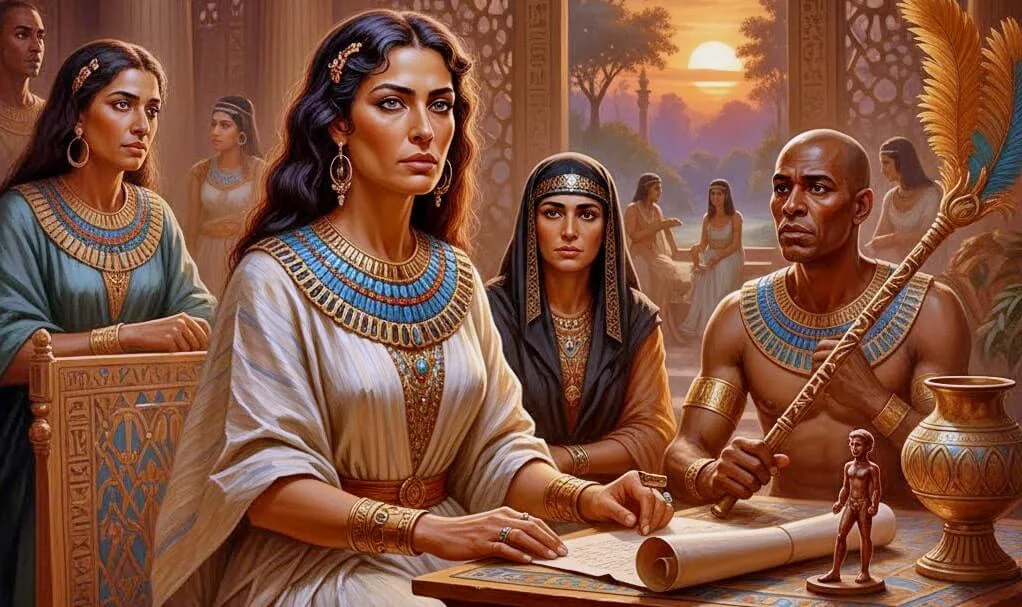
As the economic situation worsened, the crisis reached the absolute highest levels of the royal court. Sensing that the aging Ramesses III was growing weak, a secondary queen named Tiye orchestrated a terrifying, clandestine plot to assassinate the pharaoh. Her primary goal was to bypass the rightful crown prince and place her own son, Pentawer, onto the golden throne.

To achieve this, Queen Tiye recruited a powerful network of palace insiders, including royal physicians, high-ranking military officers, and harem overseers. The conspirators used physical weapons and even dark magic spells to execute their bloody plan.

According to modern CT scans of the pharaoh’s mummy, the assassins successfully slit Ramesses III’s throat from behind, killing him almost instantly. However, the plot ultimately failed in its main objective. The rightful heir, Ramesses IV, acted with absolute speed to secure the capital and arrest the conspirators before they could install their puppet king.

To restore public order, Ramesses IV established a special tribunal of twelve high court judges to try the traitors. The dramatic trial is preserved today on the famous Judicial Papyrus of Turin. The court sentenced the ringleaders to brutal executions, while Prince Pentawer was forced to take his own life. Although the rightful lineage survived this dark chapter, the shocking murder of a living god-king permanently shattered the divine prestige of the Twentieth Dynasty of Egypt, plunging the royal court into paranoia just as a long line of weak successors prepared to take the throne.

The eye of Horus

The Long Decline (Ramesses IV to Ramesses XI)

The Long Decline (Ramesses IV to Ramesses XI)

The Succession of Namesakes in the Twentieth Dynasty of Egypt

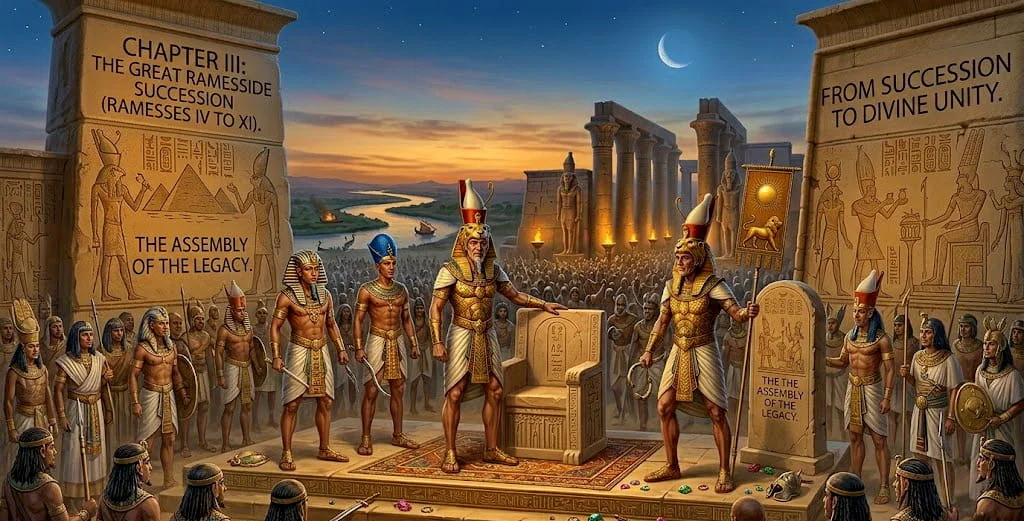
Following the tragic assassination of Ramesses III, the throne passed through a rapid succession of weak, short-lived rulers. Over the next several decades, eight different pharaohs took the prestigious name of Ramesses. However, none of these kings possessed the military genius or administrative strength of their grand ancestors.

Most of these rulers suffered from incredibly short reigns, which constantly disrupted the continuity of the central government. For example, Ramesses IV spent his brief six years on the throne desperately trying to fund massive building projects that the state could no longer afford. Because the crown shifted so frequently between brothers, uncles, and distant nephews, the royal family became consumed by internal political infighting, leaving the country leaderless during an era of global crisis.

Economic Inflation and Chaos in the Twentieth Dynasty of Egypt

As political leadership crumbled, the daily lives of ordinary citizens became plagued by worsening economic disaster. The state treasury never fully recovered from the massive loss of foreign trade. Worsening the crisis, runaway inflation gripped the marketplace, causing the price of grain to soar to unprecedented heights.

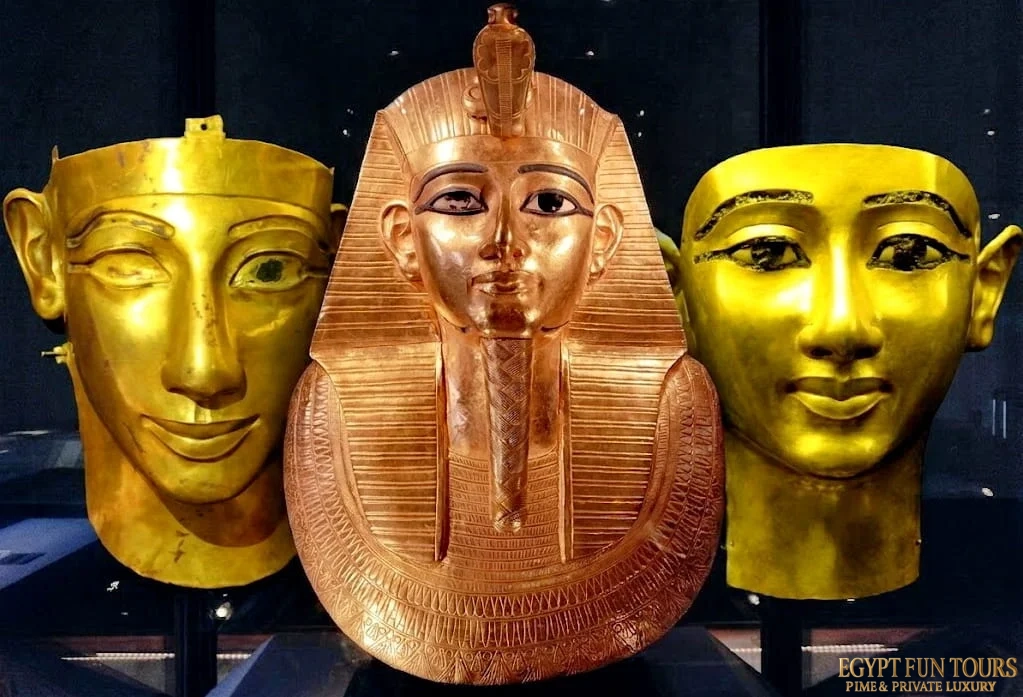
Due to this widespread poverty and the weak police force, a wave of systematic tomb robbing swept across the west bank of Thebes. Desperate gangs of thieves, often aided by corrupt local mayors and temple priests, broke into the sacred royal tombs of the Valley of the Kings. They ripped open the gilded coffins, stripped the mummies of their precious gold amulets, and melted down the stolen treasures. The grand trials recorded in the Amherst Papyrus and Abbott Papyrus expose a terrifying reality: the royal administration was completely powerless to protect even the sacred bodies of its ancestral god-kings.

The Loss of the Levant: A Geopolitical Retreat

While Egypt decayed from within, its international influence completely vanished on the world stage. During the glorious Ramesside Golden Age, the empire maintained a powerful network of vassal states and military garrisons across the Levant. However, under the weak later kings of the Twentieth Dynasty of Egypt, the state could no longer afford to maintain these distant military posts.

Consequently, local rulers in Palestine and Syria openly revolted and broke away from Egyptian control. The tragic reality of this collapse is famously captured in the Report of Wenamun, an ancient literary text that describes an Egyptian envoy who travels to Lebanon to buy cedar wood. Instead of being treated with royal respect, Wenamun is insulted, robbed, and completely ignored by local rulers. This humiliating text proves that within a few short generations, Egypt had fallen from a dominant global superpower to a weak, isolated nation, forced to retreat back within its natural borders.

Divider

The Fall and Division of Egypt

The Rise of the High Priests of Amun in the Twentieth Dynasty of Egypt

During the final years of the Ramesside era, the ultimate threat to royal power did not come from foreign invaders, but from within the sacred temples of Thebes. Because the later pharaohs chose to remain far away in their northern capital of Pi-Ramesses, a dangerous political vacuum grew in Upper Egypt. The High Priests of Amun at Karnak quickly exploited this absence to expand their own authority. Over generations, the temple of Amun had accumulated vast tracts of agricultural land, thousands of ships, and immense gold reserves, making it far wealthier than the royal crown itself.

Consequently, by the reign of Ramesses XI, the high priest Herihor took a radical step forward. He did not merely manage the temple assets; instead, he completely seized absolute economic and military control over Upper Egypt. Herihor began representing himself in grand temple reliefs with full royal regalia and kingly titles, effectively creating a semi-independent military dictatorship in the south. This bold usurpation split the country from within, leaving the rightful pharaoh as a powerless figurehead inside his own palace.

Smendes, Tanis, and the End of the Twentieth Dynasty of Egypt

Tanis Treasures The Undiscovered Masterpieces of Ancient Egypt

When Ramesses XI finally passed away without a clear male heir, the fragile political structure of the New Kingdom completely collapsed. In the north, a powerful nobleman and high-ranking official named Smendes stepped forward to claim authority over the Delta region. Rather than fighting a bloody civil war against the military priests in the south, Smendes chose a path of peaceful diplomacy to secure his position.

First, he moved the main northern administrative capital to the strategic port city of Tanis. Next, he formed a close political and matrimonial alliance with the ruling high priests of Thebes. This historic compromise permanently divided the geopolitical landscape of the Nile Valley into two separate, peaceful zones of influence:

  • The North: Smendes ruled the Delta from Tanis, officially establishing the Twenty-First Dynasty.
  • The South: The High Priests of Amun continued to rule Upper Egypt as a military-theocratic state from Thebes.

Ultimately, this peaceful division officially brought a definitive end to both the Twentieth Dynasty of Egypt and the glorious New Kingdom era. By fracturing central authority, it closed the book on the age of grand imperial building and opened the door to the long, fragmented centuries of the Third Intermediate Period.

The eye of Horus

The Final Echoes of the New Kingdom

The Dramatic Journey of the Twentieth Dynasty of Egypt

In summary, the Twentieth Dynasty of Egypt stands as one of the most dramatic and transformative eras in the history of the Nile Valley. It successfully emerged from a period of severe civil anarchy and political collapse, thanks to the decisive military intervention of Setnakhte. Following this initial restoration, his brilliant successor, Ramesses III, successfully defended the nation against unprecedented waves of foreign invasions, sealing his triumph in the stone walls of Medinet Habu.

However, as our detailed analysis has demonstrated, the immense cost of persistent defensive warfare eventually triggered a long, irreversible domestic decline. The internal stability of the Twentieth Dynasty of Egypt was gradually eroded by a perfect storm of environmental disasters, economic inflation, and shocking royal court conspiracies. While earlier dynasties are celebrated for expanding imperial borders, this final Ramesside line is defined by its courageous, exhausting struggle to preserve the foundational fabric of the Egyptian state.

The Lasting Historical Blueprint of Imperial Twilight

Ultimately, the true legacy of this dynasty lies in how its final collapse reshaped the geopolitical landscape of ancient Egypt. The gradual loss of the Levant and the shocking rise of systematic tomb robbing proved that the central pharaonic state could no longer project absolute power at home or abroad. By the time the lineage dissolved under Ramesses XI, the traditional concept of an all-powerful, unified god-king had completely vanished.

When the High Priests of Amun seized control of the south, and Smendes established a new capital at Tanis, they did not destroy Egypt; rather, they adapted to a changing world. This peaceful division of power marked the official end of both the Twentieth Dynasty of Egypt and the magnificent New Kingdom. By closing the door on the age of empire, these late Ramesside rulers left behind a complex blueprint of survival that would guide the fractured, deeply religious centuries of the Third Intermediate Period.

Divider

Day Trip to Alexandria

An enjoyable drive from Cairo to Alexandria. It was an enriching trip. I learnt so much history about the ancient civilisation. The tour guide explained the history of each site we visited. There is so much to see. I would definitely highly recommend visiting Alexandria. It’s rich in history. The

More »

Outstanding layover tour

I had the opportunity to do a layover tour with Egypt Fun Tours this Friday, and it was amazing. I had a 10-hour layover tour in Cairo, and I was met by Mohamed on time at the airport. He picked me up in a clean, new, safe, and comfortable van.

More »

Like two days of touring in one day!

I had a 12 hour stay in Cairo- and had made no plans on how to spend it until 8pm the night before departure. I emailed Egypt Fun Tours in a panic and they responded immediately. They made it incredibly easy to arrange a tour and we made arrangements via

More »
15-Day Historical Egypt Tour Package

all good!

we took pyramid and Cairo city tours and all went smoothly. The were very flexible to adapt to our requirements. Car, car driver and guide were great. very knowledgable and professional tour. Very recommendable

More »
God_Anubis_Icon

Top-rated Tour Packages

God_Anubis_Icon
WhatsApp
Email
Print