The Eye of Horus: Symbol of Protection, Healing, and Mathematics

Unlock the secrets of the Eye of Horus (Wadjet), ancient Egypt's ultimate symbol of protection and healing. This guide explores the dramatic myth of how Horus lost his eye to Seth and regained it through magic, symbolizing restoration and sacrifice. We decode the hidden mathematics behind the symbol—representing the "six senses" and the first six powers of two—and reveal why this 3,000-year-old icon remains a powerful talisman against negative energy in the modern world.

The Watchful Eye: A Symbol of Divine Power

Few symbols in human history are as instantly recognizable as the Eye of Horus. From the crumbling walls of ancient temples to modern jewelry and tattoos, this stylized eye has captivated the human imagination for thousands of years. It represents a powerful blend of mythology, mathematics, and spiritual healing that transcends time.

Known to the ancient Egyptians as the Wedjat (meaning “The Whole One”), this symbol is far more than a piece of artistic design. It is a theological statement. While it is often used interchangeably with the “Eye of Ra,” the Eye of Horus carries its own distinct story of sacrifice, restoration, and the triumph of order over chaos.

This guide delves into the secrets of this iconic image. We will explore its bloody origins in the battle between Horus and Seth, decode the hidden mathematics behind its markings (the “first six powers of two”), and reveal why it remains a potent symbol of protection against evil forces today.

Key Takeaways

  • The Name: The Eye of Horus is also known as the Wedjat (“The Whole One”) or the Udjat.
  • The Myth: It represents the eye Horus lost in a battle with his uncle Seth, which was later magically restored.
  • The Meaning: It symbolizes protection, royal power, and the restoration of health (healing).
  • The Math: The specific parts of the eye represent ancient Egyptian fractions and the six senses (including thought and intuition).
FUN

The Price of Victory: Horus vs. Seth

The Price of Victory; Horus vs. Seth

To understand the true power of the Eye of Horus, you must look back to one of the most violent chapters in Egyptian mythology. The symbol was not created in peace; it was forged in battle.

The Battle for the Throne

As we know, Horus was the son of Osiris and Isis, a divine figure who embodied kingship and the sun. However, his right to rule was challenged by his uncle, Seth, the god of chaos who had murdered Osiris.

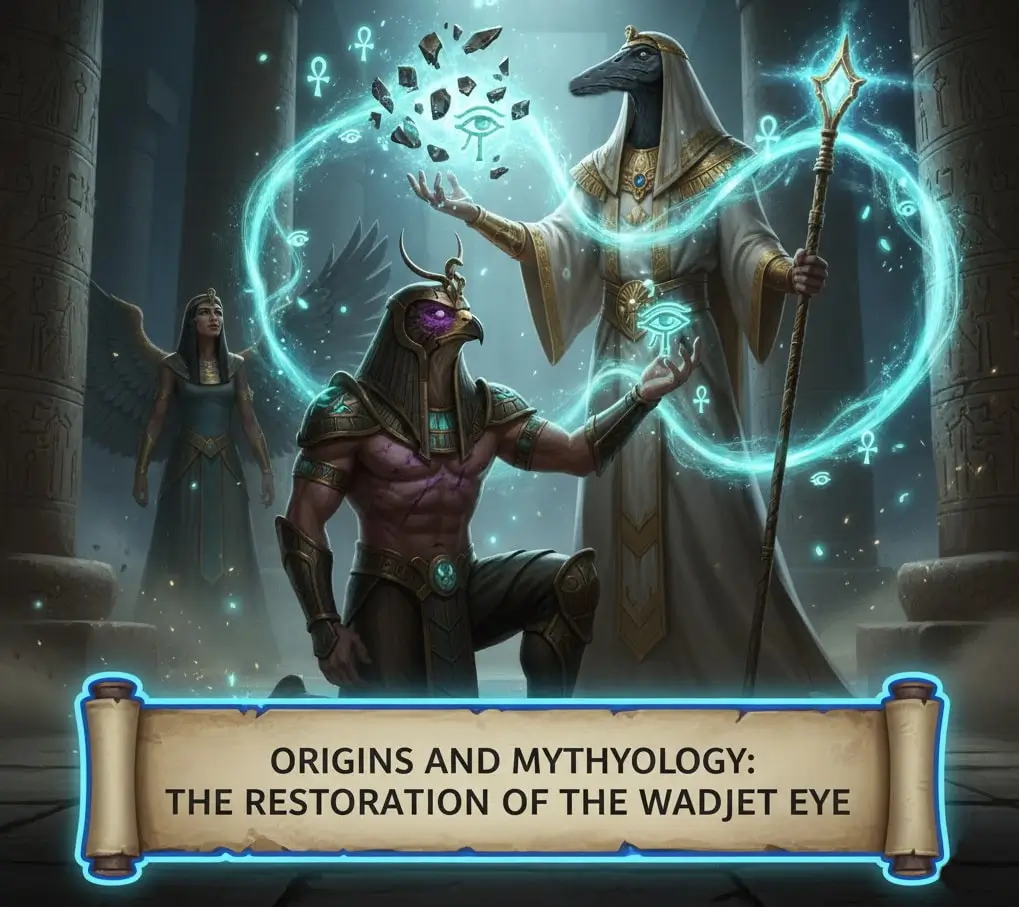
When Horus came of age, he challenged Seth for the throne of Egypt. In one particularly fierce clash, Seth ripped out Horus’s left eye. This act represented a blow to the moon (associated with the left eye) and a temporary victory for chaos over order.

The Restoration (Wadjet)

The story does not end with the injury. Thoth, the god of wisdom and magic (or sometimes Hathor), intervened. Using powerful magic, Thoth reassembled the shattered pieces of the eye and healed it completely. Because of this miraculous healing, the eye became known as the Wadjet, which translates to “The Whole One” or “The Restored One.”

The Ultimate Sacrifice

Crucially, Horus did not keep the restored eye for himself. Instead, he offered it to his dead father, Osiris. The magical power of the eye was so great that it helped restore Osiris to life in the underworld. Thus, the Eye of Horus became the ultimate symbol of sacrifice, healing, and the power to protect one’s family.

FUN

☀️ vs. 🌙 Clearing the Confusion: The Sun and the Moon

☀️ vs. 🌙 Clearing the Confusion; The Sun and the Moon

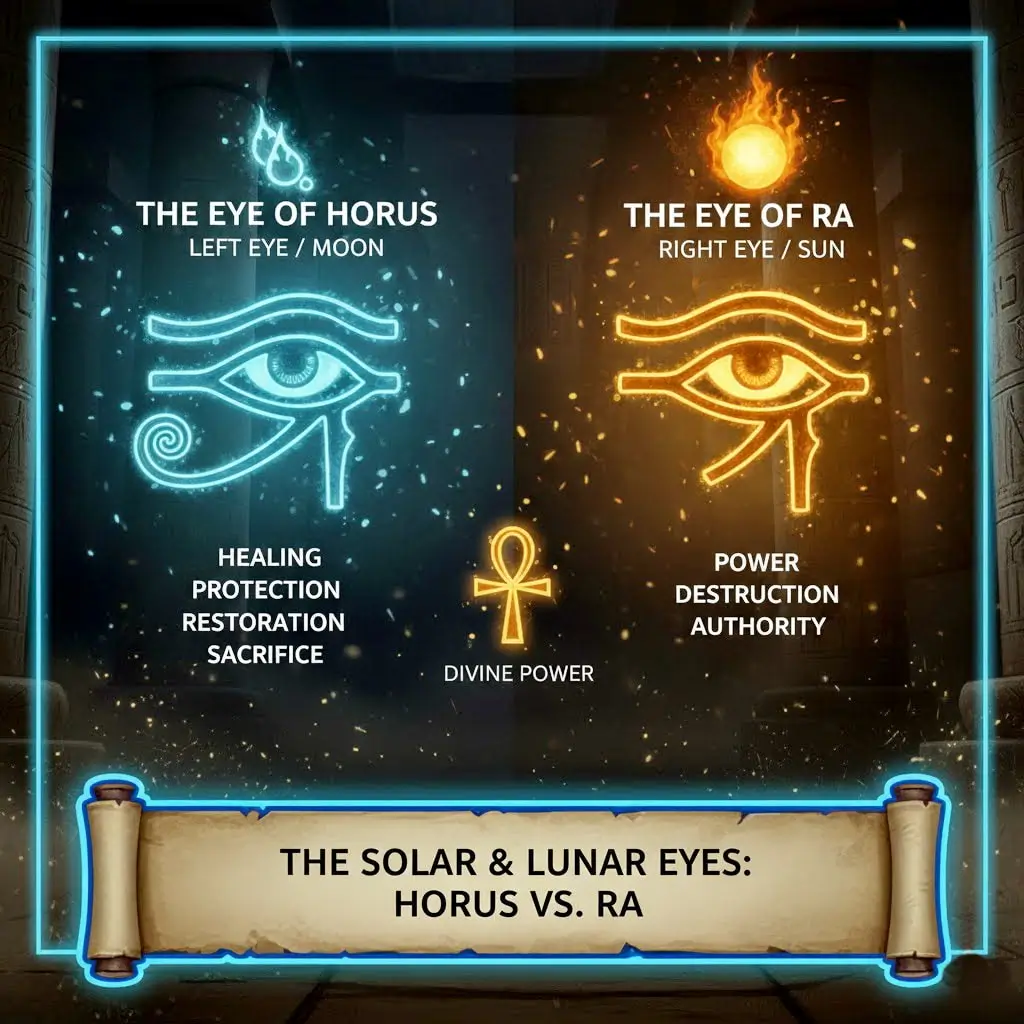
One of the most common questions about ancient Egyptian symbolism is: What’s the difference between the Eye of Horus and the Eye of Ra? While they are both powerful “eyes” that represent divine power, they have distinct origins, meanings, and associations.

The Left Eye: Eye of Horus (Wadjet)

  • Association: The Left Eye of Horus.
  • Celestial Body: It represents the Moon.
  • Meaning: It symbolizes healing, restoration, protection, and sacrifice. It is the eye that was lost and restored, embodying the concept of “making whole” (Wadjet). It is passive and benevolent.
  • Mythology: Its origin is tied directly to the battle between Horus and Seth, where it was physically injured and magically made whole.

The Right Eye: Eye of Ra (Utchat)

  • Association: The Right Eye of Ra.
  • Celestial Body: It represents the Sun.
  • Meaning: It symbolizes fury, destructive power, authority, and the fierce protection of the sun god Ra. This eye is active and often aggressive. It is sometimes personified as a goddess (like Sekhmet) who punishes humanity.
  • Mythology: Its origin is tied to Ra’s anger at humanity’s rebellion, sending his Eye to unleash devastation.

Although their meanings are distinct, both eyes were considered powerful symbols. Artists often depicted them side-by-side or interchangeably, reflecting their shared purpose in signifying divine oversight and protection, particularly for the pharaoh. They symbolized the pharaoh’s divine right to rule and protect the kingdom, embodying the complete spectrum of divine power—both nurturing and destructive.

The Egyptian Cartouche: Symbol of Royalty and Eternal Protection

Uncover the meaning of the ancient Egyptian cartouche, one of the most iconic symbols from...
Related post
FUN

The First Computer? Math and the Six Senses

The First Computer; Math and the Six Senses

Beyond its mythology, the Eye of Horus served as a sophisticated mathematical tool. Ancient Egyptians were master mathematicians, and they used the eye’s distinct parts to represent the Heqat system, a method for measuring volumes of grain, flour, and medicine.

The “First Six Powers of Two”

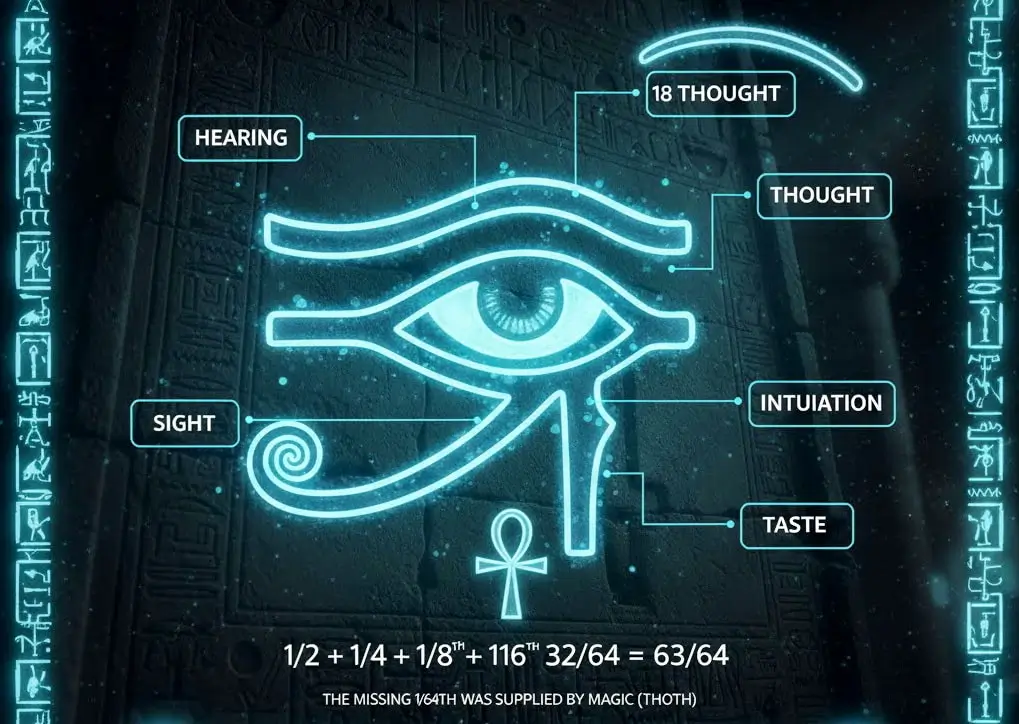
The eye is not just a drawing; it is a puzzle made of six pieces. Each piece corresponds to a specific fraction based on halving (1/2, 1/4, 1/8, etc.). This system, known as the “first six powers of two,” symbolized the process of creation and wholeness.

The 6 Fractions & 6 Senses

Fascinatingly, the Egyptians associated each fraction not just with math, but with a specific human sense. This demonstrates their holistic view of the universe.

  1. 1/2 (Hearing): The inner corner of the eye. This part points towards the ear, symbolizing the primary sense of hearing.
  2. 1/4 (Sight): The pupil. Naturally, the center of the eye represents the sense of sight and the light that enters it.
  3. 1/8 (Thought): The eyebrow. The Egyptians believed the eyebrow expressed emotion and intellect, linking it to the mind and thought.
  4. 1/16 (Intuition): The outer corner. This part points away from the face, symbolizing the perception of things unseen or future events (intuition).
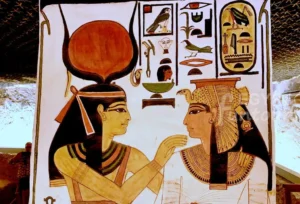
  5. 1/32 (Taste): The curled tail. It resembles a sprouting wheat stalk, which provides food, linking it to the sense of taste.
  6. 1/64 (Touch): The teardrop stalk. This vertical line represents a stalk planted firmly in the ground, symbolizing physical connection and the sense of touch.

When added together, these fractions equal 63/64. Legend says that Thoth supplied the missing 1/64th with magic to make the eye perfectly whole, reminding us that perfection belongs only to the gods.

The Two Ladies (Nebty): Unveiling Wadjet and Nekhbet

The Two Ladies (Nebty) form the essential foundation of Ancient Egyptian royalty, embodying the political...
Related post
FUN

Protection and Healing: Warding Off Negative Energy

Protection and Healing; Warding Off Negative Energy

Beyond math and myth, the Eye of Horus served a vital daily function for the ancient Egyptians. It was their ultimate spiritual shield.

Warding Off Negative Energy

Ancient Egyptian belief held that the world was filled with “evil forces” and negative energies. To safeguard themselves, people from all walks of life used the Eye as an amulet or talisman. They believed it possessed the power to deflect the “Evil Eye” and protect the wearer from harm, acting as a constant guardian for their physical and spiritual well-being.

Medical Magic and Rebirth

Furthermore, the symbol was deeply connected to medicine. Because mythologically the eye was broken and then healed, it became the primary symbol for the restoration of health, rejuvenation, and rebirth. Physicians often invoked the Eye during healing rituals. Most importantly, embalmers placed a Wadjet amulet within the wrappings of mummies—specifically over the incision made to remove organs—to magically heal the wound in the afterlife, ensuring the body remained perfect for eternity.

Ouroboros: Snake Eating Its Tail Meaning

The Ouroboros is an ancient, powerful symbol of a serpent or dragon consuming its own...
Related post
FUN

Ancient Egyptian Culture & Kingship

Eye of Ra Eye of Horus Egypt Fun Tours

The Eye of Horus was deeply ingrained in the cultural fabric of the Nile Valley. It was not just a folk charm; it was a state symbol.

Art and Architecture

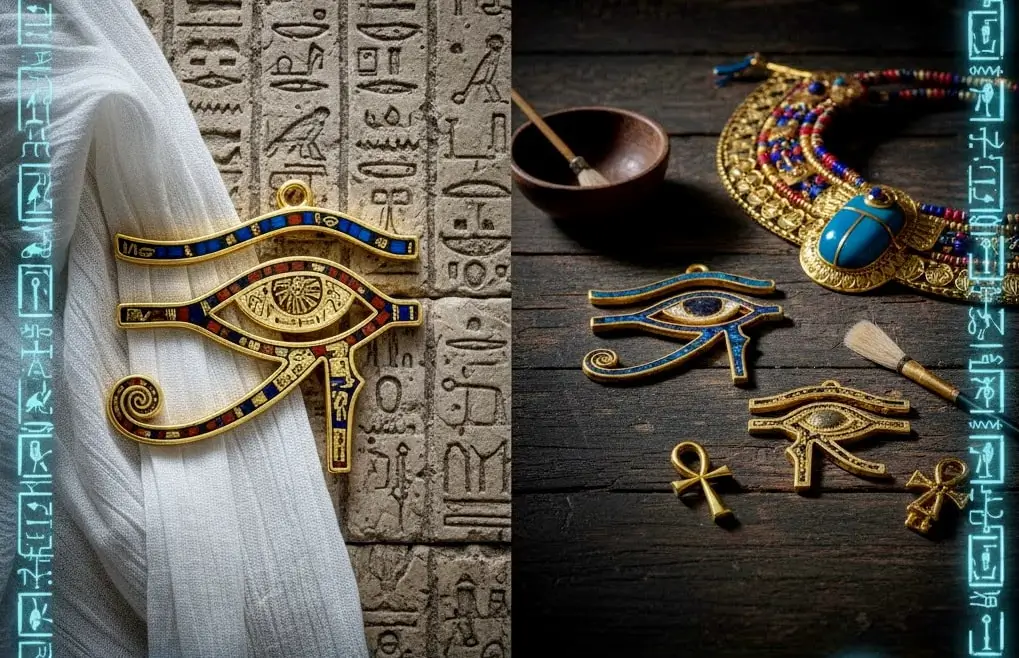
Artists depicted the symbol everywhere. You can find it carved into massive temple walls, painted on delicate papyrus scrolls, and fashioned into exquisite gold jewelry. This widespread usage reflects just how essential the concept of divine protection was to their daily reality.

The Pharaoh’s Divine Right

Crucially, the Eye was inextricably linked to the pharaoh. As the living Horus, the king wielded the power of the Eye to maintain order (Ma’at). It symbolized his divine right to rule and his sacred duty to protect the kingdom from the chaos of the desert and foreign enemies.

Legacy and Modern Interpretations

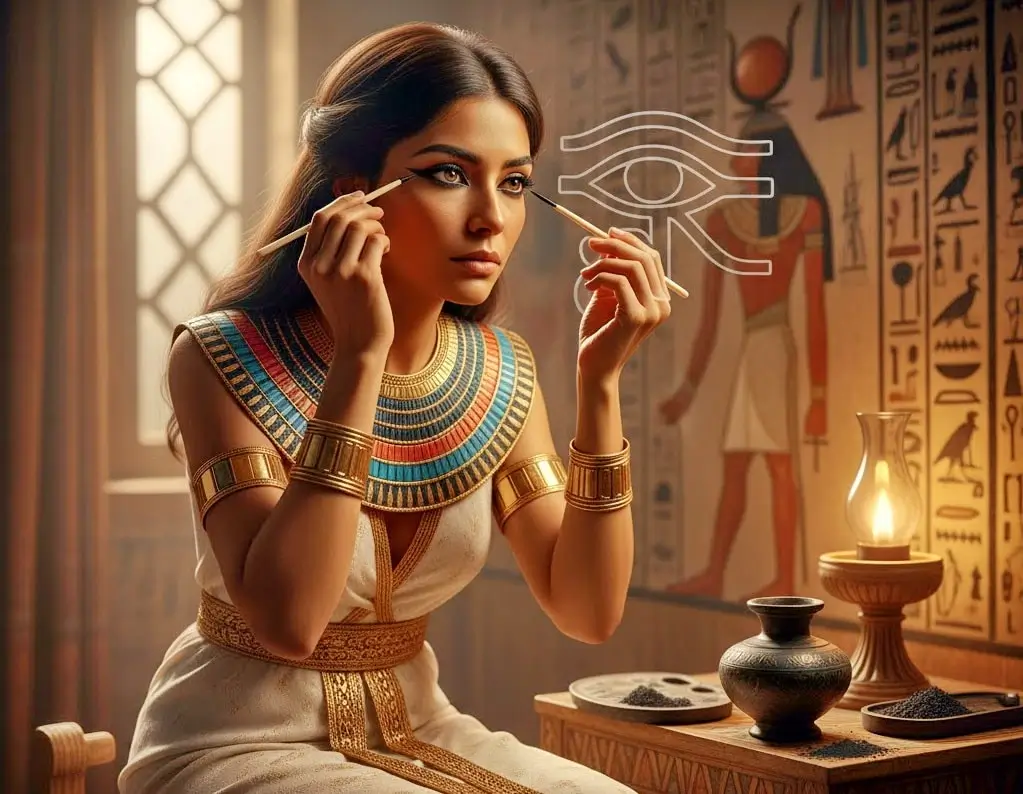
Kohl The Essential Eye of Horus

Remarkably, the power of the Eye of Horus did not fade with the fall of Egypt. Despite its ancient origins, this symbol continues to hold immense relevance in the modern world.

It has transcended its roots to become a global icon. Today, you will find it central to contemporary spirituality and esoteric practices, where it is still revered as a source of ancient wisdom. Mainstream culture has also embraced it; many individuals wear the Eye as jewelry or permanently etch it onto their skin as a tattoo. For them, it serves as a personal, timeless symbol of protection, a reminder of the deep connection between humanity and the mysteries of the universe.

All Classic Egypt in only 6 Days...
This Deluxe Tour package is ideal for any visitor looking to see the best of Egypt....

11 Wonderful Hours in Cairo

I had an 11 hour layover in Cairo, and it couldn’t have been better spent than with Manal from Egypt Fun Tours. I was able to adjust my tour once we left the airport and Manal had some really great suggestions when I told her what it was I wanted

More »

Amazing layover Tour

We had 12 hour layover in Cairo, and our guide Hani waited patiently for us when we had a few visa issues entering the country! We got on our tour, and had the best experience ever! We saw the pyramids, the sphinx, Islamic Cairo and rode through the city! We

More »
15-Day Historical Egypt Tour Package

all good!

we took pyramid and Cairo city tours and all went smoothly. The were very flexible to adapt to our requirements. Car, car driver and guide were great. very knowledgable and professional tour. Very recommendable

More »
Cairo layover tour - pyramids tour from the airport - Pyramids and GEM Tour from Cairo Airport

Layover tour of Cairo Pyramids

On a recent trip, I had 8 hours from the time I landed in Cairo to when my next flight was scheduled to leave. Luckily, I arrived in the morning and left in the afternoon, so, not being one to sit around an airport for 8 hours, I visited the

More »
hani ahmed 1

Hani Was our Awesome Tour Guide!

We had an 11-hour layover in Cairo on 12/15/2011. We wanted to go to see the Pyramids, Tahrir Square, and possibly the museum. We were so lucky to have a guide, Hani from Egypt Fun Tour, who made it possible to see all the above, plus the Bazaar, and time

More »
Isis with wings

Top-rated Tour Packages

Isis with wings