
The Baron Palace in Cairo: An Architectural Masterpiece of Heliopolis

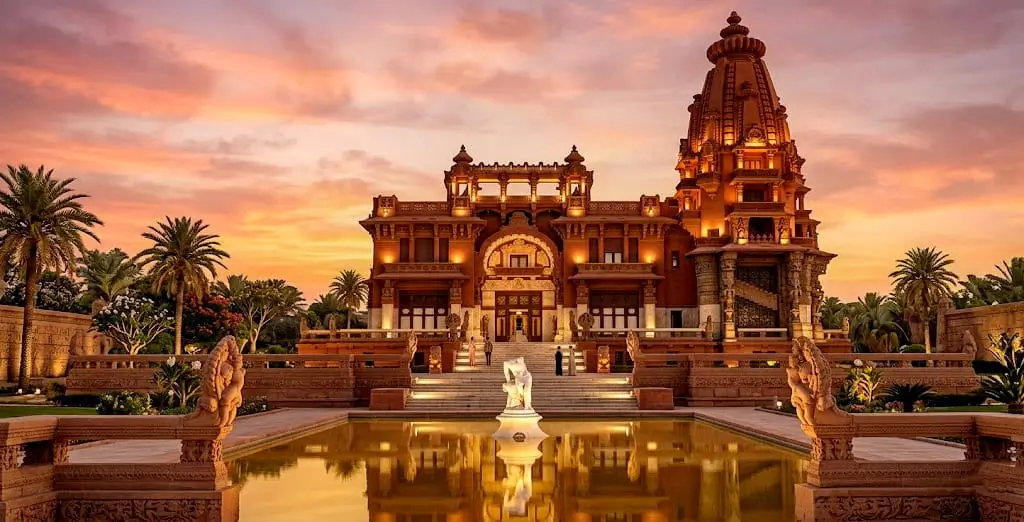
The Baron Palace in Cairo stands as a breathtaking architectural anomaly in the heart of Heliopolis, blending Hindu-Khmer temple aesthetics with early 20th-century European luxury. Built by Belgian industrialist Édouard Empain, this reinforced concrete masterpiece has transitioned from a glamorous private residence to a site of haunting local legends and, finally, to a meticulously restored museum. Today, it serves as an authoritative landmark of Egypt's cosmopolitan heritage, inviting visitors to explore its enigmatic history, revolutionary engineering, and the visionary "City of the Sun" that surrounds it.

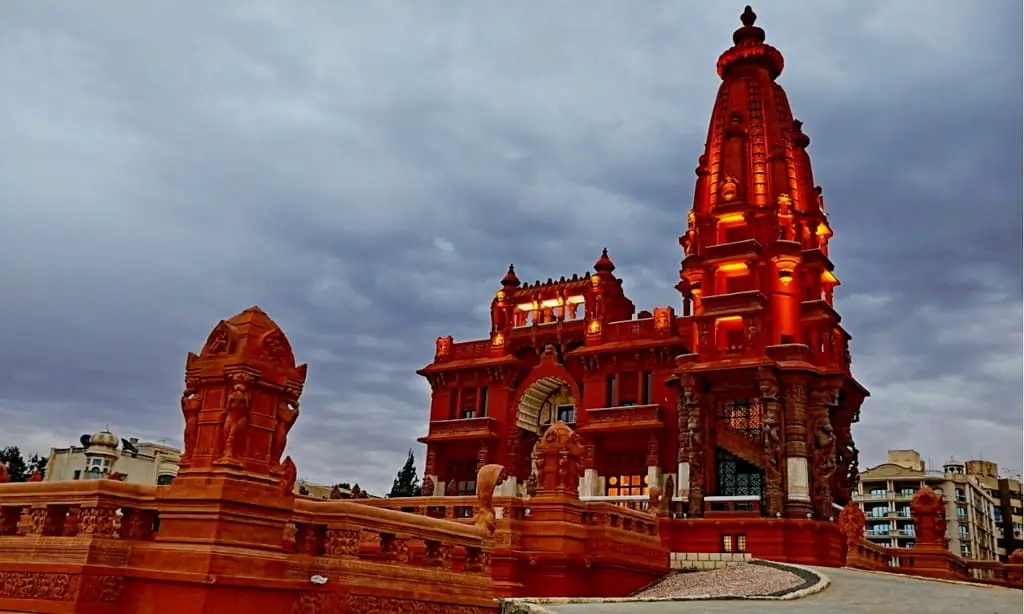
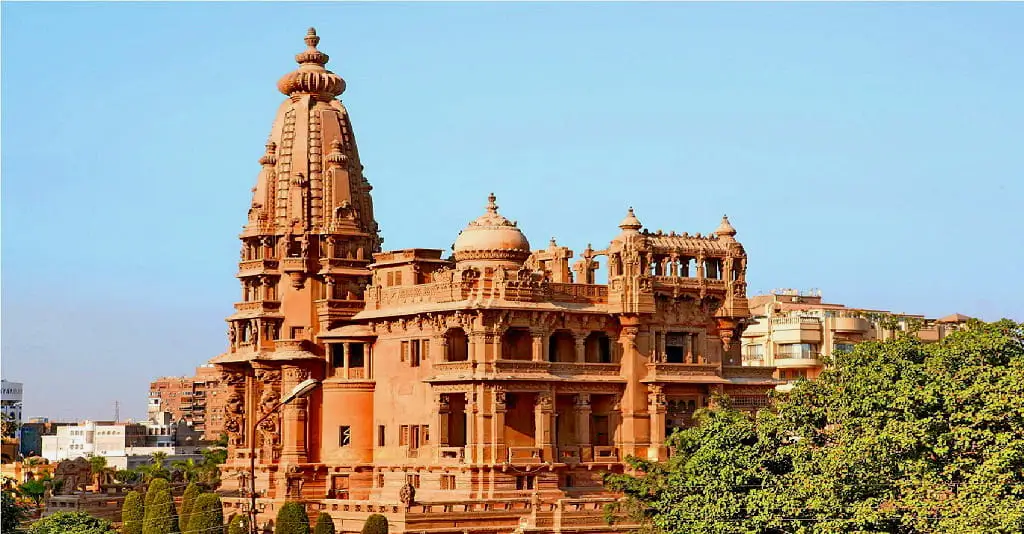
Rising like a terracotta mirage from the desert sands of Heliopolis, the Baron Palace in Cairo is one of the most enigmatic landmarks in Egypt. Built between 1907 and 1911, this architectural wonder breaks every rule of traditional Coptic or Islamic design. Instead, it transports visitors to the temples of Angkor Wat and the shrines of India. Consequently, the palace stands as a defiant symbol of the visionary spirit of its founder, the Belgian industrialist Édouard Empain.

For decades, the palace was a “grey ghost,” shrouded in neglect and local urban legends of spirits and rotating towers. However, following an extensive state-led restoration, the Baron Palace in Cairo has been reborn as a world-class museum. Today, it serves as the crowning jewel of the Heliopolis district. It invites travelers to step into a world where European concrete meets Eastern mythology. Whether you are drawn by its haunting history or its groundbreaking engineering, the palace remains an authoritative testament to Cairo’s cosmopolitan golden age.

The Historical Foundation of the Baron Palace in Cairo

The story of the Baron Palace in Cairo begins with a dream of a “City of the Sun.” Baron Édouard Empain arrived in Egypt at the end of the 19th century. He was already a titan of industry, responsible for the Paris Metro. Consequently, he sought to build a futuristic suburb in the desert north of Cairo. He called this dream Heliopolis.

To anchor his new city, the Baron commissioned a residence that would reflect his global travels. He hired French architect Alexandre Marcel, who was famous for his unusual designs. Interestingly, Marcel used a revolutionary technique: reinforced concrete. Therefore, the Baron Palace in Cairo was not only a stylistic marvel but also a triumph of modern engineering. It was one of the first major buildings in Egypt to use this durable material.

Why the Baron Palace in Cairo Features Hindu-Khmer Style

Many visitors wonder why a Belgian Baron chose an Indian-inspired theme for his home. The design of the Baron Palace in Cairo is heavily influenced by the Hindu temple of Orissa and the Khmer temple of Angkor Wat. Marcel incorporated these elements to show the Baron’s status as a world traveler.

As you walk around the exterior, you will see a dense tapestry of sculptures. For instance, the balconies are supported by Indian elephant statues. Furthermore, the walls feature intricate carvings of Buddhas, Krishnas, and mythical dragons. Because these details were so unique, the palace earned the nickname “Le Palais Hindou.” Even today, the Baron Palace in Cairo remains the only building of its kind in the entire world.
FUN

The Mystery of the Rotating Tower at the Baron Palace

The Mystery of the Rotating Tower at the Baron Palace

One of the most enduring legends of the Baron Palace involves its central tower. Local tradition long maintained that the entire building sat on a massive rotating base. According to these stories, the palace turned 360 degrees to follow the sun’s path throughout the day. Consequently, the Baron’s bedroom would always be bathed in natural light.

However, modern architects have clarified this myth during the recent restoration of the Baron Palace. While the entire building does not rotate, the circular tower offers panoramic views of the desert. The Baron could climb to the top and overlook his entire “City of the Sun.” Therefore, the legend of the rotating tower likely stems from the building’s innovative design and the Baron’s obsession with sunlight. Even without a mechanical motor, the Baron Palace in Cairo remains a triumph of light and shadow.

Inside the Walls of the Baron Palace in Cairo: A Global Interior

Inside the Walls of the Baron Palace in Cairo

Stepping inside the Palace is like entering a time capsule of early 20th-century luxury. The interior design contrasts sharply with the Hindu-Khmer exterior. While the outside looks like an ancient temple, the inside reflects the finest European tastes. For instance, the floors are covered in Italian marble and rare Belgian parquet.

Furthermore, the palace featured amenities that were revolutionary for the time. The Baron Palace was one of the first private residences in Egypt to have an electric elevator. Additionally, it boasted a sophisticated service tunnel system. This allowed servants to move between the kitchens and the dining room without being seen by guests. Because of these features, the palace was considered the most technologically advanced home in North Africa.

FUN

The Artistic Details within the Baron Palace

The Artistic Details within the Baron Palace

The walls of the Palace are adorned with intricate plasterwork and murals. Many of these decorations depict European landscapes, contrasting with the Indian statues outside. For example, the “Great Hall” features high ceilings designed to keep the air cool during the hot Egyptian summers.

Moreover, the windows of the Palace are made of expensive tinted glass. This glass was imported specifically to protect the expensive furniture from the harsh UV rays of the Sahara. Consequently, every room felt like a private sanctuary. Interestingly, the Baron also included a “smoking room” decorated in a Moorish style. This blend of cultures—Hindu, Khmer, European, and Islamic—makes the Baron Palace an authoritative example of “Eclectic Architecture.”

The Underground Tunnels of the Baron Palace in Cairo

No discussion of the Baron Palace is complete without mentioning its secret tunnels. Local historians confirm that a private tunnel once connected the palace to the nearby Basilica of the Virgin Mary. The Baron built the Basilica as his final resting place.

Consequently, he could walk from his home to the church in total privacy. This tunnel added to the mysterious reputation of the Baron Palace. During the years of neglect, many believed these tunnels were haunted. However, today they are recognized as a clever architectural solution for a man who valued his solitude. By exploring these hidden paths, you gain a deeper understanding of the Baron’s complex personality.

The Dark Decades: Legends and Hauntings of the Baron Palace

The Dark Decades Legends and Hauntings of the Baron Palace

For nearly half a century, the Palace sat in a state of eerie abandonment. Following the death of Baron Empain in 1929 and the subsequent departure of his heirs, the mansion fell into disrepair. Consequently, the desert wind and gathering dust transformed the terracotta masterpiece into a “house of ghosts.” Residents began to spread chilling tales about the flickering lights in the windows of the Baron Palace in Cairo.

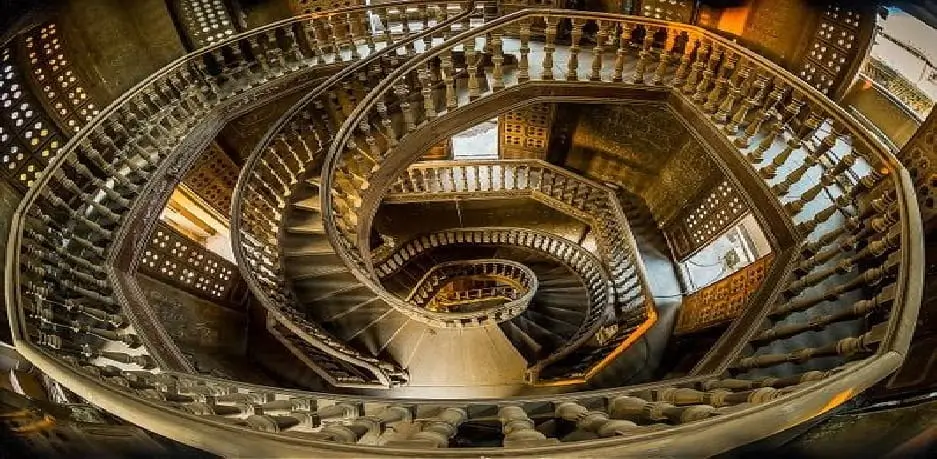
The most famous legend involves the Baron’s sister, Baroness Helena. According to local lore, she fell to her death from the palace’s spiral staircase. Therefore, many believed her spirit remained trapped within the walls. During the 1990s, these rumors reached a fever pitch. Specifically, a group of youths was arrested for trespassing, leading to sensationalist headlines about “Satanic rituals” inside the Palace. Although these stories were largely exaggerated, they added a layer of dark mystique to the building’s history. Because of this reputation, the palace became the most famous “haunted house” in the Middle East.

Giza Zoo

The Giza Zoo: History and Collection Khedive Ismail constructed the Giza Zoo, opening it on...

Related post
FUN

The 2026 Restoration: Rebirth of the Baron Palace

The 2026 Restoration Rebirth of the Baron Palace

Recognizing the architectural value of the site, the Egyptian government launched a massive restoration project. This initiative aimed to strip away decades of soot and pollution from the Palace. Restorers used specialized chemical washes to reveal the original “burnt sienna” color of the concrete. Consequently, the palace now glows with the same warmth it possessed in 1911.

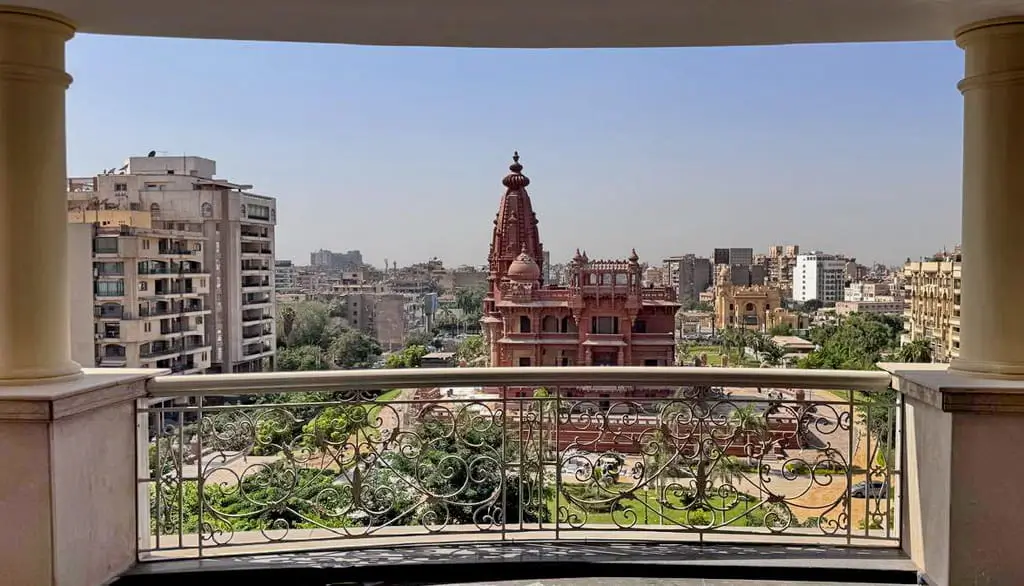
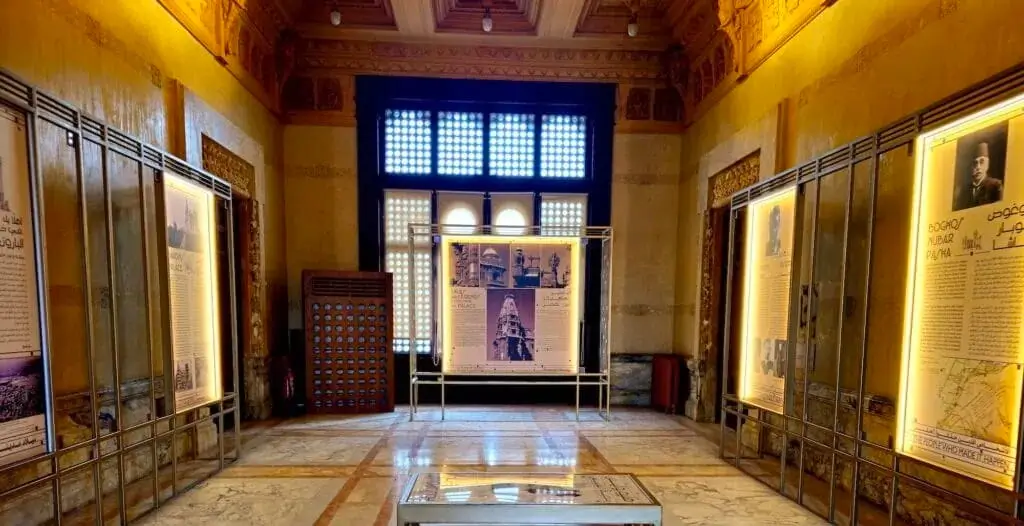
Furthermore, the restoration of the Palace was not just cosmetic. Engineers reinforced the foundation and restored the delicate Hindu-Khmer statues. Interestingly, they also converted the basement into a modern museum. This museum chronicles the history of the Heliopolis district. Therefore, a visit to the Baron Palace in Cairo today provides a comprehensive look at the birth of modern Cairo. By visiting the rooftop, tourists can now enjoy the same views that the Baron once cherished.

Heliopolis: The Vision Surrounding the Palace

To truly understand the palace, one must look at the city around it. Baron Empain did not just build a house; he built an entire suburb. The Palace was designed to be the crown jewel of Heliopolis. For instance, the Baron ensured the district had its own tram line and luxury hotels. Consequently, Heliopolis became the most sought-after address in Egypt.

The architecture of the surrounding buildings mirrors the “Neo-Moorish” style found in the palace’s smoking room. Therefore, the Palace acts as the anchor for an entire architectural movement. Even today, the “Heliopolis Style” remains a point of pride for Coptic and Muslim residents alike. Because the Baron created a city of harmony, his palace remains a symbol of Egypt’s cosmopolitan past. In short, exploring the streets around the Baron Palace is as important as exploring the mansion itself.

Visitor Guide: Exploring the Baron Palace in Cairo Today

Today, the Baron Palace in Cairo is one of the most organized tourist sites in the capital. To help you plan your visit, here are the essential details:

  • Tickets: You can purchase tickets at the gate or through official travel portals.
  • Photography: Personal cameras are allowed, but professional equipment may require a permit.
  • The Rooftop: Do not miss the chance to go to the roof of the Baron Palace in Cairo. It offers the best sunset views in Heliopolis.

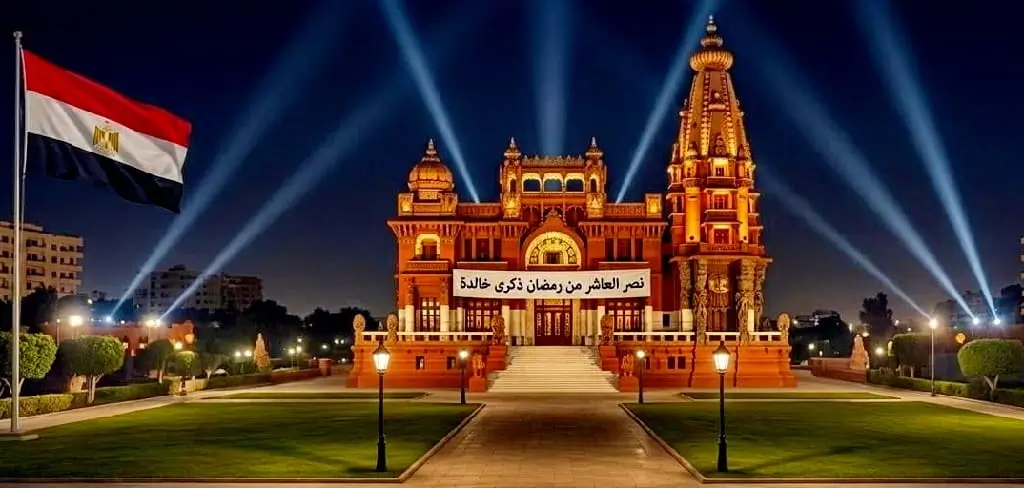
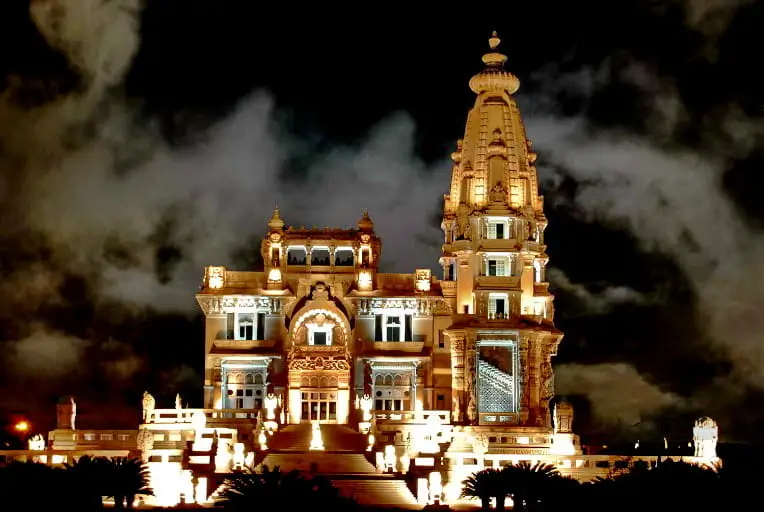
Moreover, the palace gardens have been replanted with unfamiliar flora. Consequently, the grounds feel like the private oasis the Baron originally intended. Because the site is now fully lit at night, the Baron Palace in Cairo serves as a glowing beacon for travelers entering the city from the airport.

Holy Family Church & Virgin Mary’s Tree in Matareya

The Holy Family Church in Matareya stands as a premier sanctuary on the biblical Holy...
Related post
FUN

The Engineering Marvel: Reinforced Concrete

The Engineering Marvel Reinforced Concrete

One of the most impressive technical feats of the Palace is its structural material. In 1907, most palaces in Egypt were built using traditional stone or brick. However, Baron Empain was a pioneer of the industrial age. Consequently, he chose to build his mansion entirely out of reinforced concrete.

This decision was revolutionary for the time. Therefore, the Palace became a testing ground for modern construction in the Middle East. Because concrete is highly durable, the intricate Hindu-Khmer carvings have survived over a century of extreme desert heat. Furthermore, the use of pre-cast concrete allowed the architect, Alexandre Marcel, to create repetitive, complex patterns. As a result, the Baron Palace in Cairo looks like a hand-carved stone temple, but it possesses the strength of an industrial fortress.

Interestingly, the restoration teams in 2026 noted how well the original “Hennebique” concrete system held up. This French engineering technique used steel bars to reinforce the liquid stone. Consequently, the Palace remains a primary case study for architecture students worldwide. By studying the palace, engineers learn how to preserve early 20th-century heritage in arid climates.

The Palace as a Cinematic Icon

The Palace as a Cinematic Icon

Because of its haunting and unusual appearance, the Palace has a long history in the film industry. During its “abandoned era,” the palace became the ultimate backdrop for Egyptian horror movies and thrillers. Filmmakers sought out the peeling paint and dusty corridors of the Palace to create a sense of mystery.

For instance, several famous Arabic music videos were filmed on the grand spiral staircase. These visual projects capitalized on the palace’s “gothic” reputation. Consequently, the Baron Palace in Cairo became a household name even for people who had never visited Heliopolis.

Moreover, the palace has inspired countless novels and ghost stories in contemporary Egyptian literature. Therefore, the Baron Palace in Cairo is more than just a building; it is a cultural protagonist. Today, the new museum on-site features a section dedicated to these cinematic appearances. By bridging the gap between architecture and art, the Palace continues to capture the imagination of every generation.

The Final Resting Place: Connecting the Palace to the Basilica

To conclude the story of the man behind the myth, one must look across the street from the Palace. Baron Empain loved his “City of the Sun” so much that he chose to stay there forever. He commissioned the Basilica of the Virgin Mary, a stunning Byzantine-style church, to serve as his mausoleum.

As mentioned earlier, a secret tunnel reportedly linked the Baron Palace in Cairo to the church’s crypt. Although the tunnel is not open to the public, the connection between the two buildings is undeniable. When the Baron died in Belgium in 1929, his body was transported back to Egypt. Consequently, he was buried beneath the altar of the Basilica, just steps away from his beloved home.

This final act of devotion highlights the Baron’s deep connection to the land. Therefore, when you visit the Palace, you are seeing the home of a man who truly considered himself a son of Heliopolis. By visiting both the palace and the Basilica, you complete the narrative of one of history’s most ambitious visionaries.

Memphis: History of Egypt’s First Capital (The City of White Walls)

Memphis was the first capital of Ancient Egypt and arguably the first imperial city in...
Related post
FUN

Did You Know? Fascinating Facts About the Palace

Did You Know Fascinating Facts About the Palace

To truly appreciate the genius of Baron Empain, consider these surprising details that often go unnoticed by the casual tourist.

  • The Hennebique System: The Baron Palace in Cairo was one of the first structures in the world to use the “Hennebique” reinforced concrete system on such a decorative scale.
  • The Tower Myth: While the tower did not mechanically rotate, its 360-degree windows were designed to capture every minute of the Egyptian sun.
  • The Secret Crypt: Baron Empain is buried in the Basilica of Our Lady of Heliopolis, which sits directly across from the Baron Palace in Cairo.
  • The Hindu-Khmer Mystery: Many of the statues are modeled after the Bayon Temple in Cambodia, making it the only “Khmer” palace in Africa.
  • The “Satanist” Scandal: In 1997, the palace was at the center of a massive police investigation after rumors of underground “heavy metal” parties led to claims of occult rituals.
  • The Tinted Glass: The original windows of the Baron Palace in Cairo used expensive Belgian tinted glass to filter the desert heat while maintaining a soft, golden interior glow.
  • Napoleon’s Influence: The architect, Alexandre Marcel, also designed the “Pagoda” in the Parc de Versailles, showing a lifelong obsession with Eastern styles.
  • The Private Tram: The Baron built a private tram line that ran directly past the Baron Palace in Cairo, connecting his home to the center of the city.
  • The Gold Leaf: During its 1911 debut, parts of the exterior carvings were rumored to be covered in real gold leaf, which has since worn away.
  • The Status: Today, the Baron Palace in Cairo is a fully digitized museum, featuring interactive touchscreens that tell the story of the Heliopolis suburb.

Baron Palace vs. Heliopolis Architecture

To understand the context of the “City of the Sun,” it is helpful to compare the Baron Palace in Cairo with other iconic structures built by the same company (The Heliopolis Oasis Company).

FeatureThe Baron PalaceHeliopolis Palace Hotel (Al-Ittihadiya)
Architectural StyleHindu-Khmer / EclecticNeo-Moorish / Islamic
Primary MaterialReinforced ConcreteStone and Marble
Original PurposePrivate ResidenceLuxury Hotel (Now Presidential Palace)
Key Attractionunusual Statues & Spiral TowerGrand Domes & Horseshoe Arches
Public AccessOpen as a Museum (2026)Restricted (Government Use)
ConnectionThe Baron’s Personal HomeThe Baron’s Commercial Masterpiece

The Final Verdict on the Baron Palace in Cairo

The Baron Palace in Cairo is not just a building. Instead, it is a manifestation of an industrialist’s dream and an architect’s fantasy. It survived decades of neglect, ghosts, and desert storms to emerge as a crown jewel of Egyptian tourism.

By visiting the Baron Palace in Cairo, you are not just seeing a museum. You are stepping into the mind of Édouard Empain—a man who wanted to blend the East and the West into a single, concrete masterpiece. Consequently, the palace stands as an authoritative reminder of Cairo’s ability to reinvent itself while honoring its layered past. Whether you come for the history, the architecture, or the legends, the palace will undoubtedly leave you breathless.

Live an unforgettable Honeymoon holiday in the land of Pharaohs....
Live between the artifacts of the ancient Egypt and discover wonders....

Cairo Day Trip

Great trip organised. I had a 12-hour layover in Cairo and had a great time with Sherif, who answered every question I had on ancient Egypt. Highly recommend.

More »

Tour of Cairo

Despite a late start due to car trouble, Mohamed more than made up for it with his incredible knowledge and dedication. His explanations were detailed and thoughtful, and he went above and beyond to make sure we had a great experience. A memorable and informative tour, thanks to Mohamed’s hard

More »
Ancient Egyptian Sarcophagus - Egypt Fun Tours

Unforgettable experience with Fun Tours – Highly recommended!

Hello everyone! We would like to share our extremely positive experience with Fun Tours. Our tour was a complete success thanks to our guide, Osama, and our driver Hassan. Osama proved to be an enthusiastic and knowledgeable guide who answered all of our questions and catered to our individual wishes

More »

Day trip to Wadi el Hitan and Wadi el Rayan

We went on a full-day trip to Wadi el Hitan and Wadi el Rayan with Mohamed (Hamada). Mohamed was a wonderful guide, always making sure we had plenty of water and enough to eat, and providing us with information about the area and Egypt more generally. He also gave us

More »

Day Trip to Alexandria

An enjoyable drive from Cairo to Alexandria. It was an enriching trip. I learnt so much history about the ancient civilisation. The tour guide explained the history of each site we visited. There is so much to see. I would definitely highly recommend visiting Alexandria. It’s rich in history. The

More »
Isis with wings

Top-rated Tour Packages

Isis with wings