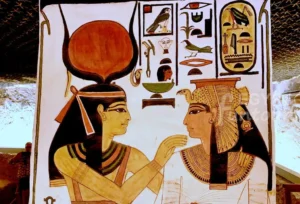
Guide to the Tomb of Ramesses VI (KV9): A Journey Through the Heavens

The Tomb of Ramesses VI (KV9) serves as a vibrant subterranean library and remains one of the most visually stunning sites in the Valley of the Kings. Renowned for its impeccable color preservation, this "double tomb" offers an exhaustive journey through ancient theology, showcasing nearly every major funerary text. The undeniable highlight is the burial chamber's vaulted ceiling, where the goddess Nut stretches across the stars in a breathtaking depiction of cosmic rebirth. Furthermore, the historical irony of its construction—which accidentally hid Tutankhamun’s tomb for millennia—makes KV9 an essential highlight for any luxury Luxor tour.

While the fame of Tutankhamun draws the crowds, savvy travelers and art historians head to a different destination in the Valley of the Kings: The Tomb of Ramesses VI (KV9). Often called the “Sistine Chapel of Ancient Egypt,” this subterranean masterpiece offers the most vibrant and complete collection of funerary texts found anywhere in the Theban Necropolis.

KV9 represents a unique moment in history—a “double tomb” originally begun by Ramesses V and later expanded by his successor, Ramesses VI. The result is a sprawling, colorful corridor that leads you deep into the ancient Egyptian mind. Unlike the subtle, carved reliefs of earlier dynasties, the walls here explode with bright pigments that look as though the artists laid them down yesterday rather than 3,000 years ago.

At Egypt Fun Tours, we consider KV9 an essential stop for anyone who appreciates the intellectual and visual depth of the 20th Dynasty. In this comprehensive 2026 guide, you will discover why this tomb served as a protective shield for Tutankhamun’s treasures and why its magnificent astronomical ceiling remains the most photographed site in the valley.

FUN

Why the Tomb of Ramesses VI (KV9) is a Visual Masterpiece

Why the Tomb of Ramesses VI (KV9) is a Visual Masterpiece

Before you enter the limestone hills of the West Bank, understand the specific features that make the Tomb of Ramesses VI a mandatory addition to your itinerary:

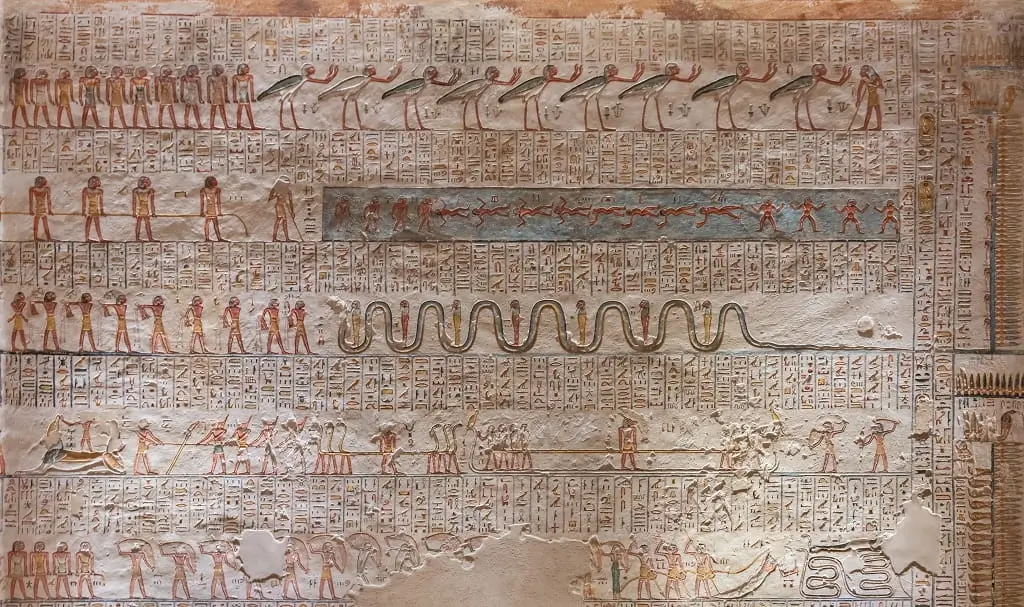
  • The “Library” of the Dead: This tomb contains a nearly complete “encyclopedia” of the afterlife. The walls display the Book of Gates, the Book of Caverns, and the Book of the Heavens in stunning detail.

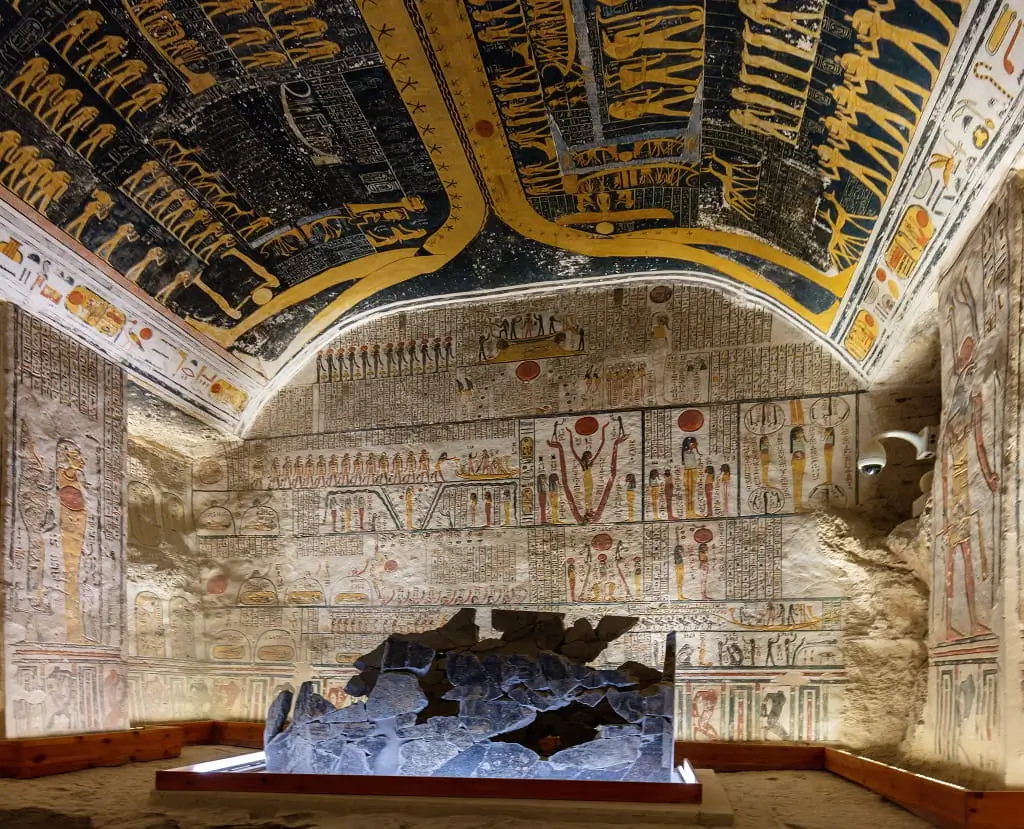
  • The Goddess Nut: The burial chamber features the world-famous dual depiction of the sky goddess, Nut. She stretches across the ceiling, swallowing the sun at night and giving birth to it at dawn—a breathtaking display of ancient cosmological belief.
  • Vivid Color Preservation: Because the tomb stayed sealed and protected from the elements for millennia, the yellows, blues, and reds remain incredibly intense, offering a perfect “High-Definition” look at ancient craftsmanship.
  • A Historical Shield: In a strange twist of fate, the limestone chips excavated during the construction of KV9 buried the nearby entrance to Tutankhamun’s tomb. This accidental camouflage protected the “Boy King” from looters for over thirty centuries.

Tomb of Ramesses VI (KV9): What This Guide Covers

Tomb of Ramesses VI (KV9) What This Guide Covers

This pillar content provides everything you need to navigate one of the most intellectually complex tombs in Egypt:

  1. The Two Kings: The story of how Ramesses V and VI shared this eternal home.
  2. The Astronomical Ceiling: A deep dive into the Book of Day and the Book of Night.
  3. The “Coptic” Graffiti: Discover the ancient Greek and Roman “tourist” marks that prove this tomb has fascinated visitors for 2,000 years.
  4. 2026 Visitor Logistics: Current ticket prices, accessibility tips, and the best time to visit for perfect photography.

Witness the Rebirth of the Sun

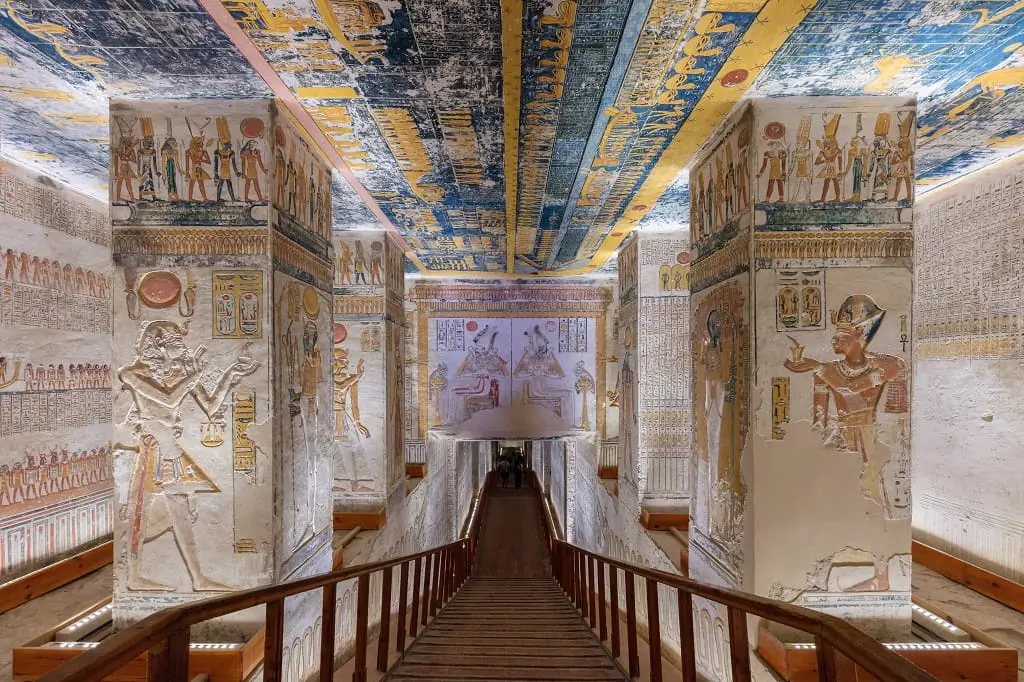
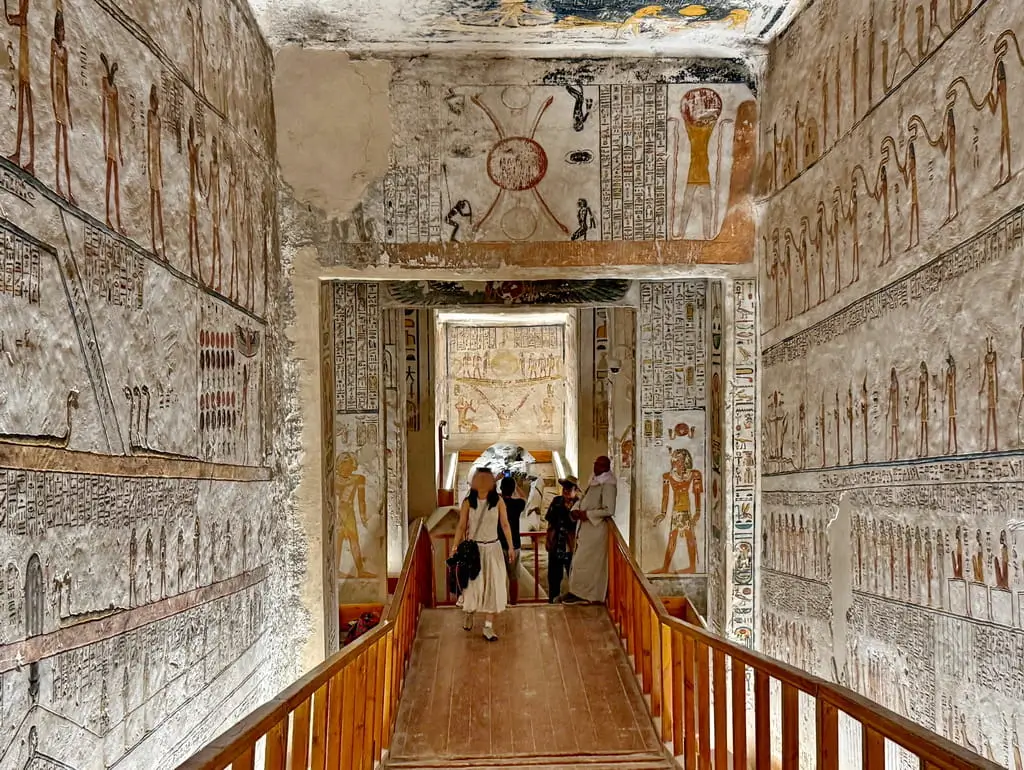
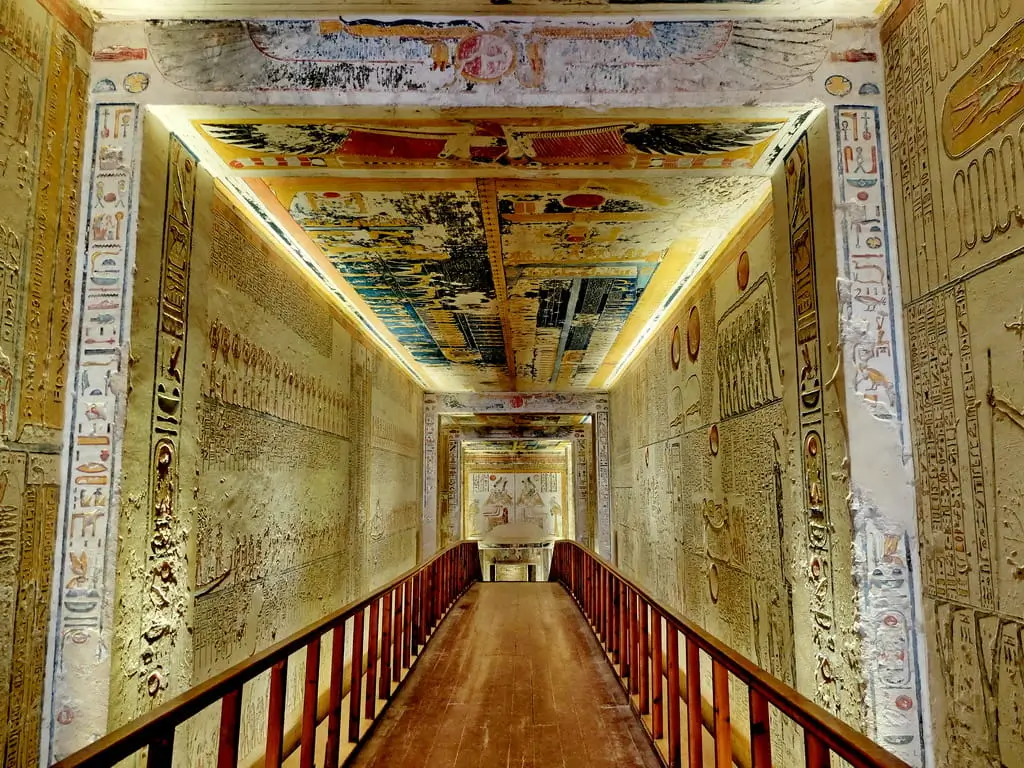
Walking through the corridors of KV9 is like walking through a giant, illustrated scroll. As you move toward the burial chamber, the narratives on the walls guide you through the darkness toward the eventual triumph of the light.

FUN

The History of the Double Tomb and Its Role in Saving Tutankhamun

The History of the Double Tomb and Its Role in Saving Tutankhamun

While most royal structures in the Valley of the Kings belong to a single ruler, KV9 stands out as a rare “double tomb.” To understand its layout, one must first look at the transition of power between two pharaohs of the 20th Dynasty.

A Shared Eternal Home: Ramesses V and VI

Originally, Pharaoh Ramesses V commissioned the excavation of this site. However, he died before the work reached completion. Consequently, his successor, Ramesses VI, did not start a new project from scratch. Instead, he chose to enlarge and finish the existing corridors to serve as his own final resting place.

Furthermore, this decision was likely driven by the economic challenges of the 20th Dynasty. By expanding an existing site, Ramesses VI saved time and resources while still creating one of the most intellectually ambitious tombs in history. Interestingly, archaeologists found that the mummy of Ramesses V was eventually moved, leaving the focus of the decoration primarily on the triumphs of Ramesses VI.

The Shield of Tutankhamun: A Twist of Fate

Beyond its own beauty, the construction of KV9 played a pivotal role in the discovery of the century. During the excavation process, ancient workers dumped tons of limestone chips and debris over the side of the hill. As a result, this mountain of rubble completely buried the entrance to the much smaller, older tomb of Tutankhamun (KV62) located just below it.

Because of this accidental camouflage, looters missed the Boy King’s tomb for over 3,000 years. Consequently, when Howard Carter finally discovered KV62 in 1922, it was only because he cleared away the foundations of the ancient workmen’s huts that sat directly atop the debris from Ramesses VI’s construction. In essence, the grandeur of KV9 acted as a fortress that kept the treasures of Tutankhamun safe for the modern world.

The Catacombs of Kom Esh-Shokafa: Roman-Egyptian Underworld

Descend into one of the "Seven Wonders of the Middle Ages" at the Catacombs of...
Related post
FUN

The Layout of the Tomb of Ramesses VI (KV9)
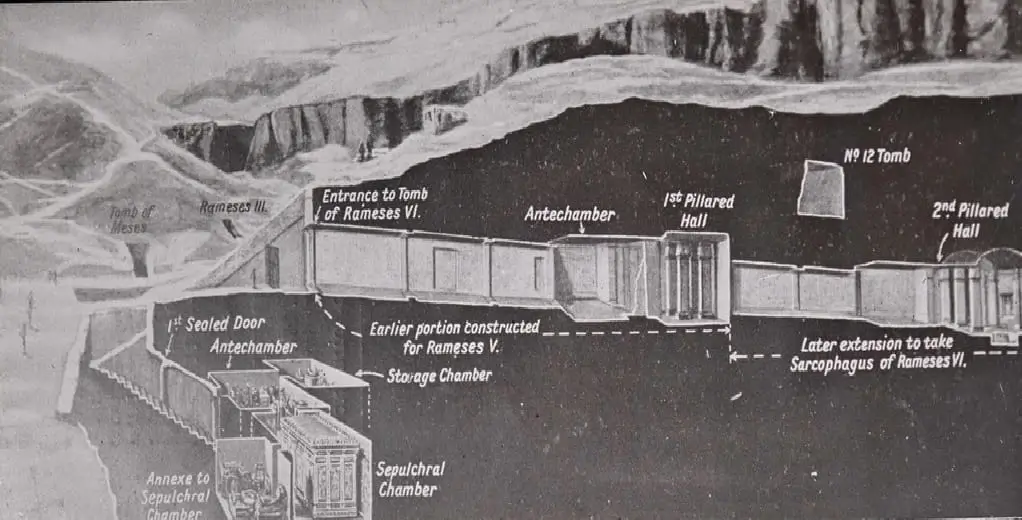
The Layout of the Tomb of Ramesses VI (KV9)

In addition to its historical significance, the architecture of KV9 reflects a shift in religious thought. Earlier tombs, such as that of Seti I, featured sharp turns and hidden shafts to confuse intruders. In contrast, the Tomb of Ramesses VI follows a “longitudinal axis”—a perfectly straight, wide corridor that plunges nearly 100 meters into the bedrock.

Moreover, this wide-open design served a specific purpose. It provided the artists with massive, flat “canvases” to display an entire library of religious texts. Consequently, as you walk down the ramp, you aren’t just moving through a hallway; you are physically traveling through the pages of ancient Egyptian theology.

Ancient “Tourists” and the History of Travel
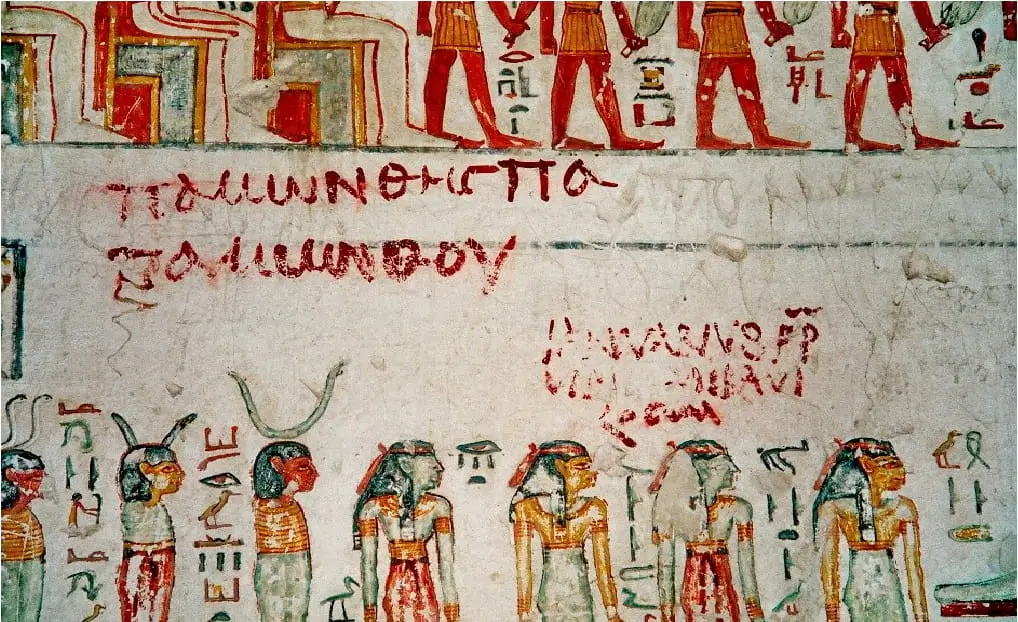
Ancient Tourists and the History of Travel

Notably, KV9 has been open and famous since antiquity. Unlike many tombs that remained sealed until the 19th century, this tomb was a “must-see” destination for Greek and Roman travelers.

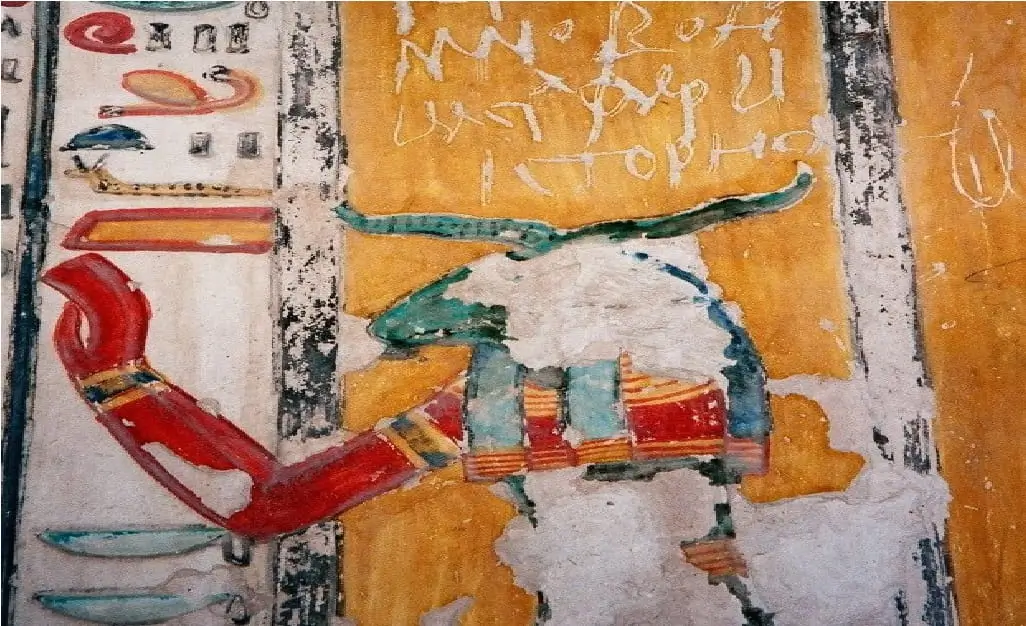
For example, there are over 1,000 instances of ancient graffiti etched into the walls, dating back as far as the Ptolemaic period. While we usually discourage such marks today, these ancient inscriptions provide fascinating evidence that visitors have been traveling with “tour guides” to see these paintings for over 2,000 years. Therefore, when you visit Egypt Fun Tours, you are participating in a tradition that spans the history of civilization itself.

The Masterpiece of the Heavens: Deciphering the Ceiling
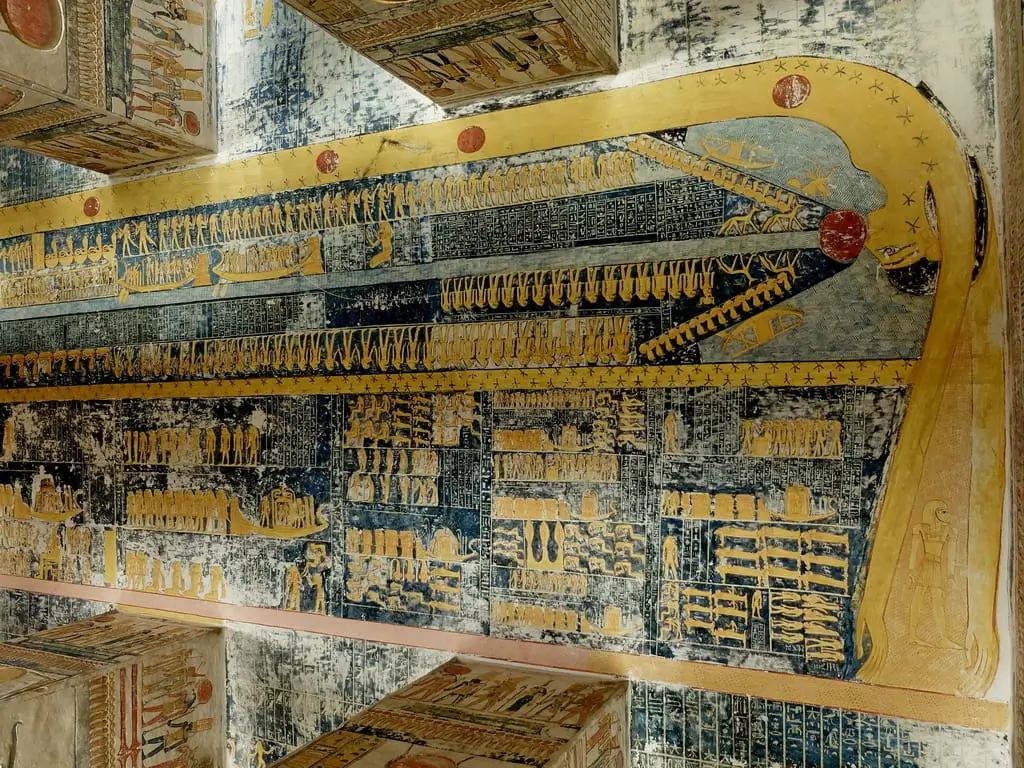
The Masterpiece of the Heavens Deciphering the Ceiling

While the corridors of KV9 provide a stunning introduction, the true climax of the experience awaits you in the burial chamber. Upon entering, your eyes will immediately draw upward to the vaulted ceiling. Here, you encounter the “Book of Day” and the “Book of Night”—a complex, dual narrative that explains the ancient Egyptian conception of time and the universe.

The Goddess Nut: The Sky as a Living Being

At the center of this display, the sky goddess Nut stretches across the ceiling in two mirrored poses. In the first half, representing the night, she swallows the sun as it sets in the west. Subsequently, the sun travels through her body—the starry vault of heaven—during the twelve hours of darkness. Finally, in the second half of the painting, she gives birth to the sun once again at dawn, symbolizing the eternal cycle of rebirth.

Notably, this is not merely a pretty picture; it is a functioning map of the cosmos. In addition to the central figure of Nut, the ceiling is crowded with stars, constellations, and the “Barque of Ra,” the celestial boat that carries the Sun God on his journey.
Valley of the Kings: Descend into the Pharaohs’ Golden Afterlife

Descend into the world's most famous burial ground, the Valley of the Kings. This is...
Related post
FUN

A Library of the Afterlife: The Walls of the Burial Chamber

A Library of the Afterlife The Walls of the Burial Chamber

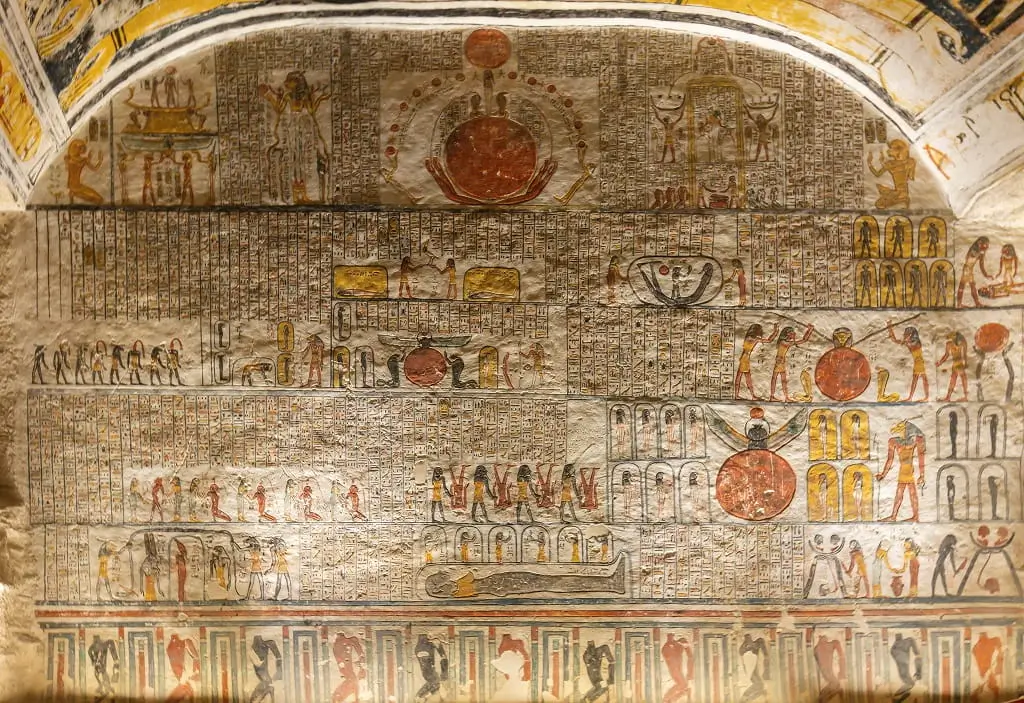
Beyond the ceiling, the walls of the burial chamber showcase a rare and complete version of the Book of the Earth. In contrast to the Amduat found in earlier tombs, which focuses on a river journey, the Book of the Earth describes the sun rising from the depths of the earth itself.

  • The Sun Disc: Look for the massive, red sun discs being lifted by the arms of the earth. This imagery represents the power of creation emerging from the darkness.
  • The Bound Enemies: In addition to the celestial scenes, you will notice depictions of the “enemies of Ra” being defeated. Therefore, these scenes served to protect the king’s spirit from any malevolent forces that might block his way to eternity.

Practical Tips for Your Visit

Practical Tips for Your Visit

To ensure you get the most out of your visit to the Tomb of Ramesses VI with Egypt Fun Tours, keep the following logistics in mind:

  • The Best Light: Because this tomb is exceptionally well-lit with modern LED systems, it is the best place in the valley for photography. However, remember that flash is strictly prohibited to prevent the 3,000-year-old pigments from fading.
  • Crowd Management: Since KV9 is a popular “Special Entry” tomb, it can get busy in the mid-morning. Consequently, we recommend visiting either immediately after the valley opens at 6:00 AM or in the late afternoon before closing.
  • Physical Accessibility: Fortunately, the ramp in KV9 is relatively gentle compared to the steep stairs of the Tomb of Seti I. Thus, it is a more accessible option for travelers who want a “Deep Tomb” experience without an intense climb.

Why Explore the Tomb of Ramesses VI (KV9) with Egypt Fun Tours?

Why Explore the Tomb of Ramesses VI (KV9) with Egypt Fun Tours

Ultimately, the beauty of the Tomb of Ramesses VI lies in its details. Without an expert guide, the walls can look like a beautiful but chaotic series of “ancient comics.” However, our Egyptologists specialize in:

  1. Translating the Narratives: We explain the specific stories being told in the Book of Caverns and the Book of Gates.
  2. Highlighting the Small Details: For instance, we will point out the subtle differences between the depictions of Ramesses V and Ramesses VI.
  3. Perfect Photography: We know exactly where to stand to capture the perfect shot of the Goddess Nut without the glare of the lights.

Are you ready to witness the most vibrant colors of the ancient world? Contact Egypt Fun Tours today to include KV9 in your private Luxor tour.

The Tomb of Ankhmahor: The “Physician’s Tomb” of Saqqara

The Tomb of Ankhmahor in Saqqara is a 6th Dynasty masterpiece famously known as the...
Related post
FUN

FAQs: The Tomb of Ramesses VI (KV9)

FAQs The Tomb of Ramesses VI (KV9)

Is the Tomb of Ramesses VI (KV9) worth the extra ticket?

Absolutely. Many travelers consider the Tomb of Ramesses VI (KV9) the most beautiful site in the Valley of the Kings. While the standard entry ticket covers three tombs, the “special entry” for KV9 opens the door to the famous astronomical ceiling and the most complete collection of funerary texts in Egypt. This tomb offers a premier experience for anyone who loves ancient mythology or photography.

How much does the ticket for the Tomb of Ramesses VI cost in 2026?

As of early 2026, the additional ticket for the Tomb of Ramesses VI (KV9) costs approximately 180 to 200 EGP. Please remember that the ticket office at the Valley of the Kings now operates a cashless system. Therefore, you must present a credit or debit card for payment. Additionally, you still require a general Valley of the Kings entrance ticket to access the main site.

What is the most famous feature of KV9?

The vaulted ceiling of the burial chamber stands as the most iconic feature of the Tomb of Ramesses VI (KV9). It depicts the Goddess Nut in the Book of Day and the Book of Night. This breathtaking artwork shows the goddess swallowing the sun at night and giving birth to it at dawn, illustrating the eternal cycle of the afterlife.

How much time should I spend inside the Tomb of Ramesses VI?

Because the tomb stretches nearly 100 meters and features dense, wall-to-wall illustrations, we recommend spending at least 20 to 30 minutes inside. This timeframe allows you to appreciate the Book of Gates and the Book of Caverns properly as you descend toward the main burial chamber.

Did the construction of KV9 really save Tutankhamun’s tomb?

Yes, remarkably so. When workers excavated the Tomb of Ramesses VI (KV9), they dumped limestone debris directly over the entrance of the much older tomb of Tutankhamun (KV62). This accidental camouflage hid the Boy King’s tomb from grave robbers for over 3,000 years until Howard Carter discovered it in 1922.

Does the Ministry allow photography inside the Tomb of Ramesses VI?

Fortunately, yes. Currently, the Ministry of Tourism permits smartphone photography (without flash) inside the Tomb of Ramesses VI (KV9). Because this tomb features professional LED lighting, photographers often rank it as the best location in Luxor for capturing high-quality images of ancient Egyptian art.

An adventure designed for family is an absolute gift worthy of remembering....
Enjoy meditation in the legendary cities of Egypt....
God_Anubis_Icon
3-day desert safari trip from Cairo—Egypt Fun Tours

Book with Egypt Fun Tours!!

In April 2011, my husband and I, after great debate, took a trip to Egypt. Because of the political situation, we decided to book a tour for our time in Cairo and Luxor. We are very happy that we did, since these are two cities that should not be missed.

More »
Cairo belly dance show - Egypt Fun Tours

The BEST tour – a dream come true

I’ve been dreaming of going to Egypt since I was 7 years old. At 37, I finally made it. Even with the warnings that it’s not safe for Americans. Thankfully, Egypt Fun Tours quickly put any worry aside. Hamada, the owner, was recommended by a friend. He was our personal

More »

Valley of the Kings, Hepchepsut

I never had a more positive experience and educational time than this tours. Learning about a variety of kings and queens was amazing! The tour guide was super nice and helped me and my friend every step of the way! Including bargaining for a few souvenirs! I will never forget

More »

Tour of Cairo

Despite a late start due to car trouble, Mohamed more than made up for it with his incredible knowledge and dedication. His explanations were detailed and thoughtful, and he went above and beyond to make sure we had a great experience. A memorable and informative tour, thanks to Mohamed’s hard

More »

Great shore excursion of Cairo & Giza

We are glad that we arranged our private shore excursion with Egypt Fun tours in last week of October 2012. Booking process was very easy with Hamada and she took care of all our questions promptly just via E-mail. Our group was little worried about safety in Egypt especially because

More »
God_Anubis_Icon

Top-rated Tour Packages

God_Anubis_Icon