The Tomb of Nakht (TT52): A Masterpiece of Music and Celebration

The Tomb of Nakht (TT52) is a "miniature masterpiece" that captures the elegance and joy of the 18th Dynasty. Although the burial chamber is small, its walls burst with iconic scenes of music, dancing, and high-society banquets. Nakht, the Astronomer of Amun, ensured his spirit would live forever surrounded by the finest things in life—from the rhythmic strumming of the blind harper to the vibrant purple grapes of the harvest. Today, the tomb remains one of Luxor's most famous sites because its art feels deeply human, offering a rare and colorful window into the private world of the ancient Egyptian elite.

The Tomb of Nakht (TT52) proves that greatness does not require massive scale. Located in the necropolis of Sheikh Abd el-Qurna, this small burial chamber contains some of the most iconic images in the history of art. Nakht served as an “Astronomer of Amun” at Karnak Temple during the 18th Dynasty. Because of his prestigious role, he commissioned master artists to decorate his final resting place with incredible detail.

Walking into the Tomb of Nakht feels like entering a vibrant celebration that never ended. While other tombs focus on somber religious rituals, TT52 bursts with life, rhythm, and sensory delight. It houses the world-famous scenes of the blind harper and the trio of female musicians. These paintings offer a rare look at the elegance of the Egyptian elite at the height of their empire.

This guide explores the artistic treasures within the Tomb of Nakht (TT52). You will discover why this “miniature masterpiece” remains a favorite for historians and travelers alike. From the flowing wine at ancient banquets to the precise movements of the harvest, Nakht’s tomb ensures his spirit enjoys the finest pleasures of Egypt forever.
FUN

Who Was Nakht? The Astronomer of Amun

Who Was Nakht The Astronomer of Amun

Nakht lived during the mid-18th Dynasty, serving under the reign of Pharaoh Thutmose IV. Although his tomb is modest in size, his title reveals a man of significant intellectual and religious importance. Nakht held the position of “Astronomer of Amun” at the Great Temple of Karnak.

Watching the Heavens for the Gods

As an astronomer, Nakht did not just look at stars for curiosity. His role was deeply practical and sacred. He observed the celestial bodies to calculate the exact timing of religious festivals and the arrival of the Nile flood. In Ancient Egypt, the calendar moved according to the stars. Therefore, Nakht acted as a bridge between the divine cosmos and the earthly administration of the temple.

A Member of the Elite

While Nakht was not a vizier or a general, he belonged to the high-ranking “professional class.” His wife, Tawy, also held a respected position as a “Chantress of Amun.” Together, they represented the cultural elite of Thebes.

Because they served the god Amun—the most powerful deity of the time—they had access to the finest artisans in the city. This explains why the artwork in TT52 is so superior. The painters used delicate brushwork and a rich color palette that rivaled the royal tombs. By building this tomb, Nakht ensured that his status as a learned man of the temple would continue into the afterlife.

The Purpose of the Tomb

For Nakht, the tomb was more than a burial site. It served as a “House of Eternity.” He designed the space to provide his spirit with everything it needed: food, music, and a connection to his family. When you view the scenes of Nakht and Tawy receiving offerings, you see a couple who expected to spend forever surrounded by the luxury they enjoyed in life.

FUN

The Great Banquet: A Vision of Luxury

The Great Banquet A Vision of Luxury

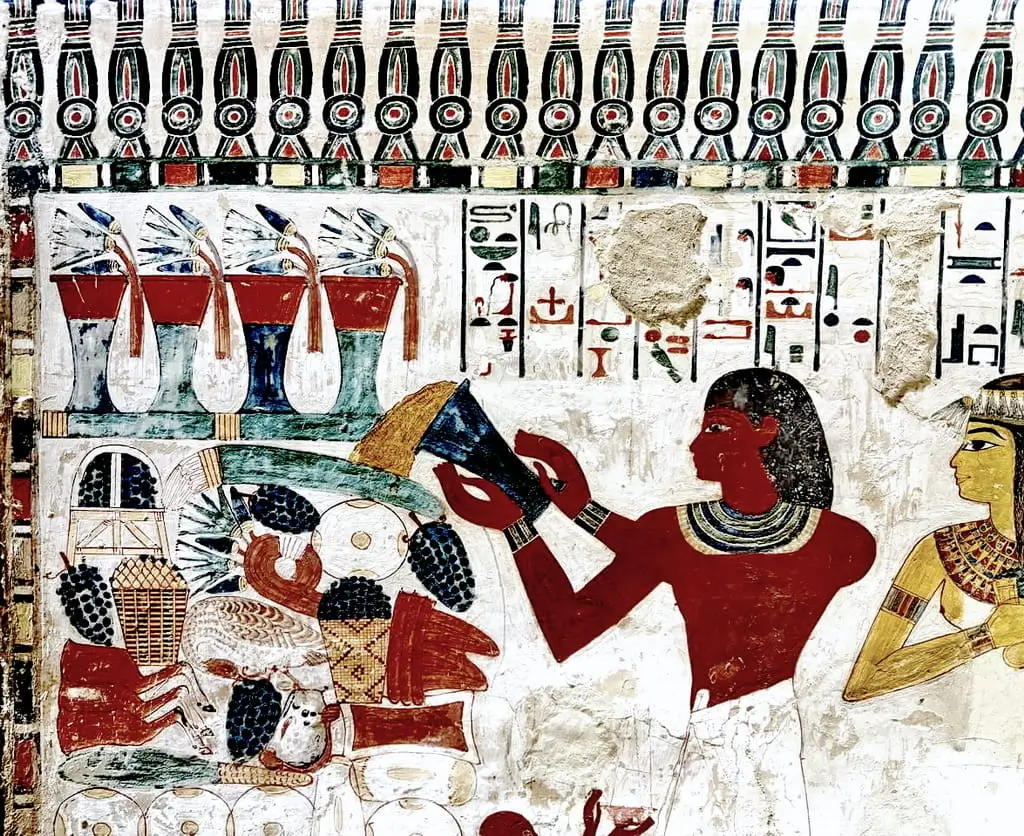
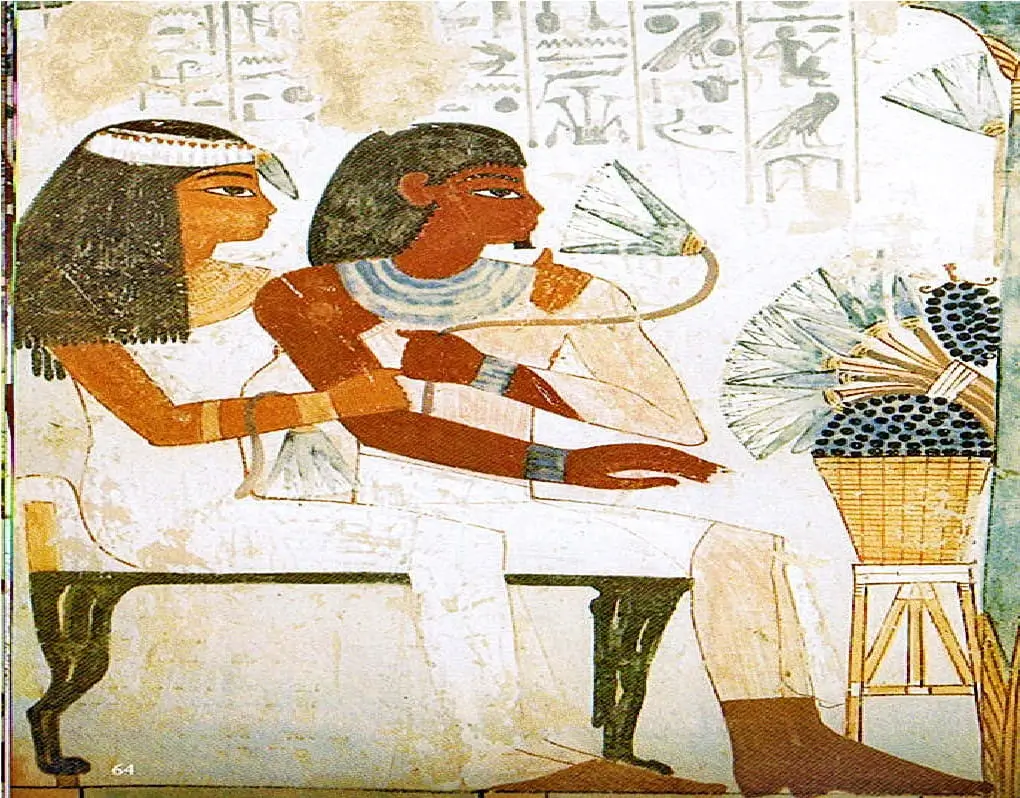
The central wall of the Tomb of Nakht features a sprawling banquet scene. This painting captures the peak of 18th-Dynasty social life. For Nakht, this was not just a memory of a party. It was a magical guarantee that he and his wife would enjoy fine food, wine, and companionship for eternity.

High Fashion and Social Status

The guests at Nakht’s banquet appear in their finest attire. You can see the incredible detail in their clothing and accessories:

  • The Wigs: People wear elaborate, heavy black wigs. These were symbols of high status.
  • Scented Fat Cones: Look closely at the tops of the guests’ heads. They wear small, yellowish cones made of scented fat. As the party progressed, the fat would melt, releasing a pleasant perfume of lilies or lotus over their hair and clothes.
  • Lotus Blossoms: Almost every guest holds a lotus flower. The lotus was more than a decoration; it symbolized rebirth and the “breath of life.”

The Servants and the Feast

The artists included small, active figures of servants to show the abundance of the feast. You can see young girls adjusting the jewelry of the guests or pouring wine from large clay jars. Near the offering table, heaps of food reach the ceiling. The paintings show:

  • Roasted poultry and cuts of meat.
  • Trays of grapes, figs, and pomegranates.
  • Loaves of bread in various shapes.

Sensory Details and Realism

What makes TT52 special is the use of “layered” painting. The artists didn’t just paint flat shapes. They used different shades of white to show the transparency of the linen robes. You can see the limbs of the guests through their thin clothing. This technique shows the extreme skill of the Theban painters.

By including these sensory details, Nakht transformed his tomb into a place of permanent joy. Every time a visitor looks at these walls, they “reactivate” the party, ensuring Nakht remains a respected member of the elite forever.
The Catacombs of Kom Esh-Shokafa: Roman-Egyptian Underworld

Descend into one of the "Seven Wonders of the Middle Ages" at the Catacombs of...
Related post
FUN

The Rhythm of the Afterlife: The Musicians and the Blind Harper

The Rhythm of the Afterlife The Musicians and the Blind Harper

Music was essential to the Egyptian soul. In the Tomb of Nakht, the “Music Scene” provides a permanent soundtrack for his spirit. The artists used fluid lines and vibrant colors to capture the sound and movement of a live performance.

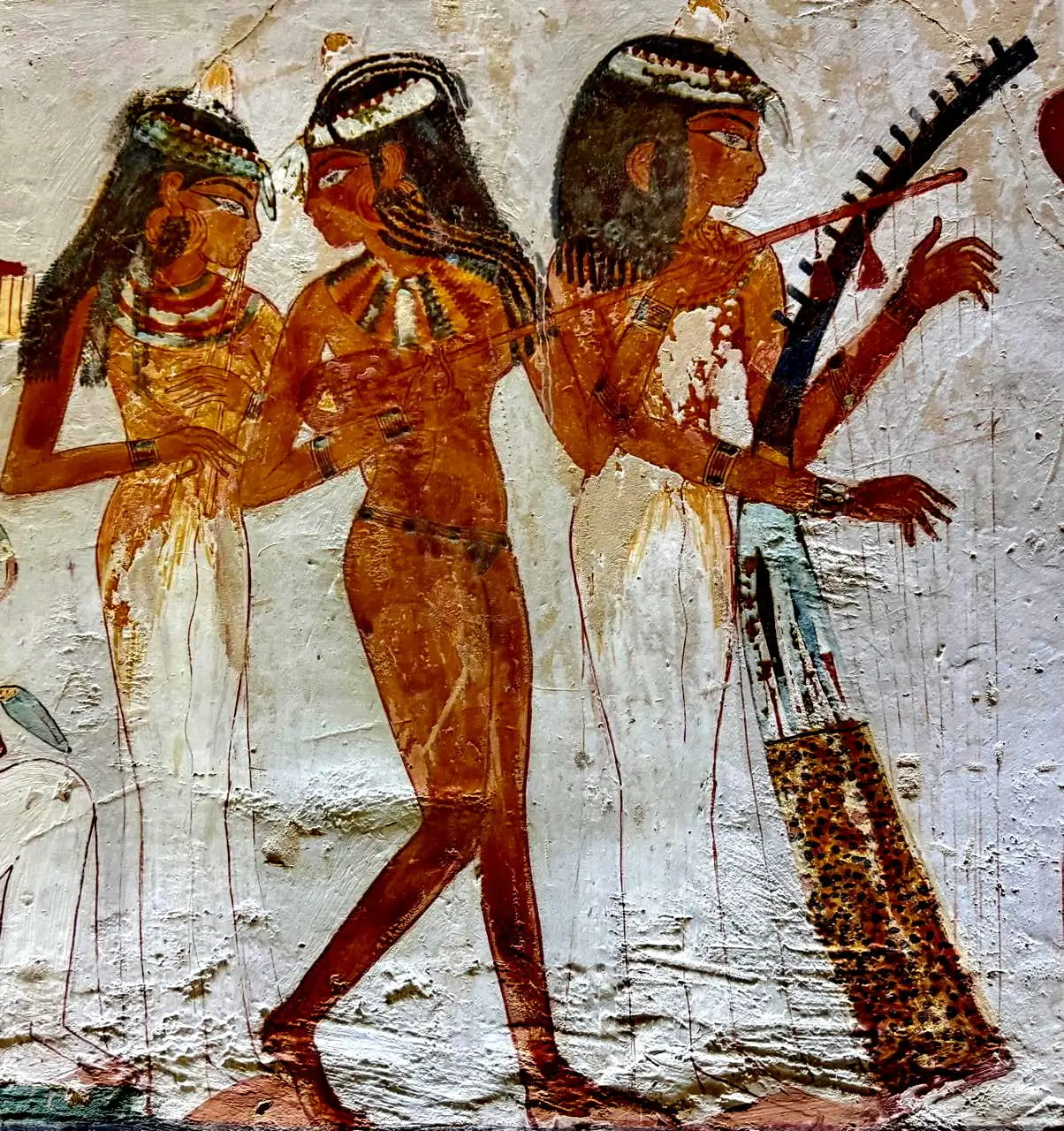
The Trio of Female Musicians

The centerpiece of the wall shows three women playing instruments. This scene is a masterpiece of balance and grace.

  • The Instruments: You can see a double-flute player, a lute player, and a harpist. Each instrument is drawn with technical accuracy, showing the strings and the finger positions of the performers.
  • The Movement: The lute player is depicted mid-step, her body twisted slightly. This break from the traditional, stiff Egyptian pose shows that the artists wanted to convey the energy of the dance.
  • The Fashion: Like the banquet guests, these women wear transparent linen robes and elaborate jewelry. Their elegant forms highlight the beauty and refinement of the 18th Dynasty.

The Famous Blind Harper

To the side of the trio sits a figure known as the Blind Harper. He is one of the most studied figures in the Theban Necropolis.

  • The Portrayal: He sits cross-legged on the floor, leaning into a large, wooden floor harp. The artist painted his eyes as simple slits to show his lack of sight.
  • The Symbolism: In Ancient Egypt, blind musicians were often associated with deep wisdom and a connection to the gods. They performed “Harper’s Songs,” which often reminded the living to enjoy life while they could.
  • The Artistic Detail: Look at the harper’s body. He is painted with a slightly rounded stomach and realistic skin folds. This “naturalism” was a new trend in art at the time, moving away from showing every person with a “perfect” body.

A Sensory Experience for the Soul

By placing these musicians in his tomb, Nakht ensured his afterlife would never be silent. The music served a religious purpose, too. It pleased the goddess Hathor, who was the patron of music, joy, and the transition into the next world. When you stand in the small chamber of TT52, you can almost hear the soft notes of the flute and the rhythmic strumming of the harp.

The Tomb of Inherkhau (TT359): Masterpieces of the 20th Dynasty

The Tomb of Inherkhau (TT359) is a 20th-Dynasty masterpiece in Deir el-Medina, showcasing the elite...
Related post
FUN

Nature and the Harvest: A Miniature World

Nature and the Harvest A Miniature World

Although the Tomb of Nakht is small, its scenes of nature are incredibly detailed. These paintings ensured that Nakht’s spirit would always have access to fresh food and the beauty of the Egyptian landscape. The artists focused on two main areas: the harvest of grain and the production of wine.

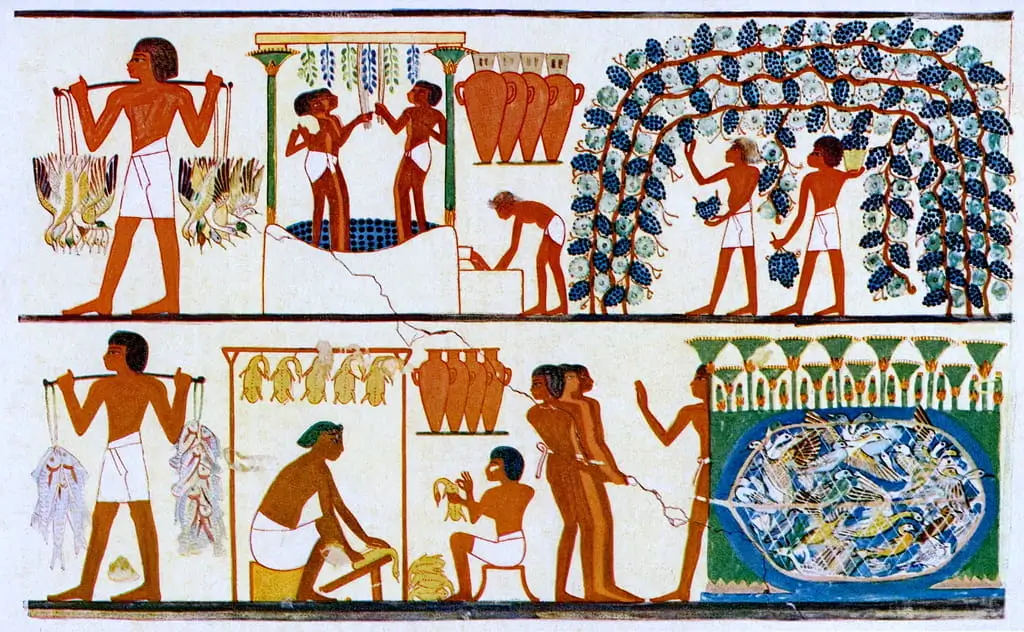
The Art of the Grape Harvest

One of the most vibrant scenes in TT52 is the grape harvest. This scene is famous for its rich, purple hues and sense of movement.

  • Treading the Grapes: You can see workers standing in a large vat, holding onto overhead ropes for balance. They stomp the grapes with their bare feet to extract the juice.
  • The Vineyards: Above the workers, heavy clusters of grapes hang from a wooden trellis. The artists used deep blues and purples to make the fruit look ripe and juicy.
  • Wine Production: Next to the vat, other workers pour the fresh juice into large clay amphorae. These jars would then be sealed and stored for the many banquets Nakht planned to host in the afterlife.

Winnowing and the Grain Cycle

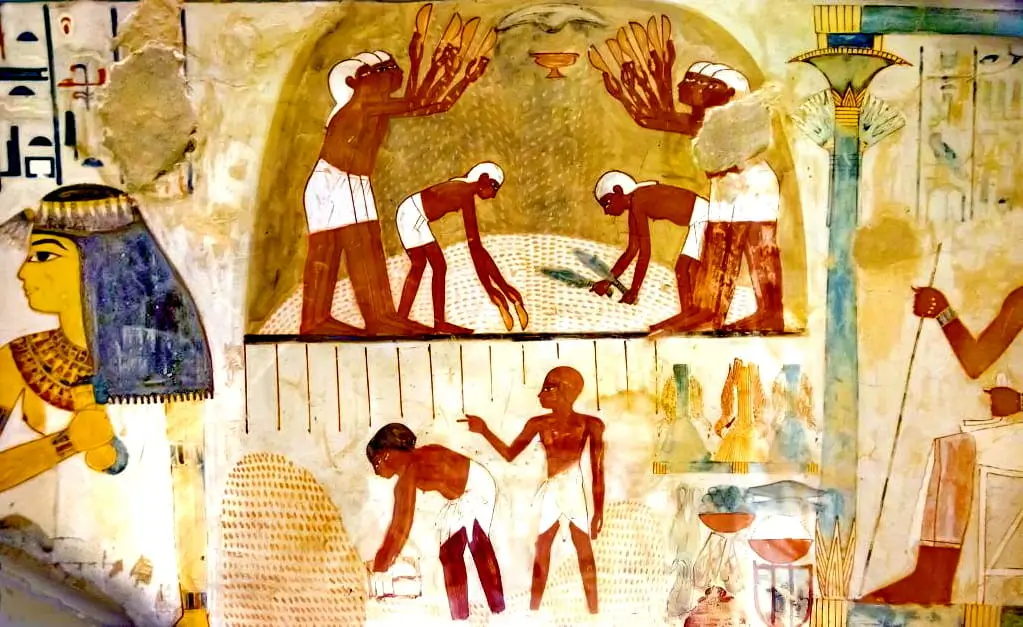
On the same wall, the artists depicted the grain harvest. Like the Tomb of Menna, these scenes follow a logical order.

  • The Wind at Work: You see laborers tossing grain into the air with wooden scoops. The white chaff blows away in the wind, leaving the golden grain behind.
  • The Offering to the Goddess: Look for the small shrine to Renenutet, the cobra-headed goddess of the harvest. She sits near the grain piles to protect the food from pests and ensure a successful yield. This detail shows that Nakht’s professional life and religious faith were always connected.

Precision in a Small Space

The artists of TT52 faced a challenge because the walls are quite narrow. To solve this, they used a “compact” style. They packed a huge amount of information into small registers without making the scene look cluttered.

For example, you can see tiny details like individual birds nesting in the papyrus or the texture of the winnowed grain. Because the colors have remained so bright, these scenes still feel fresh. They remind every visitor that for the Ancient Egyptians, the afterlife was not a dark place. Instead, it was a world of abundance, sunlight, and constant growth.

The Mastaba of Kagemni: The Ultimate Guide to Saqqara’s Artistic Masterpiece

The Mastaba of Kagemni is Saqqara’s premier example of 6th Dynasty artistic mastery, featuring the...
Related post
FUN

The Artistic Legacy and Visitor Guide

The Artistic Legacy and Visitor Guide

The Tomb of Nakht is more than just a burial site. It is a time capsule of 18th-Dynasty aesthetics. Even though the tomb is small, its influence on Egyptology is massive. Most of the “standard” images we see today of ancient Egyptian parties, music, and farming come directly from these walls.

Why TT52 is an Artistic Milestone

The artists of TT52 were masters of the “Theban Style.” They moved away from the stiff, formal art of earlier periods. Instead, they embraced fluid lines and realistic details.

  • Color Saturation: Because the tomb is small and deep, the colors did not fade as much as in larger, more open tombs. The blues, greens, and ochres remain incredibly punchy.
  • Human Detail: From the realistic belly of the blind harper to the transparent dresses of the musicians, the art feels human. It connects us to the people of the past in a way that grand royal monuments often do not.

Practical Tips for Your Visit

When you visit the Tomb of Nakht on the West Bank of Luxor, keep these tips in mind to get the most out of the experience:

  • Location: It is part of the “Nobles Tombs” group in Sheikh Abd el-Qurna. It is usually grouped on a single ticket with the Tomb of Menna (TT69).
  • The “False Door”: Look for the beautifully painted False Door on the left wall. This was the magical portal where Nakht’s spirit entered the room to receive offerings.
  • Photography: Use a camera with good low-light settings. However, remember that flash is strictly prohibited to protect the 3,400-year-old pigments.
  • Timing: Because the chamber is very small, it can get crowded quickly. Try to visit early in the morning or late in the afternoon to have the space to yourself.

Summary: The Miniature Masterpiece

The Tomb of Nakht (TT52) serves as a perfect example of “quality over quantity.” Every square inch of the wall is packed with meaning, beauty, and life. While the Pharaohs built giant pyramids and deep tunnels to reach the gods, Nakht built a small, beautiful room to stay connected to the joys of the world he loved. For any traveler visiting Luxor, this tomb is a mandatory stop to see the true heart of Ancient Egypt.

This comprehensive tour includes 2 days of sightseeing in Cairo, a day trip to Alexandria, and 5 days of exploration in Luxor and Aswan, complete...
Giza pyramids & Sphinx, & Sakkara pyramids | Sound & Light show & Nile dinner cruises (optional) | Cairo museum, Khan El-Khalili, Citadel of Saladin,...
God_Anubis_Icon

Egypt Fun Tours – Does it All!

My husband and I visited Egypt in March 2013. First, let me say, ‘Go, go, go!’ – it’s safer and definitely friendlier than many places we’ve visited. Tourism is drastically down – thanks mostly to media misinformation – so it’s a great time to visit to avoid line-ups and crowds

More »

Highly Recommend Egypt Fun Tours!

Several weeks ago, I reached out to Egypt Fun Tours regarding a 9-hour layover in Cairo. From the very beginning, Hani Ahmed was responsive and professional, quickly providing a well-organized itinerary tailored to our limited time. The itinerary included a visit to the pyramids, other historical sites, a delicious dinner,

More »
6 Days Luxury Tour {Egypt Treasures} - Cairo and Nile Cruise Affordable Tour Package

A trip of a lifetime in a 10 hour layover!

We recently scheduled a layover tour in Cairo through Egypt Fun Tours. Our layover was 10 hours and we scheduled the tour just about a day and a half before our arrival. When we arrived in Cairo we very easily made our way out of the airport (after getting our

More »

Great layover tour

First things first…I was in Cairo about a week before the protests of 2011 started. As far as the tour was concerned, I was very pleased. I was met at the airport by a knowledgeable guide (Sara) who spoke great English and a driver. They took me to Giza first,

More »

Early Layover Tour in Cairo

My husband, 2 sons – aged 9 & 11 – and I landed in Cairo at 5:15am on Saturday 12 January 2013. We had booked an early layover tour with Egypt Fun Tours after reading the great reviews in TripAdvisor. As promised he and his driver awaited us in a

More »
God_Anubis_Icon

Top-rated Tour Packages

God_Anubis_Icon