The Temple of El-Tod: A Guide to the Forgotten Sanctuary of Montu

The Temple of El-Tod serves as a vital chronological bridge in Egyptian history, marking the southern boundary of the "Theban quadrilateral" dedicated to the war god Montu. While the site features significant additions from the Ptolemaic and Roman eras, its true value lies in its Middle Kingdom foundations and the legendary Tod Treasure—a cache of Aegean silver and Mesopotamian lapis lazuli discovered in 1936. Today, El-Tod offers a serene, off-the-beaten-path experience for those looking to explore the evolution of Egyptian religious architecture and the international trade reach of the 12th Dynasty.

The Temple of El-Tod, known in antiquity as Djerty, stands as one of Egypt’s most fascinating yet underrated archaeological sites. Located just 20 kilometers south of Luxor, this sacred complex was the primary seat of Montu, the fierce, falcon-headed war god of the Theban triad. While often bypassed by the standard tourist trail, El-Tod offers a rare, uninterrupted timeline of Egyptian history—stretching from the shadows of the Old Kingdom to the grand building projects of the Ptolemaic and Roman eras.

Whether you are a seasoned Egyptologist or a curious traveler seeking to escape the crowds of Karnak, this guide explores the architectural evolution, the mysterious “Tod Treasure,” and the deep mythological roots of this powerful site.

El-Tod Temple: What You Will Discover in This Guide:

  • The War God’s Domain: Why Montu was the “Lord of Thebes” before Amun-Ra took center stage.
  • Architectural Layers: A walkthrough of the Middle Kingdom foundations and the later Ptolemaic shrines.
  • The Tod Treasure: The story behind the 1936 discovery of Aegean silver and gold buried beneath the temple floor.
  • Visitor Logistics: Expert tips on how to combine El-Tod with other sites like Armant and Medamud.
FUN

Why El-Tod is Essential for Ancient History Enthusiasts

Why El-Tod is Essential for Ancient History Enthusiasts

Most travelers visit Luxor to see the majesty of the New Kingdom. However, El-Tod provides the missing link for understanding the Middle Kingdom (2040–1782 BCE). It was during this era that the Pharaohs of the 11th and 12th Dynasties transformed this small settlement into a fortified religious powerhouse.

The site serves as a literal “stone book” of Egyptian history. As you walk through the ruins, you aren’t just seeing one temple; you are seeing the remnants of four distinct eras of civilization layered atop one another.

Quick Facts: El-Tod Temple at a Glance

  • Main Deity: Montu (and his consort Raettawy).
  • Oldest Foundations: 5th Dynasty (Userkaf).
  • Peak Construction: 12th Dynasty (Senusret I) and Ptolemy VIII.
  • Key Discovery: The “Tod Treasure” (now housed in the Louvre and Cairo Museum).
  • Best For: Photography, quiet exploration, and Middle Kingdom studies.
FUN

The Might of Montu: The War God of the Theban Region

The Might of Montu The War God of the Theban Region

To understand the Temple of El-Tod, one must first understand the deity who commanded its altars. Long before Amun-Ra became the “King of the Gods,” the Theban district was the domain of Montu, a fierce and ancient solar deity associated with the burning heat of the sun and the raw power of the battlefield.

El-Tod Temple: The Origins of the Falcon-Headed Warrior

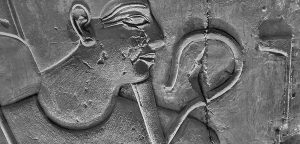
Montu (also spelled Monthu or Menthu) was typically depicted as a man with the head of a falcon, crowned with a solar disk and two tall plumes. While he shared the falcon imagery with Horus and the solar aspects with Ra, Montu’s identity was uniquely tied to martial prowess.

In the Pyramid Texts, Montu is already present, but it was during the 11th Dynasty that he reached his zenith. The Pharaohs of this era—many of whom were named Mentuhotep (meaning “Montu is Satisfied”)—hailed from Thebes. They credited Montu with their success in reuniting Egypt after the chaos of the First Intermediate Period.

El-Tod Temple: Montu: The “Lord of Thebes”

Before the rise of the New Kingdom, Montu was the undisputed patron of the Theban “nome” (province). He was not confined to a single temple but reigned over a defensive “quadrilateral” of four cult centers that surrounded the capital:

  1. El-Tod (Djerty): The southern anchor of his power.
  2. Armant (Iuny): His primary cult center, where he was linked to the sacred Buchis Bull.
  3. Medamud (Madu): Located to the north, focused on his role as a solar victor.
  4. Karnak: A dedicated precinct was built for him north of the Great Temple of Amun.

By building at El-Tod, the Pharaohs weren’t just honoring a god; they were strategically placing a spiritual fortress to protect the southern approaches of Thebes.

El-Tod Temple: The Divine Family: Raettawy and Iunit

At El-Tod, Montu did not reside alone. Like most Egyptian deities, he was part of a divine triad that helped balance his aggressive nature with solar and feminine energies:

  • Raettawy: His primary consort, a female counterpart to Ra. Her name literally means “Female Ra of the Two Lands,” emphasizing the solar connection of the El-Tod sanctuary.
  • Iunit: A more localized goddess often associated with the nearby city of Armant, representing the fertility and protection of the region.

The Bull Connection: The Living Avatar

The Bull Connection The Living Avatar

In later periods, Montu’s warlike energy was manifested on earth through the Buchis Bull. This sacred animal was chosen based on specific physical markings and was believed to be the living “Ba” (soul) of Montu. While the main burial site for these bulls (the Bucheum) is in Armant, the priests at El-Tod maintained deep ritualistic ties to the cult, ensuring the god’s strength remained vital and renewed.

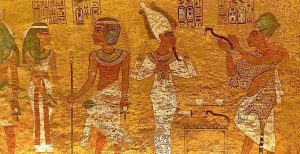
Did You Know? In Egyptian reliefs, Montu is often shown leading the Pharaoh to victory or presenting the “Khopesh” (sickle sword) to the King, symbolizing the divine right to conquer and rule through strength.

El-Tod Temple: Why This Matters for Your Visit

When you stand amidst the ruins of El-Tod, you aren’t just looking at stone; you are standing in a place designed to vibrate with the energy of a protector. The carvings of the Pharaoh making offerings here were not merely decorative—they were political and spiritual contracts intended to keep the Egyptian state secure and its enemies at bay.

The King Tut Story: Howard Carter’s House & The Tomb Replica

Go "behind-the-scenes" of the King Tut discovery! Visit Howard Carter's House in Luxor, a 1920s...
Related post
FUN

The Mystery of the Tod Treasure: A Cache of Silver and Gold

The Mystery of the Tod Treasure A Cache of Silver and Gold

Perhaps the most gripping chapter in the history of this site lies not in its inscriptions, but beneath its floors. In 1936, French archaeologist Fernand Bisson de la Roque made a discovery at El-Tod that rewrote our understanding of Middle Kingdom trade and diplomacy: The Tod Treasure.

The Discovery: A Secret Beneath the Foundation

While excavating the foundations of the Ptolemaic temple, de la Roque’s team unearthed four heavy bronze chests. These chests bore the name of Pharaoh Amenemhat II (12th Dynasty, approx. 1911–1877 BCE).

Instead of typical Egyptian artifacts, the team found a staggering collection of “unfamiliar” wealth:

  • Silver Vessels: Over 150 silver cups and bowls featured “ribbed” designs and handles that completely ignored traditional Egyptian craftsmanship.
  • Lapis Lazuli: Thousands of pieces, including raw fragments, beads, and cylinder seals, traced their origins back to Mesopotamia.
  • Gold Ingots: Heavy chains and gold leaf sat ready for use as currency or for the gilding of sacred objects.

The Aegean Connection: Trade or Tribute?

The Tod Treasure provides some of the most significant archaeological proof of Egypt’s international reach during the Middle Kingdom. Many of the silver cups share a striking resemblance to “Kamares Ware” pottery from Minoan Crete.

Historians still debate how these items reached the Temple of Montu:

  1. Diplomatic Gifts: Aegean or Syrian rulers likely sent these offerings to court to curry favor with the powerful Pharaoh.
  2. War Booty: Amenemhat II may have seized these treasures during a military campaign in the Levant.
  3. Mercenary Pay: Some suggest the temple maintained this “reserve fund” to pay for foreign services or rare materials.

Where to See the Treasure Today

You will no longer find the “Tod Treasure” at the temple site. Following the discovery, authorities split the collection according to the “partage” laws of the era:

  • The Louvre Museum (Paris): Displays many of the silver vessels and the original bronze chests.
  • The Egyptian Museum (Cairo): Exhibits a stunning selection of gold ingots and the lapis lazuli cylinder seals.

Why the Pharaoh Buried it at El-Tod

The burial of such immense wealth beneath a temple floor served as a profound ritual act. By placing these precious materials—especially silver, which ancient Egyptians valued more than gold—under the sanctuary of Montu, the Pharaoh effectively “consecrated” the wealth of the world to the god of war. This act transformed physical treasure into a permanent testament to the god’s power over foreign lands.

The Temple of Isis at Shenhur: The Hidden Sanctuary of the Roman East

The Temple of Isis at Shenhur is a vital archaeological site located between Luxor and...
Related post
FUN

Architectural Walkthrough: From Foundation to Pylon

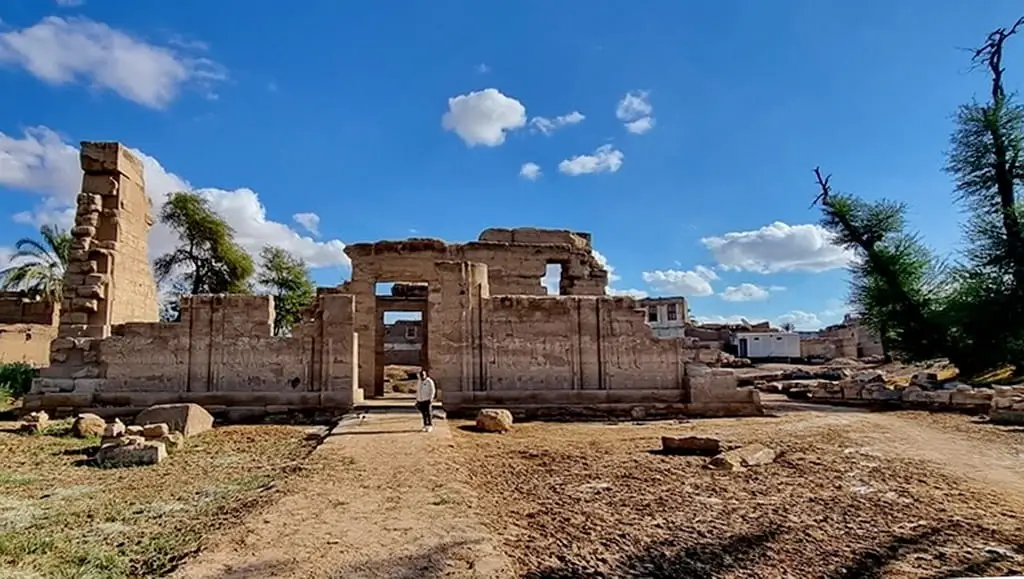
Now that we have uncovered the hidden gold, let’s examine the “Stone Record” the builders left behind. The Temple of El-Tod presents a fascinating architectural puzzle because of its compressed nature. Here, you can witness 2,000 years of change in a single 15-minute walk.

The Middle Kingdom Core (The 12th Dynasty)

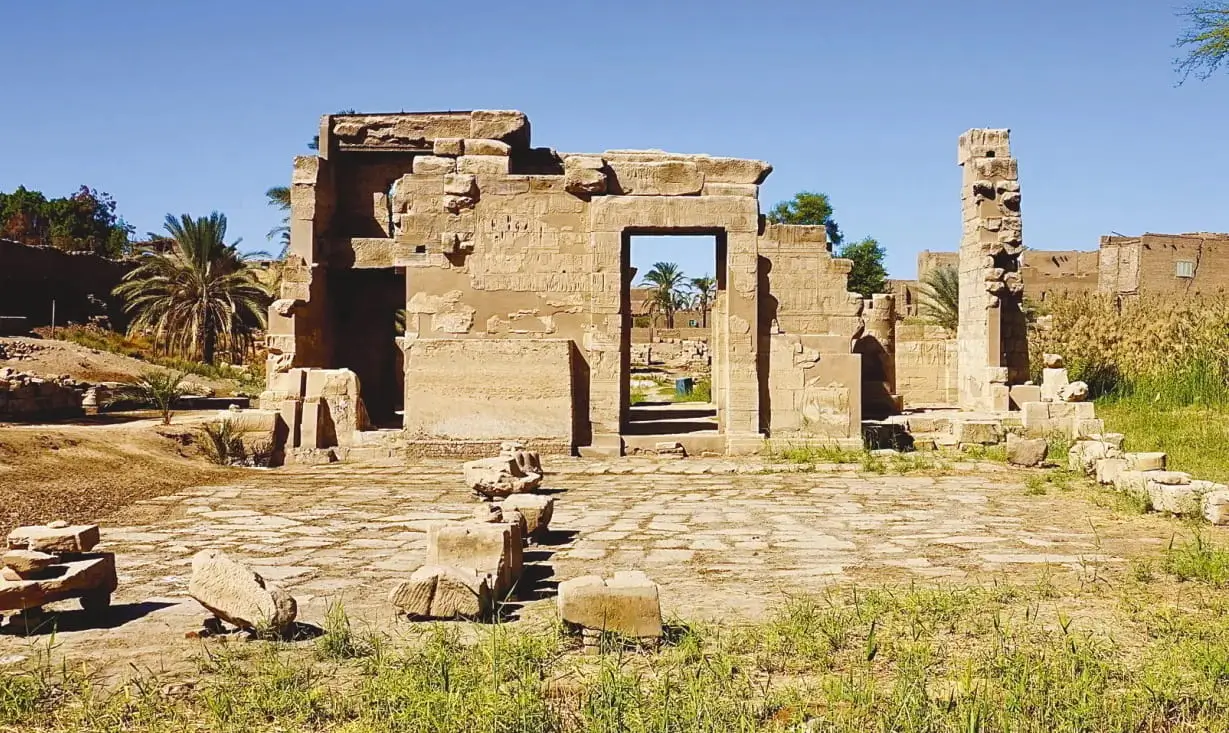
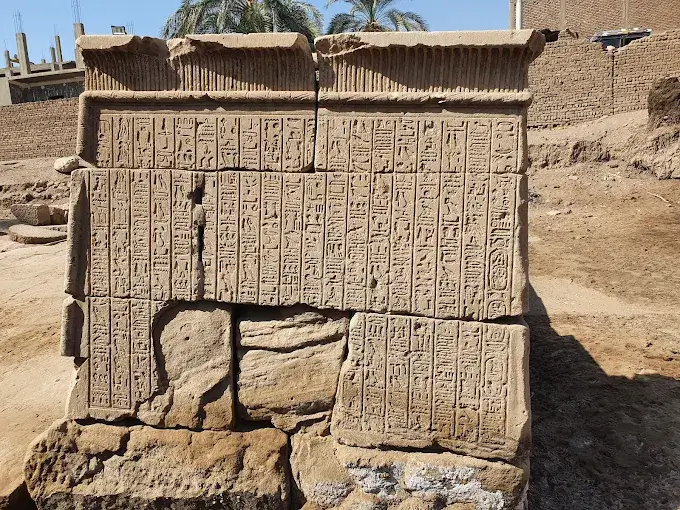
Senusret I established the heart of the temple. While New Kingdom and Ptolemaic builders often demolished older structures to clear space for their own, they respected the sacred “axis” of Senusret’s shrine. Look for the massive limestone blocks near the center—these represent the “bones” of the original Middle Kingdom sanctuary.

The Ptolemaic Expansion (The 18th Dynasty to the Greeks)

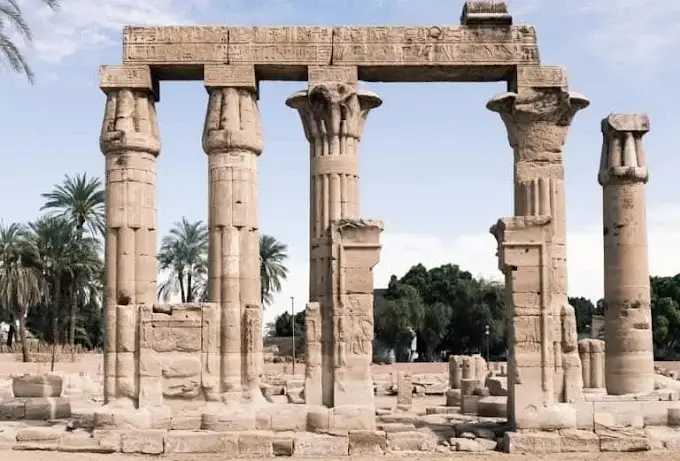
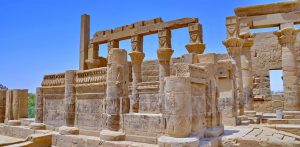
The reign of Ptolemy VIII Euergetes II accounts for most of what you see today—the columns, the decorated walls, and the well-preserved sanctuary.

  • The Pronaos (Outer Hall): Notice the floral capitals on the columns, which showcase the elegance of Ptolemaic design.
  • The Sanctuary: In this innermost room, the statue of Montu once resided. The reliefs here depict the King performing the “Daily Ritual,” where he offers food, incense, and wine to satisfy the god’s spirit.

The Roman Mammisi (The Birth House)

Beside the main temple stands the Mammisi. During the late period, architects considered these “Birth Houses” essential. They celebrated the divine birth of the god’s child, further linking the Pharaoh’s legitimacy to the divine realm.

Qasr Qarun: Fayoum’s Labyrinth Temple and Its Winter Solstice Miracle

Explore Qasr Qarun, a 2,000-year-old Ptolemaic temple on the remote edge of Fayoum's Lake Qarun....
Related post
FUN

Planning Your Visit: Logistics and Expert Travel Tips

El-Tod remains one of the best-kept secrets in the Luxor region. Because it sits off the main tourist track, you will likely have the entire complex to yourself, making it a dream for photographers and history buffs who prefer a quiet, contemplative atmosphere.

How to Get to El-Tod

The temple lies approximately 20 kilometers south of Luxor on the East Bank of the Nile.

  • Private Car/Taxi: This is the most efficient method. A drive from central Luxor takes about 30 to 45 minutes. Most drivers can combine this with a trip to the nearby temples of Armant or Medamud.
  • Local Transportation: While “microbuses” run to the village of El-Tod, they require a short walk or a local tuk-tuk ride to reach the archaeological zone. For those on a tight schedule, a private transfer is the better choice.

Best Time for Photography and Exploration

To capture the temple in its best light, aim for early morning (8:00 AM – 10:00 AM) or the “Golden Hour” before sunset.

  • The Light: The morning sun illuminates the Ptolemaic reliefs in the inner sanctuary, bringing the intricate carvings of Montu and Raettawy to life.
  • The Temperature: Like all sites in Upper Egypt, the midday heat can be intense. The site offers limited shade, so planning for the cooler parts of the day ensures a more comfortable experience.

Top Sites to Pair with El-Tod

If you want to create a “Montu-themed” day trip, consider visiting his other cult centers to see the full scope of his influence:

  1. Temple of Armant: Located on the West Bank, this was the primary home of the Buchis Bull.
  2. Temple of Medamud: Situated north of Luxor, this site offers another perspective on how New Kingdom and Ptolemaic rulers honored the war god.
  3. The Luxor Museum: After visiting the temple, stop by the museum on the Luxor Corniche to see statues and artifacts recovered from the Theban area that provide further context to El-Tod’s history.

The Quiet Legacy of Djerty

The Temple of El-Tod may not have the towering pylons of Karnak or the perfectly preserved ceilings of Dendera, but it possesses something rare: a sense of unbroken time. From the hidden treasures of the Middle Kingdom to the ritual birth houses of the Roman era, El-Tod stands as a testament to the enduring power of the Egyptian spirit and its devotion to the fierce protector, Montu.

By visiting this “forgotten” sanctuary, you aren’t just seeing ruins—you are stepping into a story that spans three millennia of human belief.

Final Checklist for Your Trip:

  • Ticket: Purchase your ticket at the site entrance (ensure you have local currency, as credit card machines in remote areas can be intermittent).
  • Sun Protection: Bring a hat, water, and sunscreen.
  • Guide: While the site is small, having a knowledgeable guide can help you identify the specific Middle Kingdom blocks hidden within the later walls.
Miracles trove Egypt group experience....
Explore the best of Luxor attractions through our 3 days Luxor tour where you will discover the best temples & tombs of Pharaohs. Read more...
FUN
God_Anubis_Icon

Amazing tour to the pyramids of Sakkara and Dahshur

This week we had a great tour with Mohamed to the pyramids of Sakkara and Dahshur, as well as Memphis. He tailored the tour to our preferences, took a lot of time with us, and gave us detailed background information on everything. It was also great that he never tired

More »

Highly Recommend Egypt Fun Tours!

Several weeks ago, I reached out to Egypt Fun Tours regarding a 9-hour layover in Cairo. From the very beginning, Hani Ahmed was responsive and professional, quickly providing a well-organized itinerary tailored to our limited time. The itinerary included a visit to the pyramids, other historical sites, a delicious dinner,

More »

7 night Egypt Experience Cairo, Aswan, Luxor

Trip of a lifetime!! COVID SAFE!! Knowledgeable guide who loves to share the magic of Egypt with tourists. Friendly and accommodating. This company goes to the extreme to make clients feel welcome and help them. A family company that takes good care of its support staff. Must book the 7-night

More »

Cairo Day Trip

My day trip to Cairo was brilliant, and close to the best one-day experience of my life. Hani was an amazing ambassador for his city and country; his wealth of knowledge, courtesy, and good humour was awesome. The itinerary was perfect, I visited most of the famous landmarks as well

More »
God_Anubis_Icon

Top-rated Tour Packages

God_Anubis_Icon