
Moving Mountains: The Epic Relocation of the Abu Simbel Temples

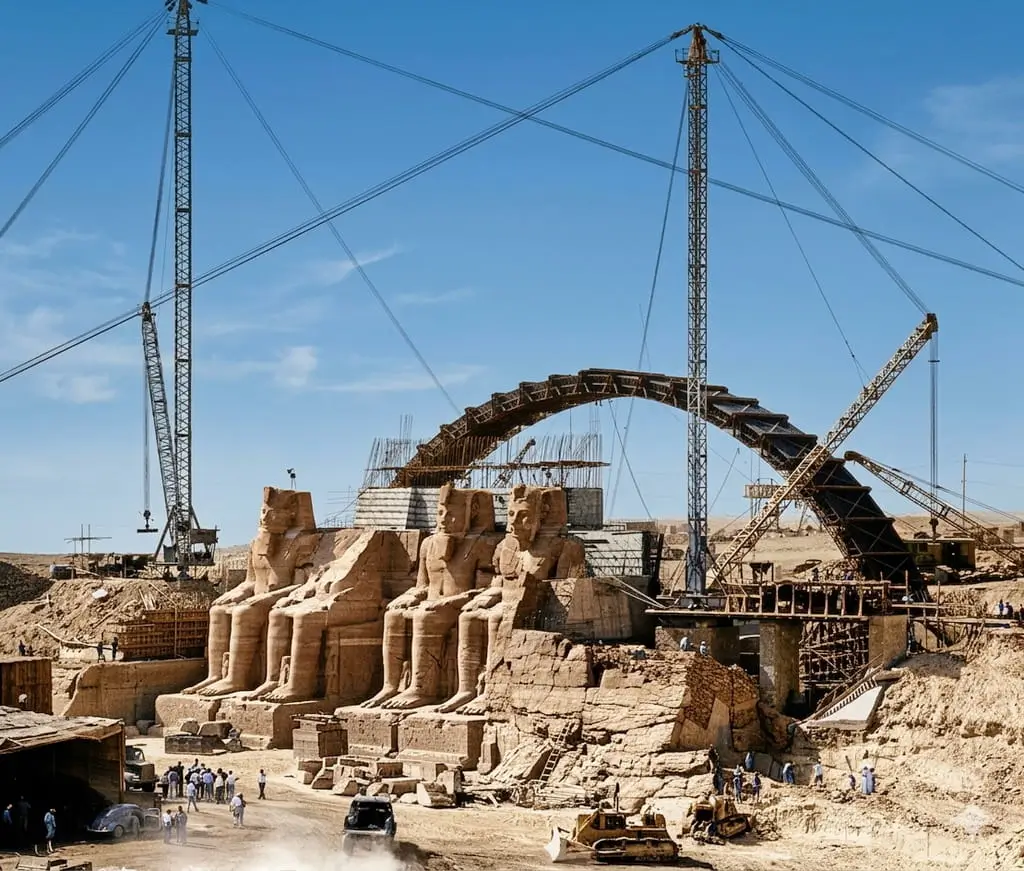
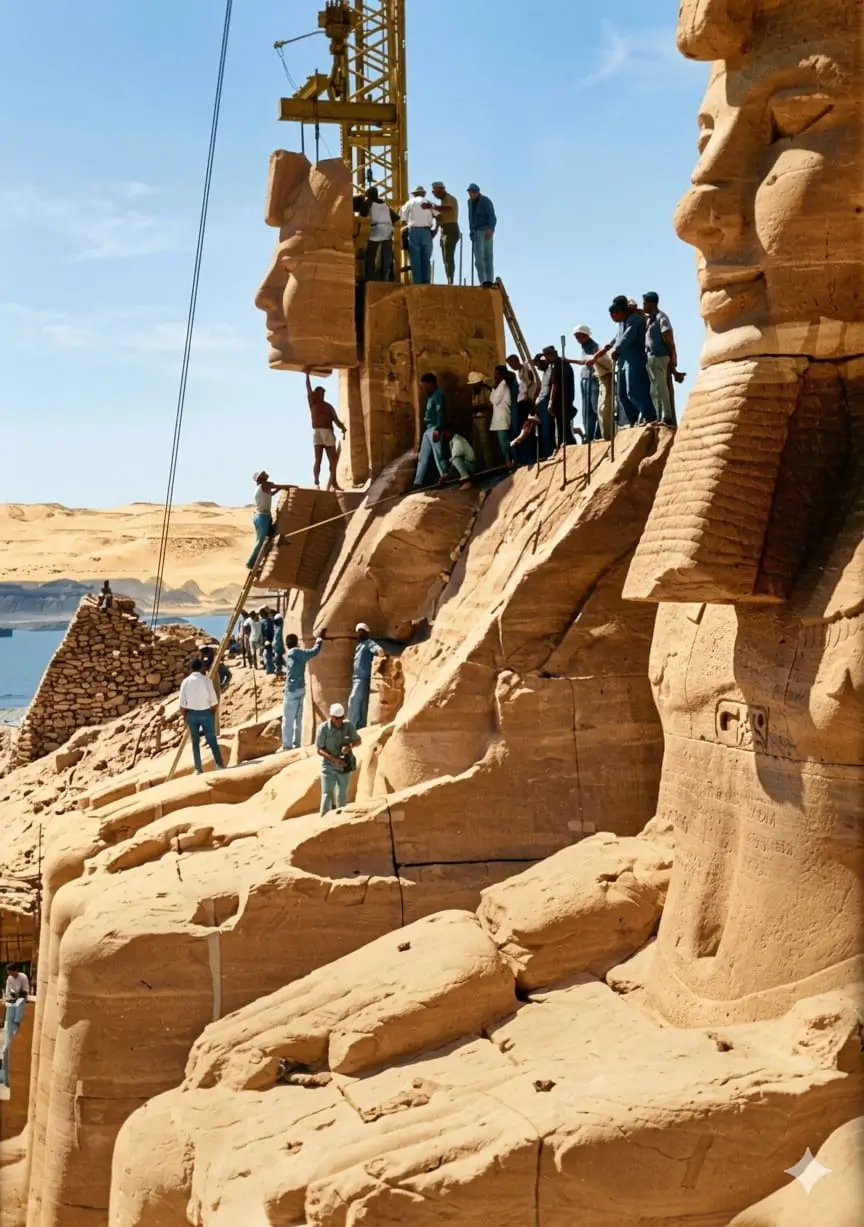
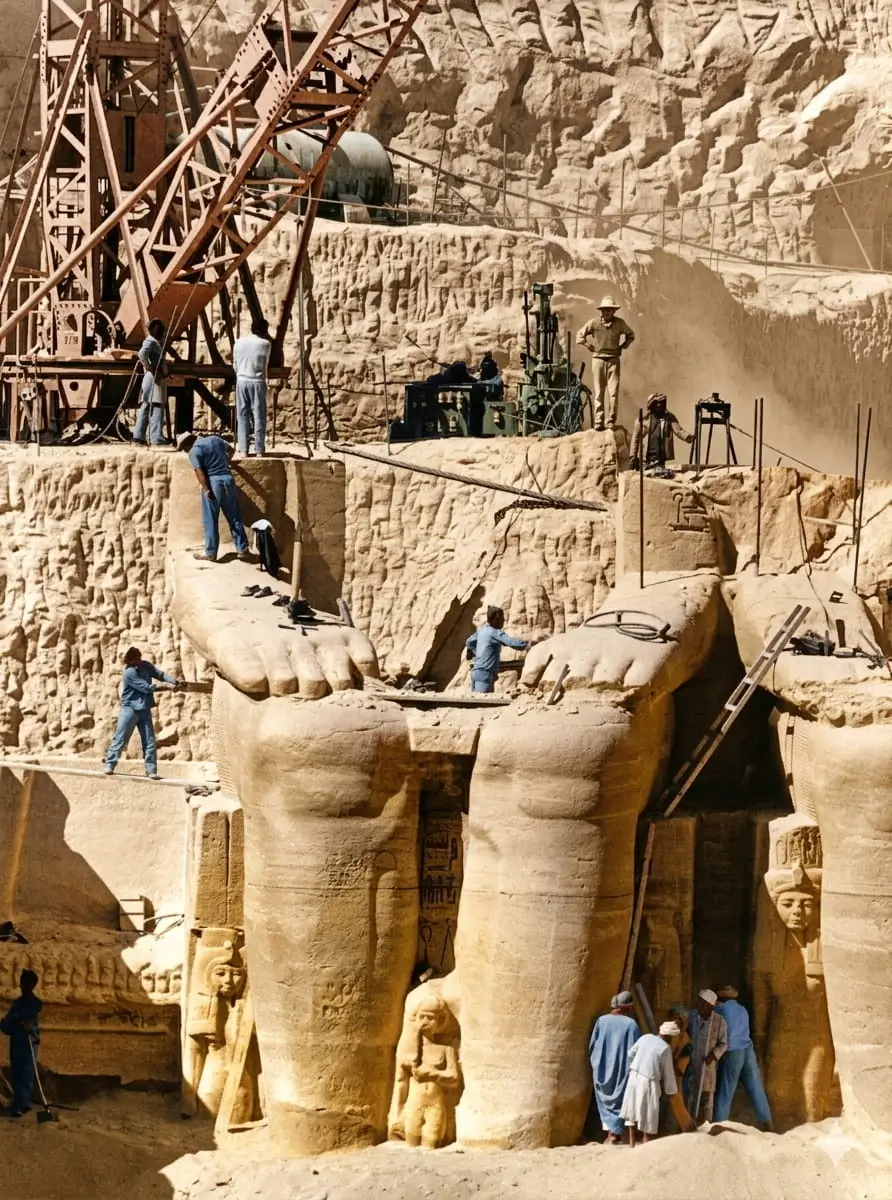
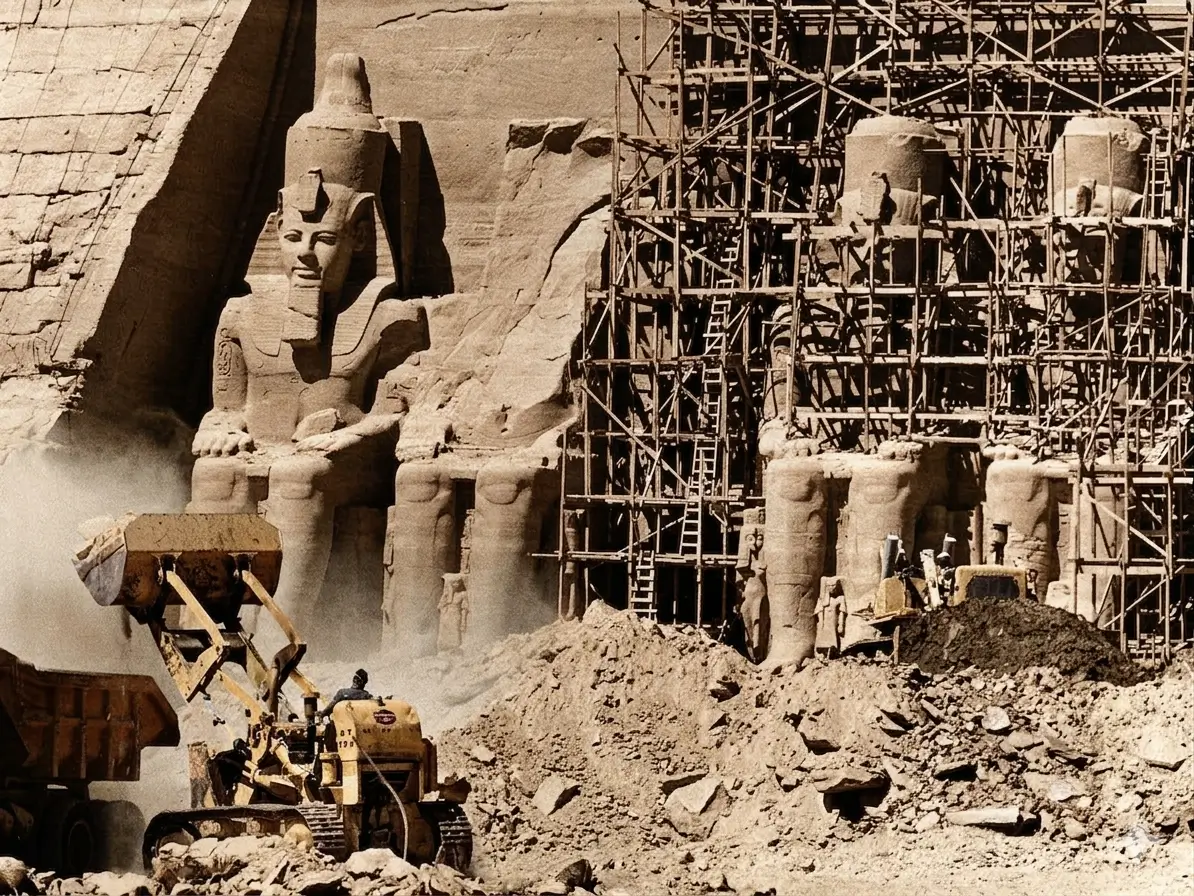
The relocation of the Abu Simbel temples was a massive international engineering feat carried out between 1964 and 1968 to save the ancient monuments from the rising waters of Lake Nasser. This project involved meticulously cutting the entire temple complex, including the colossal statues of Ramses II, into thousands of precision blocks weighing up to 30 tons each. These segments were then transported to a new site approximately 200 meters further inland and 65 meters higher than the original location. To preserve the site's historical appearance and structural integrity, a giant reinforced concrete dome was constructed to support the artificial hill over the temples, ensuring that the alignment with the sun—a key architectural feature—remained intact.

The Abu Simbel temple relocation stands as the most ambitious archaeological rescue operation in human history; however, it also represents a triumphant intersection of ancient legacy and modern engineering. In the early 1960s, the construction of the Aswan High Dam created a monumental crisis because the rising waters of the Nile threatened to submerge the 19th Dynasty’s greatest masterpieces forever. Consequently, an unprecedented international campaign led by UNESCO united global experts to save the heritage of Ramesses the Great.

To preserve these colossal structures, engineers performed what many consider a “modern miracle.” Specifically, crews dismantled the entire complex into over 1,000 massive stone blocks and reassembled them 65 meters higher on a carefully constructed artificial mountain. Furthermore, this section of our digital repository explores the technical precision and international diplomacy that defined this mission. While the task presented daunting challenges, the teams meticulously maintained the temple’s famous solar alignment throughout the process. By moving these mountains, the world ensured that the sanctuary “for whom the sun shines” would remain a beacon of Egyptian grandeur for future generations.

The Engineering Strategy: Precision and Power
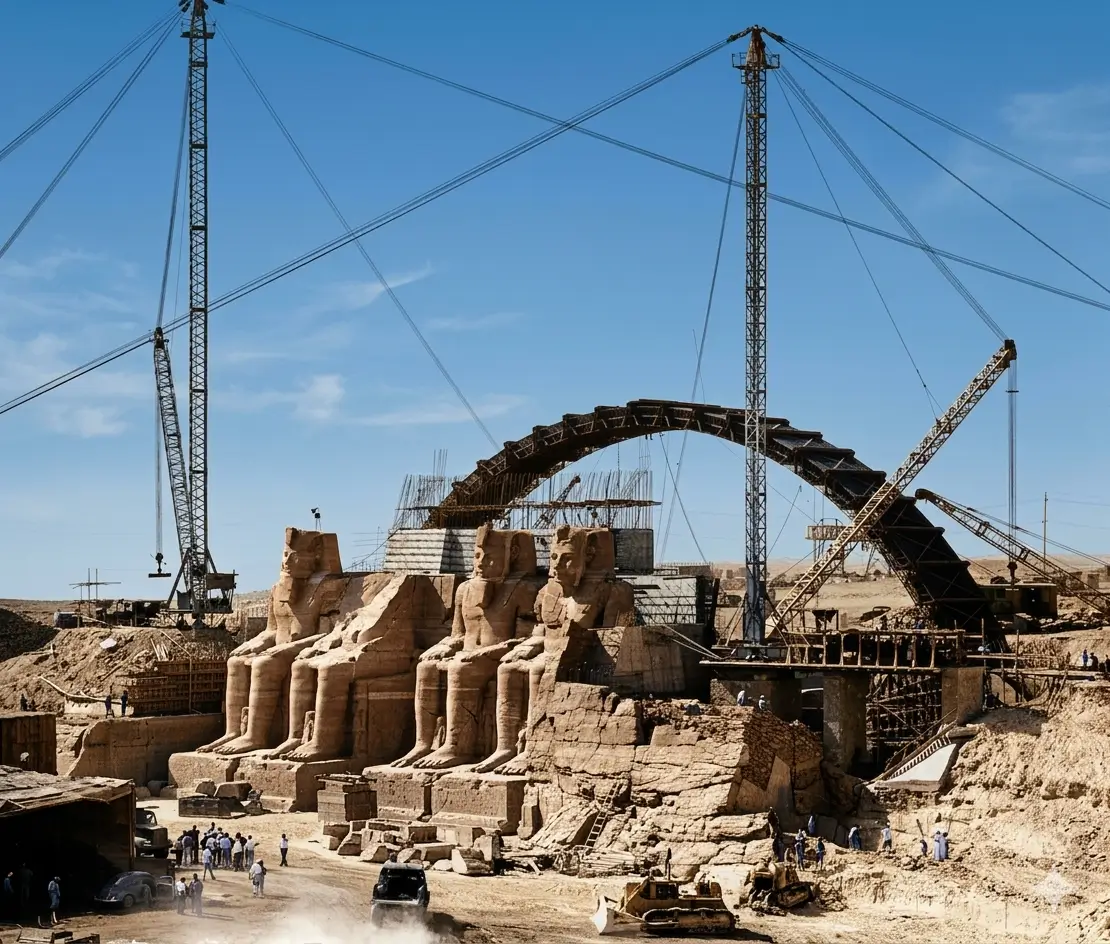
The Engineering Strategy Precision and Power

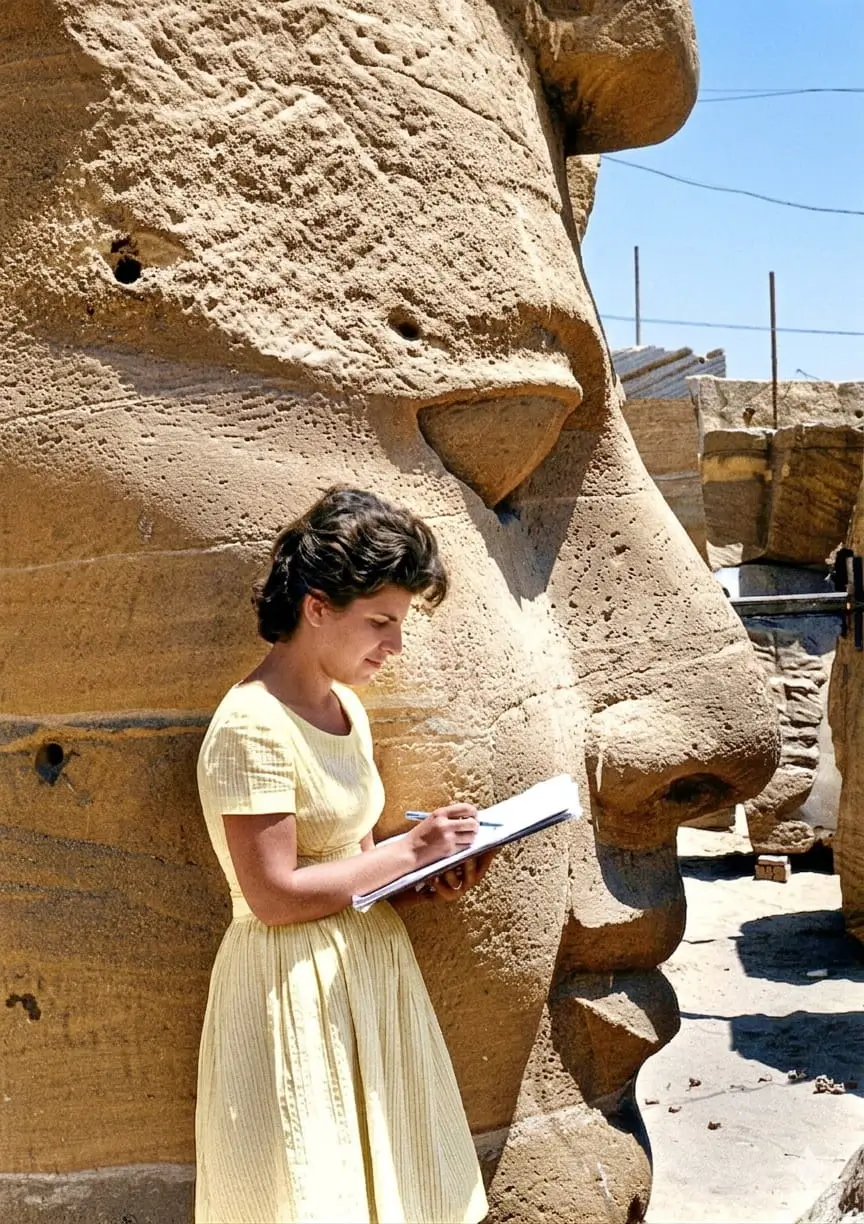
Moreover, the technical execution of the project demanded a level of accuracy that mirrored the work of the original ancient architects. Because the sandstone was fragile, engineers calculated every cut to minimize damage to the delicate reliefs. In addition to the physical relocation, researchers spent years documenting every square inch of the temple walls before they touched a single stone. Therefore, the successful reconstruction serves not only as a feat of modern machinery but also as a testament to our enduring commitment to preserving the 19th Dynasty’s historical narrative.
FUN

The Dismantling Process: Cutting the Mountain

The Dismantling Process Cutting the Mountain

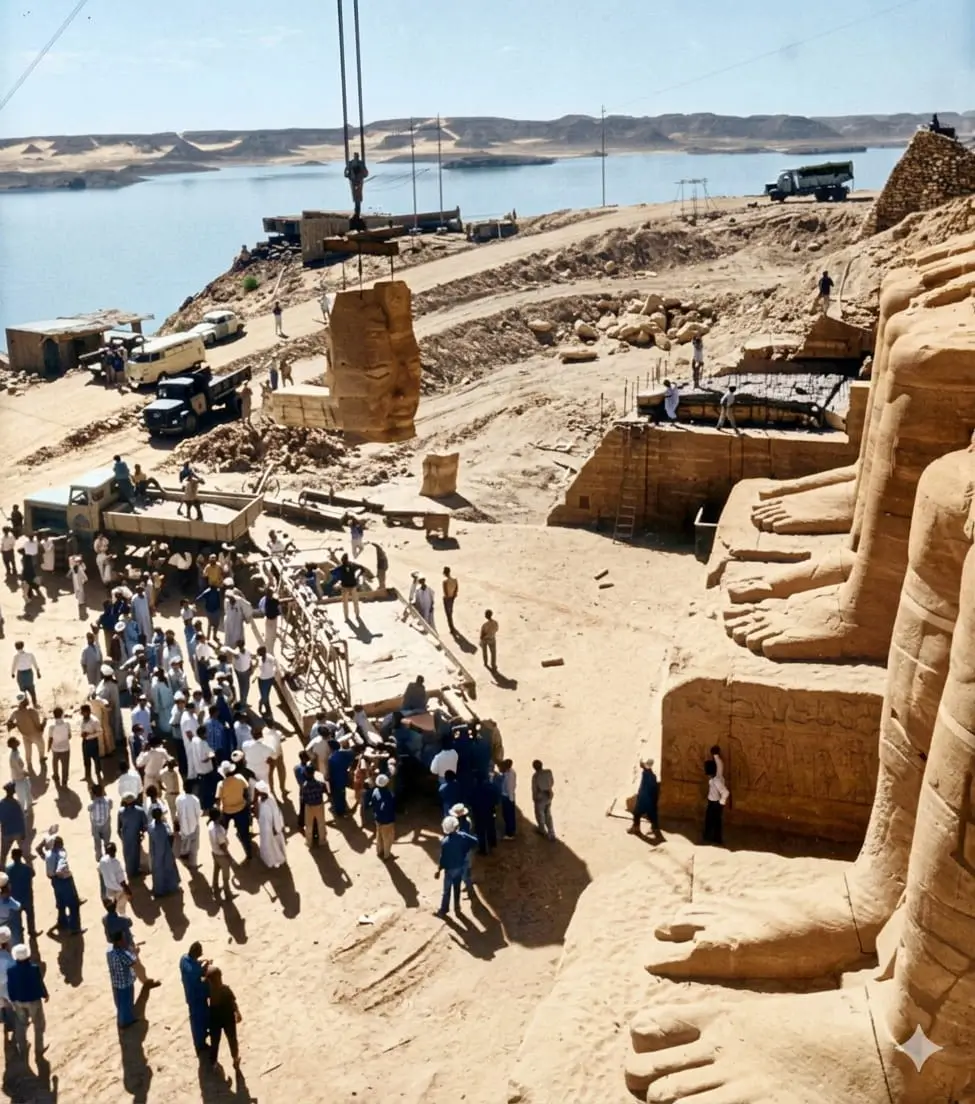
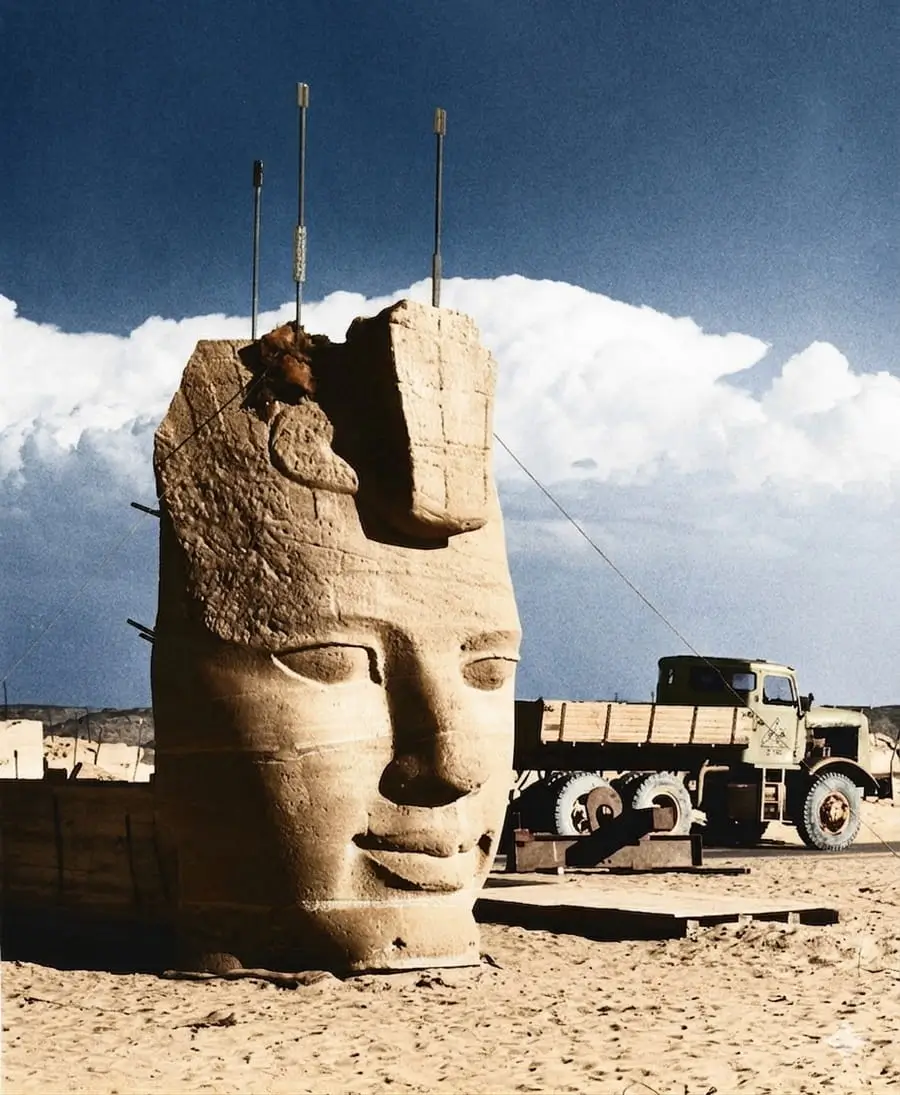
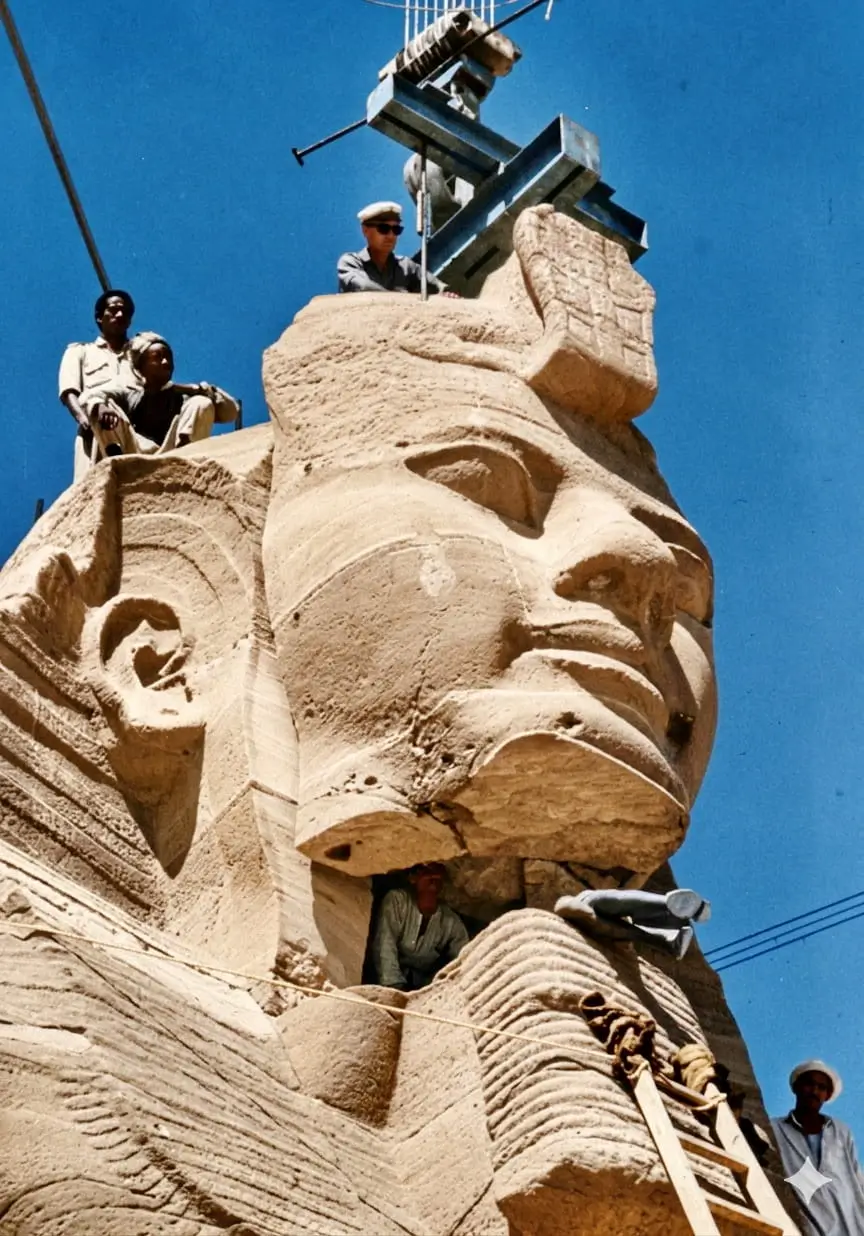
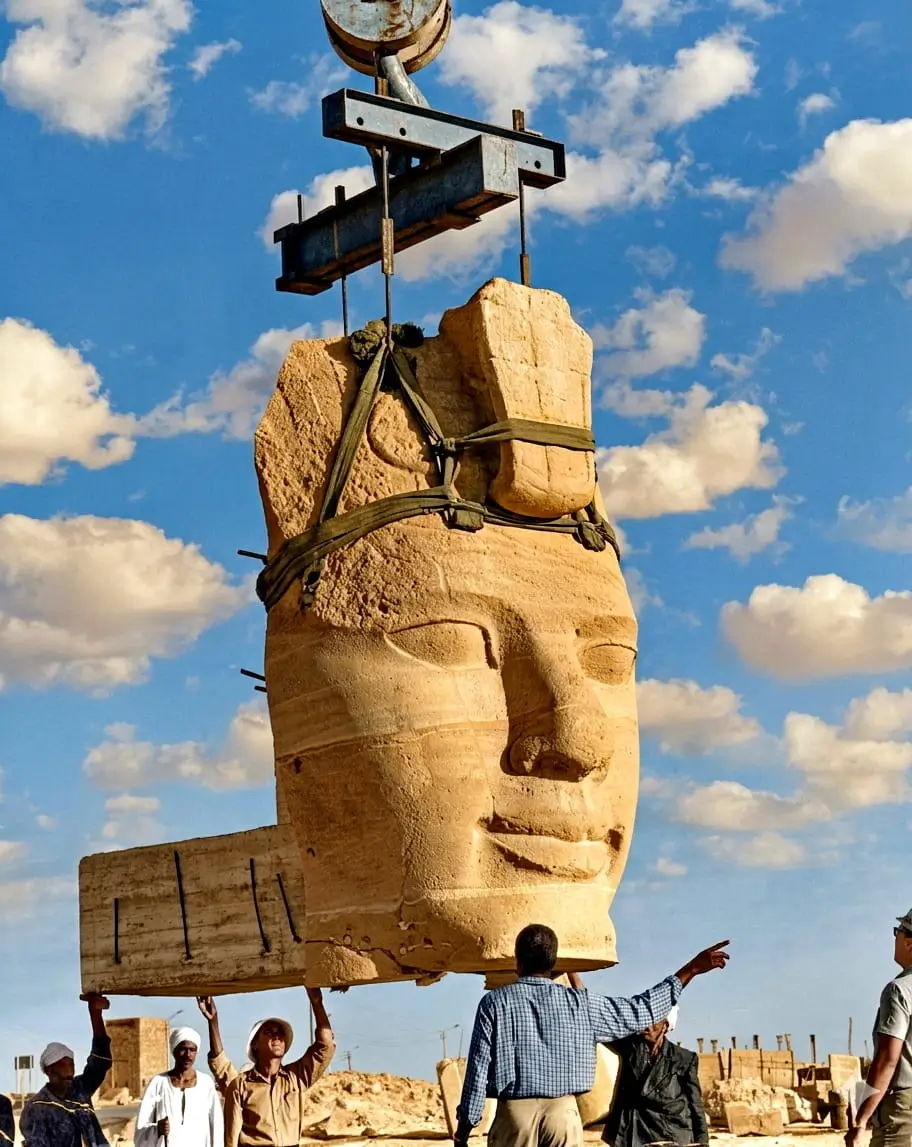
To initiate the physical Abu Simbel temple relocation, engineering teams faced the staggering task of slicing through the living rock without shattering the ancient artwork. Because the sandstone lacked structural density, specialists used fine-toothed hand saws and wire saws to achieve surgical precision. They limited the width of each cut to just 6 millimeters, ensuring that the gaps between the blocks remained nearly invisible once reassembled. This painstaking process allowed crews to divide the Great Temple and the Temple of Nefertari into manageable sections, ranging from 7 to 30 tons each.

Moreover, the logistics of the dismantling required a sophisticated tracking system. Engineers assigned a specific identification number to every single block, documenting its exact coordinates within the original cliffside. They also injected synthetic resin into the more fragile sections of the stone to prevent crumbling during transport. Consequently, these precautions ensured that the massive statues of Ramesses II and his queen survived the transition to their new home without losing their structural integrity or their intricate facial details.

Transporting the Colossi: A Heavy Lift

Transporting the Colossi A Heavy Lift

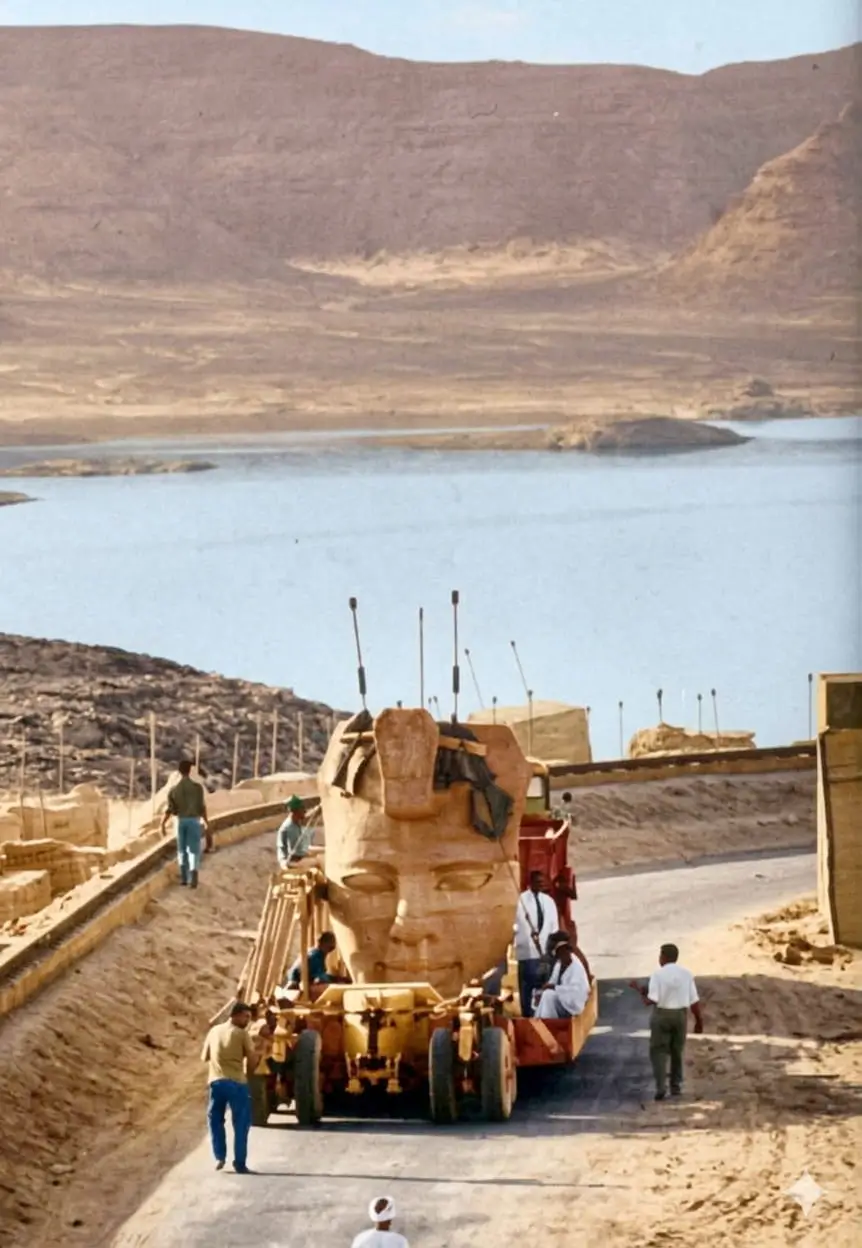
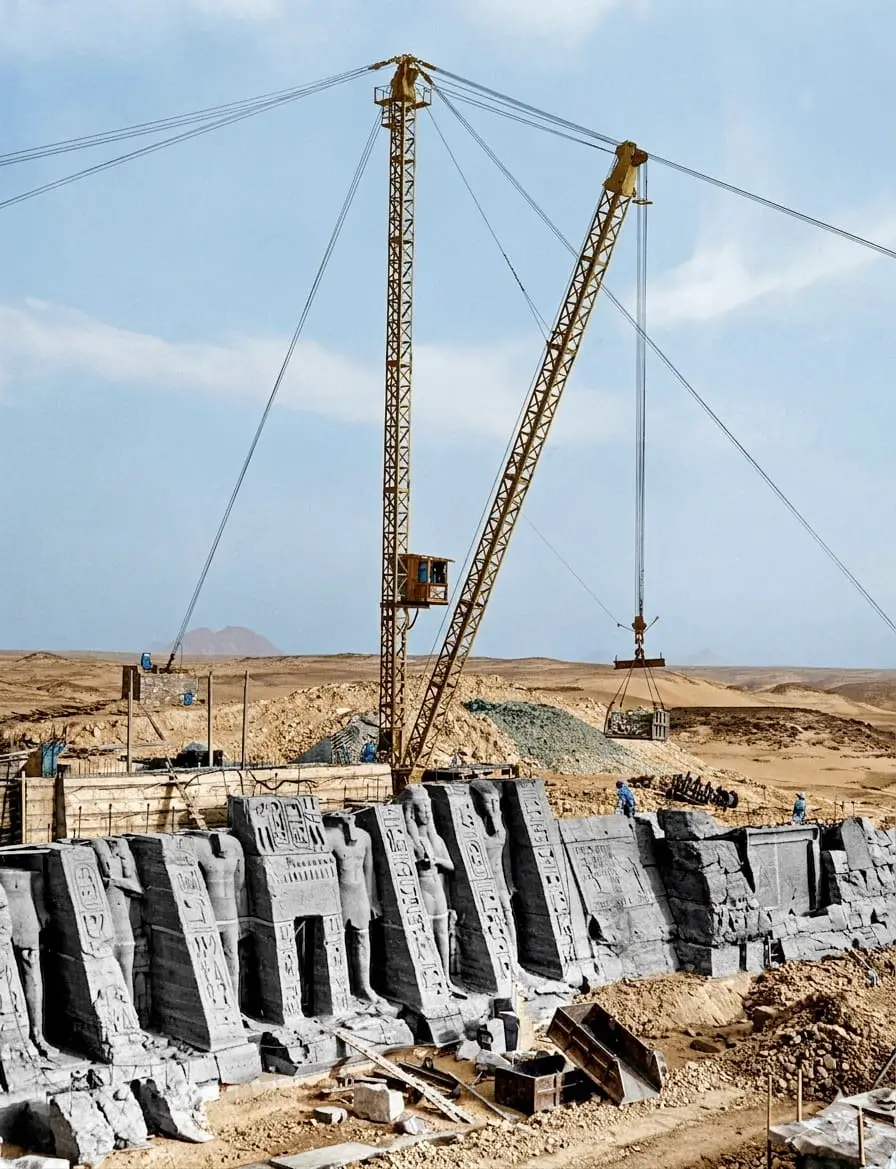
Furthermore, the transportation phase demanded specialized equipment capable of handling extreme weights on uneven desert terrain. Heavy-duty cranes and custom-built trailers moved the numbered blocks to a temporary storage area, where they sat protected from the elements. While the project site bustled with thousands of laborers and scientists, the management teams strictly followed the documentation protocols developed during the initial survey. Therefore, the relocation site functioned like a giant, 1,000-piece puzzle where every component had a non-negotiable destination.

By organizing the blocks in this manner, the teams prepared for the most challenging part of the mission: reassembling the temple 65 meters higher than its original location. Because this new site lacked the natural support of a mountain, engineers had to build a massive concrete dome to house the structures. This innovative solution provided the necessary framework to support the weight of the stone blocks while creating a cavernous interior that mimicked the original rock-cut atmosphere.

FUN

The Reconstruction Phase: Building the Artificial Mountain

The Reconstruction Phase Building the Artificial Mountain

Once the teams moved the blocks to higher ground, they began the monumental task of reassembling the sanctuary. However, because the new location lacked a natural cliff, engineers had to design a structural support system from scratch. Specifically, they constructed two massive, reinforced concrete domes that would act as the internal skeleton for the temples. These domes support the immense weight of the sandstone blocks and the thousands of tons of rock and rubble piled on top to recreate the appearance of a natural mountain. Consequently, the Great Temple now sits within an artificial cavern that perfectly mimics its original subterranean environment.

Moreover, the positioning of the four seated colossi of Ramesses II required surgical accuracy to satisfy historical and scientific standards. Experts used sensitive surveying equipment to place each block exactly where it belonged, ensuring that the joints remained as tight as possible. To hide the saw marks, technicians filled the 6-millimeter gaps with a mixture of crushed sandstone and mortar that matched the original color of the stone. Therefore, when you stand before the façade today, the statues appear as though the original craftsmen carved them directly into this new hillside.

Ain Sokhna: Your Quick Guide to Cairo’s Red Sea Paradise

Discover Ain Sokhna, Cairo's closest Red Sea paradise, located just 1.5 hours away. This stunning...
Related post
FUN

Engineering the Solar Alignment at the New Site

Engineering the Solar Alignment at the New Site

Furthermore, the most critical challenge involved preserving the biannual solar phenomenon that occurs in the sanctuary. Because the original architects aligned the temple with the rising sun to illuminate the statues of the gods, the modern relocation team had to replicate this orientation precisely. Using advanced astronomical calculations, engineers shifted the entire temple’s position slightly to account for the new elevation and the movement of the sun over several millennia. While the dates of the alignment shifted by exactly one day, the miracle remains intact, proving that modern engineering can indeed master ancient secrets.

By successfully recreating this alignment, the project did more than just save a building; it preserved a functional calendar of Pharaonic power. During the reconstruction, workers meticulously checked the path of light through the halls to ensure it still reached the “Holy of Holies” 60 meters deep within the dome. This dedication to accuracy highlights the deep respect that the international community held for the 19th Dynasty’s scientific achievements. Consequently, the Abu Simbel relocation serves as a definitive pillar of our digital tourism repository, showcasing the survival of human heritage through global cooperation.

Abu Simbel: The Ultimate Must-See Temples of Ramesses II

An epic "must-do" from Aswan! Visit Abu Simbel to see the four colossal statues of...
Related post
FUN

The International Diplomacy of the UNESCO Campaign

The International Diplomacy of the UNESCO Campaign

The Abu Simbel temple relocation succeeded primarily because it transformed a local crisis into a global responsibility. When the Egyptian government announced the construction of the Aswan High Dam, the international community realized that losing these 19th Dynasty monuments would be a loss for all of humanity. Consequently, in 1960, UNESCO launched an unprecedented international appeal to save the heritage of Nubia. This campaign eventually gathered financial and technical support from over 50 nations, proving that cultural preservation can transcend political boundaries even during the height of the Cold War.

Moreover, this diplomatic effort established the very foundation of the modern World Heritage system. Because so many countries contributed funds, equipment, and expertise, the project became a model for future conservation efforts. The collaborative spirit allowed archaeologists to conduct emergency excavations across the entire flood zone before the waters rose. Therefore, the mission did more than just move stone; it birthed a global consciousness regarding the protection of historical landmarks. This legacy of cooperation remains a central theme in your authoritative repository, as it underscores the universal value of Egypt’s ancient sites.

Completion and the Modern Visitor Experience

Completion and the Modern Visitor Experience

Furthermore, the official completion of the project in 1968 marked the beginning of a new era for Nubian tourism. Today, visitors witness the temples in a state that closely mirrors their original splendor, yet with the added narrative of their miraculous survival. The artificial mountain and the concrete dome provide a stable environment that protects the fragile sandstone from the elements more effectively than the original cliffside. While the location has changed, the spirit of the place remains undisturbed, offering a deep connection to the reign of Ramesses II.

Abydos: Royal Tombs, City of Osiris, and the Birthplace of Egyptian Kingship

The Enduring Significance of Abydos Abydos holds a unique status in Egypt. Indeed, it is...

Related post
FUN

FAQs: The Abu Simbel Temple Relocation

FAQs The Abu Simbel Temple Relocation

Why did Egypt have to move the Abu Simbel temples?

The Egyptian government and UNESCO moved the temples to save them from permanent submersion. During the 1960s, the construction of the Aswan High Dam created Lake Nasser, a massive reservoir that eventually flooded the original site. Without the Abu Simbel temple relocation, the rising Nile waters would have destroyed the 19th Dynasty sandstone structures and their priceless reliefs forever.

How exactly did engineers move such massive statues?

How exactly did engineers move such massive statues

Engineers used a “cut and lift” method to dismantle the monuments. They used delicate hand saws and wire saws to slice the temples into more than 1,000 blocks, each weighing between 7 and 30 tons. Crews then numbered every block and transported them to higher ground. Finally, technicians reassembled the pieces like a giant puzzle around a reinforced concrete dome that mimics the original mountain cliff.

Does the solar miracle still happen at the new location?

Does the solar miracle still happen at the new location

Yes, the solar alignment remains intact at the relocated site. While the dates shifted by exactly one day due to the change in latitude and elevation, the sun still penetrates the sanctuary twice a year (traditionally February 22 and October 22). The rays illuminate the statues of Amun-Ra, the deified Ramesses II, and Ra-Horakhty, proving that modern engineers successfully replicated the sophisticated astronomical calculations of the ancient architects.

How much did the Abu Simbel rescue mission cost?

How much did the Abu Simbel rescue mission cost

The international campaign cost approximately $40 million USD in the 1960s, which translates to several hundred million dollars today. More than 50 nations contributed to the fund through UNESCO. This financial cooperation ensured that one of the world’s most significant cultural landmarks survived for future generations, establishing the blueprint for the modern World Heritage site system.

Can visitors see the evidence of the move today?

Can visitors see the evidence of the move today

While the reconstruction was incredibly precise, observant visitors can occasionally see the faint lines where the blocks were joined. However, the conservation teams filled these 6-millimeter gaps with a specialized mortar made of crushed local sandstone to make the seams nearly invisible. Furthermore, you can visit the interior of the massive concrete dome that supports the “mountain,” which serves as a hidden testament to the 1960s engineering feat.

Live an unforgettable Honeymoon holiday in the land of Pharaohs....
Private Guided Tour Package from Cairo to White Desert, Aswan, Nile Cruise, Luxor, and Abu Simbel....
FUN
God_Anubis_Icon
Top 10 restaurants in cairo Egypt Fun Tours 2

Tour & Overnight camping with Mohamed

The breathtaking views and the isolation with a night under the stars! The trip was memorable with Mohamed, our tour guide, who drove us to all the sites on the way to the White Desert, and is clearly someone who knows the desert inside out. He also cooked a delicious

More »

Great layover tour

First things first…I was in Cairo about a week before the protests of 2011 started. As far as the tour was concerned, I was very pleased. I was met at the airport by a knowledgeable guide (Sara) who spoke great English and a driver. They took me to Giza first,

More »

7 night Egypt Experience Cairo, Aswan, Luxor

Trip of a lifetime!! COVID SAFE!! Knowledgeable guide who loves to share the magic of Egypt with tourists. Friendly and accommodating. This company goes to the extreme to make clients feel welcome and help them. A family company that takes good care of its support staff. Must book the 7-night

More »
Ancient Egyptian Sarcophagus - Egypt Fun Tours

Unforgettable experience with Fun Tours – Highly recommended!

Hello everyone! We would like to share our extremely positive experience with Fun Tours. Our tour was a complete success thanks to our guide, Osama, and our driver Hassan. Osama proved to be an enthusiastic and knowledgeable guide who answered all of our questions and catered to our individual wishes

More »

AMAZING TOUR, SOLO TRAVELER.

I am a California woman who traveled to Egypt alone, and thanks to Egypt Fun Tours, I had a great time. Hani, Mohammed, Kamal, and David (my driver) were very professional and very knowledgeable. I appreciate how respectful they were and how protective they were of me. They showed me

More »
God_Anubis_Icon

Top-rated Tour Packages

God_Anubis_Icon