
The White and Red Monasteries of Sohag: The Twin Pillars of Coptic Heritage

The White and Red Monasteries of Sohag represent the absolute pinnacle of early Christian monasticism in Egypt. Situated on the edge of the desert near the ancient city of Athribis, these “twin” sanctuaries offer a profound physical record of the transition from Pharaonic traditions to Byzantine spirituality. Because the White Monastery (Deir el-Abiad) reflects the architectural scale of an ancient temple and the Red Monastery (Deir el-Ahmar) houses the world-renowned “Sistine Chapel of Egypt” frescoes, they are inseparable in the historical narrative of Upper Egypt. Consequently, this guide provides the authoritative context needed to appreciate these masterpieces of stone and color.

For the modern traveler, these sites serve as a masterclass in cultural synthesis. Specifically, the reuse of Pharaonic limestone in the White Monastery and the sophisticated polychrome paintings in the Red Monastery prove that Coptic Egypt was a period of intense artistic innovation. Because Saint Shenouda the Archimandrite—the father of Coptic literature—transformed this community into a spiritual powerhouse in the 5th century, the region remains a vital center for scholarly study. Therefore, the White and Red Monasteries of Sohag stand as the definitive gateway to understanding the enduring soul of Christian Egypt.

FUN

The Shared Legacy of Saint Shenouda the Archimandrite

The Shared Legacy of Saint Shenouda the Archimandrite - White and Red Monasteries

To understand these structures, one must first understand the visionary leader who shaped them. Saint Shenouda inherited a small monastic community of only 30 monks and transformed it into a self-sustaining empire.

  • The Great Reformer: He established a revolutionary system that required novices to live outside the monastery before consecration, ensuring total commitment to the monastic covenant.
  • A Massive Expansion: Under his leadership, the White Monastery grew to house over 2,200 monks and 1,800 nuns, covering an area thousands of times larger than its original foundation.
  • Self-Sufficiency and Industry: He required monks to utilize their previous trades—from weaving and leatherwork to shoemaking and pottery—to benefit both the monastery and the local community.
  • Cultural Preservation: Shenouda mandated literacy for all his followers, turning the monastery into a global center for manuscript copying and Coptic literature.

Consequently, these monasteries are more than just architectural relics; they are the physical manifestation of a social and religious revolution. Therefore, their grand scale and artistic richness reflect the immense influence Shenouda’s community held over the identity of early Christian Egypt.
FUN

The White Monastery (Deir el-Abiad): A Pharaonic Silhouette

The White Monastery Deir el-Abiad A Pharaonic Silhouette

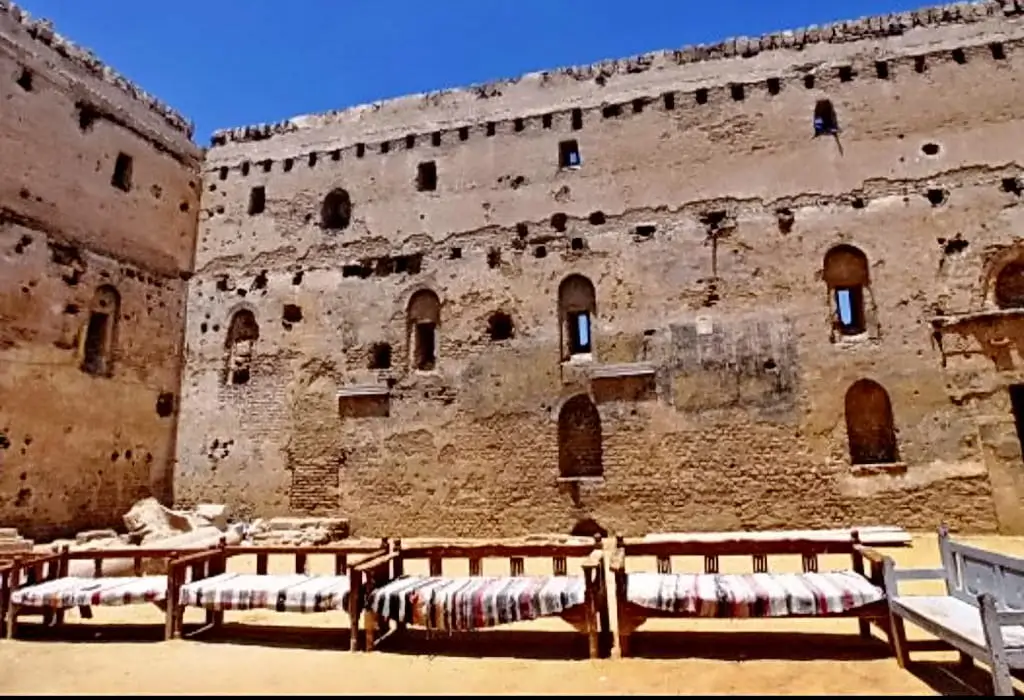
The White Monastery is an architectural anomaly that immediately strikes the 2026 traveler with its ancient appearance. Its exterior walls consist of massive blocks of white limestone, giving the structure its name. Because the walls feature the distinct inward slope—known as a cavetto cornice—the monastery mimics the silhouette of an ancient Egyptian temple. This design choice likely provided both structural stability and a sense of cultural continuity during the 5th century. Therefore, the White Monastery serves as a bridge between the Pharaonic and Christian architectural traditions.

The Re-use of Ancient Temples

One of the most fascinating aspects of the White Monastery is the visible presence of ancient history in its walls. The builders heavily utilized “spolia,” or repurposed stones, from the nearby ruins of the Greco-Roman temple of Athribis. Consequently, the site offers a unique scavenger hunt for the observant historian.

  • Hieroglyphic Blocks: You can find blocks still bearing high-relief hieroglyphs embedded within the monastery’s outer walls.
  • Temple Foundations: Many of the largest limestone slabs at the base were originally part of the majestic temple dedicated to the goddess Repyt.
  • Cultural Synthesis: By integrating these stones, the early Christians physically built their new faith upon the foundations of the old.

Because these Pharaonic blocks are so well-integrated, they provide a tangible connection to the region’s 20-year deep history of archaeological significance. Therefore, the site is a primary case study for the concept of architectural recycling in Upper Egypt.

White and Red Monasteries: The Church of Saint Shenouda

While much of the original “monastic city” is now in ruins, the central church remains a masterpiece of late antique design. Originally measuring over 75 meters in length, it was one of the largest basilicas in the Mediterranean world. Specifically, its layout influenced many later churches throughout the Nile Valley.

  • The Nave: The vast open space once allowed thousands of monks to gather for communal prayer.
  • The Triconch Sanctuary: The eastern end features a three-lobed sanctuary, a hallmark of sophisticated Coptic design.
  • Limestone Craftsmanship: The quality of the stone cutting reflects the high economic and political status of the community under Saint Shenouda.

Consequently, the White Monastery represents the scale of institutional power during the peak of the 19th Dynasty of Coptic influence. For the modern researcher, it stands as a testament to the industrial and spiritual organization of the 5th-century church.

A Visitor’s Guide to St. George’s Church in Coptic Cairo

Discover the Church of St. George (Mar Girgis), the principal Greek Orthodox church in Coptic...
Related post
FUN

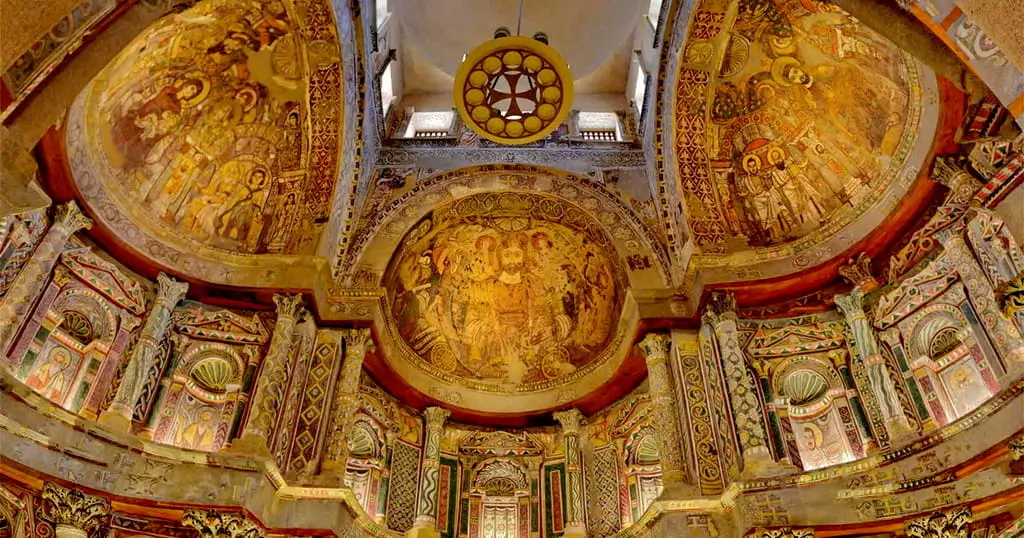
The Red Monastery (Deir el-Ahmar) – The “Sistine Chapel of Egypt.”

The Red Monastery (Deir el-Ahmar) – The Sistine Chapel of Egypt.

While the White Monastery impresses with its stone scale, the Red Monastery overwhelms the senses with color. Located just a short drive from its twin, this site earns its name from the fired red bricks used in its construction. However, the true treasure lies inside the sanctuary. Specifically, the Red Monastery contains the most complete and vibrant collection of early Christian frescoes in the world. Because these paintings date back to the 5th and 6th centuries, they provide a rare window into the visual world of late antiquity. Consequently, the Red Monastery is now a primary destination for art historians and spiritual travelers in 2026.

White and Red Monasteries: The 2026 Restoration Breakthrough

For centuries, these masterpieces were hidden under layers of black soot and dust. Thanks to a massive multi-year restoration project led by the American Research Center in Egypt (ARCE), the original colors have returned to their full glory.

  • Polychrome Brilliance: The sanctuary features a “triconch” (three-lobed) design entirely covered in painted plaster.
  • Architectural Art: The artists used paint to mimic the appearance of expensive marble, porphyry, and even elaborate textiles.
  • The Sacred Grotto: The cleaning revealed intricate depictions of the Four Evangelists and various Coptic saints in stunning detail.

Therefore, the Red Monastery is no longer a “hidden” gem. It is a world-class monument that rivals the most famous cathedrals of Europe. Specifically, the use of perspective and layered color proves that Coptic artists were masters of light and space. For the 2026 visitor, standing in the sanctuary is an immersive experience that brings the 5th century to life.

The Lost Library of the White Monastery

The Lost Library of the White Monastery - White and Red Monasteries

If the Red Monastery is the “Sistine Chapel,” the White Monastery was the “Library of Alexandria” for the Coptic world. Under the leadership of Saint Shenouda, the community became a powerhouse of literary production. Because Shenouda mandated that every monk and nun be literate, the monastery’s scriptorium worked tirelessly to produce manuscripts. Consequently, the library once held thousands of codices containing the world’s most significant collection of Coptic literature.

The Mystery of the Dispersed Manuscripts

Today, the physical library is a ruin, but its contents have changed the face of biblical studies. During the 18th and 19th centuries, thousands of parchment fragments were discovered within a secret chamber (the “Genizah”) of the monastery.

  • Global Distribution: These fragments are now scattered across the world’s greatest museums, including the British Library, the Louvre, and the Vatican.
  • The Shenouda Corpus: The library contained the original writings of Saint Shenouda, which remain the foundation of Coptic linguistics.
  • Biblical Evidence: Many of these manuscripts are the oldest surviving versions of specific biblical texts.

Therefore, the White Monastery remains an intellectual giant in the field of archaeology. For the researcher in 2026, the digital reconstruction of this library is a major ongoing project. Specifically, it allows scholars to “rebuild” the lost books of Shenouda using fragments found thousands of miles apart. Consequently, the monastery continues to speak to us through its written legacy.

The Church of the Blessed Virgin Mary at Gebel el-Teir: A Sacred Ascent

The Church of the Blessed Virgin Mary Gebel el-Teir represents a unique intersection of faith,...
Related post
FUN

The Temple of Athribis – The Stone Ancestor

The Temple of Athribis – The Stone Ancestor

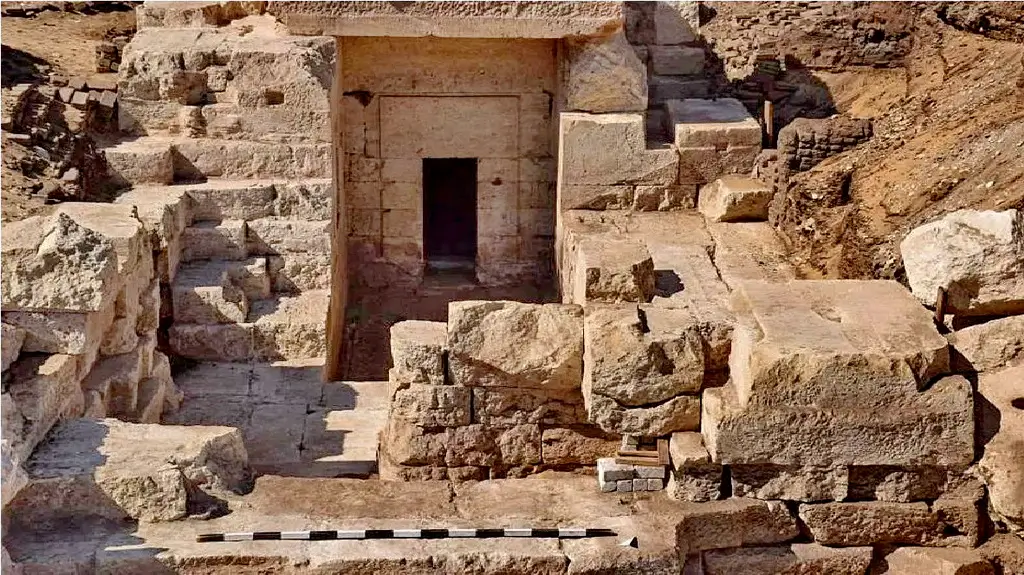
To truly understand the White and Red Monasteries, one must look at the ruins of Athribis (Wannina). Located just a few hundred meters from the White Monastery, this Greco-Roman temple was dedicated to the lion-headed goddess Repyt and the god Min. Because the early Christian builders viewed the temple as a convenient quarry, they dismantled its limestone blocks to construct the monastery. Consequently, the two sites are spiritually and physically intertwined. For the 2026 traveler, visiting Athribis provides the “before and after” narrative of Egyptian history.

  • The Zodiac Ceiling: Recent excavations have uncovered rare astronomical scenes that rival those at Dendera.
  • The Quarry Connection: You can still see the empty “negative spaces” where blocks were removed for the White Monastery.
  • A Site Reborn: Thanks to recent 2026 archaeological efforts, more of the temple’s lower chambers are now open to the public.

Therefore, the White Monastery is not just a building; it is a recycled monument. Specifically, the presence of the goddess Repyt’s imagery within a Christian sanctuary serves as a powerful reminder of Egypt’s layered identity.

The Sohag Monastic Itinerary

The Sohag Monastic Itinerary

Planning a trip to these sites requires a focus on lighting and timing. Because the Sohag region is now a key part of the “Nile Heartland” route, this itinerary ensures you see the best of both worlds in a single day.

  • 08:00 AM – Athribis Ruins: Start your morning at the Temple of Repyt. The early light is perfect for seeing the relief work before the heat rises.
  • 10:00 AM – The White Monastery: Walk or take a short drive to Deir el-Abiad. Spend time identifying the hieroglyphs in the outer limestone walls.
  • 12:30 PM – Lunch in Sohag: Head into the city for a traditional Upper Egyptian meal near the Nile corniche.
  • 02:30 PM – The Red Monastery: End your tour at Deir el-Ahmar. The afternoon sun provides the best indirect light for viewing the vibrant sanctuary frescoes.
  • 04:30 PM – Sohag National Museum: View the statues and artifacts recovered from both monastic sites.

The Church of Saint Sergius and Bacchus (Abu Serga): A Definitive Guide to Cairo’s Oldest Church and the Holy Family’s Refuge

The Church of Saint Sergius and Bacchus (Abu Serga) is a vital historical landmark located...
Related post
FUN

White and Red Monasteries FAQs

White and Red Monasteries FAQs

Are the White and Red Monasteries open to tourists?

Yes, both sites are open to the public daily. Specifically, they are active monasteries where monks still live and pray. Because of their religious nature, modesty in dress is required. For the 2026 season, most visitors arrive via private car or organized tours from Luxor.

Why is the Red Monastery called the “Sistine Chapel of Egypt”?

The Red Monastery earned this nickname because of its incredible 5th-century frescoes. Specifically, the paintings cover nearly every inch of the sanctuary’s walls and ceilings. Because the colors are so well preserved following the ARCE restoration, the experience is comparable to that of the famous chapel in Rome.

Can you see the “Lost Library” manuscripts at the site?

Currently, the physical manuscripts are not housed at the monastery. Most are located in international museums like the British Library. However, the Sohag National Museum displays several parchment fragments and liturgical items that tell the story of the library’s greatness.

Is it safe to travel to Sohag in 2026?

Sohag is a safe and welcoming destination for international travelers. Specifically, the government has invested heavily in the “Sohag Cultural Route” to promote tourism. Therefore, you will find improved roads, modern visitor centers, and helpful tourism police at every site.

The Soul of Upper Egypt

The Soul of Upper Egypt - White and Red Monasteries

The White and Red Monasteries of Sohag are far more than archaeological ruins. They are living testaments to a time when Egypt reinvented its spiritual identity. By combining the massive limestone heritage of the White Monastery with the colorful artistry of the Red Monastery, you experience the full spectrum of the Coptic era. Because these sites sit atop the foundations of the ancient Temple of Athribis, they represent the eternal continuity of the Nile Valley. Therefore, your 2026 journey to Sohag is not just a trip—it is a pilgrimage into the heart of history.

This isn't just a tour—it's an Amarna Archaeological Expedition. For those captivated by Pharaoh Akhenaten and the Amarna period....
Witness the best attractions of Cairo, Luxor, & Hurghada....
FUN
God_Anubis_Icon
Cairo belly dance show - Egypt Fun Tours

The BEST tour – a dream come true

I’ve been dreaming of going to Egypt since I was 7 years old. At 37, I finally made it. Even with the warnings that it’s not safe for Americans. Thankfully, Egypt Fun Tours quickly put any worry aside. Hamada, the owner, was recommended by a friend. He was our personal

More »

Day Trip to Alexandria

An enjoyable drive from Cairo to Alexandria. It was an enriching trip. I learnt so much history about the ancient civilisation. The tour guide explained the history of each site we visited. There is so much to see. I would definitely highly recommend visiting Alexandria. It’s rich in history. The

More »

Tour of Cairo

Despite a late start due to car trouble, Mohamed more than made up for it with his incredible knowledge and dedication. His explanations were detailed and thoughtful, and he went above and beyond to make sure we had a great experience. A memorable and informative tour, thanks to Mohamed’s hard

More »

Transit Stopover in Cairo

We have just returned from a two week holiday in Cape Town. On the way out our airline schedule meant that we had a 15 hour stop in Cairo. We decided to arrange a tour of the city and after asking for quotes/itineraries we chose Egypt Fun Tours. This worked

More »

Cairo Day Trip

My day trip to Cairo was brilliant, and close to the best one-day experience of my life. Hani was an amazing ambassador for his city and country; his wealth of knowledge, courtesy, and good humour was awesome. The itinerary was perfect, I visited most of the famous landmarks as well

More »
God_Anubis_Icon

Top-rated Tour Packages

God_Anubis_Icon