
The Ultimate Guide to Monasteries in Egypt: History & Heritage

This guide serves as a comprehensive resource exploring the rich history, unique architecture, and enduring spiritual significance of monasteries in Egypt. Throughout this article, we examine how these sacred spaces evolved from the solitary caves of early hermits into the thriving, fortress-like communal centers that define the Coptic tradition today. You will learn about the distinct architectural features designed for both protection and worship, as well as the essential role these sites play in preserving ancient manuscripts and artistic heritage. Furthermore, we highlight major monastic hubs—including the historic retreats of Wadi El Natrun, the ancient sites near the Red Sea, and the world-renowned library at Saint Catherine’s. Whether you are a dedicated pilgrim, a history enthusiast, or a curious traveler, this guide provides the vital context needed to understand the profound legacy of monasteries in Egypt and their ongoing influence on modern faith.

The Egyptian desert is more than just a vast, sandy landscape. For nearly two thousand years, it has served as the birthplace of Christian monasticism. It was here, in the deep silence of the wilderness, that the first monks began their journey. They sought spiritual wisdom and peace. Because of their dedication, they transformed the rugged desert into a sanctuary for prayer. Today, monasteries in Egypt remain living monuments. They perfectly bridge the gap between the ancient world and the modern Coptic faith.

Monasteries in Egypt: Guardians of a Unique Heritage

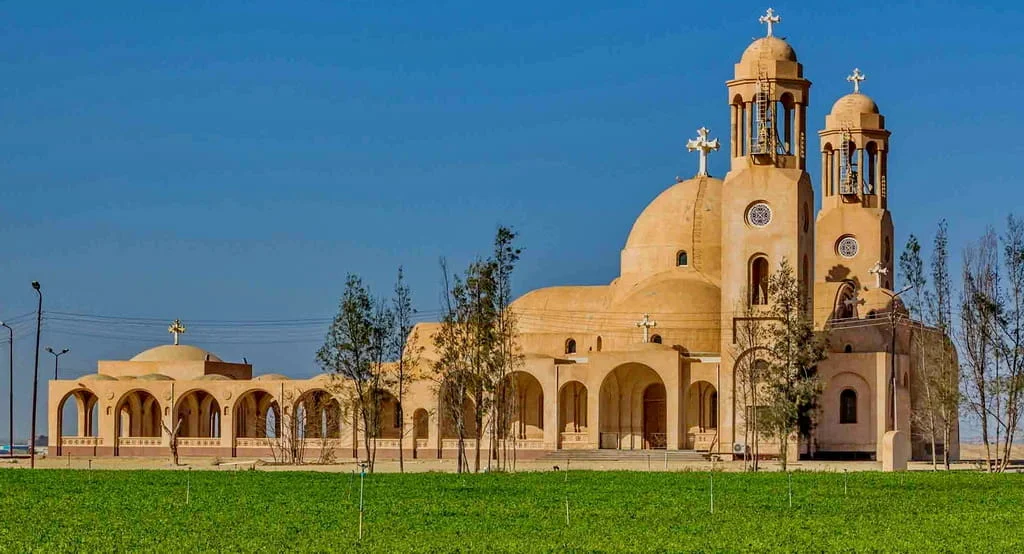
These monastic complexes are much more than just old stone buildings. In reality, they are the vital guardians of a unique cultural heritage. First, consider their architecture. Many monasteries in Egypt were built like fortresses to protect monks from historical raids. Furthermore, the interiors feature stunning, intricate frescoes that have survived for centuries. Each site tells a powerful story of survival, devotion, and artistic expression. Ultimately, these sites served as essential centers for preserving ancient manuscripts and the very foundations of Christian theology.

Monasteries in Egypt: A Legacy That Endures

To visit an Egyptian monastery today is to step directly into living history. Despite the changing of empires and the isolation of the desert, these sites have persisted through time. This guide explores the lasting legacy of the monasteries in Egypt. We will trace the roots of the early monastic movements. Additionally, we will uncover the hidden artistic treasures found in the remote corners of the Nile Valley. As we travel through this sacred geography—from the historic retreats of Wadi El Natrun to the lonely caves of the Red Sea—we will discover a faith that continues to inspire people around the world.

The Origins of Monasticism in Egypt

The story of how monasteries in Egypt began is rooted in the desert. In the third and fourth centuries, many Christians left the cities. They sought a life of prayer and simplicity in the wilderness. Consequently, they abandoned worldly goods to find spiritual closeness with God. Saint Anthony the Great is often called the “Father of Monasticism.” He famously moved into the desert to live in total solitude. His dedication inspired thousands to follow his path.

FUN

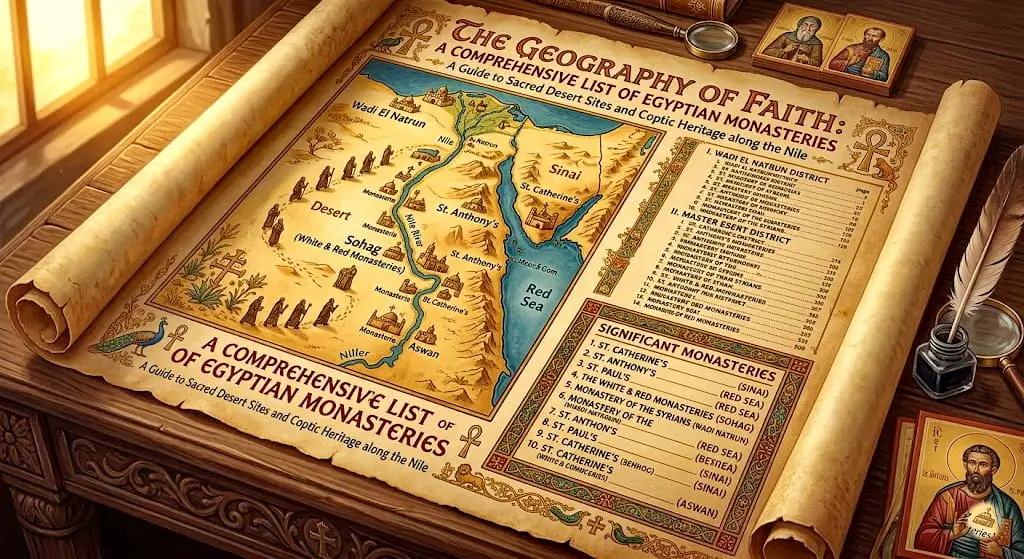
The Geography of Faith: A Comprehensive List of Egyptian Monasteries

The Geography of Faith A Comprehensive List of Egyptian Monasteries

This list represents the most significant monastic centers in Egypt that maintain historical or active religious status. It is not exhaustive, as the Egyptian desert contains hundreds of ancient sites, cells, and foundations that have been lost to time or remain subject to ongoing archaeological study.”

Wadi El Natrun (Beheira Governorate)

  • Monastery of Saint Macarius the Great (Deir Abu Makar): Wadi El Natrun
  • Monastery of the Syrians (Deir El-Suryan): Wadi El Natrun
  • Monastery of Saint Pishoy (Deir Anba Bishoy): Wadi El Natrun
  • Monastery of Paromeos (Deir El-Baramous): Wadi El Natrun

The Eastern Desert & Red Sea

  • Monastery of Saint Anthony: Red Sea Governorate
  • Monastery of Saint Paul the Anchorite: Red Sea Governorate

Cairo & Giza

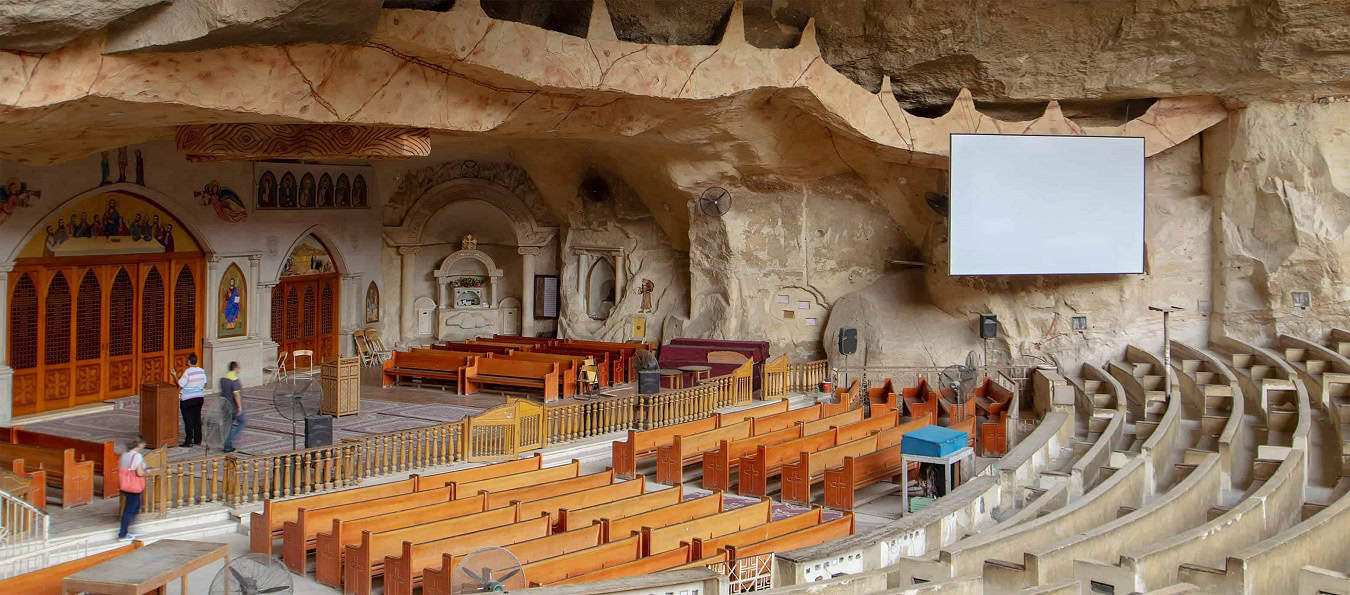
  • Monastery of Saint Simon the Tanner (Cave Church): Mokattam, Cairo
  • Monastery of Saint Barsoum El-Erian: Helwan, Cairo
  • Monastery of Saint George: Coptic Cairo (Old Cairo)
  • Convent of Saint Mercurius (Abu-Sefein): Coptic Cairo (Old Cairo)

Middle Egypt (Fayyum, Minya, Asyut)

  • Monastery of the Archangel Gabriel (Deir Naqlun): Fayyum
  • Monastery of Saint Samuel the Confessor: Qalamoun Mountain, Minya
  • Monastery of Saint Fana: West Mallawi, Minya
  • Monastery of the Virgin Mary (Deir El-Muharraq): Asyut
  • Monastery of the Virgin Mary (Deir Durunka): Asyut
  • Monastery of Saint Apollo: Bawit, Asyut (Archaeological/Uninhabited)

Upper Egypt (Sohag, Qena, Luxor, Aswan)

  • White Monastery (Deir El-Abiad): Sohag
  • Red Monastery (Deir El-Ahmar): Sohag
  • Monastery of Saint Shenouda (Deir Anba Shenouda): Sohag
  • Monastery of Saint Pachomius: Edfu, Aswan
  • Monastery of Saint Matthew the Potter: Esna, Luxor
  • Monastery of Saint George: Naqada, Qena
  • Monastery of the Archangel Michael: Qamula, Qena

Alexandria & The Delta

  • Monastery of Saint Menas (New): Mariout, Alexandria
  • Monastery of Saint Menas (Ancient/Ruins): Abu Mena, Alexandria
  • Convent of Saint Damiana: Belqas, Dakahlia

Sinai

FUN

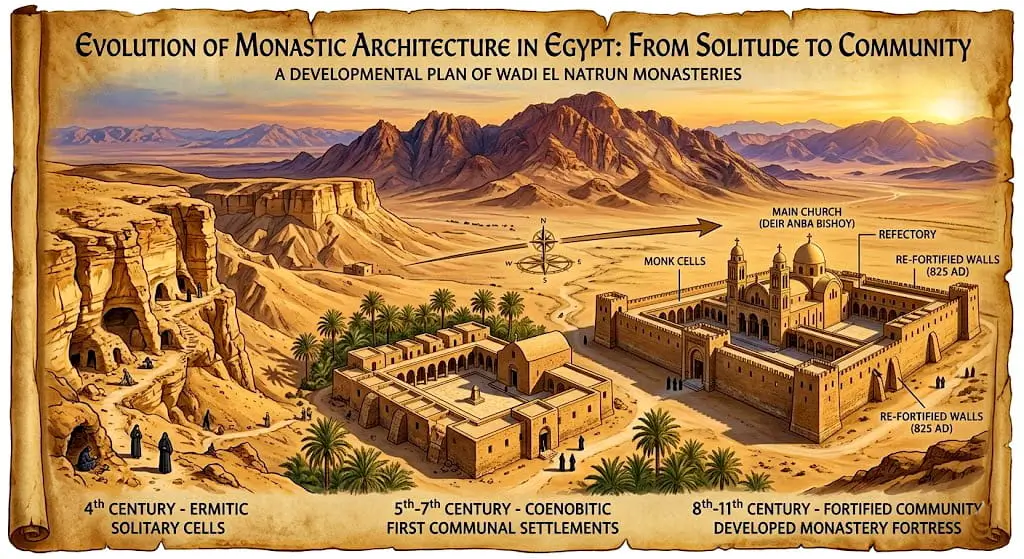
How Monasteries in Egypt Evolved from Solitude to Community

How Monasteries in Egypt Evolved from Solitude to Community

At first, most monks lived as hermits in individual caves. This lifestyle is known as the “eremitic” tradition. However, this solitary life was often dangerous and difficult to maintain. Over time, a new model emerged. Saint Pachomius developed the “cenobitic” or communal system. In this model, monks lived together within a shared space.

Consequently, they worked and prayed as a unified group. This transition was crucial for the growth of monasteries in Egypt. It provided better security and a structured daily routine. Later, these communities grew into the large, walled complexes we recognize today. They served as beacons of light in the vast, quiet desert.

The Theology Behind the Desert Life

The spiritual motivation for these monks was profound. They viewed the desert as a training ground for the soul. By removing all distractions, they hoped to reach a higher state of holiness. Moreover, they spent their days in constant prayer and manual labor.

This way of life was not just about hiding from the world. It was about transforming the human heart. Because of this focus, the monasteries in Egypt became centers of profound wisdom. People traveled long distances to ask the monks for advice. These interactions helped shape the teachings that still influence the Coptic Church today. Ultimately, the theology of the desert fathers remains the bedrock of their faith.

Architectural Design of Monasteries in Egypt

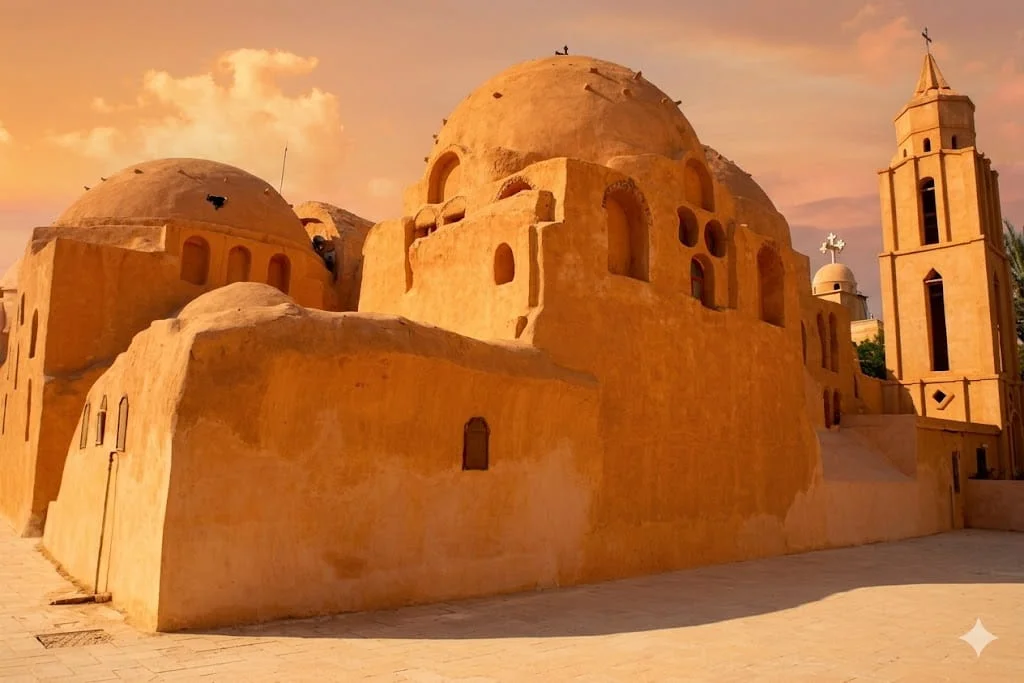
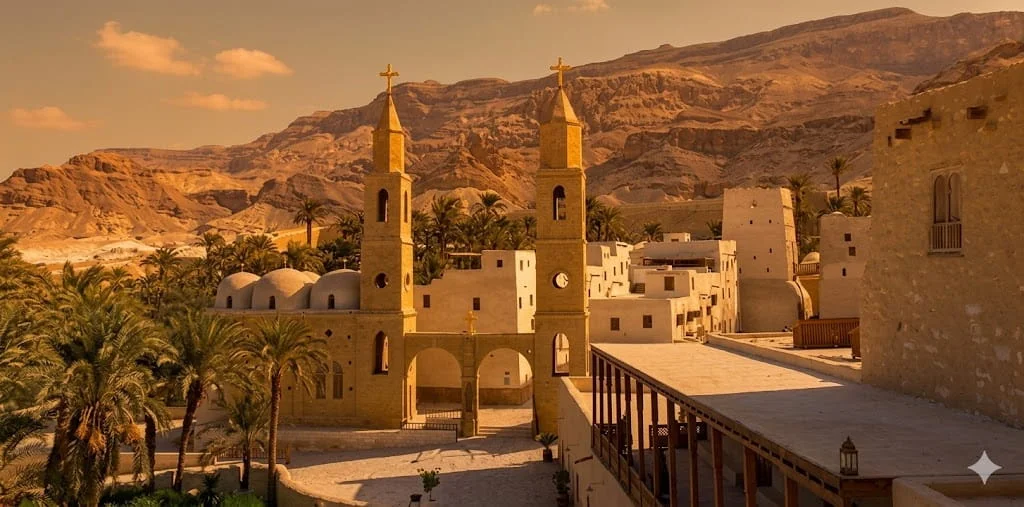
The architecture of these ancient sites is truly remarkable. Early monasteries in Egypt were not built merely for beauty. Instead, they were constructed for survival and safety. Because the monks lived in remote desert areas, they faced many threats. Consequently, they designed their homes to be secure fortresses. High, thick stone walls became a standard feature. These walls protected the residents from outside raids while keeping the atmosphere quiet and focused.

Key Features Found in Monasteries in Egypt

When exploring these historic sites, you will notice specific architectural patterns. First, the church acts as the heart of the complex. It is almost always the most decorated structure. Furthermore, you will often find a refectory where the monks share their meals. Another essential feature is the library. Historically, these libraries served as storehouses for precious, hand-written manuscripts.

[Image placeholder: Detailed diagram showing the layout of a typical walled monastery]

In addition to these buildings, many monasteries in Egypt include deep wells. Since water is scarce in the desert, this was a life-saving necessity. Also, the monk cells are usually simple and small. This simplicity reflects their commitment to a life of humility. Every part of the design serves a specific purpose, whether for prayer, protection, or basic survival.

Artistic Treasures Within the Walls

Beyond the structural strength, the interiors are often breathtaking. Artists spent countless hours creating intricate frescoes on the walls. Many of these paintings feature saints and biblical scenes. Moreover, the colors used in these works remain vibrant today. By preserving these pieces, the monasteries in Egypt act as museums of ancient Coptic art. They provide a rare window into the artistic traditions that flourished centuries ago. Consequently, every visitor experiences a deep sense of connection to the past.

A Visitor’s Guide to St. George’s Church in Coptic Cairo

Discover the Church of St. George (Mar Girgis), the principal Greek Orthodox church in Coptic...
Related post
FUN

Spotlight on Major Monastic Centers: The Heart of the Tradition

Cave Church of Saint Simon Egypt Fun Tours 1

To truly understand the monastic movement, one must look at specific, active sites. These monasteries in Egypt are not just museums; they are thriving communities. They represent the diverse traditions that have kept Coptic spirituality alive for centuries. Each location offers a unique perspective on desert life.

Wadi El Natrun: The Historic Monastic Hub

Wadi El Natrun is perhaps the most famous region for desert monasticism. Historically, it served as a retreat for monks fleeing city distractions. Today, it remains a bustling center of faith. Four major monasteries in Egypt are located here, each with its own character. For instance, the Monastery of the Syrians is renowned for its ancient library. In contrast, the Monastery of Saint Pishoy stands as a primary residence for the Coptic Pope.

Visitors often remark on the deep silence found in this valley. It is here that the tradition of the Desert Fathers is most intensely preserved. Consequently, this region remains the primary destination for pilgrims seeking a deeper connection to their history.

The Monastery of Saint Anthony and Saint Paul

Located near the Red Sea, these two sites hold immense historical weight. The Monastery of Saint Anthony is often called the oldest inhabited site in the world. It was built near the cave where Saint Anthony the Great lived. Because of this connection, it is a site of profound pilgrimage.

Nearby, the Monastery of Saint Paul follows the tradition of the anchorite. Both of these monasteries in Egypt provide a unique look at how monastic life began in total seclusion. Furthermore, the desert landscape surrounding these sites is dramatic and beautiful. It serves as a constant reminder of the physical challenges these monks overcame to pursue a life of holiness.

The Unique Significance of Saint Catherine’s Monastery

Tucked away in the Sinai Peninsula, Saint Catherine’s Monastery is truly distinct. Unlike other sites, it follows the Greek Orthodox tradition. Moreover, it is world-famous for its massive library of ancient manuscripts. This collection is second only to the Vatican in importance.

Because of its remote location and age, the site has remained remarkably preserved. It represents a different, yet vital, thread in the tapestry of monasteries in Egypt. Ultimately, this monastery serves as a bridge between the Christian traditions of the East and the desert heritage of North Africa.

Daily Life and Modern Relevance of Monasteries in Egypt

Daily Life and Modern Relevance of Monasteries in Egypt

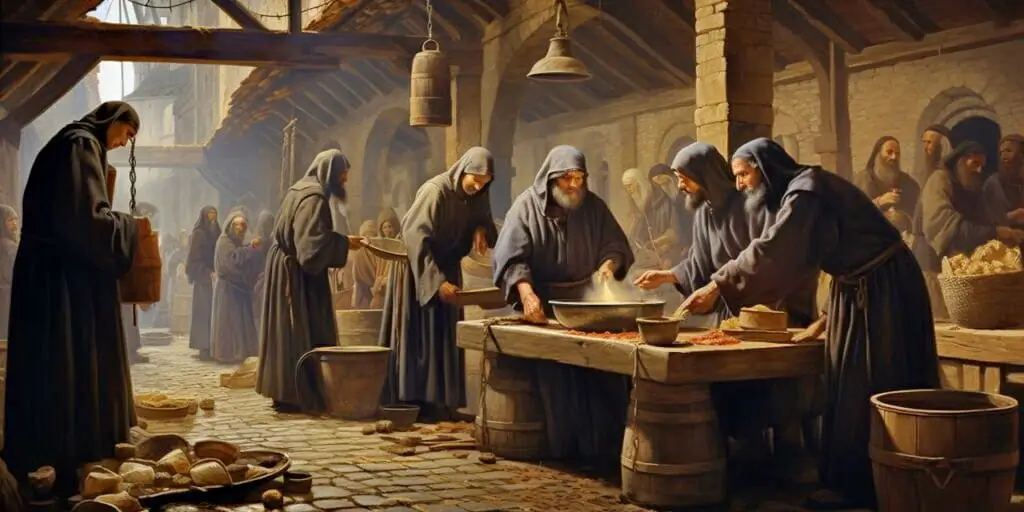
Today, the monasteries in Egypt are vibrant hubs of activity rather than mere ruins. While they maintain the ancient traditions of the Desert Fathers, they also serve as vital pillars for the modern Coptic community. Each day begins well before dawn, as monks gather for midnight prayers and the Psalmody. This rhythm of early morning worship, followed by communal liturgy, anchors the monastic life. It is a rigorous schedule that prioritizes prayer, yet it is balanced with essential manual labor.

How Monasteries in Egypt Serve the Community

The role of a modern monk often extends beyond the monastery walls. First, these sites function as centers of spiritual guidance. Many people visit seeking counsel, blessing, or a temporary retreat from the stresses of modern life. Furthermore, many monasteries in Egypt are self-sufficient, managing productive farms, workshops, and gardens. These facilities provide food for the community and enable monks to craft goods that support the monastery’s maintenance.

Additionally, the monasteries remain critical centers for education. They house extensive libraries that protect precious manuscripts and Coptic heritage. By training new generations of monks and providing resources for scholars, they ensure that ancient wisdom is passed down. Consequently, these sites are not isolated from the world; they are actively engaged in preserving the identity and faith of the Coptic Church in a changing global landscape.

Wadi Al-Natrun: The Living Legacy of Egypt’s Monasteries

The monasteries of Wadi El-Natrun stand as silent, profound witnesses to an enduring legacy of...
Related post
FUN

The Enduring Legacy of Monasteries in Egypt

Adaptive Reuse and Evolution in Wadi Al-Natrun

Looking toward the future, these monastic centers continue to attract new vocations. Young people from across Egypt and the diaspora still feel the call to this life of devotion. The revival of monasticism in recent decades has ensured that the “angelic life” practiced in the desert remains a beacon of hope.

Ultimately, the monasteries in Egypt stand as a testament to the endurance of faith. They have survived centuries of challenges, yet they continue to offer a sanctuary for those seeking silence, prayer, and a deeper connection to God. As we conclude this exploration, it is clear that these sacred spaces are not just historical artifacts; they are the living, breathing heart of Egyptian Christian history.

Practical Tips for Visiting Monasteries in Egypt

Planning a trip to these sacred sites requires careful preparation. Because these are active places of worship, they are not conventional tourist attractions. Instead, they are spiritual homes that have functioned for centuries. Consequently, visitors should approach their journey with humility, respect, and a clear understanding of local customs. By following these guidelines, you ensure that your visit remains respectful and enriching for both you and the monastic community.

Dress Code and Etiquette for Monasteries in Egypt

FAQs About Visiting Wadi Al-Natrun

Modesty is the most important rule when you visit. People must ensure that their shoulders and knees are fully covered at all times. For women, it is often helpful to carry a light scarf or shawl. You may need to cover your head when entering the inner chapels or during liturgical services. Furthermore, avoid wearing shorts, gym clothes, or any revealing outfits. When in doubt, choose loose-fitting, conservative clothing that reflects the solemnity of the environment.

In addition to your attire, be mindful of your behavior. Because these monasteries in Egypt are sacred spaces, maintain a quiet and respectful demeanor. If a service is in progress, avoid loud conversations or intrusive movement. Always ask for permission before taking photographs. Some areas, particularly near the altars or within the inner sanctuaries, may restrict photography entirely. Finally, remember that the monks dedicate their lives to prayer and silence. Respect their personal space, and avoid interrupting them during their duties unless they initiate a conversation.

A Visitor’s Guide to the Cave Church of Saint Simon (Mokattam)

Discover the Monastery of Saint Simon the Tanner, famously known as the "Cave Church," one...
Related post
FUN

Planning Your Journey to Monasteries in Egypt

Architectural Wonders and Defenses in Wadi Al-Natrun

Before you travel, verify the accessibility of the site. While many monasteries in Egypt welcome pilgrims, some have specific visiting hours or may close during major fasts and feast days. It is often wise to hire a reputable, local guide who understands the specific etiquette required for religious tourism. They can help navigate the logistics, ensuring you have the necessary permissions to enter the grounds.

[Image placeholder: A respectful visitor interacting with the landscape or architecture of a monastery]

Furthermore, plan your timing carefully. Many of the most historic sites are located deep in the desert. Always travel with enough water, sun protection, and a reliable vehicle. If you are interested in a deeper experience, some guest houses offer limited accommodation for overnight stays. However, you must request this well in advance. Ultimately, by preparing thoroughly and showing genuine respect, your visit to these monasteries in Egypt will be a profound and memorable experience that bridges the gap between the ancient past and your own spiritual journey.

FUN
God_Anubis_Icon
Tailored Services for Corporate Business Transportation Needs

On time, adaptable, and fun!

My friend and I planned a whirlwind trip to Dubai, the Dead Sea, Petra, Cairo, Luxor, and Sharm el Sheikh for early November 2011 – 6 cities in 10 days! We allotted one afternoon and evening for Cairo, and we wanted to see as much as we could! We drove

More »

Cairo Day Trip

My day trip to Cairo was brilliant, and close to the best one-day experience of my life. Hani was an amazing ambassador for his city and country; his wealth of knowledge, courtesy, and good humour was awesome. The itinerary was perfect, I visited most of the famous landmarks as well

More »

Valley of the Kings, Hepchepsut

I never had a more positive experience and educational time than this tours. Learning about a variety of kings and queens was amazing! The tour guide was super nice and helped me and my friend every step of the way! Including bargaining for a few souvenirs! I will never forget

More »

Great guided tour of pyramids

We travelled to Cairo on Friday, May 3, 2019, from Toronto. We landed at 0530 and were met by a representative of Fun Tours at the departure gate. We were only on a layover of 6 hours, and the tour company came with a private van, water, a driver, and

More »

AMAZING TOUR, SOLO TRAVELER.

I am a California woman who traveled to Egypt alone, and thanks to Egypt Fun Tours, I had a great time. Hani, Mohammed, Kamal, and David (my driver) were very professional and very knowledgeable. I appreciate how respectful they were and how protective they were of me. They showed me

More »
God_Anubis_Icon

Top-rated Tour Packages

God_Anubis_Icon