Second Dynasty of Egypt: Architectural and Technological Milestones
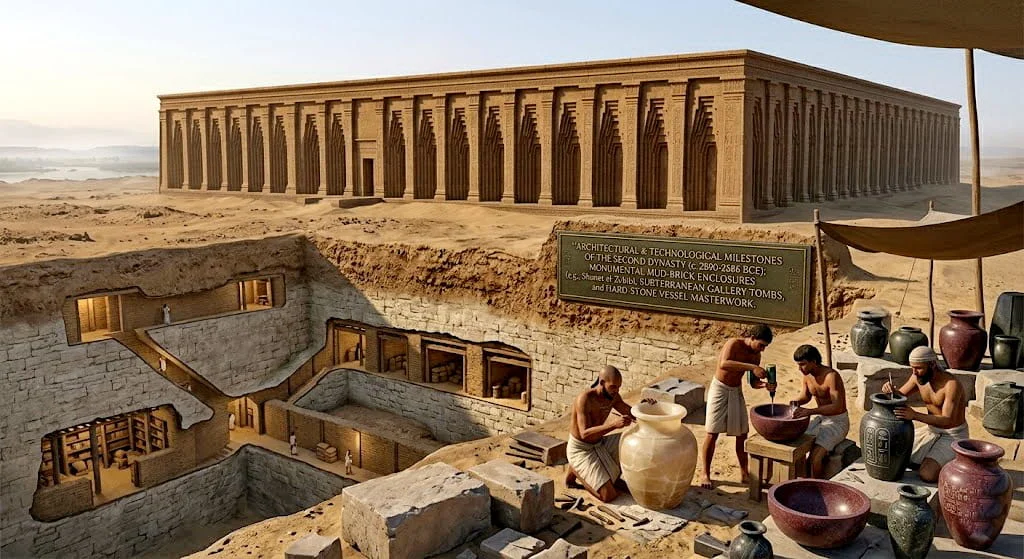
The Second Dynasty is frequently overshadowed by the later pyramid builders. However, this era achieved monumental advancements in construction technology, engineering, and administrative organization.
Second Dynasty of Egypt: The Underground Galleries of Saqqara
The tombs of Hotepsekhemwy and Nynetjer at Saqqara are marvels of subterranean engineering. Workers tunneled deep into the solid limestone bedrock to carve out sprawling networks of corridors, storage magazines, and royal chambers.
The tomb of Nynetjer, for example, features over a dozen complex galleries. These subterranean rooms mimic the layout of a real royal palace. These massive undertakings required a highly sophisticated, disciplined labor force.
Shunet el-Zebib: The Mud-Brick Fortress
At Abydos, Khasekhemwy constructed a colossal funerary enclosure known today as the Shunet el-Zebib (“Storehouse of the Raisins”). This structure is one of the oldest surviving monumental mud-brick buildings in the world.
- Dimensions: The enclosure walls measure over 120 meters long and 65 meters wide.
- Height: The massive walls still tower over 11 meters into the desert sky.
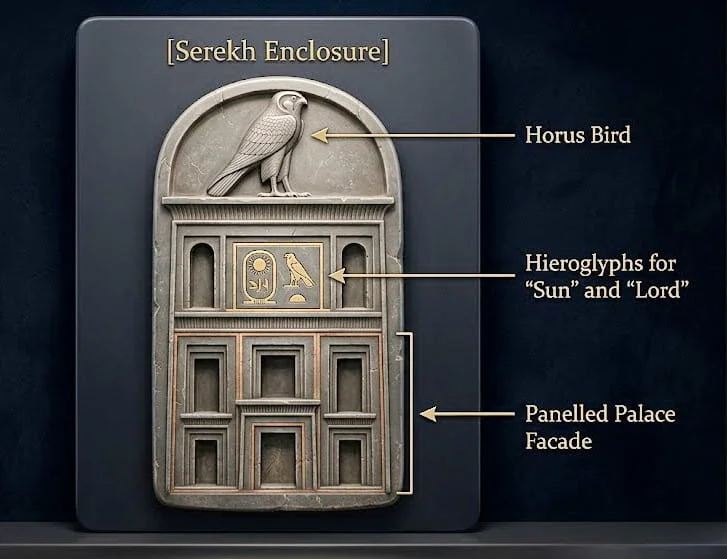
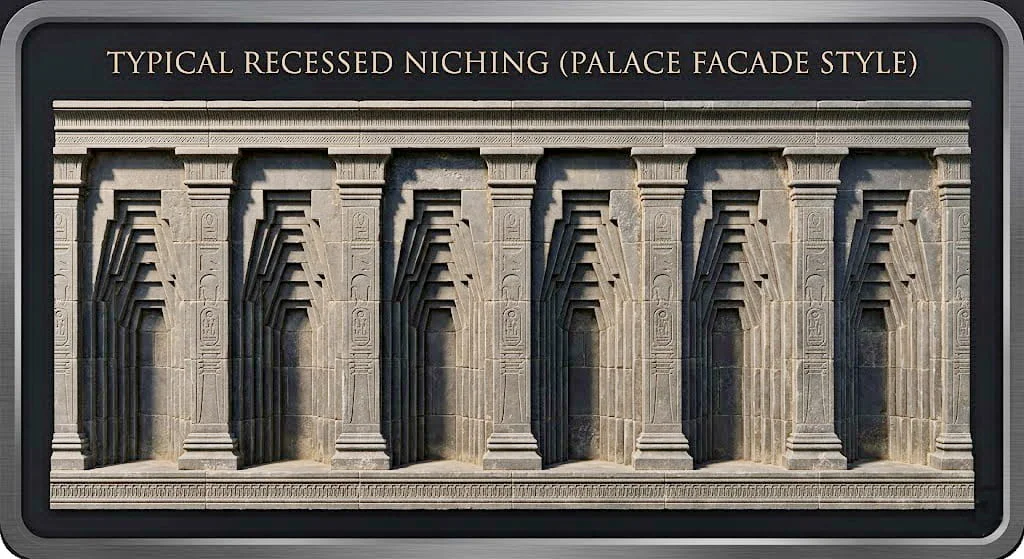
- Design: The exterior walls feature intricate, recessed niching. This decorative technique directly copied the “palace facade” style seen on early serekhs.
The sheer scale of the Shunet el-Zebib proves that the centralized state possessed immense wealth. It also demonstrates an extraordinary ability to mobilize large numbers of laborers. This project served as the immediate architectural precursor to Djoser’s Step Pyramid complex.
Masterwork Stone Carving
During the Second Dynasty, Egyptian artisans achieved a level of mastery in hard-stone vessel carving that was never surpassed. Excavators have recovered thousands of beautifully polished bowls, plates, and jars from this period.
These vessels were crafted from incredibly difficult materials. Artisans successfully carved diorite, schist, porphyry, and translucent alabaster. Many of these items bear delicate, incised inscriptions of Second Dynasty royal names, providing modern historians with invaluable chronological clues.
Key Artifacts of the Second Dynasty: Silent Witnesses to History
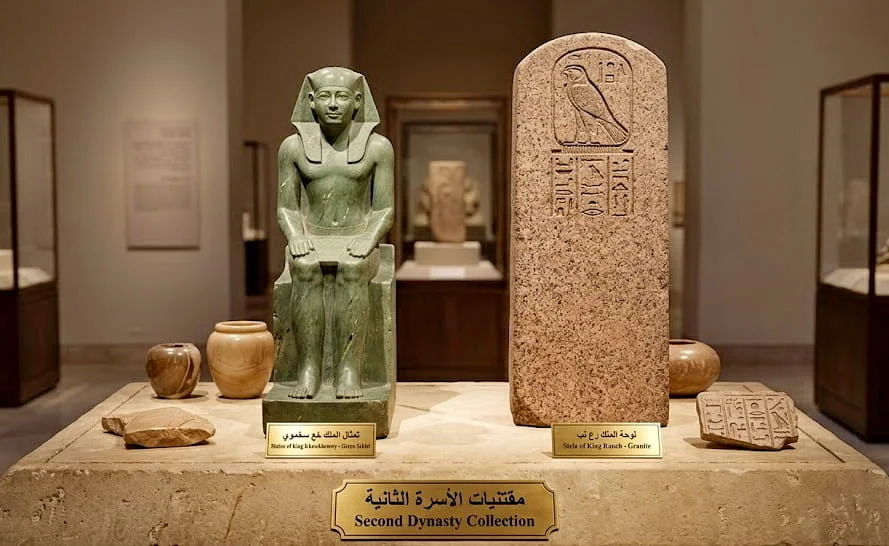
Because written narrative texts from the Early Dynastic Period are virtually non-existent, Egyptologists rely heavily on contemporary material culture to reconstruct the political and religious landscape of the Second Dynasty. The surviving artifacts from this era are not merely decorative objects; they are deliberate pieces of royal propaganda, administrative tools, and theological statements carved into enduring stone.
Second Dynasty of Egypt: The Definitive Artifact Archive of the Era
The following masterworks represent the most historically significant objects recovered from Second Dynasty contexts, offering a physical blueprint of a divided—and ultimately reunified—nation.
| Artifact Name |
Material |
Current Location |
Historical Significance |
| Seated Statues of Khasekhem |
Green Schist / Limestone |
Cairo Museum & Ashmolean Museum (Oxford) |
Features the earliest detailed depictions of a ruling pharaoh; bases are inscribed with the body counts of defeated northern rebels. |
| Funerary Stela of King Peribsen |
Greywacke / Sandstone |
British Museum & Cairo Museum |
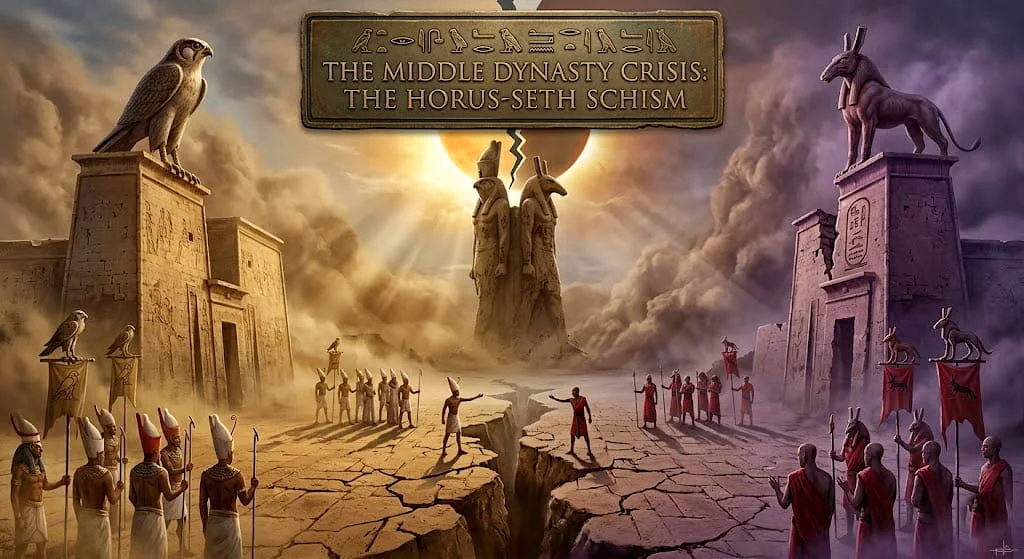
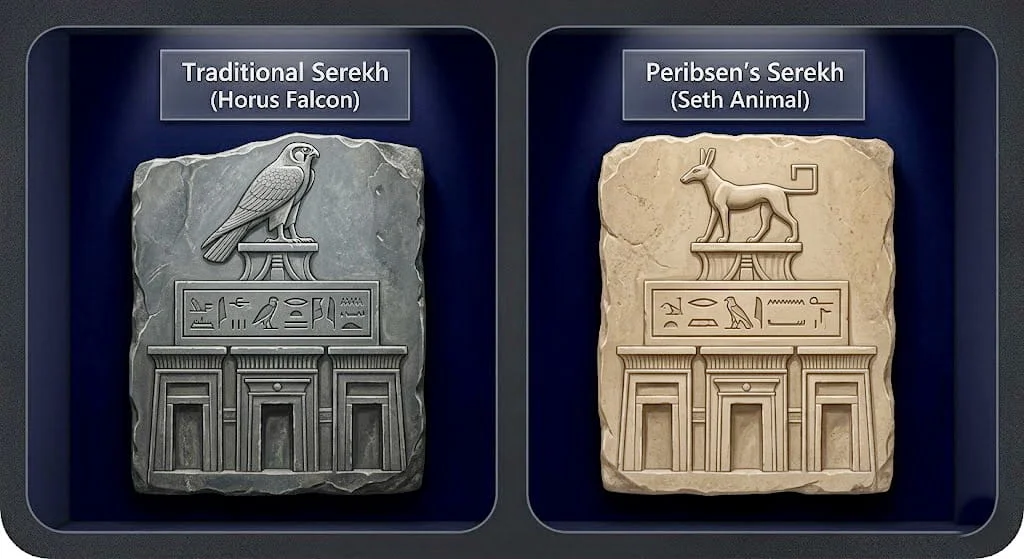
The definitive archaeological proof of the religious schism, displaying the enigmatic Seth animal atop the royal serekh. |
| Granite Stela of Raneb (Nebra) |
Pink Granite |
Metropolitan Museum of Art (New York) |
Features the earliest known monumental usage of the Ra hieroglyph, marking the birth of solar theological influence. |
| The Khasekhemwy Reconstructed Jamb |
Hard Limestone / Granite |
Hierakonpolis (Main Deposit) / Cairo Museum |
Showcases the rapid evolution of complex, raised-relief monumental temple architecture just before the Old Kingdom. |
1. The Seated Statues of Khasekhem: Propaganda in Stone
Discovered by James Quibell at Hierakonpolis in the late 19th century, the two seated statues of Khasekhem represent a monumental leap forward in the history of Egyptian royal portraiture.
- The Iconography: The king is depicted wearing the tightly fitted Heb-Sed jubilee cloak and the white crown (Hedjet) of Upper Egypt. His posture is rigid, projecting absolute, divine authority.
- The Political Graphic: The bases of these statues are etched with the contorted, chaotic bodies of northern enemies. The inscriptions record precisely 47,209 fallen rebels from Lower Egypt. This is one of the earliest examples of art being utilized as a precise tool of political intimidation and victory documentation in human history.
2. The Funerary Stela of Peribsen: The Heretic’s Signature
Recovered from the royal tomb (Tomb P) at Umm el-Gaab in Abydos, this round-topped stone stela stood outside the king’s burial complex to mark the place where offerings were to be made.
Instead of the traditional Horus falcon, the top of the serekh prominently features the long-eared, fork-tailed hound of Seth. The carving is clean, crisp, and unambiguous. It confirms that the religious shift from Horus to Seth was an official, state-sanctioned mandate during Peribsen’s reign, rather than a posthumous slander by his successors.
3. The Monumental Stela of Raneb: Solar Beginnings
This massive, round-topped pink granite monument was originally erected at Saqqara to mark the superstructure of Raneb’s massive gallery tomb.
The stela lacks complex text, focusing entirely on the king’s name inside the palace facade enclosure. The presence of the sun disk directly above the neb (“lord”) sign demonstrates that even while the physical administrative capital was resting securely in Memphis, theological eyes were beginning to track toward Heliopolis and the solar doctrines that would define the upcoming Fourth Dynasty.
4. The Subterranean Stone Vessel Hoards
Among the most awe-inspiring archaeological yields of the Second Dynasty are the thousands of stone vessels recovered from the underground tunnels beneath Djoser’s Step Pyramid, where they had been gathered and ceremonially cached.
- Material Mastery: These vessels were hollowed out using weighted copper drills and abrasive sand, transforming unyielding rocks like diorite, metamorphic schist, and porphyry into paper-thin bowls and delicate jars.
- Historical Anchors: Many of these vessels feature highly detailed, scratch-incised serekhs of Hotepsekhemwy, Nynetjer, and alternative ephemeral rulers like Senedj and Bird-Nebty. These vessels acted as an ancestral archive, which Djoser buried to legally and spiritually link his new Third Dynasty line back to the historic rulers of the Second Dynasty.
The Second Dynasty of Egypt: Paving the Way for the Old Kingdom
The Second Dynasty did not collapse into chaos. Instead, it concluded with an era of absolute state control and architectural ambition. Khasekhemwy married a powerful northern princess named Nymaathap. History records Nymaathap as a highly influential queen. Crucially, she gave birth to the next pharaoh, Djoser.
Djoser inherited a completely pacified, wealthy, and highly centralized state from his parents. He moved the royal burial ground back to Saqqara. There, working closely with his legendary architect Imhotep, he transformed the traditional mud-brick enclosures of his ancestors into stone. He built the Step Pyramid, the world’s first true skyscraper. Therefore, the Second Dynasty was not a historical detour. It was a vital crucible of statehood. Through its intense political crises, Egypt successfully forged the administrative tools and ideological resilience necessary to build the Pyramids.
Bibliographic Foundations and Recommended Reading
To provide this comprehensive overview of the Second Dynasty, research was synthesized from the leading academic authorities on Early Dynastic Egypt. For further independent study or to expand your personal research library, the following foundational texts are highly recommended:
To understand the broader socio-political structure and how this era fits into the macro-cycles of pharaonic power, see our master guide on The Dynasties of Ancient Egypt.