The Rulers of the Sixth Dynasty of Egypt: Detailed Biographical Profiles

The transition from the Fifth to the Sixth Dynasty of Egypt marked a subtle shift in pharaonic power. While the external trappings of the Old Kingdom remained, the personal priorities of the rulers and the focus of their monuments began to reveal the fissures that would eventually fracture the state.
Teti: The Founder of the Sixth Dynasty and the Consolidation of Power
Teti, the first ruler of the Sixth Dynasty, ascended the throne in a period of potential instability. He married Iput I, a daughter of the Fifth Dynasty’s King Unas. This strategic move bridged the gap between the two dynasties and ensured the legitimacy of his reign.
Teti dedicated his efforts to maintaining the status quo. He sought to secure the loyalty of a growing bureaucratic class. He is best remembered for his pyramid complex at Saqqara.
His pyramid featured a significant innovation. The builders covered the walls of the burial chamber with Pyramid Texts. These ritual incantations had previously been restricted. Their appearance in private tombs signified a major cultural shift.
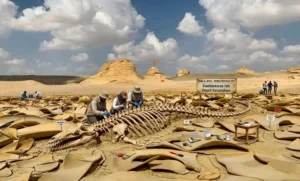
Archaeological excavations at his site revealed a mortuary temple that remained in use for centuries. This indicates that his cult survived long after his death. However, ancient sources like Manetho hint that his reign ended prematurely. Perhaps palace guards assassinated him. This event underscores the mounting tensions within elite circles.
Pepi I: Expansion and Bureaucratic Growth
Pepi I’s reign marked a period of assertive external policy. Under his rule, Egypt expanded its reach in trade and military influence. He famously commissioned the official Weni the Elder to lead military expeditions into the Levant.
These campaigns appear in Weni’s autobiography. This text remains a primary source for understanding the military logistics of that time. Simultaneously, Pepi I sent trading expeditions to the southern regions of Nubia. He also sent teams to the land of Punt. They procured incense, gold, and unfamiliar raw materials.
These efforts solidified Egypt’s economic dominance. Architecturally, Pepi I returned to the South Saqqara necropolis. He constructed a pyramid known as Men-nefer-Pepi. This structure became the focal point for a new royal city.
He appointed provincial officials more aggressively during his reign. This strategy was a double-edged sword. It increased central efficiency in the short term. However, it empowered the nomarchs who would eventually challenge the throne.
Merenre I: Strengthening the Southern Frontier
Merenre I, the son of Pepi I, continued his father’s aggressive foreign policy. He focused specifically on the southern frontier. His reign is notable for the promotion of Harkhuf, a governor of Elephantine.
Harkhuf’s tomb inscriptions detail daring journeys into Nubia. He brought back goods and, on one occasion, a dancing dwarf for the royal court. These expeditions were vital for the state’s economy and prestige.
Merenre I understood the necessity of maintaining order among the nomadic groups of the desert. He utilized both diplomacy and the threat of force to secure vital trade routes. His pyramid at South Saqqara is less well-preserved than those of his predecessors.
However, recent archaeological investigations have provided fascinating insights into the construction techniques of the era. Builders utilized localized stone and mud-brick casing. Merenre I died at a relatively young age. He left the throne to his brother, Pepi II.
The Pepi II Paradox: A Century of Stagnation
The reign of Pepi II is perhaps the most famous in the study of the Sixth Dynasty. He traditionally held a 94-year rule. Pepi II ascended the throne as a child. He lived to see his state transform beyond recognition.
Ancient Egyptians viewed the king as a divine, youthful mediator. The paradox of a king who remained on the throne for a century was profound. The aging monarch became an increasingly remote figure. The physical decline of the king likely mirrored the administrative fatigue of the state.
Psychologically, the population lived under a ruler who was an immutable fixture. This created a sense of generational stasis. His long tenure arguably facilitated the decay of central authority. The king’s ability to appoint and oversee provincial administrators diminished with his physical faculties.
Nomarchs were left unchecked for decades. They consolidated local power bases and created autonomous fiefdoms. By the end of Pepi II’s life, the ideology of the “God-King” had been hollowed out. Pragmatic regional autonomy replaced it.
Archaeological evidence from his pyramid complex at South Saqqara shows the final efforts of a decaying administration. The state attempted to maintain the grandeur of the past. However, the kingdom’s resources were being diverted away from the center. This signaled that the Old Kingdom was effectively over before Pepi II was even laid to rest.