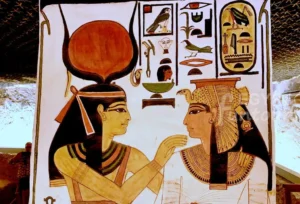
King Horemheb: The Great Erasure (Rewriting History)
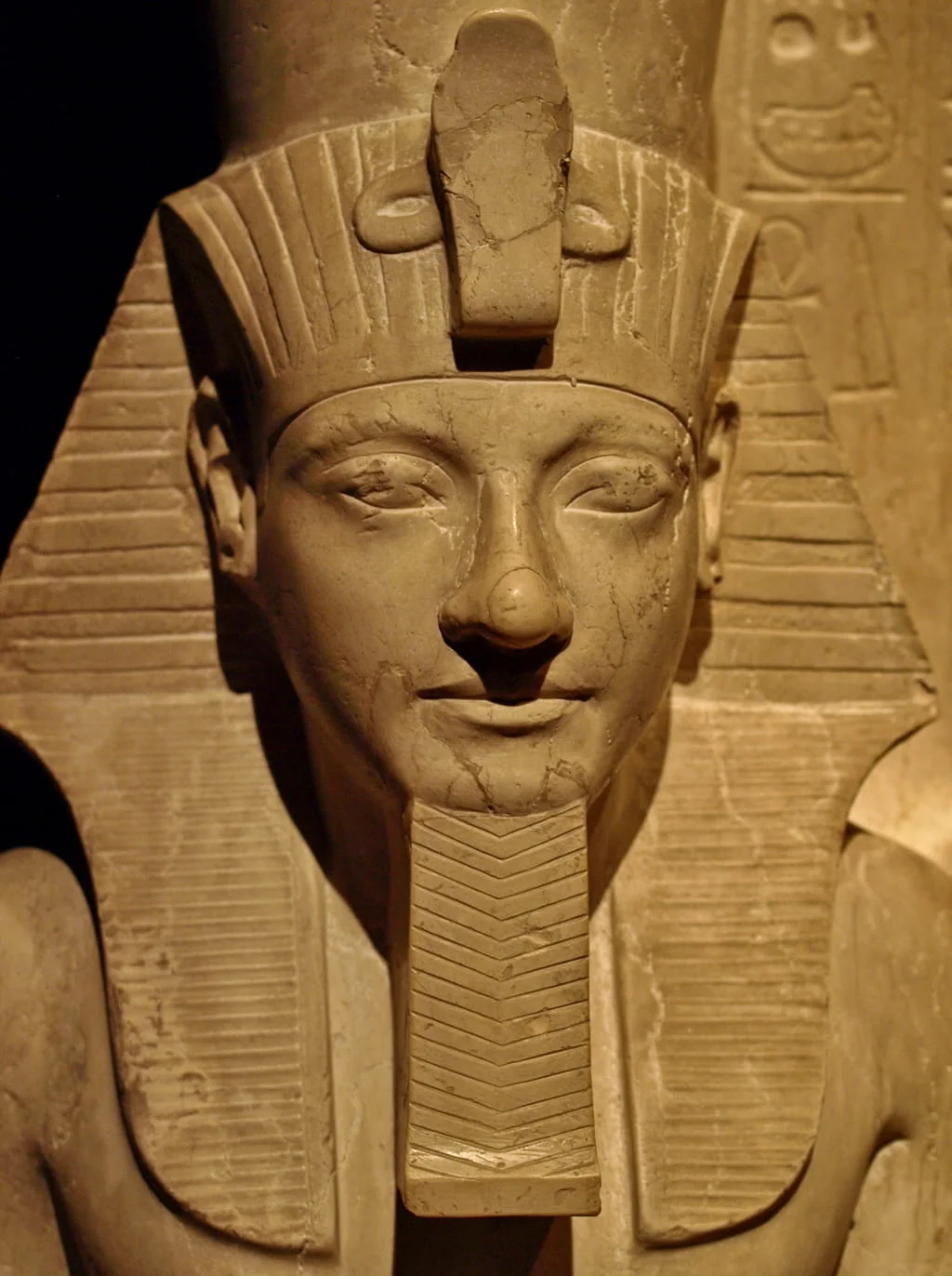
Political stability often requires a clean break from a traumatic past. While Horemheb’s legal reforms successfully restored peace to the streets, a massive ideological problem remained. The ghost of Akhenaten’s religious revolution continued to haunt the national psyche. Monotheistic temples still stood, and the traditional priesthoods demanded complete retribution for decades of persecution.
To heal the wounded nation, Horemheb initiated a radical campaign of systemic erasure. Today, historians call this process damnatio memoriae—the complete damnation of a person’s memory. The king resolved to completely scrub the entire Amarna period from the official records of Egypt. He did not merely want to replace the heretic rulers; he wanted to pretend they had never existed at all.
King Horemheb: Dismantling the Sun Temples
The primary targets of this campaign were the architectural monuments of the Amarna era. Horemheb deployed vast military engineering teams to completely dismantle the temples dedicated to the solar disk, the Aten.
Instead of burning or shattering these stones, the pharaoh executed a brilliant logistical plan. He treated the old structures as massive, pre-cut stone quarries. His workers carefully dismantled the walls of Akhenaten’s shrines, utilizing the salvaged materials to fuel the king’s own grand construction projects.
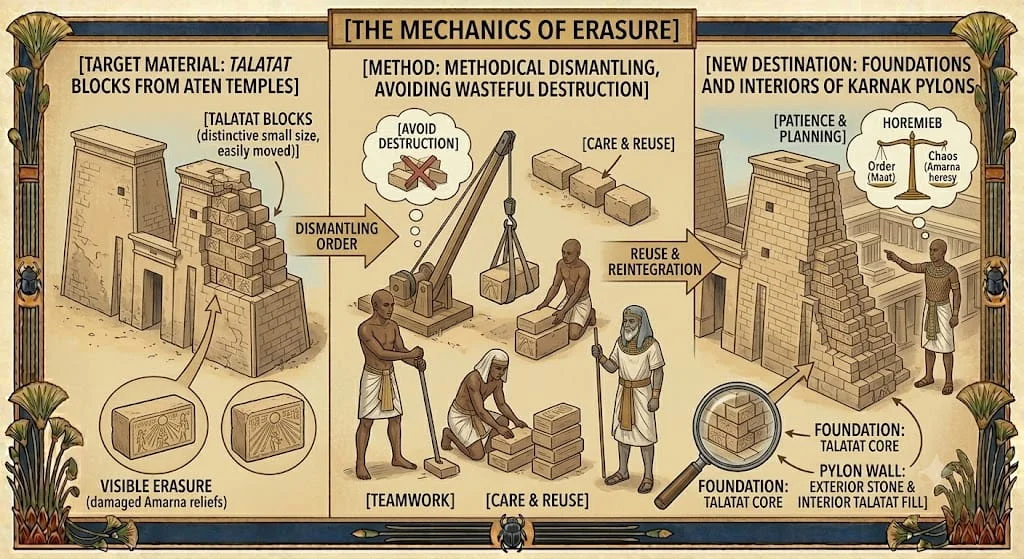
This strategy served a dual purpose. It instantly cleared the landscape of heretical symbols while providing cheap, high-quality building materials for traditional monuments. By recycling the enemy’s stone, the pharaoh saved the treasury immense time and labor.
The Talatat Secret: Recycling the Heresy
Akhenaten’s architects had invented a specific type of building material known as talatat blocks. These limestone blocks were uniquely small and standardized, measuring roughly two feet long by one foot wide. Because they were light, a single worker could easily carry them up a ramp, allowing the heretic king to construct his cities with incredible speed.
Horemheb took thousands of these decorated talatat blocks and stuffed them directly into the hollow interiors of his new monuments. Specifically, he used them as foundational filler for the massive Second, Ninth, and Tenth Pylons at the Temple of Amun-Ra in Karnak.
Ironically, this act of political erasure accidentally preserved history. By packing the stones tightly inside the dark, dry cores of his giant gateways, Horemheb completely protected the colorful Amarna reliefs from water, wind, and sun damage for over three thousand years.
King Horemheb: Redrawing the Royal Line
Beyond removing physical stone, the king targeted the official royal histories. He ordered scribes to completely rewrite the state King Lists, which served as the official genealogical records of Egyptian pharaohs.
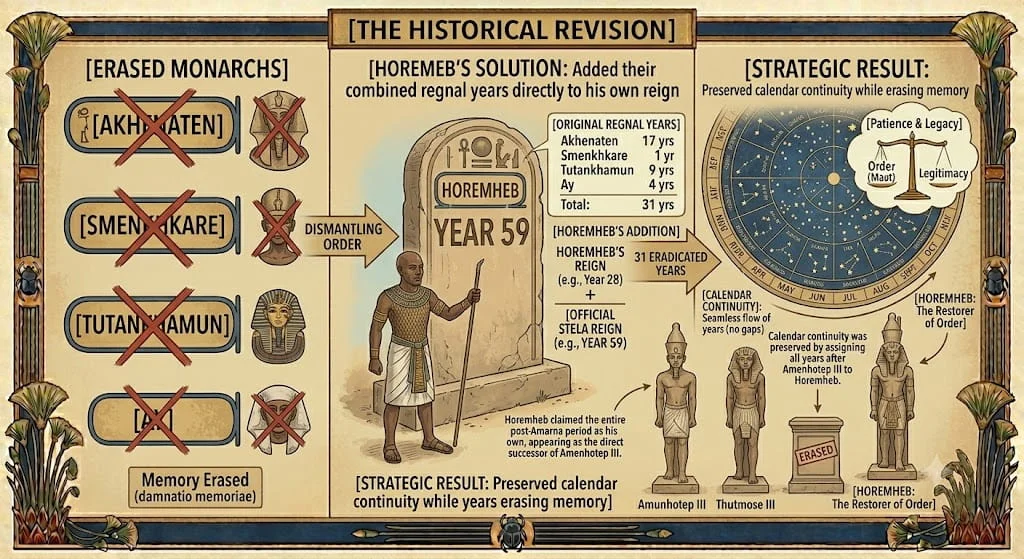
Scribes completely struck the names of Akhenaten, Smenkhkare, Tutankhamun, and Ay from the monuments. In their place, the records stated that Horemheb’s reign began immediately after the death of Amenhotep III. This bold revision instantly wiped out nearly thirty years of political turmoil, seamlessly joining the old golden age to Horemheb’s new era of restoration.
Justice or Political Ambition?
Modern historians frequently debate the true morality behind this total erasure. Some scholars view it as an act of ruthless personal ambition, allowing a commoner king to legitimize his stolen crown by burying his immediate predecessors.
However, a deeper psychological truth likely drove this policy. Egypt was a civilization built on the concepts of permanence, rhythm, and cosmic balance. The Amarna heresy had profoundly traumatized the population, shattering their sense of divine security.
By physically and historically deleting the heresy, Horemheb gave his people a fresh start. He restored their confidence in the eternal nature of the state, proving that Ma’at could always swallow chaos.
King Horemheb: The Dual Burials (From Courtier to God)
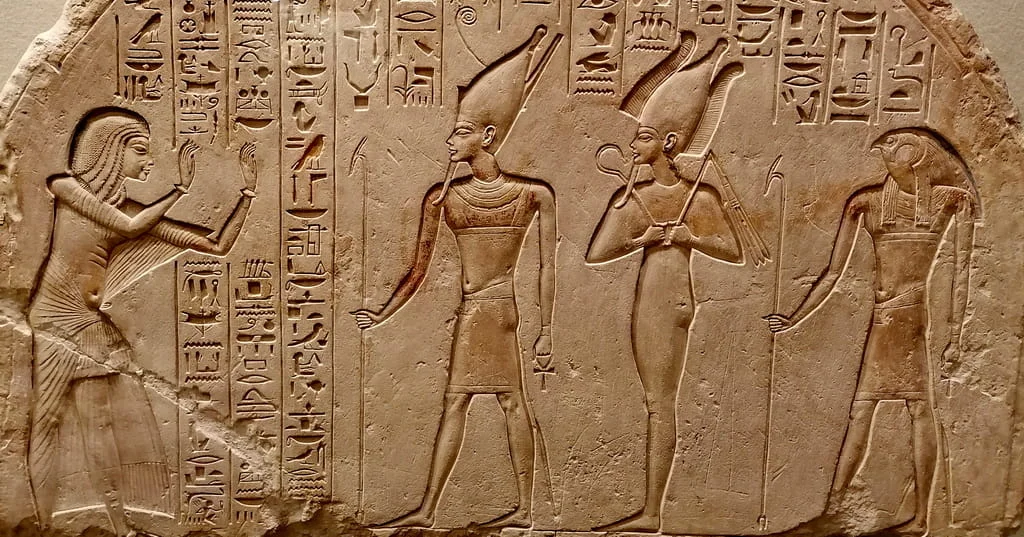
Few monuments reflect a man’s shifting destiny quite like his final resting place. Most pharaohs began planning their royal tombs the exact moment they took the throne. But because Horemheb lived two distinct lives—first as a commoner general and later as an absolute monarch—he left behind two completely separate burials.
These two structures offer an unparalleled look into his dramatic transformation. One tomb stands in the north, built for a master strategist of the army. The other hides deep in the southern desert, carved to house a divine king. Together, they map the physical and spiritual journey of Egypt’s ultimate survivor.
The Saqqara Tomb: The Elite General’s Palace of Stone
Long before he ever dreamed of wearing the double crown, Horemheb commissioned a magnificent private tomb for himself in the desert sands of Saqqara. This vast complex sat near the ancient pyramid of King Unas. It functioned not just as a grave, but as a sprawling monument to his earthly achievements.
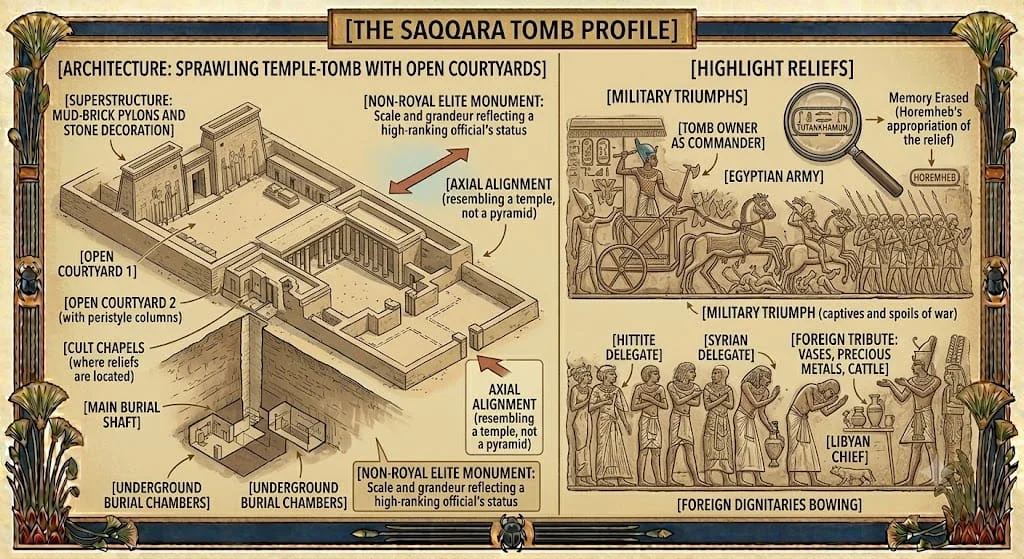
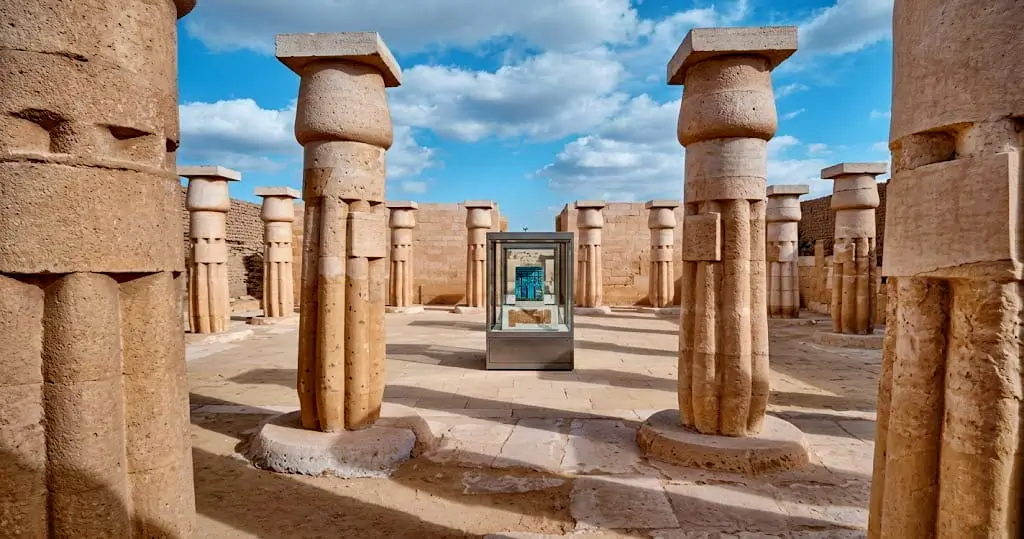
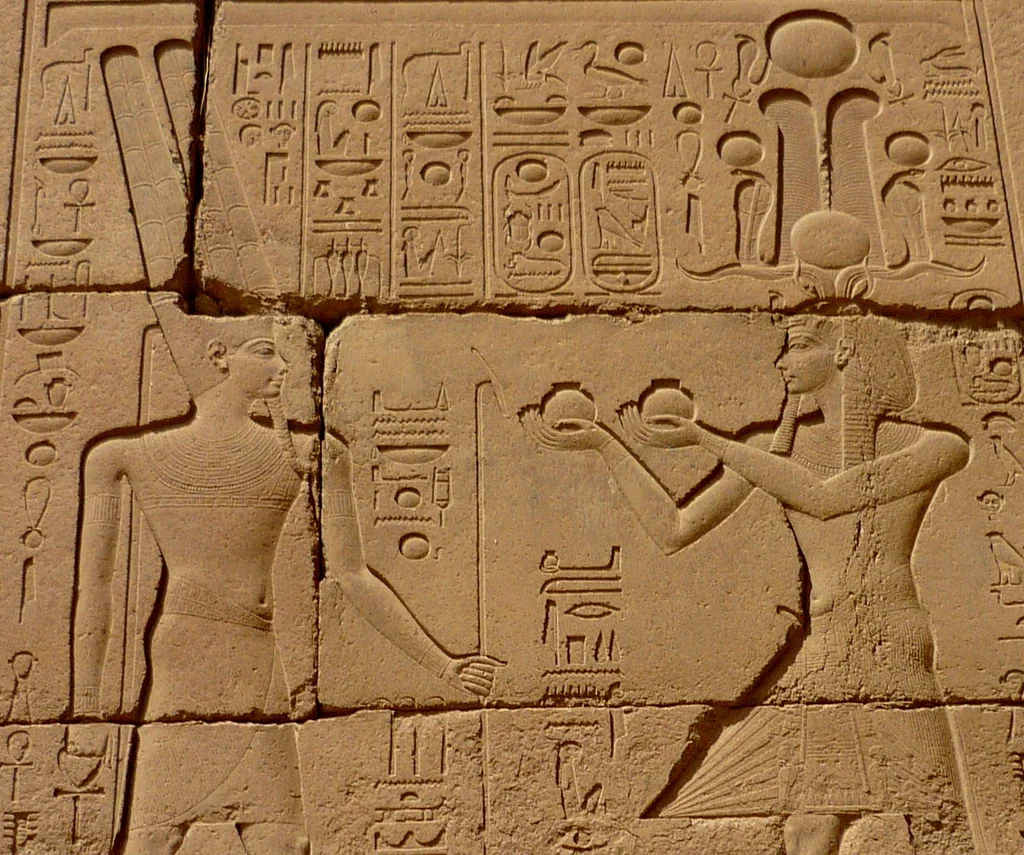
Architecturally, the Saqqara tomb resembled a miniature temple. It featured a grand pylon gateway, beautiful open-air courtyards lined with columns, and detailed offering chapels. The limestone walls contained some of the finest masterworks of late Eighteenth Dynasty art.
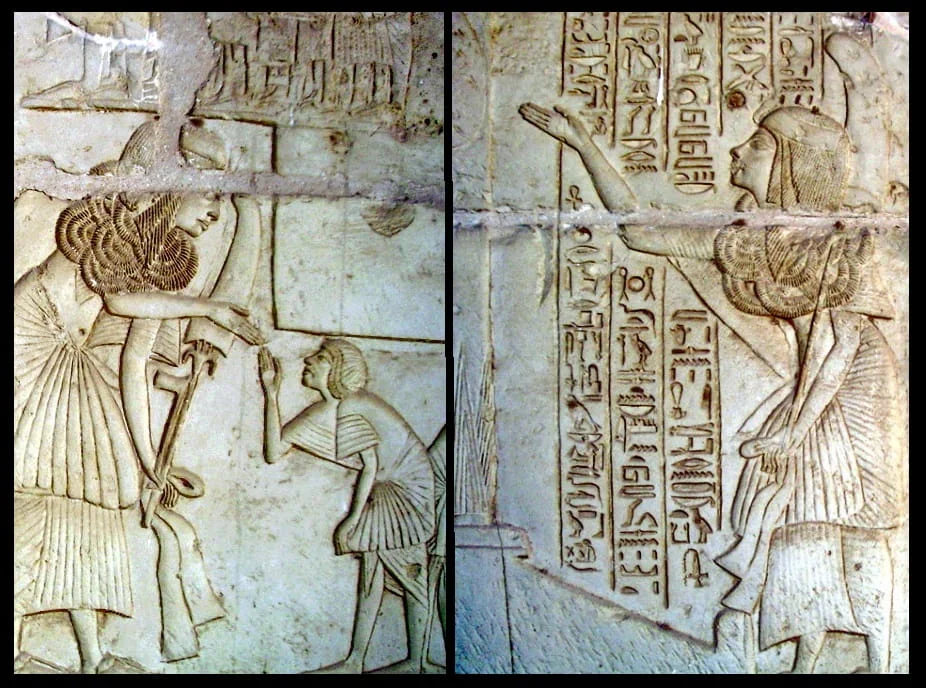
These detailed reliefs vividly captured his life as a supreme commander. One famous scene shows Horemheb receiving the coveted “Gold of Honor” directly from the royal palace, with heavy gold collars draped around his neck. Other walls depict rows of bound foreign captives, including Syrians and Libyans, trembling before his military authority.
A Change of Destiny and a Broken Tomb
Although he spent decades expanding this northern monument, Horemheb never actually used it for his own afterlife. The moment he took the throne in Thebes, the Saqqara complex became entirely obsolete. A pharaoh could not be buried in a commoner’s cemetery; he required a sacred cavern in the Valley of the Kings.
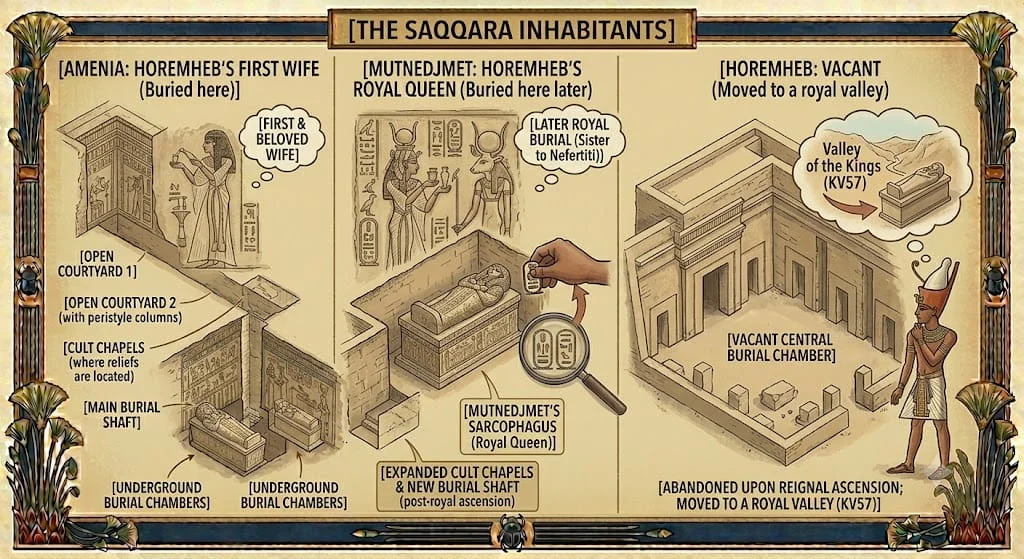
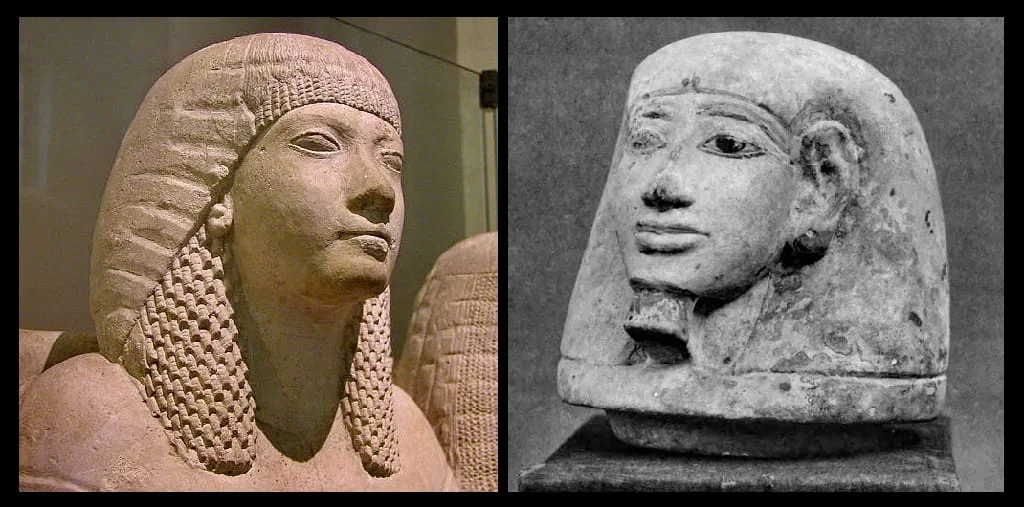
However, the Saqqara tomb did not go completely to waste. Artists modified the existing carvings, carefully adding royal uraeus cobras to Horemheb’s stone forehead to reflect his new status. Ultimately, the tomb became the final resting place for his two wives, Queen Amenia and Queen Mutnedjmet. Excavations by archaeologists revealed the skeletons of both women, proving that while the general moved south, his family remained tied to the north.
KV57: The Royal Gateway to the Underworld
Moving his burial operations to Thebes, Horemheb ordered his engineers to cut a brand-new royal tomb into the limestone cliffs. Known today as KV57, this tomb stands as a massive milestone in the history of the Valley of the Kings.
KV57 broke away from traditional Eighteenth Dynasty designs in several revolutionary ways:
- Linear Axis: Instead of featuring a sharp, protective right-angle turn, the corridors plunged straight into the mountain, creating a direct, majestic path to the burial chamber.
- The Book of Gates: The walls featured scenes from a brand-new funerary text called the Book of Gates, replacing the older Amduat. This text focused on the challenges the sun god faced while passing through the guarded gates of the night.
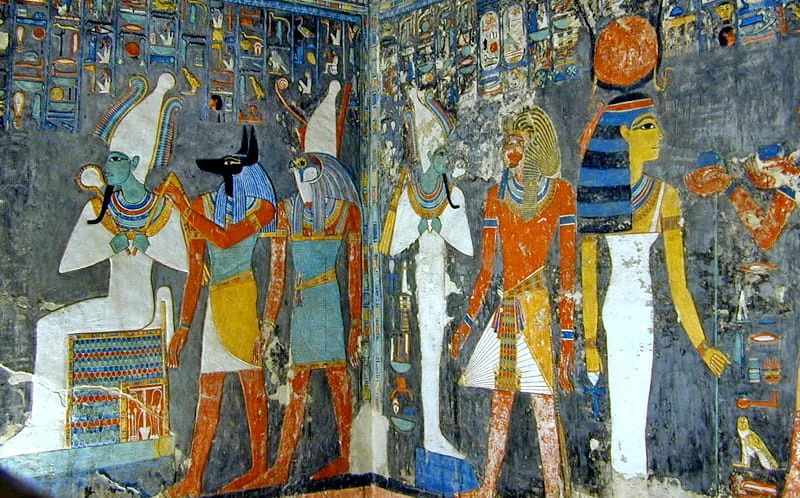
- Sunk Reliefs: Rather than painting directly onto flat plaster, artists painstakingly carved deep, crisp sunk reliefs into the hard limestone.
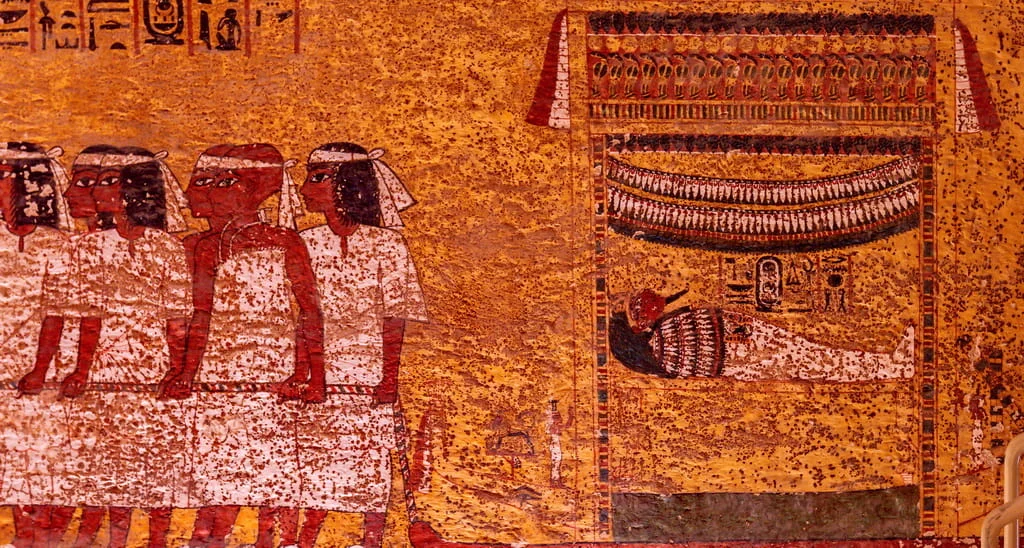
The visual impact of this new style was breathtaking. Artists painted the exquisite figures using vibrant reds, rich yellows, and deep greens, setting them against a smooth, dark blue-gray background that symbolized the night sky of the underworld.
King Horemheb: The Unfinished Masterpiece
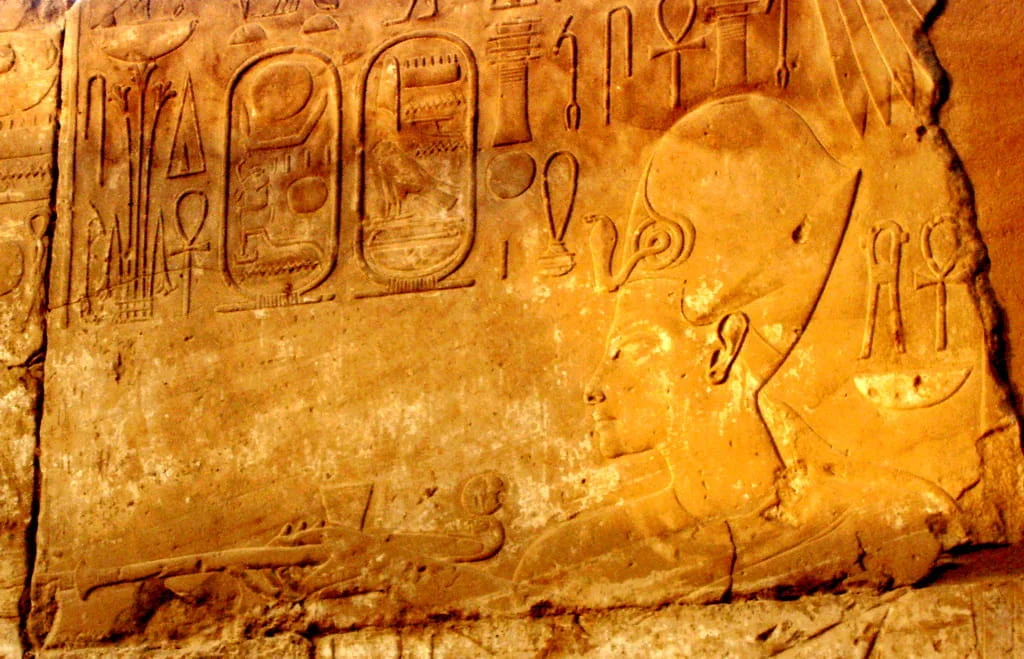
Despite its immense beauty, KV57 remains a fascinating work in progress. If you look closely at the walls deep inside the tomb, you can actually see the ancient artistic process frozen in time.
In the lower chambers, the finished colored reliefs suddenly give way to rough, white plaster. On these walls, master scribes drew initial sketches using red ink, while chief inspectors added black corrections to perfect the anatomical proportions. The stonecutters never had the chance to carve these final sections before the pharaoh passed away.
Inside this dark, stone chamber, Horemheb was finally laid to rest within a massive red quartzite sarcophagus. He had successfully climbed from a provincial house in Herakleopolis to a magnificent tomb in the Valley of the Kings. He left behind his mortal victories in the sands of Saqqara, entering eternity as a fully divine pharaoh of Egypt.