Tanis Treasures: The Undiscovered Masterpieces of Ancient Egypt

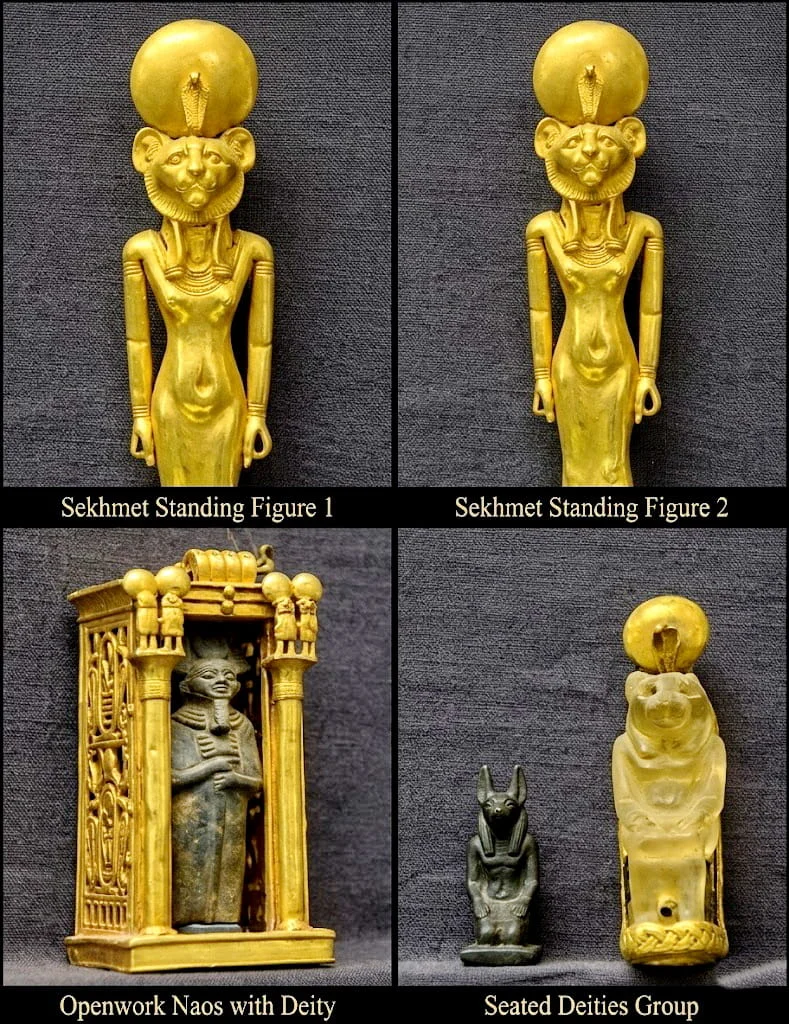
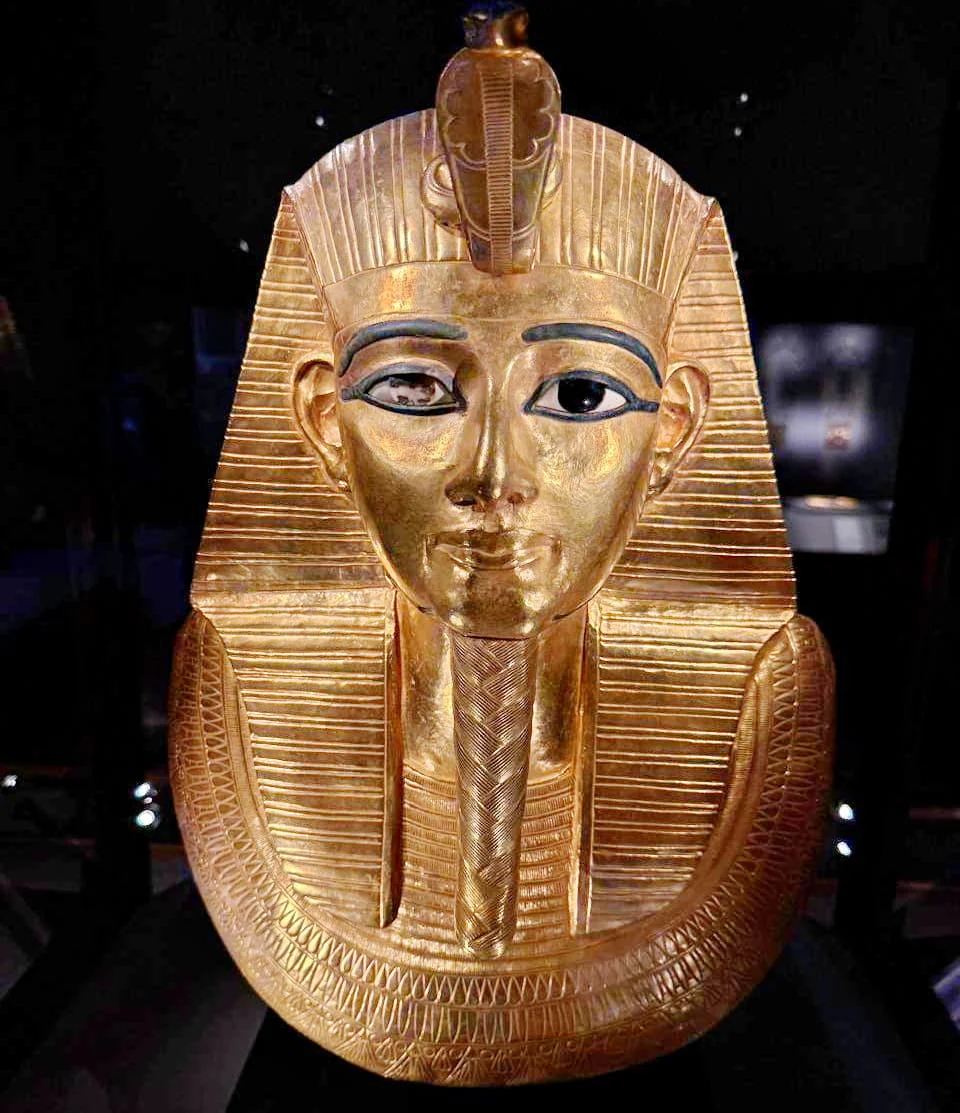
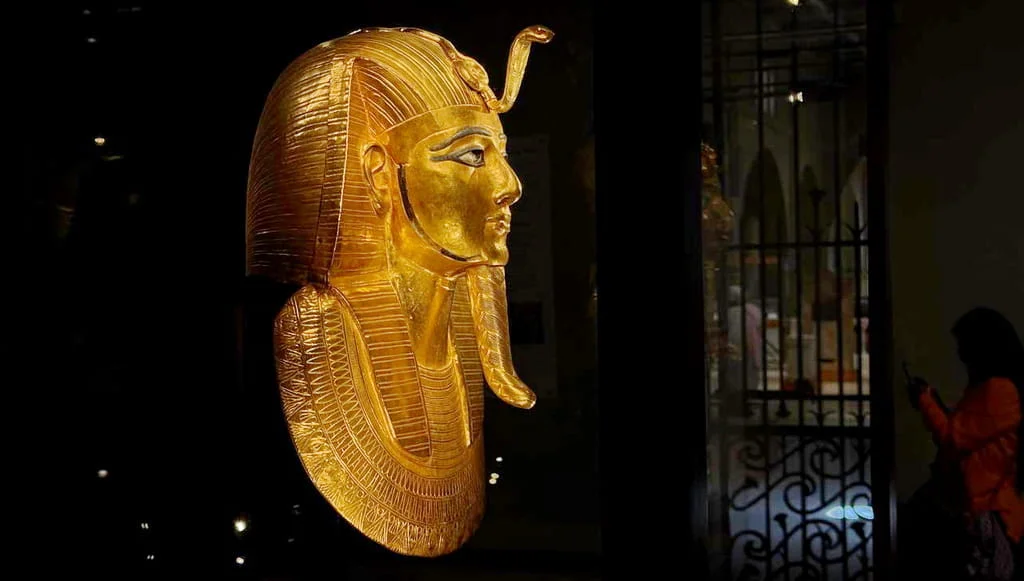
The Tanis treasures represent one of the most magnificent yet historically overlooked archaeological breakthroughs of the twentieth century. Discovered by French Egyptologist Pierre Montet on the absolute brink of World War II, this unplundered Royal Necropolis yielded an astonishing hoard of gold and silver that directly rivaled the wealth of King Tutankhamun. Because the global press was entirely consumed by wartime news, masterpieces like the solid silver falcon-headed coffin of Shoshenq II and the breathtaking golden burial mask of Psusennes I initially slipped into historical obscurity. Today, augmented by recent breakthroughs like the late 2025 discovery of Shoshenq III's intact ushabti hoard, the Tanis treasures stand as a brilliant testament to the artistic resilience of the Third Intermediate Period and are prominently celebrated as premier crown jewels of Egypt’s national museums.

Hidden within the dusty, wind-swept ruins of San el-Hagar in the northeastern Nile Delta lies one of history’s greatest archaeological paradoxes. This site holds the ancient capital of Tanis, a city that yielded a hoard of gold and silver to rival the tomb of King Tutankhamun. Yet, despite their breathtaking beauty, the Tanis treasures remain virtually unknown to the general public. Discovered on the absolute brink of World War II, this unparalleled collection of pharaonic wealth slipped quietly into the shadows of global conflict.

Today, these magnificent artifacts are reclaiming their rightful place in archaeological history. This comprehensive, long-form guide explores the miraculous discovery, the profound craftsmanship, and the enduring legacy of the legendary Tanis treasures.
FUN

The Shadow of World War II: Why History Forgot the Gold

The Shadow of World War II Why History Forgot the Gold - Tanis Treasures

To understand the mystery of the Tanis treasures, you must first examine the tragic timing of their excavation. During the late 1930s, French Egyptologist Pierre Montet dedicated his career to digging in the muddy plains of the Nile Delta. In February 1939, his persistence paid off when he began lifting the heavy stone paving blocks of the Amun temple enclosure. Beneath the temple floor, Montet struck an absolute goldmine: an entire complex of royal tombs belonging to the 21st and 22nd Dynasties.
[Feb 1939: Pierre Montet Finds Royal Necropolis] ---> [March 1939: Coffin of Shoshenq II Opened]
                                                                    |
                                                                    v
[May 1940: Nazi Invasion of France halts dig]   <--- [March 1940: Psusennes I Tomb Unveiled]

On March 20, 1939, Montet opened the spectacular silver coffin of a previously unknown pharaoh, Shoshenq II, in the presence of Egypt’s King Farouk. Exactly one year later, in March 1940, the team breached the unexplored burial chamber of King Psusennes I.

However, just as these historic announcements reached Europe, total warfare erupted across the Western Front. By May 1940, Nazi tanks rolled into France, forcing Montet to halt his work abruptly. Because the existential threat of World War II entirely consumed the global press, the public completely overlooked this miraculous archaeological achievement. Furthermore, because Montet published his initial academic findings exclusively in French, the dizzying riches of Tanis remained hidden from English-speaking pop culture.

FUN

Silver Over Gold: The Wealth of the “Silver Pharaoh.”

Silver Over Gold The Wealth of the Silver Pharaoh. Tanis Treasures

When people think of Egyptian wealth, they immediately picture gold. However, the Tanis treasures revealed a fascinating economic reality that completely subverted traditional pharaonic expectations. In ancient Egypt, gold was locally abundant in the Eastern Desert and Nubia. Silver, on the other hand, could not be mined locally and had to be imported through complex trade routes from the Mediterranean and the Levant.
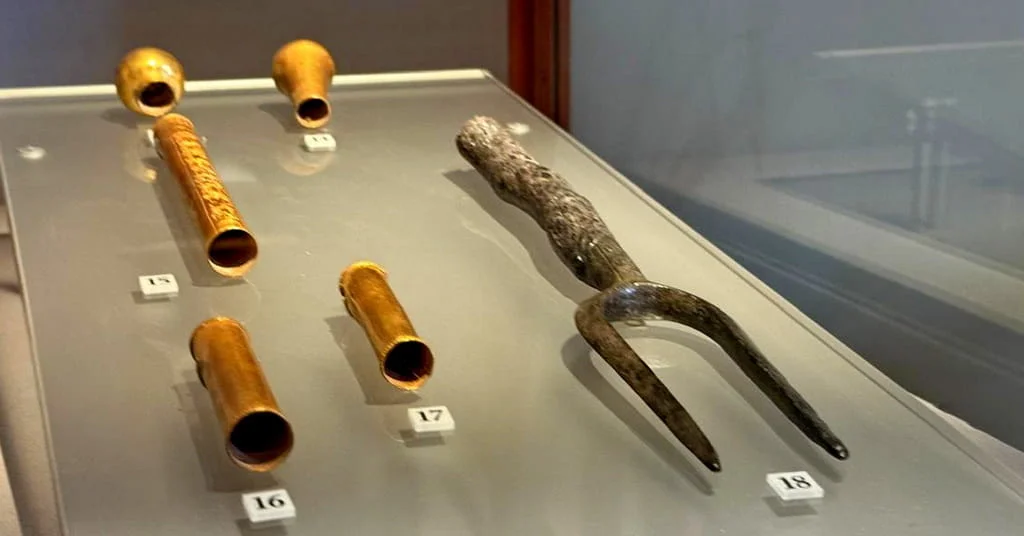
Consequently, during the Third Intermediate Period, silver was exceptionally rare and carried a higher financial value than gold. The tombs of Tanis yielded an unprecedented collection of silver artifacts, earning King Psusennes I the historical title of the “Silver Pharaoh“.

The Solid Silver Falcon Coffin

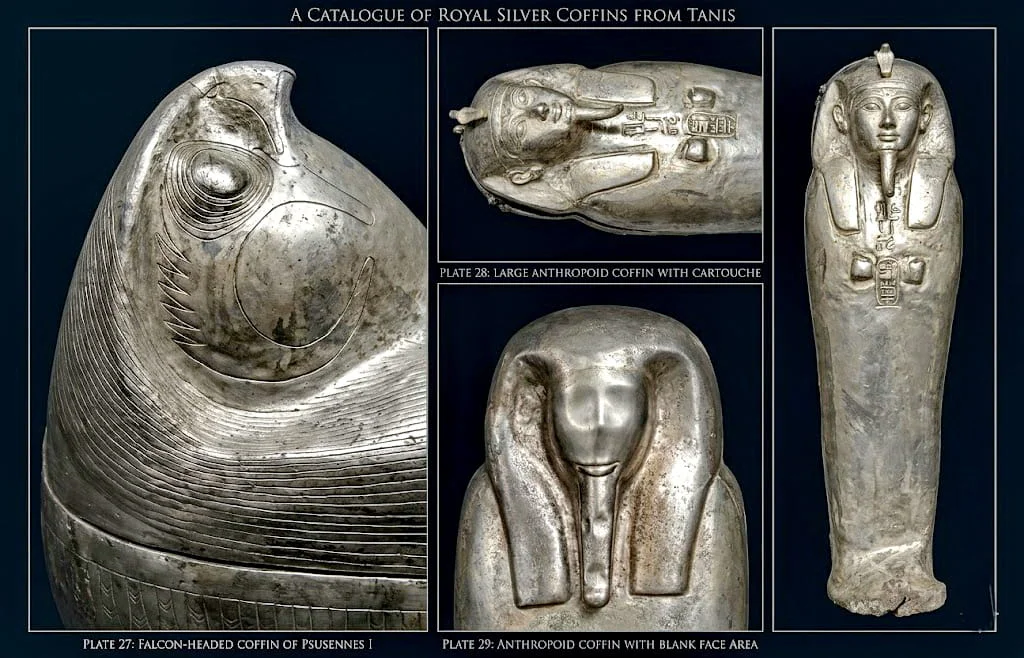
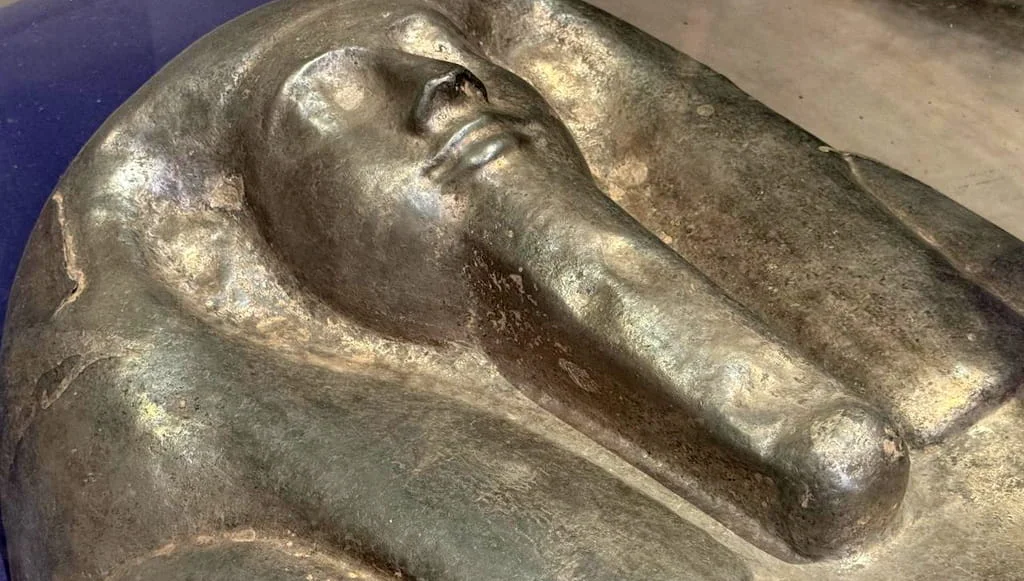
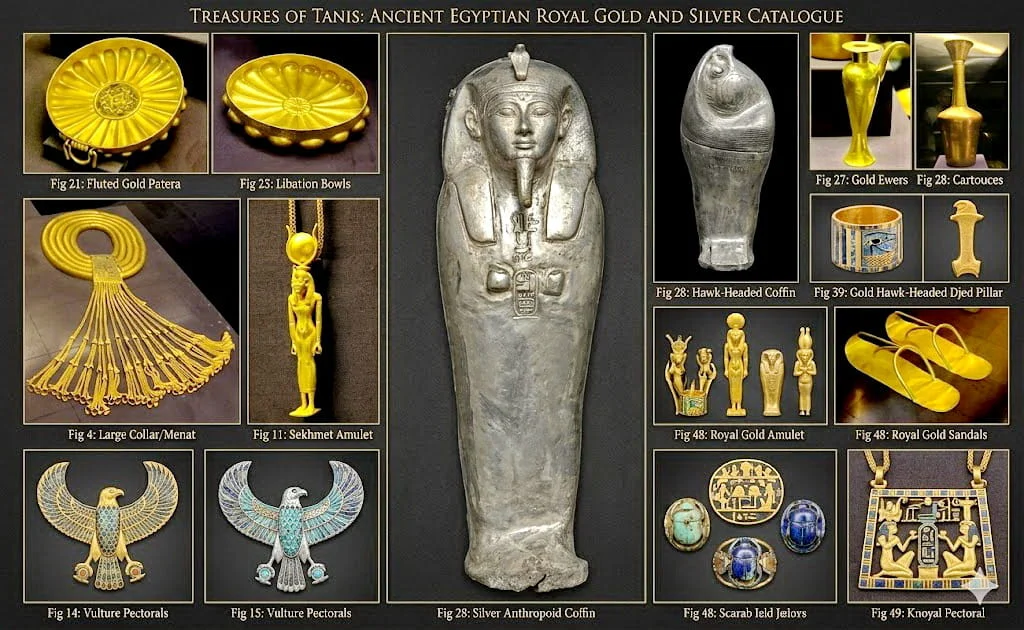
The crowning jewel of the silver collection is the magnificent anthropoid coffin of Shoshenq II. Crafted entirely from heavy sheet silver, the coffin features a beautifully detailed, hawk-headed deity representing Sokar or Horus. The absolute mastery of the repoussé metalwork is evident in the hundreds of individually chased feathers that wrap around the divine body.

The Sarcophagus Suite of Psusennes I

Silver Coffin of King Psusennes I

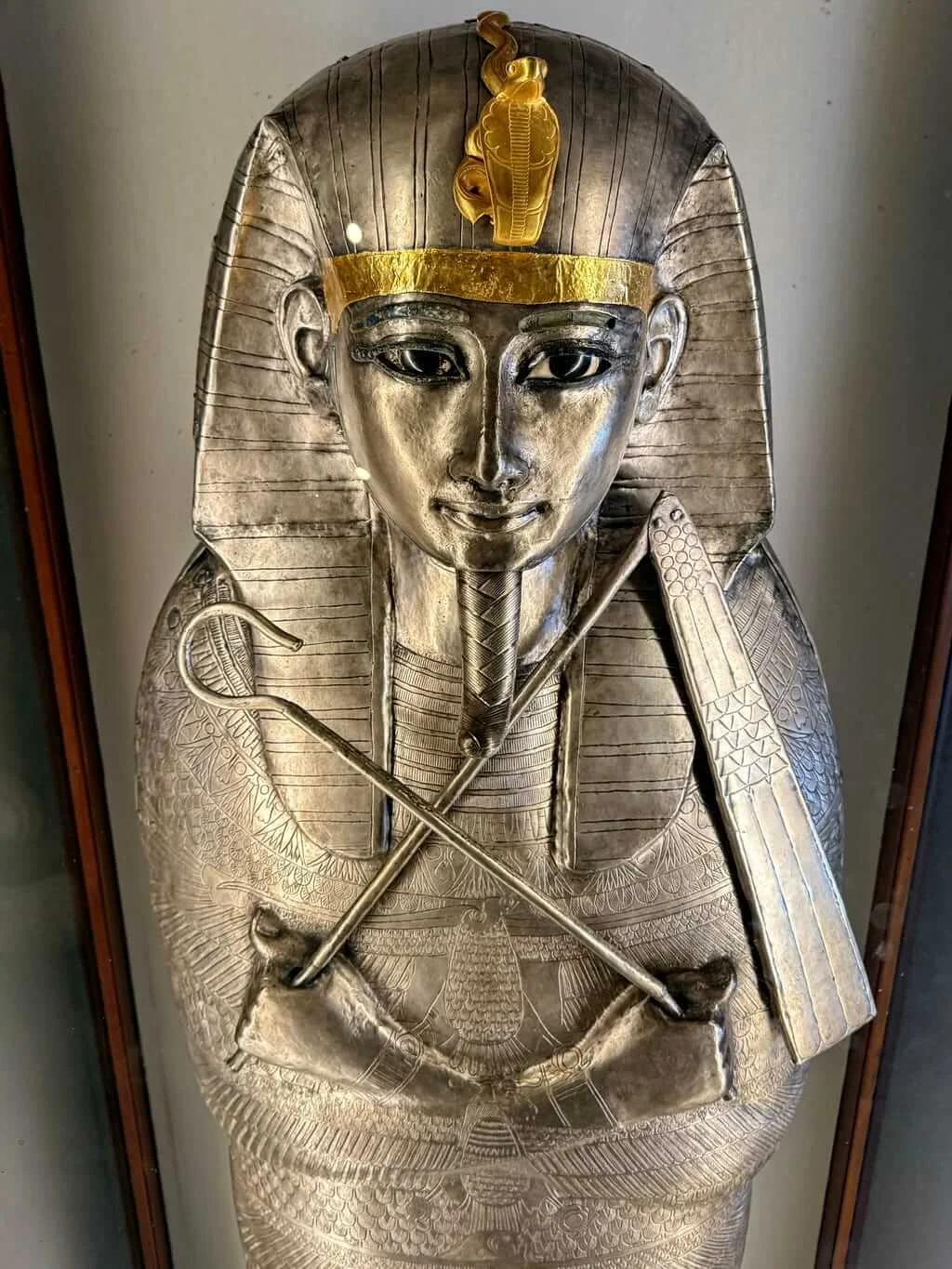
Psusennes I protected his final rest through an architectural nesting doll of high-value materials. His ultimate burial container was a masterfully hammered, solid silver coffin. To add another layer of history, this silver shell rested inside an intermediate black basalt sarcophagus, which itself sat inside a massive red granite outer sarcophagus originally carved for New Kingdom Pharaoh Merneptah (the son of Ramesses II).

The Unification Battle by King Narmer

The Unification Battle by King Narmer The unification battle of King Narmer is shown on...

Related post
FUN

Tanis Treasures: The Golden Face Masks of the Delta Kings

Tanis Treasures The Golden Face Masks of the Delta Kings

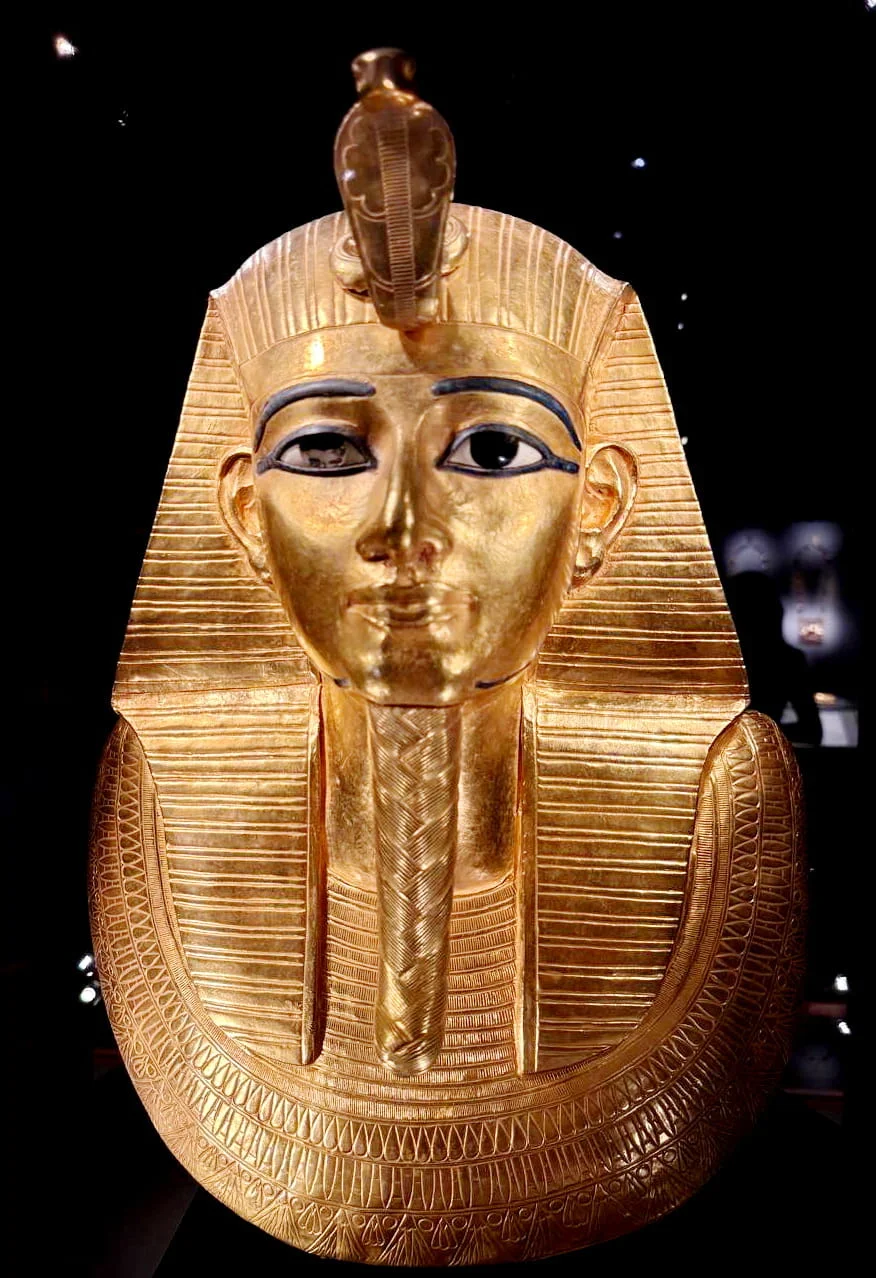
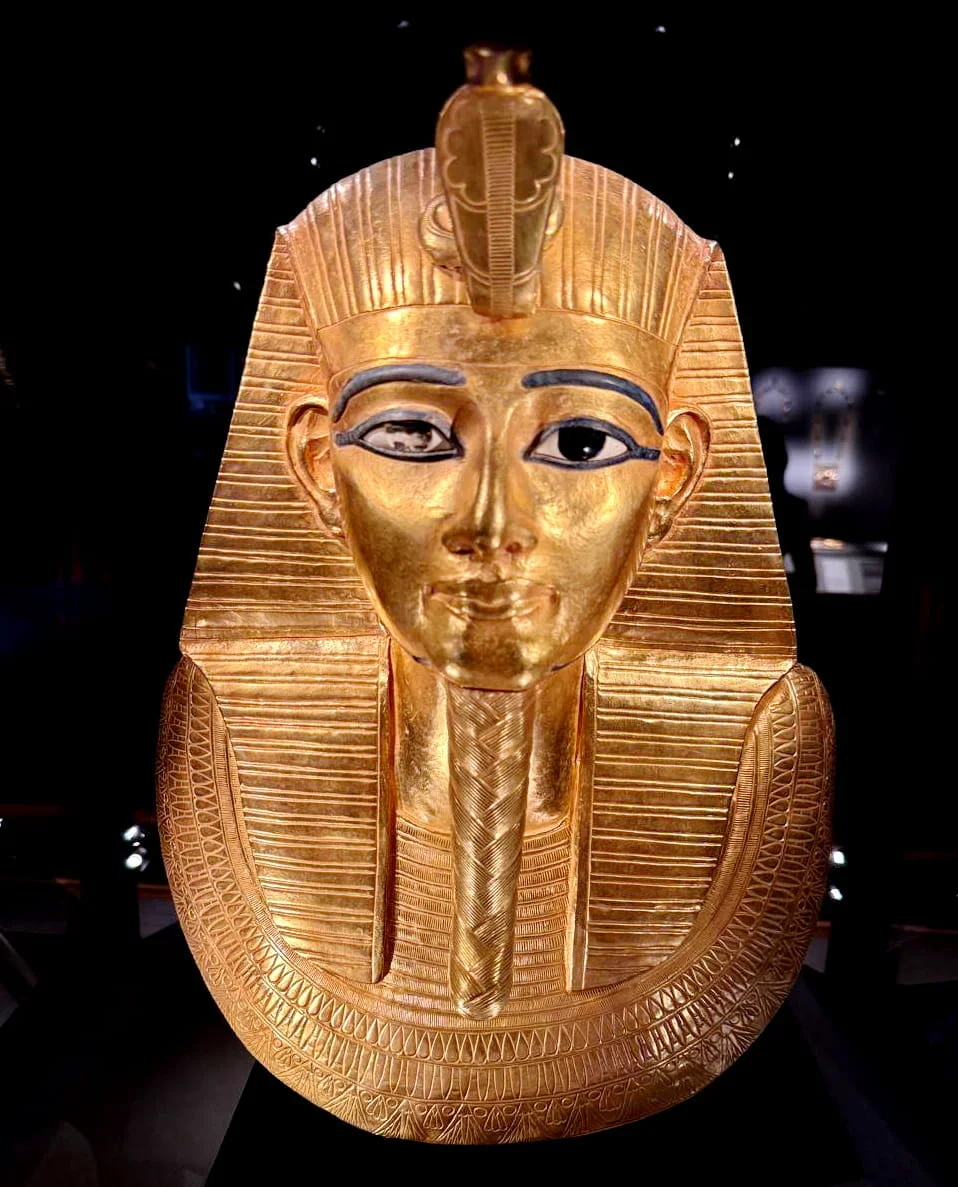
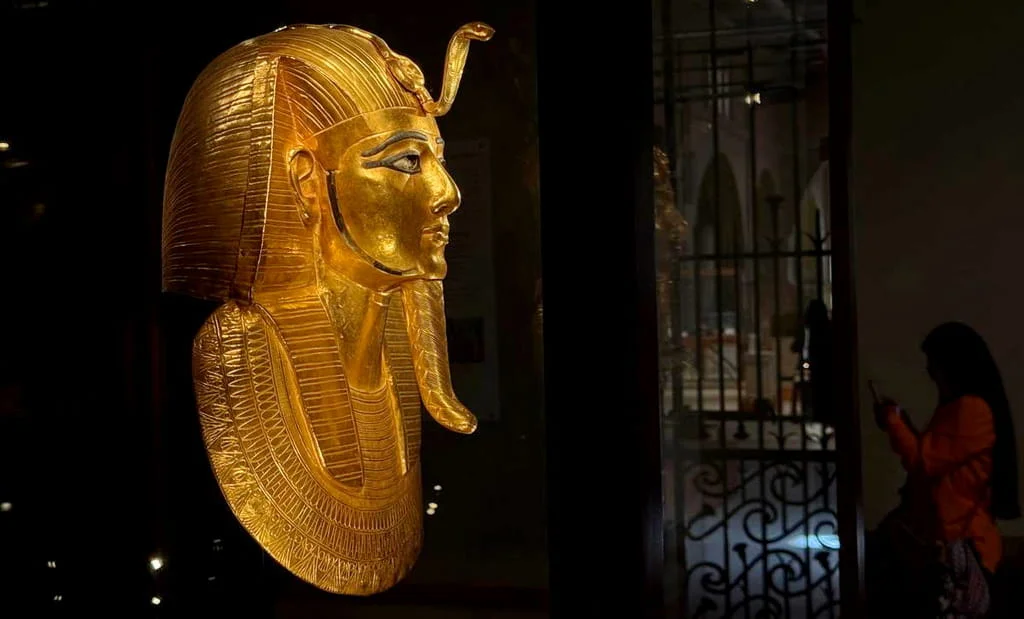
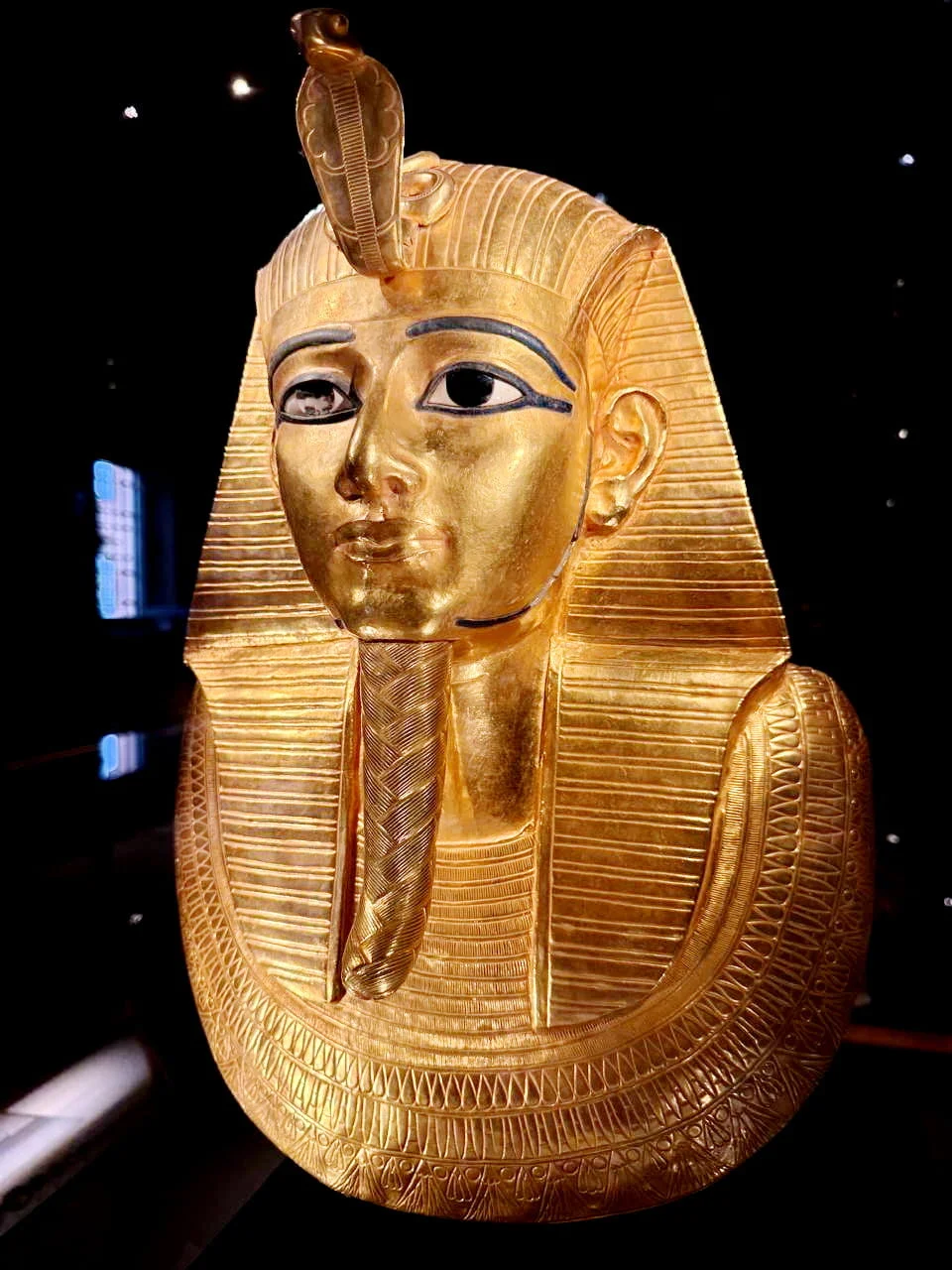
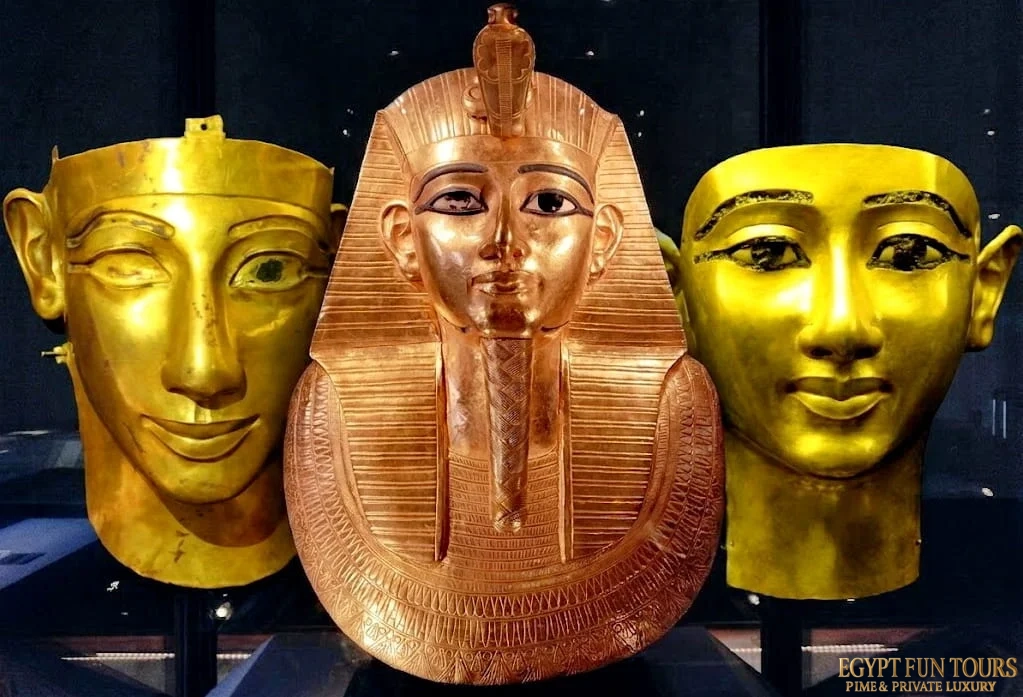
While silver represented the absolute height of luxury, gold still retained its deep theological importance as the eternal “flesh of the gods.” To preserve the identities of the deceased kings for the afterlife, the Tanis treasures feature four spectacular, intact gold funerary masks that rival the artistic genius of Upper Egypt’s elite burials.

+------------------------------------------------------------------------+
|                 THE FOUR INTENSELY CRAFTED GOLD MASKS                  |
+-------------------+----------------------------------------------------+
| Pharaoh           | Unique Artistic Details                            |
+-------------------+----------------------------------------------------+
| Psusennes I       | Beaten gold with inlaid glass paste and dark       |
|                   | lapis lazuli for the striking eyes and eyebrows. |
+-------------------+----------------------------------------------------+
| Shoshenq II       | Discovered directly over the mummy's head inside   |
|                   | the falcon-headed silver coffin.              |
+-------------------+----------------------------------------------------+
| Amenemope         | Idealized pharaonic features designed to ensure   |
|                   | successful transformation into a divine being.|
+-------------------+----------------------------------------------------+
| Wendjebauendjed   | Found post-war (1946) inside the intact tomb of   |
| (General)         | this high-ranking military commander.    |
+-------------------+----------------------------------------------------+

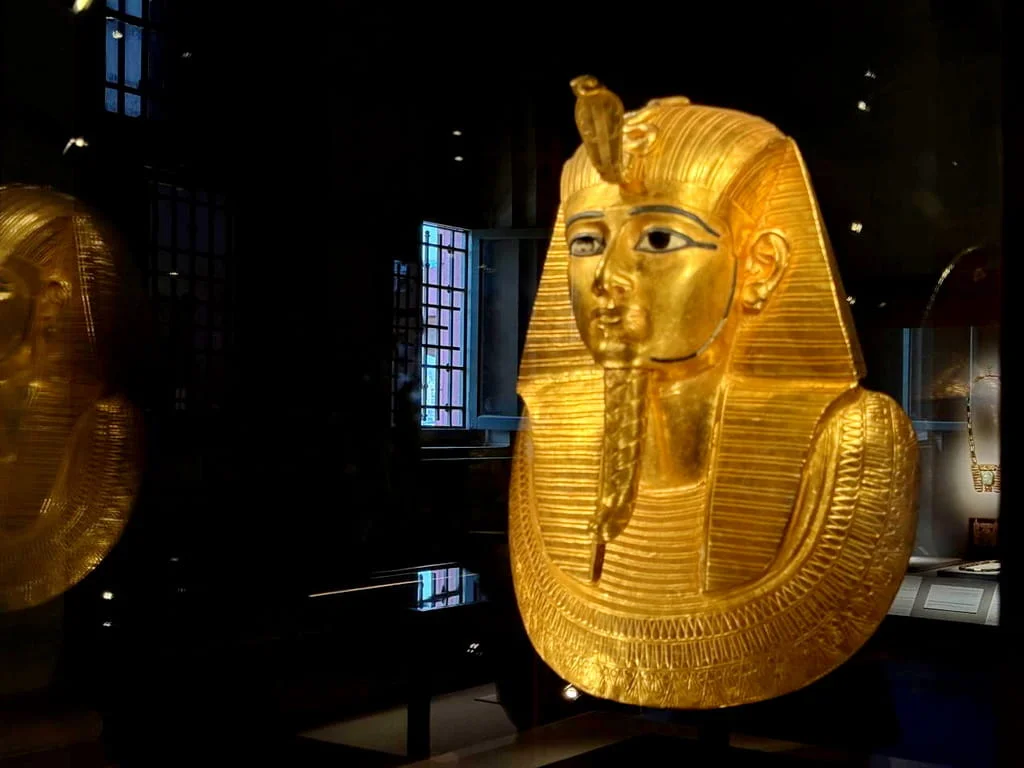
The mask of Psusennes I stands out as a triumph of ancient metallurgy. Hammered from a single sheet of thick gold, it depicts the pharaoh with a serene, ageless expression. The brilliant yellow metal contrasts sharply with the rich blue lapis lazuli bands of the royal nemes headdress, creating an image of absolute, unshakeable sovereignty.

The Lost City of Tanis: Capital of Northen Egypt in Delta

The Ancient Egyptian City of Tanis was the vital capital of the 21st and 22nd...
Related post
FUN

Masterpieces of Metalwork: Pectorals, Bracelets, and Tableware

Masterpieces of Metalwork Pectorals, Bracelets, and Tableware

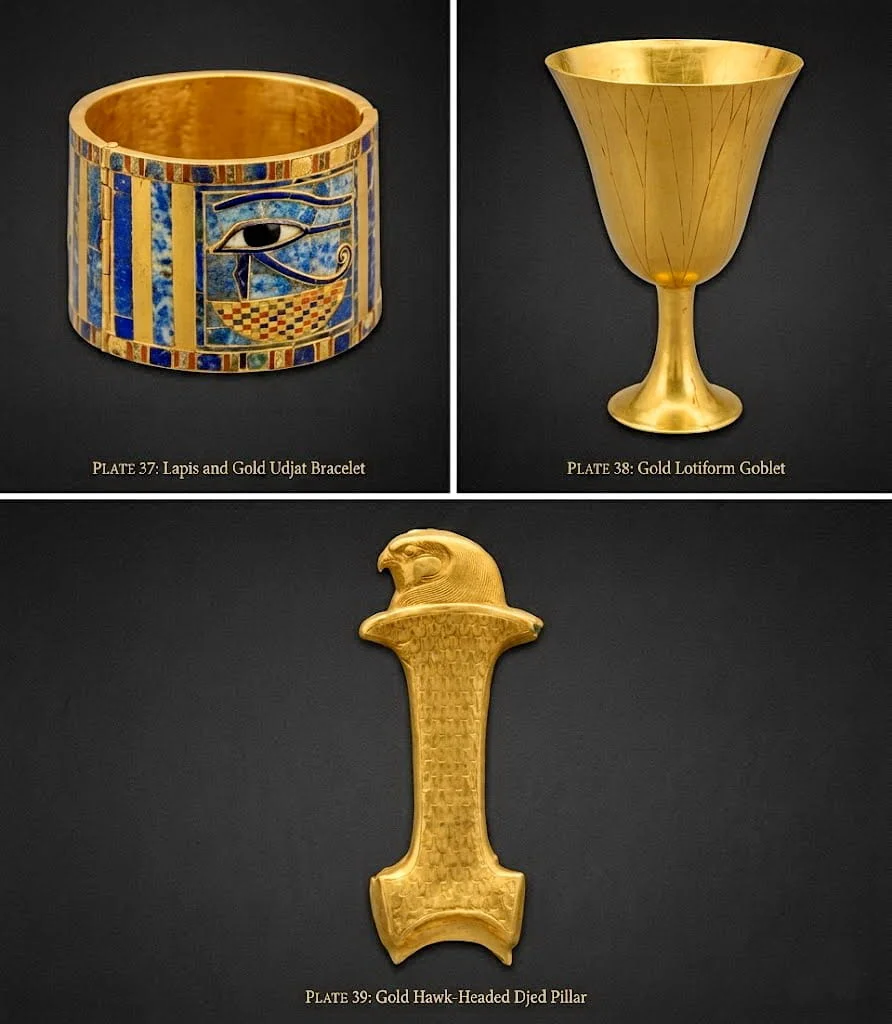
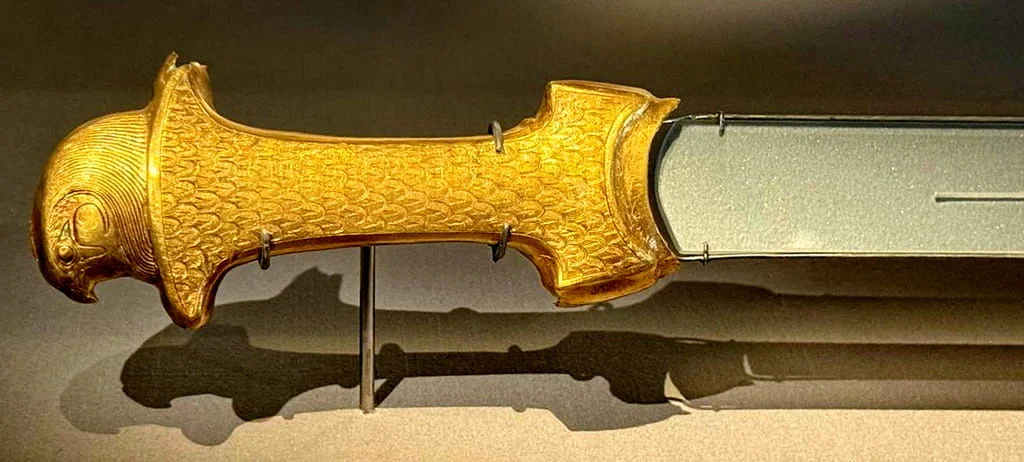
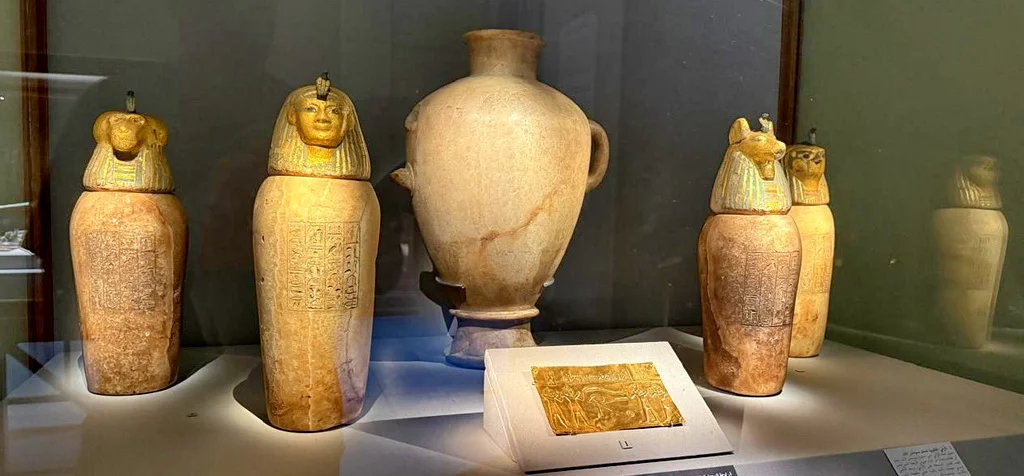
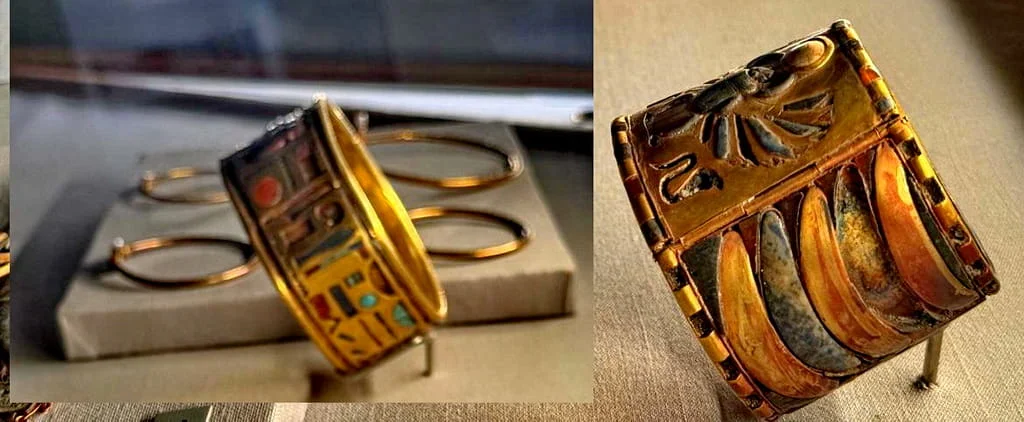
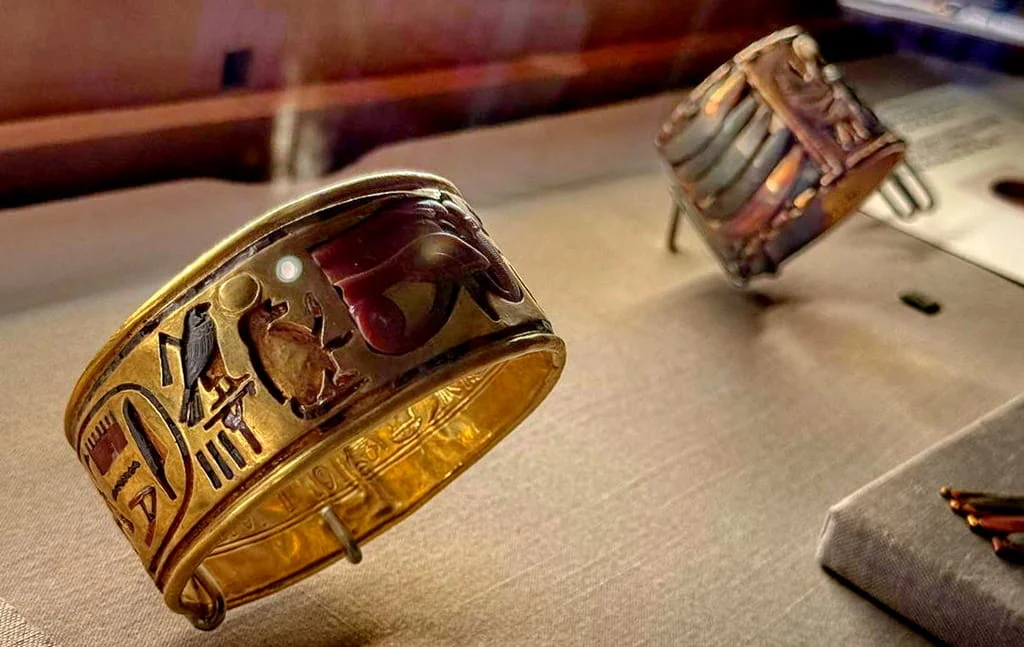
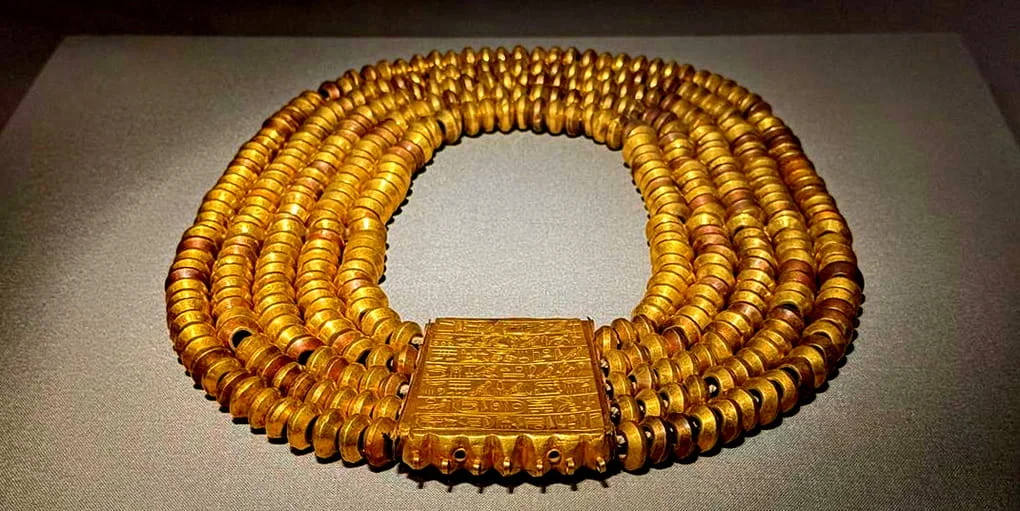
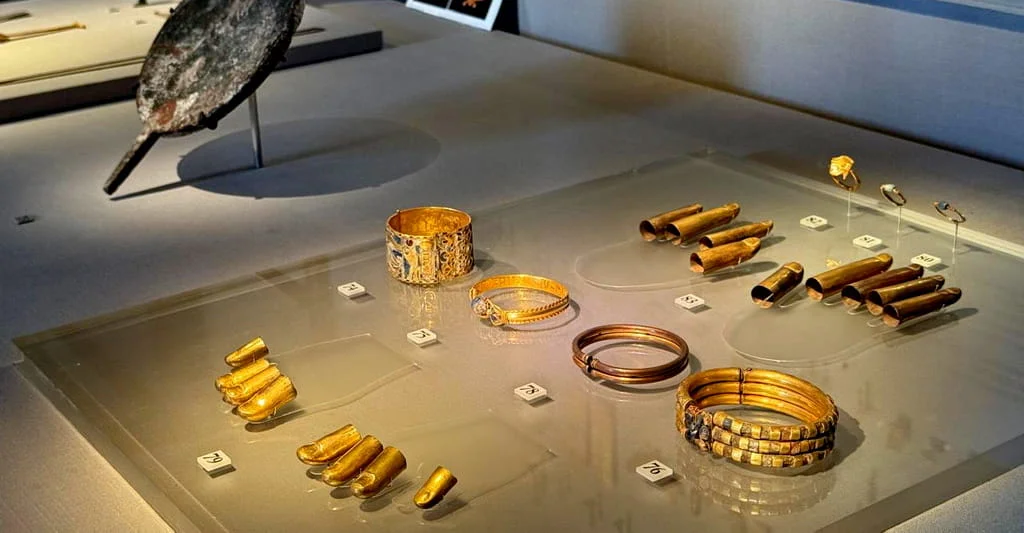
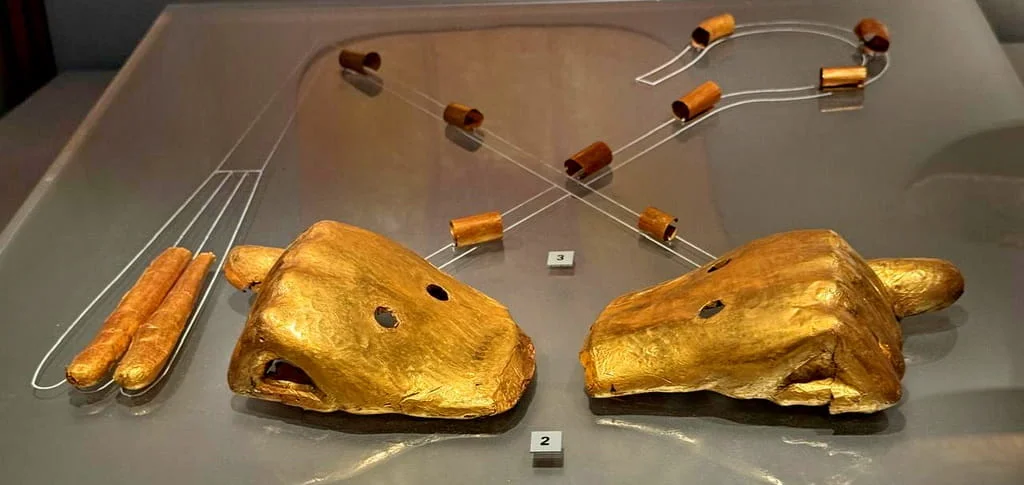
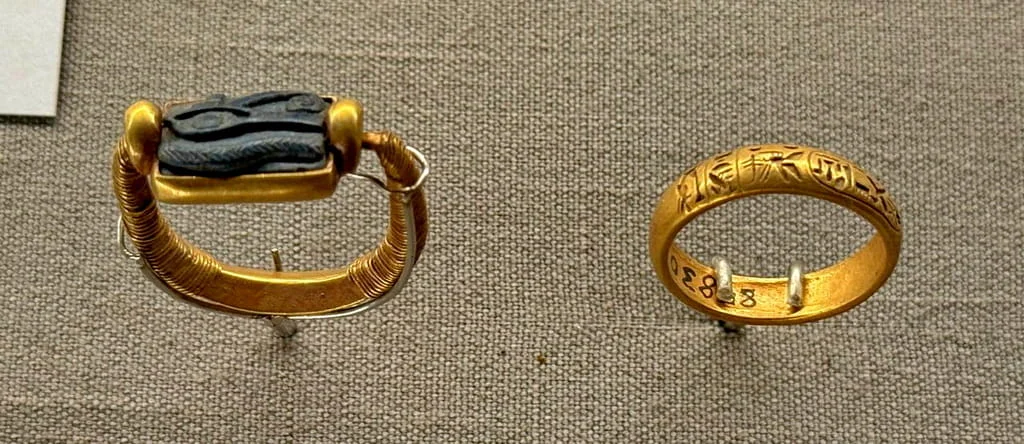
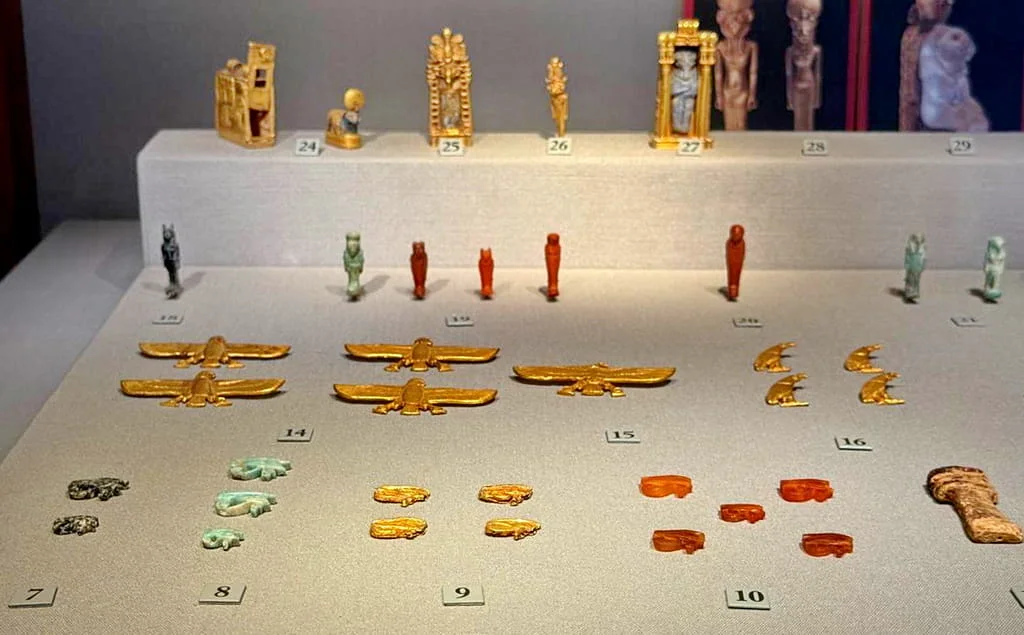
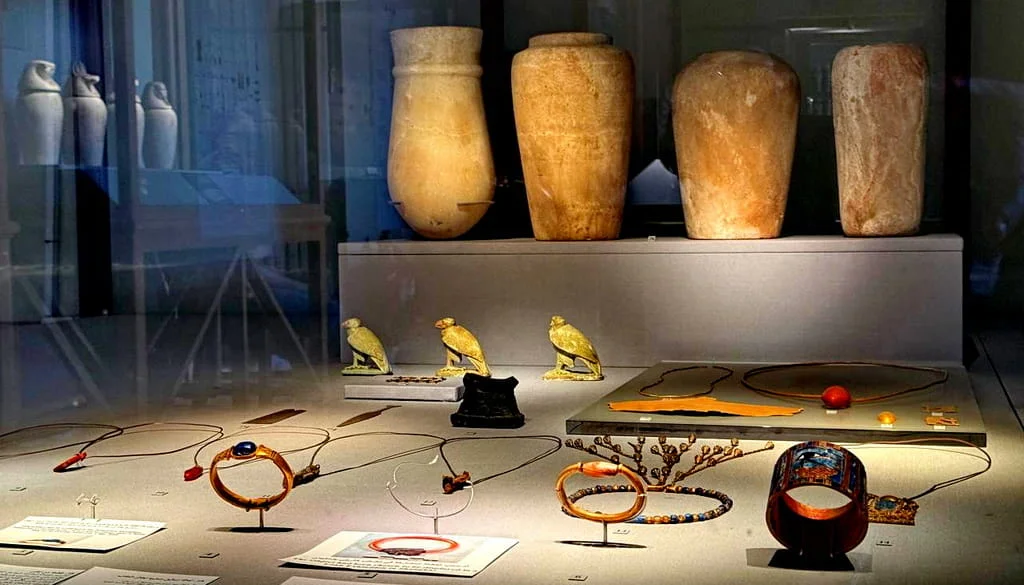
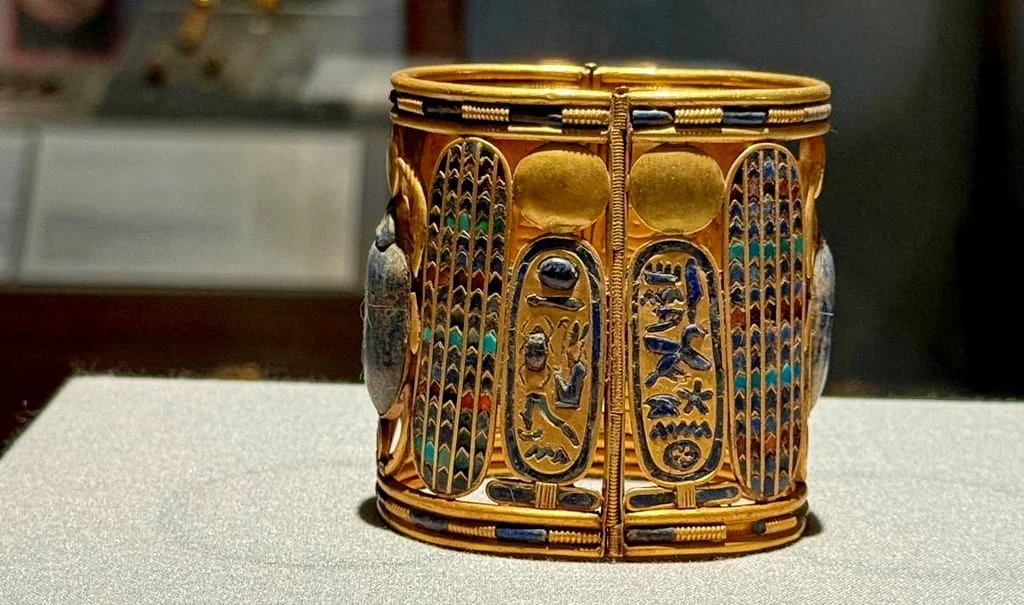
Beyond the monumental coffins and striking masks, Pierre Montet pulled nearly 600 individual objects of personal adornment and ritual usage from the dark subterranean vaults. These items show that even during an era of domestic political fragmentation, Egyptian artisans maintained an elite standard of luxury.

The Jewel-Enrusted Pectorals

The Jewel-Enrusted Pectorals

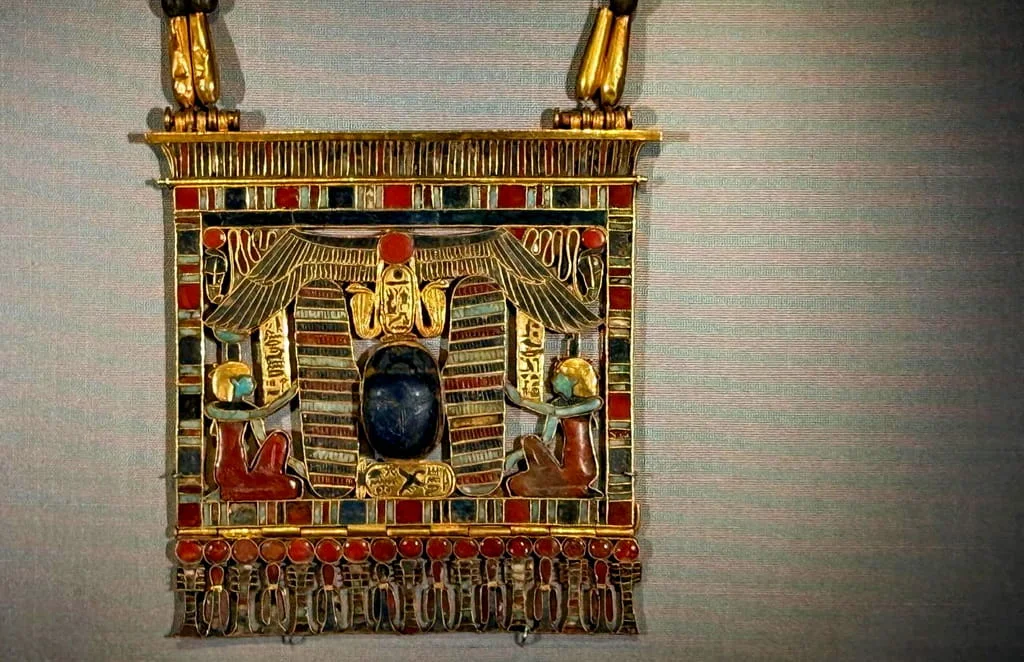
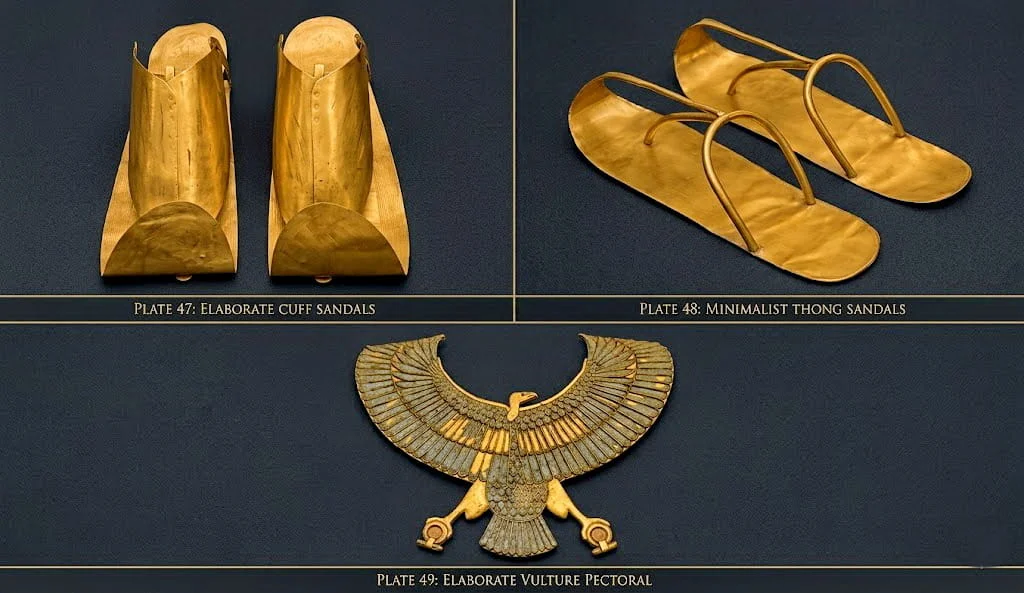
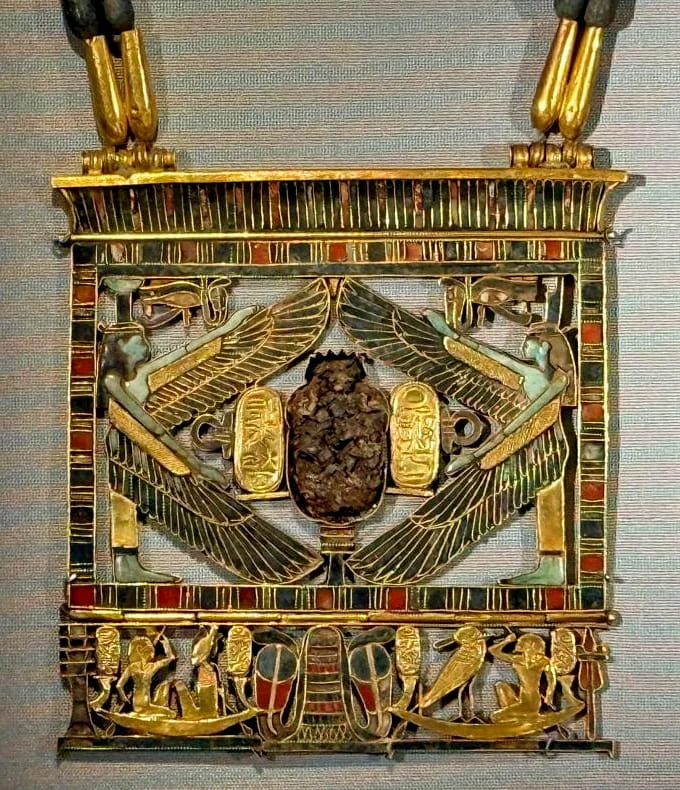
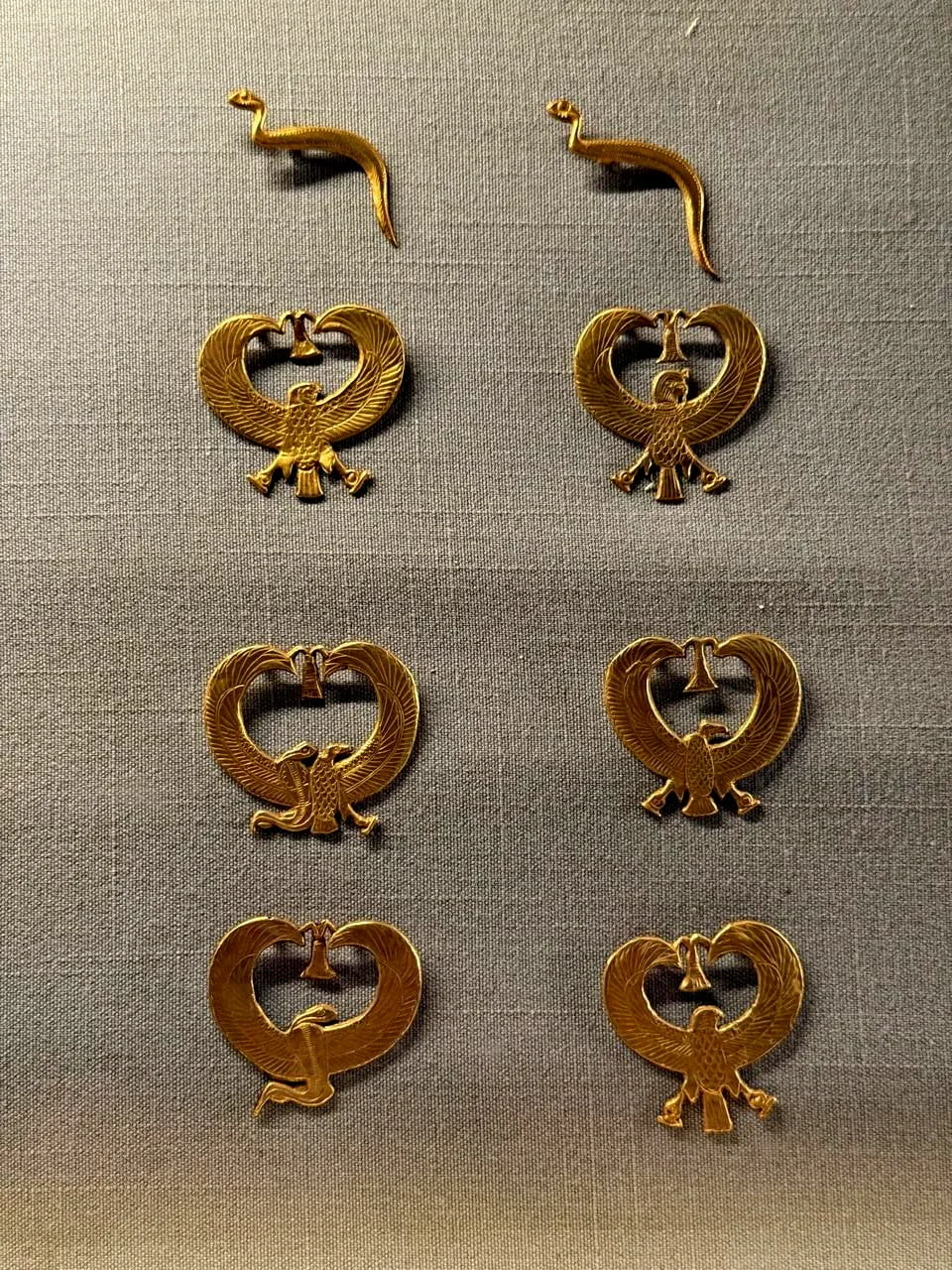
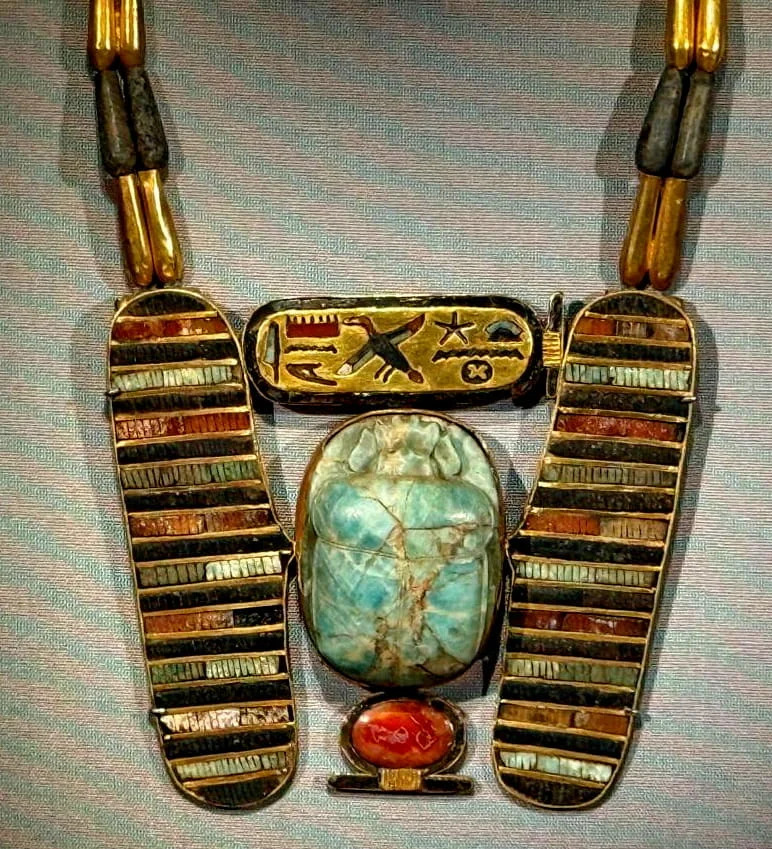
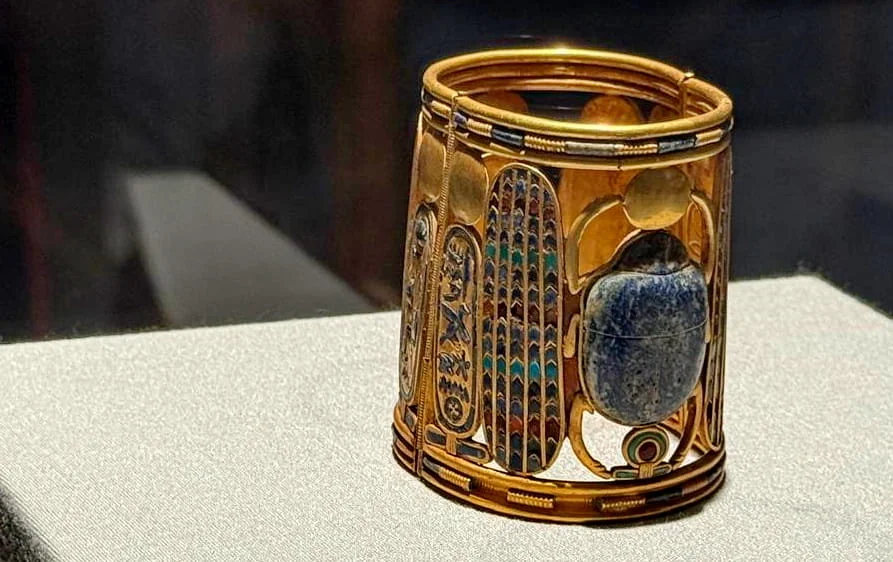
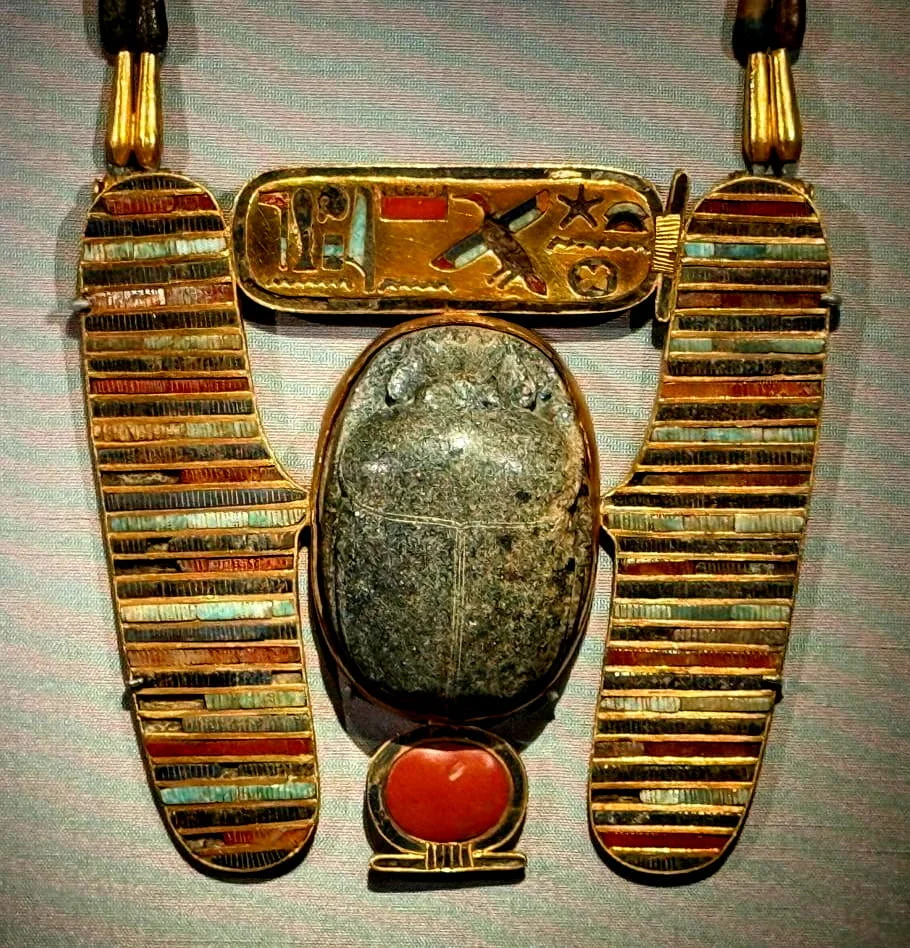
The Tanis treasures include dozens of heavy gold pectorals (chest ornaments) that protected the pharaohs’ hearts. These pieces are heavily inlaid with vibrant semi-precious stones, including:

  • Deep blue lapis lazuli
  • Fiery red carnelian
  • Sky-blue turquoise

The imagery on these pectorals focuses heavily on cosmic protection. Many depict the sacred winged scarab beetle pushing the solar disk across the sky, flanked by the protective goddesses Isis and Nephthys.

The Royal Tableware

The Royal Tableware - Tanis Treasures

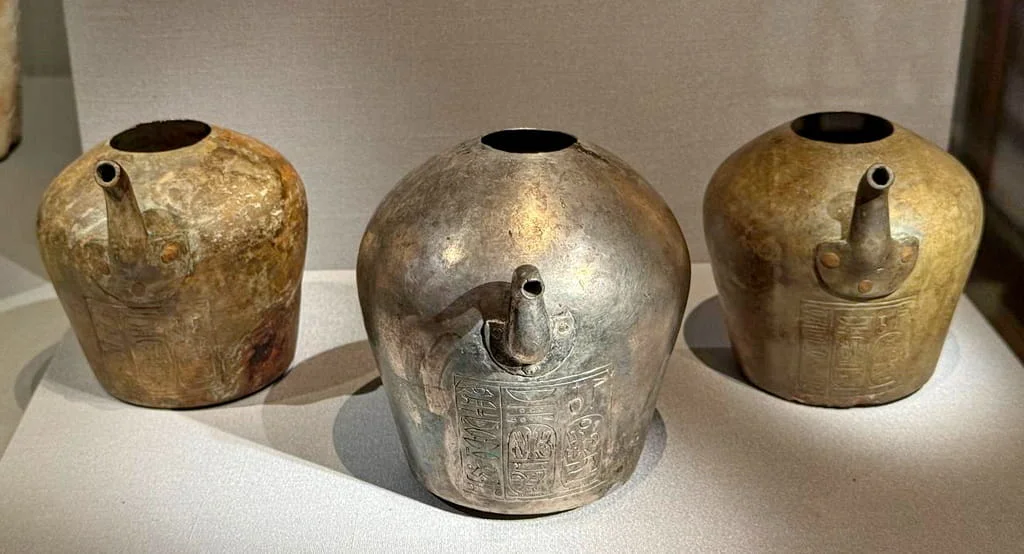
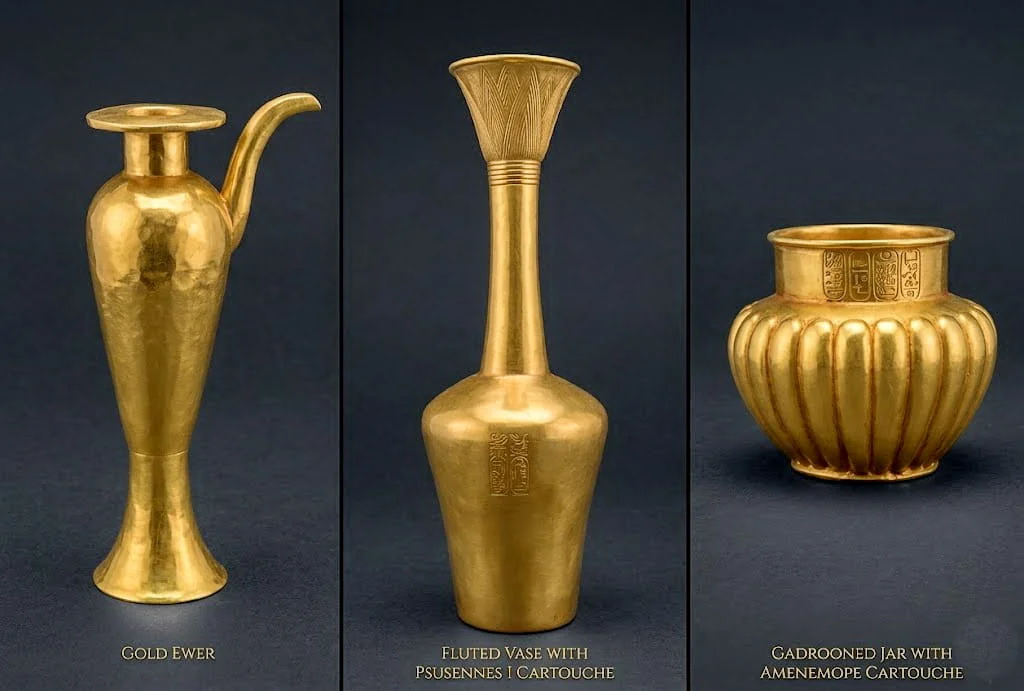
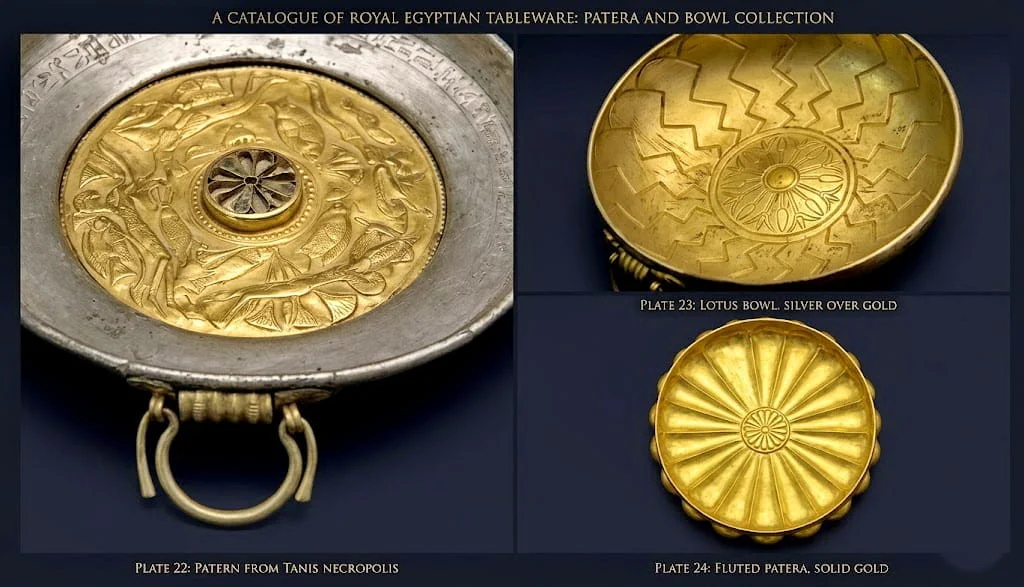
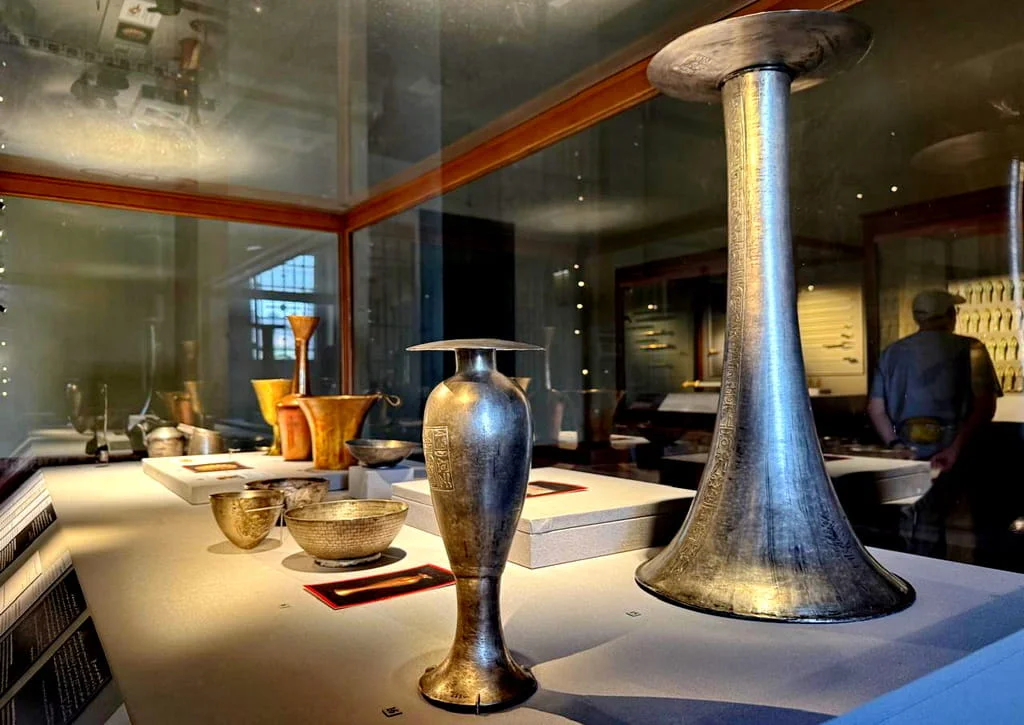
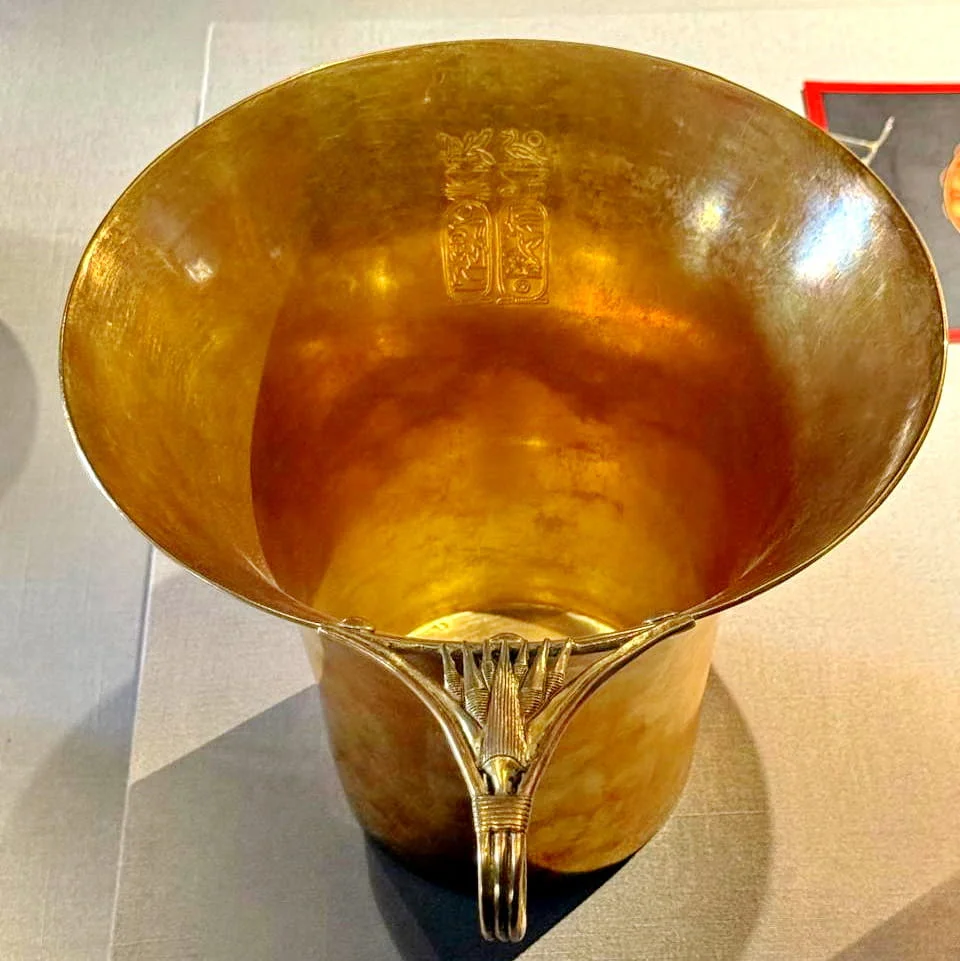
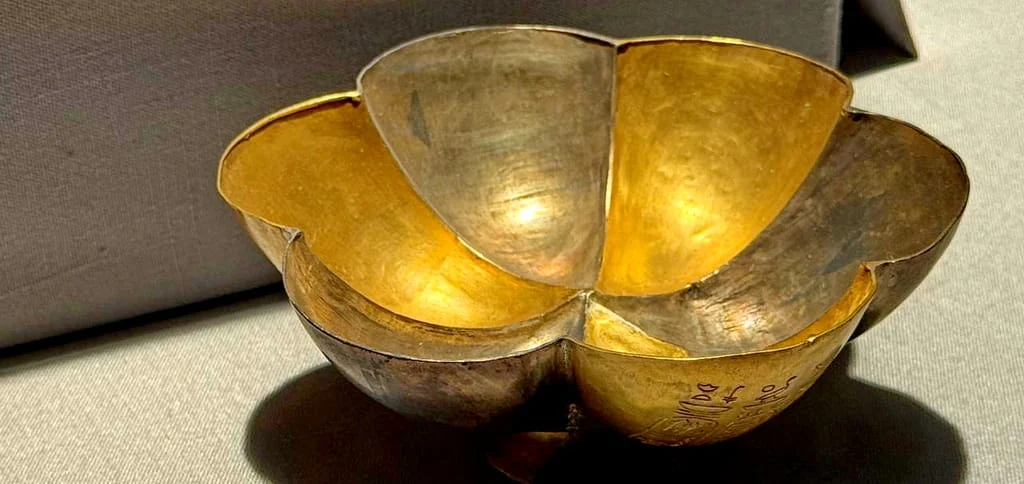
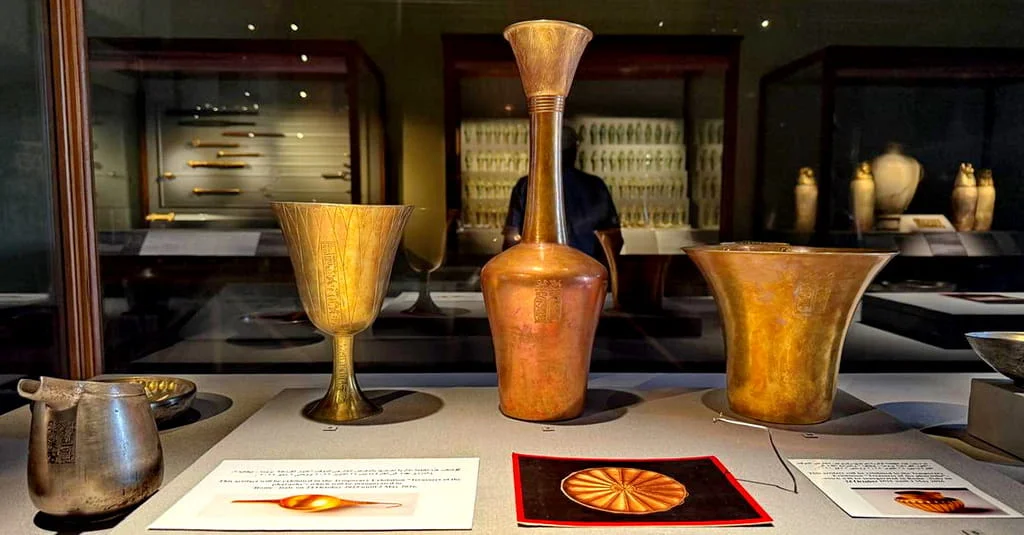
Among the most intimate finds were the solid gold and silver bowls, cups, and libation vessels used during royal banquets and temple ceremonies. One stunning gold bowl features an elegant fluted pattern mimicking the petals of a lotus flower in full bloom. Inscriptions carved into these vessels allowed epigraphers to piece together the complex royal genealogy of the 21st Dynasty.

King Akhenaten: The Life and Legacy of the Heretic Pharaoh

Akhenaten was the radical 18th Dynasty pharaoh who briefly transformed ancient Egypt by banning the...
Related post
FUN

Recent Revelations: The 2025 Shoshenq III Discovery

Recent Revelations The 2025 Shoshenq III Discovery

If anyone doubts that the ruins of San el-Hagar still guard immense secrets, they only need to look at recent history. In October 2025, a French archaeological mission led by Dr. Frédéric Payraudeau made a sensational discovery that solved a centuries-old historical mystery.

[Narrow Tomb Chamber Excavated] ---> [Star-Shaped Pit Discovered at Bottom]
                                               |
                                               v
[225 Green Ushabtis Extracted]  ---> [Royal Symbols Identify Shoshenq III]

While digging in a tiny, narrow tomb containing an unnamed granite sarcophagus, the team uncovered a hidden trapezoidal pit. Carefully arranged in a magnificent star shape, they found a hoard of 225 beautifully preserved green glazed ushabti figurines. These small statues were designed to act as magical servants for the pharaoh in the afterlife.

Most importantly, the royal symbols stamped onto these figurines conclusively identified the occupant of the tomb as Pharaoh Shoshenq III. Finding an intact hoard of ushabtis in their original position had not happened at Tanis since 1946, proving that the Tanis treasures are still actively expanding.

Pop Culture vs. Reality: The Indiana Jones Connection

Pop Culture vs. Reality The Indiana Jones Connection

For millions of people around the world, the word “Tanis” triggers an immediate pop culture association. In the classic 1981 film Raiders of the Lost Ark, Hollywood depicted Tanis as a city completely swallowed by a catastrophic ancient sandstorm. While in the movie, Nazi expeditions secretly excavate the site to locate the legendary Ark of the Covenant.

In reality, this narrative is pure cinematic fiction. The Ark of the Covenant was never hidden in the Nile Delta, a sudden sandstorm never erased the city, and Indiana Jones never fought German soldiers among the ruins. Instead, the real-life adventure belonged entirely to Pierre Montet, who spent over eleven grueling seasons fighting mud, rising groundwater, and the ticking clock of global war to rescue the Tanis treasures from obscurity.

Where to See the Treasures Today

Where to See the Treasures Today

If you want to view the magnificent Tanis treasures in person, you do not actually travel to the Delta ruins. Because groundwater conditions at San el-Hagar are highly destructive to organic material and metals, the Egyptian Ministry of Antiquities immediately transferred the collection to secure museum environments.

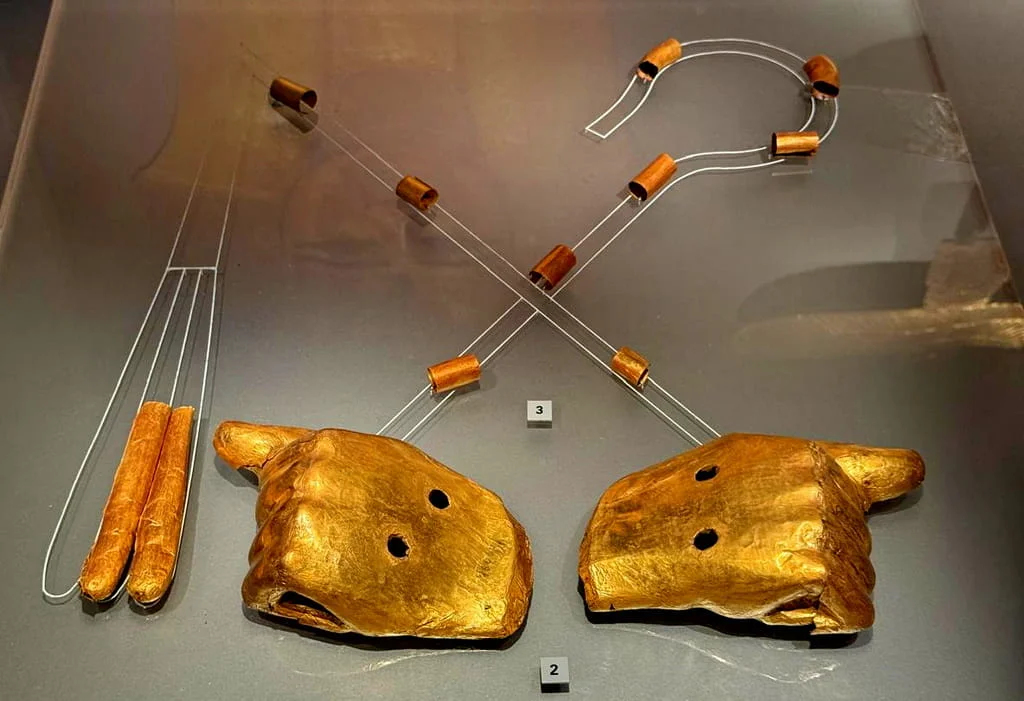
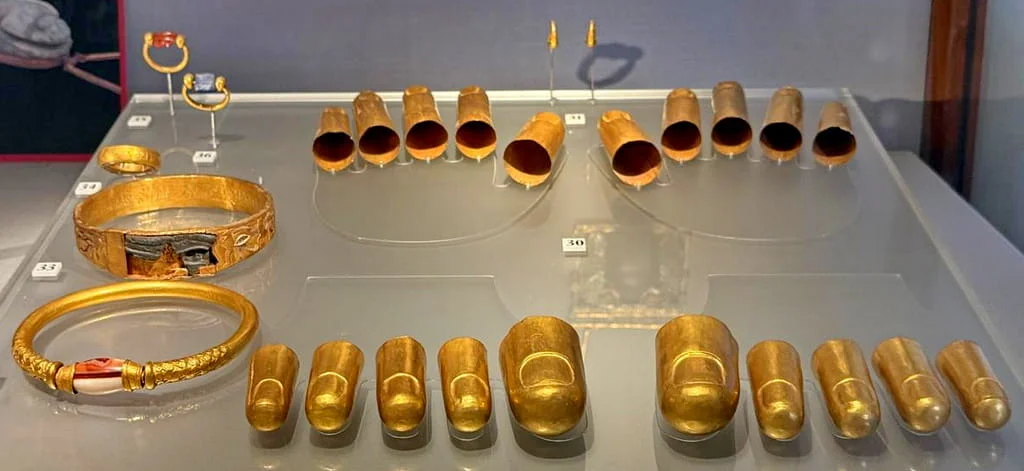
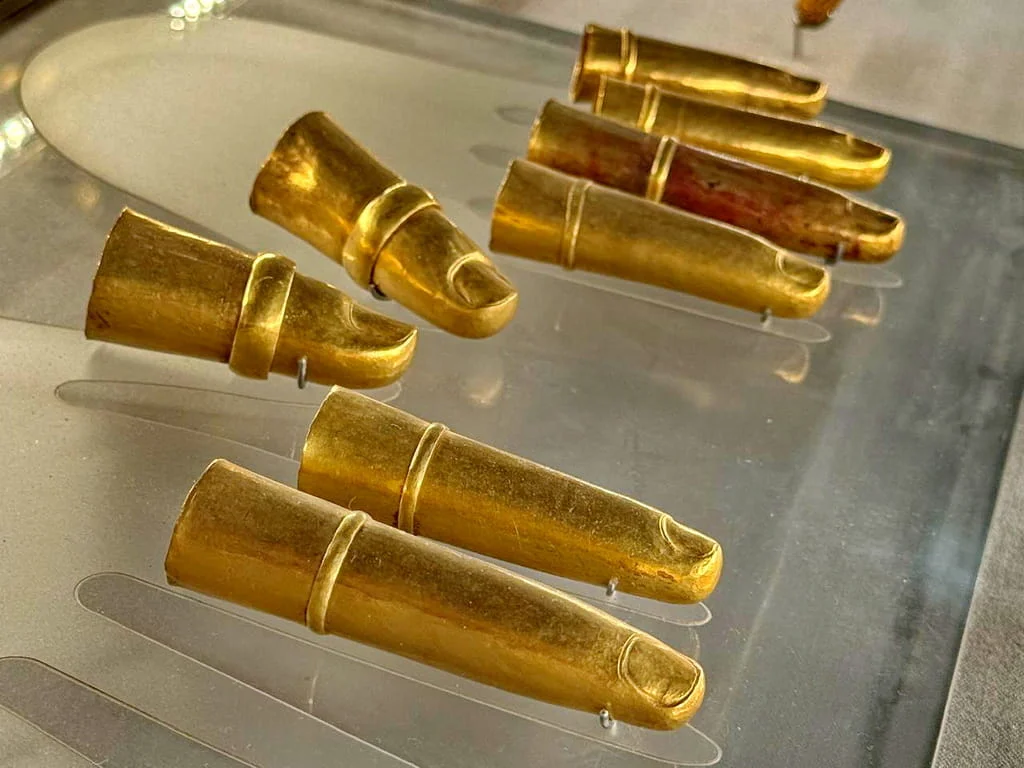
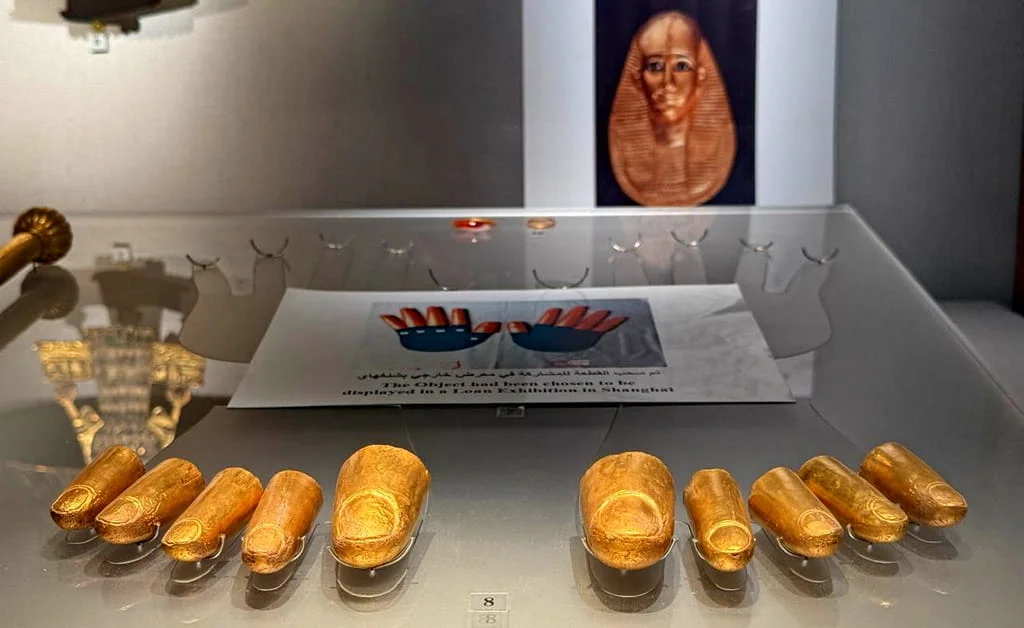
  • The Egyptian Museum in Tahrir Square (Cairo): The vast majority of the Tanis collection resides on the upper floor of this iconic institution. Following a massive multi-year restoration project completed in partnership with the Louvre Museum, over 2,500 individual objects—including the silver coffins, gold masks, and royal finger and toe covers—are dynamically displayed in a dedicated wing.
  • The Grand Egyptian Museum (GEM): Selected masterworks from the Third Intermediate Period are stepping into the spotlight of this massive new facility, providing a stunning historical counterweight to the Tutankhamun galleries.

The Tanis treasures remain one of the absolute zeniths of human artistic achievement. Unveiled during a dark era of global turmoil, these spectacular silver coffins and golden masks offer an unexplored window into the spiritual resilience of ancient Egypt. They stand as definitive proof that even when a civilization faces immense political transition, its artistic soul can continue to shine with brilliant, undiminished luster.

Tanis Treasures: Photo Gallery

4 Days Wheelchair Accessible Tour of Cairo and Luxor....
Explore pyramids, Karnak temples, Valley of the kings, Khan El Khalili & museums...
FUN
God_Anubis_Icon

Amazing one day tour

Fantastic tour. We were picked up at the airport early in the morning (6 am), and were dropped off in the evening after discovering amazing Cairo. The guide was knowledgeable and took us to many hidden places, which we wouldn’t have found without him. Thank you!

More »

Highly Recommend Egypt Fun Tours!

Several weeks ago, I reached out to Egypt Fun Tours regarding a 9-hour layover in Cairo. From the very beginning, Hani Ahmed was responsive and professional, quickly providing a well-organized itinerary tailored to our limited time. The itinerary included a visit to the pyramids, other historical sites, a delicious dinner,

More »
15-Day Historical Egypt Tour Package

all good!

we took pyramid and Cairo city tours and all went smoothly. The were very flexible to adapt to our requirements. Car, car driver and guide were great. very knowledgable and professional tour. Very recommendable

More »
God_Anubis_Icon

Top-rated Tour Packages

God_Anubis_Icon