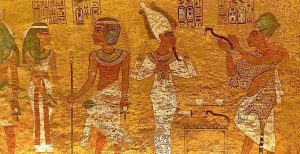
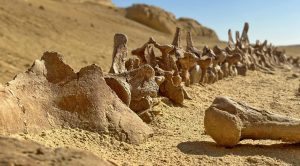
Ancient Egyptian Mummies: From Pharaohs to Powdered Medicine

This article explores the dark, two-sided history of Ancient Egyptian Mummies. Discover the staggering scale of mummification—a practice involving tens of millions of people—and its profound religious significance. However, the focus shifts to the shocking betrayal of these sacred remains: their transformation into a vile, profitable commodity. Explore the 19th-century Mummy Trade, the macabre craze for Mummy Powder Medicine as a supposed cure-all, and the final degradation of the dead into common materials for industry and art.

From Sacred Immortality to Profitable Powder

You are about to uncover the dark second life of Ancient Egyptian Mummies. For over three millennia, this civilization worked tirelessly to defeat death. Millions of citizens—from Pharaohs to commoners—preserved themselves, seeking an eternal, dignified afterlife. The mummification effort involved tens of millions of people, making its scale immense. Yet, the modern world delivered a shocking betrayal to the fate of these sacred remains.

The Great Betrayal

Centuries after the last embalmer closed shop, these ancient bodies became commodities. Following the rise of Egyptology, European obsession created a vile, lucrative commerce. Mummies no longer earned reverence; instead, collectors sold them for display, industry, and most shockingly, for consumption. This trade gave rise to a bizarre medicinal craze. Sellers relied heavily on grinding ancient remains into a powder. We must look at how sacred preservation became a profane, global business.

FUN

The Staggering Scale: How Many Mummies Were Created?

The Staggering Scale; How Many Mummies Were Created

First, we must understand the scale of mummification. The Ancient Egyptian Mummies created across three millennia were staggering in number. Crucially, the focus on preservation did not stop with royalty. Instead, it was a societal imperative for most Egyptians. This led to a count that completely dwarfs modern cemetery figures.

The Millions Mummified

The most challenging number to define is the total population preserved. The practice of mummification spanned over 3,000 years (roughly 3500 BCE to 4th century CE).

  • Population Estimate: Demographic historians estimate that during this vast timeline, perhaps 70 million people lived in Egypt.
  • Religious Imperative: Because Egyptian belief required the preservation of the body for the spirit (Ba and Ka) to survive, virtually everyone who could afford it—and many who could only afford the cheapest, fastest process—underwent mummification.
  • The Consensus: Experts overwhelmingly conclude that the total number of people mummified is in the tens of millions.

Crucial Distinction: While the number of perfectly preserved Pharaohs (like King Tutankhamun) is small, the number of mummified commoners—often poorly preserved or highly fragmented—is overwhelming.

The Discovered vs. The Undiscovered

The difference between what archaeologists have found and what remains buried is vast.

1. Known and Cataloged Mummies: Tens of Thousands

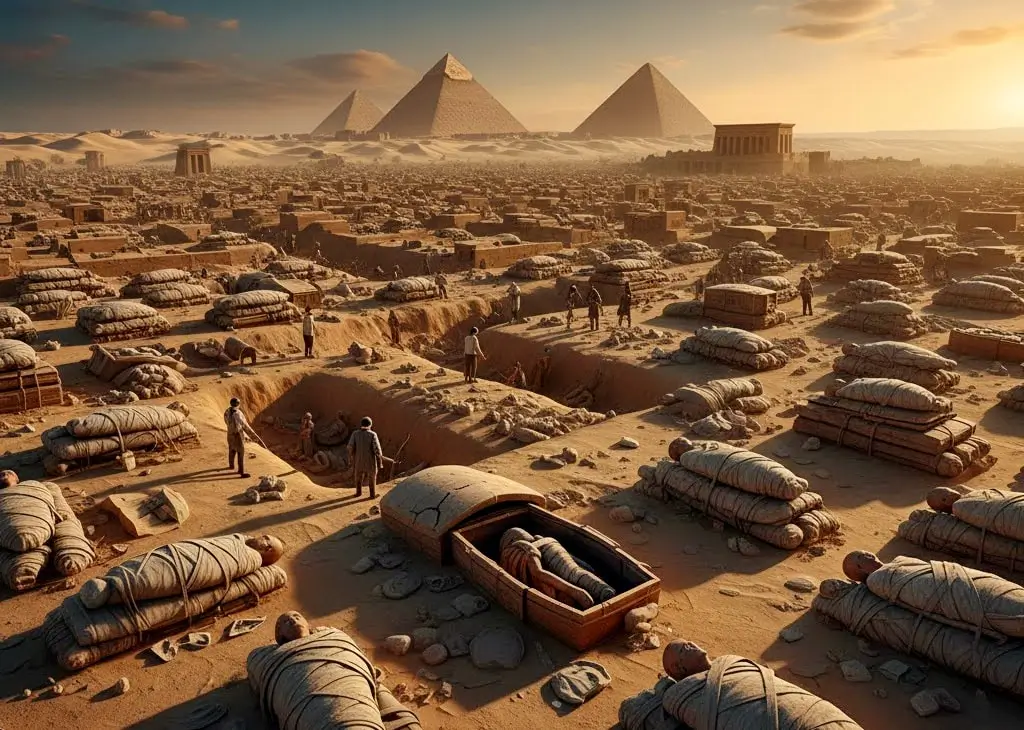
Archaeologists have spent over 200 years exploring Egypt’s vast necropolises (cities of the dead). The number of recorded, excavated, and scientifically studied human mummies sits in the tens of thousands.

  • Recent Discoveries: Major finds continue. In the 21st century alone, expeditions have uncovered shafts containing hundreds of sarcophagi and mummies at sites like Saqqara and Minya, quickly adding to the census.
  • Animal Overload: The number of animal mummies—sacrifices to the gods—is in a completely different league. Archaeologists have located dedicated catacombs containing over one million preserved cats, dogs, ibises, and crocodiles.

2. The Vast Majority Still Lie Buried: Millions

Archaeologists agree that they have explored only a small fraction of the tombs and cemeteries across Egypt.

  • Undiscovered Cemeteries: For every well-known royal tomb, thousands of smaller, regional cemeteries belonging to farmers, laborers, and middle-class families remain untouched under the desert sand.
  • The Estimated Remaining Count: The consensus suggests the number of mummified remains still buried is likely in the millions. The dry, sterile environment of the Egyptian desert acts as a massive natural preserver, waiting only for a spade to uncover it.
FUN

History of Mummification: From Sand to Science

The desire for eternal life drove the complex process of mummification, a tradition that evolved dramatically over its 3,000-year history, moving from chance preservation to a precise, chemical-laden art form. Understanding this technical commitment is key to appreciating the profound disrespect of the latter trade.

Early Preservation: The Gift of the Desert (c. 3500–2686 BCE)

Mummification began accidentally. The earliest Egyptians buried their dead directly in shallow pits in the hot, desert sand.

  • Natural Desiccation: The arid sand naturally absorbed the body’s moisture, rapidly drying the tissues before decomposition could occur. This created the first, most natural Ancient Egyptian Mummies.
  • The Problem: Once burials moved to protective, sealed coffins and deep tombs, the body lost this contact with the sand, and decomposition quickly set in. The Egyptians needed an artificial process to ensure survival.

The Peak of the Art: Chemical Preservation (Old to New Kingdom)

Around the time of the great pyramids (Old Kingdom), priests and embalmers developed a complex, time-consuming ritual to guarantee successful preservation.

The 70-Day Rite: The canonical mummification process took approximately 70 days—a time span tied to the celestial cycle of the star Sothis (Sirius).

Key Steps in the Process:

  • Extraction: Removal of the soft internal organs (lungs, liver, stomach, intestines), which decay fastest, and placing them in Canopic Jars. The brain was often liquefied and removed through the nose.
  • Desiccation: The body cavity was packed with natron salt—a naturally occurring sodium-based mineral—for up to 40 days. The natron drew all remaining moisture from the body, achieving total preservation.
  • Restoration: Embalmers washed the dried body, stuffed it to restore its lifelike shape, and oiled the skin.
  • Bandaging: They tightly wrapped the body in hundreds of yards of linen bandages, placing amulets and charms between the layers for spiritual protection. This wrapping sometimes involved resin, which centuries later Europeans would confuse with bitumen.

The Democratization of the Afterlife

While the royal process was expensive, the need for preservation remained universal.

  • Tiered Pricing: As the practice continued into the Middle and New Kingdoms, embalmers offered services at different price points—a lucrative business that ensured almost every Egyptian, regardless of class, could achieve some form of mummification, thus contributing to the tens of millions of bodies created.

The Profound Egyptian Influence on Greek Civilization

Egypt profoundly influenced ancient Greek civilization in various aspects. Key influences include religious syncretism, with...
Related post
FUN

The Vile Commerce: The 19th-Century Egyptian Mummy Trade

The Vile Commerce; The 19th-Century Egyptian Mummy Trade

The discovery of the sheer number of Ancient Egyptian Mummies spurred not only scientific curiosity but also a profane, booming trade. By the 19th century, following Napoleon’s 1798 campaign, the remains of the dead moved from sacred resting places to the global marketplace, transforming into common goods for profit and spectacle.

Mummy Mania and the Rise of the Commodity

European travelers and wealthy collectors fueled an insatiable demand for Egyptian artifacts. Mummies, whether royal or commoner, became the ultimate souvenir and status symbol.

  • Street Vendors and Souvenirs: In Cairo and Luxor, local vendors and tomb robbers sold mummies and mummy parts openly in markets. Tourists eagerly purchased these items, often paying high prices to ship them back to Europe and America.
  • The Unwrapping Spectacle: Wealthy Victorians hosted lavish “mummy unwrapping parties.” Attendees, including physicians and social elites, paid to watch the public destruction of an ancient body. These events satisfied a bizarre curiosity, blending entertainment, macabre science, and social status.
  • Industrial Use Claims: Rumors persisted that the large quantities of linen wrappings stripped from mummies found use in the European paper-making industry. While historians often debate the extent of this specific practice, the claims highlight the total lack of respect the era showed the dead.

The Most Profane Use: Filling the Market

The demand for dead bodies far outstripped the supply of actual, intact mummies. This led to massive, destructive excavation efforts focused solely on quantity, not preservation. However, a specific demand—the medicinal use—created the greatest need for raw, powdered material.

💡 The Ultimate Degradation

The widespread belief that mummies possessed curative properties made them a valuable, tradable commodity well into the 19th century. This market would eventually lead to the greatest violation of the Ancient Egyptian concept of eternal life: the forced consumption of human remains.

Business of Immortality: Democratization of the Afterlife and the Market

The Business of Immortality: Trace the incredible Democratization of the Afterlife in Ancient Egypt. Learn...
Related post
FUN

Cure-All: The Craze for Mummy Powder Medicine

Cure-All; The Craze for Mummy Powder Medicine

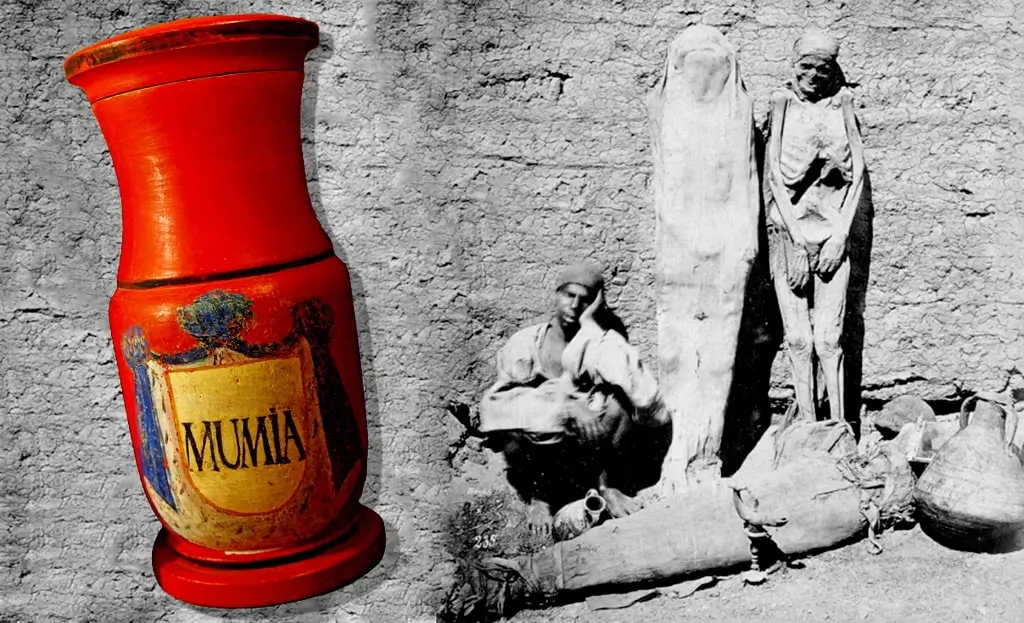
The most bizarre and macabre chapter in the history of Ancient Egyptian Mummies centers on the medicinal use of their remains. Driven by centuries of faulty logic and high demand, preserved bodies were literally ground into powder and sold as a universal pharmaceutical: mumia.

The Case of Mistaken Identity: Bitumen to Body

The medicinal practice began not with Egyptian bodies, but with a simple semantic confusion in the Middle Ages:

  1. The Origin of Mumia: The original term, mūmiyā (Arabic), referred to a black, tar-like substance known as bitumen. Medieval physicians used bitumen as a genuine medicine, primarily for healing bruises and sealing wounds.
  2. The Confusion: When explorers and merchants encountered Egyptian mummies, they noticed the black, hardened resins and oils used in the embalming process. Europeans mistakenly believed this black substance was the medicinal bitumen (mūmiyā).
  3. The Switch: By the 12th century, physicians across Europe had switched from prescribing mineral bitumen to prescribing actual powdered Ancient Egyptian Mummies.

The High Demand for Powdered Flesh

The medicinal use of mumia peaked between the 16th and 18th centuries, but persisted well into the 19th-century trade you described.

  • The Universal Cure: Doctors prescribed powdered mummy for nearly every ailment imaginable—from epilepsy, headaches, and menstrual pain to internal bleeding and plague. The theory held that since the ancient Egyptians had mastered immortality, consuming their remains would transfer that essence of eternal life to the patient.
  • The Price of Death: The price of Mumia soared. Due to its status as a supposed cure-all and the difficulty of acquiring the material, it became an incredibly profitable trade commodity.

The Rise of Counterfeits

As the demand for Mummy Powder Medicine grew exponentially, the legitimate supply of mummies from Egypt could not keep pace.

  • Manufacturing Mummies: Sellers, both in Europe and Egypt, began producing fake mummies to meet the lucrative demand. They took the bodies of executed criminals, slaves, beggars, and unclaimed dead, crudely embalmed them, dried them in an oven, and then ground them into powder.
  • Mass Production: Even animal mummies, which were far more numerous, often served as substitutes, highlighting the total depravity of the commerce.

The medicinal market only faded as physicians in the late 18th and 19th centuries grew skeptical, calling the practice barbaric and questioning its effectiveness. By the early 20th century, the era of medical cannibalism finally ended, though remnants persisted in the art world.

Ancient Egyptian Book of the Dead: Spells, Judgment, and the Afterlife

Unlock the secrets of the Ancient Egyptian Book of the Dead, the ultimate survival guide...
Related post
FUN

The Artistic Afterlife: Mummy Brown Pigment and Conclusion

While the medicinal craze for Mummy Powder Medicine eventually subsided due to increased medical ethics and skepticism, the use of Ancient Egyptian Mummies persisted in one last, strange application: fine art.

The Curious Case of Mummy Brown

For centuries, artists valued a pigment called Mummy Brown, also known as Caput Mortuum (Death’s Head).

  • Composition: Manufacturers produced this rich brown pigment by grinding up whole human or animal mummies, mixing the resulting powder with pitch, resins, and myrrh—the very embalming ingredients—to create a distinct, translucent oil paint.
  • Artistic Appeal: Painters prized Mummy Brown for its unique warmth and tonal qualities, often using it for flesh tones, shadows, and subtle glazes. Notable artists who likely utilized the pigment included the Pre-Raphaelite painter Edward Burne-Jones and perhaps even Eugène Delacroix.
  • The Final End: The use of Mummy Brown finally faded in the early 20th century, largely due to supply issues, a lack of consistent quality, and, most importantly, the growing moral repulsion to painting with human remains. A famous anecdote recounts Burne-Jones burying his tube of Mummy Brown when he realized its true, morbid origin.

The Legacy of the Betrayal

The story of the Egyptian Mummy Trade serves as a profound ethical lesson. The immense effort of a civilization to guarantee the immortality of its people was undone by the greed and scientific ignorance of a later age.

From being a sacred vessel for the soul’s eternity, the Ancient Egyptian Mummies became nothing more than a profitable resource: a curiosity for collectors, a fuel source for industry, and a powdered drug for the masses.

  • Finality: While the trade ended, the scale of destruction was immense. The tens of millions of mummies that provided the ultimate historical record of a powerful civilization suffered widespread degradation, dispersal, and consumption. The legacy is a stark reminder of what happens when historical context is ignored in favor of commerce.

Frequently Asked Questions (FAQs)

Q1: How many mummies are there in total?

The exact figure is impossible to determine. However, experts estimate that Ancient Egyptian civilization created mummies for approximately tens of millions of people. This occurred over their 3,000-year history. Furthermore, this count includes both common citizens and royalty. Significantly, only a fraction of these remains have been discovered and scientifically cataloged. The majority still lie buried in untouched cemeteries across Egypt.

Q2: What was the Mummy Powder Medicine used for?

The powdered human remains, known as mumia, became a popular medicine in Europe, particularly from the 12th century through the 18th century. Physicians prescribed Mummy Powder Medicine as a cure-all for a wide range of ailments, including headaches, internal bleeding, and epilepsy. This medicinal craze originated from a misconception that the embalming materials (bitumen/resin) had curative properties, leading to the use and consumption of the mummies themselves.

Q3: Did people really eat mummies?

Yes, they did. Due to the popular belief in its medicinal power, powdered mummy was a legitimate and widely sold pharmaceutical product for several centuries. When the supply of genuine mummies proved insufficient for the massive demand, unscrupulous merchants began creating and selling counterfeit mummies—the crudely preserved bodies of the commoners or executed—to be ground up and sold as medicine.

Explore Pyramids, Luxor, the black & white desert, and more...
Live a royal lifestyle surrounded by Egypt's historical wonders....

HANDS DOWN, the best cultural experience I’ve ever had

Thank you, Egypt Fun Tour, for a most memorable trip. I admit I didn’t do any of the planning (it was all done by my boyfriend), but as you can read in the reviews below, Hani (the owner of Egypt Fun Tours) is superbly organized and accommodating with scheduling. My

More »

Goes well beyond “tour”

I am tempted to say “my friend Hani” runs an amazing service, because that is how he makes you feel. I first went on the 9-hour layover tour in summer 2011. Hani and driver picked me up at the airport at 3am, and by the time I left at noon

More »

Valley of the Kings, Hepchepsut

I never had a more positive experience and educational time than this tours. Learning about a variety of kings and queens was amazing! The tour guide was super nice and helped me and my friend every step of the way! Including bargaining for a few souvenirs! I will never forget

More »

Very Considerate and Helpful

Guide and driver were on time, open to my requests and took care that I felt safe and saw the Pyramids and parts of old cairo during my less than 24 hour stay between flights. Office staff were great in communicating by email before and during the trip.

More »
13-day Egypt guided tour package - Egypt Fun Tours

Easily the best two days of the year!

We were doing the 14-day Mediterranean cruise and were in Egypt for two days. I was searching the internet for about 4 days and finally found Egypt Fun Tours as my guide in Egypt. It ended up being the best 2 days of the entire cruise trip. Since this is

More »
Isis with wings

Top-rated Tour Packages

Isis with wings