The Pyramid of Senusret III: A Fortress for the Afterlife

The Pyramid of Senusret III Dahshur stands as a bold monument to Middle Kingdom security and royal power. King Senusret III revolutionized pyramid design by moving the entrance from the traditional north side to a hidden location in the west. This strategic shift aimed to protect the royal remains from the growing threat of tomb robbers. While the original white limestone casing has vanished, the massive mudbrick core remains a dominant feature of the Dahshur landscape. Specifically, the discovery of the "Dahshur Treasure" within the queens' galleries proves the immense wealth of the Twelfth Dynasty. For the traveler in 2026, the site offers a raw look at the evolution of ancient engineering and the transition toward the hidden tombs of the New Kingdom. Therefore, the Pyramid of Senusret III Dahshur is an essential stop for understanding the intersection of military precision and funerary art.

The Pyramid of Senusret III in Dahshur is a landmark of Middle Kingdom engineering. King Senusret III was one of Egypt’s most powerful warrior-pharaohs. He chose to build his funerary complex on the northern edge of the Dahshur plateau. Specifically, this monument is much larger than those of his predecessors. Because the king wanted to project eternal strength, he designed a massive mudbrick core encased in fine white limestone. Consequently, the Pyramid of Senusret III once dominated the horizon as a shining symbol of royal authority.

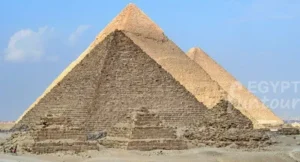
Originally, the pyramid reached a height of about 78 meters. However, centuries of stone robbing have removed its limestone protective shell. Specifically, only the dark mudbrick core remains visible today. This core has eroded into a series of jagged ridges. Because of this decay, the structure looks like a natural hill from a distance. Nevertheless, the scale of the ruins proves the immense resources of the Twelfth Dynasty. Therefore, the Pyramid of Senusret III remains a primary site for studying late Middle Kingdom state power.

FUN

The Hidden Entrance: A Revolution in Security

The Hidden Entrance A Revolution in Security

The Pyramid of Senusret III changed the rules of pyramid design. Specifically, the architects abandoned the traditional northern entrance. For thousands of years, robbers knew exactly where to start digging. Because Senusret III wanted to protect his mummy, he ordered a hidden entrance on the western side. This was a revolutionary move in Egyptian history. Consequently, the Pyramid of Senusret III became a prototype for the “hidden tombs” of later dynasties.

The internal layout is a complex web of granite and limestone.

  • The Descending Passage: It starts far from the pyramid’s center to confuse thieves.
  • The Burial Chamber: Located in the northwest sector rather than directly under the peak.
  • The Granite Sarcophagus: A massive, expertly carved box remains inside the vault.

Because of these precautions, the interior is a masterpiece of deception. Furthermore, the architects used massive stone beams to support the weight of the mudbrick above. This ensured that the chambers would not collapse like those of the Black Pyramid. For this reason, the Pyramid of Senusret III is considered a more successful engineering project.

FUN

The Dahshur Jewelry and the Queens’ Gallery

The Dahshur Jewelry and the Queens' Gallery

The Pyramid of Senusret III is famous for the “Dahshur Treasure.” Specifically, archaeologists discovered several hidden galleries for the royal women. In 1894, Jacques de Morgan found the tombs of Princess Sithathor and Queen Mereret. Because these burials were hidden beneath the pyramid courtyard, they remained untouched for millennia. Consequently, they contained some of the most exquisite jewelry ever found in Egypt.

These treasures include:

  1. Gold Pectorals: Featuring the names of Senusret II and Senusret III.
  2. Amethyst Anklets: Strung with gold “claw” charms.
  3. Scarabs: Made of lapis lazuli and set in high-quality gold.

Therefore, the Pyramid of Senusret III provides a vivid look at the wealth of the royal court. Furthermore, these artifacts show the high status of women in the Middle Kingdom. For the traveler, viewing these items in the Egyptian Museum is essential. They prove that the “ruined” mudbrick piles of Dahshur once held the world’s finest craftsmanship.

The Egyptian Pyramids: A Complete Guide to the Ancient Wonders

This definitive guide covers the complete story of the Egyptian pyramids. We explore their true...
Related post
FUN

Internal Granite Vaults: A Masterclass in Stress Relief

The architects of the Pyramid of Senusret III faced a massive structural challenge. Specifically, the weight of the mudbrick core threatened to crush the internal chambers. To prevent this, they used a series of massive limestone and granite beams. These beams weigh up to 30 tons each. Because the builders arranged them in a gabled pattern, they directed the weight away from the burial room. Consequently, the Pyramid of Senusret III remains a testament to Middle Kingdom physics.

The burial chamber itself features walls sheathed in fine granite. Specifically, workers applied a thin layer of white stucco over the red stone. This created a bright and sacred atmosphere for the king’s spirit. Furthermore, the architects used clever artistic tricks in the lower passages. Because pink granite was expensive, they painted red and black dots on cheaper limestone. Consequently, the interior looked far more luxurious than it actually was. Therefore, the Pyramid of Senusret III Dahshur shows a blend of high-end engineering and creative budgeting.

Dahshur Pyramids: Where Pyramids Were Perfected

Escape the crowds at the Dahshur Pyramids, a true "hidden gem" just south of Saqqara....
Related post
FUN

The Red Granite Sarcophagus and the Palace Facade

A magnificent red granite sarcophagus rests against the western wall of the burial chamber. Specifically, the base of the box features fifteen intricate niches. This design replicates the “palace facade” style found in the Step Pyramid of Djoser. Because Senusret III wanted to connect with the very first pyramid builders, he chose this ancient aesthetic. Consequently, the Pyramid of Senusret III serves as a bridge between the Third and Twelfth Dynasties.

Despite the beauty of the sarcophagus, it appears the king never used it. Specifically, archaeologists found no human remains or funerary debris inside the chamber. Because Senusret III built a second, massive tomb in Abydos, many experts believe he was buried there instead. Consequently, the Pyramid of Senusret III may have served as a “ka” pyramid or a symbolic cenotaph. For the 2026 researcher, this mystery adds a layer of intrigue to the site. It suggests that the pharaoh’s final journey was more complex than a single burial.

Giza Pyramids Complex: The Eternal Horizon of the Fourth Dynasty

The Giza Pyramid Complex remains the ultimate testament to human ingenuity, spanning the intersection of...
Related post
FUN

Logistics: Exploring the Dahshur North Site

For travelers, the Pyramid of Senusret III offers a peaceful and raw archaeological experience. The site is located about 30 kilometers south of Cairo. Most visitors arrive by private car from October Gardens or Giza. Specifically, you should plan to visit in the early morning between October and April. Because the desert heat is intense, early arrivals ensure a more comfortable exploration of the ruins.

Expert Tips for Visitors:

  • Photography: The morning sun highlights the deep crater in the center of the mudbrick core.
  • Footwear: Wear high-quality hiking boots to navigate the loose sand and limestone fragments.
  • Guided Tours: Hire a local guide from the Badrashin area to help locate the hidden western entrance.
  • Payment: Remember that most Egyptian sites now require credit cards for ticket purchases.

Therefore, the Pyramid of Senusret III is a must-visit for any serious history enthusiast. It allows you to step away from the crowds of Giza and witness the evolution of royal security. Furthermore, the proximity to the Red and Bent pyramids makes it an easy addition to a full-day Dahshur itinerary. Consequently, you can experience the full architectural transition of the Middle Kingdom in a single morning.

Explore the marvels of Cairo and Alexandria....
Enjoy every moment spent in Egypt exploring wonders and marveling at wonderful places....
FUN
God_Anubis_Icon

Egypt Fun Tours – Does it All!

My husband and I visited Egypt in March 2013. First, let me say, ‘Go, go, go!’ – it’s safer and definitely friendlier than many places we’ve visited. Tourism is drastically down – thanks mostly to media misinformation – so it’s a great time to visit to avoid line-ups and crowds

More »

Good but did not get what I paid for…

I had an 11 hour layover in Cairo. I wrote to them based on recent reviews for them on this site. After a few email exchanges with Hati, who I think is one of the owners, I was ready to get there. I was greeted by Hatem, a very good

More »

Cairo Day Trip

Great trip organised. I had a 12-hour layover in Cairo and had a great time with Sherif, who answered every question I had on ancient Egypt. Highly recommend.

More »
9-day tour package - Egypt Fun Tours

You’re in “GREAT HANDS” with Egypt Fun Tours!

We first went to Egypt in July 2010. We were to pass through Cairo on our way to Africa, and we had arranged to be picked up from the Cairo airport and shown around the city during our 6-hour layover. This was arranged through emails with Hamada, of Egypt Fun

More »

Great one day tour in Cairo

My husband and I had a long layover in Cairo on our way to Kenya in 2010. Since we had never been to Egypt, we decided to sign up for a one-day tour with Egypt Fun Tours Day Trips. Our guide was there when we arrived and quickly guided us

More »
God_Anubis_Icon

Top-rated Tour Packages

God_Anubis_Icon