The Enduring Stability of The Djed Pillar
The power of the Djed Pillar transcended its original mythological context. Its symbolism resonated throughout Egyptian history. It became synonymous with the very concept of duration. Consequently, its meaning became deeply ingrained in the nation’s identity.
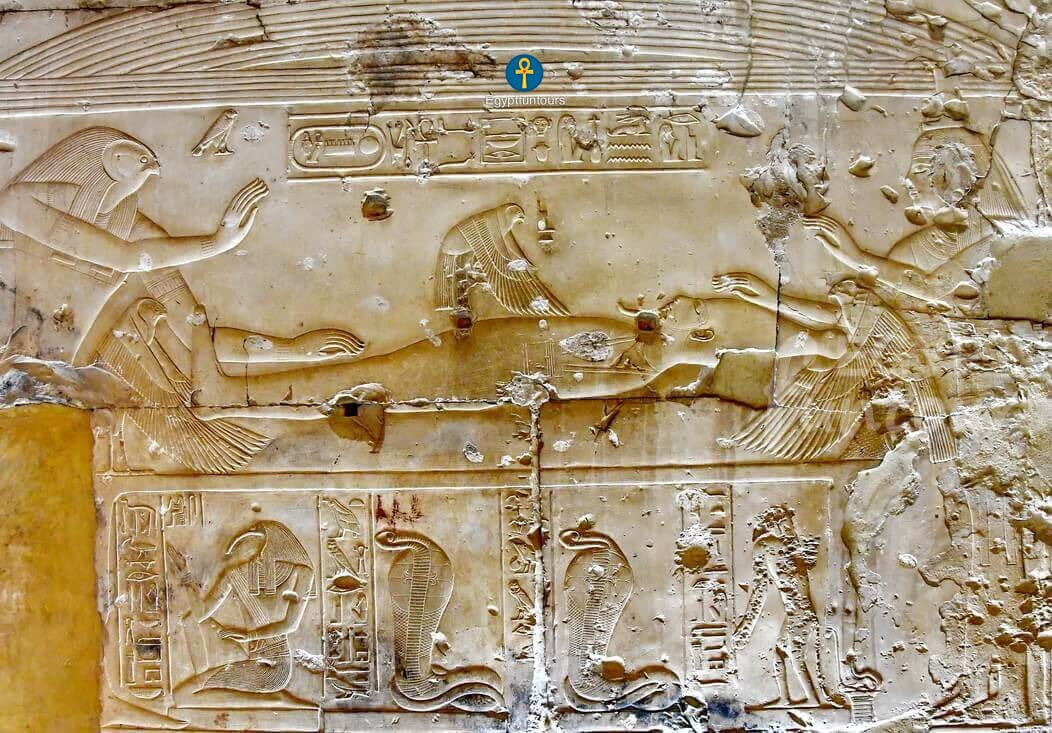
The Djed provides a fundamental lesson. The Egyptians built their world upon order, renewal, and endurance. They used the spine of a dead god, Osiris, to symbolize this profound principle. Therefore, the pillar represents the ultimate triumph of life over death. It shows how destruction leads to greater stability.
This analysis confirms the pillar’s authoritative role. The Djed Pillar was not just a decoration. It functioned as the spiritual, political, and literal backbone of Ancient Egyptian civilization.
Glossary of Key Terms: Defining The Djed Pillar World
We must define the key terminology for absolute clarity. These definitions enhance reader understanding and solidify the authority of this content.
- Ma’at: The fundamental ancient Egyptian concept. It represents cosmic order, truth, justice, and balance. The Pharaoh’s main duty was to uphold Ma’at.
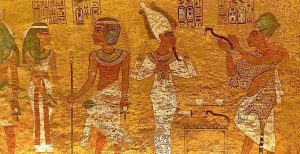
- Osiris: The god of the afterlife, the underworld, and regeneration. The Djed Pillar is the specific symbol representing his backbone and his subsequent resurrection.
- Sed Festival: The royal jubilee ceremony. The Pharaoh celebrated this festival, typically after 30 years of rule, to renew his physical and spiritual strength for the remainder of his reign.
- Tyet (Knot of Isis): A symbol often paired with the Djed Pillar. The Tyet represents life and welfare, complementing the Djed’s meaning of stability and duration.
- Totenpfahl: A German term used by some scholars. It refers to a type of “dead pole” or an early ritualistic support structure. This comparison attempts to trace the Djed’s possible pre-dynastic origins.
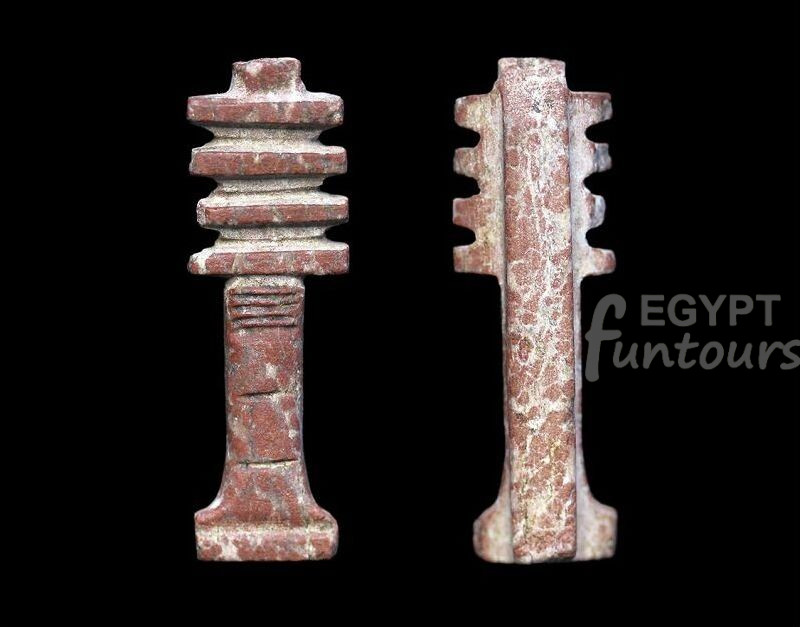
- Amulet: A small charm or jewelry piece. People wore Djed-shaped amulets for protective magic, guaranteeing stability and physical integrity in life and the afterlife.
(FAQ) About the Djed Pillar
These answers address common user questions, boosting SEO visibility for long-tail queries and providing quick-answer value.
What is the Djed Pillar supposed to represent?
The Djed Pillar primarily represents the backbone of the god Osiris. This anatomical link makes it the ultimate symbol of stability, duration, and strength. Consequently, when used in temples or tombs, it magically reinforced the structure and ensured permanence.
Who performs the “Raising the Djed” ritual?
The reigning Pharaoh traditionally performed the “Raising the Djed” ritual. He acted as the primary priest of the state. The Pharaoh performed this ceremonial act with the assistance of high-ranking officials and priests. In this way, the king took personal responsibility for re-establishing cosmic order (Ma’at) for the nation.
Was the Djed Pillar a real architectural feature?
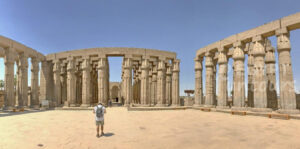
Yes, the pillar was a real architectural feature. Architects designed actual temple columns to resemble the Djed Pillar. This happened most notably in the New Kingdom and later temples. Furthermore, the pillar’s image was carved onto walls to ritually strengthen the construction, making it an integral part of sacred space design.
Where is the Djed Pillar found most often?
You can find the Djed Pillar in many contexts. It appears frequently on temple reliefs, sarcophagi, and stelae. However, its most common physical location is inside tombs. Priests placed Djed amulets directly on or near the mummy’s neck or spine to guarantee the deceased’s physical and spiritual continuity.
What is the difference between the Djed Pillar and the Tyet Knot?
The Djed Pillar and the Tyet Knot (or Knot of Isis) are often paired. The Djed represents the male force of stability and duration (Osiris). In contrast, the Tyet represents the female force of life and welfare (Isis). When displayed together, they symbolize the complete balance and order of the universe, achieved through the unity of the divine couple.
Current weather in Egypt