The Rebirth of the Pyramid Age at El Lisht
Located approximately 65 kilometers south of Cairo, the El Lisht Ancient Site serves as the definitive monumental record of Egypt’s Middle Kingdom (c. 1991–1783 BCE). After the decentralization of the First Intermediate Period, the Pharaohs of the 12th Dynasty sought to restore the grandeur of the Old Kingdom. To do this, they moved the capital to a new city called Itj-tawy and established El Lisht as their royal necropolis.
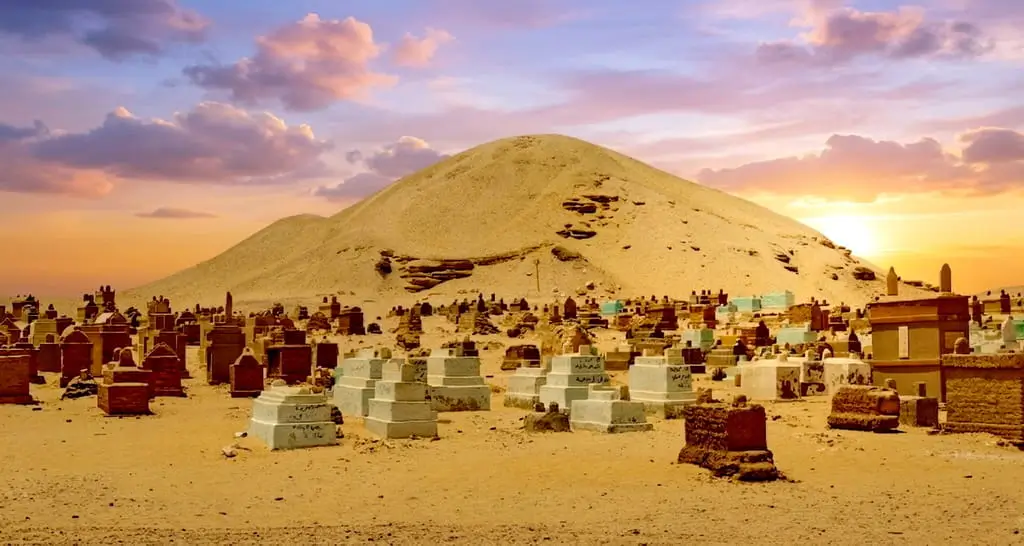
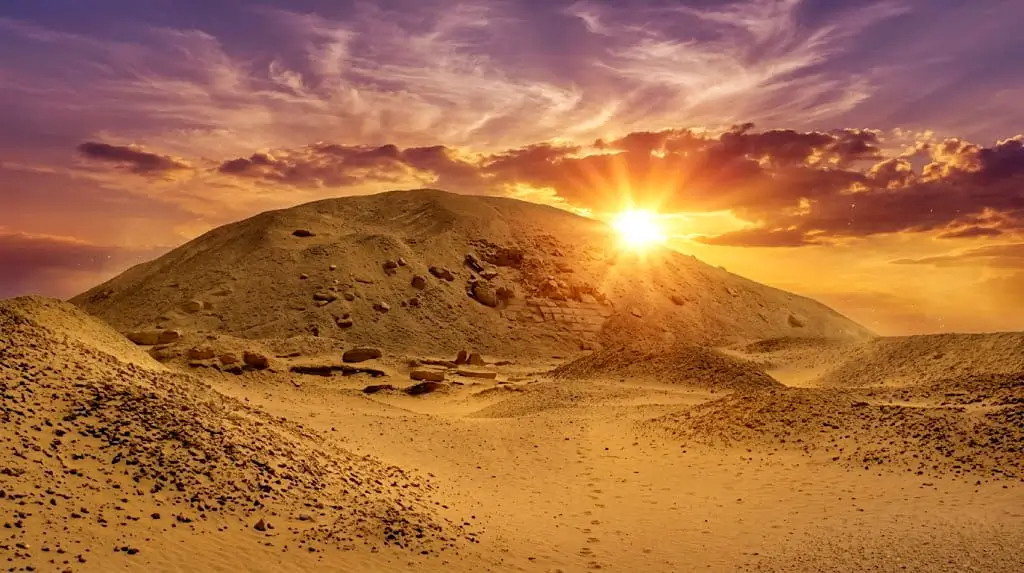
El Lisht is home to two major pyramid complexes belonging to Amenemhat I and his son Senusret I. Unlike the solid stone giants of Giza, these structures represent a fascinating technical evolution. Architects began using mudbrick cores reinforced with stone “skeleton walls”—a method that allowed for rapid construction while maintaining a regal exterior of Tura limestone. Today, although the outer casings have largely vanished, the site remains a goldmine for archaeologists and travelers seeking to understand the transition from the “Pyramid Age” to the “Classical Age” of Egyptian literature and art.
The Pyramid of Amenemhat I: A Political Statement in Stone
Amenemhat I, the founder of the 12th Dynasty, used his funerary monument to bridge the gap between his new reign and the glorious past. Interestingly, the core of his pyramid contains “recycled” blocks from the Old Kingdom monuments at Giza and Saqqara. This was not a move of desperation; rather, it was a profound political statement. By literally building his tomb from the stones of Khufu and Khafre, Amenemhat I physically anchored his dynasty to the “Golden Age.”
- Height: Originally 55 meters.
- Innovation: The first use of the “cellular” internal framework.
- The Burial Chamber: Currently inaccessible due to Nile seepage, but historically known to contain a granite altar and offering hall that reflected the King’s role as the unifier of the Nomes (provinces).
The Pyramid of Senusret I: The Technical Peak
About a mile to the south lies the more impressive Pyramid of Senusret I. Known in antiquity as “Senusret Beholds the Two Lands,” this complex was significantly larger and better constructed than his father’s.
Architects here perfected a revolutionary internal “grid” system. They built 32 internal limestone walls radiating from the center, creating compartments that were then filled with desert debris and mudbrick. This engineering experiment provided the structural stability needed for a larger monument while managing resources efficiently. The site also features nine smaller pyramids for the King’s queens, emphasizing the return to the large-scale royal family funerary complexes seen in the 6th Dynasty.
Beyond the Kings: The High Officials of El Lisht
Surrounding the royal pyramids are the mastaba tombs of the era’s elite. Much like the Mastaba of Kagemni in Saqqara, these tombs provide a window into the professional and spiritual lives of Middle Kingdom officials.
- The Tomb of Senebtisi: One of the most famous finds at El Lisht, this undisturbed burial yielded exquisite jewelry and funerary goods now housed in the Metropolitan Museum of Art.
- The Vizier Mentuhotep: His massive tomb near Senusret I’s complex reflects the immense power held by the viziers during this period of centralized revival.
Quick Facts for Your Pillar Page
| Feature | Details |
| Primary Era | Middle Kingdom (12th Dynasty) |
| Main Monuments | Pyramids of Amenemhat I and Senusret I |
| Location | 65km south of Cairo, near the Fayum |
| Historical Significance | Re-establishment of the Pyramid Age after the First Intermediate Period |
| Architectural Style | Mudbrick cores with limestone skeleton walls |