Valley Temple of King Khafre: A Gateway to the Afterlife at Giza

The Valley Temple of Khafre, built around 2570 BC on the Giza Plateau, served as the sacred entry point for the deceased pharaoh. Here, priests performed vital purification rituals, initiating the king's journey to the afterlife. This remarkably preserved monument showcases minimalist architecture and profound symbolism, connecting the earthly realm to eternity.

Valley Temple of King Khafre

Step back 4,500 years to the Giza Plateau, where you can find one of ancient Egypt’s most awe-inspiring and best-preserved structures: the Valley Temple of Khafre. Pharaoh Khafre of the Fourth Dynasty (c. 2570 BC), who was the son of Khufu, commissioned this temple. However, this wasn’t a place for public worship. Instead, it served as the grand ceremonial entrance for a king’s solemn journey into eternity.

This article explores the Valley Temple’s crucial function in ancient funerary rituals, its minimalist architectural genius, and the profound symbolism that the builders encoded within its very stones.

Quick Facts: Khafre’s Valley Temple
Pharaoh Khafre (Chephren)
Dynasty 4th Dynasty, Old Kingdom
Date c. 2570 BC
Location Giza Plateau, Egypt
Materials Red Granite, White Alabaster, Tura Limestone
Key Discovery Diorite Statue of Khafre with Horus
Function Purification & mummification preparation
FUN

Valley Temple: Part of a Grand Funerary Complex

Valley Temple Part of a Grand Funerary Complex

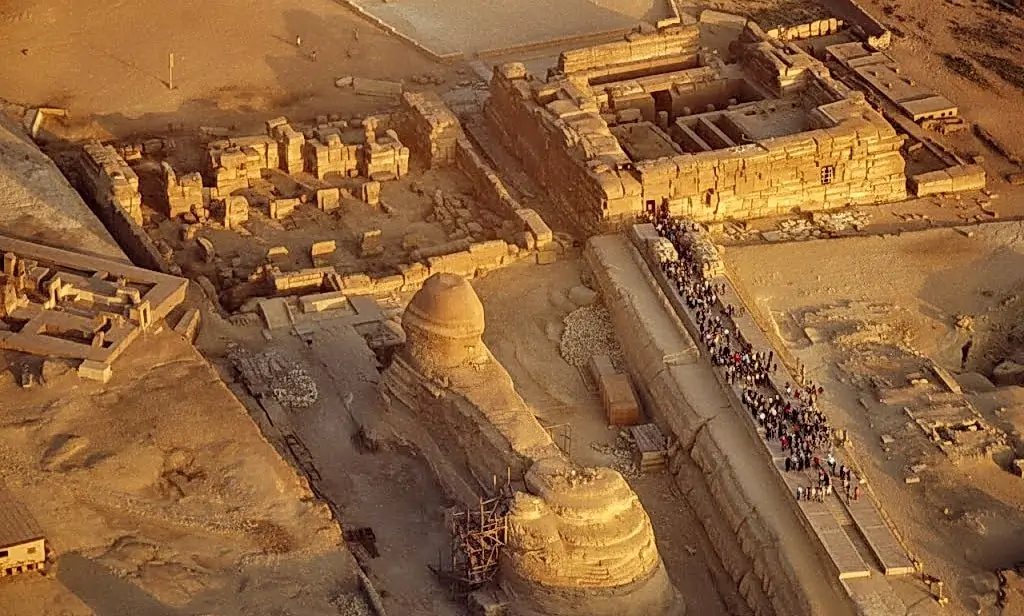
The Valley Temple did not stand alone. In fact, it was the crucial first stop in Khafre’s mortuary complex. The royal architects designed this massive architectural system to guarantee the pharaoh’s successful transition to the afterlife.

Specifically, the full complex included:

  1. The Valley Temple: The reception point at the water’s edge.
  2. The Causeway: A long, covered corridor leading up the plateau.
  3. The Mortuary Temple: Located directly against the pyramid for final rituals.
  4. The Pyramid of Khafre: The pharaoh’s final resting place.
FUN

Purpose of the Valley Temple

Purpose of the Valley Temple

The builders strategically positioned the temple beside a canal connected to the Nile, making it the primary gateway for the pharaoh’s body after death.

Consequently, the funerary procession arrived by boat and docked directly at the temple. Once inside, priests performed the initial sacred rites. This was the designated place for ritual purification and cleansing ceremonies that prepared the king for mummification. Furthermore, Egyptologists believe it was here that priests performed the most critical ritual: the “Opening of the Mouth” ceremony. This rite magically restored the senses of the deceased, thereby allowing him to see, speak, and eat in the afterlife.

Therefore, the Valley Temple functioned as a transitional portal—the essential bridge between the earthly world and the divine realm.

The Unification Battle by King Narmer

The Unification Battle by King Narmer The unification battle of King Narmer is shown on...

Related post
FUN

Architectural Brilliance: Simplicity and Power

Architectural Brilliance Simplicity and Power

The temple’s design showcases the mastery of Old Kingdom architecture, defined by its massive scale and powerful minimalism. Unlike later temples filled with intricate hieroglyphs, its profound beauty comes from its geometric precision and perfectly finished stone.

The T-Shaped Hall and the Statues of Khafre

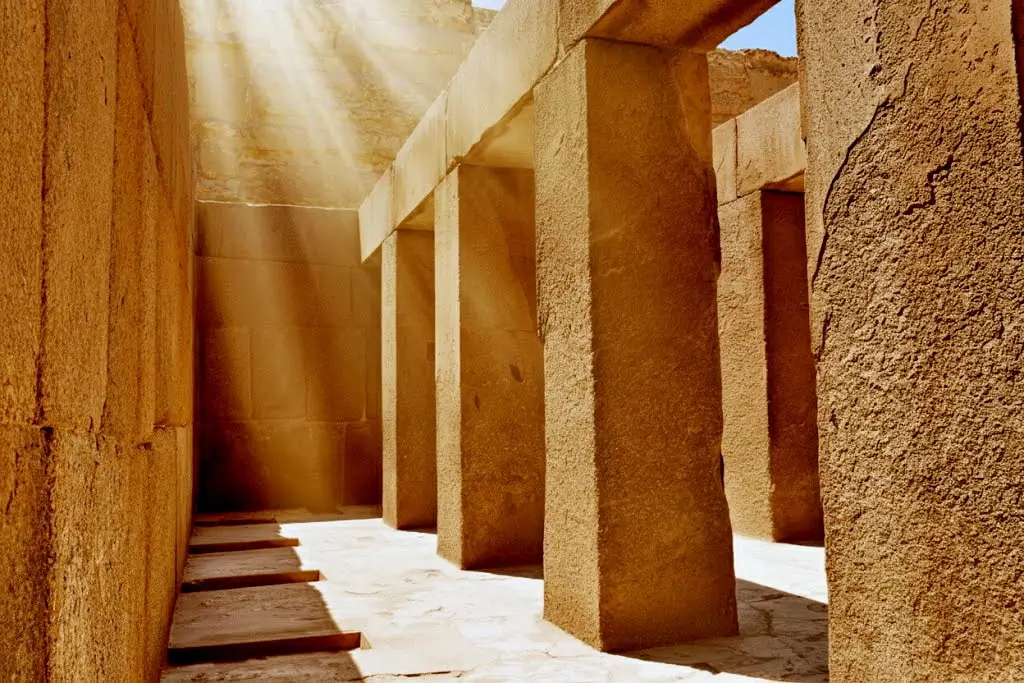
At the heart of the temple, you will find a grand, T-shaped hypostyle hall. Originally, this hall housed 23 life-sized statues of Khafre, which artisans carved from hard, dark stones like diorite and schist. These statues were not mere decorations; on the contrary, they served a vital spiritual purpose. The ancient Egyptians believed the king’s life force, or Ka, needed a physical vessel to inhabit for eternity. For this reason, if the royal mummy were ever damaged, the Ka could live on within these statues.

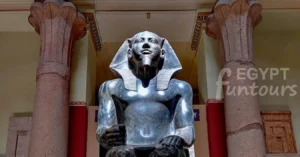
The most famous of these is the magnificent diorite statue of Khafre, now a centerpiece of the Egyptian Museum in Cairo. It depicts the pharaoh enthroned, while the falcon god Horus protectively wraps his wings around the king’s head—a perfect symbol of divine kingship.

A Pharaoh’s Body Carved in Stone

The builders’ choice of materials in the Valley Temple was deeply symbolic. In fact, they designed the entire structure as a metaphor for the pharaoh’s eternal, resurrected body.

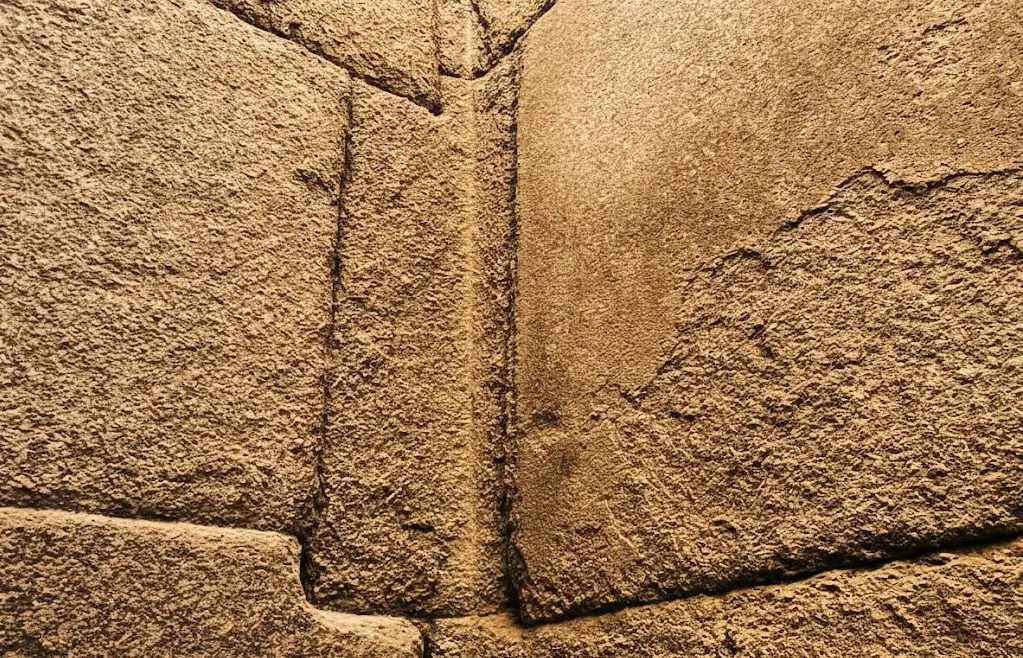
  • Red Granite (Flesh & Blood): Inside, the walls are lined with enormous, polished blocks of red granite from Aswan. Its reddish hue symbolized the indestructible flesh and blood of the divine king.
  • White Alabaster (Bones): The floor was paved with gleaming white alabaster. In Egyptian thought, white represented purity and the skeleton—the permanent framework of the body.
  • Tura Limestone (Skin): Finally, builders originally encased the temple’s exterior in brilliant white Tura limestone, representing the pharaoh’s pure outer skin and completing the architectural metaphor.

The Lost City of Tanis: Capital of Northen Egypt in Delta

The Ancient Egyptian City of Tanis was the vital capital of the 21st and 22nd...
Related post
FUN

The Final Journey: The Causeway to the Pyramid

The Final Journey The Causeway to the Pyramid

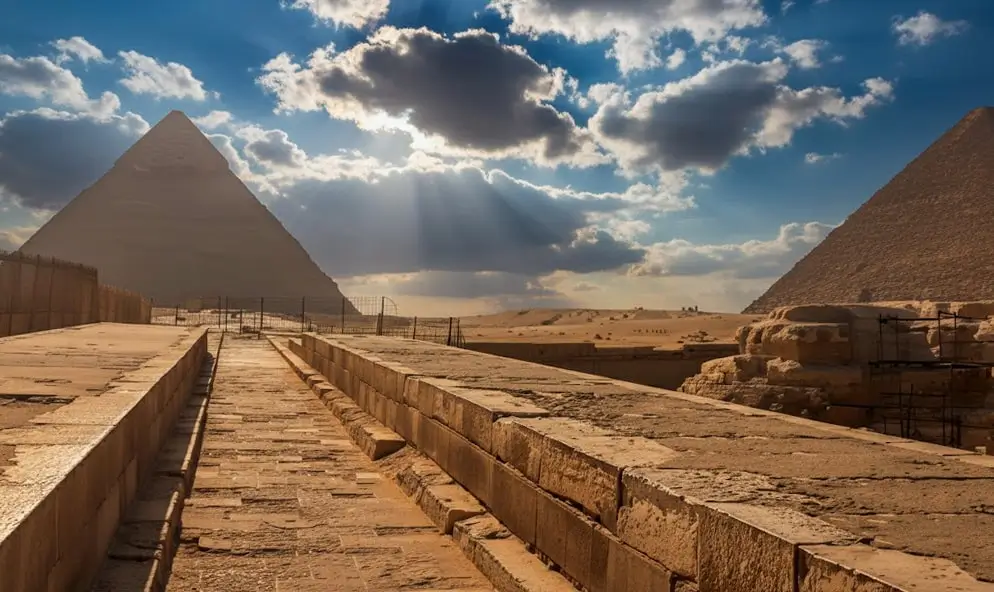
After the priests completed the initial rites in the Valley Temple, the king’s body began its final ascent. The procession then carried the body through the long, covered Causeway that connected the Valley Temple to the Mortuary Temple at the base of the pyramid. This sloping path, therefore, symbolized the pharaoh’s climb from the earth to the heavens.

Valley Temple Discovery and Modern Legacy

For millennia, the shifting desert sands of Giza completely buried and protected the Valley Temple. Consequently, it remained hidden until French archaeologist Auguste Mariette rediscovered it in 1860, unearthing the stunning diorite statue of Khafre.

As a result, its remarkable state of preservation makes it a must-see for visitors today. Walking through its silent, granite-lined halls offers a direct and powerful connection to the architectural genius and profound religious convictions of ancient Egypt. It is a monument that truly embodies permanence in stone.

King Chephren (Khafre): The Pharaoh of the Sphinx and the 2nd Pyramid

King Chephren (Khafre) is the master of the Giza Plateau. While his father, Khufu, built...
Related post
FUN

Frequently Asked Questions (FAQ)

1. Why is the Valley Temple of Khafre so well-preserved? It’s so well-preserved primarily because the desert sand buried it for thousands of years. This protected it from the elements and from being quarried for stone, a fate many other ancient structures suffered.

2. Can you go inside the Valley Temple? Yes, the Valley Temple is open to visitors and is a standard part of a tour of the Giza Plateau. You can walk through the main hypostyle hall and experience its incredible atmosphere.

3. What is the difference between the Valley Temple and the Mortuary Temple? The Valley Temple, located at the water’s edge, served as the entry point for purification and initial rituals. In contrast, the Mortuary Temple stood directly next to the pyramid and was used for ongoing offerings and rituals for the deceased king’s spirit.

A stunning vacation in Cairo and Upper Egypt....
8 Days Tour to the Treasures of Egypt in Cairo and Luxor...
FUN
God_Anubis_Icon

Goes well beyond “tour”

I am tempted to say “my friend Hani” runs an amazing service, because that is how he makes you feel. I first went on the 9-hour layover tour in summer 2011. Hani and driver picked me up at the airport at 3am, and by the time I left at noon

More »

Very Considerate and Helpful

Guide and driver were on time, open to my requests and took care that I felt safe and saw the Pyramids and parts of old cairo during my less than 24 hour stay between flights. Office staff were great in communicating by email before and during the trip.

More »

Great layover Tour!!

I had an excellent layover tour with Hani. He is knowledgable, fun, and passionate about his city. I went for a tour of the pyramids, sphinx, and to a papyrus factory which were all great. Ask him any question about Egyptian history and he will surely know the answer! Also

More »

Absolutely the best

We visited Cairo over a 15-hour layover. Egypt Fun Tours organized a customized and wonderful experience for us. We could not be happier. The day included a visit to all the great sites, the marketplace, dinner, a boat ride on the Nile, and a host of other special requests. I

More »
13-day Egypt guided tour package - Egypt Fun Tours

Easily the best two days of the year!

We were doing the 14-day Mediterranean cruise and were in Egypt for two days. I was searching the internet for about 4 days and finally found Egypt Fun Tours as my guide in Egypt. It ended up being the best 2 days of the entire cruise trip. Since this is

More »
God_Anubis_Icon

Top-rated Tour Packages

God_Anubis_Icon