God Sobek: Guide to the Crocodile God of Power, Fertility, and the Nile

Sobek stands as one of the most ancient and enigmatic deities in the Egyptian pantheon. He is the formidable god of crocodiles, the Nile River, military strength, and fertility. Uniquely, Sobek embodied a striking duality. He was both a menace of chaos and a powerful, benevolent protector. He commanded the raw, untamed power of the Nile, representing the unpredictable threat of the river. Yet, he was simultaneously revered as a healer, a protector of the pharaohs, and a loyal ally to the supreme gods. His unique crocodile form made him a tangible, constant presence in the daily lives of the ancient Egyptians.

Welcome to the Domain of Sobek: The Lord of the Waters

Sobek stands as one of the most ancient and enigmatic deities in the Egyptian pantheon. He is the formidable god of crocodiles, the Nile River, military strength, and fertility. Uniquely, Sobek embodied a striking duality. He was both a menace of chaos and a powerful, benevolent protector. He commanded the raw, untamed power of the Nile, representing the unpredictable threat of the river. Yet, he was simultaneously revered as a healer, a protector of the pharaohs, and a loyal ally to the supreme gods. His unique crocodile form made him a tangible, constant presence in the daily lives of the ancient Egyptians.
FUN

Origin, Early Worship, and Dual Nature

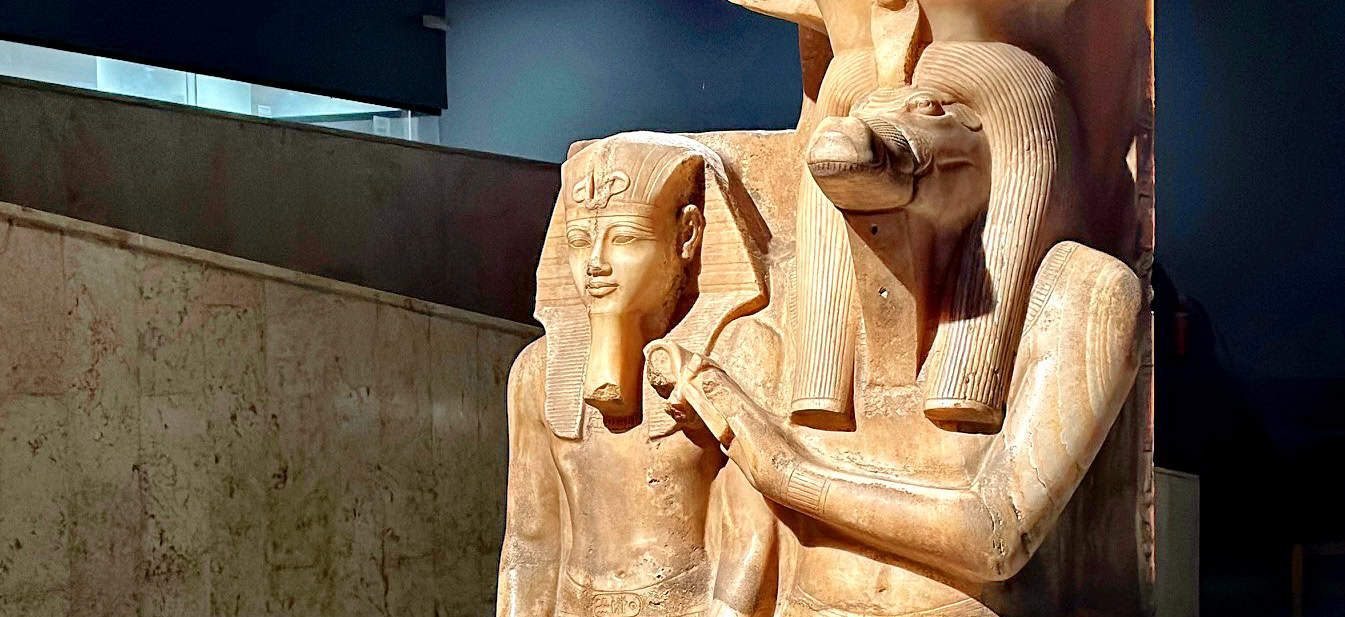
Sobek the nile gof ancient egypt gods goddesses egypt fun tours

The worship of God Sobek dates back to the Old Kingdom (c. 2686–2181 BCE). His earliest mentions appear in the Pyramid Texts, confirming his status as a foundational god. This early recognition establishes his deep roots within Egyptian cosmology.

Centers of Power: The Faiyum Oasis

Sobek’s cult centers were consistently located in areas where crocodiles thrived. The Faiyum Oasis served as his most crucial region of power.

  • Lake Moeris: The large Lake Moeris (known as She-Wer by the Egyptians) in the Faiyum was a hub for crocodile populations. Here, the city of Shedet became the major hub for his cult, earning the Greek name “Crocodilopolis.”
  • Local Identity: Sobek’s devotees honored him as the Lord of the Waters and the powerful ruler of the marshlands. The ancient Egyptians saw the crocodile as a formidable predator. They sought to control its dangerous nature and harness its raw strength by deifying it.

The Paradoxical Nature of the Crocodile God

Sobek’s character embodied a striking and powerful duality. He simultaneously represented protection and destruction.

  • Destruction and Chaos: On one hand, he was a god of destruction and sudden chaos. He represented the hidden danger lurking beneath the water’s surface. His name is believed to derive from a word meaning “to impregnate” or “to make pregnant,” hinting at the sudden, potent, and unavoidable nature of his power.
  • Protector and Healer: On the other hand, he was a benevolent deity. He protected the pharaohs and the Egyptian people from the very dangers of the Nile he controlled, including hostile animals and foreign invaders. His power, once harnessed, became the greatest defense. This paradoxical nature made him a unique and eternally revered figure.
FUN

Mythology, Creation, and Cosmic Role

Mythology, Creation, and Cosmic Role of god Sobek

Sobek’s mythological roles cemented his position as a powerful and necessary figure, integrating him into the most important creation and afterlife narratives.

Sobek’s Role in Creation

Some ancient Egyptian accounts credit Sobek with the creation of the world. He emerged from the primeval waters of Nun to bring forth order.

  • The Nile’s Origin: His divine sweat was famously said to have formed the Nile River. This belief further cemented his connection to the life-giving waterway. The river, the source of all life, flowed directly from his potent body.
  • Lord of Minerals: Texts also describe Sobek as a god who gathered the mud and clay from the river’s banks. He used these materials to create various objects. This task sometimes linked him to the creation process of the cosmos itself.

The Ally of Order: Sobek in the Osiris Myth

Sobek was a loyal and crucial ally to other major gods. His actions in the Osiris Myth solidify his reputation as a god of restoration and healing, despite his chaotic appearance.

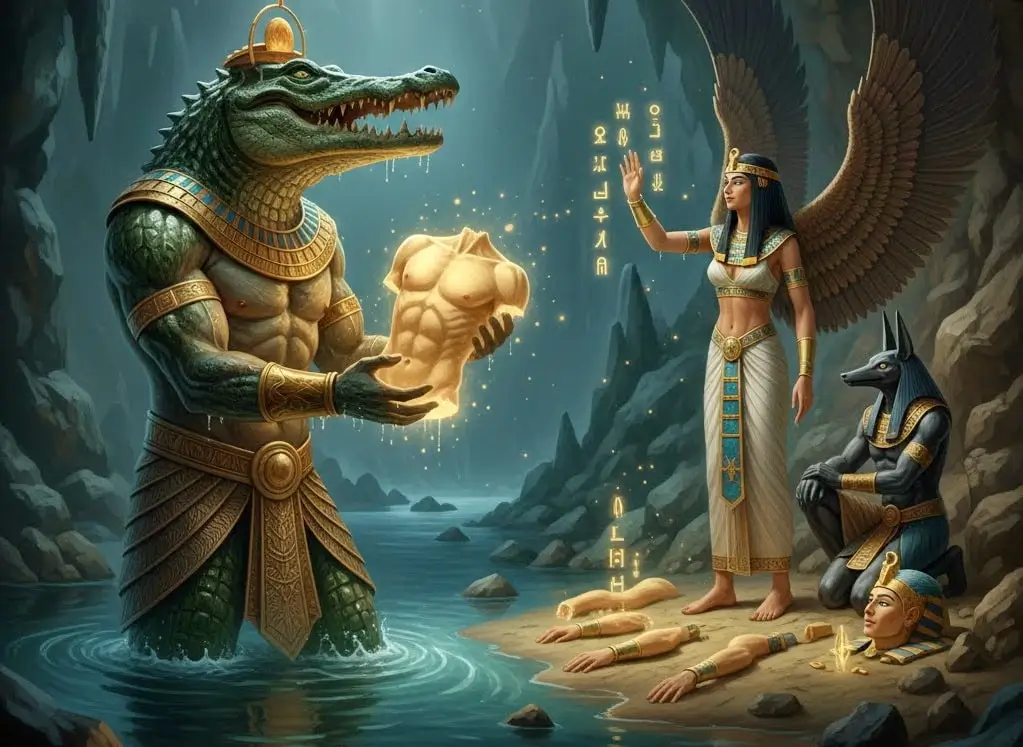
  • Isis’s Helper: He helped the goddess Isis recover the scattered body parts of her husband, Osiris, after his brutal murder and dismemberment by his brother Set.
  • Restorer of Vitality: Sobek’s ability to travel effortlessly through the waters allowed him to track and retrieve the lost pieces. This act of reconstruction solidified his reputation as a restorer, a preserver, and a healer of divine wounds.

Sobek and the Pharaoh’s Protection

The fierce, protective nature of God Sobek made him a favorite among the pharaohs. Rulers consistently sought to align themselves with his raw strength.

  • Royal Association: During the Middle Kingdom (specifically the 12th Dynasty), Sobek became a prominent royal deity. Several pharaohs incorporated his name into their own, such as Sobekneferu, the first known female pharaoh, and Amenemhat III, who centered his massive irrigation projects and pyramid complex in the Faiyum region. This royal patronage elevated Sobek’s status and integrated him into the state religion.

Egyptian Phoenix Bennu: Myth, Symbolism, and Legacy

Forget the fire. The original legend is even better. Meet the Bennu, the Egyptian Phoenix....
Related post
FUN

Appearance, Iconography, and Symbolism

Crocodile in ancient egypt - Egypt Travel Package

Sobek’s physical appearance was one of the most recognizable and striking in the Egyptian pantheon. His iconography directly expressed his dual nature of primal power and divine royalty.

The Crocodile God’s Form

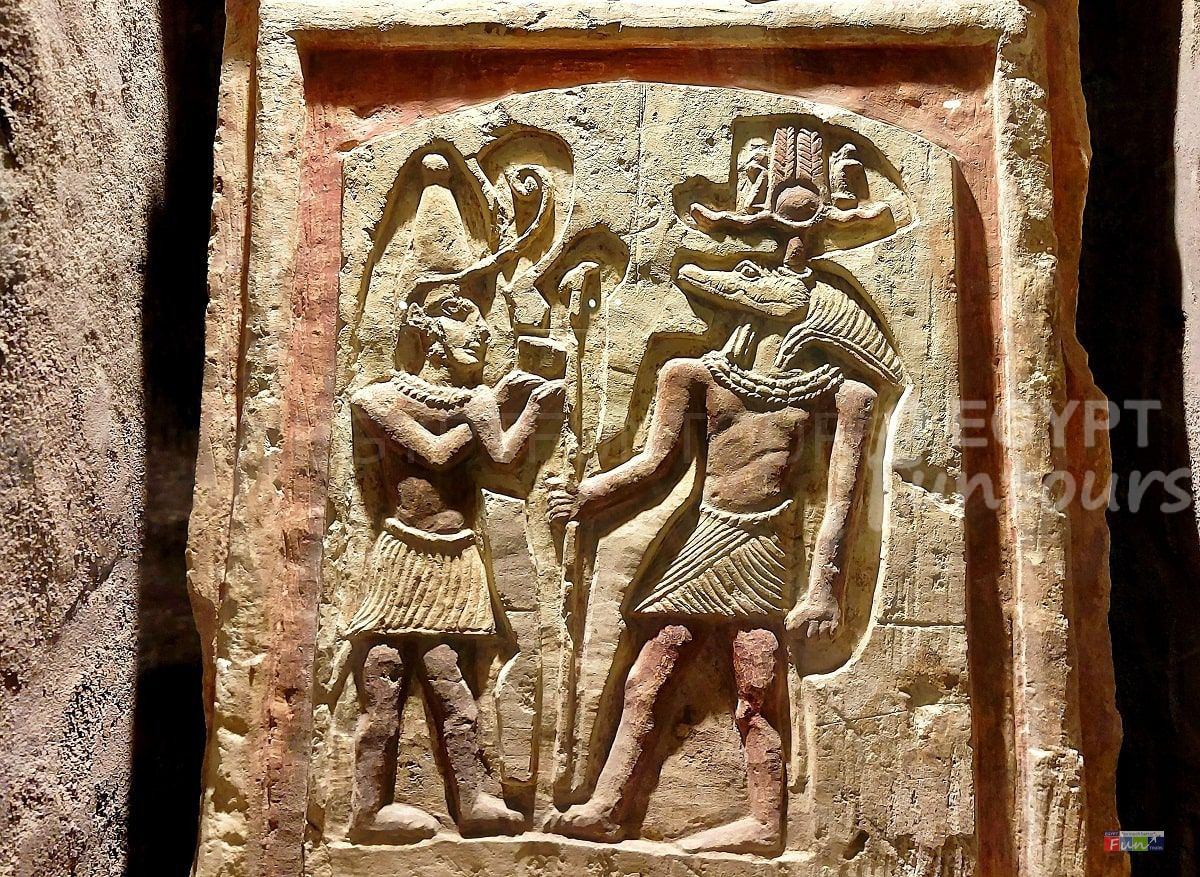
Typical depictions of God Sobek show him as a man with the head of a crocodile or, sometimes, as a fully formed crocodile lying on a shrine or altar.

  • Muscular Physique: His powerful and muscular physique conveyed his immense strength and ferocity. His body suggested the coiled energy of a predator ready to strike.
  • Divine Headgear: He often wore a headdress featuring a sun disk with the uraeus (the cobra symbol of royalty). This imagery highlights his strong link to Ra, the supreme sun god, establishing him as a solar-infused divinity. He sometimes wore horns and plumes, further connecting him to other major deities.

Symbolism of the Nile and Rebirth

The crocodile symbolized profound concepts vital to Egyptian existence:

  • Fertility and Renewal: The annual flooding of the Nile—essential for agriculture—was often associated with the crocodile’s return to the riverbanks. Therefore, the crocodile symbolized fertility, virility, and the continuous rebirth of the land.
  • Instinct and Awareness: The crocodile’s ability to see underwater and ambush its prey symbolized raw instinct, cunning, and profound, hidden awareness. Worshipers believed Sobek granted these attributes to the pharaohs and to themselves.

God Thoth: The Egyptian God of Wisdom, Writing, and the Moon

Thoth (or Djehuty) is one of the most important and powerful ancient Egyptian gods. He...
Related post
FUN

Cult Centers, Priesthood, and Rituals

Crocodile Temple at Kom Ombo Crocodile in ancient Egypt Egypt FunTours

The cult of Sobek was extensive and highly organized. The rituals surrounding him were some of the most dramatic and sensory in ancient Egypt.

The Dual Temple of Kom Ombo

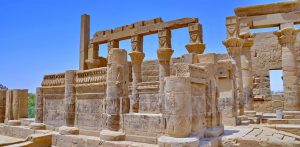
One of the most famous and enduring temples dedicated to Sobek was at Kom Ombo, located on the banks of the Nile in Upper Egypt.

  • Unique Dual Design: Sobek shared this temple with the falcon god, Horus the Elder (Haroeris). The temple featured a symmetrical design with two separate entrances, two parallel courts, and two main halls—one dedicated to each god.
  • Theology of Balance: This unique dual temple underscores Sobek’s importance and his integration into the broader religious framework. The pairing of the chaotic crocodile god with the orderly falcon god symbolizes the balance of opposing forces necessary for Ma’at (cosmic order).

The Priesthood and Sacred Crocodiles

The priesthood dedicated to Sobek was extensive and highly specialized.

  • Sacred Animals: Priests dedicated to Sobek cared for sacred, living crocodiles kept in temple pools. These animals were considered living manifestations of the god. They were meticulously adorned with jewels and gold and fed special offerings of meat, honey, and milk.
  • Ritual Significance: Pilgrims traveled to these sites to seek the god’s blessings and protection. The priests would observe the movements and feeding habits of the sacred crocodile to interpret the god’s will and provide omens. The animal’s death was an occasion for elaborate mourning and ceremonial mummification.

God Set: Guide to the Egyptian God of Chaos, Storms, and the Desert

Set (also known as Seth or Sutekh) is the ancient Egyptian god of the Desert,...
Related post
FUN

Legacy of God Sobek

The worship of Sobek persisted well into the Greco-Roman period, testifying to the enduring power of his symbolism.

Sobek’s Syncretism and Enduring Influence

Sobek’s powerful image led him to merge with other prominent deities.

  • Sobek-Ra: His headdress and iconography often linked him to the sun god Ra, forming the composite deity Sobek-Ra. This merger elevated him from a regional god to a cosmic entity, giving him a role in the daily journey of the sun.
  • Greco-Roman Period: During this period, the Greeks often associated Sobek with their sun god, Helios. The mummified crocodile remains and artifacts continue to provide archaeologists with crucial insights into the elaborate rituals and beliefs surrounding this unique deity.

The Enduring Allure of the Crocodile God

Ultimately, Sobek was much more than just the god of crocodiles. He was a complex deity representing both the destructive and protective forces of the natural world. His role as a creator, a healer, and a protector of the pharaohs cemented his indispensable importance in ancient Egyptian society. Through his dual nature and his powerful symbolism, Sobek remains a captivating figure—a perfect reflection of the magnificent, yet terrifying, river that defined ancient Egyptian civilization.

Currnet weather in Egypt

Private guided Tour Package to Cairo attractions, Alexandria sightseeing, Luxor, Aswan, Nile cruise accommodation & Hurghada. Door to door transfer....

This intensive, 9-day journey is designed for those captivated by Pharaoh Akhenaten and the revolutionary Amarna period. This isn’t just a tour—it’s an Amarna Archaeological...

Outstanding layover tour

I had the opportunity to do a layover tour with Egypt Fun Tours this Friday, and it was amazing. I had a 10-hour layover tour in Cairo, and I was met by Mohamed on time at the airport. He picked me up in a clean, new, safe, and comfortable van.

More »

Valley of Whales – Wadi El Hitan and Wadi El Rayan

What a blast! It was an amazing day and a 5-star day trip. Everything was organised from A to Z by Hamada and Mohamed at Egypt Fun Tours in a timely manner. Pick up/drop off from/to the hotel, exquisite lunch and snacks, 4×4 jeep. Everything was as advertised. Also, the

More »

Goes well beyond “tour”

I am tempted to say “my friend Hani” runs an amazing service, because that is how he makes you feel. I first went on the 9-hour layover tour in summer 2011. Hani and driver picked me up at the airport at 3am, and by the time I left at noon

More »

The best holiday ever!

The Nile cruise, Luxor, and Aswan were amazing sites to see, especially when you have the best tour guide in Egypt. Hamada was absolutely fantastic, lots of information, and some of it not spoken by others. This guy was not only a simple tour guide for us, but he also

More »
Isis with wings

Top-rated Tour Packages

Isis with wings