The Hyksos: The Foreign Rulers Who Transformed a Civilization

Stop calling the Hyksos just 'invaders.' This group, known as the "Rulers of Foreign Lands," dominated northern Egypt during the Second Intermediate Period (c. 1650–1550 BCE) from their capital, Avaris. They were a mix of Semitic peoples from Canaan who profoundly transformed Egyptian society, not through sheer conquest, but by introducing the advanced military technology of the Bronze Age—most notably, the chariot and the composite bow. The trauma of their rule ultimately led to the Theban Wars of Liberation, culminating in the victory of Ahmose I and the birth of the mighty New Kingdom empire. Discover how this period of foreign dominance shaped Egypt’s imperial destiny forever.

The Rulers of Foreign Lands

For centuries, historians believed a terrifying story. They thought a mysterious army stormed Ancient Egypt, burning cities and enslaving the people. The truth, however, is much more fascinating. The Hyksos were not just invaders. They were the catalyst that woke Egypt from its slumber.

You must understand the name itself. Hyksos is the Greek version of the Egyptian phrase Heqa Khaskhet. This translates to “Rulers of Foreign Lands.” They were the first foreign power to rule the Nile Valley. Their reign marked the end of the Middle Kingdom and the start of the chaotic Second Intermediate Period.

This guide uncovers the reality of the Hyksos. You will learn about their gradual immigration. You will discover their massive technological gifts, like the horse and chariot. Finally, you will see how the violent wars to expel them actually created the Egyptian Empire. First, we must answer the biggest question: where did they come from?

FUN

The Mystery of Origins: Who Were the Hyksos?

The Mystery of Origins; Who Were the Hyksos

To understand the Hyksos in Egypt, you must look to the northeast. These were not people from a single country. They were a mix of Semitic peoples from the Levant (modern-day Palestine).

The Invasion Myth vs. Reality

For a long time, we relied on one source: the Egyptian priest Manetho. Writing thousands of years later, he described a sudden, brutal invasion. He claimed they came “unexpectedly” and “with a blast of God,” destroying temples and treating the locals cruelly.

However, modern archaeology tells a different story.

Evidence of Gradual Migration

Excavations at their capital, Tell el-Dab’a, reveal the truth. The Hyksos’ origins were not rooted in sudden war. Instead, they began with a gradual migration.

  • Trade and Work: Semitic people had moved into the Nile Delta for centuries. They came as traders, sailors, and skilled workers.
  • Settlement: Slowly, their population grew. As the central Egyptian government weakened, these “foreigners” simply took control of the administration in the north.
  • Cultural Blend: They did not initially destroy Egyptian culture. They adapted to it.

Therefore, the “invasion” was likely a slow, peaceful takeover that only turned violent later. They were Canaanites who became kings, not warlords who burned everything down.

Once they established themselves, they built one of the greatest cities in the ancient world.

FUN

Avaris: The Cosmopolitan Capital of the North

Architectural Secrets of Avaris Hyksos Capital

Once they consolidated power, the Hyksos established a capital city. This city was not an Egyptian masterpiece. It was a thriving, cosmopolitan hub. This city was Avaris, known today as Tell el-Dab’a.

A Strategic Location

The Hyksos chose a brilliant location. Avaris was situated in the Nile Delta, a perfect position. It allowed them to control the most fertile agricultural land in the North. Crucially, it gave them direct control over the trade routes. These routes connected the Mediterranean world to the lucrative markets of the Levant and the rest of Egypt. The city quickly grew wealthy and powerful.

A Blend of Cultures

Archaeological excavations at Tell el-Dab’a reveal a unique blend of cultures. Avaris was not a copy of Memphis or Thebes. It was an international port city.

  • Levantine Architecture: Houses were built in the style of Canaanite homes, featuring square, enclosed courtyards. This suggests the bulk of the population maintained their original culture.
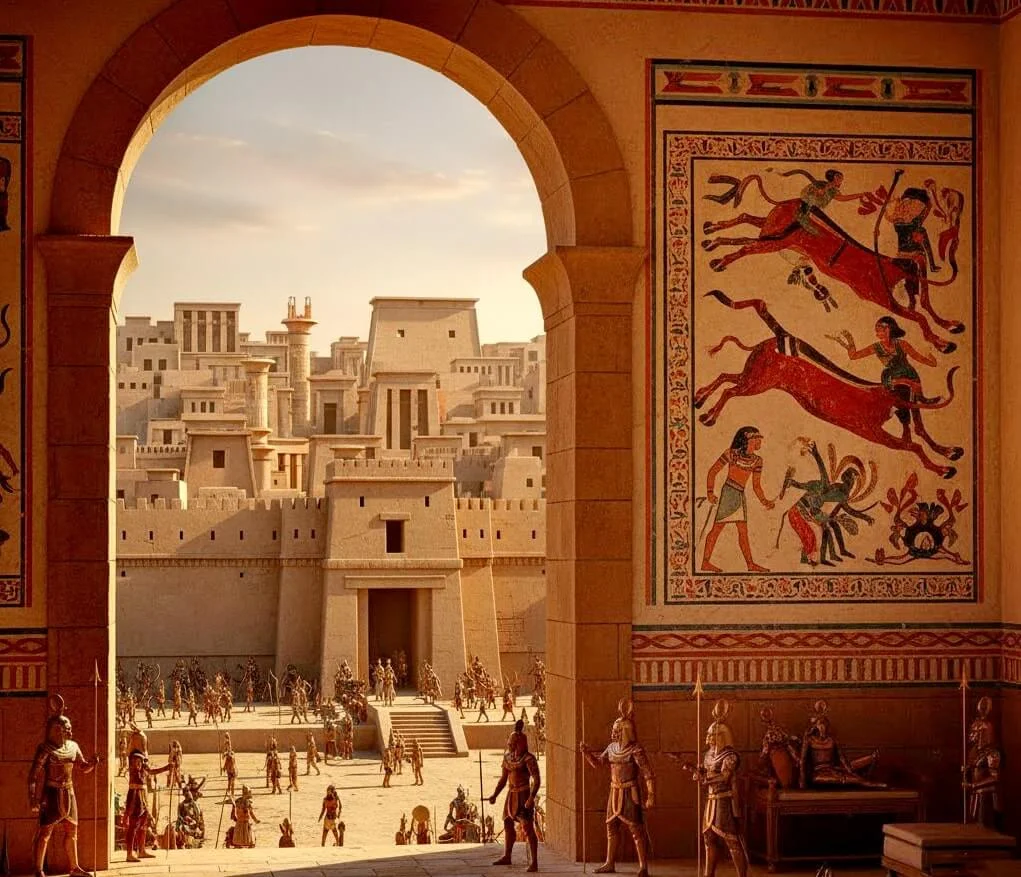
  • Minoan Frescoes: Most surprisingly, archaeologists found fragments of Minoan frescoes. These included famous bull-leaping scenes from Crete. This proves Avaris was an active maritime hub with contacts deep into the Aegean Sea.
  • Burial Customs: The Hyksos maintained distinct burial traditions. They often buried donkeys, horses, and even children under the thresholds of their homes. This was a non-Egyptian practice.

Ruling the North

From this powerhouse city, the Hyksos solidified their rule. The powerful rulers of the 15th Dynasty established their court here. They controlled most of Lower Egypt and exerted a strong influence over Middle Egypt. This wealth and political stability in the north stood in stark contrast to the weakness of the native Egyptian rulers.

This city was the economic engine of the Second Intermediate Period.

Battle of Kadesh by Ramses II

The Great Battle of Kadesh One of the ancient Egyptian wars is the Battle of...

Related post
FUN

The 15th Dynasty: The Age of Hyksos Rule

Avaris and the Hyksos Dynasty; The Rulers of Foreign Lands

The establishment of Avaris led directly to the formation of the 15th Dynasty. This dynasty marks the period of direct Hyksos rule in Egypt. Their reign defined the tumultuous Second Intermediate Period.

Egypt Divided

Understand this: the Hyksos never ruled all of Egypt. The country was politically fragmented.

Region Ruling Power Dynasty Capital Status
North (Delta) The Hyksos 15th Dynasty Avaris Direct Rulers
South (Upper Egypt) Native Egyptians 17th Dynasty Thebes Vassals/Tribute Payers

The Hyksos ruled Lower Egypt directly. They then demanded tribute from the native Egyptian rulers down south in Thebes. The arrangement was an uneasy peace, based entirely on the Hyksos’ superior military strength and wealth.

Famous Hyksos Kings

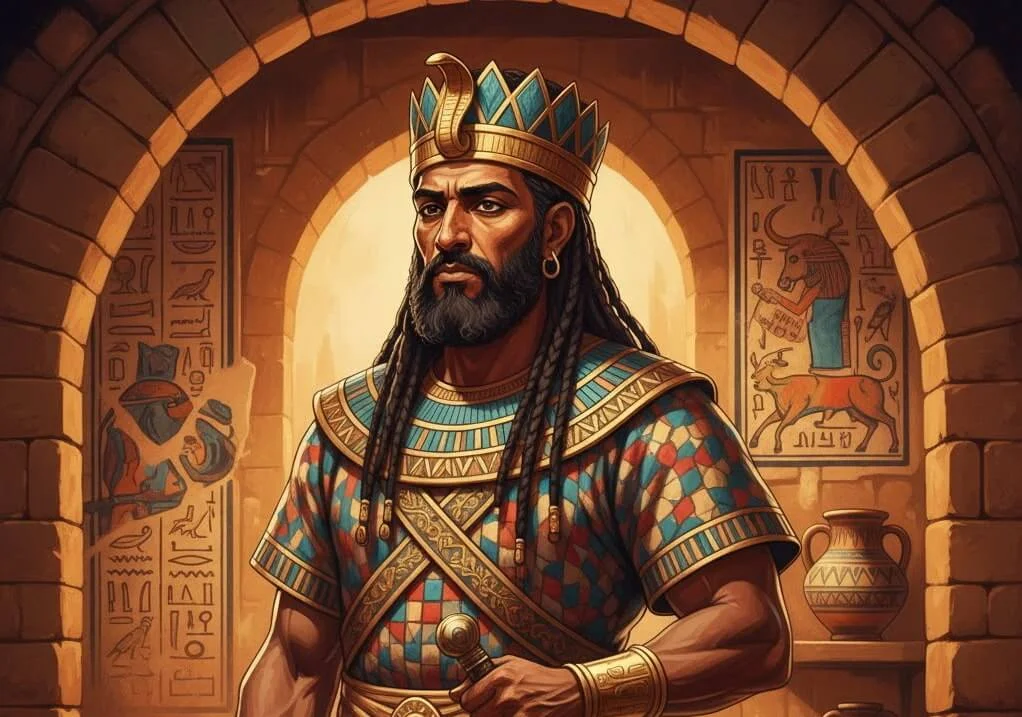
The Hyksos kings quickly adopted Egyptian customs to legitimize their rule. They used pharaonic titles and dressed like native kings. The most notable ruler was Apophis (or Apepi).

  • Apophis was the longest and most powerful Hyksos king. His long reign shows the stability of the 15th Dynasty’s rule.
  • He controlled trade and commanded a massive military. His rule, however, set the stage for the inevitable conflict with the powerful Theban royal family.

Cultural Adaptation

The Hyksos tried to be Egyptian pharaohs, not just foreign warlords. They repaired temples and commissioned monuments. They inscribed their own names in hieroglyphs. This adaptation was a strategic move. It allowed them to maintain control and administer a highly complex Egyptian bureaucracy.

However, despite this show of loyalty, native Egyptians viewed their rule as a profound humiliation. This foreign dominance fueled a growing desire for rebellion in Thebes. They didn’t just rule; they fundamentally changed Egyptian technology.

Chariots and Bronze: How the Hyksos Modernized Egypt

The greatest and most lasting impact the Hyksos had on Egypt was technological. They were not just rulers; they were brilliant innovators. When the Hyksos arrived, they brought the best military technology of the Near East. This completely changed Egyptian warfare and daily life forever.

Military Overhaul

The introduction of new weapons and concepts revolutionized the battlefield:

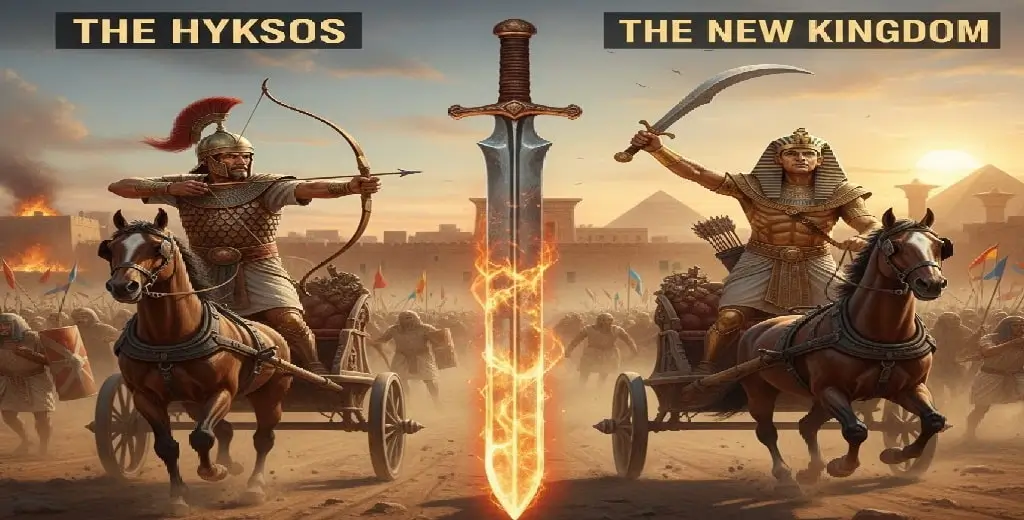
The Chariot: The Hyksos introduced the horse and chariot to Egypt. Before this, Egyptian soldiers fought entirely on foot. The light, fast, two-wheeled chariot was a devastating mobile platform for archers. It gave the Hyksos unparalleled speed and shock power.

  • The Composite Bow: They replaced the Egyptians’ simple bow with the far more powerful composite bow. This weapon was made from layers of wood, sinew, and horn. It provided greater tension, range, and penetrating power.
  • New Metalwork: The Hyksos popularized superior bronze working. They introduced stronger, better bronze alloys for weapons, tools, and armor. This led to the development of the khopesh (sickle sword), a fearsome infantry weapon.

Innovations in Daily Life

The technological imports were not limited to warfare. They also improved efficiency in civilian life:

  • Weaving: The introduction of the vertical loom dramatically sped up the production of linen clothing and textiles.
  • Pottery: They introduced the fast potter’s wheel, allowing for faster and more uniform production of ceramic vessels.
  • Music and Instruments: They also introduced new musical instruments, including the long-necked lute and the lyre, enriching Egyptian culture.

This transfer of technology was ironic. The Hyksos essentially handed their future conquerors the tools needed for their own expulsion. The Egyptians would later use these very weapons to drive the Hyksos out and build an empire. However, technology could not bridge the deep cultural divide, especially regarding religion.

The Unification Battle by King Narmer

The Unification Battle by King Narmer The unification battle of King Narmer is shown on...

Related post
FUN

The God Set and Cultural Clashes

The God Set and Cultural Clashes

Despite adopting Egyptian titles and building in the Egyptian style, the Hyksos retained distinct cultural and religious practices. This cultural divide created deep tension with the native Egyptian rulers in Thebes. Religion became a key point of contention.

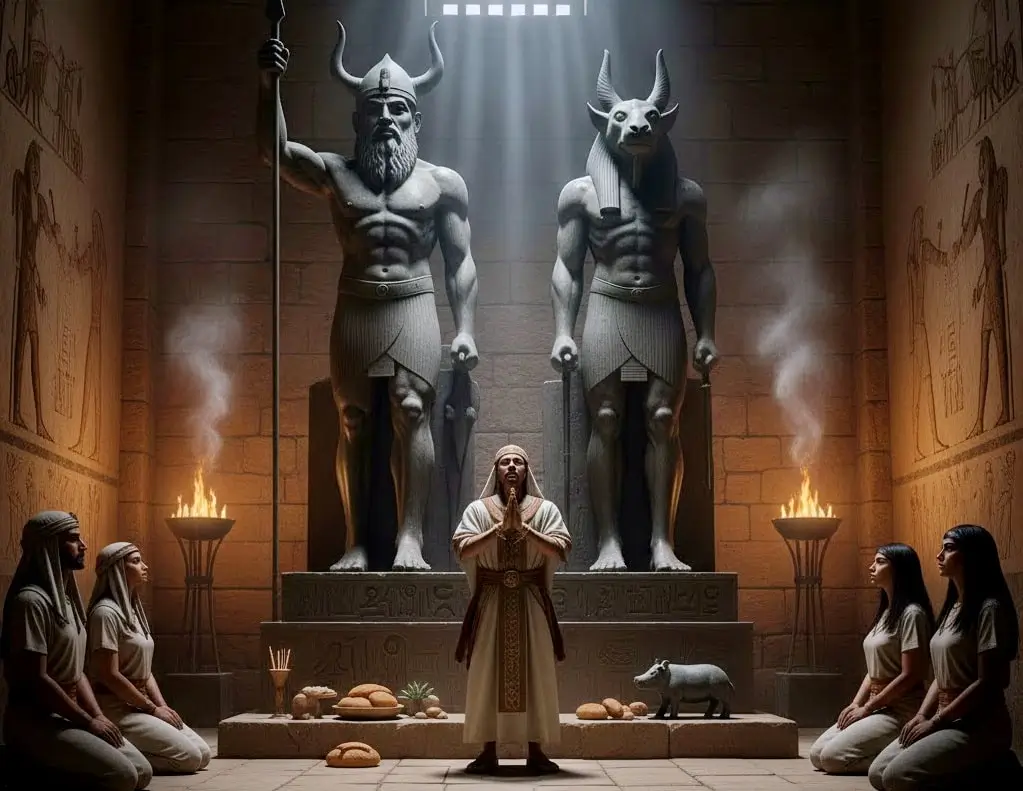
The Hyksos identified their chief Canaanite storm god, Baal, with the Egyptian god Set (also spelled Seth).

  • Set’s Significance: Set was the god of chaos, storms, and foreign lands. The Hyksos saw him as a powerful, fitting patron deity. They built temples to Set in Avaris and venerated him highly.
  • Egyptian Perception: To the native Egyptians, Set was the god who had murdered Osiris. He represented the violent, foreign aspects of the cosmos. By elevating Set, the Hyksos were unknowingly validating their own image as destructive foreign rulers.

The Amun vs. Set Conflict

This choice of deity directly threatened the native Theban power. The Theban rulers’ patron god was Amun, the hidden one. Amun was considered the King of the Gods. This meant the conflict was not just political; it was a religious holy war: Amun’s followers versus Set’s followers.

The Hippopotamus Affair

Folklore illustrates the depth of this cultural and political rift. A famous tale tells of the Hyksos King Apophis sending a message to the Theban ruler, Sequenenre Tao. Apophis complained that the hippopotami in Thebes were so loud, they were keeping him awake in Avaris—hundreds of miles away!

  • The Message: This absurd complaint was a clear political provocation. Apophis was demonstrating his power over the South. He was asserting his right to interfere even in the Theban waterways.
  • The Response: Sequenenre Tao saw the message for what it was: an insult and a challenge. This incident crystallized the deep humiliation felt by the native Egyptians.

This brewing tension inevitably led to open war.

The War for Egypt: Sequenenre Tao and Kamose

The political and religious humiliations proved too much for the native Egyptian rulers. The powerful 17th Dynasty in Thebes decided to launch a counter-attack. They stopped paying tribute to the Hyksos in Avaris. This decision ignited the crucial Wars of Liberation.

Sequenenre Tao: The Brave Martyr

The campaign began with Pharaoh Sequenenre Tao, known as “the Brave.” He led the initial skirmishes against the Hyksos. His determination was absolute. However, the cost of the war was devastatingly high.

  • The Evidence: His own mummy provides gruesome evidence of the conflict. The mummy of Sequenenre Tao shows severe head wounds. These were inflicted by a Hyksos battleaxe or possibly a dagger.
  • Significance: This suggests he died bravely on the front lines. His sacrifice turned him into a martyr. This event fueled the determination of the entire Theban royal house to reclaim Egypt.

Kamose: The Aggressive Challenger

The war was taken up by Sequenenre Tao’s son, Kamose. Kamose was relentless. He launched a surprise attack into the north. He advanced far beyond the traditional Theban border.

  • The Stelae: Kamose’s own inscriptions, known as the Kamose Stelae, reveal his mindset. He declared that he could not tolerate the situation. He openly stated his goal: to destroy the foreign ruler. He famously wrote: “I cannot sit here while an Asiatic and a Nubian rule my land.”
  • The Campaign: Kamose managed to defeat the Hyksos’ southern allies and destroy their bases in Middle Egypt. He even briefly reached the vicinity of Avaris.

Kamose, however, died before finishing the job. The complete expulsion of the Hyksos was left to the next great Theban king, who would found the New Kingdom.

Battle of Kadesh by Ramses II

The Great Battle of Kadesh One of the ancient Egyptian wars is the Battle of...

Related post
FUN

Ahmose I and the Birth of the New Kingdom

King Ahmose I fighting the Hyksos Egypt Fun Tours

The war for liberation reached its climax under Ahmose I, the younger brother of Kamose. Ahmose was the decisive military leader who finally ended the Hyksos rule. His victory was so complete that it marked the end of the Second Intermediate Period and the glorious beginning of the New Kingdom.

The Final Campaign

Ahmose used the enemy’s own innovations against them. His new, powerful Egyptian army utilized the chariot and the superior bronze weapons introduced by the Hyksos themselves.

  • The Siege of Avaris: Ahmose successfully besieged and captured Avaris, the Hyksos capital. This was a decisive victory.
  • The Pursuit: Crucially, Ahmose did not stop at the border. He understood that to guarantee Egypt’s safety, he had to neutralize the Hyksos threat entirely. He pursued the retreating Hyksos forces into their original homeland in the Levant.
  • Sharuhen: Ahmose besieged the fortress of Sharuhen in southern Canaan. After a long siege, he captured it. This aggression was unprecedented. It marked a major shift in Egyptian foreign policy.

The Empire Mindset

The trauma of 100 years of foreign rule fundamentally changed the Egyptian psyche. The Hyksos taught the Egyptians a harsh lesson: isolationism was dangerous.

  • Never Again: The native rulers decided they must protect Egypt by creating a buffer zone. They adopted a permanent, aggressive military posture.
  • The Empire is Born: This “Never Again” mentality directly led to the establishment of the Egyptian Empire. Pharaohs like Thutmose III and Ramesses II would later conquer vast territories in the Near East. They were ensuring that no foreign power could ever threaten the Nile Valley again.

The Hyksos were expelled, but their impact remained. They were the bridge that brought Egypt into the Bronze Age of international warfare and diplomacy.

The Hyksos Legacy

The story of the Hyksos in Egypt is far more complex than a simple invasion narrative. It is a story of cultural absorption, technological transfer, and national trauma.

They were not just barbarians. They forced Egypt to modernize, introducing the chariot and superior metalworking that fueled its future military success. Without the Hyksos, the New Kingdom—the era of Tutankhamun and the Valley of the Kings—would look dramatically different. The Hyksos invasion, ironically, was the necessary step that led to Egypt’s imperial destiny.

The Hyksos left us a profound historical lesson. Foreign influence, even when painful, can ultimately lead to innovation and strength.

Key Sites and Artifacts of the Hyksos Era

Hyksos foreign rulers - Egypt Fun Tours

These locations and objects directly illustrate the impact and expulsion of the Hyksos from Egypt, linking history to modern travel.

1. Archaeological Site: Tell el-Dab’a (Ancient Avaris)

  • Significance: This is the location of Avaris, the powerful capital city of the Hyksos during the 15th Dynasty.
  • What to See: While the site itself is an ongoing excavation, the findings are globally significant. The distinctive Levantine architecture and unique burial sites discovered here proved the Hyksos’ non-Egyptian origins and gradual settlement.
  • Focus: It represents the geographical center of foreign rule.

2. Funerary Artifact: The Mummy of Sequenenre Tao

  • Significance: This artifact provides chilling, direct evidence of the Wars of Liberation.
  • What to See: This mummy (currently housed in the Luxor Museum or the National Museum of Egyptian Civilization in Cairo) clearly shows the wounds that killed him—severe cuts and fractures consistent with being struck by a Hyksos battleaxe or dagger.
  • Focus: It embodies the native Egyptian sacrifice that fueled the revolt.

3. Royal Monument: The Kamose Stelae

  • Significance: This is the primary textual evidence detailing the military efforts against the Hyksos before the final victory.
  • What to See: Fragments of this stela are displayed in the Luxor Museum (some fragments remain at Karnak Temple). The text records Pharaoh Kamose’s aggressive campaigns against the Hyksos, including his famous quote: “I cannot sit here while an Asiatic and a Nubian rule my land.”
  • Focus: It defines the aggressive, nationalist mindset that ended the Second Intermediate Period.

4. Technological Legacy: Chariots and Weapons

  • Significance: These artifacts illustrate the very technology the Hyksos introduced and which the Egyptians subsequently used to expel them.
  • What to See: Look for examples of the composite bow, the khopesh (sickle sword), and early representations of the chariot (either models or tomb paintings). These are best viewed in the Cairo Museum (Tahrir) or the Luxor Museum.
  • Focus: It represents the military modernization of Egypt.

Weather conditions in Egypt

The incredible history and unique culture of Egypt will be in your grasp....
Experience the most spectacular, varied, and spiritual Cairo tourist destinations in Cairo and Giza....
3-day desert safari trip from Cairo—Egypt Fun Tours

Book with Egypt Fun Tours!!

In April 2011, my husband and I, after great debate, took a trip to Egypt. Because of the political situation, we decided to book a tour for our time in Cairo and Luxor. We are very happy that we did, since these are two cities that should not be missed.

More »

Great layover Tour!!

I had an excellent layover tour with Hani. He is knowledgable, fun, and passionate about his city. I went for a tour of the pyramids, sphinx, and to a papyrus factory which were all great. Ask him any question about Egyptian history and he will surely know the answer! Also

More »

11 Wonderful Hours in Cairo

I had an 11 hour layover in Cairo, and it couldn’t have been better spent than with Manal from Egypt Fun Tours. I was able to adjust my tour once we left the airport and Manal had some really great suggestions when I told her what it was I wanted

More »

Day Trip to Alexandria

An enjoyable drive from Cairo to Alexandria. It was an enriching trip. I learnt so much history about the ancient civilisation. The tour guide explained the history of each site we visited. There is so much to see. I would definitely highly recommend visiting Alexandria. It’s rich in history. The

More »
Giza pyramids Tours - Egypt Fun Tours

Thanks to egypt fun tours!

Thank u Hani for the enlightening tour of Giza and Saqqara. Thank u also for the great recommendation – Felfela – which we enjoyed a lot. returning the commission u got at the papyrus shop was something we didn’t expect and truly appreciate. shookran!

More »
Isis with wings

Top-rated Tour Packages

Isis with wings