
King Snefru: The Perfecter of Pyramid Building
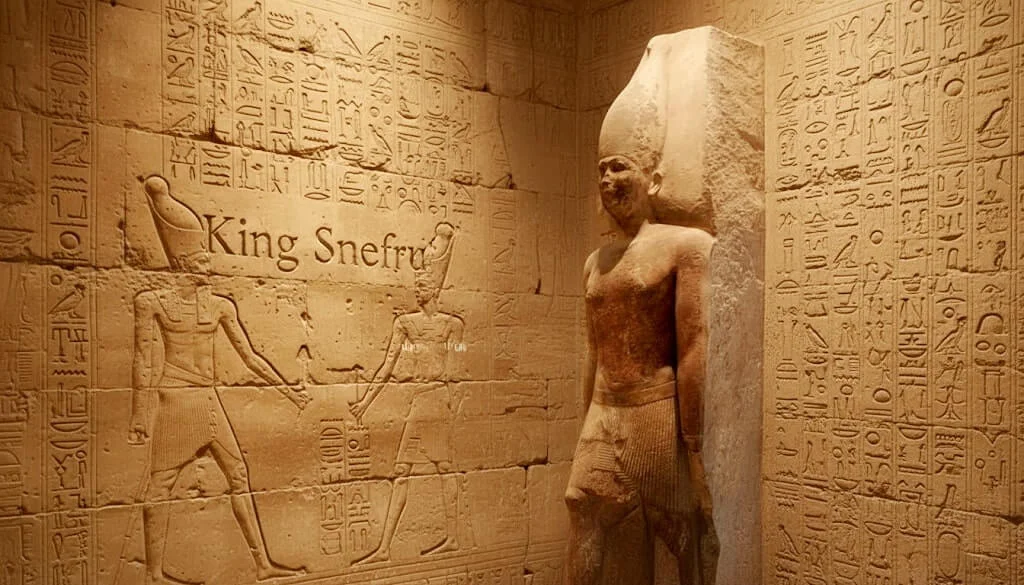
King Snefru, a pharaoh of Egypt’s Fourth Dynasty, was the most prolific pyramid builder in ancient Egyptian history. He experimented with three major pyramids—the Meidum, the Bent, and finally the Red Pyramid—which perfected the true pyramid form. His architectural innovations cemented his legacy as a visionary leader and the father of Egypt’s most iconic monuments.
King Djoser: The Pharaoh of The Step Pyramid

King Djoser was a pharaoh of Egypt’s Third Dynasty, most famous for commissioning the Step Pyramid at Saqqara, the world’s first large-scale stone building. His brilliant vizier and architect, Imhotep, designed the pyramid as a series of stacked mastabas, which became the prototype for all subsequent pyramids. This revolutionary monument was the center of a large mortuary complex, cementing Djoser’s legacy as a visionary leader.
King Menkaure: Who Completed the Giza Necropolis
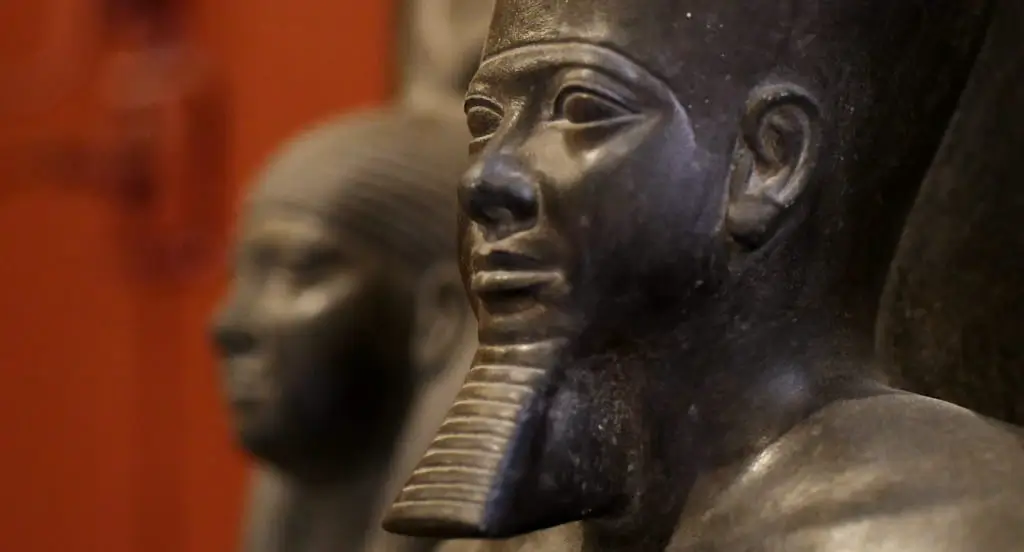
King Menkaure (also known as Mycerinus) was a pharaoh of Egypt’s Fourth Dynasty who completed the Giza pyramid complex. Although his pyramid is the smallest, it’s known for its artistic and architectural achievements, including a combination of red granite and limestone casing. His legacy includes the remarkable Menkaure Triads—statues found in his valley temple that are considered among the finest examples of Old Kingdom art.
Wadjet: The Cobra Goddess of Ancient Egypt

Wadjet, the cobra goddess of ancient Egypt, was a fierce protector and patron of Lower Egypt. She was one of the “Two Ladies” representing the unification of Upper and Lower Egypt. Her most significant role was protecting the pharaoh, and she is famously depicted as the uraeus on the royal crown. She symbolized divine authority, healing, and sovereignty.
Nekhbet: The Vulture Goddess of Ancient Egypt
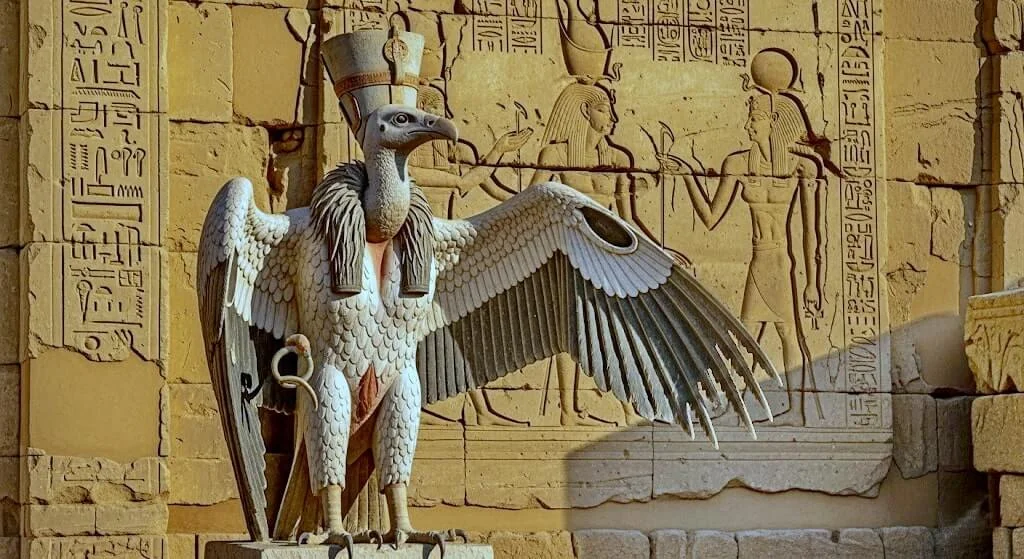
Nekhbet was an ancient Egyptian goddess, primarily known as the protector of Upper Egypt. Represented by a white vulture, she symbolized motherhood and divine protection. Nekhbet was a key part of the “Two Ladies” alongside Wadjet, the cobra goddess of Lower Egypt, together symbolizing the unity of all of Egypt. Her most crucial role was safeguarding the pharaoh, and she was often depicted with outstretched wings, hovering over the king. As a powerful symbol of sovereignty, she was closely linked to the White Crown of Upper Egypt. She also protected women during childbirth and guided the deceased in the afterlife, making her a significant figure in both royal and everyday life.
Sema-Tawy: Ancient Egyptian Symbol of Unitifaction
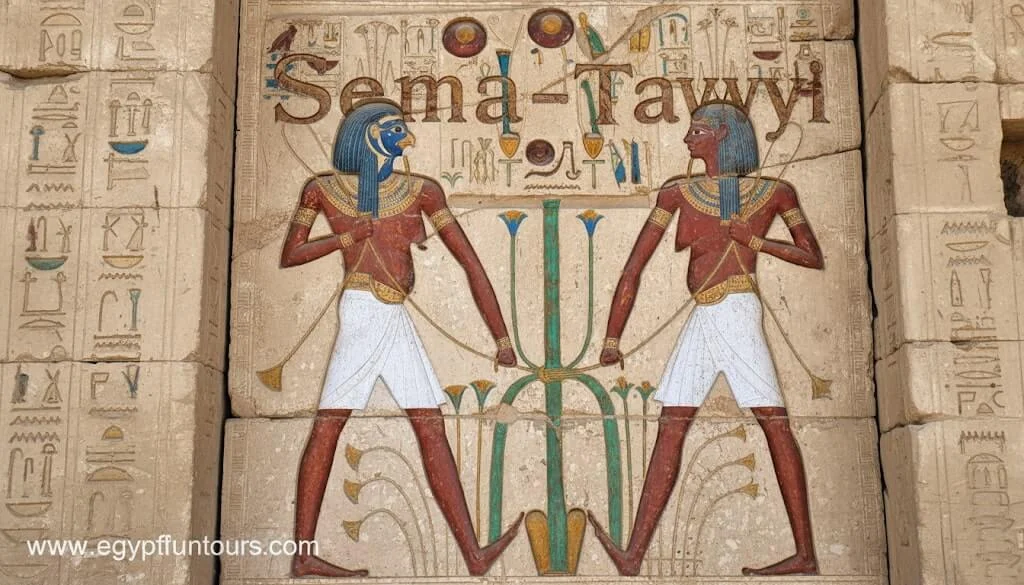
The Sema-Tawy is a powerful ancient Egyptian symbol that represents the unification of Upper and Lower Egypt. It visually depicts a papyrus plant (Lower Egypt) and a lotus flower (Upper Egypt) intertwined around the “sema” hieroglyph, which means “union.” This symbol was used to legitimize the pharaoh’s rule and reinforce the concept of cosmic order and balance (Ma’at). The Sema-Tawy was extensively used on royal thrones, temple walls, and statues throughout Egyptian history, demonstrating its central role in political and religious thought.
Decoding the Sacred Names: The Royal Titulary of the Pharaohs
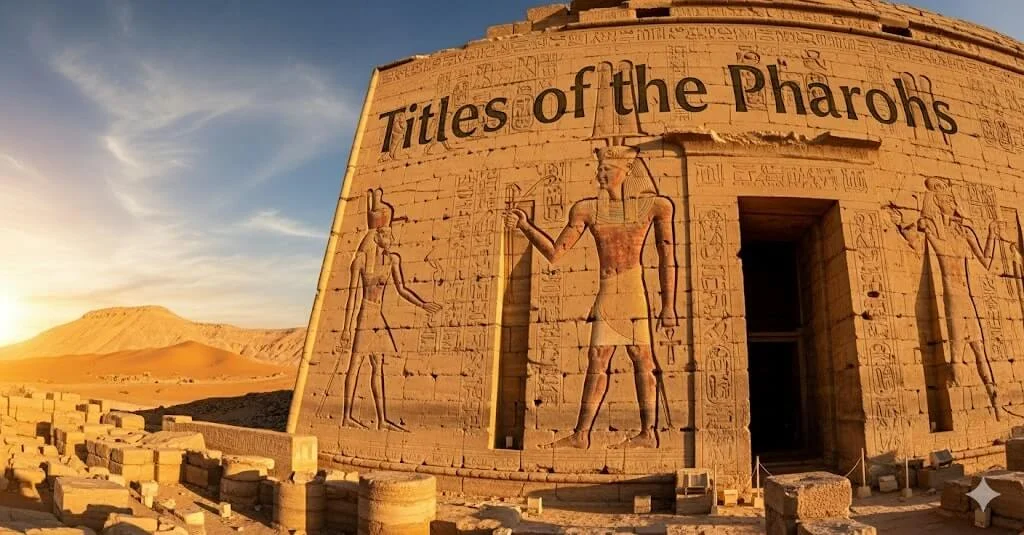
A pharaoh wasn’t just a king; he was a living god, and his “royal titulary” of five names proved it. This sacred naming convention was a blueprint for his reign, establishing his divine authority. It began with the Horus Name, declaring him the god on earth, and the Nebty Name, which unified the two lands of Egypt under his rule. His most famous names, the Throne Name (Prenomen) and Birth Name (Nomen), were written inside the iconic cartouche to protect them for eternity.
Tyet Knot of Isis: An Ancient Egyptian Symbol of Protection and Life
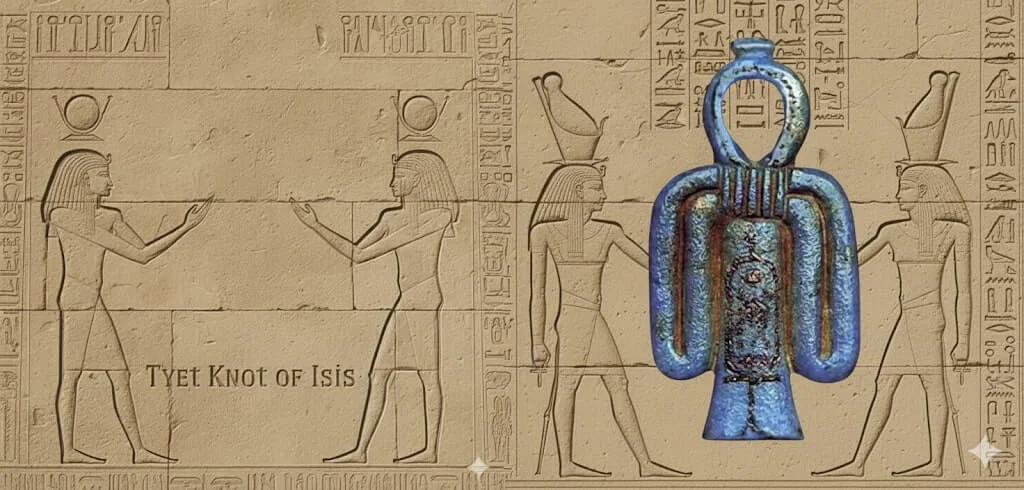
Unravel the secrets of the Tyet, the enigmatic “Isis Knot” of ancient Egypt. This summary highlights an article discussing the amulet’s potent connection to the goddess Isis, its role in funerary practices, and its symbolic power believed to grant protection and harness the forces of life.
The Crook and Flail: The Ultimate Symbols of Ancient Egyptian Kingship
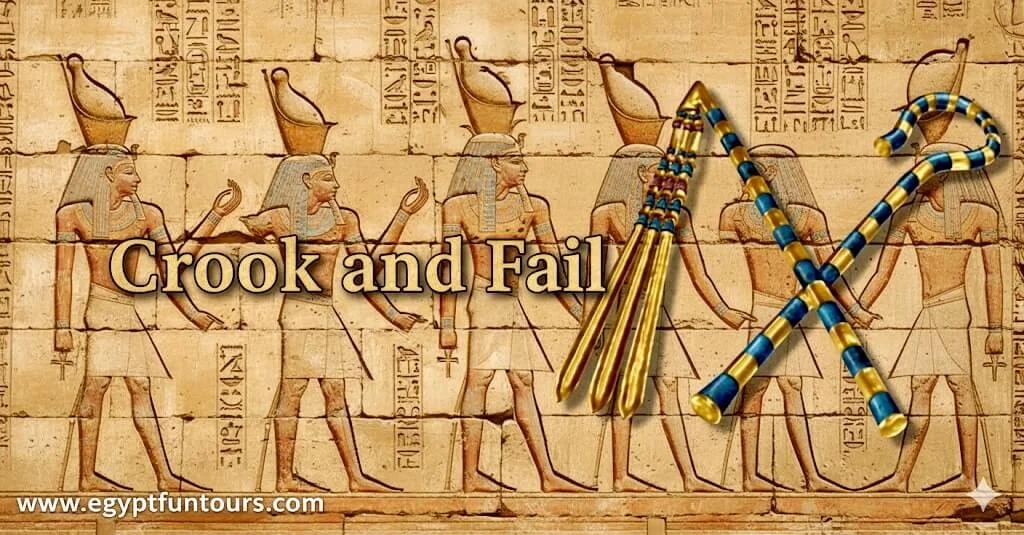
Unlock the symbolism behind the Crook and Flail, the ultimate insignias of pharaonic power. This guide explains how the Crook (a shepherd’s staff) represented the king’s duty to guide and protect his people, while the Flail (an agricultural tool) symbolized his authority to provide fertility and maintain order. Discover how these crossed scepters linked the living Pharaoh to Osiris, the god of the underworld, representing the eternal balance between mercy and might.
The Was Scepter: Egypt’s Ultimate Symbol of Divine Power
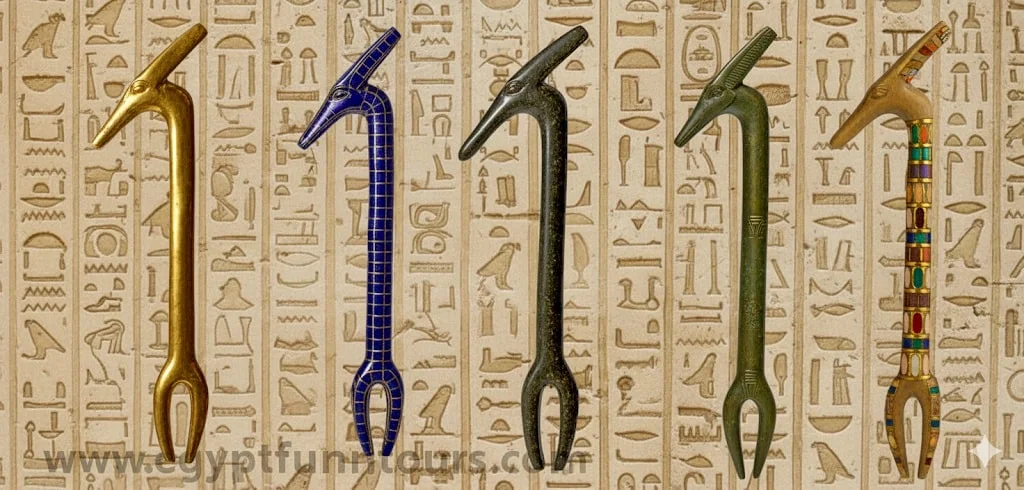
The Was scepter is one of ancient Egypt’s most potent symbols, representing divine power, authority, and dominion. This iconic staff, instantly recognizable by its straight shaft, forked base, and stylized animal head, was wielded by gods like Ptah and Set, as well as by pharaohs, to signify their control over the cosmos. This article explores the Was scepter’s origins, its deep religious meaning, and its prominent role in hieroglyphs and art as the ultimate emblem of divine and royal power.
God Sokar: Guide to the Enigmatic Funerary God of the Memphite Necropolis
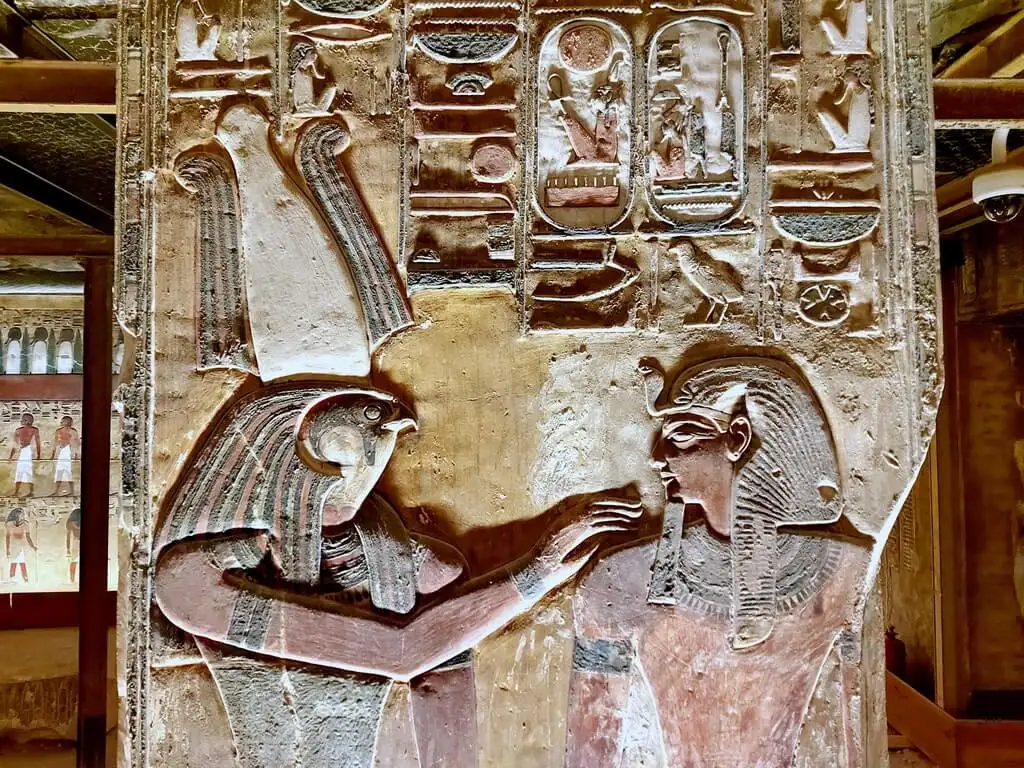
Sokar (also spelled Seker) is an ancient Egyptian funerary god, originally the local deity of the Memphite Necropolis (Saqqara). He reigns as the Lord of the Dark Earth, ruling the deepest, darkest sections of the underworld (Duat). Sokar is primarily depicted as a mummified falcon or a mummified man with a falcon’s head, symbolizing the transition of the soul between worlds. His importance grew through syncretism, culminating in the powerful composite deity Ptah-Sokar-Osiris, who represented creation, death, and resurrection. His annual festival involved solemn yet chaotic rituals that mirrored the arduous journey of the soul to rebirth.
God Min: The Definitive Guide to the Egyptian God of Fertility, Kingship, and the Eastern Desert
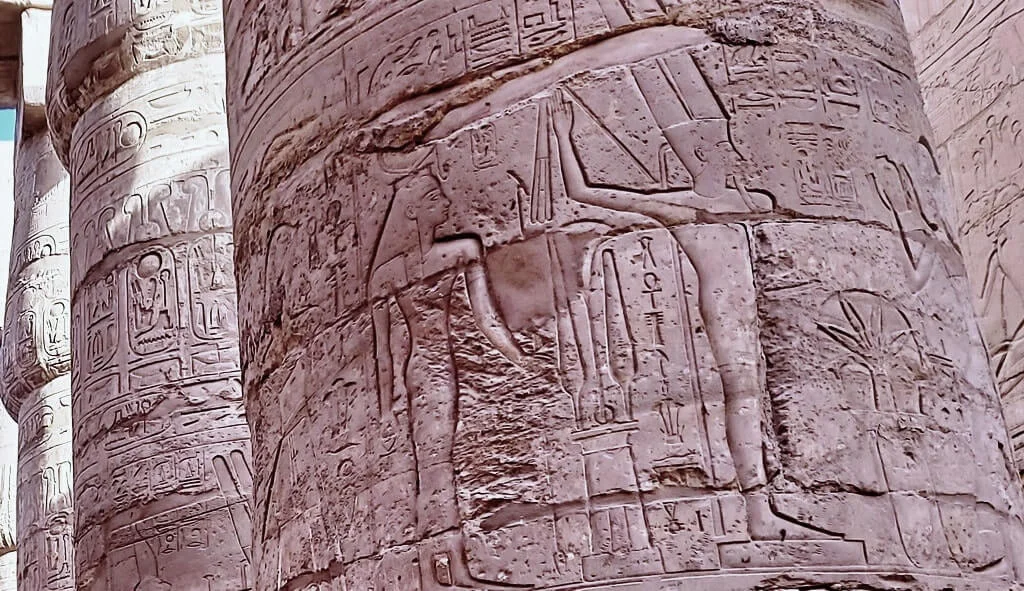
Min is one of the oldest and most distinctive deities in the Egyptian pantheon. He is the god of male fertility, sexual potency, harvest, and kingship. He is uniquely depicted in an ithyphallic (erect phallus) form, often holding a flail and wearing a feathered crown. Furthermore, Min was the patron of the desert trade routes, particularly those leading to the quarries and mines of the Eastern Desert. His worship was central to the continuation of the kingdom, celebrated famously in the Festival of Min, which guaranteed the pharaoh’s strength and the land’s fruitfulness.