The Unfinished Mystery: A Guide to Qasr El Sagha, Fayoum’s Lost Temple

Journey deep into the Fayoum desert by 4x4 to discover Qasr El Sagha, a 4,000-year-old unfinished temple. This mysterious "Goldsmiths' Palace" is an ancient puzzle, built with massive, irregular stones fitted with perfect precision yet mysteriously left blank with no hieroglyphs. Explore its silent main hall, seven enigmatic shrines, and the nearby ancient quay that once served a prehistoric lake, all standing in remote, dramatic isolation.

High on a remote escarpment 101 kilometers from Cairo, a mysterious temple stands silent guard over the Fayoum desert. This is Qasr El Sagha, or the “Goldsmiths’ Palace,” an enigmatic structure that has puzzled historians for over a century.

It is a temple with no inscriptions, no royal cartouches, and no clear purpose. It was never finished, yet its construction is a marvel of engineering. For years, the temple lay lost, blending perfectly into the desert hills behind it until archaeologist Schweinfurth rediscovered it in 1884. Today, it remains one of Egypt’s most intriguing and isolated ancient sites.

FUN

Key Highlights: Qasr El Sagha at a Glance

  • What It Is: An unfinished, 4,000-year-old temple from Egypt’s Middle Kingdom.
  • The Mystery: It is completely undecorated. There are no hieroglyphs or carvings, which is extremely unusual for an Egyptian temple.
  • Unique Design: It is built from massive, irregular sandstone blocks that fit together like a perfect puzzle (polygonal masonry).
  • What’s Nearby: The site includes an ancient “Quay” (port), the ruins of Dimeh al-Siba, and the Coptic Deir Abu Lifa monastery.
  • How to Get There: Access is by 4×4 vehicle only via a 25-kilometer desert track.
FUN

The Temple’s Enigmatic Design

Qasr El-Sagha; The Temple's Enigmatic Design

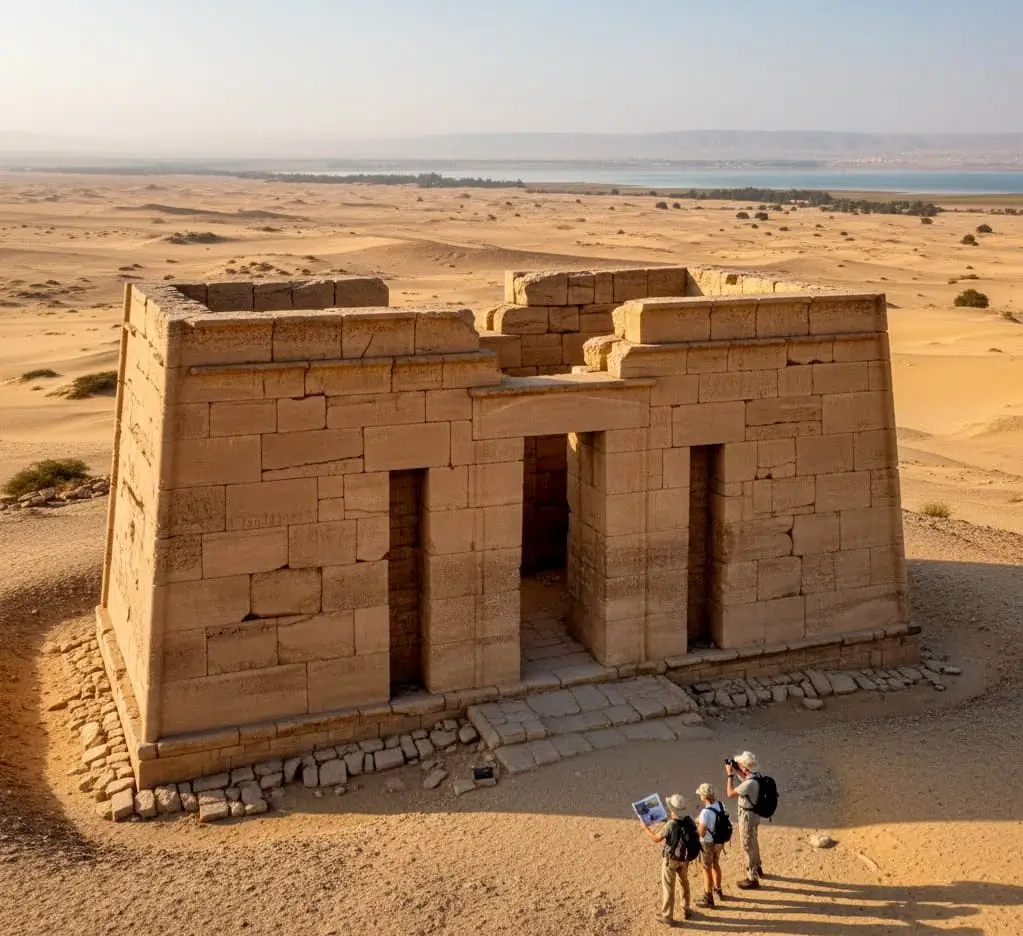
Qasr El Sagha’s primary allure is its strange and masterful construction. It is a rectangular, windowless building made entirely of local sandstone.

A Feat of Polygonal Masonry

The temple’s most striking feature is its masonry. It is not built from standard, uniform bricks. Instead, builders used huge, unevenly-sized blocks. They cut and fitted these massive stones together so precisely that not even a knife blade can fit between them. This “polygonal masonry” is rare in Egypt and shows an incredible level of skill.

An Unfinished Interior

A massive lintel guards the temple’s single southern entrance. Once you step inside, you find a simple, yet strange, layout:

  • The Main Hall: A spacious, transverse hallway that spans the width of the temple.
  • The Seven Shrines: The northern wall features a row of seven identical, roofed shrines. This is a highly unusual design, and no one knows what or who they were for.
  • The “Sanctuary”: A small passage leads to a wider chamber, often called the “offering hall” or sanctuary.
  • Side Rooms: To the west, two small, connected chambers exist. To the east, a short, dead-end tunnel is carved into the wall.

This entire interior is bare, adding to the puzzle. Why build such a precise, massive structure and leave it blank?

The Middle Kingdom Clues

The best clue to the temple’s age comes from its surroundings. Archaeologist Gertrude Caton-Thompson discovered a nearby Middle Kingdom (c. 2040-1782 BCE) graveyard and a settlement of stone tool workers. This discovery strongly suggests builders constructed the temple during this period, making it approximately 4,000 years old.

Discover the Magic Lake: Fayoum’s Hidden Desert Gem

Discover Fayoum's best-kept secret: the Magic Lake. This stunning oasis, hidden among golden dunes, gets...
Related post
FUN

Beyond the Temple: A Prehistoric Landscape

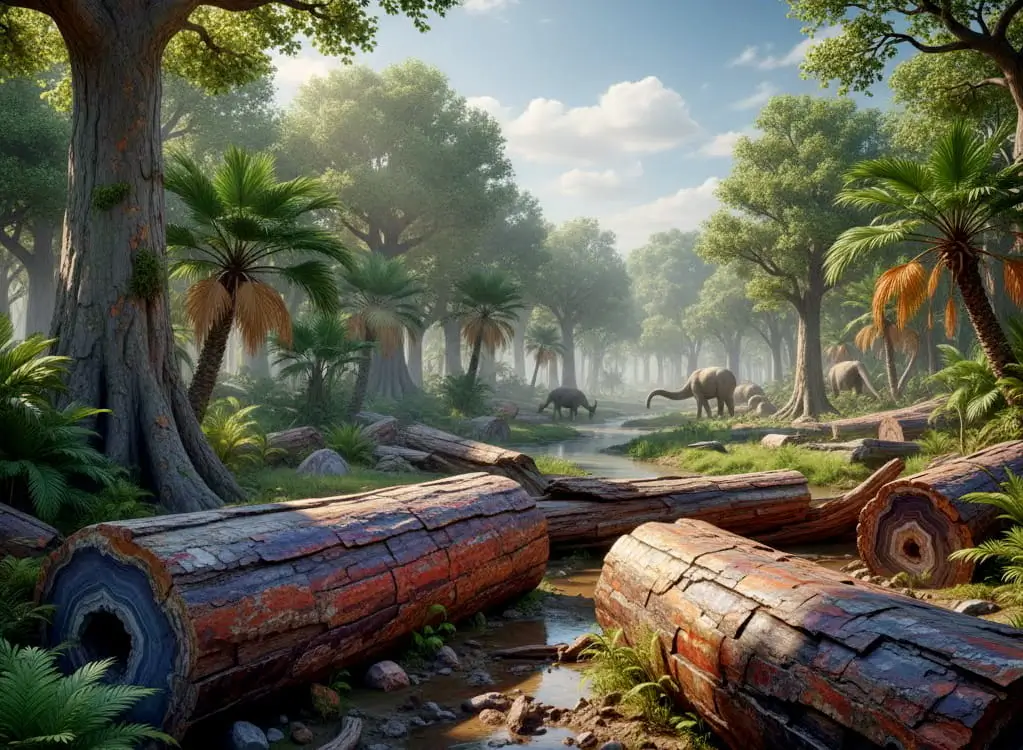
A Journey to the Oligocene Epoch; The petrified Forest in Fayoum

The area around Qasr El Sagha tells a story of a very different Fayoum, one with a much higher lake and a bustling industrial purpose.

The Ancient Quay: A Port for Basalt

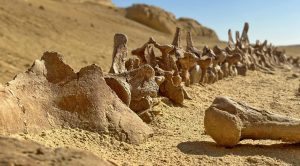
About 700 meters southeast of the temple, you will find a massive, long pile of rocks. Caton-Thompson first thought this was just a dump for a nearby quarry. Today, we believe this was an ancient quay, or pier.

This pier served the basalt quarries at Widan al-Faras, even further out in the desert. Workers transported huge, valuable basalt slabs from the quarries to this port. From here, they loaded the stone onto ships to cross the ancient, higher version of Lake Qarun for use in temples and tombs across Egypt.

Deir Abu Lifa: A Coptic Refuge

High on the escarpment, just two kilometers northeast of the temple, hide the ruins of Deir Abu Lifa (Monastery of Father Lifa). This rock-hewn monastery offered a remote and easily defended refuge for Christians during periods of persecution.

Inscriptions suggest people founded it around 686 CE and that it operated from the 7th to the 9th centuries. Local legends claim that when monks abandoned other monasteries, they buried stolen treasures here—though none have ever been found.

The Enigma of Meidum Pyramid: Egypt’s Forgotten Stairway to the Stars

The Meidum Pyramid stands as Egypt's most significant "missing link," documenting the daring transition from...
Related post
FUN

A Visitor’s Guide: Planning Your Expedition

Reaching Qasr El Sagha is an adventure in itself. The temple is remote, and you must have a 4×4 vehicle and an experienced driver or guide.

How to Get There:

  1. Start Point: The trail begins on the north side of the Cairo-Fayoum road, 1.3 kilometers past the Kom Aushim Museum.
  2. The Fork: After 3 kilometers, bear right onto the graded, rough desert road.
  3. The Drive: This is a bumpy, 20-21 kilometer trip through quarries and open desert.
  4. Spotting the Sites: You will eventually see Dimeh al-Siba (Dimeh) rising from the desert floor. Qasr al-Sagha sits slightly to the right, halfway up the mountain.
  5. Final Ascent: At the 22.5-kilometer mark, a sign marks the temple. The road bears right at 24.6 kilometers and climbs the final stretch to a parking area.

The Pyramid of Hawara: Amenemhat III’s Mud-Brick Marvel

Discover the Pyramid of Hawara, the 12th Dynasty tomb of Pharaoh Amenemhat III, located in...
Related post
FUN

Explore Qasr El Sagha’s Mysteries with Egypt Fun Tours

This is not a simple trip. The journey to Qasr El Sagha involves 25 kilometers of rough, unmarked desert roads. To navigate this remote area safely and truly understand what you’re seeing, a 4×4 vehicle and an expert guide are essential. Egypt Fun Tours specializes in these desert expeditions. Our guides will not only handle the difficult drive but also bring the silent stones of the temple, the ancient quay, and the monastery to life with the stories and history that make this one of Fayoum’s most unforgettable adventures.

Embarking on an 11-night Darakum Nile cruise from Cairo to Luxor is a captivating journey that takes travelers on a remarkable exploration of Egypt’s ancient...

Discover the wonders of ancient and modern Egypt...

Pyramids in the Mist, Egypt Adventure

Our long drive from Cairo turned into a terrifying flight through Alexandria’s impossibly crowded streets. Our minivan miraculously avoided hitting pedestrians, donkey carts, and old Lada cars. We arrived at the port gates with only 10 minutes to spare. But the guards ignored our U.S. passports, and they refused to

More »

AMAZING Layover Tour

We had the MOST amazing layover tour with Egypt Fun Tours. Hanni was amazing, and we loved every moment. Pyramids, authentic food, and Islamic Cairo – amazing!

More »

Excellent Tour

Really excellent tour from Mohamed, and we learned so much about Egypt and went to places we never would have found as tourists at home. My girlfriend had a 12 hour stop over on the way to Ethiopia and it was the perfect way to see Cairo. I hope people

More »

Goes well beyond “tour”

I am tempted to say “my friend Hani” runs an amazing service, because that is how he makes you feel. I first went on the 9-hour layover tour in summer 2011. Hani and driver picked me up at the airport at 3am, and by the time I left at noon

More »
Isis with wings

Top-rated Tour Packages

Isis with wings