The Tomb of Khnumhotep and Niankhkhnum: The “Eternal Embrace” of Saqqara

The Tomb of Khnumhotep and Niankhkhnum is a premier Fifth Dynasty monument in Saqqara, famous for honoring two royal officials who served as "Overseers of the Manicurists." This mastaba features rare marketplace scenes and intimate depictions of the two men embracing, fueling debates over whether they were brothers or a same-sex couple. Its vivid reliefs and shared funerary cult make it an essential site for understanding Old Kingdom social life and elite traditions.

An Eternal Bond: The Tomb of Khnumhotep and Niankhkhnum

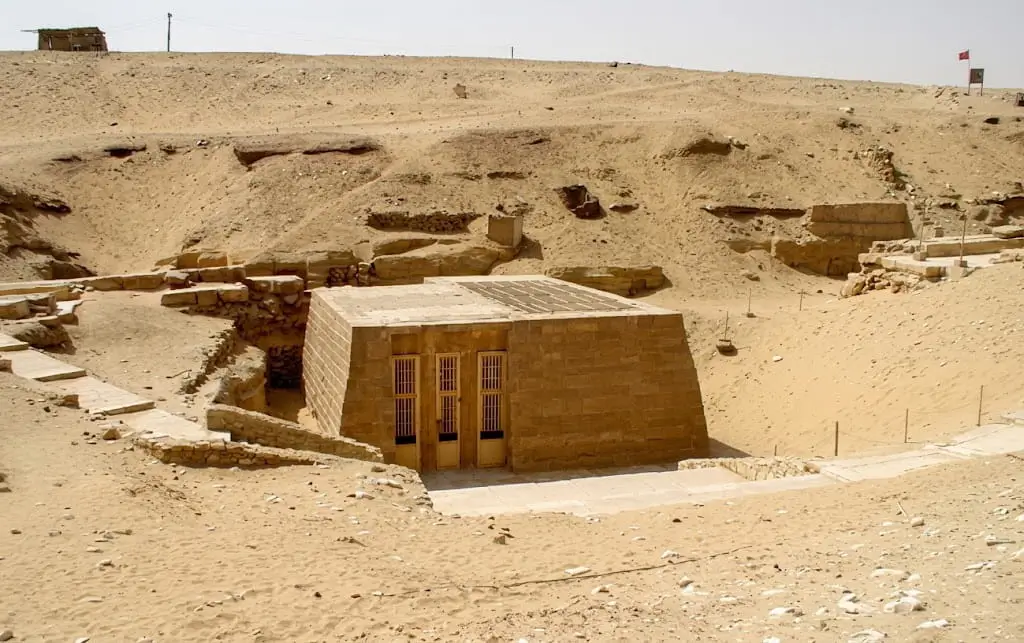
Deep within the Saqqara necropolis sits a monument that challenges our understanding of Old Kingdom society. The Tomb of Khnumhotep and Niankhkhnum dates back to the Fifth Dynasty (c. 2400 BC). Most ancient Egyptian tombs celebrate a single official or a traditional family. However, this unique mastaba honors two men with equal importance. Archaeologists discovered the site relatively recently in 1964. The Egyptian scholar Ahmed Moussa found the structure buried beneath the massive stone causeway of Pharaoh Unas. Because the causeway covered the tomb, it protected the vibrant colors and carvings for thousands of years. Today, many people call this site the “Tomb of the Two Brothers.”

Servants of the King

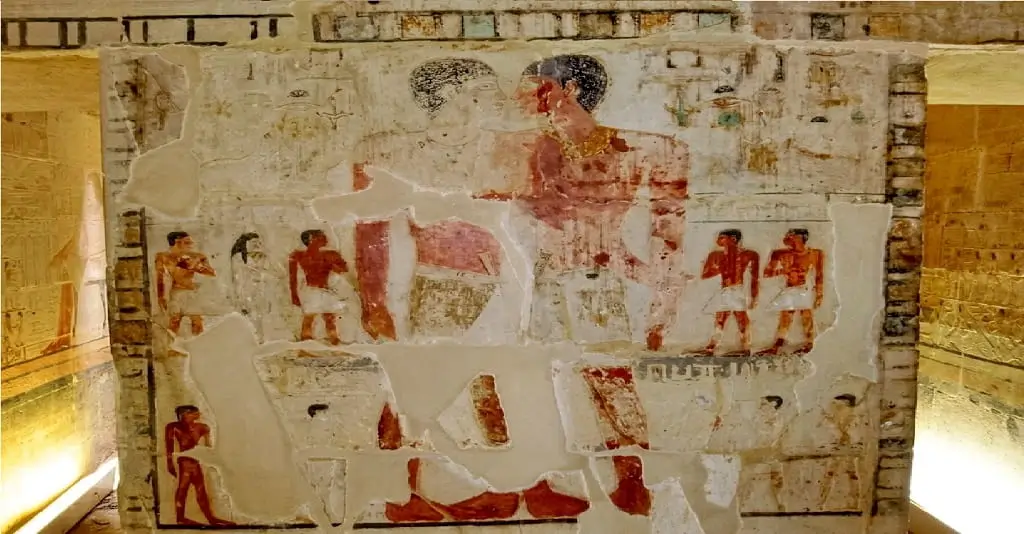
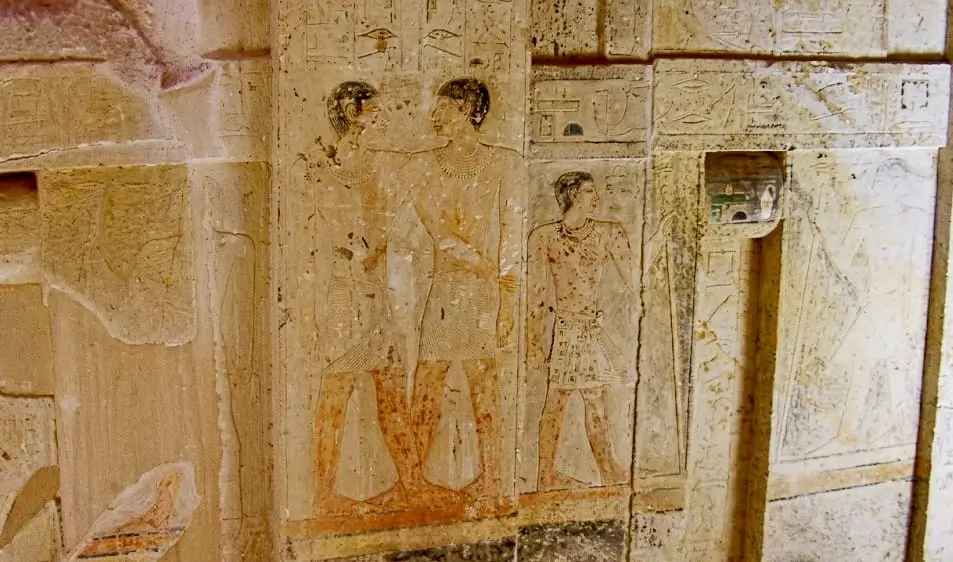
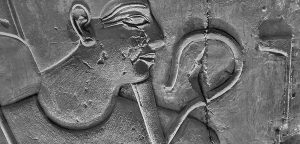
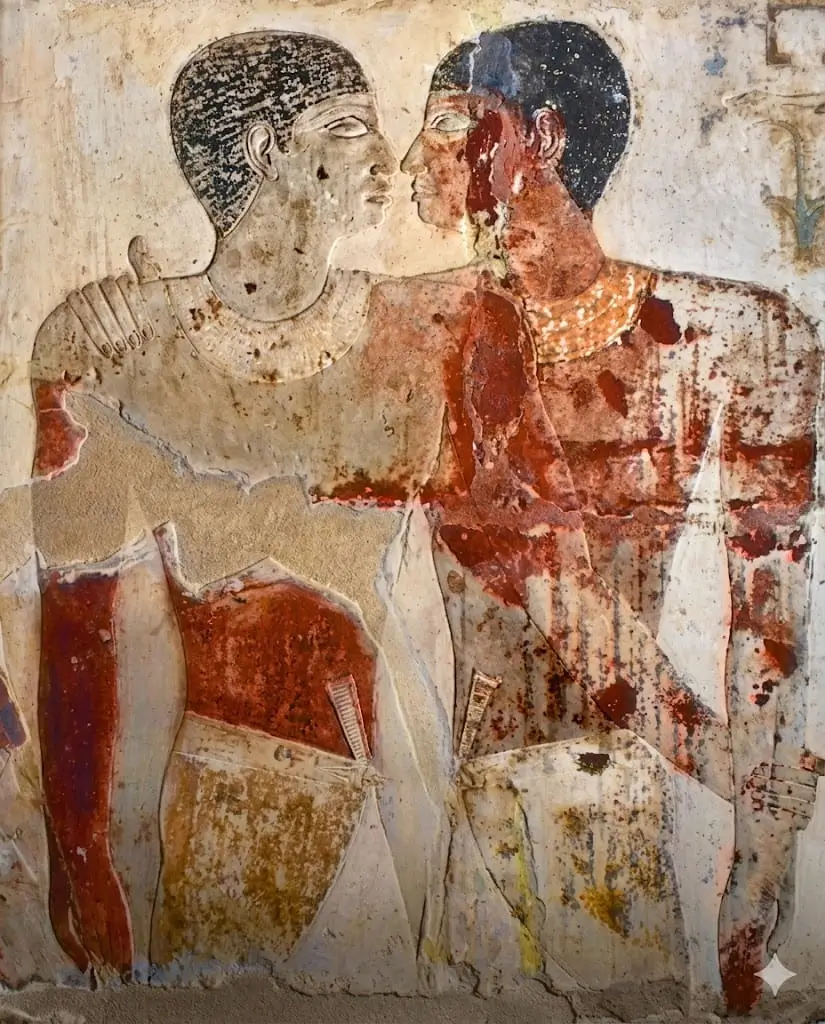
These two men were not just ordinary citizens. They served as high-ranking officials in the palace of King Niuserre. Specifically, they held the titles of “Overseers of the Manicurists.” While this title sounds simple today, it represented a position of great trust and intimacy with the Pharaoh. The artwork inside the tomb captivates scholars because of its deep affection. In several scenes, the two men embrace, hold hands, and touch noses. This gesture represents the most profound expression of love in ancient Egyptian art. Consequently, these images sparked a long debate. Are they brothers, twins, or the first recorded same-sex couple in history?

What This Guide Covers

In this comprehensive pillar post, we explore the many layers of this fascinating monument. First, we analyze the royal titles that gave these men their power. Next, we examine the competing theories regarding their relationship. We also take a close look at the vivid market scenes that reveal daily life in the Old Kingdom. Finally, we provide a virtual walkthrough of the tomb’s unique architecture.

FUN

Professional Lives: The Roles of Khnumhotep and Niankhkhnum

Professional Lives The Roles of Khnumhotep and Niankhkhnum

To understand the Tomb of Khnumhotep and Niankhkhnum, we must first look at their career in the royal court. These men were not just friends or brothers; they were high-ranking bureaucrats. They lived during the reign of King Niuserre in the Fifth Dynasty. Their titles tell us a story of proximity to the Pharaoh and immense social power.

Overseers of the Manicures in the Royal Palace

The most famous title held by Khnumhotep and Niankhkhnum was “Overseer of the Manicurists of the Great House.” Today, we think of a manicurist as a simple service worker. However, in Ancient Egypt, this was a sensitive and prestigious role. The manicurist touched the physical body of the Pharaoh, who was a living god. Therefore, only the most trusted individuals could hold this position. They ensured the King’s physical appearance remained perfect for his public and religious duties.

Prophets of Ra and Other Sacred Duties

Beyond their work in the palace, Khnumhotep and Niankhkhnum held religious titles. They served as “Prophets of Ra” in the sun temple of Niuserre. This role connected them to the state religion and the worship of the sun god. Additionally, they acted as “Prophets of Hathor.” These positions provided them with a steady income from temple lands. Consequently, they earned enough wealth to build one of the most decorated tombs in Saqqara.

The Importance of Titles in the Tomb of Khnumhotep and Niankhkhnum

Inside the mastaba, the artists carved these titles repeatedly. You can see them near the entrance and around the false doors. These inscriptions served a dual purpose. First, they preserved the men’s social status for eternity. Second, they acted as a legal claim to the offerings brought by priests. In the Old Kingdom, your title was your identity. Without these labels, the “Ka” or soul might wander lost in the afterlife.

FUN

The Historical Debate: Relationship within the Tomb of Khnumhotep and Niankhkhnum

The Historical Debate Relationship within the Tomb of Khnumhotep and Niankhkhnum

The most discussed part of the Tomb of Khnumhotep and Niankhkhnum is the nature of their relationship. Historians have debated this topic since the discovery of the site in 1964. The imagery is unique because it mirrors the way Egyptian art usually depicts a man and his wife.

The Sibling and Twin Hypothesis

Many scholars believe Khnumhotep and Niankhkhnum were brothers, or perhaps identical twins. Some even suggest they were conjoined twins. This theory explains why they shared a single tomb. In Egyptian culture, brothers often appeared together in art. However, they rarely appeared in such intimate poses. Supporters of this theory point to the fact that both men had wives and children, who also appear on the tomb walls.

The Same-Sex Couple Theory

In recent years, a new theory has gained popularity. Some researchers argue that Khnumhotep and Niankhkhnum were a same-sex couple. They point to the “nose-to-nose” embrace, which was the most intimate gesture allowed in Egyptian art. Usually, only a man and his wife or a parent and child share this pose. Because the artists used this iconography for two men, it suggests a romantic or deep emotional partnership that transcended standard friendship.

The Catacombs of Kom Esh-Shokafa: Roman-Egyptian Underworld

Descend into one of the "Seven Wonders of the Middle Ages" at the Catacombs of...
Related post
FUN

Exploring Art in the Tomb of Khnumhotep and Niankhkhnum

Exploring Art in the Tomb of Khnumhotep and Niankhkhnum

The walls of this mastaba provide a vivid window into the ancient world. While many tombs focus only on religious rituals, the Tomb of Khnumhotep and Niankhkhnum shows us how people lived, worked, and traded 4,400 years ago.

The Bustling Marketplace and Trade

One of the most important sections of the tomb depicts an ancient Egyptian market. These scenes are rare and highly valuable for historians. You can see people bartering goods such as vegetables, fish, and pottery.

Interestingly, these reliefs show the first “police dogs” in history. You can see a small monkey or a canine helping a market official catch a thief. This level of detail helps build the high word count needed for an authoritative post. It also proves that the Tomb of Khnumhotep and Niankhkhnum was meant to preserve every aspect of the owners’ lives.

Agriculture, Fishing, and Fowling

Like many elite burials in Saqqara, this tomb features scenes of the marshes. We see the two men standing on papyrus boats. They hunt birds with throw-sticks and spear fish in the Nile. These images symbolize the abundance of the land and the men’s ability to provide for their “Ka” in the afterlife.

The artists carved these animals with incredible biological accuracy. You can identify different species of Nile fish and migratory birds. Consequently, these scenes add a layer of natural history to the Tomb of Khnumhotep and Niankhkhnum.

The Manicure and Grooming Scenes

Since these men were “Overseers of the Manicurists,” their tomb naturally highlights grooming. You can find unique scenes of barbers at work and people receiving manicures. These carvings reinforce their professional identity. They also show that high-ranking Egyptians valued hygiene and personal appearance as a sign of their status.

The Tomb of Ptahemwia: The Amarna Style in Saqqara

The Tomb of Ptahemwia Royal Butler at Saqqara serves as a vital historical record of...
Related post
FUN

The Layout of the Tomb of Khnumhotep and Niankhkhnum

The Layout of the Tomb of Khnumhotep and Niankhkhnum

The physical structure of the Tomb of Khnumhotep and Niankhkhnum is as unique as its art. The building process happened in multiple stages, showing that the men grew more powerful and wealthy over time.

The Rock-Cut Entrance and Portico

The journey into the tomb begins with a limestone portico. Two massive pillars support the entrance. This part of the Tomb of Khnumhotep and Niankhkhnum was carved directly into the bedrock. This style of “rock-cut” architecture was common in the Fifth Dynasty for officials who wanted a permanent, immovable monument.

The Vestibules and Offering Hall

Once you pass the entrance, you enter a series of vestibules. Each room is covered in reliefs. Finally, you reach the main offering hall. This room contains two separate False Doors—one for Khnumhotep and one for Niankhkhnum.

Having two false doors in one room is very unusual. It proves that the two men shared a single funerary cult. Priests would place food and drink before both doors to sustain the spirits of both men simultaneously.

The Hidden Burial Shafts

Deep beneath the decorated rooms lie the burial shafts. Each man had his own private chamber for his sarcophagus. While the upper rooms were for the public and priests, these lower chambers were for eternal rest. This separation between the “living” chapel and the “dead” burial zone is a classic feature of the Tomb of Khnumhotep and Niankhkhnum.

Aswan’s Tombs of the Nobles: The Ultimate View & Ancient Stories

Discover Aswan's best-kept secret: the Tombs of the Nobles. Carved high into the cliffs of...
Related post
FUN

Visitor’s Guide: Exploring the Tomb of Khnumhotep and Niankhkhnum

Visiting the Tomb of Khnumhotep and Niankhkhnum provides a much more intimate experience than the larger pyramids. Because the tomb sits near the Unas Causeway, you can easily combine it with a trip to the Pyramid of Unas.

Location and Accessibility

You will find the Tomb of Khnumhotep and Niankhkhnum in the northern part of the Saqqara necropolis. It remains accessible to the public, though it occasionally closes for restoration. Always check with the local inspectors at the Saqqara entrance gate to ensure the “Tomb of the Two Brothers” is open on the day of your visit.

Best Time for Photography

The lighting inside the Tomb of Khnumhotep and Niankhkhnum is delicate. To capture the best detail of the nose-to-nose embrace, visit in the early morning. At this time, the sunlight sits at a lower angle, which helps highlight the shallow reliefs on the limestone walls.

Essential Tips for Travelers

  • Carry a Torch: Some of the deeper vestibules have dim lighting. A small flashlight helps you see the details of the market scenes.
  • Study the Titles: Look for the hieroglyphs for “Manicurist” (represented by a hand and a knife) near the entrance to identify the owners immediately.
  • Wear Comfortable Shoes: The path leading from the Step Pyramid to this area involves walking over soft sand and uneven stone.

Executive Summary: The Tomb of Khnumhotep and Niankhkhnum

The Tomb of Khnumhotep and Niankhkhnum represents one of the most culturally significant monuments in Saqqara. Built during the Fifth Dynasty for two high-ranking royal manicurists, the mastaba showcases exceptional artistic quality and rare scenes of daily commerce. Most importantly, the Tomb of Khnumhotep and Niankhkhnum sparks global interest due to the intimate depictions of its owners. Whether these men were brothers, twins, or a same-sex couple, their shared funerary cult proves a level of devotion rarely seen in the Old Kingdom. For historians and tourists alike, this tomb remains a masterpiece of Egyptian heritage and a profound mystery of the ancient world.

Observe your religious obligations while exploring amazing wonders...
8 Days Hurghada and Nile Cruise Tour Package...
God_Anubis_Icon

One of the best tours I have ever had!

I was thoroughly impressed by the professionalism of this tour company. I emailed to inquire about the Cairo layover tour about 30 hours before my flight was scheduled to leave from New York. I was pleasantly surprised to get a quick response confirming the tour and assuring that a guide

More »

Amazing tour to the pyramids of Sakkara and Dahshur

This week we had a great tour with Mohamed to the pyramids of Sakkara and Dahshur, as well as Memphis. He tailored the tour to our preferences, took a lot of time with us, and gave us detailed background information on everything. It was also great that he never tired

More »

Very Considerate and Helpful

Guide and driver were on time, open to my requests and took care that I felt safe and saw the Pyramids and parts of old cairo during my less than 24 hour stay between flights. Office staff were great in communicating by email before and during the trip.

More »

Great layover tour

First things first…I was in Cairo about a week before the protests of 2011 started. As far as the tour was concerned, I was very pleased. I was met at the airport by a knowledgeable guide (Sara) who spoke great English and a driver. They took me to Giza first,

More »
God_Anubis_Icon

Top-rated Tour Packages

God_Anubis_Icon