The Tomb of Meryneith: A Bridge Between Gods in Saqqara

The Tomb of Meryneith (also referred to as Meryre) at Saqqara is one of the most historically significant private burials in Egypt. It serves as a physical record of the country's return to tradition following the "Amarna Revolution."

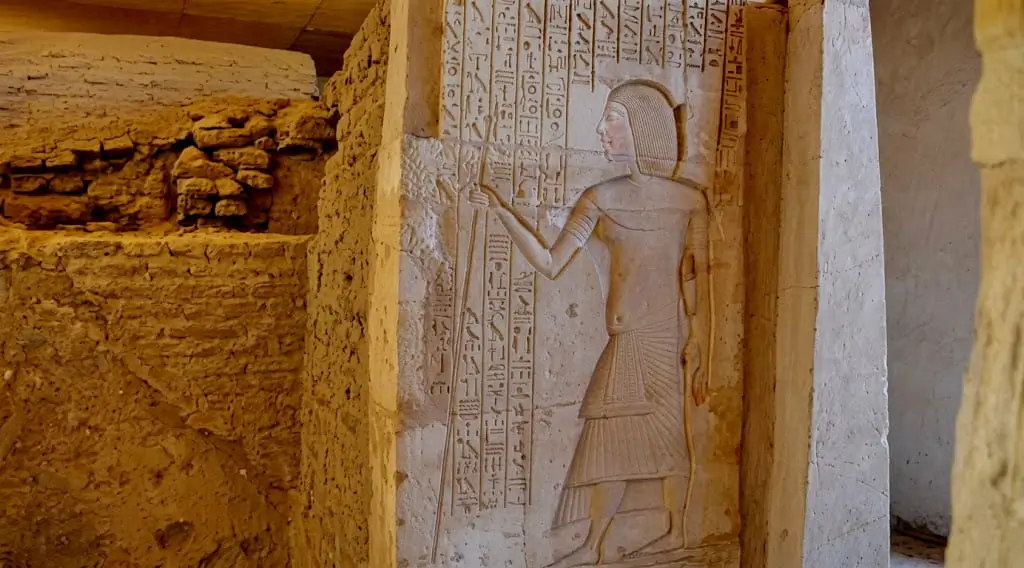
The Saqqara Necropolis hides a spectacular monument beneath its golden sands. This site sits just south of the famous Step Pyramid of Djoser. It serves as a powerful testament to a dramatic religious revolution in ancient Egypt. The Tomb of Meryneith is not a simple burial ground. Instead, it acts as a limestone “time capsule.” It captures the exact moment when Egypt moved away from monotheism and returned to its traditional gods.

A Powerful Survivor in a Changing Era

Most travelers visit Saqqara to see the Third Dynasty monuments. However, the New Kingdom cemetery offers a different kind of beauty. Here, Meryneith built a grand “temple-tomb” that rivals the artistry in the Valley of the Kings. Meryneith was a high-ranking official and a political survivor. He served at the highest levels of government under the “Heretic King” Akhenaten. Later, he continued his career under the famous young Pharaoh, Tutankhamun.

The Transformation of an Identity

Visitors witness a physical change in identity as they step into the courtyard. Originally, this man went by the name Meryre. This name meant “Beloved of Ra” or “Beloved of the Aten.” He worked as the High Priest of the Sun-Disk in the short-lived capital of Amarna. Furthermore, the political winds eventually shifted. The Royal Court returned to the city of Memphis. Consequently, Meryre reclaimed his traditional faith. He renamed himself Meryneith, which honors the ancient goddess Neith.

A Missing Link in History

In addition to its beauty, this tomb serves as a vital “missing link” in Egyptian archaeology. The exquisite reliefs show a personal struggle for balance. They highlight the conflict between the revolutionary “Sun Worship” and the eternal traditions of the state. Therefore, the Tomb of Meryneith reveals how one man navigated two different worlds. Egypt Fun Tours invites you to peel back the layers of sand. Discover the secrets of a priest who held the keys to two different Heavens.

FUN

Who Was Meryneith? The Man of Two Names

Who Was Meryneith The Man of Two Names

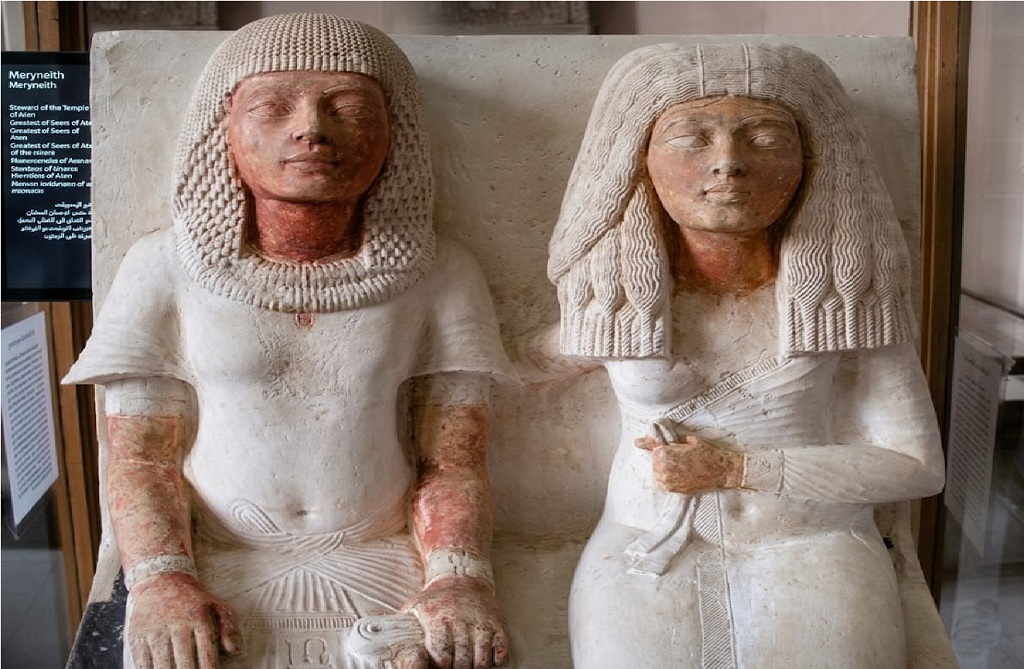
Meryneith lived during the late 18th Dynasty. This period was one of the most chaotic times in Egyptian history. He was a high-ranking official who served under the “Heretic King” Akhenaten. Later, he continued his career under the famous Tutankhamun. His life story shows how a powerful leader survived a massive religious revolution.

The High Priest of the Sun

In his early career, Meryneith went by the name Meryre. This name means “Beloved of Ra” or “Beloved of the Aten.” He held incredible power in the new capital city of Amarna. During this time, he served as the Greatest of Seers of the Aten. This title essentially made him the High Priest of the Sun-Disk. He managed the Great Temple of Aten and oversaw the king’s new religious vision.

A Return to Tradition

However, the Amarna period eventually collapsed after the death of Akhenaten. The royal court moved back to the traditional capital of Memphis. Consequently, Meryre had to adapt to a changing world. He changed his name to Meryneith, which honors the ancient goddess Neith. He also took on new roles in the traditional priesthood. These roles included:

  • High Priest of Neith: A leader in the cult of the ancient war goddess.
  • Steward of the Temple of Aten in Memphis: A role that likely managed the remaining properties of the old sun-cult.

A Master of Survival

Meryneith was a rare “bridge” between two eras. Most officials from the Amarna period disappeared or lost their status. In contrast, Meryneith remained a powerful figure in the government. His tomb reflects this transition perfectly. For example, some wall carvings show the “Amarna style” with its fluid, natural shapes. Yet, other sections show the rigid, classic style of the Old Kingdom. Therefore, his burial site acts as a visual map of a man reclaiming his heritage.

The Family Legacy

Meryneith did not navigate these changes alone. His wife, Anuy, appears frequently in the tomb reliefs. She held the title of “Chantress of Amun.” This detail is very important for historians. It suggests that even while Meryneith served the Sun-Disk, his family maintained ties to the traditional god Amun. Consequently, their family story reveals the complex reality of life during a religious civil war.

FUN

The Architecture of the Tomb: A House for Eternity

The Architecture; A House for Eternity

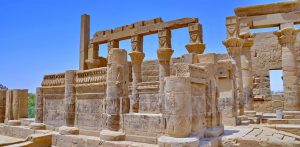
The Tomb of Meryneith is a masterpiece of “Temple-Tomb” design. This style was very popular in Saqqara during the New Kingdom. It looks like a small version of the massive temples found in Luxor. The builders used mud-bricks for the main walls. Furthermore, they covered these walls with fine Tura limestone to create a smooth surface for carvings.

The Courtyard and the Pylon

Visitors first enter through a massive gateway called a pylon. This entrance leads into an open peristyle court. A row of columns once surrounded this courtyard. These columns provided shade for priests who performed daily rituals. In addition, the court allowed natural light to shine on the beautiful wall reliefs. These carvings show scenes of Meryneith’s high status and his service to the King.

The Three Cult Chapels

At the far end of the courtyard, there are three small rooms called chapels. These were the most sacred parts of the surface tomb.

  • The Central Chapel: This room was the main focus of worship. A small mud-brick pyramid originally sat on top of it.
  • The Side Chapels: These rooms were dedicated to Meryneith’s family and his afterlife journey.

The Secret Underground Chambers

While the surface tomb was for the living, the burial happened deep underground. A vertical shaft drops 8 meters into the bedrock. Consequently, this shaft leads to a complex of four burial chambers.

  • Ancient Recycling: Meryneith’s builders were very clever. They actually reused older tunnels from the Second Dynasty.
  • The Final Resting Place: The main chamber held the stone sarcophagus. Archaeologists found that grave robbers had entered the tomb in ancient times. However, they still discovered beautiful pottery and small statues called Ushabtis left behind.

Why This Layout Matters

This specific design shows the wealth of the New Kingdom elite. It combines the grand style of a temple with the security of a hidden grave. Therefore, the tomb protected Meryneith’s body while keeping his name alive among the living. Egypt Fun Tours takes you through these physical layers to help you visualize the ancient funeral processions.

The Catacombs of Kom Esh-Shokafa: Roman-Egyptian Underworld

Descend into one of the "Seven Wonders of the Middle Ages" at the Catacombs of...
Related post
FUN

The Art of the Tomb: A Blend of Beauty and Change

The Art of the Tomb; A Blend of Beauty and Change

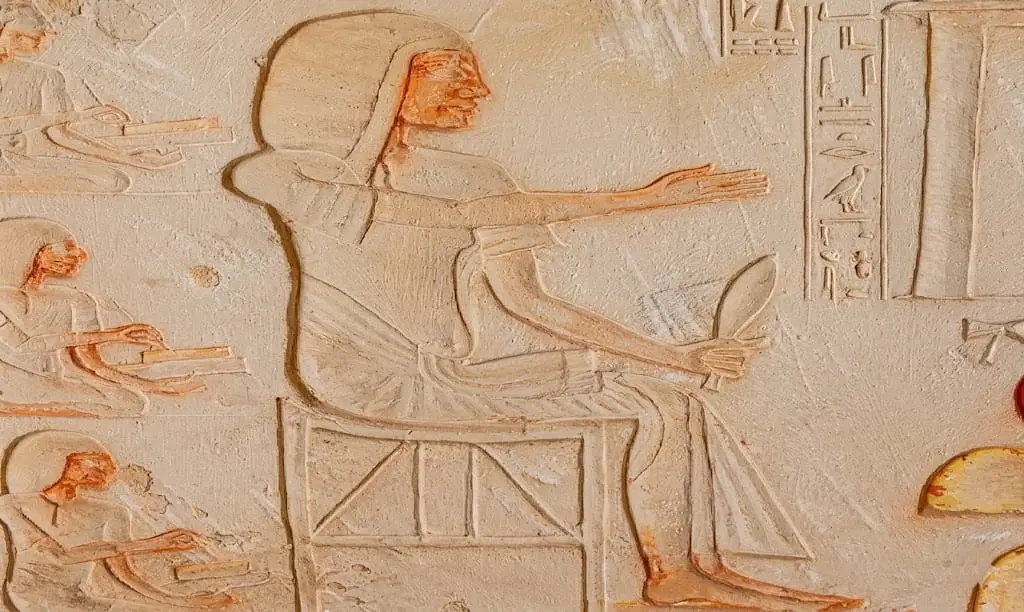
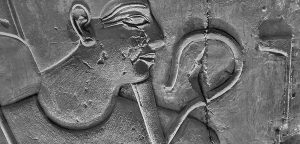
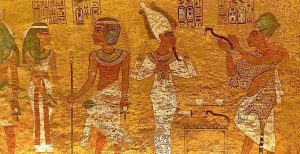
The wall carvings in the Tomb of Meryneith are some of the most unique in the Saqqara region. Because Meryneith lived through the “Amarna Revolution,” the art in his tomb shows two very different styles. Visitors can actually see the evolution of Egyptian art within a single building.

The Influence of Amarna Naturalism

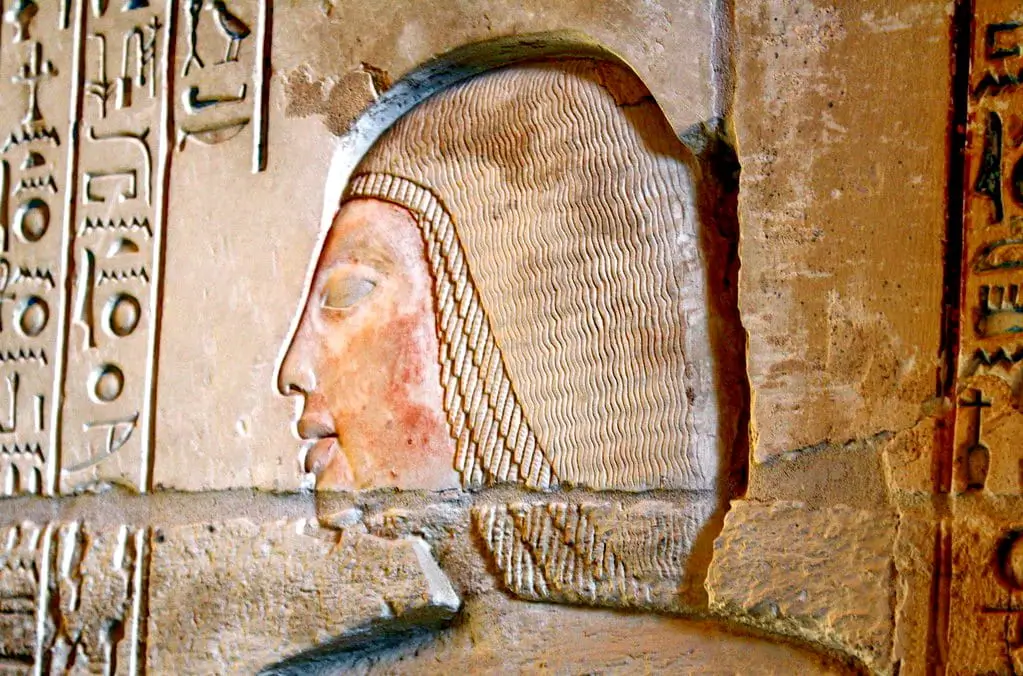
During the reign of Akhenaten, art became more fluid and natural. In the Tomb of Meryneith, the figures have soft lines and realistic details. Furthermore, the artists captured movement in a way that older styles did not.

  • Daily Life: You will see detailed scenes of laborers, animals, and large estates.
  • The Royal Connection: Some reliefs show the king and queen, which was a common theme during the Amarna period.

The Return to Classic Memphite Style

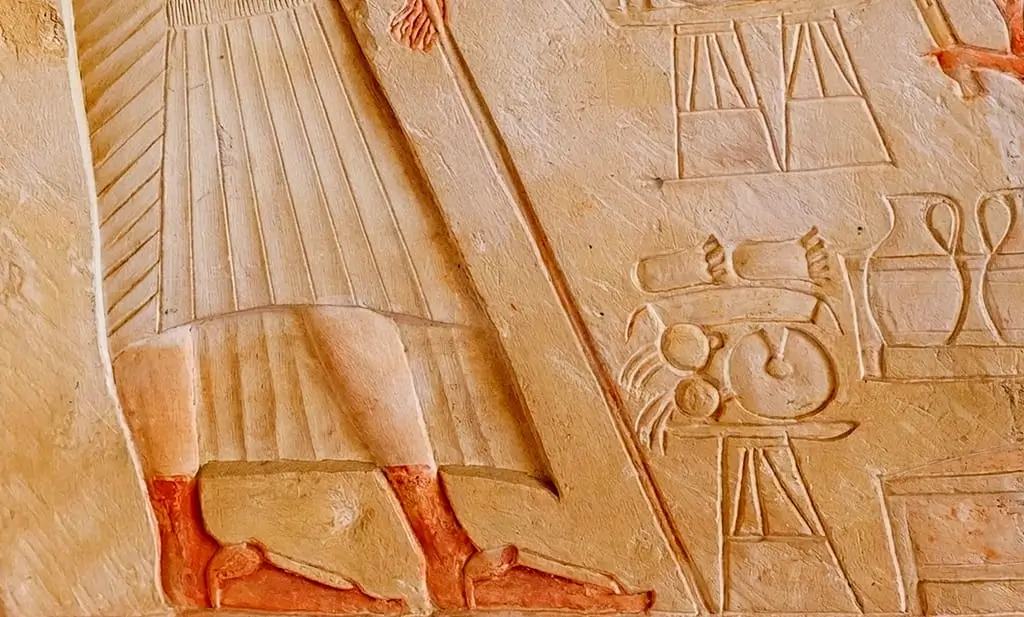
However, once the court returned to Memphis, the art changed again. The later carvings in the tomb return to a more “classic” Egyptian look. The figures become more structured and formal. This style honored the traditions of the Old Kingdom. Consequently, the tomb serves as a visual record of Egypt’s return to its roots.

Erased History and Redrawn Gods

One of the most fascinating things to look for is the evidence of “erasure.” Because the sun-god Aten became unpopular after Akhenaten died, workers physically chipped away his name and symbols.

  • Recarving: In several places, you can see where the name of the goddess Neith was carved over the old name of Aten.
  • A Hidden Past: These alterations show how hard Meryneith worked to stay in favor with the new government under Tutankhamun.

Why These Reliefs Stand Out

In addition to their historical value, the carvings are beautiful pieces of craft. The limestone is of high quality, and the details are very sharp. Therefore, when you walk through the tomb with Egypt Fun Tours, you aren’t just looking at old walls. You are looking at a “political makeover” frozen in stone.

Saqqara: Guide to Egypt’s Eternal Necropolis and the Evolution of the Pyramid

Saqqara is a vast ancient necropolis near Cairo, serving as the burial ground for the...
Related post
FUN

How to Visit the Tomb of Meryneith: Practical Travel Tips

How to Visit the Tomb of Meryneith Practical Travel Tips

The Tomb of Meryneith is a highlight of the New Kingdom cemetery at Saqqara. Most visitors stay near the Step Pyramid, but this area offers a much quieter and more intimate experience. Egypt Fun Tours provides expert guidance to help you find this hidden gem.

Getting to the Site

Saqqara is located about 30 kilometers south of Cairo. You can easily reach it by car or private van. Furthermore, the New Kingdom tombs are located a short walk from the main parking area near the Pyramid of Unas.

  • Travel Time: It takes roughly 45 to 60 minutes to drive from central Cairo or Giza.
  • Walking: Wear comfortable shoes. The path to the tomb involves walking over sandy and uneven terrain.

Opening Hours and Tickets

The Saqqara archaeological site typically opens at 8:00 AM and closes at 5:00 PM.

  • Tickets: You must buy a general entrance ticket for Saqqara. Some specific tombs require an extra “New Kingdom Tombs” ticket. Therefore, check at the main gate before you head up the hill.
  • Photography: You can usually take photos with your phone for free. However, professional cameras require a special permit.

The Best Time to Visit

The best time to explore the tomb is in the early morning. The sun is lower in the sky during these hours. Consequently, the light enters the open courtyard and highlights the fine details of the limestone reliefs. In addition, the morning temperatures are much cooler for walking between the different burial sites.

Combine Your Visit

You should make the most of your trip to the south side of the necropolis. In addition to the Tomb of Meryneith, you should visit:

  • The Tomb of Horemheb: The grand burial site of the general who became Pharaoh.
  • The Tomb of Maya: The treasurer of King Tutankhamun.
  • The Pyramid of Unas: Famous for the earliest “Pyramid Texts” carved on the walls.

Great Pyramid of Giza: An Enduring Wonder of the Ancient World

Dive into the mystery of the Great Pyramid of Giza, the last surviving wonder of...
Related post
FUN

Why Choose Egypt Fun Tours?

Why Choose Egypt Fun Tours

Exploring Saqqara alone can be overwhelming because the site is so large. Our guides are trained Egyptologists who know the specific history of the Amarna period. Therefore, we don’t just show you the walls; we tell you the story of the people who lived there. We handle all the transportation and ticketing. Consequently, you can focus entirely on the beauty of ancient Egypt.

Contact Egypt Fun Tours to book your private Saqqara adventure today!

Discover wonders in Cairo and Luxor, then go to Hurghada....
11 Days UNESCO Tour To the Major Cities of Egypt...
God_Anubis_Icon

Jeep Safari in the Sahara

I contacted Hani two days before I went to Egypt and asked him if it was possible to combine two of their tours as we were short on time. We had planned to stay in Cairo but with the uprising we decided it would be safed outside of the hot

More »
4-day-christmas-nile-cruise

Hossam Rashwan Tour Guide

We took this trip with Hossam Rashwan as our tour guide, and I must say that Hossam was the greatest tour guide in Luxor who showed us around. Our tour guide’s tales transported us to Luxor’s past, and we felt as if we were living in ancient Egypt. We really

More »
Cairo belly dance show - Egypt Fun Tours

The BEST tour – a dream come true

I’ve been dreaming of going to Egypt since I was 7 years old. At 37, I finally made it. Even with the warnings that it’s not safe for Americans. Thankfully, Egypt Fun Tours quickly put any worry aside. Hamada, the owner, was recommended by a friend. He was our personal

More »
God_Anubis_Icon

Top-rated Tour Packages

God_Anubis_Icon