The Tomb of Princess Idut: Saqqara’s Masterpiece of Old Kingdom Art

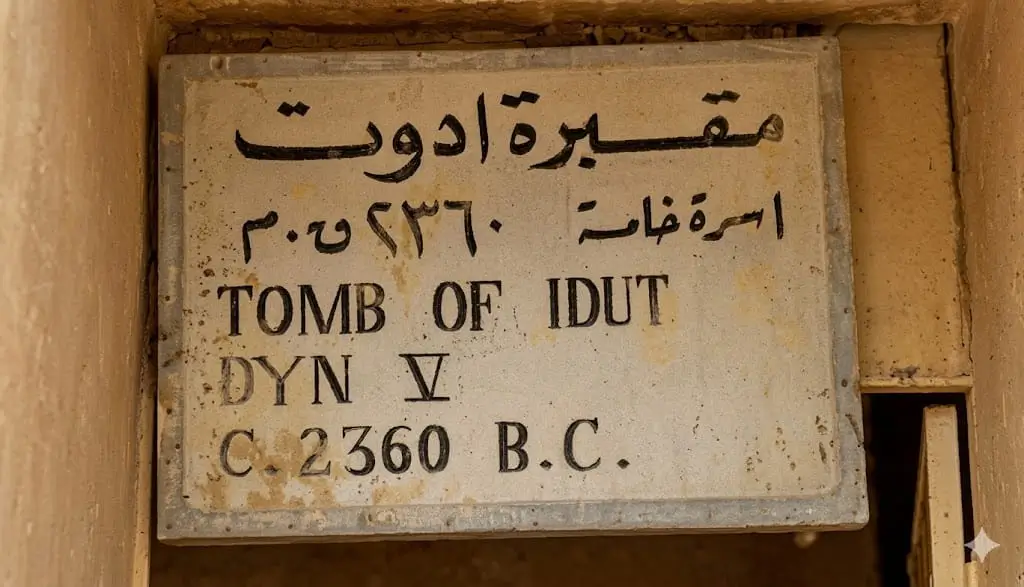
The Tomb of Princess Idut remains one of the most significant artistic treasures in the Saqqara Necropolis. This Old Kingdom mastaba provides a unique look at the transition between the 5th and 6th Dynasties, featuring some of the best-preserved pigments in ancient Egypt. While it stands out for its vibrant scenes of Nile life and the famous "crocodile birth," the tomb also tells a story of political change. Originally built for Vizier Ihy, the monument was later repurposed for the Princess, leaving behind fascinating "ghost" reliefs that bridge the gap between bureaucratic and royal history. Today, it serves as a vital pillar for anyone exploring the technical mastery and daily life of the Pharaonic era.

The Saqqara Necropolis hides a vibrant treasure beneath its golden sands. Just south of the Pyramid of Unas, the Tomb of Princess Idut (also known as Sesheshet) remains a stunning relic of the Old Kingdom. While massive pyramids dominate the skyline, this mastaba provides a rare, colorful look at the daily lives of ancient Egyptians.

Tomb of Princess Idut: A Vivid Window into the Past

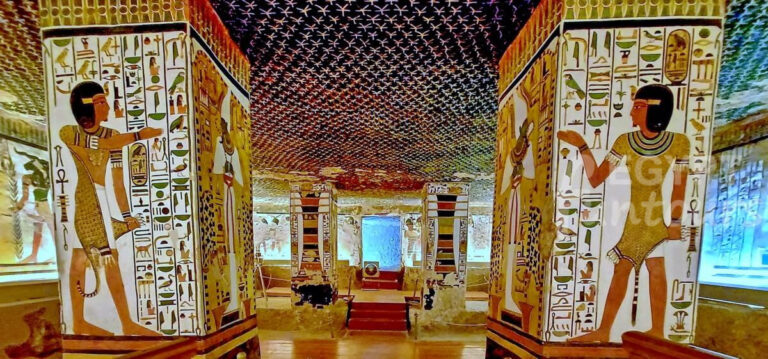
Princess Idut lived during the transition between the 5th and 6th Dynasties. The Tomb of Princess Idut acts as a time capsule from over 4,300 years ago. Visitors today still marvel at the startlingly fresh pigments on the limestone walls. These scenes do not just show static figures. Instead, they capture the rhythmic heartbeat of the Nile.

Why Tomb of Princess Idut Stands Out

Several factors make the Mastaba of Idut a mandatory stop for any traveler or historian:

  • Brilliant Colors: The reds, blues, and yellows look as though the artist finished them yesterday.
  • Wildlife Realism: The reliefs feature the famous “crocodile birth” scene and teeming river life.
  • Historical Intrigue: The tomb hides a secret history of power and repurposing.
FUN

The Mystery of the Usurped Tomb

The Mystery of the Usurped Tomb

Princess Idut was not the original owner of this grand monument. Initially, a powerful official named Vizier Ihy commissioned the mastaba for himself. However, history took a sharp turn. The Princess eventually took over the space for her own eternal rest.

Architects worked quickly to change the occupant’s identity. They erased Ihy’s name and carved Idut’s titles in its place. Consequently, careful observers can still find “ghost” images of the Vizier beneath the Princess’s portraits. This transition offers a fascinating glimpse into the political shifts of the Pharaonic court.

What You Will Discover in This Guide

To help you appreciate this masterpiece, we have organized this pillar guide into clear, actionable sections. You will learn about the architectural layout of the ten chambers. We will also decode the complex symbolism of the reliefs. Finally, we provide essential visitor logistics to help you find this hidden gem on the Saqqara plateau.

This guide ensures you don’t miss a single detail of Idut’s journey into the afterlife. Let’s begin our tour by exploring the architectural bones of this ancient sanctuary.

Architectural Mastery: A Tour of the Ten Chambers

The Mastaba of Idut follows the classic “L-shaped” floor plan typical of high-ranking elite tombs in the late Old Kingdom. Unlike the narrow corridors of some neighboring structures, this tomb feels spacious. It contains ten distinct rooms, though only five feature the celebrated wall reliefs that draw visitors today.

Tomb of Princess Idut: The Entrance and Initial Chambers

Your journey begins on the north side. A short staircase leads you down into the first chamber. This entrance serves as a transition from the harsh desert sun to the cool, quiet interior of the limestone bedrock.

  • Chamber I: This room introduces you to the scale of the decoration. Here, the artists established the theme of the Nile economy.
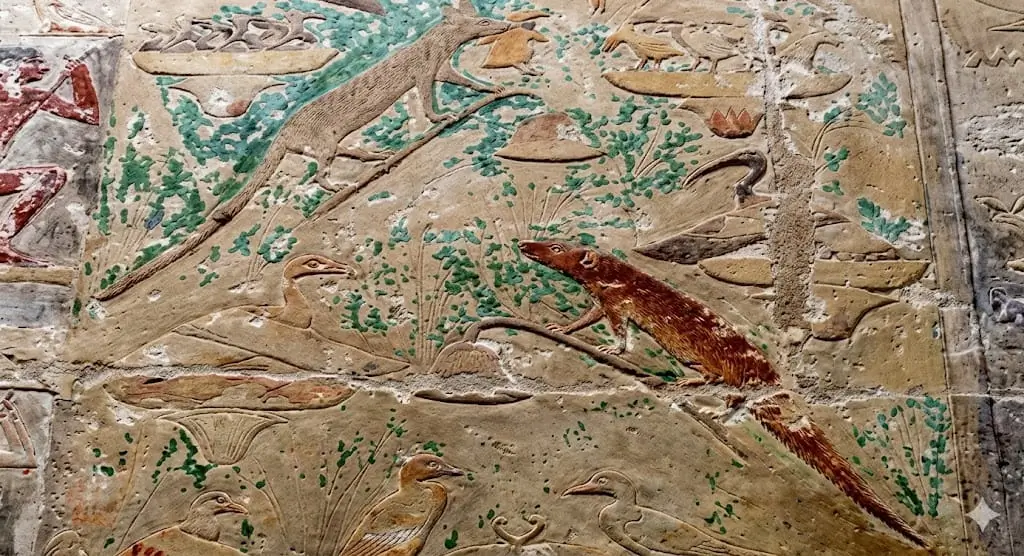
  • Chamber II: Moving deeper, you encounter the most famous scenes. The walls depict massive papyrus thickets. Look closely at the water line; you will see hippopotami and crocodiles fighting for dominance in the river.
FUN

Artistic Highlights: The Marsh and the River

Artistic Highlights; The Marsh and the River

The “marsh scenes” in Chambers II and III represent the pinnacle of 6th Dynasty realism. The artists used a technique called low relief, in which they carved away the background to make the figures stand out.

The Famous Crocodile Birth

One specific relief has gained international fame. It shows a female crocodile in the act of giving birth. A hungry hippopotamus waits nearby with an open mouth, hoping for an easy meal. This scene proves that ancient Egyptian artists spent hours observing nature. They did not just follow rigid religious rules; they captured the brutal reality of the wild.

Fishing and Fowling

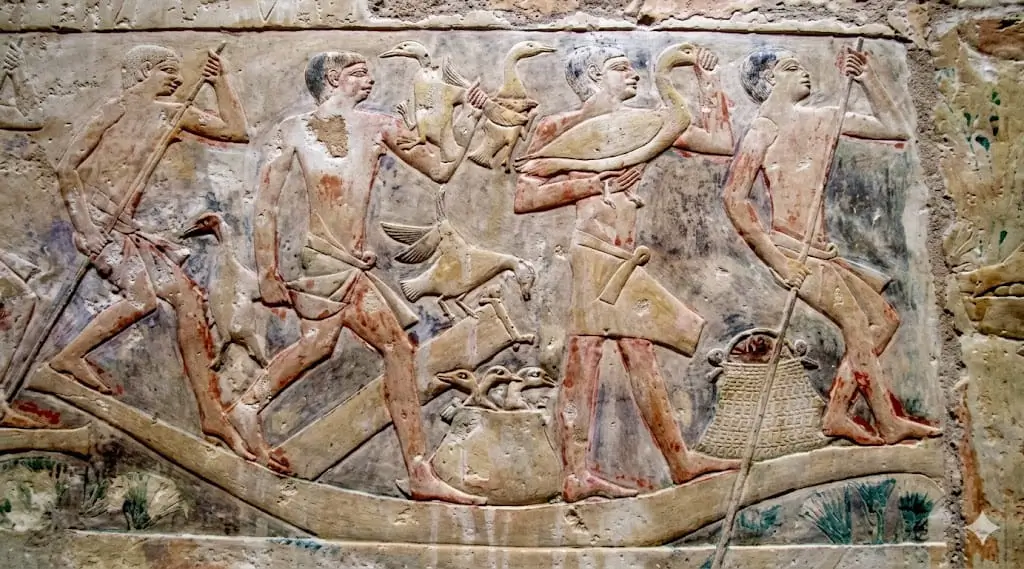
Other walls show men standing in slender papyrus skiffs. They cast large nets into the water or use harpoons to catch fish. Above them, the papyrus stalks teem with birds like kingfishers and hoopoes. These scenes served a magical purpose. By depicting a bountiful Nile, the artists ensured that Princess Idut would never go hungry in the afterlife.

The Ritual Heart: The Offering Room

The most important room in the mastaba is the Offering Chamber, located at the far end of the L-shape. This room acted as the bridge between the living and the dead.

The False Door

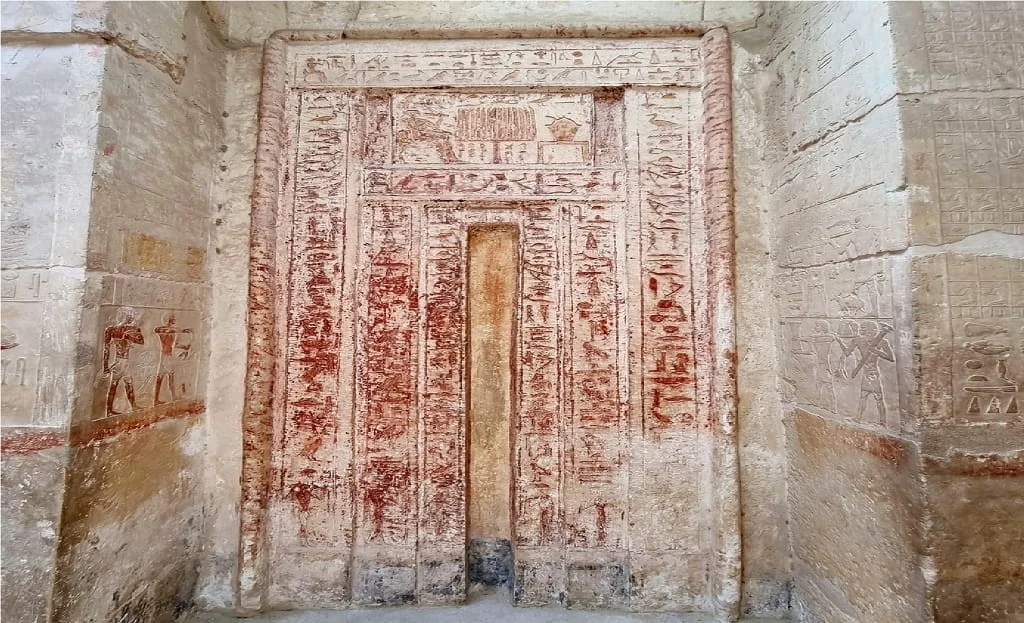
On the western wall, you will find a massive False Door carved from fine limestone. In Egyptian belief, the West was the land of the dead. The Princess’s spirit (Ka) would “walk” through this solid stone door to receive offerings.

  • The Inscriptions: The door lists her titles, such as “Daughter of the King’s Body.”
  • The Scene: Above the door, a small relief shows Idut sitting comfortably at a table piled with bread loaves.

The Serdab (The Statue Chamber)

Next to the offering room is a small, enclosed space called the Serdab. Originally, this room was completely sealed. It held a life-sized statue of Idut. A tiny slit in the wall allowed the statue to “breathe” the incense burned by priests and “see” the food offerings left by her family.

The Catacombs of Kom Esh-Shokafa: Roman-Egyptian Underworld

Descend into one of the "Seven Wonders of the Middle Ages" at the Catacombs of...
Related post
FUN

Subterranean Secrets: The Burial Shaft

Tomb of Princess Idut

While the decorated rooms sit at ground level, the actual body of the Princess lies far below. A vertical shaft in the floor of the offering room drops nearly 30 feet into the earth.

At the bottom of this shaft, the ancient builders carved a hidden burial chamber. Inside, a massive limestone sarcophagus protected the Princess’s mummy. Although grave robbers cleared the tomb of its gold and jewelry centuries ago, the sarcophagus remains a silent witness to the funeral rites that took place here over four millennia ago.

The Mystery of the Usurped Tomb: From Vizier Ihy to Princess Idut

The Tomb of Idut holds a secret within its walls. While we call it the “Tomb of Idut” today, it carries the architectural “DNA” of another person. This section explores the fascinating process of funerary usurpation and how experts discovered the truth behind its ownership.

Evidence of the “Ghost” Owner

When archaeologists first cleared the sand from these chambers, they noticed something strange. In many places, the hieroglyphs looked crowded or uneven. Upon closer inspection, they realized that the current inscriptions sat on top of an older layer.

Originally, a powerful man named Vizier Ihy commissioned this mastaba during the reign of King Unas. Ihy was a high-ranking official who oversaw the kingdom’s administration. However, for reasons history has not fully explained, Ihy never occupied the tomb. Instead, Princess Idut took over the monument at the start of the 6th Dynasty.

How the Artists “Rebranded” the Tomb

Ancient Egyptian artists were practical and efficient. Rather than destroying the walls, they performed a sophisticated “copy-paste” operation:

  • Gender Swapping: In several reliefs, the artists modified the physical features of the figures. They slimmed down the broad shoulders and adjusted the clothing to transform the male Vizier into the female Princess.
  • Name Erasure: Stone carvers chiseled away Ihy’s name and titles. They then filled the gaps with plaster and carved Idut’s name over the top.
  • Title Updates: They replaced the bureaucratic titles of a Vizier with the royal titles of a “King’s Daughter.”

Why Did the Usurpation Happen?

Historians offer several theories regarding this sudden change in ownership. In the Ancient World, building a high-quality mastaba took years and required immense wealth.

  1. Political Fall: Vizier Ihy may have fallen out of favor with the King. If a King stripped an official of his status, the state often reclaimed his property—including his tomb.
  2. Royal Necessity: Princess Idut might have died unexpectedly. To ensure she had a proper burial in a prestigious location near the King’s pyramid, the royal family may have repurposed an existing, high-quality monument.
  3. Inheritance: In some cases, family members inherited tombs from their predecessors, though the complete erasure of Ihy’s identity suggests a more formal “takeover.”

Spotting the Transitions Today

As you walk through the chambers, keep your eyes on the hieroglyphic bands near the ceiling. In some areas, the light hits the stone at an angle, revealing the faint outlines of the original carvings.

These “ghost images” provide a rare look at the labor behind Egyptian art. They prove that these tombs were not just static religious spaces. They were active, changing projects that reflected the shifting power dynamics of the Pharaonic court.

The Mastaba of Ti: A Masterpiece of Old Kingdom Art and Life

The Mastaba of Ti is an architectural and artistic masterpiece of the Old Kingdom, serving...
Related post
FUN

Mastering the Marsh: The Art of the Nile Reliefs

Mastering the Marsh; The Art of the Nile Reliefs - Tomb of Princess Idut

The Tomb of Idut contains some of the most dynamic and naturalistic art in the entire Saqqara Necropolis. While many Old Kingdom tombs focus on stiff, formal ceremonies, the reliefs here pulse with the energy of the Egyptian landscape. The artists utilized a technique called low relief, where they carved away the background to leave the figures slightly raised.

The Ecosystem of the Ancient Nile

The walls of the first few chambers act as a visual encyclopedia of the Nile’s flora and fauna. Ancient Egyptians viewed the river as the source of all life, and these scenes ensured that the Princess would always have access to its riches.

  • Papyrus Thickets: Artists carved tall, vertical lines to represent papyrus stalks. These lines create a sense of depth and rhythm, framing the chaotic scenes of animal life.
  • The Riverbed: Below the boats, the water is teeming with fish. You can identify specific species like tilapia and catfish, rendered with such precision that modern biologists still use them for study.
  • Aerial Life: Above the marshes, birds like kingfishers and herons are shown nesting or diving.

Scenes of Nature and Conflict

What makes this tomb famous among art historians is its raw, unedited look at nature. The Egyptians did not shy away from the “survival of the fittest.”

The Famous Crocodile Birth

In Chamber II, you will find the celebrated birth of a crocodile. This relief shows a female crocodile in labor. Directly behind her, a hungry hippopotamus waits with an open mouth, ready to snatch the newborn.

  • Symbolism: This scene represents the cycle of life and the inherent dangers of the wild.
  • Observation: It highlights the incredible patience of the ancient artists, who must have witnessed these rare moments in the wild to carve them with such accuracy.

Hippo Hunts and River Battles

Other scenes depict men in small papyrus boats attempting to hunt hippopotami with harpoons. These battles were not just for sport; hippos were dangerous pests that could destroy crops and overturn boats. The tension in the hunters’ muscles and the ferocity of the animals are captured in vivid detail.

The Palette of the 6th Dynasty

The preservation of color in this tomb is nearly unrivaled for its age. Most tombs from the 6th Dynasty have lost their pigment due to time and humidity, but Idut’s sanctuary remains a “technicolor” experience.

ColorSourceUsage in the Tomb
Deep Teal/BlueAzurite or Egyptian BlueUsed for the Nile water and the plumage of kingfishers.
Ochre/RedIron OxideUsed for the skin of men and cattle.
YellowOrpimentUsed for the jewelry of the Princess and the grain.
WhiteGypsumUsed for the linen dresses and the background of the reliefs.

Technical Precision in Daily Life

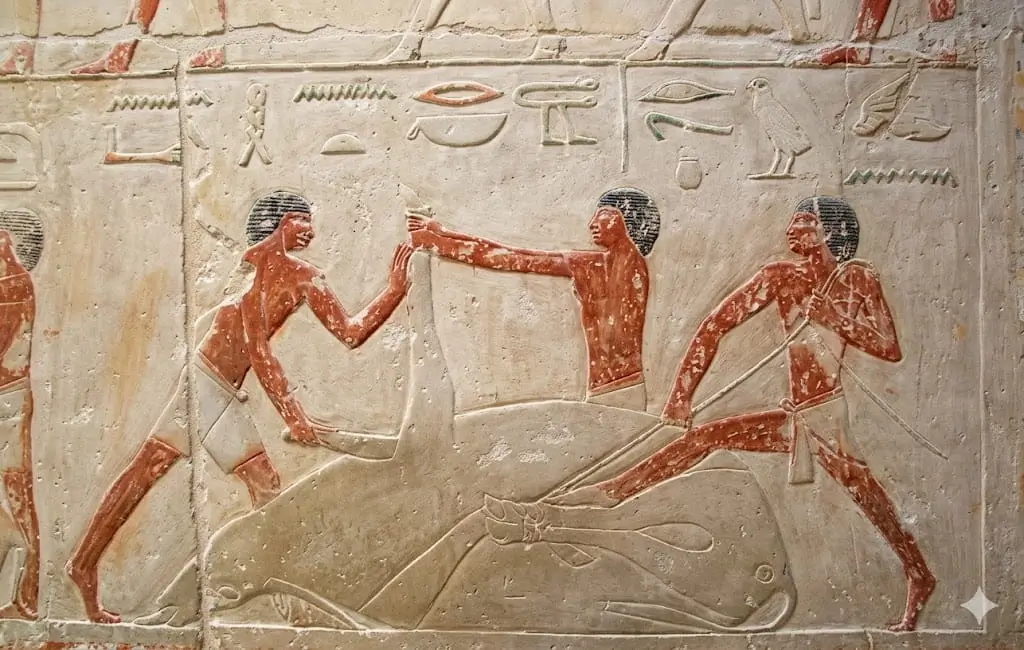
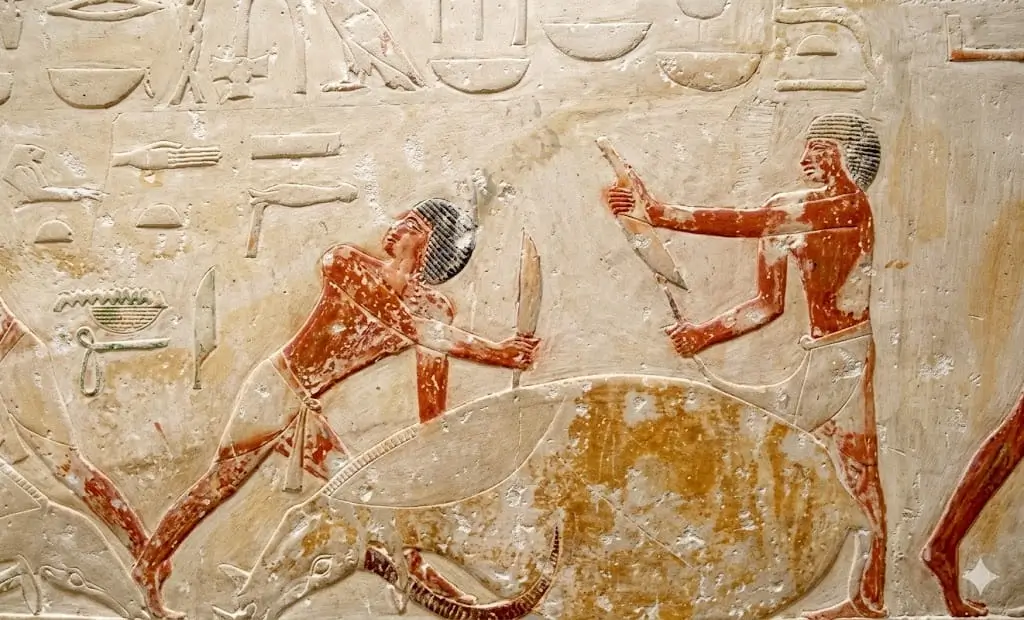
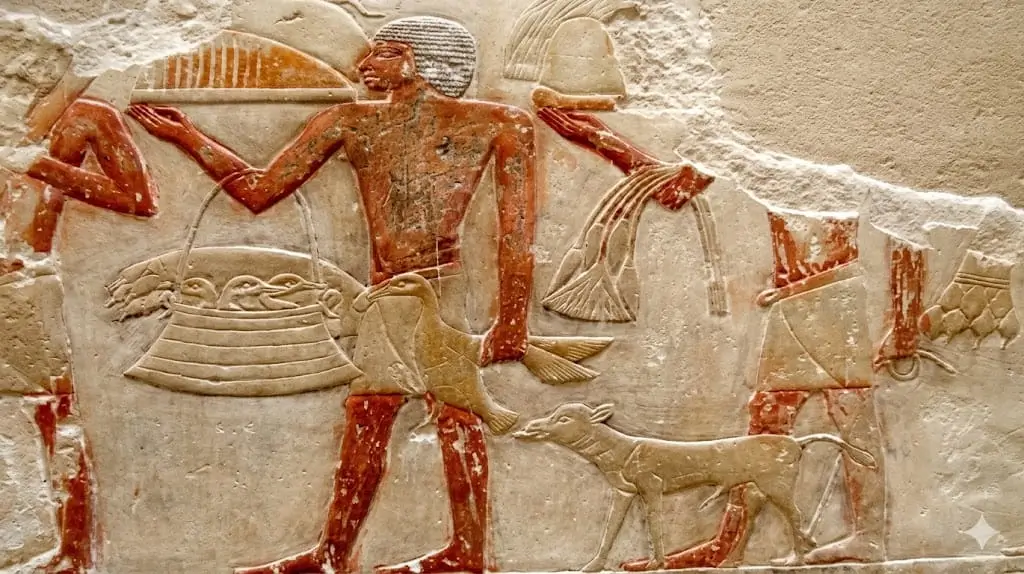
Beyond the wild animals, the reliefs show the human economy. You can see men casting massive nets to catch fish and others driving cattle across a river. In the cattle-crossing scenes, the lead herder often carries a young calf on his back. This creates a touching, human moment in an otherwise grand royal monument.

The active voice of the carvings tells a story of a busy, thriving civilization. Every strike of the chisel served a dual purpose: to showcase artistic beauty and to magically provide for the Princess’s soul.

Giza Pyramids Complex: The Eternal Horizon of the Fourth Dynasty

The Giza Pyramid Complex remains the ultimate testament to human ingenuity, spanning the intersection of...
Related post
FUN

The Ritual Heart: The Offering Room and False Door

The Ritual Heart The Offering Room and False Door

The final chambers of the Tomb of Idut serve a sacred purpose. While the outer rooms depict the world of the living, the Offering Room functions as a portal to the afterlife. This room is the ritual heart of the mastaba, where the physical and spiritual worlds meet.

Tomb of Princess Idut: The Significance of the False Door

On the western wall stands the False Door, a masterpiece of limestone carving. In ancient Egyptian cosmology, the West represented the gateway to the underworld. This door was not a literal entrance for humans; instead, it acted as a threshold for the soul.

  • The Spiritual Portal: The Egyptians believed the spirit of the Princess, the Ka, could pass through the solid stone to receive sustenance.
  • The Offering Scene: Directly above the door, a relief shows Idut seated on a fine chair. She reaches toward an offering table piled high with stylized loaves of bread.
  • The Inscriptions: Elaborate hieroglyphs surround the door. They list her prestigious titles, including “Daughter of the King’s Body” and “Priestess of Hathor.” These carvings ensured her status remained recognized for eternity.

Sustaining the Soul: The Serdab and Offerings

Behind a small slit in the wall lies the Serdab. This hidden, narrow chamber once housed a life-sized statue of the Princess.

The statue served as a backup body for the Ka if the mummy suffered damage. Through the tiny opening, the statue could “smell” the incense burned by priests and “see” the food offerings left on the stone table in the main room. This constant cycle of offerings guaranteed her immortality.

Planning Your Visit to Saqqara

Planning Your Visit to Saqqara - Tomb of Princess Idut

The Tomb of Idut is a highlight of any trip to the Saqqara plateau. Because it sits slightly off the main path, it often offers a quieter, more intimate experience than the larger pyramids.

How to Get There

The mastaba is located just south of the Unas Causeway. When you exit the Pyramid of Unas, head toward the cluster of tombs nearby. The entrance is marked by a small stone staircase leading underground.

Tomb of Princess Idut: Essential Visitor Tips

To make the most of your visit, keep these points in mind:

  • Check the Lighting: The colors appear most vibrant when natural light filters through the entrance. Bringing a small, weak flashlight (with permission) can help you spot the “ghost” images of Vizier Ihy.
  • Photography Rules: Check the current regulations at the main gate. Often, photography is allowed with a specific ticket, but you must avoid using a flash to protect the 4,300-year-old pigments.
  • Timing: Visit in the early morning or late afternoon to avoid the heat. The temperature inside the tomb remains remarkably cool even in the summer.

A Legacy in Stone

A Legacy in Stone - Tomb of Princess Idut

The Tomb of Princess Idut is more than just a burial site. It is a testament to the resilience of Egyptian art and the complex history of its owners. From its origins as a Vizier’s monument to its final form as a Princess’s sanctuary, every relief tells a story of transformation.

As you stand before the vivid scenes of the Nile, you aren’t just looking at history; you are witnessing the eternal heartbeat of ancient Egypt. The brilliant teals and deep ochres serve as a bridge, connecting the modern world to a civilization that mastered the art of living—and the science of the afterlife.

Embark on a 7 night Nile cruise from Aswan to visit the stunning temples and tombs in Luxor and Aswan joined by a private tour...
Experience the amazing Sanctuary Nile cruise for 4,5,8 days around the historical landmarks in Luxor and Aswan...
God_Anubis_Icon
Premium Cairo Tour Package Egypt Fun Tours

THE MOST AMAZING TRIP

Hi Hamada! Sorry, we were so quick to say goodbye—my mom was fading 🙂 I just wanted to say thank you for THE MOST AMAZING trip… You thought of every detail, improvised, adapted, overcame every challenge, multitasked personalities, and did it all with grace, intelligence, and kindness. From the bottom

More »

Layover tour of Cairo Pyramids

On a recent trip, I had 8 hours from the time I landed in Cairo to when my next flight was scheduled to leave. Luckily, I arrived in the morning and left in the afternoon, so, not being one to sit around an airport for 8 hours, I visited the

More »

Very Considerate and Helpful

Guide and driver were on time, open to my requests and took care that I felt safe and saw the Pyramids and parts of old cairo during my less than 24 hour stay between flights. Office staff were great in communicating by email before and during the trip.

More »
Souqs and Markets in Egypt - Egypt Fun Tours

Cairo walking tours

After a rocky start (the driver had been in an accident on his way to pick me up,) the company very quickly sent another driver/guide named Mohammed, who was a real pro. Thoroughly enjoyed my first day in Egypt!

More »
God_Anubis_Icon

Top-rated Tour Packages

God_Anubis_Icon