Souq Al Fustat: The Definitive Guide to Cairo’s Artisanal Soul

Souq Al Fustat is the refined, artisanal heart of Old Cairo, offering a quiet sanctuary for travelers seeking authentic Egyptian heritage. Located in the historic Fustat district—the site of Egypt’s first Islamic capital—this market is a "living bridge" that revives 1,000-year-old crafts in a modern, gallery-style setting. Unlike the high-energy bustle of traditional bazaars, the souq features wide, sun-drenched corridors where master artisans showcase hand-painted Tunis Village pottery, delicate hand-blown glass, and museum-quality Khayamiya textiles. Situated directly adjacent to the Religions Complex and the Mosque of Amr ibn al-Aas, it is the premier destination for discerning collectors who value fixed-price transparency and the chance to meet the creators behind Egypt’s most iconic handmade treasures.

Where History Meets Heritage

Deep in the heart of Old Cairo, Souq Al Fustat stands as a premier destination. It is the perfect choice for travelers seeking authentic Egyptian craftsmanship. While the famous Khan el-Khalili offers high energy, Souq Al Fustat provides a refined alternative. Therefore, it is a sanctuary for those who appreciate a gallery-style experience. Here, ancient traditions from the Pharaonic and Coptic eras converge into modern masterpieces.

First, you must look beneath the stone floors to understand this market. This site is part of Fustat, the first Islamic capital of Egypt. It was founded in 641 AD by the commander Amr ibn al-Aas. For centuries, Fustat served as a global center for pottery and textile weaving. Today, the souq acts as a living bridge to that past. Consequently, it revives these industries within the shadow of Cairo’s most sacred landmarks.

Furthermore, the market is a sanctuary for serious collectors. It sits directly adjacent to the Religions Complex in Old Cairo. Because of this location, it is the natural final stop on your cultural journey. After exploring the Hanging Church, you can find a peaceful seat in the souq. We designed this guide for those who value the story behind the object. In short, you do not simply buy a souvenir here; you acquire a piece of Egypt’s soul.

FUN

The Historical Foundation of Fustat

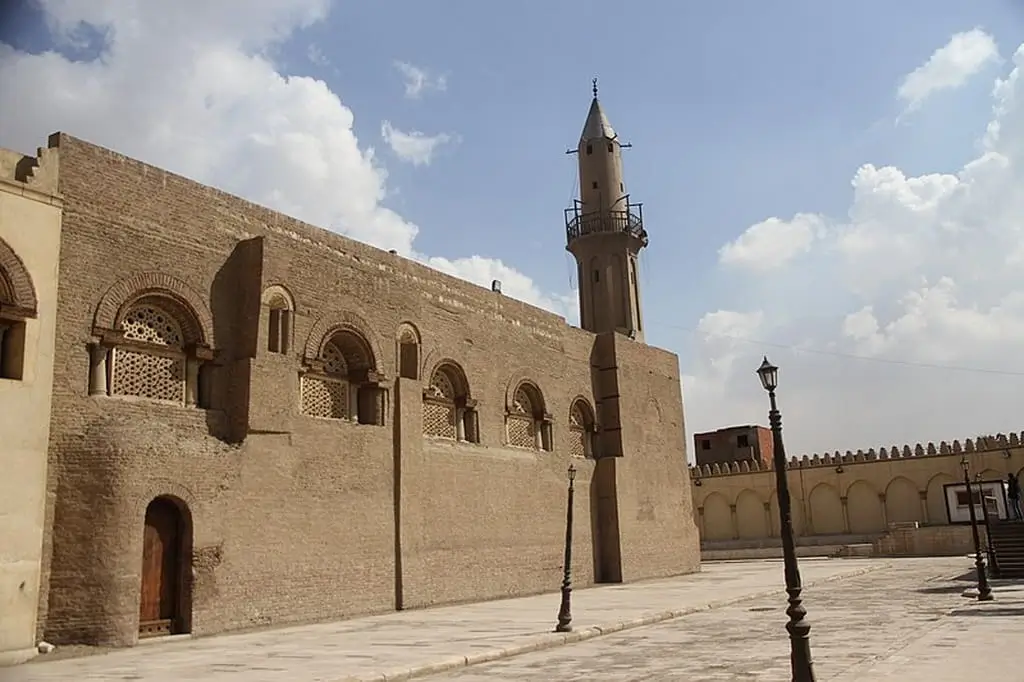
The Mosque of Amr ibn al-As The Crown of Mosques and Africa’s First Masjid

To truly appreciate the market, you must first understand its history. Long before Cairo’s modern boulevards existed, there was only Fustat. Specifically, it was the first Muslim settlement in Africa. Commander Amr ibn al-Aas established it as Egypt’s capital in 641 AD. As a result, this ground is one of the most historically significant in the world.

The Legend of the Tent

The name “Fustat” literally translates to “The Tent.” According to local narrative, a dove nested on the general’s tent during the siege. Because he refused to disturb the bird, he declared the spot sacred. This humble camp quickly evolved into a massive metropolis. For over 500 years, it functioned as the heartbeat of Mediterranean trade. When you walk through the souq today, you are walking through the echoes of a golden age.

A Strategic Powerhouse

Fustat was strategically positioned at the head of the Nile Delta. Because of this, it controlled the flow of goods from Upper Egypt to the sea. Consequently, it became a world-renowned center for glass-making and ceramics. However, a massive fire nearly destroyed the city in 1168 AD. The vizier ordered the blaze to keep the city out of Crusader hands. While the capital eventually moved to “New Cairo,” the artisanal spirit stayed behind. Today, Souq Al Fustat is a deliberate project to reclaim this lost heritage.

FUN

The Gateway to the Religions Complex

Moreover, the souq serves as a physical gateway to the Religious Complex. This unique area is where three major faiths have coexisted for a millennium.

  • First, the market sits next to the Roman Fortress of Babylon. Inside these walls, you will find the Hanging Church. This 3rd-century masterpiece features a famous wooden roof shaped like Noah’s Ark.
  • Next, a short walk leads to the Ben Ezra Synagogue. This site is world-famous because of the Cairo Geniza. This massive hoard of medieval manuscripts revealed the secret history of daily life in Fustat.
  • Finally, the Mosque of Amr ibn al-Aas faces the market directly. Although rebuilt many times, it remains the spiritual anchor of the district. Its simple columns represent the dawn of Islamic architecture in Egypt.

The Anatomy of Egyptian Crafts

The Anatomy of Egyptian Crafts

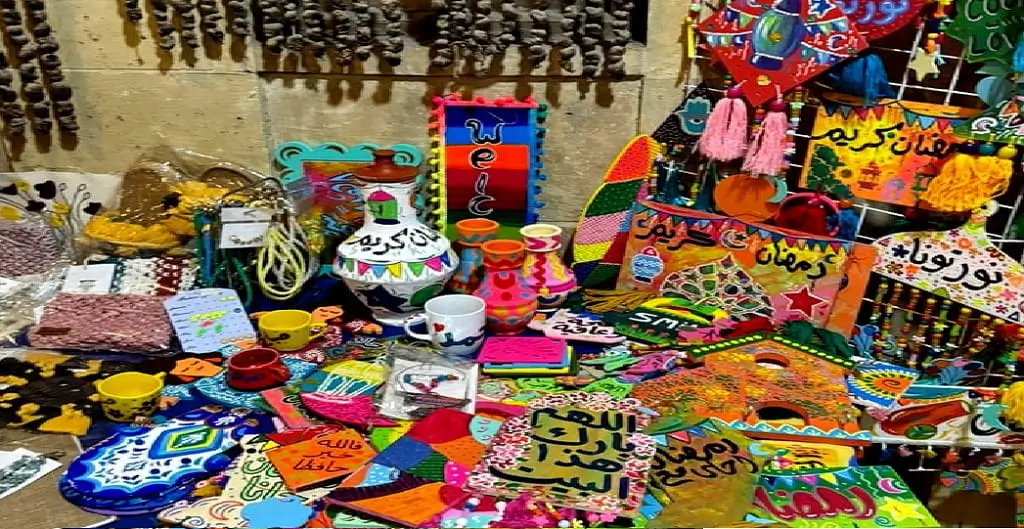
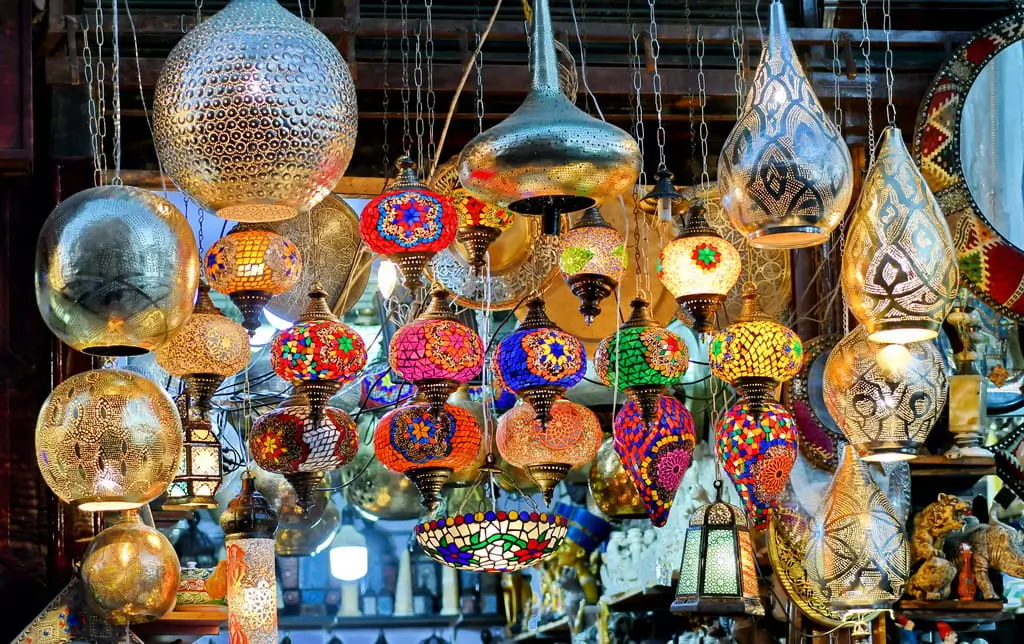
Inside Souq Al Fustat, you will find a curated collection of Egypt’s finest arts. This market is not for mass-produced souvenirs. Instead, it serves as a showcase for master artisans. Each boutique represents a different “school” of traditional craft. Consequently, you can explore the evolution of Egyptian design in a single afternoon.

The Master Potters of Fustat

First, you should visit the ceramic galleries. Pottery is the oldest industry in Fustat. In fact, excavations in the area have uncovered kilns dating back over 1,000 years. Today, the souq revives this legacy through several distinct styles.

  • The Garagos Tradition: These pieces come from a famous village in Upper Egypt. Artisans use a deep blue or rich green glaze. Often, they feature simple motifs like fish, birds, or the “Tree of Life.”
  • The Tunis Village Style: These ceramics originate from the Fayoum Oasis. They are world-renowned for their intricate, hand-painted desert scenes. Because each artist has a signature style, every plate is a unique piece of art.
  • Traditional Red Clay: Many local potters still use the Nile’s own silt. They create unglazed water jars and decorative vases. Therefore, these items feel like a direct link to the Pharaonic era.

The Art of Hand-Blown Glass

Next, move toward the glasswork displays. Egyptian glass-making is a 3,500-year-old tradition. In this market, you can find “Musky Glass,” which is famous for its tiny air bubbles. This characteristic proves the item was made by hand, not by a machine. Furthermore, you will see delicate perfume bottles. Artisans hand-paint these with 24-karat gold filigree. As a result, they make for stunning, lightweight gifts that carry the essence of Cairo.

Textile Weaving and “The Tentmakers”

Furthermore, the souq is a hub for high-end textiles. You will find several boutiques dedicated to Khayamiya, or the art of tentmaking. This craft involves hand-stitching complex geometric patterns onto heavy canvas. Traditionally, these textiles decorated grand desert tents. Now, however, they serve as sophisticated wall hangings and cushion covers.

In addition, look for Naqada weaving. These hand-loomed linens come from Upper Egypt. Because they use ancient manual looms, the fabric has a rich, organic texture. You can find beautiful scarves and traditional Galabeyas that blend ancient patterns with modern fashion.

Boutique Jewelry and Metalwork

Finally, explore the jewelry collections. Unlike the crowded gold markets of the Khan, Fustat focuses on boutique silver and copper.

  • Islamic Geometry: Many artists use brass and silver to create necklaces inspired by mosque windows.
  • Pharaonic Revival: You will find elegant pieces featuring the “Ankh” or the “Eye of Horus.”
  • Bespoke Design: Because many shop owners are the actual designers, you can often request custom engravings. Consequently, your purchase becomes a personal heirloom.

10 Luxury Hotels in Cairo: Pyramids, Nile, and Downtown

Explore the top 10 luxury hotels in Cairo, precisely categorized by location and prestige. Choose...
Related post
FUN

Choosing Your Experience: Souq Al Fustat vs. Khan el-Khalili

Private Islamic Cairo Expedition; The Citadel, Sultan Hassan, and the Medieval Heart - El Muizz street

Many travelers ask which market they should visit first. Both are iconic, yet they offer completely different worlds. Therefore, understanding the contrast will help you plan the perfect day. While Khan el-Khalili is a historic spectacle, Souq Al Fustat is a curated sanctuary.

The Energy and Atmosphere

First, consider the pace of your shopping. Khan el-Khalili is the legendary, high-energy heart of Islamic Cairo. Consequently, it is crowded, loud, and thrilling. You will navigate narrow alleys filled with the scent of spices and tobacco. In contrast, Souq Al Fustat offers a tranquil, gallery-like environment. The corridors are wide and air-conditioned. Thus, it is the ideal choice for those who prefer a quiet, stress-free stroll.

The Art of the Deal: To Haggle or Not?

Next, think about how you like to buy. In the Khan, haggling is a mandatory cultural ritual. You must negotiate every price starting from a high point. However, Souq Al Fustat operates largely on a fixed-price system. Because the goods are high-end artisanal pieces, the prices reflect the artist’s labor. This transparency is perfect for travelers who dislike the pressure of bargaining.

Quality Control and Authenticity

Furthermore, the type of products differs significantly. The Khan is famous for its massive variety. You can find everything from gold jewelry to mass-produced plastic pyramids. However, Souq Al Fustat focuses strictly on authentic Egyptian heritage.

  • The Khan: Best for finding “everything under the sun” and enjoying a lively street scene.
  • The Souq: Best for finding signed pottery, museum-quality textiles, and unique silver.

The Photography Perspective

Additionally, your camera will notice the difference. The Khan is great for “street-style” photography and capturing raw local life. But the lighting is often dark, and the crowds are dense. Conversely, Souq Al Fustat features stunning Neo-Islamic architecture. The stone walls and large windows provide beautiful natural light. Therefore, it is a superior spot for capturing the intricate details of Egyptian crafts.

The “Egypt Fun Tours” Recommendation

Finally, we suggest visiting both if your schedule allows. Start your morning at the Religions Complex and end at Souq Al Fustat for a peaceful lunch and shopping. Then, as the sun sets, head to Khan el-Khalili for dinner and a traditional tannoura dance. This combination gives you the best of both old and new Cairo.

The Downtown Antique Trail: Discovering Cairo’s Vintage Treasures

Antique shopping in Downtown Cairo offers a captivating journey through the "Paris on the Nile"...
Related post
FUN

Collector’s Secrets: How to Identify Genuine Egyptian Crafts

Expert travelers know that not all souvenirs are created equal. Because Egypt is a global hub for tourism, mass-produced imitations are common. However, Souq Al Fustat is a sanctuary for authentic work. Consequently, you should learn how to distinguish a masterpiece from a factory-made copy. Here are the secrets to identifying genuine Egyptian heritage.

The Secret of Hand-Blown Glass

First, examine any glassware closely. Authentic Egyptian “Musky Glass” has specific markers. Specifically, look for tiny, trapped air bubbles within the glass. These bubbles prove the artisan blew the piece by hand. Next, flip the item over. Look for a rough “pontil mark” on the base. This small scar is where the glassblower detached the rod. If the bottom is perfectly smooth, it was likely made in a factory.

Identifying Handmade Pottery

Furthermore, you should feel the weight of ceramics. Handmade pottery from Tunis Village or Garagos feels organic and slightly irregular. Because artists paint these by hand, no two patterns are identical. Therefore, look for slight variations in the brushstrokes. If the pattern is “too perfect” or repeats exactly on every plate, it is a digital decal. Finally, check the base for the artist’s signature. Most masters in Souq Al Fustat sign their work in Arabic or English.

The Truth About Egyptian Textiles

Next, move to the textile galleries. Genuine Khayamiya (applique) is a labor of love. Specifically, turn the fabric over to look at the stitching. You should see thousands of tiny, slightly uneven hand-stitches. These stitches bind the colorful layers to the heavy canvas base. Conversely, machine-made imitations use a “zig-zag” stitch or simple printing. If the back of the fabric is a different color from the front, it is likely a print. Authentic hand-stitched work looks beautiful from both sides.

Silver and Metalwork Standards

Additionally, you must verify the quality of metalwork. Egypt has a strict hallmarking system for silver and gold. Therefore, every genuine piece must carry a tiny stamp. This stamp indicates the purity, such as 800 or 925 for silver.

  • The “Cold Test”: Real silver feels cold to the touch and warms up quickly in your hand.
  • The Sound Test: If you gently tap a silver ring, it should produce a clear, bell-like ring.
  • The Weight: Copper and brass should feel heavy and solid. Avoid items that feel like light, “tinny” alloys.

Why Quality Matters

Finally, remember that buying authentic crafts is an investment. High-quality items from Souq Al Fustat will last for generations. Moreover, your purchase directly supports the survival of these ancient skills. When you buy a signed piece, you are preserving the dignity of the Egyptian artisan. Consequently, your home will hold a true piece of Cairo’s history, not just a temporary trinket.

The Map of Egypt: A Complete Guide to Its Geography, Cities, and Borders

Explore the map of Egypt, a landscape defined by the life-giving Nile River and vast...
Related post
FUN

The “Perfect Day” Itinerary: Exploring Old Cairo

Planning a trip to Old Cairo requires a strategic approach. Because this area is dense with history, you should follow a logical path. This itinerary perfectly combines the Religions Complex with a relaxing afternoon at Souq Al Fustat. Consequently, you will see the best of Cairo without feeling rushed.

09:00 AM – The Fortress of Babylon

First, start your morning at the Roman Fortress of Babylon. This massive stone structure dates back to the 1st century. It serves as the physical gateway to Coptic Cairo. Walk through the ancient gates to feel the transition from the modern city into the medieval heart of Egypt.

10:00 AM – The Hanging Church and Coptic Museum

Next, head directly to the Hanging Church (Al-Muallaqa). Because it is built atop the Roman gatehouse, it appears to float. Take a moment to admire the 13th-century wooden roof. Specifically, look for the design that mimics Noah’s Ark. Afterward, spend an hour in the Coptic Museum. It houses the world’s largest collection of Christian Egyptian art. Here, you will see how Pharaonic symbols, like the Ankh, evolved into the Coptic cross.

11:30 AM – The Ben Ezra Synagogue and St. Sergius

Furthermore, continue your walk to the Ben Ezra Synagogue. This site is a legendary landmark of Jewish history. Specifically, it is where the famous Cairo Geniza documents were discovered. Just a few steps away, visit the Church of St. Sergius and Bacchus. According to local narrative, the Holy Family rested in a crypt beneath this church. Therefore, it is one of the most sacred pilgrimage sites in Africa.

01:00 PM – Lunch with a View

By midday, you will likely be hungry. We recommend walking toward Al-Azhar Park for a high-end lunch. Alternatively, find a local cafe near the Mosque of Amr ibn al-Aas. This mosque is the oldest in Africa. It offers a massive, peaceful courtyard where you can rest before your shopping session.

02:30 PM – Discovering Souq Al Fustat

Finally, enter Souq Al Fustat for your afternoon shopping. Because the market is shaded and cool, it is the perfect escape from the afternoon sun.

  • First Hour: Explore the pottery and glass galleries on the ground floor.
  • Second Hour: Head to the textile and jewelry boutiques to find a unique statement piece.
  • The Final Stop: Many artisans offer workshops. Therefore, you can watch a potter at the wheel or a weaver at the loom before you leave.

05:00 PM – Sunset Reflection

To end your day, walk back to the plaza between the mosque and the souq. As the “Call to Prayer” echoes across the district, you will see the sun set behind the minarets. This moment provides a perfect opportunity for photography. Consequently, you will leave with both beautiful memories and authentic Egyptian treasures.

Summary Table for Your Visit

Stop Highlights Best Time
Coptic Cairo Hanging Church, St. Sergius Crypt 09:00 AM – 11:30 AM
Ben Ezra Synagogue Medieval Jewish history & Geniza 11:30 AM – 12:30 PM
Amr ibn al-Aas Mosque First Mosque in Africa 01:00 PM – 02:00 PM
Souq Al Fustat Authentic pottery, silver, & textiles 02:30 PM – 05:00 PM

(FAQ) About Souq Al Fustat

To help you plan your visit to Souq Al Fustat, we have compiled the most common questions from our travelers at Egypt Fun Tours. These answers will ensure you have a seamless experience in Old Cairo.

1. Where is Souq Al Fustat located?

Specifically, you can find the market in Old Cairo (Masr al-Qadima). It sits directly across from the Mosque of Amr ibn al-Aas. Furthermore, it is only a five-minute walk from the Mar Girgis (St. George) Metro Station. Consequently, it is very easy to reach from Downtown Cairo or Maadi.

2. What are the opening hours for the Souq?

Generally, the market opens daily from 10:00 AM to 10:00 PM. However, some individual artisan workshops may close slightly earlier. Therefore, we recommend arriving by 2:00 PM. This gives you plenty of time to explore before the evening crowds arrive.

3. Do I need to haggle at Souq Al Fustat?

Unlike the Khan el-Khalili, most shops here use a fixed-price system. Because these are high-end gallery pieces, the price reflects the artist’s expertise. Occasionally, you may receive a small discount if you buy multiple items. But, in general, the listed price is final and fair.

4. Is the market accessible for older people or families?

Yes, absolutely. Souq Al Fustat features wide, flat corridors and clean facilities. Furthermore, it is entirely pedestrian-friendly. Unlike the steep stairs and uneven stones of the Khan, this market is comfortable for everyone. Consequently, it is our top recommendation for families with strollers or travelers with limited mobility.

5. Can I pay with a credit card?

Many of the larger boutiques and pottery galleries do accept credit cards. However, smaller independent artisans may only take cash (Egyptian Pounds). Therefore, we suggest carrying a mix of both. Fortunately, there are several ATMs located near the entrance of the Religions Complex.

6. What are the best items to buy here?

If you are looking for authenticity, focus on hand-painted ceramics and hand-blown glass. Additionally, the Khayamiya (tentmaker) textiles found here are museum-quality. Because these items are unique to Egypt, they make for incredible, lifelong gifts.

7. Is it safe to visit alone?

Yes, the area is very safe and well-guarded. Because it sits within the Religions Complex, there is a strong security presence. Furthermore, the shopkeepers are professional and respectful. You will not experience the high-pressure “touting” found in busier tourist zones.

Escape the city for a private 2-day White Desert safari from Cairo. Experience 4x4 off-roading through the Black Desert, Agabat Valley, and Crystal Mountain. Camp...
Explore the Pyramids, Abu Simbel, and more....

Alexandria! Wow!

Muhammad is the best! He showed me a world I never thought possible! The tombs in Alexandria, by far, were my favorite! I never knew there was a place on earth that contained both Greek and Egyptian carvings in the same tombs! The history and culture of Egypt is so

More »

Jeep Safari in the Sahara

I contacted Hani two days before I went to Egypt and asked him if it was possible to combine two of their tours as we were short on time. We had planned to stay in Cairo but with the uprising we decided it would be safed outside of the hot

More »

Great layover tour

First things first…I was in Cairo about a week before the protests of 2011 started. As far as the tour was concerned, I was very pleased. I was met at the airport by a knowledgeable guide (Sara) who spoke great English and a driver. They took me to Giza first,

More »
Isis with wings

Top-rated Tour Packages

Isis with wings