
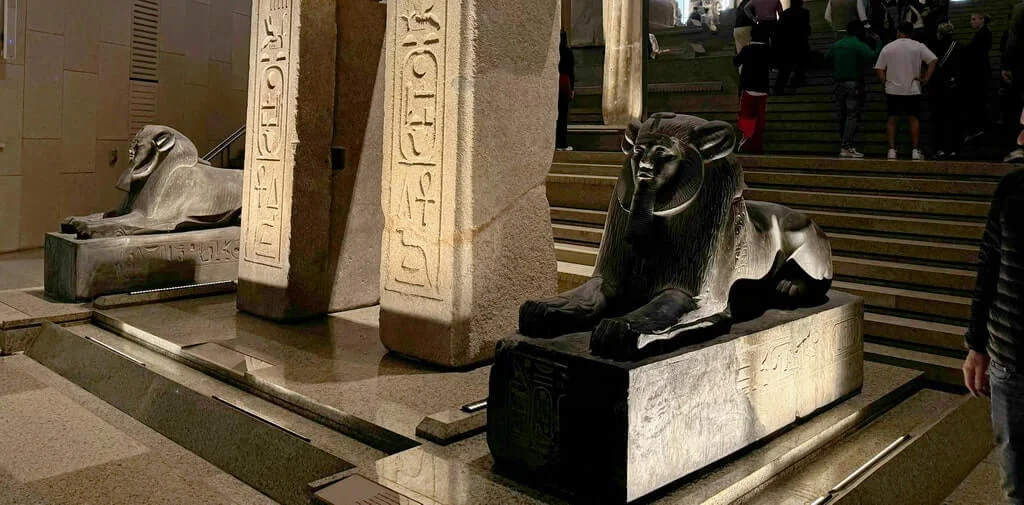
The Sphinxes of Tanis: Ancient Egypt’s Masterpieces of Usurpation

Uncover the mystery of the Sphinxes of Tanis, the "stolen" masterpieces of the Nile Delta. While these magnificent granite guardians proudly display the cartouches of Ramesses II, their stern, rugged features reveal a secret: they were actually sculpted centuries earlier during the Middle Kingdom. Explore how these powerful statues became the ultimate symbols of royal usurpation, repurposed by successive pharaohs to claim ancient glory as their own.

The Sphinxes of Tanis: Guardians of the North

The Sphinxes of Tanis are a remarkable group of ancient Egyptian statues. They are a testament to the city’s power and its complex history. These sphinxes are not as famous as the Sphinx of Giza, but they are just as significant. They offer a unique window into a later period of Egyptian history, specifically the Ramesside and Third Intermediate Periods. The city of Tanis, located in the Nile Delta, was once a thriving royal capital. These sphinxes were its powerful guardians.

FUN

The City of Tanis and Its Turbulent History

The City of Tanis

Tanis, which the ancient Egyptians called Djanet, was a major city in the northeastern Nile Delta. First, it served as Egypt’s capital during the 21st and 22nd Dynasties (c. 1070–712 BCE). It was also a powerful royal residence and a major religious center. Furthermore, the city’s builders used monuments and blocks from other, older cities, most notably Pi-Ramesses. Consequently, the pharaohs of Tanis, such as Psusennes I, often reused and recarved older monuments. This practice is particularly evident in the city’s sphinxes. Although the city’s location near the Mediterranean made it a vital hub for trade and defense, it also made it vulnerable. Ultimately, flooding and the eventual silting of the Nile branch led to its decline, and inhabitants eventually abandoned it.

FUN

The Sphinxes and Their Complex Origins

Tanis Sphinxes and thier complex origins

The sphinxes of Tanis are unique because they were not originally made for the city. They were moved there from other sites, likely by the Ramesside pharaohs. The most famous of these sphinxes is the Great Sphinx of Tanis. It is a colossal granite statue, and many scholars believe it originally belonged to the Middle Kingdom period. Later pharaohs, most notably Ramses II, added their names to the statue. This act of “usurpation” was common in ancient Egypt. It allowed later rulers to associate themselves with the power of their predecessors. The sphinxes’ complex history, with multiple inscriptions from different eras, makes them invaluable to Egyptologists.

Scholars have been able to trace the origins of some of the sphinxes as far back as the reigns of pharaohs like Amenemhat II and Amenemhat III. The practice of moving and renaming monuments was a strategic way for new dynasties to legitimize their rule. The sphinxes, with their layers of inscriptions, serve as a kind of historical palimpsest, showing the changing power dynamics of ancient Egypt.

The Unification Battle by King Narmer

The Unification Battle by King Narmer The unification battle of King Narmer is shown on...

Related post
FUN

Sphinxes of Tanis: Features and Symbolism

Sphinxes of Tanis Features and Symbolism

The Sphinxes of Tanis are made of granite. This material makes them durable, but their features are less polished than those of the limestone sphinxes at Giza. The faces on these sphinxes show different artistic styles. This is because artists from different periods carved and recarved them. The sphinxes have human heads and lion bodies. The human heads often wear the royal nemes headdress and sometimes a beard. These features symbolized the pharaoh’s power and divine nature. The sphinxes were placed at temple entrances. They served as fierce guardians, protecting the sacred spaces within.

The faces of these sphinxes, though they represent pharaohs, are often generalized and serene. This reflects the ancient Egyptian ideal of a ruler who was both powerful and tranquil. The sphinx motif itself combines intellect (the human head) with raw strength (the lion’s body), a perfect metaphor for the pharaoh’s dual role as a wise king and a fierce warrior.

Valley Temple of King Khafre: A Gateway to the Afterlife at Giza

The Valley Temple of Khafre, built around 2570 BC on the Giza Plateau, served as...
Related post
FUN

Rediscovery and Legacy

Rediscovery and Legacy

Modern archaeologists rediscovered the Sphinxes of Tanis during excavations in the 19th and 20th centuries. The French Egyptologist Auguste Mariette was one of the first to excavate the site. The sphinxes, along with other monumental finds, helped scholars understand the complex history of the Nile Delta. Today, many of these sphinxes are on display in museums. The Great Sphinx of Tanis is a key exhibit at the Louvre Museum in Paris. Other sphinxes from the site remain at Tanis itself.

The Old Kingdom of Egypt: The Age of Pyramids and Sun Kings

Step back into the Old Kingdom of Egypt, the legendary "Age of Pyramids" that defined...
Related post
FUN

They are silent witnesses to a city that rose to become a capital and then fell into ruin. The Sphinxes of Tanis remind us that history is a layered and complex narrative. They show how ancient Egyptians reused and reinterpreted their past to build their present. Their journey from ancient capitals to modern museums tells a story of survival and enduring cultural significance.

Current weather in Egypt

Adhere to your religious obligations, as you visit Cairo and Luxor...
Enjoy lavish living in the heart of Egypt's four most famous and ancient cities....

What an amazing day!

I had a 12 hour layover on my way to Dar es Salaam and wanted to take full advantage of my time in Cairo. After researching for many hours, I came across Egypt Fun Tours and emailed for more information. I received a prompt reply with full details of several

More »
Premium Cairo Tour Package Egypt Fun Tours

THE MOST AMAZING TRIP

Hi Hamada! Sorry, we were so quick to say goodbye—my mom was fading 🙂 I just wanted to say thank you for THE MOST AMAZING trip… You thought of every detail, improvised, adapted, overcame every challenge, multitasked personalities, and did it all with grace, intelligence, and kindness. From the bottom

More »
9-day tour package - Egypt Fun Tours

You’re in “GREAT HANDS” with Egypt Fun Tours!

We first went to Egypt in July 2010. We were to pass through Cairo on our way to Africa, and we had arranged to be picked up from the Cairo airport and shown around the city during our 6-hour layover. This was arranged through emails with Hamada, of Egypt Fun

More »
group tour of wonders

Solid Tour Company

Last year (2010) my wife and I did a 20 day trip in Egypt, mostly Do-It-Yourself. However, one of the first things we did was a trip to Bahariya oasis and to the White Desert — not so easy to do yourself, so we needed an agency. After e-mail back-and-forths

More »
3-day desert safari trip from Cairo—Egypt Fun Tours

Book with Egypt Fun Tours!!

In April 2011, my husband and I, after great debate, took a trip to Egypt. Because of the political situation, we decided to book a tour for our time in Cairo and Luxor. We are very happy that we did, since these are two cities that should not be missed.

More »
Isis with wings

Top-rated Tour Packages

Isis with wings